
KAR Sin Bhd (KSB), a wholly-owned subsidiary of YNH Property Bhd, has formalised agreements for management, technical and consultancy services with Frasers Hospitality Pte Ltd, the hospitality arm of Frasers Centrepoint Ltd (a wholly-owned subsidiary of Fraser and Neave Ltd).
Frasers Hospitality will manage the Gold-Standard Serviced Residence, Fraser Place Kuala Lumpur, located at Lot 163, Jalan Perak, Kuala Lumpur.
Fraser Place Kuala Lumpur, slated for completion soon, will be a young vibrant hub for expatriates, located in the "golden triangle" of the Malaysian capital, where most international banks, oil and gas companies and multinationals are based. It will be within walking distance of the Petronas Twin Towers (KLCC) and Pavilion KL, the city's largest retail mall.
"This is in line with our strategy to ensure the quality of our projects to meet the taste and requirements of our discerning purchasers and also ensuring that the management of the building is left in the hands of professionals," YNH executive chairman Datuk Dr Yu Kuan Chon said in a statement.
The project comprises an office tower and a second tower with 217 studios, bedrooms and penthouse serviced residences.
By New Straits Times
Monday, August 4, 2008

Rising material costs put developers in limbo
The escalating cost of building materials is raising concerns over the widening gap between the income levels and the selling price of properties as well as availability of affordable housing.
“A family with a combined monthly income of RM10,000 is eligible to obtain a mortgage loan of about RM350,000 from a commercial banking institution. But how many fall in this income bracket?,” asked registered and chartered valuer C.A. Lim & Co proprietor Lim Chien Aun.

Lim Chien Aun
“From statistics collected, the average employee monthly income is RM2,000 to RM4,000. On a joint basis, this enable the purchasers to obtain a mortgage loan for a property valued at about RM200,000.
“But with the rising cost of building materials and construction, a RM200,000 residential property will be about 30% higher if other factors affecting the market value remain as it is today.”
Steel bars have gone up to RM4,100 per tonne compared with RM3,500 in June while cement is sold at RM13.45 a bag compared with RM10.95.
Across the board, all types of commonly used construction materials have increased by 15% to 30%.
Less than 5% of the families in Malaysia have a combined income of RM10,000 and above
Lim said the Penang state government should seriously encourage the development of more affordable housing schemes on the island.
It also has to find ways to address the plight of house owners in view of the current spiralling cost of living.
“One way is to reappraise the plot ratio. Presently the plot ratio on the island allows the developer to build 3.5 times per sq ft.
“This plot ratio needs to be reappraised, taking into consideration the additional infrastructure requirements that can be added to a specifically identified area.
“Such a revision will allow a developer more space to construct a variety of homes for different income groups,” he said.

A filepic of terraced houses in Tanjung Bungah. Rehda sees fewer projects being launched in Penang this year
Presently, developers are complaining that the existing development guidelines on the island are too restrictive. For each acre, developers are allowed to develop 15 units of 1,400 sq ft properties, or 30 units of 700sq ft properties.
With the present land and construction costs, this works out to about RM600,000 to develop a high-rise unit of a 1,500sq ft.
This is why developers on the island are not able to price their properties affordably.
But with a higher plot ratio, developers can spread out their development costs and build properties with different lower price range.
Lim also urged the Penang Development Corp to work with the private sector to create more affordable and improved housing projects, taking into account the interest of the people, especially the working population.
“Otherwise, only the very rich can afford to stay in George Town, leaving the other parts of the island to become a blighted zone,” he said.
Lim is also concerned over the impact of higher interest rate on the property market. It is speculated that the banking authorities may raise interest rates by 0.5% soon.

“This may lead to a forced selling situation for those who cannot hold on to their properties due to higher mortgage repayments as well as the rising living and maintenance costs.
“Should this happen, there will be a negative impact on property prices and the livelihood of the general population which can affect the economy,” he said.
At a press conference recently, Real Estate Housing and Developers’ Association (Rehda) Penang chairman Datuk Jerry Chan appealed to the state government to allow developers to build projects with higher density and larger built-up areas in the city.
In view of soaring energy and building prices, he said there would be no development of new low-cost and low-medium-cost housing projects, which were currently priced at RM42,000 and RM75,000 respectively.
“We are appealing to the state government to revise these prices.
“Developers will resort to building only expensive homes comprising less than 150 units per scheme, which does not require them to build affordable housing,” he added.
Chan expects fewer property projects to be launched in Penang this year due to the rising cost of fuel and building materials.
“This is reflected in the new launches lined up for exhibition at the Malaysian Property Exhibition (Mapex) 2008 held recently.
“There were only three new launches this year for Mapex 2008 with a gross sales value (GSV) of RM44.5mil, compared with seven last year which had a GSV of RM300mil,” Chan added.
Henry Butcher Malaysia (Penang) director Dr Teoh Poh Huat concurred that fewer residential project launches were expected in the immediate term due to the rising development costs, including fuel and building materials.
Based on today’s land value and the existing local authority’s planning guidelines, he said it would be difficult to supply affordable homes in the near future unless the basic macro and micro challenges were promptly addressed.
The mid-end of the market will also be affected but to a lesser extent, compared with the affordable home sector.
Teoh said the high-end market would continue to attract entrepreneur’s attention, as it offered the highest margins.
He said recent foreign interests in Penang’s real estate had supported property values at levels that were unheard of in the past.
“This augurs well for the prospect of Penang’s real estate as it encouraged greater product innovation and creativity.
“Penang is now better known as a 'ought to visit' destination for property investment,” he said.
By The Star (by David Tan)
Axis REIT to become syariah-compliant?

NEWEST ASSET: Menara Axis in Petaling Jaya. It is believed that Axis REIT may soon appoint a syarlah expert to conduct due diligence on its properties
AXIS Real Estate Investment Trust (REIT), Malaysia's first property trust to be listed, is studying the possibility of converting into a syariah-compliant vehicle, to appeal to a wider group of investors.
Sources told Business Times that Axis may soon appoint a syariah expert to conduct due diligence on the properties held under the REIT.
"Axis is looking at syariah-compliant REIT to have a wider pool of investors who can invest in the trust," the source said.
Axis has some RM700 million worth of properties under the REIT in commercial, light industrial, logistics and warehouse retail facilities.
Officials from Axis REIT could not be contacted for confirmation.
According to the Securities Commission guideline for Islamic REITs, syariah-compliant assessments must be carried out by an appointed syariah committee/syariah adviser to assess any property to be acquired by an Islamic REIT.
An Islamic REIT has tenants who operate permissible activities according to the Syariah. In the event that the tenant is found to operate non-permissible activities, the fund manager for the Islamic REIT must perform additional compliance assessment.
In general, a 20 per cent non-compliance leeway is allowed. This is based on total rental from non-permissible activities which will be compared to total turnover of the Islamic REIT to obtain the percentage of rental from non-permissible activities.
As per SC's requirement, an Islamic REIT must also use takaful schemes to insure its real estate, unless takaful is unable to provide the insurance coverage needed.
It was reported that Axis REIT plans to increase its real estate size to RM1 billion in 2008.
Currently, there are two listed Islamic REITs - the Al-'Aqar KPJ REIT, the first healthcare REIT in Malaysia and Al-Hadharah Boustead REIT, Malaysia's first Islamic plantation REIT.
By New Straits Times (by Vasantha Ganesan)
UEM won't collect tolls at second Penang bridge
UEM Builders Bhd, the main builder of a second bridge to the Malaysian island of Penang, won't get the contract to collect road tolls at the site, according to Second Finance Minister Tan Sri Nor Mohamed Yakcop today.
The government decided about a month ago to set up "a special-purpose vehicle to collect the tolls," Nor told reporters in Kuala Lumpur. Under a new contract, the developers will just build the bridge.
Penang is home to manufacturers including Dell Inc and needs an additional bridge to relieve traffic congestion. China Harbour Engineering Co will work with UEM Builders to build the 23-kilometer (14-mile) link from the mainland to the island after the Export-Import Bank of China agreed to lend Malaysia US$800 million for the project, the Chinese company said last year.
UEM said in June the Malaysian government has agreed to raise the cost of the RM4.3 billion project on higher raw material prices. The bridge is due for completion in 2011, UEM said.
By Bloomberg
Saturday, August 2, 2008
Boustead Properties branding entire development
Now that Boustead Holdings Bhd has successfully completed its privatisation of Boustead Properties Bhd, it is going to focus on branding.
That seems like flogging a dead horse actually, this branding thing. After all, it was doing that since Ikea first bought its corporate lot about 10 years ago. And with each component that came on board, Boustead drove the branding vehicle – with Ikea, Ikano, Tesco, The Curve and Cineleisure.

Boustead Properties Bhd executive director Datuk Ghazali Mohd Ali.
Boustead Properties Bhd executive director Datuk Ghazali Mohd Ali says it is necessary. “Last time, we were branding all the individual components. Now we are branding the entire development as a single large entity, with all its infrastructures that make this an award-winning township, both for commercial and residential pruposes.
“It’s different, and we need to push this strategy further if we are to remain relevant,” he says.
An analyst likens Boustead’s strategy to Coca Cola’s. “It’s a global brand, but it continues to emphasise on branding. It’s a strategy to stay at the forefront. And it will reap from it.”
Ghazali says in order for Boustead to remain attractive to shareholders, and Mutiara Damansara to buyers, it has to do things differently.
“We have proven that we can and now we are leveraging what we have started,” he says.
By that he means the overall package, and what’s on the card now that it has taken Boustead Properties private.
“We will shed some non-core assets and do a bit of rationalising, and wait out the current challenging period.”
Ghazali says the conglomerate has partners like Johnson Suisse sanitary ware, a paint company in the form of Boustead Sissions Paint and UAC Bhd which is involved in building materials as a buffer.
Boustead Holdings reported sterling first quarter 2008 results, thanks to higher contribution from the plantation business, consolidation of subsidiary Boustead Naval Shipyard’s (BNS) earnings and lower effective tax rate. The trading division reported stronger earnings as well as its pretax profit increased by 7.5 times to RM22.8mil on the back of better sales volume and some inventory gain. Bulk of the earnings was contributed by BHPetrol.
The property division’s operating profit on the other hand declined 26% due to lack of sale of corporate lots.
“We still have nine corporate lots of about an acre each in Mutiara Damansara in Petaling Jaya but we are in no hurry to sell. We can wait for prices to move up. We have a successful mall which we can inject into a real estate investment trust (Reit).
This, says an analyst, is a tactical delay to capitalise on expected forward price appreciation. All in, net profit jumped 140% year on year and 21.2% quarter on quarter to RM152.3mil. The group declared an interim dividend of 5 sen gross as a reward to shareholders.
Fresh from its corporate exercise of going private, Boustead Properties is now preparing to launch its last residential development later this year in Mutiara Damansara Surian Residency, its second condominium project there. Its first is Surian Condominium.
The freehold development will have about 300 units of between 900 and 2200 sq ft. It will have two blocks of 23 and 25 storey each and some low-rise units. In terms of overall architecture, it will be fairly similar to Surian Condominium.
“The project will be more upmarket than Surian Condominium in terms of finishing and design, our first high-rise residential development there.”
He says Surian Residency will be selling for about RM400 per sq ft.
“We want to ride on the success of Surian Condominium, which is now changing hands between 30% and 40% above its launching price in the secondary market,” he says.
Boustead Properties is at the same time negotiating with potential tenants on the lease of Surian Tower, in the same township. The office block will be part of the overall development there.
With visitors to The Curve alone numbering 2 million a month – compared to 600,000 four years ago when it first opened – the numbers, he says, speaks for itself.
“We have tenants like Living Quarters and MetroJaya who are expanding. We also have tenants who have seen better sales when they moved over here than when they were in their old place. We also have competitors who are buying corporate lots here. This says something – that Boustead Properties is on the right track, notwithstanding the current economic situation,” says Ghazali.
Glomac Bhd recently bought two pieces of land totalling 10,800 sq ft for RM38.69mil. A third lot was sold to an insurance company. Boustead Properties has four core divisions – plantations, which contributes about 35% to sales, property development (40%), hotel and property investment.
Ghazali says that although its 26-storey Surian Tower is yet to be completed, one-third of it is already leased to a multinational company.
The lease for its remaining two-thirds of the building is being negotiated currently. He hopes the place will be occupied by September 2009.
With so many visitors to The Curve, Boustead is putting in 30% more to the car parks at Surian Tower than what is required by the local authorities.
Besides this office block with a net lettable space of 335,000 sq ft, Boustead Properties will also be building a new hotel and convention centre behind Cineleisure. Like its other 150-room hotel in the popular suburb, The Royale Bintang Damansara, the new hotel will have about 300 rooms.
“The Royale Bintang Damansara is nearly always full. So this idea to have another hotel with convention facilities is a good idea. With the price of petrol today and in the years to come, I would think people will be reluctant to drive into the city. Ideas and plans just evolve, we did not have this in mind earlier.”
To integrate the various components there, Boustead Properties hope to have a physical link from the proposed LRT station in the suburb to Surian Tower office block and the new hotel and convention centre.
Ikea, among its first buyers of commercial corporate lots, bought their site for RM99 per sq ft eight years ago. Corporate lots are now in the region of RM380 to RM400 per sq ft. Things have certainly moved.
By The Star (by Thean Lee Cheng)
Budget proposals to kickstart property
Having taken tough measures to counter the rising cost scenario, property developers have stepped forward to suggest a series of measures that can help kickstart the industry and put the players on firmer ground.
In its Budget 2009 memorandum, the Real Estate and Housing Developers Association (Rehda) has highlighted that among other things, the bumiputra quota release mechanism should be standardised, structured and transparent.
Rehda president Datuk Ng Seing Liong has proposed:
·An automatic release of the quota units to be in place after six months of a project's launch or when a project has reached 50% in its construction, whichever is earlier;
·Discounts for bumiputra buyers to be capped at 5% and only applicable for houses RM250,000 and below as purchasers in a higher market segment are more financially secure and do not need such discounts;
·The low-cost housing ceiling price to be raised to RM60,000 a unit from RM42,000 currently to mitigate the effect of increased construction costs;
·A reduction or waiver of stamp duty rates for house purchase that average between 2% and 3% now. which will also help reduce the people's burden;
·Granting tax exemption for dividend income to unitholders to give a much-needed lift to the real estate investment trust (REIT) market.
Developers have been harping on some of these issues for a long time but attention from the Government is more urgent now.
The mantle of protectionism should be unshackled so as to create a more level playing field. Developers, already bracing for tougher days ahead, do not want to be further burdened by some of these practices.
Already many new project launches have been delayed to avoid unnecessary cost over-runs, now 25% to 30% higher than earlier projections.
Most developers see more challenges on the horizon with food and petrol price hikes, escalating costs of construction and expected rise in interest rates to contain inflationary pressures.
Their woes have been exacerbated by the weak take-up rate that prevents them from passing on the rising costs to buyers.
Many of these buyers are adopting a wait-and-see attitude especially in view of the uncertain interest rate scenario.
Malaysia has a relatively young population where almost a third of the 26 million people are aged 25 to 44, and the country still needs a fairly big number of houses each year.
There will still be demand for houses, especially good products at competitive prices in the right locations.
While demand for medium and lower priced properties has dropped, the high-end market is still holding out as buyers in this segment are less affected by the rising cost of living.
With sales for lower priced property expected to remain soft, more developers should consider coming up with more versatile designs and smaller projects with shorter turnaround time and better cash flows.
By The Star (by Angie Ng)
Iskandar Malaysia spurs demand for costly homes
JOHOR BARU: Iskandar Malaysia has spurred growing market demand for high-end properties that was virtually non-existent in South Johor previously, said Berinda group sales manager Lim Sung Heng.
Buyers in Johor Baru are now ready to pay for houses priced from RM500,000, he said at the launch of the Park Link Villa II super-link semi-detached houses at Taman Impian Emas recently.
Priced from RM700,000, the 36 units have land size of 50ft by 100ft, an extra wide car porch that easily fits three cars and a spacious walk-in wardrobe in the master bedroom.
“We’ll be launching more high-end houses in Taman Impian Emas and this time around, the price tag will be from RM1mil,” Lim told StarBiz.
The Park Link Villa II precinct is equipped with WiFi, RFID technology, two-tiered gated and guarded security, a 27-hole golf course and a residents' club.
Berinda, a member of the Kuok group, launched Park Link Villa I late last year and received good response for the 40 units priced from RM600,000.
Lim said the latest phase was expected to generate similar response.He said the price of houses in Johor Baru was comparatively lower than in Kuala Lumpur, for instance, a 3,500 sq ft semi-detached house selling for RM700,000 in Johor Baru would cost over RM1mil in Kuala Lumpur.
He said house buyers in Johor Baru were becoming more discerning and demanding unlike previously due to the presence of developers from Kuala Lumpur.
By The Star - StarBiz - (by Zazali Musa)
Red tape hampers import of steel bars
It is almost three months since the government liberalised the steel bars and billet market, but some contractors say they are still being slapped with 15 per cent import duty by the Customs Department.
The Cabinet had on May 12 2008 announced immediate tax-free status on steel bars and billets, be it imported or exported.
"Our first shipment of steel bars, worth RM6 million, is stuck in Singapore because the Customs Department insists that the steel bar grade of British Standard 4449 does not match their computerised Malaysia Standard 146," Johor Master Builders Association president Loh Liam Hiang said.
The Johor Customs Department continues to impose a 15 per cent import duty on the shipment, he said, adding that the association's members are already at their wits' end because steel bars in the local market are too expensive.
"How many small- and medium-sized contractors can afford to pay RM4,000 per tonne for steel bars? We decided to import but now the shipment is stuck in Singapore. How are we going to meet project deadlines? For every one day delay, we've to pay penalties," he added.
Loh was participating in a nationwide dialogue involving some 600 contractors organised by the Masters Builders Association of Malaysia (MBAM) in Kuala Lumpur yesterday.
MBAM president Ng Kee Leen, who was also present, said while importation of steel bars is within the federal government's purview, sand supply is controlled by state governments via issuance of sand mining permits.
Ng said contractors in Selangor are facing sand shortage because the state government had stopped issuing sand extraction permits. This has affected concrete castings and held back some projects for contractors.
"We appeal to the Selangor state government to quickly re-issue permits to help normalise sand supply," he said.
By New Straits Times (by Ooi Tee Ching)
Friday, August 1, 2008
Japan's Orix invests in Tune Hotels
JAPAN'S Orix Corp, a financial group, is investing US$17.2 million (RM56.07 million) for a 10 per cent stake in Tune Hotels.com, an operator of budget hotels.
Tune Hotels will use the money to accelerate its rollout across Southeast Asia, it said in a statement released in Kuala Lumpur yesterday.
It now operates two hotels in Malaysia and plans for 28 more across Thailand, Indonesia and the Philippines. By the end of this year, it hopes to expand its regional hotel presence to 50.
"We welcome our new partner, this investment is a major milestone in the growth of Tune and also the economy hotel investment market in Asia," said Tune Hotels director and co-founder Dennis Melka.
Orix is listed on the Tokyo stock exchange. Its main activities include corporate financial services such as leases and loans as well as automobile operations, rental operations and real estate-related finance.
Orix managing director Hideo Ichida will also become one of Tune Hotels' directors.
AirAsia Bhd group chief executive officer Datuk Seri Tony Fernandes, who is also a co-founder, said Tune Hotels has revolutionised the hospitality industry.
It offers space-efficient rooms with luxury beds and high-pressure showers at rates as low as US$3.00 (RM9.78) per night in the city centre as well as beachfront locations.
"We offer the best hotel rates to travellers by cutting out frills like ballrooms, gyms, meeting rooms and business centres," he said.
By New Straits Times
Orix buys into Tune Hotel
KUALA LUMPUR: Orix Corp, a financial services and investment company headquartered in Tokyo, has agreed to a strategic investment in Tune Hotels.com Ltd.
In a statement, Tune said Orix agreed on July 27 to invest US$17.2mil for a 10% equity stake in the company.
It said Orix managing director Hideo Ichida would join Tune's board of directors effective immediately.
Tune said the proceeds from the share placement would be used to accelerate its rollout across South-East Asia.
“At present, Tune has two hotel properties opened and an additional 28 sites under development across Malaysia, Thailand, Indonesia and the Philippines.
“Tune is on track to increase its portfolio of sites (opened and under development) to over 50 by year-end and 100 by 2009,” it said.
Meanwhile, Ichida said the exponential growth of low-cost carriers in South-East Asia has created an unprecedented boom in tourism.
“Coupled with rising disposable incomes and increased regional integration in Asean, there is a shortage of quality affordable accommodation.
“Tune Hotels.com is best positioned to meet this surging market demand,” he said.
Tune chief executive officer Mark Lankester said the investment would allow the company to maintain its rapid growth across Asean and eventual leadership position in the Asian economy hotel industry.
By Bernama
Frasers Hospitality enters Malaysia
SINGAPORE: Frasers Hospitality Pte Ltd, the hospitality arm of property group Frasers Centrepoint Ltd, is entering Malaysia and will provide technical and advisory services for YNH Property Bhd’s “Gold-Standard” serviced residence project in Kuala Lumpur.
In a statement on Wednesday, Frasers Hospitality said it had signed agreements to provide the services for Fraser Place Kuala Lumpur, which is slated for completion in a year.
Fraser Place will be part of a mixed development project, which comprises an office tower and a second tower with 217 studios, one-bedroom, two-bedroom and penthouse serviced residences. Fraser Place will be open to guests in the third quarter of 2009.
YNH executive chairman Datuk Dr Yu Kuan Chon said: “We are very happy to work together with Frasers Hospitality which will enhance our property’s value, image and reputation. Frasers Hospitality has built a reputation as one of the best international branded serviced residence management companies in the world.”
Frasers Hospitality chief executive officer Choe Peng Sum said: “Fraser Place offers fully-fitted luxury apartments with five-star-hotel-type service.”
Citing the Asian Development Bank, he said in spite of the economic woes in the US and its spillover to Asia, Malaysia’s real gross domestic product was expected to grow 5.7% in 2008 versus 5.8% in 2007.
Choe said Malaysia’s foreign direct investment (FDI) this year, according to the Malaysian Industrial Development Authority, was expected to surpass the RM33.4 billion recorded in 2007.
He said these indications meant a high number of business travellers on medium-term projects. “More than 80% of our guests are from Fortune 500 companies,” he said. “They come to Fraser because we offer Gold-Standard hotel-type services and ample living space, ideal for stays of a week and longer.”
Singapore-based Frasers Centrepoint is a wholly owned subsidiary of Fraser and Neave Ltd.
By The EDGE Malaysia
CapitaLand profit falls 44%, positive on outlook
SINGAPORE: CapitaLand, Southeast Asia's biggest property developer by market value, posted a 44% drop in quarterly net profit as property sales slowed and it had no big one-off gains, but it said the outlook was positive.
"Despite the cautious market sentiments, we have a positive outlook as our business units are competitively positioned and geographically diversified," CEO Liew Mun Leong said in a statement.
CapitaLand, 40%-owned by Singapore sovereign fund Temasek, earned S$515.2 million (US$376.9 million or RM1.23 billion) in April-June, down from S$912.6 million a year ago, when earnings were boosted by unrealised fair value gains in its assets. Excluding one-offs, net profit for the 2007 second quarter was S$267.2 million.
The economic gloom has triggered a steep drop in the number of home sales, with some analysts predicting house prices will fall by up to 40% over the next three years.
"In such a challenging time, when many companies in the countries we operate in are unable to raise funds, we continue to be able to access the capital markets in view of the group's strong reputation and good financial standing," Chairman Richard Hu said in the statement.
CapitaLand said it was on track in preparing its first Malaysian retail real estate investment trust (REIT) for launch this year, bringing the number of its listed REITs to six.
CapitaLand earlier this month borrowed US$1.5 billion to fund a residential project in Singapore that it plans to launch for sale in the first half of 2009, in a joint venture with Morgan Stanley Real Estate, Wachovia, and Singapore's Hotel Properties.
For 2008, CapitaLand is expected to post a 64% drop in earnings to S$1.02 billion from S$2.8 billion in 2007, according to the average of 16 analysts polled by Reuters. The 2007 results had included S$1.1 billion in revaluation gains. CapitaLand earned 61% of its income from Singapore in 2007, while Australia and New Zealand contributed 12% and China added 23%. But analysts are expecting weaker contributions from its Australia and China businesses this year.
AustraLand, 54%-owned by CapitaLand, earlier this week reported a 79% fall in earnings and announced a rights issue to raise up to A$557 million (RM1.7 billion).
CapitaLand has commited to subscribe to A$302 million in the issue, which could boost its stake in AustraLand to 70%.
Shares of CapitaLand have fallen 9% this year, slightly outperforming a 15% drop in the Straits Times Index. Rival developer KepLand lost a third of its value, while City Developments lost 19%.
By Reuters
Contractors feeling the pinch
PETALING JAYA: Master Builders Association Malaysia (MBAM) affiliate members are feeling the pinch of the escalating costs of essential building materials, including cement and steel bars as well as the recent shortage of sand.
This has led to delayed and abandoned projects in various states. Construction players said the situation had entered a critical stage particularly in Johor, Kedah, Melaka and Negri Sembilan.
MBAM president Ng Kee Leen said the association had urged the government to provide soft loans to small and medium-sized contractors and requested the Construction Industry Development Board (CIDB) to waive the levy on the contract sum of 0.125%, towards aiding its members through these difficult times.
"The local industry is still having problems after the liberalisation process of steel bars," he said at an MBAM dialogue with affiliate members on Aug 1. Ng also hoped that the ban on the import of steel bars would be lifted.
Ng expected more contractors to close shop if the prices of steel bars and cement do not stabilise soon.
Malacca Building Contractor's Association chairman Liw Chong Liong said so far, three major federal government projects in that state had been halted.
Another MBAM affiliate member from Johor said the state was facing a shortage of sand due to the export of the material to Singapore.
National Ready-Mixed Concrete Association of Malaysia (NRMCA) president Chris Landry said sand was an issue, particularly in Selangor and the shortage was due to the government's reluctance to allow sand permits to be handed out.
"Now there is only one sand pit opened for trade which drastically reduces the amount of natural sand available in the market," he said.
Sand is a major component of ready-mixed concrete, and if natural sand does not become more available in the short period, Landry predicted the shortage of ready-mixed concrete would drastically affect the building industry.
Landry said effective Aug 1, sand price had increased by RM7-15 per cubic metre. He added that he had no choice but to increase the prices of concrete as well.
By The EDGE Malaysia (by Julie Chong)
Thursday, July 31, 2008
Crescendo sees more profit from industrial properties
PETALING JAYA: Johor-based property developer Crescendo Corporation Bhd expects industrial properties to be its main profit generator for the current financial year ending Jan 31, 2009.
Crescendo managing director Gooi Seong Lim said the industrial property arm could contribute at least 60% of its profits in FY09 and much of the appeal of its industrial properties lay in its location in Nusajaya, which is part of the multi-billion ringgit regional development, Iskandar Malaysia.
Industrial properties contributed nearly 50% to the group’s profits in FY08.
“The Nusajaya area is located only 10 minutes from Tuas Singapore through the second link; so the take-up rate is quite good due to relocation from higher costs area in Singapore to Malaysia, which is cheaper,” Gooi said after the company’s AGM here yesterday.
Crescendo is now in the midst of building the second phase, which consists of about 40 units, of the Nusa Cemerlang Industrial Park in Nusajaya. The second phase is targeted for completion next March.
“The factories are in the early stages of building and enquiries have been encouraging. The whole (Nusa Cemerlang Industrial Park) project consists of 382 (factory) units.
“There are still a few phases to go. Package 2 is going to be officially launched in August this year and is already having some sales,” Gooi added. The first two phases have a gross development value (GDV) of about RM200 million.
He said profit projections for FY09 was looking bright for the group, as it had locked in unbilled sales, mainly from industrial properties, of some RM113 million as at June 30. “We still have 200 completed residential units on sale now with a GDV of RM40 million,” Gooi added.
For the three months to April 30 this year, Crescendo posted a net profit of RM7.3 million on a RM45.7 million revenue, which is an improvement of 82% and 105% respectively, from a year earlier.
Gooi added that the group was not looking at acquiring more land as it already had about 3,200 acres (1,295 hectares) in strategic locations in Johor, of which 1,900 acres are in Iskandar Malaysia.
By The EDGE Malaysia
Bank Rakyat-Casa Impian home renovation scheme

FLEXIBLE REPAYMENT PLAN: Kamaruzaman (second from right) being briefed by Norlinda (right) and Casa Impian executive director Khairul Anwar Rahmat (second from left). With them is Bank Rakyat general manager corporate services/bank secretary Datuk Rosely Samsuri.
Bank Kerjasama Rakyat Malaysia Bhd, the country's largest cooperative bank, expects to disburse RM1 million a month for the financing of home renovation under its new product, Personal Financing i-Aslah Purchase Plus.
The bank has formed a tie-up with interior designer Casa Impian Sdn Bhd, where customers will engage the decorator's expertise in their home designs.
Customers may apply for a minimum of RM50,000 to a maximum of RM150,000 loan for the purpose, with a repayment period of up to 15 years.
"The common problem faced by first time house buyers is the difficulty to fund renovation works after spending a 'bomb' to buy the property," Casa Impian managing director Datin Norlinda Abd Taib said in Kuala Lumpur yesterday.
Despite bearish consumer sentiment, she is optimistic of an encouraging response from customers due to the bank's flexible repayment plan.
Meanwhile, Bank Rakyat managing director Datuk Kamaruzaman Che Mat said the bank expects to maintain its 2.2 per cent non-performing loans (NPLs) this year.
"To ensure a manageable NPL rate, we tie up with other banks for salary deductions from borrowers' accounts and we encourage repeat borrowers with good track records to continue banking with us," he said.
It was earlier reported that Bank Rakyat is on track to hit RM1 billion profit for this year after pre-tax earnings from January to June soared to more than RM500 million.
In the first six months, the bank gave out 23 per cent more loans than the same period in 2007, where consumer loans, mainly personal and hire purchase financing, make up 95 per cent of total loans. The balance five per cent are corporate loans.
Commenting on Bank Rakyat's plan to buy a stake in an overseas bank, Kamaruzaman said the bank has yet to initiate talks with any party but is looking at opportunities.
"We still want to grow organically, (so) any talks for such a plan may only take place next year," he said, adding that the bank will use its own funds for this purpose.
Up to June this year, its total deposits stood at RM28.1 billion, assets at RM40 billion and shareholders' fund at RM4.37 billion.
By New Straits Times (by Zurinna Raja Adam)
Wednesday, July 30, 2008
i-City to offer world class data centres
KUALA LUMPUR: I-Bhd's i-City project in Shah Alam will be the first commercial development in Malaysia to boast of three world class data centres following a strategic alliance forged with Kompakar Inc Bhd, an integrated solutions provider, yesterday.
At the agreement signing, Kompakar chief executive officer Dr Ahmad Fikri Hussein said Kompakar had decided to become one of the anchor tenants in Selangor’s first digital city.
“We are investing and will be providing world class data centre service expertise in the design, set up, management and operation of the data centre equipment and facilities.”
I-Bhd deputy chief executive officer Lim Boon Siong said I-Bhd planned to invest close to RM50mil in the data centres based on the company's business plan and projected demand.

Deputy CEO Lim Boon Siong speaking at the signing ceremony between i-Bhd and Kompakar on Tuesday. - Starpic by Ong Soon Hin
The data centres comprise a 3,500 sq ft hosting facility catering to local small and medium enterprises and two 70,000 sq ft world-class Tier 4 purpose-built ready data centre catering to global information and communications technology companies.
Al Raji Bank (Malaysia) agreed Monday to purchase 36 units of i-City Cybercentre 1 office suites for RM95mil.
The purchase accounted for 80% of the units completed in the first phase of i-City, a RM2bil township on 72 acres in Section 7, Shah Alam.
On the balance units that I-Bhd said it would hold for local information and communications technology companies, director Eu Hong Chew said long-term investment had always been part of the company's commitment to nurture the information technology industry.
In terms of investor response, Lim said besides the Middle East, i-City had received tremendous response from Australia and South Korea, although talks were still at the preliminary stage.
By The Star
I-Berhad aims to sell i-City office towers by year-end
PROPERTY developer I-Berhad is confident of selling off two office towers at its RM2 billion i-City intelligent township in Shah Alam by the end of this year, following its first en bloc sale on Wednesday.
Al Rajhi Bank (Malaysia) Bhd is buying 36 units of the i-City Cybercentre 1 office suites, one of the many components of i-City, for RM95 million.
"This is the first en bloc sale for i-City. We are in discussions with interested parties from Asia-Pacific and the Middle East and with serious buyers from South Korea and Australia.
"We are optimistic of closing one or two new deals by December," I-Berhad deputy chief officer Lim Boon Siong told Business Times after the signing of a mutual cooperation agreement with Kompakar Group in Kuala Lumpur yesterday.
The signing was witnessed by Minister of Housing and Local Government Datuk Seri Ong Ka Chuan.
Lim said Al Rajhi has indicated that it would invest in other properties within i-City, but did not elaborate.
The 30.28ha i-City, which started in mid-2007, will feature 12 office towers, a 1 million-sq ft shopping mall, office suites, three data centres, a five-star and a boutique hotel, and two blocks of 24-storey residences.
The integrated development, which is envisaged to be Selangor's knowledge hub and in the league of the Dubai Internet City in the United Arab Emirates, will offer 7.5 million sq ft of built-up when completed in 2012.
For the hotels, Lim said the company was still talking to international hotel chains with strong roots in Malaysia to operate the properties.
They include Starwood, Hilton, Marriott and Accor.
"We are at the design and discussion stage now. We hope to finalise the details by year end and launch the hotels in the first half of 2009," Lim said, adding that it was also in talks with an international hospital group that wants to operate at i-City.
Lim also said the data centres are one of the key selling points for i-City.
"Ours is the first township in this region to have world-class Tier 4 ready data centres connected to the whole 30.28ha real estate via giga-speed fibre-optics network. This is one piece of the puzzle that will enhance i-City's value," Lim said.
Earlier, Kompakar chief executive officer Dr Ahmad Fikri Hussein told reporters that the company and I-Berhad will invest RM100 million to build and equip the data centres, which consists of a 3,500 sq ft hosting facility for the local small and medium enterprises, and two 70,000-sq ft Tier 4 ready data centres.
The hosting facility and the first data centre are already operating, while the second data centre will be ready by 2011.
By New Straits Times (by Sharen Kaur)
Talam expects to complete stalled projects by year-end
Property developer Talam Corp Bhd expects three of its stalled projects, namely Ukay Perdana, Bandar Bukit Beruntung and a part of Taman Puncak Jalil - worth a combined RM400 million - to be completed by the end of the year.
The high-rise units at Taman Puncak Jalil will be completed next year.
Talam executive director Chua Kim Lan said this would mean that 7,500 units of the 13,000 stalled units would be completed.

She added that 10 per cent of its total stalled units are unsold.
Meanwhile, the company is putting its 92ha development in Gombak on hold, despite obtaining the necessary approval, due to the high prices of construction materials and dampening consumer sentiment.
"At this point of time, it is useless to start any project considering that contractors are giving quotations on a weekly basis because of the increasing price of construction materials," she said.
In March 2007, Mutual Prosperous Sdn Bhd entered into a joint venture with IJM Properties Sdn Bhd to use Cekap Tropikal Sdn Bhd as the 50:50 joint venture company to takeover the development of the area known as Sierra Selayang.
The land, which is owned by three of Talam's subsidiaries, has an estimated gross development value of RM1 billion.
Talam director Loy Boon Chen said work on the project will start once the prices have stabilised.
Loy is an IJM Corp Bhd nominee to the board of Talam.
Chua said the increasing price of steel and cement has not affected the completion of its stalled projects as most of them are past the structural phase where steel bars and cement are used the most.
She said Talam has seen an increase of less than 10 per cent in costs, when the industry average is around 20 per cent.
Chua also said the company is looking at developing industrial lots at the remaining 1,200ha undeveloped land in Bandar Bukit Beruntung and a 64ha in Puchong.
She added that Talam will no longer focus on developing medium-cost housing.
Talam expects to be back in the black this year with the implementation of its regularisation plan, which was approved by the Securities Commission in April this year.
The company will table the plan to the shareholders at an extraordinary general meeting to be held by the end of August.
By New Straits Times (by Presenna Nambiar)
Talam plans to deliver 7,000 homes
PETALING JAYA: Talam Corp Bhd intends to deliver 7,000 homes to buyers this year, says executive director Chua Kim Lan.
“So far, we have delivered 700 units and more are expected in the next few months,” she told StarBiz in a telephone interview yesterday.
Next year, it will deliver another 6,000 homes, bringing the total gross development value (GDV) of the 13,000 units to almost RM1bil.
As the main structure works of the properties are already completed, the developer is marginally affected by the rise in steel prices.
“The impact to total construction cost is less than 10%,” Chua said, adding that this, however, would eat into its margins.
The company’s Serenia Gardens project, which is a joint venture with IJM Corp Bhd, was launched earlier this year while the launch of Sierra Selayang, also with IJM, has been put on hold until next year.
The two projects have a combined GDV of RM1.5bil.
Serenia Gardens, which is on a 90-acre leasehold land in Ulu Kelang, involves the development of 225 terraced houses in the first phase and 104 units in the second.
Sierra Selayang, on the other hand, comprises semi-detached houses and bungalows.
Talam was considering to convert some of its residential land bank in Puchong and Bukit Beruntung to industrial status given that the Selangor government was keen on removing backyard factories. Chua said: “There may be launches of industrial properties early next year.”
By The Star - StarBizMah Sing Q2 net profit surges
Mah Sing Group Bhd has reported an 82 per cent increase in net profit to RM37.3 million for its second quarter ended June 30, 2008, compared with RM20.4 million in the previous corresponding period.
In a statement today, the company attributed the improvement in net profit on revenue of RM195.4 million to contribution from both residential and commercial projects.
Among the projects are the Grade A office of The Icon Jalan Tun Razak and residential projects included Hijauan Residence, Aman Perdana, Kemuning Residence and Perdana Residence as well as Sierra Perdana and Austin Perdana.
Mah Sing said having practised financial prudence and steadily charting strong growth, the group is in a good position for acquisitions with a cash pile of RM145.76 million and low gearing of 0.14 times as at June 30, 2008.
The group will be looking into Sabah and Sarawak and any potential growth locations overseas, apart from its established three hotspots in Peninsular Malaysia for more land acquisitions, it said.
Mah Sing has 14 projects in prime locations, of which nine in the Klang Valley, four in Iskandar Malaysia, Johor Baru, and one in Penang.
“We can hunt for good land for our expansion, but we are not in a hurry as we have sufficient locked-in sales to last us for another two years,” said group managing director and chief executive officer Datuk Seri Leong Hoy Kum.
“Our undeveloped land bank of 574 acres worth RM2.9 billion will be developed over the next five to seven years,” he said.
By Bernama
Luxury property portal launched
iPROPERTY.com Group launched a new property portal, iLuxuryasia.com (www.iluxuryasia.com) specifically for Asian luxury properties.
The new portal provides useful information and tips on buying and financing properties in selected countries, aside from showcasing the best new developments, resale and rental properties.
By Bernama
The new portal provides useful information and tips on buying and financing properties in selected countries, aside from showcasing the best new developments, resale and rental properties.
By Bernama
Europlus plans RM3b bond sale to fund road project
KUMPULAN Europlus Bhd plans to issue bonds worth about RM3 billion early next year to finance the West Coast Expressway (WCE) project.
Its president and chief executive Tan Sri Chan Ah Chye said the company is working with a local rating agency to raise the money quickly.

Ratings for the debt paper are expected to be finalised within a few weeks and the bonds will be put on sale six months thereafter.
The fund-raising exercise has been delayed because of changes made to the alignment of the road and costing, among other factors.
The 216km expressway will cost about RM4.6 billion. It will stretch from Banting in Selangor to Taiping in Perak.
Chan said that construction cost alone is about RM3.6 billion.
Europlus' 64.2 per cent-owned subsidiary, Konsortium LPB Sdn Bhd (KLPB), was awarded the expressway concession on May 25 last year.
Under the concession agreement, KLPB will build the expressway and can collect toll for 33 years before handing the road back to the government.
The consortium's other shareholders are Kumpulan Darul Ehsan Bhd (20 per cent) and Perak Corp Bhd (20 per cent).
Chan expects the expressway project to begin works next year and to take three years to complete.
Currently, Europlus has two major contracts in hand, including the West Coast Expressway and the Canal City, which has been delayed after the Barisan Nasional lost Selangor in the general election.
Chan said the group will soon meet the new state government to finalise new terms and conditions for the project to continue.
Europlus and construction firm IJM Corp Bhd are joint-venture partners in the project.
On its outlook for the year ending January 31 2009, Chan said he expects Europlus to make a profit now that associate company Talam Corp Bhd's proposed regularisation plan has been approved by the authorities.
In the financial year ended Jan-uary 31 2008, Europlus posted net loss of RM4.5 million on turnover of RM41.1 million.
By New Straits Times (by Rupinder Singh)
Builders: Give 6 months lead time before raising prices
Master Builders Association Malaysia (MBAM) has voiced its unhappiness over the proposed increase in cement prices by Lafarge Malayan Cement Sdn Bhd, saying it will hurt the construction industry badly.
The price increase will take effect on August 1.
MBAM president Ng Kee Leen said that cement manufacturers should consider providing the industry with at least six months lead time to allow contractors to allocate provisions to mitigate their cost.
"This announcement has trapped contractors in a cycle of continuous price increase," he said in a statement released in Kuala Lumpur yesterday.
Ng pointed out that it will be yet another increase in just two months, after the government lifted the ceiling price of cement on June 5.
Cement prices rose 22 per cent from the RM10.90 under government price control to RM13.20 immediately after liberalisation.
Lafarge's proposed increase will add another RM1 per 50kg to RM14.25, or 30 per cent.
"As it is, contractors are facing difficulties in controlling the cost of projects and committing to timely delivery. The cement price increase will add more pressure to cash-flow problems," Ng said.
"MBAM would like to caution that many small- and medium-sized contractors from Classes D, E and F may be forced to stop work, delay work, or even abandon projects as a result of the steep price increase of essential building materials, especially steel bars and cement.
"The government should take cognisance of this and act quickly."
Ng said that although the cement liberalisation was announced last month, difficulties remained over its import because of logistics.
He added that the scenario was the same for steel bars, of which prices had risen to an all-time high of RM4,100 a tonne.
The liberalisation process of steel bars has not been well implemented, Ng said.
"It has been difficult to import steel bars into the country and there are still cases of Customs Department officers demanding approved permits and/or imposing import duty on certain steel bars."
MBAM will also ask that all items under HS Code 7214, all steel bars for construction use under Code 7214 and all steel bars for construction use under Codes MS 146 and BS 4449 be fully liberalised.
"If the situation continues to worsen, the government should step in and implement 15 per cent export tax on steel bars and billets, cement and clinkers, and ban exports of steel bars and clinkers to ensure building material manufacturers meet the needs of the local construction industry first.
"The 10 per cent import tax on cement should be waived as well because contractors and developers are already facing great pricing pressure, and any form of import tax relief will be appreciated," Ng said.
By New Straits Times
Cement price set to rise further

The average selling price of local cement is now on par with cement prices in the Asia-Pacific which range from RM273 to RM277 per tonne.
On Monday, Lafarge Malayan Cement Bhd, which controls about 40% of the local cement market, said it would raise the prices of its cement products by RM20 per tonne from Aug 1.
Industry analysts said the latest price increase would translate into a new average selling price of about RM277 per tonne for cement in Malaysia.
They expect further hikes in cement price this year, given strong indications that other local players like YTL Cement Bhd, Tasek Cement Bhd and Cement Industries of Malaysia Bhd would soon emulate Lafarge's move to offset the recent 26% rise in electricity tariff and 63% jump in diesel price.
An analyst with a foreign brokerage told StarBiz the local cement industry was an oligopoly dominated by four large players.
“I expect cement price to continue to increase based on the high price of coal – the major source of energy for cement operators.
“Cement constitutes about 50% of raw material costs or about 20% of total construction cost. I believe every 10% increase in cement price will increase property development cost by 2%,” the analyst said.
CIMB Research said in its report yesterday that the price hike by Lafarge was not surprising, as cement companies would have to raise their selling prices following higher operational costs.
Despite the anticipated slowdown in construction, the research unit said it did not expect the price increase to dent demand in the short term.
However, CIMB Research is cautious on the long-term outlook, given delays in construction projects and a slowdown in the property sector.
It also expects a lower risk of imports due to the revised selling price that is on par with regional prices.
This will give local suppliers an edge over imports in terms of storage, quality and shelf life of the products.
Aseambankers said Lafarge's revised selling price of about RM275 per tonne in August was comparable to the price of efficient cement producers in Thailand at an estimated RM273 per tonne.
It said the quantum of Lafarge's price hike was sufficient to offset its higher cost but “the main concern is on the price of coal”.
Coal spot price based on Australia's Newcastle Index has averaged US$180 per tonne currently compared with US$70 per tonne last year.
Lafarge is set to review its cement prices by year-end. “They will possibly be higher if prices of raw materials and fuel continue to escalate,” said the research unit.
By The Star - StarBiz
Export ban on steel bars, cement?
KUALA LUMPUR: Is a temporary ban on export of steel bars and cement on the cards?
It looks like the Government may impose some kind of restrictions to help the construction industry overcome the rising prices of these and other raw materials.
Housing and Local Government Minister Datuk Seri Ong Ka Chuan said he had received lots of requests from developers and contractors that there should be restrictions to control the outflow of essential items.
Ong said his ministry was talking with the Finance Ministry on the matter and was mindful of the fact that priority should be given to meet local demand.
However, for the moment, he felt it would be better to allow the free market system to determine the supply and demand of steel bars and cement, while the Government closely monitors escalating prices and their supplies.
“But if the situation persists, I think the Government has to intervene. We have to make it our priority to the local industries rather than overseas market even if it (the raw material) fetches a better price,” he said.
Ong said this at a press conference after witnessing the signing of a mutual co-operation agreement between I-Bhd and Kompakar Group for the development of a Tier 4 Ready Data Centre in the RM2bil i-City integrated commercial-cum-residential development in Shah Alam.
Meanwhile, the Master Builders Association Malaysia (MBAM) has warned that many medium and small contractors from Class D, E and F may be forced to stop, delay or even abandon projects as a result of the steep price hike of essential building materials.
“The Government should act quickly. If the situation continues to worsen, it should step in and ban export of steel bars and clinkers to ensure building materials manufacturers would supply the needs of the local construction industry first,” said MBAM president Ng Kee Leen.
He said the 10% import tax for cement should be waived as well because contractors and developers were facing great pricing pressure and any form of import tax relief would be appreciated.
Although cement liberalisation was announced on June 5, Ng said the import of cement was still not in place due to logistics.
With liberalisation, cement price had continued to rise from RM10.90 during the government price control period to RM13.20 (22% up) immediately after liberalisation and now another increase by RM1, or 30%, per 50kg bag to RM14.25.
In the case of steel bars, he said, although it was liberalised on May 12, the liberalisation process was not well implemented.
“It was difficult to import steel bars and there are still cases of Customs Department officers demanding for approved permits and/or impose import duty on certain steel bars.
“MBAM hopes the Government would simplify (matters) by making clear the process to import steel bars for local construction use,” he added.
MBAM also requested cement and steel bar manufacturers to provide at least six months' lead time for any announcement on price increase to enable contractors to allocate provisions to mitigate their cost.
Ng said the Lafarge Malayan Cement Bhd's announcement on price increase for cement effective Aug 1 would hurt the construction industry.
Meanwhile, ready-mixed concrete operators in Selangor and Kuala Lumpur yesterday announced revised prices for ready-mixed concrete of various grades by 5.2% to 6.2% effective Aug 1.
By The Star
Tuesday, July 29, 2008
GCorp plans niche residential project in KL
KUALA LUMPUR: General Corp Bhd (GCorp) plans to acquire a small piece of land in the Klang Valley this year for a proposed niche residential property project, says executive director Datuk Marco Low.
The company wanted to focus on small and luxury residential projects because they were in demand, he said, but declined to provide more details on the proposed land acquisition.
“However, for the broader property market, investors are more cautious due to the current economic conditions,” Low said after the company AGM yesterday. Executive director Michael Cheong said the strategy to focus on higher-end properties was necessary to contain capital expenditure, especially due to soaring building material prices.
He said the Malaysia My Second Home programme had boosted demand for high-end properties, especially from foreign buyers. GCorp is developing Panorama, a 223-unit freehold luxury condominium project at Persiaran Hampshire, close to the Kuala Lumpur City Centre.
Low said Panorama was scheduled for completion by end-2010 and the total gross development value (GDV) was about RM300mil. About 90% of the units had been sold since it was launched in April, he added.
He said GCorp was building 25 bungalows at Taman Esplanad, Bukit Jalil, with a GDV of RM40mil and, so far, 50% of the units had been sold. The company had also been busy in Singapore with two projects, Low added. Its subsidiary, Low Keng Huat (S) Ltd, is involved in the S$346mil Hard Rock Hotel at the integrated resort at Sentosa and a S$146mil job to renovate the Meritus Mandarin Hotel along Orchard Road.
“Our development projects in Singapore are contributing the bulk of our profit this and next year,” he said.
By The Star
Developer General Corp on track to maintain growth
PROPERTY developer General Corp Bhd expects to maintain the growth it enjoyed last year, bolstered by its developments in Singapore.
The company has two contracts in Singapore worth a combined S$492 million (RM1.17 billion).
The group registered net profit of RM41.3 million for the financial year ended January 31 2008, a nine per cent jump from the RM37.8 million it made the year before.
General Corp's developments in Singapore contributed 46 per cent to revenue last year.
The group recorded RM337.6 million in revenue last year.
The group's executive director Datuk Marco Low Peng Kiat said the company will not be aggressive in executing its growth plans this year, preferring to focus on completing its existing projects.

LOW: We are looking for more of pockets of land for niche development
He said the stance is in light of the current political and economic uncertainties in the country.
This does not stop the company from growing its land bank though, as it looks to grow its number of properties in the Klang Valley area.
"We are not looking for big acquisitions, more of pockets of land for niche development," Low said.
On the impact of rising raw material prices like steel and cement, he said the group has recorded a 10 per cent increase in cost due to the phenomenon.
Low said he expects a softening in demand for the property market this year especially with the uncertainty in the political scenario.
"We are fortunate that we are involved in niche developments rather than large scale developments like townships," executive director Michael Cheong Chee Leng said.
He said larger scale projects would be the ones most hit by the price increases.
By New Straits Times (by Presenna Nambiar)
Mutiara Goodyear and Kajang Heights team up
PETALING JAYA: Mutiara Goodyear Development Bhd is teaming up with Kajang Heights Development Sdn Bhd to undertake a property project with a gross development value of RM430mil.
Under the agreement signed yesterday, Mutiara unit Regal Form Sdn Bhd would build mixed commercial and residential properties on Kajang Heights’ 27.6ha site in Kajang, of which 21.5ha would be for houses and the remaining 6.1ha for shoplots.
Mutiara chief executive offer Kee Cheng Teik said in a statement the joint venture would allow both parties to combine their resources and expertise to add value to the proposed development. The completion date for project was five years.
Under the agreement, Kajang Heights would be entitled to RM50mil or 22% of the GDV, whichever was higher, from the project with initial payment of RM6mil. Its entitlement could also be satisfied via unsold units in the project based on the launch price.
By The Star
Mutiara's RM430m project in Kajang
PROPERTY developer Mutiara Good-year Development Bhd will be developing mixed commercial and residential properties in Kajang with a gross development value (GDV) of RM430 million.
Mutiara, through its wholly-owned unit, entered into a joint-venture agreement with Kajang Heights Development Sdn Bhd yesterday to develop the latter's 27.77ha (68.58 acres) land, it told Bursa Malaysia yesterday.
"Under the agreement, Kajang Heights Development is entitled to RM50 million, or 22 per cent, of GDV from the project with an initial payment of RM6 million," it said.
By New Straits Times
IJM calls off Sabah condo, hotel plan
IJM Corp Bhd's property unit will not develop its earlier planned condominium and boutique hotel in Kota Kinabalu, Sabah.
"IJM Properties Sdn Bhd and Suria Capital Holdings have mutually agreed not to proceed with the joint venture for the development of a 16-storey condominium and 11-storey boutique hotel," it told Bursa Malaysia yesterday.
The developments were to be housed under Zone 1 within the port area at Jalan Tanjung Lipat, Kota Kinabalu, which is being developed into a tourism-related mixed development known as the Jesselton Waterfront Project.
By New Straits Times
Phase 2 of Mines park secures sales before launch
COUNTRY Heights Holdings Bhd's second phase of Mines Waterfront Business Park has already secured sales and received enquiries from potential buyers locally and abroad, even before its launch.
Project developer, Mines Waterfront Business Park Sdn Bhd (MWBP), is expected to start the construction within the next six months.
MWBP sales and marketing head Vincent Chew said the second phase of the project, which is an extension of the current five blocks of the property, would be launched in one to two months' time.
"The yet-to-be launched Phase 2 of Mines Waterfront Business Park has already secured sales from purchasers who have heard about this sure-win investment through word-of-mouth.
"There are some enquiries from foreign and local parties who are interested to purchase en-bloc with a net lettable area of a little over 66,000 sq ft," he said in a statement.
Chew said the first phase of the project is 98 per cent tenanted with a net lettable area of 246,000 sq ft. Among the tenants are Astro, EMI, Hitachi and Mynic & Sumitomo.
The second phase comprises two blocks - Prairie and Bay - with a view of 60ha lake and 18-hole golf course and country homes.
Prairie is a 14-storey commercial block with a net lettable area of 66,000 sq ft and Bay is a 19-storey building with a net lettable area of about 106,000 sq ft.
Chew also said that it is timely for purchasers to buy the property now because if the costs of building materials keep rising, future property launches would inevitably be more expensive.
"In this scenario, property prices in general are likely to escalate soon and it is thus, timely to buy now before developers increase their prices," he said.
He said soaring material prices would result in lower supply of commercial properties as developers are more cautious in launching new projects but demand will continue to grow.
"The company (MWBP) has been closely monitoring the increase in building material prices over the past year and fortunately for us, foundation works as well as a portion of the super-structure have already been completed," he added.
By New Straits Times (by Hamisah Hamid)
Lafarge raises cement retail price
PETALING JAYA: Lafarge Malayan Cement Bhd, the country’s largest cement producer, has increased the recommended retail prices for its bagged cement products by RM1 per 50kg bag or RM20 per tonne effective Aug 1. The price increase will apply until year-end. (see table)

Lafarge’s latest move was seen by industry observers as setting the benchmark for local cement players to increase their prices “anytime” soon.
President and chief executive officer Bi Yong Chungunco told StarBiz that the company had to adjust its cement selling prices to alleviate some of the major cost increases.

Bi Yong Chungunco
The cement industry continues to face more increases in its cost of production, particularly for coal and fuel since December 2006 to June 2008.
There has been no adjustment in local cement prices since 1995. In December 2006, the Government increased the cement price by 9% but during the same period, the sector was facing cost increase of over 40%.
Following the liberalisation of the local sector last month, cement prices had increased by an average 17% to “help defray some of the cost increases that the industry has been absorbing since 1995,” Bi Yong said.
Despite the price hike in cement, diesel price shot up even higher, by 63%, while electricity cost rose 26% effective early July.
Bi Yong said: “The higher electricity tariff has an immediate impact on Lafarge’s cost of producing cement and the increase in diesel price directly impacted our inbound and outbound transportation costs.
“This also indirectly affects our other costs including overheads, contract works and capital expenditure.”
Based on the latest cement price increase effective next month, Bi Yong said cement price would have increased only three times in the past 13 years which is a total of 34%.
“This is an average of about 2.6% per annum which is much lower than the annual inflation rate while other costs have risen much higher in recent years,” she added.
Meanwhile, there was consensus that cement prices next year would depend on the prices of vital raw materials that are expected to rise in tandem with the commodity prices.
The current local cement prices range from RM250 to RM280 per tonne.
A spokesman of a major local cement group told StarBiz yesterday that coal prices had increased three-fold to US$120 this year from US$40 five years ago while cement prices increased merely 10% in the 10 years between 1995 and 2006.
“We will absorb additional costs but there are limits to how much we can absorb. The rest we need to pass on to consumers,” he said.
He said international cement prices were 5% higher than local prices, excluding logistic and storage costs.
The recent hikes in fuel price and electricity tariff were also to be blamed for squeezing manufacturers’ operating margins, he added.
Meanwhile, Cement and Concrete Association of Malaysia executive director Grace Okuda said the 10% import duty imposed on non-Asean countries was a fair measure for all parties, including builders.
She also said Malaysian manufacturers had excess supply and there was no shortage of cement at this moment.
An analyst with OSK Research has a negative outlook on the construction industry for the second half of this year. He said construction activities had slowed down partly due to economic uncertainties and inflation.
The price of cement, an important component of concrete, jumped 22% after the ceiling price was lifted on June 5.
Coal, fuel and electricity make up more than 50% of the total raw material costs for cement products.
By The Star - StarBiz - (by Law Kai Chow)
Quill sees long-term gains in assets tenanted by blue-chip firms
PETALING JAYA: Commercial real estate investment trust Quill Capita Trust (QCT) believes that quality commercial assets tenanted by blue-chip companies not only offer a stable income stream but will also generate sustainable long-term total returns on investment despite the challenging economic climate.
Chief executive officer Chan Say Yeong said blue-chip companies usually tenanted QCT's assets on a long-term basis with step-up rental rates.
“In keeping up with the quality blue-chip tenants, we are focused on continuously improving building and tenant relations. These provide QCT with organic rental growth,” he told StarBiz yesterday.
QCT recently announced a 140.4% increase in revenue to RM13.7mil for the second quarter ended June 30 from RM5.7mil recorded in the previous corresponding quarter.
Meanwhile, net profit jumped 81.1% in the quarter to RM6.7mil from RM3.7mil previously.
Earnings per share rose to 1.73 sen from 1.54 sen.
The company attributed the better results to full revenue and income contribution from recent acquisitions, namely Wisma Technip and commercial units and car park of Plaza Mont Kiara acquired in September last year, Quill Building 5-IBM, Quill Building 8-DHL and Quill Building 10-HSBC purchased in March this year.

RHB Research in a report said that despite the jump in revenue, the company experienced about a 5% decline in net profit from the preceding quarter partly due to one-off maintenance costs.
“However, despite rising inflation, we do not expect property maintenance costs to affect the company significantly in the future as we understand that it has the rights to pass on the increase to its tenants via higher service charges,” the report added.
The company recently proposed to acquire the Tesco building in Jelutong, Penang, for RM132mil from IJM Properties Sdn Bhd.
According to Chan, upon the completion of the acquisition in the fourth quarter, QCT’s asset size would increase to RM810mil, exceeding the original forecast of RM750mil for the current financial year ending Dec 31.
New assets in the pipeline include the new HSBC headquarters and KL Sentral Lot J.
“The Kuala Lumpur office market is experiencing an upturn due to healthy demand from business expansion, especially in finance, insurance as well as the oil and gas sectors,” Chan said, adding that take-up rate was expected to remain healthy.
By The Star (by Laalitha Hunt)
Al Rajhi Bank buys property
KUALA LUMPUR: Al Rajhi Bank (Malaysia) is purchasing 36 units of i-City Cybercentre 1 office suites for RM95mil, marking its first property venture in the country.
The purchase accounted for 80% of the units completed in the first phase of i-City, a RM2bil township on 72 acres in Section 7, Shah Alam.
“The investment of Al Rajhi in i-City demonstrates its real value and increasing interest among Middle Eastern companies in our property market,” I-Bhd director Eu Hong Chew said after the parties signed a sale and purchase agreement yesterday.

I-Bhd director Eu Hong Chew (left) and Al Rajhi Bank (Malaysia) CEO Ahmed Rehman posing with the signed documents for the purchase of RM95m worth of office units in i-City, Shah Alam, by the Al Rajhi Bank.
I-Bhd is the developer of iCity.
The purchase is to be completed over the next two to three months.
The first phase of i-City comprises 44 units totalling 300,000 sq ft. I-Bhd will retain 20% of the units for local information and communications technology companies.
By Bernama
Monday, July 28, 2008
Glomac keen to build more Grade A office towers in KL
DEVELOPER Glomac Bhd may build more Grade A office towers in Kuala Lumpur after its first such project was snapped up even before it started any work.
The company is now looking for land in prime areas like Bangsar, Sri Hartamas, Damansara and the city centre, group executive vice chairman Datuk Richard Fong said.

FONG: The company is now looking for land in prime areas like Bangsar, Sri Hartamas, Damansara and the city centre.
Glomac has sold the Glomac Tower in Kuala Lumpur, a 40-storey building next to the Petronas Twin Towers, to Prestige Scale Sdn Bhd, a company run by a local businessman for RM1,160 psf or RM577 million. The deal was done at the end of 2007.
"Glomac Tower is the first en bloc sale for us off the plans. We got an offer from Kuwait Finance House and Prestige we could not refuse as it was a good deal. We hit record price, which had set a new benchmark for Grade A office buildings for the city centre," Fong told Business Times in an interview recently.
The land was acquired last year by Glomac Al Batha Sdn Bhd for about RM1,000 psf from the Tan family of the Continental Hotel group.
Glomac Al Batha is a 51:49 joint-venture firm held by Glomac and Al Batha Group respectively, one of the largest private business concerns in the United Arab Emirates.
On the construction of Glomac Tower, foundation work will start in August and done in 12 months, followed by the main building, which will be completed by August 2011.
Fong said the project will be affected by higher raw material prices, but it has enough margins to cushion the increase in construction cost.
"We didn't anticipate the cost to go up by so much. The increase exceeded our expectations, but still we are able to make a handsome profit," he added.
Glomac Tower was initially worth RM450 million. It was revalued when the net floor area increased from below 500,000 sq ft to 550,000 sq ft, Fong said.
Glomac Tower will have 30 office floors, two retail and three sky restaurant floors including an open-air rooftop restaurant, four levels of elevated car park and four levels of basement car park.
It will be built in compliance with the requirements of the Multimedia Super Corridor (MSC) so that an application could later be made for MSC status.
By New Straits Times (by Sharen Kaur)
Reserves to help Mah Sing enter new markets
Mah Sing Group Bhd will be using its strengthening cash reserves to expand into new market frontiers in east Malaysia and Vietnam next year. 
Datuk Seri Leong Hoy Kum
The company's cash pile of RM130.7mil as at March 31 will receive a boost with the scheduled completion of the en bloc sale of the east wing of The Icon@Tun Razak for RM236mil to Prompt Symphony Sdn Bhd by middle of next year.
Mah Sing's cash position was strengthened by a RM200mil capital raising exercise and proposed sale of two Grade A office buildings, The Icon@Tun Razak and The Icon@Mont'Kiara, for RM735mil last year.
Given the company's low gearing ratio of 0.03 times compared with the industry norm of 0.5 times, Mah Sing could also resort to bank borrowings for its regional expansion plans.

Datuk Seri Leong Hoy Kum
President and group chief executive Datuk Seri Leong Hoy Kum said the company was on track to become a regional lifestyle developer and some potential projects had been identified.
“We are in a very good position to make some opportunistic acquisitions.
“It is a good time to lock in land which have recently dropped in value and by the time the projects are launched in 2010, the regional economy should recover from the current slowdown,” Leong told StarBiz.
He said the company had been closely monitoring the situation in Vietnam and believed the country would recover from its current economic doldrums in the next six to nine months.
“There is still a severe shortage of houses for the country's 85 million people and our plans are to build landed residential projects and Grade A office buildings in high-growth cities,” he added.
Leong said Mah Sing was also looking at other strong growth countries including China, India and Indonesia.
In the next five years, the company's overseas projects will contribute 20% to 30% of group revenue.
Locally, Mah Sing is eyeing opportunities in Sabah and Sarawak to take advantage of the growth to be brought about by the Sabah and Sarawak growth corridors.
“The Sabah Development Corridor and the Sarawak Corridor of Renewable Energy have already attracted more than 30 foreign investors to each of the corridor.
“Kota Kinabalu's strong tourism sector offers big potential for the company to build its brand of themed commercial developments that include hotels, service apartments and shop offices,” he said.
Meanwhile, Mah Sing's 584 acres of undeveloped land bank have the potential to generate RM3bil in gross development value over the next five to seven years.
For the current financial year ending Dec 31, the company is looking at recording sales of RM560mil while new project launches will come up to RM706mil.
Citigroup Research, in a recent note, said that backed by high unbilled sales of RM1.1bil as at 31 March, Mah Sing could look forward to a three-year net profit compounded annual growth rate of 21%.
By The Star - StarBiz - (by Angie Ng)
Colour psychology helps boost business
CRACKING your head over the choice of colour for your home, office, show unit, shopping mall, product or even brand?
Well, you may need the advice of a colour psychologist like Karen Kow, the managing director of Colours In Motion Sdn Bhd that specialises in providing colour consultation to homeowners, interior designers, renovators, property investors and commercial property owners.

Karen Kow
Kow, who set up the company early this year, believes that colour could make or break the feel and value of a property.
“Many people have difficulty picking the right colours for their home. Some have a good idea of how they would like their room to look like but they may end up with mix-match of everything,” she said.
She added that many people were not very adventurous with colours and still kept the builder's white after many years.
“Light and colour can affect your emotions. For instance, it is important to choose bedroom colours that will calm and soothe a hyperactive child. Other colours encourage appetite or study,” she said.
“Colours can be used for corporate identity or it can be used to create a better working environment,” said Kow, who has a doctorate in metaphysical psychology, master's degree in metaphysical science (both from the United States) and a bachelor's degree in psychology from Britain.
Kow said colour could also affect one's perception of a product or brand.
“If you are looking to re-brand your corporate identity, we can suggest the most appropriate colours to send out the message you intend for the public and to attract your target market for your services or product by working closely with your branding, advertising, and creative team,” she said.
The use of distinctive colours to identify products, she said, could be seen everywhere. Some products are packaged in a variety of distinct colours while others tend to be packaged in variations of the same two or three colours in different designs.
She said each colour has its own individuality, wavelength and frequency.
“All physical, mental and emotional levels respond to colours. The application and usage of colour psychology is limitless because we live in a world full of colours,” she said.
“Colours can harmonise and produce effective results when used to complement an individual's character, home, and even the working environment,” said Kow, who has given consultations to clients in the US, Britain, Malaysia, Germany, Hong Kong, Australia, China and Singapore.
Her corporate and individual clients are from the hospitality, fashion, retail, banking, and property development industries.
She said research showed that people made a subconscious judgment about a person, environment, or product within 90 seconds of initial viewing and that between 62% and 90% of that assessment was based on colour alone.
Since colours used for a product, website, business card and a logo could cause powerful reactions, choosing the right colours is critical to successful sales.
Kow, who believes in enjoying everything she does and achieving a balanced and healthy lifestyle, said most people have their own favourite colours that reflected their personality, likes and dislikes.
“I do not have any favourite colours and I hope people will also like all colours and treat them impartially,” she added.
According to a handout, she is also a master practitioner of neuro-linguistic programming and holds a certification in professional clinical hypnotherapy.
Trained and certified as a colour therapist, she understands how colours affect human behaviours, emotions and physical health.
Kow is also founder and director of Path To Excellence, a company that does corporate training, hypnotherapy, executive life coaching, stress management and neuro linguistic programming.
By The Star (by S.C.Cheah)
IJM launches welded wire mesh plant in Hyderabad
NEW DELHI: IJM Corporation commissioned a RM16 million (Rs21 crore) welded wire mesh manufacturing facility in Hyderabad yesterday.
The project undertaken through IJM’s subsidiary IJM Steel Products Private Ltd is located in Isnapur near Hyderabad, capital of Andhra Pradesh.
The Hindu Business Line reported that the facility would operate with one production line initially, with a production capacity of supplying 12,000 tonnes of welded wire mesh per annum.
“Welded wire mesh for concrete reinforcement is new to the Indian construction industry. The manufactured product comes to the site ready for immediate onsite installation, contributing to higher productivity and better quality control,” said Datuk Krishnan Tan, chief executive officer and managing director of IJM Corporation.
“We are confident that the mesh is set to revolutionise the infrastructure and the real estate industry in India, which builds close to 1.5 million housing units a year,” he told reporters in Hyderabad after launching the facility.
Tan said the company planned to double its production capacity within the next three years at the Isnapur plant and has plans to set up a similar facility in Mumbai.
“We have signed up IJM (India) Infrastructure Ltd as our first customer. We wanted to first use our welded wire mesh product at our ongoing housing projects — a 120-acre project in Vijayawada and a 42-acre residential project in Nagpur — to create confidence among the Indian customers,” he said.
“We expect the Hyderabad facility to garner revenues of Rs35 crore (RM27 million) this year,” Tan was quoted as saying.
By Bernama
Subscribe to:
Posts (Atom)
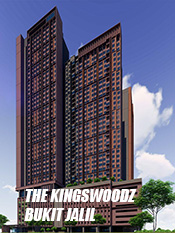



 Posts


