Malaysia Property News is a free resource website sharing Daily Property News & information about Property in Malaysia, which related to, Property Market, Property Investment, Commercial Property , Hot Properties Malaysia, Real Estate, Retail Shop, Business Park, Condominium Malaysia, Terraces & Apartment Malaysia, Houses, Residence, Resort and many more.

Friday, July 30, 2010

Penang set to see RM2b projects

SOME RM2.1 billion worth of residential properties in Penang are being lined up for development from this year to next, Chief Minister Lim Guan Eng said.

He said that Penang and Kuala Lumpur-based developers were planning a total of 2,696 residential properties, with estimated gross sales of more than RM2.1 billion, on the island and mainland.

"Of this, a total of 1,676 units with estimated gross sales value of RM1.84 billion are located out of the island," Lim said at a luncheon address on the sidelines of the 13th National Housing and Property Summit in Petaling Jaya, Selangor, yesterday.

Apart from this, the state government will also put out to tender some of the prime land in Penang, he added.

Among the sites is a piece of land between the Penang Bridge and Queensbay shopping complex.

"This land is being offered on a freehold basis with the reserve minimum price of RM200 per sq ft. This is considered cheap.

"However, potential bidders will be required to build a hospital, office lots, and reclaim some land. Still, this is a worthwhile bargain," Lim said.

According to Lim, interest was already being shown by overseas investors, including those from Singapore and Hong Kong.

By Business Times

Talam gearing for property launches

Talam Corp Bhd, once the country's largest builder of low- and low-medium-cost houses, plans to launch properties worth as much as RM1 billion once its restructuring exercise is completed.

The property launches will be staggered over a period of two to three years.

The company expects to launch some projects by the second half of next year.

The group has sold off RM676 million worth of properties to settle its debts, of which RM393 million is due to Menteri Besar Selangor Inc and RM266.3 million to lenders.

When its restructuring is completed, the group's current liabilities will be reduced to RM190 million from RM887 million a year ago.
"Once this exercise has been approved by shareholders and regulatory body, we will use the remaining landbank to launch higher-range products," executive director Chua Kim Lan told reporters after the group's annual general meeting in Kuala Lumpur yesterday.

After selling off some 1,942.5ha to settle its debts, the group still has 809.4ha in Selangor and plans to develop bungalows, semi-detached houses and industrial factories.

"One of the many things we learnt from this episode was, when we launch low-medium-cost houses, we get low returns. In addition to that, during the peak of the property market in the 1990s, we had a huge landbank of 7,284.3ha and the group's liability then was around RM4 billion to RM5 billion," chairman Tsen Keng Yam said.

"We do not need so much landbank, should only buy when you have money and when you need it," he added.

For this year, Talam is committed to finishing off its incomplete projects, including housing developments in Kinrara Section 3, Jalil Heights, in Petaling, Saujana Puchong and Ukay Perdana.

The projects have progress balance billings of about RM100 million.

By Business Times

White knights sought for idle housing projects

The government is seeking "white knights" to revive 56 abandoned housing projects while coming down hard on directors of companies and property developers out to make a fast buck from the industry.

Housing and Local Government Minister Datuk Wira Chor Chee Heung said its officers had managed to bring down the number of abandoned projects to 56 from 151 last year.

"In the process of reviving these abandoned projects, we have identified 40 developers who are willing to help revive those projects.

"Now, there are 56 projects that need to be revived, but we have yet to get the needed assistance from the willing developers," Chor told reporters at the 13th National Housing and Property Summit in Petaling Jaya, Selangor, yesterday.

He said that some developers were not really interested in helping to revive the abandoned projects as they were not money-making ventures. On the contrary, they had to fork out more money to revive them.

Taking this into account, the government is willing to top up the RM200 million fund allocated previously to revive such projects, he said.

At the same time, the ministry will be stricter in vetting applications by developers for housing developments.

"We try to weed out unscrupulous or unqualified developers who tend to make a fast buck.

"Their actions are not wanted here. The buyers tend to be the victims as they have taken loans to pay for the houses in advance. If the projects are abandoned, they will suffer," Chor said.

Although he did not have the statistics on errant developers, Chor said the ministry had blacklisted some, including company directors.These directors are not allowed to set up new companies.

On calls for the government to implement the "build first, then sell" policy, Chor said that the country had yet to reach the stage to implement it, but encouraged able developers to do so.

"When we build first, and up to a certain level, then sell, then, of course, developers will have to set aside a lot of capital outlay.

"Currently, a lot of developers in this country can only continue development under the current system of acquiring funding from end-financiers.

"I suppose we are not able to emulate advanced nations such as Singapore where they build first and sell later.

"We have not reached that stage yet, but we encourage those who can afford to do that," he said.

On the 10th Malaysia Plan (2011-2015), Chor said that some 78,000 units of affordable housing had been targeted to be built.

"We are targeting to build 78,000 units although survey shows that there are currently some 95,000 families throughout the nation who have yet to own houses.

He added that there was a lot of demand for such houses in Selangor, Penang, Pahang and Kedah.

By Business Times

Mutiara's unit in RM38 m property disposal

KUALA LUMPUR: MUTIARA GOODYEAR DEVELOPMENT Bhd announced that its wholly owned subsidiary, Potensi Naga Sdn Bhd (PNSB), has entered into a sale and purchase agreement (SPA) with Prosper Palm Oil Mill Sdn Bhd (PPOM) to dispose a property for RM38 million cash.

The company said on Friday, July 30 that the property involved a 13-storey office building together with 230 car park bays in Kelana Centre Point, Petaling Jaya.

The group said the property was acquired by PNSB on May 15, 1999 for a consideration of RM31.9 million, adding that it was a leasehold property with the lease expiring on Jan 23, 2094.

"The property is currently leased to a mixed group of tenants for office use and has a tenancy rate of 77%," said Mutiara, adding that the approximate age of the property is 11 years.

It noted the fair book value of the property based on PNSB’s latest audited financial statements for the year ended April 30, 2009 was RM32 million.

Mutiara said the the disposal represented an opportunity for the Mutiara Group to unlock the value of assets that did not contribute towards its core business of property development.

It added that the disposal would also free the group from future holding and maintenance costs of the property.

The proceeds from the disposal would provide future cashflow for the group’s working capital purposes, reduce its borrowings and/or contribute towards expansion of its core business.

By The Edge Malaysia

Empire Mall eyes full occupancy in 3 months

The Empire Shopping Gallery (ESG), Subang Jaya's new landmark, expects its retail space to be fully taken up in three months' time.

Mammoth Empire Holdings Sdn Bhd managing director Datuk Sean Ng said most of the company's projects had different concepts to prevent the customers from getting bored.

"To meet the demands of the customers, we have been selective in the tenants we want.

"We also actually have to look at the geographical and demographic factors in certain locations to implement the right concept," he told reporters after the opening of the lifestyle-focused and upscale mall in Subang Jaya today.

The mall is part of the freehold Empire Subang commercial development which also comprises Empire Soho (small office/home office), Empire Tower and a boutique hotel.

Empire Soho consists of 210 units while the Empire Tower is a 12-storey office block.

Empire Hotel offers stylish getaway options for business and leisure travelers.

Mammoth Empire Holdings Sdn Bhd also have two other projects at Damansara Perdana that will be launched by year-end.

By Bernama

Thursday, July 29, 2010

Outlook for KL office market remains soft


PETALING JAYA: The Kuala Lumpur office market is expected to remain soft for at least the next six months, with average rental rates facing downward pressure, including for some prime office buildings, property consultants said.

DTZ Nawawi Tie Leung executive director Brian Koh said with the large incoming supply of new office space, especially in the next two years, office occupancy and rental would come under pressure until at least 2012.

“It will take sometime for the market to recover. We expect monthly average rentals in the prime office areas to ease from RM6 per sq ft now to around RM5.80 in the coming months,” he told StarBiz.

DTZ Nawawi Tie Leung, in its latest DTZ Property Times Kuala Lumpur report, said the local office market had increasingly become a tenants’ market as supply would continue to surpass demand.

“This is due to a significant increase in incoming supply later this year and over the next few years. That will allow tenants to negotiate for cheaper rates upon renewal and when signing for new leases,” it added.

By the second half of the year, another 2.06 million sq ft of new office space is scheduled to come onstream.

Between 2010 and 2014, about 14.9 million sq ft of space is in the pipeline, with about seven million sq ft scheduled for completion in 2012.

“With the significant supply of new office space coming on-stream, competition is expected to intensify further among new office buildings to secure tenants, and office rents are expected to see further downward pressure,” the report said.

It added that the outlook for the sector remained cautious, “until a more convincing and firmer economic performance is achieved”.

Although the overall occupancy rate of office buildings in Kuala Lumpur rose from 87.2% in the first quarter of this year (Q1’10) to 87.9% in Q2’10 due to a lack of new supply, the average monthly rental of office space fell from RM6.02 per sq ft (psf) in Q1’10 to RM6.00 in Q2’10.

YY Property Solutions, in association with Cushman & Wakefield, in its latest Kuala Lumpur Office Marketbeat report, said although there were more active enquiries in Q2’10 compared with the previous quarters, “the pace of demand for office space has yet to match the improved economic environment.”

“It is still largely a tenants’ market with landlords offering better terms to tenants under growing competition from existing and newly completed office buildings,” it added.

Lauding Bank Negara’s issuance of five new commercial banking licenses as “giving a boost to the office market”, it said demand for office space was essentially driven by employment generation in the services sector.

The report pointed out that the capital value of real estate in the investment market was expected to remain stable this year.

CB Richard Ellis Sdn Bhd executive director Paul Khong concurs that the market is very much a tenants’ market and rental rates are very competitive.

“Landlords need to fight harder to attract tenants and various financial incentives are now thrown in to package a deal,” he said.

However, Khong is more optimistic in his outlook of the office market and believes rentals will be stable “with some nominal increases for the rest of 2010 while occupancy rates will continue to improve slightly further.”

“Over the next six months, we expect to see further activities in the office market and more relocation of tenants to newer buildings,” he added. Khong noted that the market held on rather well in the first half of the year with areas like KL Sentral, Jalan Bangsar, Mid Valley, Damansara Heights, Petaling Jaya and Mutiara Damansara, recording a higher occupancy rate.

Monthly rentals for Grade A office space in KL’s city centre are within the range of RM6.50 to RM7 psf inclusive of service charges, at RM7.50 to RM8 psf in KLSentral, and RM5 to RM5.50 psf in Bangsar and Damansara Heights. Average office rental in Petaling Jaya is around RM4.50 psf.

By The Star (by Angie Ng)

Malaysia housing development still active

Housing development in Malaysia is still active due to the rapid growth of urbanisation and is expected to increase from 67 per cent this year to 75 per cent by 2020.

Housing and Local Government Minister Datuk Wira Chor Chee Heung said the property sector is doing well based on positive sales by property developers.

"In my own personal opinion, the industry is doing well as Malaysians have a high savings rate and are still able to purchase houses," he told reporters after officiating the 13th National Housing and Property Summit in Kuala Lumpur today.

The summit was organised by the Asian Strategy and Leadership Institute.

Chor said the growing demand for property was also in line with the rising population while prices of properties in Malaysia are still low compared to other regions.

"Hence, the attractive prices have attracted foreign investors as they believe there is still an upside in terms of returns. The number of houses is projected to increase to 8.37 million units by 2020 from 5.15 million in 2000," he added.

On whether rising property prices is healthy for the industry, Chor said the current pricing is still manageable and there was no overheating in the sector.

"The government is monitoring the (prices) every now and then. We are not reaching the stage where there is going to be overheating," he explained.

He also said Malaysia is not ready for the build and sell concept as the it has not achieved a specific level of development and is unable to emulate the advanced nations.

However, he added, the Ministry of Housing and Local Government does encourage big developers to start the concept.

"There are many developers at the top of the scale who are able to adopt the build and sell scheme, which of course, will not give rise to abandoned housing projects," he highlighted.

According to Chor, the Housing and Local Government Ministry is in the process of reviving the remaining abandoned housing schemes and will try to weed out the unscrupulous developers.

He said the government had successfully reduced abandoned housing projects to 56 this year from the 151 in 2009.

By Bernama

Ivory hopes to expand to KL soon

KUALA LUMPUR: Penang-based Ivory Properties Group Bhd, which made a strong debut on the Main Market of Bursa Malaysia yesterday, hopes to expand its operations to Kuala Lumpur in the near future, said its chairman and group chief executive officer Datuk Low Eng Hock.


Datuk Low Eng Hock (right), deputy chairman Datuk Seri Nazir Ariff (second from right) and other directors checking out the company’s debut prices yesterday.

“Our company’s strength lies in enhancing land value and maximising its return. We have been doing this in Penang for the past 10 years, and hopefully with the success of this listing we may secure deals with landowners in Kuala Lumpur soon,” said Low.

The company posted a 15 sen premium over its offer price of RM1. Afternoon trade resulted in a high of RM1.35 before it closed 15 sen higher at RM1.30, with 51 million stocks changing hands. Ivory is the first property developer to be listed on the Main Market this year.

Low said Ivory Properties was looking to secure joint ventures with other property developers.

“We have been in joint venture deals with companies from Kuala Lumpur to develop property in Penang for the past 10 years. We are currently in talks with several companies to develop more townships as well as commercial condominiums,” added Low.

At present, the company has completed property development projects with a total gross development value (GDV) of about RM675.63mil. It has ongoing projects with a GDV of about RM834.08mil scheduled for completion within the next few years. The company also has future projects worth RM1.9bil.

Project director Murly Manokharan said the property market outlook was good at present.

“In recent months, the property market has looked good not just in Penang but in the whole of Malaysia. We have recently participated in The Star Property Fair and sales results were better compared to the past two years. I would say the (property) market is on an uptrend,” said Manokharan.

By The Star

MRCB to raise RM400m for KL Sentral Park


MRCB Sentral Properties Sdn Bhd, a unit of Malaysian Resources Corp Bhd (MRCB), will raise RM400 million of debt to finance the development of its latest project called KL Sentral Park.

The commercial paper/medium term notes (CP/MTN) programme is arranged by Affin Investment Bank Bhd.

"The financing, which is being guaranteed by Danajamin Nasional Bhd, is for a period of seven years," said MRCB chief executive officer Mohamed Razeek Hussain.

KL Sentral Park comprises five blocks of office buildings, high-end retail shops, business centres and green spaces with a net lettable area of 518,000sq ft. So far, 18 per cent of the project has been completed.
Speaking to reporters after the signing ceremony between MRCB, Affin Investment and Danajamin in Kuala Lumpur yesterday, Mohamed Razeek said construction started in the fourth of quarter of 2009.

"The project is scheduled to be completed next year," he said.

MRCB had executed a 15-year lease agreement with SME Corp and recently obtained a commitment to lease for 15 years by SBM (Malaysia) Sdn Bhd.

"Collectively, this translates to occupancy reaching 60 per cent of KL Sentral Park's net lettable area," he said.

Also present were Affin Investment managing director Maimoonah Mohamed Hussain, Danajamin chief executive officer Ahmad Zulqarnain Onn, Malaysian Trustees Bhd director Ng Hon Soon and MRCB senior vice-president of property Wong Dor Loke.

Meanwhile, Maimoonah said the domestic bond market has been dull since the subprime crisis started.

"Therefore, the guarantee provided by Danajamin to MRCB is instrumental to re-ignite interest by providing quality issuance to the market," she said.

Maimoonah said the CP/MTN programme is accorded the highest rating of MARC1 and "AAA" with the guarantee wrap from Danajamin.

This provides the most competitive pricing which lowers the company's interest costs further.

The financing for MRCB is Affin's second for the group in the last two years, the first being the RM499 million syndicated loan.

By Business Times

Viva Home to be KL's new retail landmark

The four-storey Viva Home retail mall at Jalan Loke Yew, Kuala Lumpur, is set to change Cheras' landscape and spur new developments as well as improve the experience of shopping for your home.

Viva Home is the first of its kind retail mall in Malaysia. It is a one-stop centre for home products like furniture, furnishing, home decoration and home improvement services.

The 660,000-sq-ft mall, developed by Viva Mall Sdn Bhd, a unit of Kha Seng Corp Group, is opening by the end of this year.

Besides shops catering to every inch of the home, the mall will also offer lifestyle and entertainment elements, housing anchor tenants like MBO Cinemas with nine screens and ICT Gadgets, an information and communication technology section selling computers, accessories, handheld devices and telecommunications equipment.

There will be a range of food and beverage outlets, banks, a hypermarket and an exhibition hall, showcasing the latest home and home-related products and services.

Viva Home will have lot sizes ranging from 300 sq ft to 2,000 sq ft, while anchors will have space of up to 15,000 sq ft.

All the lots are for lease, and Viva Home is currently undergoing its leasing campaign.

"As a developer, we tend to look at long-term investment ... so we will retain the lots for recurring income and manage the retail mix," Viva Mall chief executive officer Yee Ia Howe said in an interview with Business Times.

The lots will be leased from RM4 per sq ft, depending on size and location, which is the current market price, Yee said.

Viva Home is part of a RM280 million two-phase redevelopment of Plaza Uncang Emas (UE3), which Kha Seng bought last year for some RM100 million.

The old mall at UE3 is being refurbished and renamed Viva Home. The phase two of the development will boast a 260-room business-class hotel, which will sit atop the mall.

Yee said work on the hotel will start by the end of this year.

"We believe in this project. We did a lot of research on how it will work. We are improving the access to Jalan Loke Yew and Jalan Cheras and building a pedestrian bridge from the Taman Miharja light rail transit station into the mall," he said.

Yee added that there will be clear merchandising zoning to ensure identifiable retail zones and concepts to make shopping easier and comfortable.

Viva Home will also have 2,000 parking bays.

By Business Times

KYM to build up property division


INDUSTRIAL packager KYM Holdings Bhd, which owns a small property division, plans to bolster the business in a bigger way to create a new significant revenue stream.

KYM executive director Datuk Lim Kheng Yew said the company owns some 28ha of land in Teluk Rubiah, Perak, and it plans to build properties there.

"Property will be a new revenue stream for us to augment our income. We are working on that but haven't signed on anything at the moment," Lim said after its annual general meeting in Kuala Lumpur yesterday.

Lim declined to elaborate when asked if KYM plans to become a full-fledged property developer and said "We will announce our plans in the foreseeable future."
KYM made a windfall when it sold 163.6ha of its land to Brazil's Vale, an iron ore group, for RM101.9 million in June 2009. It has an option to sell another 302.4ha for RM93.8 million and this was completed in February 2010.

As a result, KYM was able to cut its debt to RM50 million from RM180 million.

KYM has also bought an additional 16ha of land in Jelapang, Perak, from Idaman Bina Makmur Sdn Bhd for RM12 million.

The company hopes to participate in Vale's downstream activities in Teluk Rubiah. This could include building properties or being a distributor for Vale.

KYM now makes and sells paper and polypropylene-based packaging products like fertiliser bags and carton packs.

By Business Times

Kha Seng does its part to transform shopping scene

The Kha Seng Group, a niche retail property developer, has taken over Plaza Uncang Emas (UE3) at Jalan Loke Yew, Kuala Lumpur, and is turning it into a prime spot for retailers and consumers.

UE3 is undergoing a massive redevelopment. The RM280 million plan includes turning the existing mall into a niche home retail mall, dubbed Viva Home, and building a multi-storey business hotel above it.

Taking over such buildings is not new to Kha Seng. In 2004, it bought Central Market, located near the Klang bus station, from Melewar Group and turned it into a vibrant culture and arts centre.

Kha Seng paid RM38 million for the building's remaining 60-year lease in an open tender by Pengurusan Danaharta Nasional Bhd.

The decision to take on the project lies in founder Bernard Bong's passion for retail. His main focus is in taking over a building and finding loopholes to meet the demand and supply of end-retail consumers.

"Central Market and Viva Home are strong concepts that can benefit from proper planning and surveying to uncover what the market really wants," he said.

"It is our commitment to develop innovative, retail properties in the Klang Valley. We find there is a demand for them. We have more projects in the pipeline," Bong said in a recent interview with Business Times.

Kha Seng is currently developing the RM1 billion Kenanga Wholesale City (KWC) in Kuala Lumpur at Jalan Kenanga, off Loke Yew, which will open by mid-2011.

The 22-level KWC, with 500,000 sq ft of net lettable space, is set to be the flagship for the Malaysian fashion wholesale industry.

The Jalan Kenanga area is the existing hub for Malaysian fashion wholesalers. Some RM1 billion revenue is generated per year and this is expected to increase by threefold after KWC opens, Bong said.

The Kha Seng Group started as a garment manufacturer and wholesaler in the 1980s. It diversified into property development and investment some 15 years ago to ride on the growing retail market.

By Business Times

MRCB will consider setting up REIT, says CEO


Mohamed Razeek Hussain exchanging documents with Maimoonah Mohamed Hussain. With them are MRCB senior vice-president and head of property Wong Dor Loke (left) and Danajamin Nasional Bhd CEO Ahmad Zulqarnain Onn.

KUALA LUMPUR: Malaysian Resources Corp Bhd (MRCB) will consider injecting some of its properties into a real estate investment trust (REIT) as part of the company’s growth strategy, said chief executive officer Mohamed Razeek Hussain.

“REIT has never been (far) away from our minds. It is a strategy that we might employ in the future, perhaps in the mid to long term.

“We are strengthening our balance sheet to enhance recurring income. When it is substantial and the time is right, we will consider,” he said after an agreement signing between MRCB and Affin Investment Bank Bhd yesterday.

Razeek was responding to a research report earlier this month that MRCB was gearing up for a REIT.

“For us, mid term would mean (within) three years and long term (is anything) beyond that,” he said.

Meanwhile, MRCB plans to raise RM400mil via a guaranteed commercial paper/medium-term note (CP/MTN) programme.

This is to finance its mixed commercial development, KL Sentral Park, which is valued at RM600mil.

MRCB Sentral Properties Sdn Bhd, a wholly-owned unit of MRCB, has appointed Affin Investment to act as principal adviser and lead arranger for the programme, which will be guaranteed by Danajamin Nasional Bhd.

The financial arrangement would come with an option of both floating and fixed interest rates, said Affin Investment managing director Maimoonah Mohamed Hussain.

“The MTN allows fixed-rate funding wherein MRCB can lock in the current low rates of interest, given the environment where interest rates are trending upwards.

“The CP, on the other hand, allows MRCB to issue short-term notes on a floating rate basis.”

Razeek said the first tranche, worth some RM50mil, would be issued “as soon as possible”. “For future tranches, it’s up to us to draw down whenever we want,” he said.

KL Sentral Park, which is about 18% completed, is scheduled for completion next year.

The project will comprise five blocks of office buildings, retail shops, business centres and green spaces with a net lettable are of about 518,000 sq ft.

By The Star

UEM Land expects average margins from Cyberjaya property launch

CYBERJAYA: UEM Land Holdings Bhd, which will launch its maiden property project in the Klang Valley this weekend, expects “mediocre margins” from the 122 units on landed strata homes offered under the first phase of its high-end residential development known as Symphony Hills in Cyberjaya.

Managing director and chief executive Datuk Wan Abdullah Wan Ibrahim said he is confident buyers would be willing to pay more for future launches at the site, once the main components of the development were completed.

“I have managed to convince the board of directors that our margins will improve to a decent level in upcoming launches after they can see what we have delivered,” he told a media preview at the site today.

A number of UEM Land’s project in Johor had already won international acclaims, and the company is setting a high target for Symphony Hills in Cyberjaya.

By The Star

Wednesday, July 28, 2010

IJM's The Light to contain world-class appeal


A performing arts centre to rival Australia's Sydney Opera House, waterfront retail promenade and an international standard marina are among the attractions property developer IJM Land Bhd will unveil when it launches the second phase of its flagship waterfront "The Light" development in Penang at the end of the year.

Its managing director Datuk Soam Heng Choon yesterday said the proposed iconic arts centre, known as "The Pearl" is expected to boost a seating capacity of 2,000 and set to be sprawled over 0.8ha.

The proposed marina, meanwhile, is expected to offer club facilities with more than 200 berths.

"Also to be found in the second phase of this commercial development would be an information technology precinct for Multimedia Super Corridor-status companies and incubator firms," he said during a media launch of the company's "The Light Collection 1" in Penang.

The Light Collection 1 project, which carries a development value of RM203 million, was soft-launched in May, and Soam said half of non-Bumiputera units which are sprawled on 2.8ha have been sold so far.

Present at the launching ceremony were IJM Land general manager (north) Toh Chin Leong and one of the company's consultant architect, Eric Tham.

The Light Collection 1 is the first of four in The Light Collection series which offers 24 units of four-storey water villas and 152 condominiums in four eight-storey blocks.

While the condominiums have built-ups of 1,371 to 1,582 sq ft, the water villas, which are touted to be the first of its kind in the country, are set to boost a built-up area of 3,132 sq ft.

The units are priced from RM823,600 to RM3.18 million.

With a gross development value of RM5.5 billion, The Light is a 60.8-ha freehold waterfront development which will be built over the next 12 to 15 years.

Soam said IJM Land intends to make The Light one of the best waterfront places to live in Malaysia.

"Living by the water," he noted, "represents the highest level of luxury for many home owners."

The entire The Light development is undertaken by IJM Land's subsidiary, Jelutong Development Sdn Bhd.

The project, which will be carried out in three phases, is being touted as the biggest and best integrated residential, shopping, dining, recreational and commercial waterfront living in the northern region.

By Business Times

Mutiara Goodyear to maintain dividend

Property developer Mutiara Goodyear Development Bhd is confident to maintain its dividend payment trend despite the adoption of Issues Committee (IC) Interpretation 15 Agreements.

"We welcome the early adoption of IC Interpretation 15 as it streamlines and simplifies revenue recognition," Executive Chairman Hamidon Abdullah said in a statement today.

IC Interpretation 15 dictates that revenue recognition from property development activities will be recognised only upon full completion of projects.

Hamidon said that in the company's development profile, its focus was more towards cashflow management, development cycle time and profitability margin.

"We are confident to maintain our dividend payment trend by capitalising on the company’s established profile and the market potential moving forward. Our shareholders will see a sustained dividend payout backed by sufficient cashflow and our strong financial position," he added.

Mutiara Goodyear recently announced a dividend payout of 3.5 sen for the financial year ended 2010, representing an increase of 14.0 per cent as compared to the preceding financial years.

Hamidon said the company's Prima Avenue at Dataran Prima would be due for completion by the fourth quarter of 2010 and would positively contribute to its cashflow in the 2011 financial year.

"We are also strongly encouraged by the overwhelming response for Nadayu Melawati phase one which already achieved 80 per cent take-up rate at soft launch stage.

"We also have a pipeline of launches over the next few years in the Klang Valley and Penang which will continue to provide us with a consistent cashflow stream," he added.

With a vast track record of 35 years in the industry, Mutiara Goodyear has vast experience with various types of commercial and residential developments such as condominiums, link-houses, semi-detached, bungalows, shop offices and townships.

Its notable projects include Subang Perdana new town, Bandar Tasek Mutiara township in Penang, Lagenda Mas in Cheras and Dataran Prima Condominium.

By Bernama

Size not the only factor for success of REITs

KUALA LUMPUR: The two major real estate investment trusts (REITs) listed on Bursa Malaysia this month - Sunway Real Estate Investment Trust (SunREIT) and CapitaMalls Malaysia Trust (CMMT), may have boosted the profile of Malaysian REITs (MREITs) and capture the attention of local and foreign investors, but size does not necessarily guarantee a better performance going forward, analysts said.

ECM Libra Capital Sdn Bhd research head Bernard Ching said while the REITs listed this year signified the maturing of MREITs and had managed to attract greater foreign investor participation, the performance of a trust would be dependent more on the REIT managers’ capabilities and the quality of the underlying assets injected into the REIT.

Ching said in Malaysia especially, “mega” REIT managers generally have a tough time looking for quality assets large enough to be injected into the trust, despite having greater liquidity, compared to niche and smaller REIT players. “But the larger REITs would be more on the radar of foreign fund managers because of their sheer size and visibility,” he said.

Ching said that while Malaysian investors have grown in awareness over the years in terms of investor knowledge and interest in REITs investment, the numbers were still relatively small. This despite MREITs giving two to three times better returns, compared with fixed deposit rates. “Many of the MREITs are currently giving 7% to 8% in income distribution yield,” he noted. A foreign REIT expert based in Singapore concurred with Ching that size was not the only factor to better performance for REITs. He said despite larger REITs listed on the stock exchange, MREITs were still at the infancy stage but that they were going in the right direction.

“There are still many outstanding issues that have impeded MREITs’ growth, ranging from regulatory restrictions to the lack of tax incentives for REITs players, and commercial properties in prime locations that are difficult to be placed in a trust because they don’t have strata titles and a lack of quality REIT experts and advisors to these trusts,” he said. The foreign REIT expert said there was still a lack of conviction and confidence among Malaysian investors and even some foreign investors to invest in MREITs. On the SunREIT and CMMT listing, he said the reception from local investors to the REITs were generally lukewarm, considering that both were reputable and had a good pipline of properties ready to be injected into the trusts.

“It’s still too early to tell how they will perform but they just about have it all ... the management expertise, size, and liquity to perform well, However, is there a market demand locally for these REITs?” he said.

SunREIT closed at 91 sen yesterday, which was a one sen premium over its offer price of 90 sen when it was listed on July 8.

CMMT settled at RM1.01, up one sen from its reference price of RM1 when it was listed on July 16.

By The Star

Tuesday, July 27, 2010

Impiana looks for land to expand Phuket property

Malaysian hotel owner and operator Impiana Hotels, Resorts and Spa which in April opened its first luxury property Impiana Kata Noi Private Villas in Phuket, Thailand, is now looking at possible land acquisition to expand the property.

"We have been offered some land beside this property and we are looking at the possibility of expanding," villa manager Jeanette Kelly told Business Times in an interview at the resort recently.

"We are very positive about the market (in Phuket) as the property has been very well received," Kelly said, adding that it had received good support from the Korean honeymooners when it opened.

Kelly said that the piece of land adjacent to its villa measures about 0.6ha.

All four private villas and seven suite villas are sea facing. Built at a cost of Baht 250 million, each unit has its own infinity pool measuring 13m to 20m. Some pools are fitted with a jacuzzi and several units have a jacuzzi tub in the bathroom too.

It offers 24-hour butler service and has 38 staff for the 11 units.

The villa is expected to garner an average room rate (ARR) of Baht 17,000 and rake an average occupancy of 50 per cent in the first year of operations.

Unit sizes range from 60 sq m to 260 sq m. Depending on the size, rates range from Baht 15,000 per night to Baht 39,000 per night (except during promotions.)

"We don't want to overprice ourselves as this is our first boutique villa venture. We are testing the market. We need to build a reputation and our brand identity," Kelly said.

While the villa may not have built a name yet, the Impiana brand is recognised as the group has two other resorts in Thailand - Impiana Resort Patong, Phuket and Impiana Resort Chaweng Noi, Koh Samui.

Impiana Kata Noi is the third property in Thailand for the group.

Apart from Koreans, the resort is targeting wedding and honeymoon crowd from Europe in the June/July period.

Its target market is seasonal. The short -haul crowd from the domestic market and regional market is expected all year round.

Impiana Kata Noi is also targeting European tourists in the summer, Christmas and New Year periods. The Chinese and Russian market is another category it is eyeing.

She added that the villa is looking at holding wedding and luxury product launches.

All units, which have a different theme, are fitted with LCD TV's, stereo systems and private espresso machines.

Impiana Kata Noi also has a fully-stocked wine cellar, a cigar bar that carries limited edition cigars as well as a well equipped fitness centre.

Meanwhile, in the second year of operations, Kelly expects that it will be able to achieve an average occupancy of 60 per cent to 65 per cent.

"We hope to grow on that year-on-year and ARR will grow too." she added.

By Business Times

RHB Invest buys 30.6m Sunway REIT shares

RHB Investment Bank Bhd, the appointed price stabiliser for Sunway Real Estate Investment Trust Bhd (Sunway REIT), has been buying the shares over the past 14 days to help stabilise price of Sunway REIT shares.


It bought some 30.6 million shares of Sunway REIT in stages over the past two weeks from prices ranging from 87.5 sen and 89.5 sen.

Under Section 9(3) of the Capital Markets and Services Act 2007, Capital Markets and Services (Price Stabilization Mechanism) Regulations 2008, an investment bank can be given the authority by the share issuer to help stabilise the share price.

The Act also states that the period for any stabilising action will be thirty calendar days starting from the first day of trading on the stock exchange of the relevant securities.
Regardless of the buying by the investment banker, Sunway REIT shares haven't moved much, but it has managed to stop their price from sliding.

Sunway REIT closed the day at 90 sen a share, unchanged from its initial public offering (IPO) price.

Jupiter Securities head of research Pong Teng Siew said he does not expect the stock to move much from the current levels.

"I also do not expect institutional shareholders to sell down the stock, but there is some retail selling," admitted Pong.

Apart from RHB who had bought the shares in batches, Sunway REIT non- executive chairman Tan Sri Jeffrey Cheah Fook Ling's Sunway Education Group Sdn Bhd also bought seven million shares in one go on July 13.

An analyst, who covers the stock, said the selling pressure on Sunway REIT will continue until its yields recollect to the sectorial average.

"One way for the yields to go up is for the price of the stock to go down." said the analyst, adding that Sunway REIT's yield is about 7.5 per cent against the industry average of between 8.5 per cent and 8.9 per cent.

The analyst, who did not want to be named, said only then she sees buying interest in Sunway REIT coming into play.

Pong, meanwhile, also noted that RHB may have used its powers as the market stabiliser to buy Sunway REIT shares because "there is no point having a capital loss on top of weaker yields".

He added that generally, market stabilisation activities only forestall the inevitable.

Sunway REIT, the property trust controlled by Sunway City Bhd, made its debut on Bursa Malaysia on July 8.

It had raised RM1.5 billion, making it the biggest IPO in Southeast Asia this year.

By Business Times

Malaysian malls in regeneration phase

The key theme for Malaysian shopping malls over the next decade is regeneration.

It is a transformation that includes both an extension of an existing mall or an extensive makeover of a mall, Malaysian Association for Shopping Complexes and Highrise Complex Management (PPK) president HC Chan said.

"After a 35-year history of malls, we are now entering the regeneration phase. Some of the shopping centres will undergo a change," Chan said.

"There will be more regeneration (activities) rather than building of new malls," he said, adding that malls will transform to become more niche.

This, Chan said, largely because the current 100 million sq ft of net lettable area of retail space within shopping complexes is sufficient to cater to the existing market.

Regeneration via expansion included Mid Valley Mega Mall, which added the Gardens, Suria KLCC with a retail podium in Lot C, and Sunway Pyramid, which added a second phase and is now working on a third and a fourth retail phase.

One mall that recently underwent a major makeover is The Mines following the takeover by CapitaLand's CapitaMalls Asia Ltd.

Another example is KL Plaza that will be relaunched as Farenheit 88 after it undergoes a massive RM100 million renovation.

Similarly, UE3 (now Viva Home), Phoenix Plaza and Kenanga Wholesale Centre are also being rejuvenated.

"Until the greater Kuala Lumpur plan takes shape, there will be no mega shopping structures. Until then, there will be only medium-sized malls," Chan said, adding that most other mall openings will continue to be within the Klang Valley.

"The next wave of substantial shopping malls development will be in the next three to five years when huge parcels of prime Kuala Lumpur land are opened for development," Chan said.

Today, the Malaysian shopping mall industry comprising 300 malls is worth some RM100 billion in real estate value and provides direct employment for 500,000 people.

By Business Times

Starhill Global REIT gets RM$1.2bil loans

SINGAPORE: Starhill Global Real Estate Investment Trust, a Singapore-based investor in retail and office buildings, got S$496mil (RM1.16bil) of three-year loans from five banks, according to a Singapore stock exchange statement.

DBS Holdings Ltd, Oversea-Chinese Banking Corp, Commonwealth Bank of Australia, Societe Generale and ING Groep NV provided the loans, which include a S$50mil revolving credit facility, the statement said.

The proceeds would be used to refinance S$447mil of maturing debt while the balance will be made available for working capital and general corporate funding purposes.

In a revolving credit facility, money can be borrowed again once it’s repaid.

By Bloomberg

Sime Darby's new medical centre opens 2011

Sime Darby Healthcare is expected to invest RM250 million for the Sime Darby Medical Centre in Ara Damansara, Kuala Lumpur, which is anticipated to be opened next year.

In a statement today, Sime Darby Healthcare said plans are being drawn up to fit out and equip the centre with specialised facilities and services for the treatment and management of heart, neuro, spine and joint diseases.

It said the new 220-bed medical centre, will be the third medical facility established under the group, after the flagship Sime Darby Medical Centre in Subang Jaya and Sime Darby Specialist Centre Megah in Petaling Jaya.

Tan Sri Dr Wan Zahid Mohd Noordin, a Sime Darby board member who oversees Sime Darby Healthcare said the medical centre will focus on quality, safety and continuous improvement, especially in areas that most directly impact patient care.

The neuroscience unit in Ara Damansara will feature a comprehensive epilepsy management programme that includes an electroencephalogram or EEG studies laboratory and state-of-the-art equipment for early diagnostic and treatment capabilities.

The centre will also have a fully-equipped and state-of-the-art rehabilitation facility including a specialised Stroke Care Unit, hydrotherapy, occupational therapy, audiometry, musculoskeletal rehabilitation using wax and splints and a Child Development Centre with Snoezelen and speech therapy.

Snoezelen or controlled multi-sensory stimulation is used for patients with autism, intellectual or mental disabilities, post-traumatic stress disorders or brain injury.

The hospital will also be installing a new Hospital Management Information System that will allow, amongst others, central appointment bookings and management of patients' health records in a seamless manner across all the Sime Darby medical facilities.

By Bernama

Monday, July 26, 2010

BLand to launch projects worth RM500m this year

BERJAYA Land Bhd (BLand) will launch new projects worth more than RM500 million this year to take advantage of pent-up demand for housing in the Klang Valley.

BLand is bullish on the property market, its senior general manager of properties and marketing, Mah Siew Wan, said.


"We are seeing a return of buying interest for high-end houses. Our properties are all unique and in prime areas so we are confident of brisk sales," she told Business Times in an interview.

BLand, 53 per cent controlled by Tan Sri Vincent Tan's Berjaya Corp Bhd, will launch Vastana25, a high-end project, at Seputeh Heights in Kuala Lumpur by end-July.
Last weekend, it relaunched The Peak at Taman TAR in Selangor.

The Peak, comprising 88 guarded and gated bungalow lots, was re-launched as it now has freehold status.

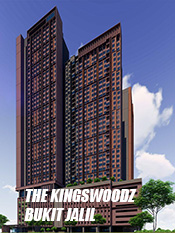
By the end of this year, BLand will launch KM1 Condominiun in Bukit Jalil and shop offices in Berjaya Park in Shah Alam, Selangor.

The group has about 10 ongoing developments worth some RM1 billion and it will launch more projects next year, Mah said.

BLand has some 400ha in the Klang Valley with the potential of generating more than RM8 billion in gross development value.

It also has projects in China, Vietnam and South Korea worth more than US$12 billion (RM 38.4 billion).

In China, BLand has a mixed-development project comprising retail, entertainment, theme park and water park in Sanhe City, Hebei Province. It has yet to launch the project.

Infrastructure work on its maiden US$3 billion (RM9.6 billion) resort-type mixed-development township project in South Korea has started.

The project featuring apartments, serviced residences, semi-detached and resort-style villas, a wellness resort, a casino and resort hotel, hotel residences, a mall and an indoor arena will be launched next year.

In Vietnam, BLand has a US$6.3 billion (RM20.7 billion) mixed-development project in Dong Nai Province.

By Business Times

Case for more iconic projects

The furore over the proposed demolition of Pudu Jail puzzles me. Very few cities have old dilapidated prisons smack right in city centres. Even "The Rock" which is the infamous Alcatraz is on an island of the US west coast, and was initially the first lighthouse and US Fort. Later, it became a federal jail but it is on an island and not in the city centre of San Francisco.

The closure and the proposed redevelopment of Pudu Jail highlights the Government's intention to rebrand Kuala Lumpur as a vibrant city with a new look.

So far, we have seen announcements of government companies and government-linked companies being called upon to develop the Merdeka Stadium, the land at Imbi Road, Sg. Besi airport, the Matrade-Naza joint venture and EPF with the Rubber Institute of Malaysia (RRIM) redevelopment. While the RRIM development is at the fringes of Kuala Lumpur, the other sites are in the city, and the infrastructure to develop them will see a total change in the traffic flow, logistics of land use, and as a result, will provide for the first time alternative iconic centres to the 15-year old Petronas Twin Towers.

The idea of using government companies looks like the early Singaporean model started by their first prime minister where they identified a piece of land at the end of Orchard Road, master-planned it and invited leading Hong Kong tycoons such as Lee Kah Shing and Tan Sri Frank Tsao to develop what eventually became the 5 million sq ft Suntec City which served as a catalyst for the redevelopment of the entire Marina Bay area.

Singapore hopes to replicate that by opening up the new Marina Bay development where the very expensive Sail Condo is located right across from the Sands Casino. This is expected to be the new financial centre in Singapore, thereby creating an extraordinary new chapter as a regional financial centre.

Malaysia should not play second fiddle, and we certainly have more opportunities to develop more iconic platforms as we have a better foot print and better design features. Furthermore, we have more land, and are able to spread our designs over a larger base.

The task for the GLCs or government companies to design and master-plan certainly is a much better proposition than passing it to well-connected individuals as was previously the case. These wholly-owned government companies, run by highly trained professionals, are very conscious of the responsibilities they have been entrusted and fully understand that they are constantly and continuously being watched, analysed and monitored by very critical analysts. The government expects these companies to practice full transparency and accountability for the future success of these projects, and more importantly, expects them perform as intended, in accordance with world standards. Additionally, the benefits derived from these development projects will return to the people via the Government which is the sole owner of these government companies.

Obviously the scale of the projects requires not only massive funding, but also deft master-planning and an understanding of market forces so that all these projects do not flood the market at the same time. Not many private companies are capable of handling these mammoth tasks.

The fact that they have a single sovereign owner should also ensure that the release of these projects into the market place will be orderly, unlike previously where there was no adequate property information. Every private developer placed his project in a vacuum, assuming that he had no competition which resulted in over-supply and a drastic drop of capital values in the late 90's.

We already have such a successful model in KLCC. The Sentral development project, after a rocky start at the tail end of the 1997 crisis, is now going from strength to strength, and MRCB has a good model there.

While it is vital to inject private sector participation in these projects, it is more important to have wholly government-owned companies or GLCs to take the lead role in the master planning process.

Selling these properties to the highest bidder, local or foreign, may result in the risk of the land being lost if the project failed or the purchaser, in his urgency to get the returns of his investment, fast-track the project without due consideration to market needs. Under this scenario, the project is bound to suffer.

The most famous landmark failure of that is of Canary Wharf, the iconic Eastern Docklands of London, which was bought by the Reichmann Brothers of Canada. Their company, Olympia & York, became the most successful property developer in Canada and US before they ventured into bidding a high price for the Canary Wharf site in 1986.

The 33.58ha site in 1987 became the largest development project in the world which incorporated One Canada Square, Britain's tallest skyscraper.

With the UK running into recession in early 1990, the building remained empty and the Reichmann Brothers were declared bankrupt in 1992, owing debts in the amount of US$20 billion (RM64 billion). The banks then took over Canary wharf and sold it by auction years later.

The London property market survived that disaster due to its strength as a world financial centre. If we follow that privatisation path again we may not be so lucky.

The writer is the chief executive officer of Malaysia Property Incorporated

By Business Times

Saturday, July 24, 2010

Johor developers keen to play integral role

Property developers in Johor want the Government to engage them in the consultation for and drafting of a plan to transform Johor Baru into a vibrant city.


Simon Heng

Real Estate and Housing Developers’ Association (Rehda) chairman of Johor branch, Simon Heng, says the private sector should not be left out in the drawing up of the plan although the initiative was mooted by the Federal and Johor Governments.

“It will be good for all stakeholders if both the public and private sectors could work together to ensure the success of the project,’’ he says in an interview with StarBizWeek.

Heng urges the Johor government to open up state-owned land in the city centre for redevelopment projects via the open tender system instead of awarding the parcels directly to certain parties.

He says it is only logical to engage property developers as they are responsive to the market and know what products sell and what buyers want.

“The former sites of the Lumba Kuda and Bukit Chagar low-cost flats are the best areas to build high-rise condominiums and serviced apartments.

“These properties will attract Malaysian professionals working in Singapore and expatriates based in the republic due to the close proximity,” he adds.

Heng says the number of Singaporeans renting houses in Johor Baru has risen in recent months because of the high rentals in the city-state. Most of these people commute daily from Johor Baru to work on the island.

Prime Minister Datuk Seri Najib Tun Razak had last month announced that the Government would allocate funding to rehabilitate and transform Johor Baru.

Under the 10th Malaysia Plan, some RM1.8bil will be spent within the city centre. T

his include RM200mil to clean up Sungai Segget, one of the dirtiest rivers in the country.

Sungai Segget flows along Jalan Wong Ah Fook in the city centre. Several years ago, RM6mil was spent to cover up a stretch of the river, which has a reputation for being a dumping ground for raw sewage.

The money for the proposed Johor Baru project comes from the Federal Government’s facilitating fund while the Iskandar Regional Development Authority (Irda) will act as a facilitator together with the State Economic Planning Unit (Upen).

According to Irda chief executive officer Ismail Ibrahim, Irda and Upen have until the end of this year to conduct studies to determine how the plan should look like. The findings are to be submitted to the Federal Government.

Undoubtedly, it is vital to rejuvenate Johor Baru city centre, in line with its status as one of the five flagship development zones in Iskandar Malaysia.

“Apart from engaging developers, views from property owners, non-governmental organisations, experts in town planning and chambers of commerce should be taken into account,’’ says Heng.

SP Setia Bhd executive vice-president (property division, northern and southern regions) Datuk Chang Khim Wah agrees with Heng.

He says the redevelopment plan will definitely increase the value of properties in areas near the city. These include those in Taman Pelangi, Taman Abad, Taman Sentosa and Taman Sri Tebrau.

Chang says while Johor Baru should have its own identity, the stakeholders can always look at the success stories of city-centre redevelopment in other parts of the world.

“A vibrant city should be a blend of the old and new, and a city should be a lively place not only during the day but also at night,’’ he says.

Chang says Istanbul is a good example as the city, with historical sites and monuments, blends well with its chic Taksim Square.

He says Johor Baru should have enough attractions to lure crowds back to the city centre even after office hours and during weekends. These can be done by having street performances, building specialty stores and boutique hotels in the old parts of the city, and by reopening the Ungku Puan night outdoor hawker centre.

The centre, which was the biggest alfresco dining area in the city centre, was highly popular with locals and tourists but was closed several years ago; instead, ugly concrete kiosks have been put up there.

KSL Holdings Bhd executive director Ku Hwa Seng suggests the authorities re-zone certain parts of the old housing estates near the city centre as part of the transformation plan.

He says residential properties facing the main roads in these estates could be converted into food and beverage outlets and specialty retail stores like in Bangsar, Kuala Lumpur.

Ku says developers should be allowed to buy these houses, refurbish and upgrade them, and lease these properties to restaurant and store owners.

“Concerted efforts are needed from the relevant parties to ensure the success of the plan. But the most important thing is the political will of the state government,’’ he says.

By The Star

Malacca and Penang: History in abundance


The Malacca government has turned the once old and quiet Jonker Street into the now vibrant and ‘happening’ Jonker Walk.

The saying ‘Old is Gold’ certainly holds true for many things.

Among the things that appreciate over time are family relationships, friendships and the value of some tangible things like real estate.

Many so-called “city folks” in Kuala Lumpur and Petaling Jaya actually do not hail from the city; their hometowns are in other parts of the country.

Home is where the heart is and many of us have set up homes in places where we work, after settling down with our own family, and have children attending schools or colleges in the city.

With passing time and wisdom, we learn to appreciate our loved ones better.

And despite the “rat race” of city life, it is important to stay connected with our loved ones and old friends back in the kampung or in other places.

Likewise in the built environment, we can find many undiscovered gems around, which, in spite of their old physical exterior, are actually hidden treasures with strong history and many untold stories within their walls.

The first thing that comes to mind is the many pre-war houses and buildings that can be found in large numbers in the inner cities of Penang and Malacca.

Despite being old and dilapidated, many have the potential to be restored and given a new lease of life.

Some of the ways to reuse these buildings and “monetise” them include turning them into museums, heritage hotels, alfresco dining and restaurants specialising in local fares.

It is interesting to compare Penang and Malacca as they share many similar traits and history.

Both will benefit by learning from each other new ways to improve and manage their built and unbuilt environment.

Since my other half is a Malaccan, I must admit that I tend to compare my hometown, Penang’s George Town, with Malacca whenever I’m back for holidays or family events.

After all, both have been declared Unesco World Heritage Sites and have many interesting buildings and structures that are reminiscent of their rich history and heritage.

Penang and Malacca are both former Straits Settlement states with a long history of early settlers from various parts of the world converging there for trade.

And both are renowned for their Baba/Nyonya culture and heritage.

Being port states, both also have strong foreign connection and influence.

Penang was a bastion of trade for the English and the East India Company after it was founded by Captain Francis Light in 1786, while Malacca was a confluence of Portuguese, Dutch and English influence.

Those influences can still be clearly seen in the architecture of the buildings today.

It is evident that both Penang and Malacca have their own distinctive assets and attractions that have endeared them to many loyal visitors who throng the cities in droves whenever there is a long stretch of holidays.

This could be one of the reasons for the traffic-choked roads during the holiday season and major festivities.

It is common to find many outstation cars among the long lines of cars on the roads during such times.

To give a boost to their intrinsic value as natural tourist attractions, there is a need to improve the public transport system in the two heritage cities to ensure that the different modes of transport are well integrated and connected to each other.

Being on the radar screen of tourists is one thing, but it is equally important to ensure that visitors have convenient access to a good public transport network.

More should also be done to further boost the alluring old world charms of these cities while at the same time, revitalise the inner cities and keep them alive as living heritage.

To achieve this, the old and new attractions and facilities should co-exist and blend seamlessly with one another to make them relevant and refreshing to the people.

Malacca has made some interesting headway in this regard with many old buildings and “once quiet” historical enclaves being given a new lease of life.

One just needs to hop over to the happening and vibrant Jonker Walk, which comes alive every evening, teeming with traders and visitors.

Penangites can certainly take a leaf from their Malaccan counterparts to liven up George Town’s dilapidated inner city.

Deputy news editor Angie Ng is keeping her fingers crossed that the old and new charms of our cities will be the pride of our present and future generations.

By The Star (by Angie Ng)

Sarawak to host infrastructure conference

SARAWAK hopes to attract both foreign and local investors to its shores by hosting its first Asian infrastructure exhibition and conference in Kuching in March next year.

Sarawak Minister of Infrastructure Development and Communications, Datuk Seri Michael Manyin Anak Jawong, said the infrastructure in Sarawak will be as developed as that in Peninsular Malaysia by 2020.

"We certainly have a lot to catch up but we will get there," he said at the soft launch of the 2011 Asia Infrastructure Exhibition and Conference in Kuala Lumpur yesterday.

Michael Manyin also stressed the importance of established domestic firms in the peninsula to make its way to Sabah and Sarawak.

"There are a lot of investment incentives given by both the federal and state governments. We hope by doing so, Sarawak will be the new Manhattan of Malaysia," Michael Manyin said.

He added that this move is to ensure continuous development and to build roads to link the rural communities together.

The ministry is also targeting big, foreign companies such as London-based mining companies Rio Tinto to invest in the state.

The 2011 Asia Infrastructure, to be held from March 1 to 3 2011, is expected to see some 200 exhibitors from 24 countries participating and to generate RM6.85 million of revenue.

By Business Times

Friday, July 23, 2010

YTL Land: Centrio to be 50pc occupied by year-end


YTL Land & Development Bhd expects 50 per cent occupancy by year-end for its newly-completed Centrio development in the highly popular Pantai Hillpark address.

"We handed over the keys on July 7 and we expect to achieve 50 per cent occupancy by year-end and 100 per cent by the first half of next year," its customer relations manager, Karen Tan, told a media briefing after a tour of the Centrio in Kuala Lumpur yesterday.

Centrio is a low-rise mixed commercial development located at Pantai Hillpark in Bukit Kerinchi.It was launched in December 2006 and completed early this year.

The development comprises 306 units of small office/home office (SOHO), boutique offices, boutique garden offices and retail stores on 1.52 ha in Bukit Kerinchi.
With a gross development value of RM100 million, Centrio is developed by Syarikat Kemajuan Perumahan Negara Sdn Bhd, a wholly-owned subsidiary of YTL Land.

Tan said the value of the property has almost doubled since its debut in 2006.

"The launch price for Centrio was RM280 per sq ft and RM350 per sq ft for the SOHO suites and boutique offices respectively, and in just over three years, they are currently valued at RM600 per sq ft," she said.

The rental rates for the SOHO suites and offices are between RM3 and RM3.50 per sq ft, she said.

By Bernama

Sedco to build RM30m resort in Semporna

The Sabah Economic Development Corporation (SEDCO) proposes to build a RM30 million holiday resort in Semporna, Sabah's east coast.

Chairman Datuk Mohd Ariffin Arif said the project to be undertaken by SEDCO subsidiary, Sabah Urban Development Corporation Sdn Bhd (SUDC), was currently studying the resort's layout plan.

"We want the layout plan for the one-storey resort to be unique and creative, from an aerial view the resort will look like "lepa-lepa" (a type of canoe made by hollowing a tree trunk).

“The new resort will provide the impetus for tourism development in Sabah, particularly the tourism sector in Semporna,” he told reporters after opening a property exhibition hosted by Sabah Urban Development Corporation.

Mohd Ariffin said since SUDC was set up 38 years ago, it had helped the state government implement development projects state-wide, including building shophouses, to help uplift the socio-economic status of Bumiputeras via property ownership at competitive prices.

He said SUDC was also building Darvel Bay Plaza, the biggest shopping mall in Lahad Datu, costing about RM40 million.

Earlier, in his speech, Mohd Ariffin hoped the property exhibition would help SUDC reach out to more buyers and to the people to know SEDCO's roles and contributions through SUDC.

“I hope this exhibition will have a positive impact on property buyers and local economic development," he said.

The state government through SEDCO was determined to ensure that the people tasted development via provision of industrial and commercial areas and housing and tourism projects.

By Bernama

Nagamas plans Yongzhou project

KUALA LUMPUR: Nagamas International Bhd’s wholly-owned unit Nagamas Enterprise (HK) Ltd has signed a memorandum of understanding (MoU) with the government of Yongzhou City to undertake China’s Yongzhou International Multi-Trade Project.

Nagamas said in a filing with Bursa Malaysia the project comprised an airport, along with administrative and management, residential, green belt, commercial, leisure, entertainment and industrial zones.

The project entails planning and investing in a piece of land situated in the surrounding 50km area of Lingling Airport in Yongzhou and Chaisze town.

Nagamas will act as a master planner and be involved in project and property management and become its exclusive marketing agent.

By Bernama

Thursday, July 22, 2010

Project to develop Sabah into choice destination in Asia

SABAH Deputy Chief Minister Tan Sri Joseph Pairin Kitingan says Sabah would be developed into an internationally recognised destination of choice in Asia for business and leisure by 2025 under the 18-year Sabah Development Corridor (SDC) Project.


"Tourism, logistics, agriculture and manufacturing sectors will be the main focus of SDC, and shall be guided by the NKEA in line with its key factor endowments," said Pairin when addressing more than 100 delegates from Malaysia and China at the 7th Malaysia-China Joint Business Council Meeting in Jinan, China, yesterday.

He was here with ministers, assistant ministers and officials from the state government and corporate leaders from Sabah to attract Chinese investment in the SDC project.

When elaborating on tourism development under the project, Pairin said, the Sabah government would turn the state as a target of high-yield and long-stay visitors, with premier eco-adventure destinations, as well as a high-end second home destination with luxury holiday villas and lifestyle activities.

"Offshore islands and Kinabalu Gold Coast Enclave will be developed into high end signature resorts, together with new eco-tourism products such as wildlife safari, rainforest interpretation, island hopping and submarine diving," he said.

Lifestyle products like Mt Kinabalu lookout, MICE (meetings, incentives, conventions, exhibitions) facilities, marinas, holiday homes, spas, wellness, healthcare centres, boutique resorts, performing arts, handicraft centres and art galleries will also be built.

He said, development would capitalise on Sabah's largest genera of marine life (cradle of coral life), oldest rainforest and colourful and diverse native population, Agro-tourism in the interior districts and wellness tourism in the highlands.

"Handicrafts and home stay will also be actively promoted to encourage local participation in tourism. To achieve this ends, a handicraft village will be established and new handicraft products such as leather craft will be introduced," he said.

As Kota Kinabalu acts as the main gateway for tourists arriving in Sabah, the waterfront area would be rehabilitated and re-developed into an iconic attraction, added Pairin.

Earlier at a meeting with officials of the Jinan Hi-Tech Industrial Development Zone, Pairin invited Chinese officials to visit Sabah and look for investment opportunities in the state.

He said, investors can focus on four key sectors, namely agriculture, tourism, logistics and manufacturing.

By Bernama

Sibu to get boost from Sunhill project

An upcoming private commercial development project totalling RM60 million in Sibu is expected to spur greater development in the surrounding areas of the airport here.

The project, to be undertaken by Sunhill Development Sdn Bhd, will see the development of a RM35 million nine-storey hotel, a RM5 million two-storey food court and 20 units of shophouses worth RM20 million.

Joseph Ting King Sung, Sarawak Housing and Real Estate Developers' Association (SHEDA) president, said the project is expected to be completed in five years time by Sunhill, a company related to his Joseph Design and Contracts Sdn Bhd.

He also said the properties, to occupy high grounds at the 23rdkm of Tun Abdul Rahman Road, will be free from any flood problem.

Ting was speaking at a press conference to announce SHEDA Home and Property Roadshow Sibu 2010 yesterday.

The three-day roadshow from July 27-29 will be held at Wisma Sanyan in Sibu in conjunction with the upcoming Merdeka Day celebration.

"To date, 60 per cent of the total of 23 booths have been booked, with a 10 per cent discount given to members of SHEDA," Ting said.

"In view of the economic recovery, this should be the best platform for developers from Kuching, Miri and Sibu to introduce their housing packages," he added.

By Bernama

En route to HK listing


Listing of Kosmopolito, a unit of Far East Consortium International, to include five Malaysian hotels, sources say

Hong Kong-based Far East Consortium International Ltd (FEC) plans to include all five Malaysian hotels in a planned listing of its unit on the main board of the Hong Kong Stock Exchange, sources say.

It is understood that the Malaysian hotels have a combined value of about RM600 million. They are Dorsett Regency KL, Grand Dorsett Subang, Grand Dorsett Labuan, Dorsett Johor and Maytower Hotel.

Collectively, they made a pre-tax profit of HK$55.03 million (RM22.74 million) on revenue of HK$237.23 million (RM98.04 million) for the year to March 31 2010, according to FEC's latest annual report.

On June 30, FEC submitted an application to list Kosmopolito Hotels International Ltd on the main board. FEC's deputy chairman and chief excutive officer is Tan Sri David Chiu Tat-cheong.

According to the listing request documents, FEC, which now wholly-owns Kosmopolito, plans to maintain over 50 per cent equity in the company once the spin-off is completed.

Kosmopolito is described as a developer, owner and operator of value to upscale and boutique hotels in Asia with a strong presence in Hong Kong and Malaysia and a primary focus on expansion in China.

It is also involved in hotel investment, operation, management and development. It now owns and operates seven hotels in Hong Kong.

The listing will help FEC raise funds to support organic growth and acquisitions and separate the business of property development from hotel investment, operation and management.

Sources also said the listing is due to take place in the last quarter of 2010.

FEC's chief financial officer Bill Mok declined to speak to Business Times, pending the company's planned listing.

In 2008, it was reported that FEC was planning on a real estate investment trust (REIT) listing that would include the Malaysian properties. However, this did not happen.

The same year, it announced that it was delaying a planned REIT in Hong Kong, comprising seven hotels, to raise HK$4 billion (RM1.65 billion).

As at March 2010, FEC operates a total of seven hotels in Hong Kong, two hotels in China and five hotels in Malaysia with a combined total of over 3,600 rooms. The five Malaysian hotels have a total of 1,407 rooms.

The group also has eight hotels in various stages of development, including five in Hong Kong, two in China and one in Singapore, representing an additional 2,752 rooms that will bring its total number of hotel rooms to 6,356 rooms by 2013.

By Business Times (by Vasantha Ganesan)

Sunway REIT sets new industry benchmark


PETALING JAYA: Sunway REIT, which made its debut on Bursa Malaysia on July 8, has set a new industry benchmark in the local real estate investment trust (REIT) market (M-REIT) by adopting best practices in its business model, market disclosure and corporate governance practices.

Sunway REIT is the largest in the country in terms of asset value at RM3.4bil. It has a total gross floor area of 8.1 million sq ft and a market capitalisation of RM2.4bil, which represents about 28% of the total market capitalisation of M-REIT.

The trust’s eight assets comprise Sunway Pyramid Shopping Mall, Sunway Carnival Shopping Mall, SunCity Ipoh Hypermarket, Sunway Resort Hotel & Spa, Pyramid Tower Hotel, Sunway Hotel Seberang Jaya, Menara Sunway and Sunway Tower.


"There is no limit as to how high the rental can go" says SUNWAY REIT MANAGEMENT SDN BHD CEO DATUK JEFFREY NG

According to Sunway REIT Management Sdn Bhd chief executive officer Datuk Jeffrey Ng, with three hotels in its portfolio, the management company has signed hotel master lease agreements with Sunway City Bhd’s subsidiaries, Sunway Resort Hotel Sdn Bhd and Sunway Hotel Seberang Jaya Sdn Bhd, to mitigate fluctuations in the hotel’s cyclical business.

“The rental-guarantee floor will ensure the minimum rental for Sunway REIT’s 1,190 hotel rooms. Meanwhile, there is no limit as to how high the rental can go when the hotel market turns for the better, which will on the overall benefit the REIT’s income streams,” Ng told StarBiz.

He said Sunway REIT was also the first local REIT to subject its IPO offer to a market price mechanism as well as allowed its asset valuation to be determined by the REIT’s prevailing unit price.

Before the international roadshow for Sunway REIT commenced last month, the REIT manager signed up reputable cornerstone investors including the Government Investment Corp of Singapore, The Employees Provident Fund, Permodalan Nasional Bhd, and Great Eastern Life Assurance (Malaysia) Sdn Bhd, which collectively have confirmed allocation of about 14% stake in the REIT.

It also adopted an over allotment or green-shoe option that came up to 87 million units that will function as a stabilisation mechanism during the one month “stabilising” period until Aug 8.

“We have also proposed for up to 50% of the management fees to be paid in Sunway REIT units and this practice shows that the management company is confident in the REIT’s performance. This should translate to about 10 million units a year,” Ng said.

To attract more global investors, Sunway REIT is working towards being included as an indexed REIT by the Brussels-based European Public Real Estate Association (Epra) and the National Assocation of Real Estate Investment Trusts (Nareit) of the United States.

According to Ng, institutional REIT investors including pension and insurance funds, track these global standard index and use it as a benchmark to guide their investment decisions.


“With RM1.56bil worth of free-float units, big global investors will be attracted to invest in Sunway REIT because of its liquidity. Once accepted as the benchmark indexed REIT for Malaysia, Sunway REIT will be in the global investors’ radar screen,” Ng pointed out.

Based on the institutional offer price of 90 sen a unit, Sunway REIT offers a yield of about 7.5% for institutional investors for the financial year ending June 30, 2011.

Retail investors can look forward to a distribution yield of 7.66%, which is higher than the 6.9% yield disclosed in the prospectus.

The IPO raised RM1.56bil (including the over allotment of 87 million units at RM78mil), of which 44% or RM680mil were subscribed by foreign institutional funds.

Ng said although Sunway REIT had a diversified asset portfolio, some 70% of its asset value and 67% of revenue would be from retail assets, which showed that Sunway REIT was a retail-focused REIT.

The three retail assets have total net lettable area of 2.4 million sq ft and asset value of RM2.4mil, making it the largest retail-focused REIT locally.

“Both the retail and institutional investors are looking at broader and longer-term investment horizon. Being a defensive REIT, unit-holders can look forward to a longer-term growth catalyst as well as low risk and stable yields.

As long as its cashflow remains strong, the dividend payout will be 100% of total net distribution income,” Ng added.

By The Star

QSR buys 1.94 million KPJ REIT units

PETALING JAYA: QSR Brands Bhd has acquired 1.947 million units in KPJ Real Estate Investment Trust (REIT) from the open market on July 20 for about RM2.012mil.

The purchase was funded via internally generated funds.

QSR said in a filing with Bursa yesterday that the acquistion was based on better return on investment of about 7.3% (based on current dividend yield) as against the current fixed deposit interest rate of about 2.5% to 3.0%.

KPJ REIT is managed and administered by Johor Corp Bhd subsidiary, Damansara Assets Sdn Bhd. Johor Corp also owns 50.35% stake in Kulim (M) Bhd, which in turn has a 61% stake in QSR.

By The Star

Wednesday, July 21, 2010

Axis REIT to raise RM132mil

KUALA LUMPUR: Axis REIT Managers Bhd (ARMB), the manager of the world’s first office/industrial Islamic real estate investment trust (REIT), plans to raise RM132mil next month as part of its capital management process, said chief executive officer/executive director Stewart LaBrooy.


Axis REIT Managers Bhd chief executive officer/executive director Stewart LaBrooy at the media briefing yesterday. At the back fr left are chief financial officer Leong Kit May, business development & investor relations senior manager Chan Wai Leo and head of real estate David Aboud.

“The funds raised will be used to expand our property portfolio and to reduce our gearing,” he told reporters here yesterday at a media briefing in conjunction with its unaudited half yearly results announcement.

LaBrooy said ARMB was looking to acquire two new logistics houses and a retail warehouse in Johor, as well as an office building in Cyberjaya, which would cost about RM190mil in total to add to the existing 23 assets it currently owned.

Axis REIT properties include assets in commercial, office and industrial real estate.

“Upon conclusion of the acquisitions, our total assets under management will be RM1.2bil from the current RM900mil,” he said, adding that on average, the group acquired about five assets annually.

He also said ARMB planned to have at least US$500mil worth of assets so that it could attract attention from the international market and that the group was pushing hard to reach that level.

“Our aim is to acquire good assets in good locations such as in Penang, Klang Valley and Johor Baru that can bring value and benefit to the group and also to the unit holders,” he said.

On the group’s financial results, LaBrooy said ARMB was on the right track, with growth seen in revenue and distribution per unit compared to the preceding quarter despite the volatility in global markets.

“This year also saw us comprehensively revalued five of our properties - Axis Shah Alam DC, BWM Centre PTP, Giant Hypermarket, Nestle Office & Warehouse and Quattro West - and this resulted in a positive change in fair value of RM9.07mil,” he said. Axis REIT, which owns mostly industrial properties, posted a 74.51% rise in net profit to RM21.87mil for the second quarter ended June 30, compared with the same quarter a year ago.

LaBrooy attributed the jump in net profit to a combination of revaluation surplus and realised gains from distributed profit and revaluation gains. Revenue for the quarter under review stood at RM21mil, a rise of just over 21% compared with a year ago.

LaBrooy said Axis REIT’s performance in the third quarter would improve due to the satisfactory performance of its existing portfolio and with Quattro West property coming on stream.

By The Star

Axis REIT Managers on buying spree


AXIS REIT Managers Bhd (ARMB) targets to manage some US$500 million (RM1.6 billion) worth of assets and is in the process of buying more properties in the Klang Valley and Johor.

ARMB, manager of the Axis Real Estate Investment Trust, an Islamic office and industrial property trust, now manages 23 properties worth a combined RM952 million, ranging from offices and warehouses to logistic centres and hypermarkets.

By end-2012, it will manage 27 properties worth a combined RM1.2 billion, ARMB chief executive officer Stewart LaBrooy told a media briefing in Kuala Lumpur yesterday.

ARMB is buying a logistics warehouse in Port of Tanjung Pelepas and a Tesco hypermarket in Johor, as well as the Axis Technology Centre in Petaling Jaya, Selangor, and the Axis PDI Centre in Klang, Selangor, totalling RM240 million.
LaBrooy said the deals, except for Tesco, will be completed by October this year. ARMB is still in negotiations to buy the hypermarket.

He added that ARMB is also in the midst of buying the Axis Techpoint 1 in Petaling Jaya, a logistics warehouse in Johor and an office building in Cyberjaya, through third party transactions.

The acquisitions, worth a combined RM190 million, will be completed by early next year, he said.

LaBrooy also said ARMB will place out 68.82 million units next month or about 20 per cent of its current fund size, to raise RM132 million for the acquisitions.

"As you get bigger, the placement gets larger and you can do more. We can accumulate bigger assets and put them in our balance sheet, placing us in the big boys club," he said.

LaBrooy said ARMB will continue to look for valuable assets in prime areas with long term returns.

ARMB's net profit for the quarter to June 30 2010 almost doubled to RM21.9 million due to the higher value of its properties.

"It is always our intention to be in the billion ringgit club. We have reached the first step of development, which is to surpass the RM1 billion mark.

"What is next is to reach RM2 billion. We will work very hard to get to that level. Anything we buy must have a long term strategy," LaBrooy said.

He added that ARMB may dispose of some of its current assets that have fully matured.

By Business Times