
It is a bold statement to make, but Datuk Wan Abdullah Wan Ibrahim, managing director and chief executive officer of UEM Land Holdings Bhd, does not mince his words when he says the company has “delivered on its promises”.
“When we got listed in 2008, we told the media and analysts where we were going,” he tells StarBizWeek in an interview.
“When the time was right, we raised almost RM1bil through a rights issue. Even before we were listed we did the de-gearing exercise with Khazanah Nasional Bhd.
“And because of our need to diversify in terms of location, which we were taking too long to do organically, we acquired Sunrise.”
The hotly-debated RM1.39bil takeover of influential ex-banker Datuk Tong Kooi Ong’s listed vehicle, which was Mont Kiara’s master planner, immediately solved a few strategic objectives.
“Among others, we needed the right brand and skill set. In those days, UEM Land was a township developer. We can build high rises, but at what level of class, efficiency and market intelligence?” Wan Abdullah asks.
“Via the Sunrise team, we had that practically overnight. They had a strong balance sheet and a good track record in not only product delivery but also the financial aspects.”
“Now,” he adds, “we just need to ramp up earnings.”
“We have a huge five-year target. Corporate governance rules do not allow me to share this, but you will probably laugh and think it is a bad joke. It’s a very steep growth trajectory.
“Our 2012 headline key performance indicators will give you an indication,” he says, referring to its target to achieve 50% growth in revenue, 40% in net profit and return on equity of 10%.
“Those are big numbers in a property climate which is uncertain as we speak. While we have all these constraints, we are still pushing ahead with our agenda. I believe we have very good prospects, and the single biggest factor we are hanging our optimism on is Nusajaya.”
The 23,875-acre Nusajaya, of which UEM Land is master developer, is one of five flagship zones in Iskandar Malaysia, the country’s first economic growth corridor.
Wan Abdullah enthuses: “SP Setia has said it is focusing on Johor, and Mah Sing is also reinvesting in Johor. These people can’t be wrong in their reading of the market and the demand.
“Everyone is rushing into Iskandar, and it is not by accident. We have been working day in and day out for this.”
The key to this growth, he points out, is two-pronged. There will be new catalyst projects unveiled towards the fourth quarter for Nusajaya, the likes of which investors and analysts got a peek of at the CIMB Asean Conference earlier this week.
In a research note, CIMB analyst Terence Wong says the management previewed Gerbang Nusajaya, a 4,500-acre, RM18bil gross development value (GDV) township envisaged as the gateway to Iskandar Malaysia for those entering from Singapore.
Some of its proposed projects include an AutoCity test track and a trade centre.
“UEM Land’s original blank canvas of 24,000 acres in Nusajaya is finally reaching a tipping point. Recent strong sales (85% take-up for Imperia and close to 100% for Somerset Puteri Harbour) attest to the attraction of the township,” Wong remarks.
“The company is the best play on Iskandar Malaysia as it has close to 8,000 acres of undeveloped landbank in Nusajaya alone, which lies in the heart of Iskandar Malaysia.”
It has also made two major land purchases totalling RM579mil so far this year, a sign that it is not resting on its laurels despite already being the largest private landowner in Johor.
In April, it bought 122.28 acres near Puteri Harbour for RM93.2mil from Tanjung Bidara Ventures Sdn Bhd, a wholly-owned subsidiary of Khazanah, to be developed into a premier residential enclave featuring canal-front homes and high-end condominiums.
The land actually forms part of a larger 4,500 acres it had disposed to Khazanah in a de-gearing exercise in 2006.
“We needed a white knight (at the time). In 2007, nobody cared about us. Our gearing was 18 times, how could I move forward? So we sold land to Khazanah at 5% above market,” Wan Abdullah explains.
“Now that five years have passed, we are in a position to take it back at a fair price.”
Another crucial focus for UEM Land, he adds, will be to create employment.
“For example, look at SiLC (Southern Industrial and Logistics Cluster). For the past four years we were happily selling industrial land. But when people buy these lots, they take their time to build the factories. We cannot allow our future to be determined by their fancy.
“We have to drive this ourselves. Because of that, we are at advanced discussions with an international industrial player to build an industrial park.
“We hope to sign the collaboration soon and will build factories to be sold or leased, so that when people buy them, they will immediately kickstart operations.”
The way he sees it, there is much opportunity for this because “Singapore is pushing out its small and medium enterprises”.
“It is not efficient for them to be in Singapore due to high cost and other reasons. We have the opportunity to receive all these new investments. I can jolly well continue to sell industrial land and make money, but that doesn’t serve the township as a whole.
“As a developer, we don’t just build, we have to script it right.”
On the firm’s regional expansion, Wan Abdullah says this is still “in its infancy”.
“When we spoke about expanding regionally, the analysts and fund managers got a bit excited, but not positively. They said, ‘These guys just learnt to start walking and now they want to run, and when they run too fast they are going to fall down and hurt themselves’.
“Give us more credit, we would not be so silly to do that. These are the early days. We are not going to jump in and buy 1,000 acres in India or Vietnam.
“But we have to start taking baby steps or people will say three years from now that we didn’t consider the region.”
Closer to home, UEM Land is set to launch the second phase of its Arcoris mixed development in Mont Kiara comprising 366 small office home office (SoHo) units.
Its business suites launched last year have been 100% sold out, according to UEM Land development division project director Raymond Cheah.
Wan Abdullah is quick to point out that Arcoris is only the third development in Malaysia to be designed by Foster and Partners, whose résumé include London’s iconic Gherkin tower and Wembley Stadium.
The other two projects designed by the architecture firm here are Universiti Teknologi Petronas in Perak and Bandar Raya Developments Bhd’s The Troika in downtown Kuala Lumpur.
The six acre, freehold, 1.44 million gross floor area Arcoris is UEM Land’s first development to feature five components, namely the SoHo, business suites, hotel, serviced residences, and retail. The latter three have yet to make their debut.
Cheah calls Arcoris the “last piece of the puzzle” in Mont Kiara. The SoHo will occupy 25 storeys of the south block, with sizes ranging from 500 sq ft to 1,000 sq ft.
Based on past records, the 700 sq ft units tend to be the most saleable, Cheah shares. Prices are between RM900 and RM1,000 per sq ft.
Market research done by UEM Land indicates that price-wise, the SoHo is within reach of 62% of the population.
Arcoris is geomancy-compliant and is seeking a green rating to boost its appeal. The RM960mil-GDV project is scheduled for completion by the first quarter of 2016.
A private preview will be held later this month before the public launch, Cheah notes.
Another feature to look out for is the hotel as it would effectively be the first in Mont Kiara, the nearest hotels being Eastin and The Royale Bintang The Curve.
“There is pent up demand that people may not be aware of yet,” Cheah says, referring to its potential to attract business travellers heading to Matrade’s upcoming one million sq ft trade and exhibition centre in Jalan Duta.
By The Star
Saturday, June 16, 2012

Is there a real reprieve in prices?
NOW that we are in the middle of 2012, it is probably a known and accepted fact that the property market is taking a long-awaited breather, after a steep and breathless uphill climb in 2010 and last year.
Prices and rental in a most parts of the Klang Valley have come down. In some hotspots that have seen the steepest price increase the last couple of years, rental and prices have come down marginally since the last quarter of 2011 and this trend has continued until today. It is likely this trend will continue well into the second half of this year.
It is not that there is no longer demand for these properties. There is demand, but the prices have been bidded up to such a degree that potential buyers are beginning to ask themselves if they are over-paying. Some may even ask if there are fundamentals to support such high prices. In short, they have decided to walk away.
Whether they are prepared to over-pay or whether there are fundamentals to support these high prices are two different things. This is because buying a house is – or can be – an emotional affair.
Some are willing to over-pay because they really like the property, or its location and the amenities that come with it. Or they may be concerned that if they do not buy now, prices may go up further.
So, despite the suspicion that they may be over-paying, they decide to go ahead with the purchase. This is particularly so if they are renting.
As for whether there are fundamentals to support prices that go up, up and up, well often, there isn’t. The same infrastructure is there, and the environment has remained status quo. But prices have moved up and buyers wonder – what’s the rationale? Buyers are beginning to question and that is good.
The secondary market – where buyers buy directly from property owners – may be a more realistic gauge of the sentiment prevailing in the property market.
There is less speculation in the secondary market. Those who shop for a house in the classifieds would already know the purpose of his purchase. He would more or less know how he is going to finance it because he has to pay for the property in full, upon signing the sales and purchase agreement. He would also have to go about seeking the services of a lawyer, if he does not have one already, and the mortgage loan would also have to be sorted out.
In other words, the outlay would be greater – emotionally, financially and physically – as there is much running around after a decision is made for a particular property.
It is only in the primary market, where buyers buy directly from the developers, that the speculative element is more evident. Amid the razzmatazz and the party spirit of the moment, a buyer just pays the 10% he is required to and sits back with the availability of today’s interest bearing schemes. He need not think too much about what he is going to do with it, or how he is going to finance the purchase until two to three years later. If he does not want to begin his loan repayment, he can sell it.
It is here, therefore, in the primary market, that the speculative element is more evident. Last year, developers had multiple launches. Their intention was to lock in sales while the going was good.
This year, the situation has changed somewhat. There is a lot more caution, both in the secondary and the primary market, as evidenced by less launches by developers, and slower sales in the secondary market. Unlike last year, a developer has to do a lot more marketing and promotion in order to lock in sales now.
Nevertheless, despite the slower sales, there seems to be no let up in the prices as they remain high, with developers justifying their prices with increasing cost of construction.
As we enter the second half of 2012, the worsening crisis in the eurozone will cast some uncertainty over the market, although indirectly. Already, exports for April have contracted, although marginally. This may filter down to the property market.
Those who buy with a clear focus and objective will continue to execute their decision. Those who are more uncertain why they are buying may take a wait-and-see approach, or if they really like a property and are certain of its potential, may just take out the cheque book.
Deputy news editor Thean Lee Cheng wonders how the Greek election tomorrow will turn out as it may open up a new chapter for the eurozone. We in Malaysia will not be immune to what’s happening in Europe.
By The Star
Prices and rental in a most parts of the Klang Valley have come down. In some hotspots that have seen the steepest price increase the last couple of years, rental and prices have come down marginally since the last quarter of 2011 and this trend has continued until today. It is likely this trend will continue well into the second half of this year.
It is not that there is no longer demand for these properties. There is demand, but the prices have been bidded up to such a degree that potential buyers are beginning to ask themselves if they are over-paying. Some may even ask if there are fundamentals to support such high prices. In short, they have decided to walk away.
Whether they are prepared to over-pay or whether there are fundamentals to support these high prices are two different things. This is because buying a house is – or can be – an emotional affair.
Some are willing to over-pay because they really like the property, or its location and the amenities that come with it. Or they may be concerned that if they do not buy now, prices may go up further.
So, despite the suspicion that they may be over-paying, they decide to go ahead with the purchase. This is particularly so if they are renting.
As for whether there are fundamentals to support prices that go up, up and up, well often, there isn’t. The same infrastructure is there, and the environment has remained status quo. But prices have moved up and buyers wonder – what’s the rationale? Buyers are beginning to question and that is good.
The secondary market – where buyers buy directly from property owners – may be a more realistic gauge of the sentiment prevailing in the property market.
There is less speculation in the secondary market. Those who shop for a house in the classifieds would already know the purpose of his purchase. He would more or less know how he is going to finance it because he has to pay for the property in full, upon signing the sales and purchase agreement. He would also have to go about seeking the services of a lawyer, if he does not have one already, and the mortgage loan would also have to be sorted out.
In other words, the outlay would be greater – emotionally, financially and physically – as there is much running around after a decision is made for a particular property.
It is only in the primary market, where buyers buy directly from the developers, that the speculative element is more evident. Amid the razzmatazz and the party spirit of the moment, a buyer just pays the 10% he is required to and sits back with the availability of today’s interest bearing schemes. He need not think too much about what he is going to do with it, or how he is going to finance the purchase until two to three years later. If he does not want to begin his loan repayment, he can sell it.
It is here, therefore, in the primary market, that the speculative element is more evident. Last year, developers had multiple launches. Their intention was to lock in sales while the going was good.
This year, the situation has changed somewhat. There is a lot more caution, both in the secondary and the primary market, as evidenced by less launches by developers, and slower sales in the secondary market. Unlike last year, a developer has to do a lot more marketing and promotion in order to lock in sales now.
Nevertheless, despite the slower sales, there seems to be no let up in the prices as they remain high, with developers justifying their prices with increasing cost of construction.
As we enter the second half of 2012, the worsening crisis in the eurozone will cast some uncertainty over the market, although indirectly. Already, exports for April have contracted, although marginally. This may filter down to the property market.
Those who buy with a clear focus and objective will continue to execute their decision. Those who are more uncertain why they are buying may take a wait-and-see approach, or if they really like a property and are certain of its potential, may just take out the cheque book.
Deputy news editor Thean Lee Cheng wonders how the Greek election tomorrow will turn out as it may open up a new chapter for the eurozone. We in Malaysia will not be immune to what’s happening in Europe.
By The Star
Chong Wei ventures into property business
KUALA LUMPUR: World number one badminton player Datuk Lee Chong Wei has made his maiden venture into the property business with a condominium project in Ampang with a gross development value of RM160 million.
Called A Residency D' Suria Condominium, the 18-storey project, located in Ampang Hilir here, will be launched by September. The project is expected to be completed by 2014.
Lee, via his set-up Chong Wei Binajaya Sdn Bhd, has teamed up with Perak-based property player SSF Corp to implement the project.
The condominium units are priced between RM500,000 and over RM1 million, depending on built-up area.
"We have already sold 40 per cent of the 252 units available due to its strategic location and are confident it will get a good response," SSF group executive director Major Datuk Wayne Chew told reporters yesterday.
Chew said Chong Wei Binajaya is a subsidiary of SSF but he declined to reveal details of the partnership.
Privately held SSF was established in 1995 and started as a contractor.
To date, it has built more than 1,000 homes, mainly in Perak, which include joint ventures with the state government. It plans to expand to the Klang Valley, Penang and Johor.
A Residency is the company's second project in Kuala Lumpur after Residency Duta Suria, which is also a condominium project and is situated next to A Residency.
By Business Times
Called A Residency D' Suria Condominium, the 18-storey project, located in Ampang Hilir here, will be launched by September. The project is expected to be completed by 2014.
Lee, via his set-up Chong Wei Binajaya Sdn Bhd, has teamed up with Perak-based property player SSF Corp to implement the project.
The condominium units are priced between RM500,000 and over RM1 million, depending on built-up area.
"We have already sold 40 per cent of the 252 units available due to its strategic location and are confident it will get a good response," SSF group executive director Major Datuk Wayne Chew told reporters yesterday.
Chew said Chong Wei Binajaya is a subsidiary of SSF but he declined to reveal details of the partnership.
Privately held SSF was established in 1995 and started as a contractor.
To date, it has built more than 1,000 homes, mainly in Perak, which include joint ventures with the state government. It plans to expand to the Klang Valley, Penang and Johor.
A Residency is the company's second project in Kuala Lumpur after Residency Duta Suria, which is also a condominium project and is situated next to A Residency.
By Business Times
Mulpha Land targets record sales this year
PETALING JAYA: Boutique developer Mulpha Land Bhd is targeting record sales of RM60 million to RM70 million in the current year, led by its Bangsar Enclave project in Kuala Lumpur.
Bangsar Enclave comprises seven units of three-storey bungalows in a gated and guarded community.
The project, with a green architecture concept and located at Jalan Medang Tanduk in Bangsar, will be completed in four months.
Mulpha Land executive director, Ghazie Yeoh Abdullah said each unit will be selling at RM12 million and above.
The company is positive on the take-up as it has a ready market.
He said Mulpha Land has a strong following from the Middle East buyers who are looking for homes here, to buy in bulk or individual units.
"The reach to the Middle East has been in our past organisation where we have constructed several projects in Saudi Arabia. We have a strong network there," Ghazie told Business Times yesterday after the company's shareholders meeting.
Mulpha Land is the property arm of Mulpha International Bhd, a diversified group.
The company's other ongoing projects are Bukit Punchor in Penang, Desa Aman in Kulim, Kedah, and Raintree Residence in Ampang.
The projects, including Bangsar Enclave, have a combined gross development value of about RM800 million, Ghazie said.
He said Raintree Residence, located opposite the Raintree Club at Jalan Wickham in the diplomatic enclave of Ampang Hilir and U-Thant, comprises 12 units and they will be retained for recurring income.
"Our current focus is to complete all current projects and realise our profitability. Long-term plans include focusing on projects in Kuala Lumpur, Selangor and in the northern states," he said.
For fiscal 2011, Mulpha Land posted a pre-tax profit of RM1.62 million on revenues of RM17.85 million.
In the first quarter of 2012, it recorded a pre-tax loss of RM601,000 on revenues of RM637,000.
The stock fell 2.5 sen yesterday, to close at 57.5 sen.
Mulpha Land deputy chief executive officer for property division Ronn Yong said he is positive on the outlook for the luxury segment of the property market.
"With the votality of the euro crises, a lot of people are hegding on properties. The rich are not affected and that is driving sales of our high-end properties," Yong said.
By Business Times
Bangsar Enclave comprises seven units of three-storey bungalows in a gated and guarded community.
The project, with a green architecture concept and located at Jalan Medang Tanduk in Bangsar, will be completed in four months.
Mulpha Land executive director, Ghazie Yeoh Abdullah said each unit will be selling at RM12 million and above.
The company is positive on the take-up as it has a ready market.
He said Mulpha Land has a strong following from the Middle East buyers who are looking for homes here, to buy in bulk or individual units.
"The reach to the Middle East has been in our past organisation where we have constructed several projects in Saudi Arabia. We have a strong network there," Ghazie told Business Times yesterday after the company's shareholders meeting.
Mulpha Land is the property arm of Mulpha International Bhd, a diversified group.
The company's other ongoing projects are Bukit Punchor in Penang, Desa Aman in Kulim, Kedah, and Raintree Residence in Ampang.
The projects, including Bangsar Enclave, have a combined gross development value of about RM800 million, Ghazie said.
He said Raintree Residence, located opposite the Raintree Club at Jalan Wickham in the diplomatic enclave of Ampang Hilir and U-Thant, comprises 12 units and they will be retained for recurring income.
"Our current focus is to complete all current projects and realise our profitability. Long-term plans include focusing on projects in Kuala Lumpur, Selangor and in the northern states," he said.
For fiscal 2011, Mulpha Land posted a pre-tax profit of RM1.62 million on revenues of RM17.85 million.
In the first quarter of 2012, it recorded a pre-tax loss of RM601,000 on revenues of RM637,000.
The stock fell 2.5 sen yesterday, to close at 57.5 sen.
Mulpha Land deputy chief executive officer for property division Ronn Yong said he is positive on the outlook for the luxury segment of the property market.
"With the votality of the euro crises, a lot of people are hegding on properties. The rich are not affected and that is driving sales of our high-end properties," Yong said.
By Business Times
Tambun Indah to expand landbank
PETALING JAYA: Property developer Tambun Indah Land Bhd is seeking to increase its land bank size, particularly in the Klang Valley.
The company hoped to use the RM44.2mil, which was raised with the completion of its two-for-five rights issue on June 4, 2012, as well as expected positive cashflow from progressive billings of increase properties sold last year, to fund the land expansion, said managing director Teh Kiak Seng.
“Since our inception in 1994, we have developed a reputation as an innovative and premier property developer in Penang.
“Now, we are ready to expand and look at opportunities available to us elsewhere. We are now casting our net wider and hope to buy new land banks in the Klang Valley and other areas where we can develop projects on our own and, or work in collaboration with a joint-venture partner. With that, we can then take the Tambun Indah brand name to other states,” Teh said in a statement.
The group currently has an existing land bank of around 716.5 acres, mostly situated in Seberang Prai.
However, Teh added that he still believed in the robust strength of the Penang property market. Last year, the total number of residential units that were sold in Penang climbed 68.2% to 30,674 from 18,233 in 2010, while the total value of property transactions rose 59.8% to RM7.7bil.
The Penang Institute data show a 50% average rise in Penang property price since 2007, with condominiums on the island rising by 82%, and terraced and semi-detached or detached units on the mainland climbing by 25% and 30% respectively.
Teh added:“Furthermore, if the current trends continue, prices are expected to rise by a further 20% to 30% over the next few years. This level of market demand is good for the industry as a whole.
“We believe that Tambun Indah is poised to take opportunities from this (situation). Judging by the take-up trends experienced thus far by the group's launches in the first half of 2012, and the two projects that we intend to launch soon. I am optimistic on our performance this year.”
Meanwhile, Tambun Indah announced a first and final dividend of 3.8 sen per share for the financial year ended Dec 31, 2011. This translates to RM11.8mil and represents 50.3% of its net profit for the year.
By The Star
The company hoped to use the RM44.2mil, which was raised with the completion of its two-for-five rights issue on June 4, 2012, as well as expected positive cashflow from progressive billings of increase properties sold last year, to fund the land expansion, said managing director Teh Kiak Seng.
“Since our inception in 1994, we have developed a reputation as an innovative and premier property developer in Penang.
“Now, we are ready to expand and look at opportunities available to us elsewhere. We are now casting our net wider and hope to buy new land banks in the Klang Valley and other areas where we can develop projects on our own and, or work in collaboration with a joint-venture partner. With that, we can then take the Tambun Indah brand name to other states,” Teh said in a statement.
The group currently has an existing land bank of around 716.5 acres, mostly situated in Seberang Prai.
However, Teh added that he still believed in the robust strength of the Penang property market. Last year, the total number of residential units that were sold in Penang climbed 68.2% to 30,674 from 18,233 in 2010, while the total value of property transactions rose 59.8% to RM7.7bil.
The Penang Institute data show a 50% average rise in Penang property price since 2007, with condominiums on the island rising by 82%, and terraced and semi-detached or detached units on the mainland climbing by 25% and 30% respectively.
Teh added:“Furthermore, if the current trends continue, prices are expected to rise by a further 20% to 30% over the next few years. This level of market demand is good for the industry as a whole.
“We believe that Tambun Indah is poised to take opportunities from this (situation). Judging by the take-up trends experienced thus far by the group's launches in the first half of 2012, and the two projects that we intend to launch soon. I am optimistic on our performance this year.”
Meanwhile, Tambun Indah announced a first and final dividend of 3.8 sen per share for the financial year ended Dec 31, 2011. This translates to RM11.8mil and represents 50.3% of its net profit for the year.
By The Star
Cahaya Alam offers aesthetics, functionality and after-sales services
FOR many, buying a house is not about the purchase of blocks of concrete and a patch green, it is about owning a place to be with loved ones.
This is the principle, property developer, Encorp Bhd adopts when creating its township in Section U12, Shah Alam.
The township, Cahaya Alam, made mainly of residential projects is sited on 209 acres of leasehold land with a gross development value of RM800mil.
Since commencement of the project in 2004, Encorp has developed about half of the township.
Beyond just developing houses, Encorp has a community-focused approach to ensure quality living for its residents.
Besides its current landscaping ideas and common facilities like the 1km linear park that runs through the township, Encorp is looking to build a community hall.
“This community hall is going to be different because we want to manage it. We will organise other events that will be useful for families like educational activities, a tuition centre, music centre and other recreational activities,” executive chairman Datuk Seri Effendi Norwawi says.
“We’re exploring the possibilities to ensure the place is well-utilised and kept in tip-top condition. We want residents to feel that they are part of an Encorp community,” he says, adding that Encorp will work with a joint-management committee for this.
Effendi says a lot of thought has gone into the planning and designing of the houses.
“From the beginning, we think of everything that will give the house real value for the buyer. Buyers start with the aesthetic, as always the case. So we work hard on the aesthetic by detailing the layout and functionality of the house,” he tells StarBizWeek.
“We think of every user living there – the husband, wife, the children – and how can the house be as practical and as user-friendly as possible,” he adds.
Encorp emphasises on innovation in its product offering and one selling point they have is after-sales services.
Encorp will be providing renovation and furniture packages as well as home repair services.
“This is what we call the Encorp experience. Homebuyers always spend a few hundred of thousands on renovation. It’s wasteful,” he says.
“We have various packages, depending on what you can afford. For example, instead of a spending RM45,000, our package can be RM34,000 because we can do it cheaper and yet maintain the quality,” he explains.
Encorp also promises to respond to requests for home repairs within the hour.
“We don’t make profit from these services. We just want to earn within the reasonable margin based on market value,” he says of Encorp’s approach.
Furthermore, Encorp has also come up with easy entry financial schemes to help young buyers to purchase homes.
It is working with a panel of financial institutions for its schemes that allows buyers to pay 2% or 5% up-front with the sale and purchase agreement legal fees and stamp duty waived.
The schemes are interest-free during construction and buyers will only need to begin mortgage payment after the keys are handed over.
Last weekend, Encorp launched two phases of its medium to upper-market range properties known as Frangipani and Lotus.
Frangipani Phase 3 has 58 units with a price tag of RM684,000 to RM700,000. These are multi-facade superlink houses that come with different external designs to give the illusion that the two and a half storey houses are not linked.
The built-up area ranges from 2,169 sq ft to 2,749 sq ft.
Encorp’s first semi-detached houses, Lotus is now in its Phase 2 and has 36 units priced between RM1mil to RM1.2mil. Lotus has two and three-storey units with built-up area of between 2,980 sq ft and 4,610 sq ft.
Effendi says the Lotus project is Encorp’s “first attempt at semi-detached houses because the market can take it now.” He is referring to the change in buying power in the last two years as more have been able to afford homes in the upper-market range.
Both Frangipani and Lotus were first launched last year. Frangipani is now in its last phase but Lotus has another phase to be launched in the last quarter of this year.
Effendi says that Cahaya Alam has enjoyed about 80% word-of-mouth sales as customers encouraged their family and friends to be part of their neighbourhood. He also notes that there are some repeat buyers, with more new buyers coming from Klang and Cheras.
Cahaya Alam property has enjoyed more than 60% price appreciation the last two years. As an indication, its middle-market Camellia 2 houses which were selling for RM360,000 in 2010 are receiving offers of nearly RM600,000 now.
Despite the appreciation, Encorp continues to target families and home-occupiers instead of investors. While this category of homebuyers may not buy and sell properties the way investors would, Effendi said that families can always look to upgrade to the upper-market units.
Putting things into perspective, Encorp has perhaps set a smooth path to benefit its own customers over the course of its Cahaya Alam township development.
Its previous projects in Cahaya Alam, such as Rosselle, Jasmin, Camellia 1 and Camellia 2, were within the middle-market range.
The company is also embarking on a new masterplan to develop the remaining 90-odd acres. This would have a resort lifestyle design and concept.
Encorp is planning four more projects to build two and three-storey terraces and zero-lot bungalows. The four upcoming precincts will be gated and guarded, with water features and landscaping.
Encorp estimates to complete these upper-market projects by 2018.
Cahaya Alam only has one commercial development, Magnolia, which are shop-offices currently under construction on 7.7 acres.
The township, surrounded by the New Klang Valley Expressway, Federal Highway and NKVE-MERU Link, is a joint venture between Encorp and the Selangor State Development Corporation.
By The Star
This is the principle, property developer, Encorp Bhd adopts when creating its township in Section U12, Shah Alam.
The township, Cahaya Alam, made mainly of residential projects is sited on 209 acres of leasehold land with a gross development value of RM800mil.
Since commencement of the project in 2004, Encorp has developed about half of the township.
Beyond just developing houses, Encorp has a community-focused approach to ensure quality living for its residents.
Besides its current landscaping ideas and common facilities like the 1km linear park that runs through the township, Encorp is looking to build a community hall.
“This community hall is going to be different because we want to manage it. We will organise other events that will be useful for families like educational activities, a tuition centre, music centre and other recreational activities,” executive chairman Datuk Seri Effendi Norwawi says.
“We’re exploring the possibilities to ensure the place is well-utilised and kept in tip-top condition. We want residents to feel that they are part of an Encorp community,” he says, adding that Encorp will work with a joint-management committee for this.
Effendi says a lot of thought has gone into the planning and designing of the houses.
“From the beginning, we think of everything that will give the house real value for the buyer. Buyers start with the aesthetic, as always the case. So we work hard on the aesthetic by detailing the layout and functionality of the house,” he tells StarBizWeek.
“We think of every user living there – the husband, wife, the children – and how can the house be as practical and as user-friendly as possible,” he adds.
Encorp emphasises on innovation in its product offering and one selling point they have is after-sales services.
Encorp will be providing renovation and furniture packages as well as home repair services.
“This is what we call the Encorp experience. Homebuyers always spend a few hundred of thousands on renovation. It’s wasteful,” he says.
“We have various packages, depending on what you can afford. For example, instead of a spending RM45,000, our package can be RM34,000 because we can do it cheaper and yet maintain the quality,” he explains.
Encorp also promises to respond to requests for home repairs within the hour.
“We don’t make profit from these services. We just want to earn within the reasonable margin based on market value,” he says of Encorp’s approach.
Furthermore, Encorp has also come up with easy entry financial schemes to help young buyers to purchase homes.
It is working with a panel of financial institutions for its schemes that allows buyers to pay 2% or 5% up-front with the sale and purchase agreement legal fees and stamp duty waived.
The schemes are interest-free during construction and buyers will only need to begin mortgage payment after the keys are handed over.
Last weekend, Encorp launched two phases of its medium to upper-market range properties known as Frangipani and Lotus.
Frangipani Phase 3 has 58 units with a price tag of RM684,000 to RM700,000. These are multi-facade superlink houses that come with different external designs to give the illusion that the two and a half storey houses are not linked.
The built-up area ranges from 2,169 sq ft to 2,749 sq ft.
Encorp’s first semi-detached houses, Lotus is now in its Phase 2 and has 36 units priced between RM1mil to RM1.2mil. Lotus has two and three-storey units with built-up area of between 2,980 sq ft and 4,610 sq ft.
Effendi says the Lotus project is Encorp’s “first attempt at semi-detached houses because the market can take it now.” He is referring to the change in buying power in the last two years as more have been able to afford homes in the upper-market range.
Both Frangipani and Lotus were first launched last year. Frangipani is now in its last phase but Lotus has another phase to be launched in the last quarter of this year.
Effendi says that Cahaya Alam has enjoyed about 80% word-of-mouth sales as customers encouraged their family and friends to be part of their neighbourhood. He also notes that there are some repeat buyers, with more new buyers coming from Klang and Cheras.
Cahaya Alam property has enjoyed more than 60% price appreciation the last two years. As an indication, its middle-market Camellia 2 houses which were selling for RM360,000 in 2010 are receiving offers of nearly RM600,000 now.
Despite the appreciation, Encorp continues to target families and home-occupiers instead of investors. While this category of homebuyers may not buy and sell properties the way investors would, Effendi said that families can always look to upgrade to the upper-market units.
Putting things into perspective, Encorp has perhaps set a smooth path to benefit its own customers over the course of its Cahaya Alam township development.
Its previous projects in Cahaya Alam, such as Rosselle, Jasmin, Camellia 1 and Camellia 2, were within the middle-market range.
The company is also embarking on a new masterplan to develop the remaining 90-odd acres. This would have a resort lifestyle design and concept.
Encorp is planning four more projects to build two and three-storey terraces and zero-lot bungalows. The four upcoming precincts will be gated and guarded, with water features and landscaping.
Encorp estimates to complete these upper-market projects by 2018.
Cahaya Alam only has one commercial development, Magnolia, which are shop-offices currently under construction on 7.7 acres.
The township, surrounded by the New Klang Valley Expressway, Federal Highway and NKVE-MERU Link, is a joint venture between Encorp and the Selangor State Development Corporation.
By The Star
Friday, June 15, 2012
Easy ownership scheme for Mah Sing property
Property developer Mah Sing Group Bhd is offering attractive price rebates in 11 projects in Kuala Lumpur, Penang and Johor in conjunction with its 18th anniversary celebrations.
Embarking on a property promotion exercise over three months this Saturday, the road show will be held in Kuala Lumpur, Penang and Johor with the theme, Realizing Dreams.
The launch at Shangri-La Hotel Kuala Lumpur on June 16 will have activities for the whole family and will continue the next day. The celebrations which will be attended by celebrities will include entertaining shows.
The other scheduled venues are Equatorial Hotel in Penang from June 22-23 and KSL Hotel in Johor Baru from June 29-30 .
To be hosted by emcees Xandria Ooi and Kevin Chong, the KL launch will feature the China Bond Girls and Shanghai Star Acrobatic Ballet during the opening ceremony at 10.30am.
The internationally-acclaimed China Bond Girls musical group will play instrumental hits while the Shanghai Star Acrobatic Ballet will perform gravity-defying feats over the weekend. The performers will also be in Penang and Johor Baru.
A series of informative talks will include tips for property buyers on enhancing their living space. Experts will teach homeowners on the fine art of cooking, gardening and interior decorating.
Local celebrity Chef Wan will be cooking up a storm at all three venues. Furthermore, Chef Daisy, who specialises in organic recipes and Chef Michael Elfwing of Senses Restaurant in Hilton Kuala Lumpur, will demonstrate their cooking skills during the road show.
Sharing their expertise on transforming a living space into one that resonates with good energy will be Feng Shui guru David Koh and Vasthu Sastra expert T. Selva.
On June 17, a LEED accredited professional will talk about how environmentally-sustainable buildings should be built, rated and occupied. There will be a special animation workshop for teenagers and young children as well as an entertaining robotics dance. Children’s programmes will also be presented on Samsung’s Smart televisions to keep the youngsters occupied throughout the duration of the road show.
Realizing Dreams Showcase
This is the first time the Mah Sing Group is conducting a property and lifestyle showcase on such a scale.
The company is offering special incentives from June 16 to Sept 15 to reward their property buyers who total 12,000 over the past 18 years. The promotion exercise is also aimed at new buyers.
Eleven developments that include landed and high-rise residential property as well as commercial projects in the Klang Valley (including KL), Penang and Johor Baru will be promoted.
Properties have always been viewed as one of the best hedges against inflation, and there are still many buyers looking for good properties in prime locations for their own use or investment.
One of the key objectives of the Realising Dreams Showcase is to make it easier for buyers to own their “dream properties”, with affordable down payment schemes. This include having to pay only 2% down payment via 0% easy payment programmes stretching up to 36 months with selected banks.
Additionally, qualified purchasers will also benefit from the Anniversary Lifestyle Package of up to RM488,888 depending on the property purchased.
During the three-month celebration, property buyers will enjoy benefits of the developer interest bearing scheme (DIBS). They only need to pay the down payment and nothing else until the completion of the property. The properties under this scheme include:
During the showcase, banks participating in the property promotion will offer “Pre-Approved Loan Assessment” as an added convenience for buyers of Mah Sing properties.
Mah Sing’s M Club members - involving loyal customers - will enjoy “Repeat Purchase Discounts” of up to 1.8% while all purchasers will enjoy “Buyer-Get-Buyer Rebates” of 1%.
There will also be weekly activities in all sales galleries of the Mah Sing Group.
By The Star
Embarking on a property promotion exercise over three months this Saturday, the road show will be held in Kuala Lumpur, Penang and Johor with the theme, Realizing Dreams.
The launch at Shangri-La Hotel Kuala Lumpur on June 16 will have activities for the whole family and will continue the next day. The celebrations which will be attended by celebrities will include entertaining shows.
The other scheduled venues are Equatorial Hotel in Penang from June 22-23 and KSL Hotel in Johor Baru from June 29-30 .
To be hosted by emcees Xandria Ooi and Kevin Chong, the KL launch will feature the China Bond Girls and Shanghai Star Acrobatic Ballet during the opening ceremony at 10.30am.
The internationally-acclaimed China Bond Girls musical group will play instrumental hits while the Shanghai Star Acrobatic Ballet will perform gravity-defying feats over the weekend. The performers will also be in Penang and Johor Baru.
A series of informative talks will include tips for property buyers on enhancing their living space. Experts will teach homeowners on the fine art of cooking, gardening and interior decorating.
Local celebrity Chef Wan will be cooking up a storm at all three venues. Furthermore, Chef Daisy, who specialises in organic recipes and Chef Michael Elfwing of Senses Restaurant in Hilton Kuala Lumpur, will demonstrate their cooking skills during the road show.
Sharing their expertise on transforming a living space into one that resonates with good energy will be Feng Shui guru David Koh and Vasthu Sastra expert T. Selva.
On June 17, a LEED accredited professional will talk about how environmentally-sustainable buildings should be built, rated and occupied. There will be a special animation workshop for teenagers and young children as well as an entertaining robotics dance. Children’s programmes will also be presented on Samsung’s Smart televisions to keep the youngsters occupied throughout the duration of the road show.
Realizing Dreams Showcase
This is the first time the Mah Sing Group is conducting a property and lifestyle showcase on such a scale.
The company is offering special incentives from June 16 to Sept 15 to reward their property buyers who total 12,000 over the past 18 years. The promotion exercise is also aimed at new buyers.
Eleven developments that include landed and high-rise residential property as well as commercial projects in the Klang Valley (including KL), Penang and Johor Baru will be promoted.
Properties have always been viewed as one of the best hedges against inflation, and there are still many buyers looking for good properties in prime locations for their own use or investment.
One of the key objectives of the Realising Dreams Showcase is to make it easier for buyers to own their “dream properties”, with affordable down payment schemes. This include having to pay only 2% down payment via 0% easy payment programmes stretching up to 36 months with selected banks.
Additionally, qualified purchasers will also benefit from the Anniversary Lifestyle Package of up to RM488,888 depending on the property purchased.
During the three-month celebration, property buyers will enjoy benefits of the developer interest bearing scheme (DIBS). They only need to pay the down payment and nothing else until the completion of the property. The properties under this scheme include:
- Icon City (Petaling Jaya)
- M City (Jalan Ampang)
- Icon Residence Mont’ Kiara
- Garden Residence & Garden Plaza (Cyberjaya)
- Kinrara Residence (Kinrara)
- Lagenda@Southbay (Penang island)
- Southbay Plaza (Penang island)
- Austin Suites (Johor Bahru)
- Non-DIBS projects include M Residence (Rawang) and Sierra Perdana (Johor Baru).
During the showcase, banks participating in the property promotion will offer “Pre-Approved Loan Assessment” as an added convenience for buyers of Mah Sing properties.
Mah Sing’s M Club members - involving loyal customers - will enjoy “Repeat Purchase Discounts” of up to 1.8% while all purchasers will enjoy “Buyer-Get-Buyer Rebates” of 1%.
There will also be weekly activities in all sales galleries of the Mah Sing Group.
By The Star
Gerbang Nusajaya, with RM18bil GDV, to be launched by end-year
KUALA LUMPUR: UEM Land Holdings Bhd will launch the 4,500acre Gerbang Nusajaya by the end 2012, which will have a gross development value of RM18bil. The project would be developed over 25 years.
UEM Land managing director Datuk Wan Abdullah Wan Ibrahim said the company would form joint ventures as well as look for strategic investors to develop the land.
 Abdullah: ‘We are not looking to sell land.’
“We are not looking to sell land,” he said. “We want to generate more recurring income. Gerbang Nusajaya will not just generate income, but also create employment. We will have activity malls, campus offices, trade centres and residential development, among others.”
He also said some RM4.5bil of development projects would come onstream this year and that UEM Land had a target to complete RM3bil worth of sales. Last year, it completed RM2.2bil worth of sales.
Over the next few weeks, UEM Land will be launching its CS-2 apartments in Nusajaya, which Abdullah said would be priced attractively.
He said UEM Land had some RM900mil in cash and a gearing level of about 0.24 times, which gave it a comfortable war chest to acquire more land.
Abdullah said 2012 was its tipping point', and that he would not be surprised if revenue from Nusajaya overtook that from its subsidiary Sunrise Bhd. For 2011, Nusajaya's revenue contribution was 46% versus Sunrise' 54%. In terms of net profit contribution, they were almost evenly matched.
By The Star
UEM Land managing director Datuk Wan Abdullah Wan Ibrahim said the company would form joint ventures as well as look for strategic investors to develop the land.
“We are not looking to sell land,” he said. “We want to generate more recurring income. Gerbang Nusajaya will not just generate income, but also create employment. We will have activity malls, campus offices, trade centres and residential development, among others.”
He also said some RM4.5bil of development projects would come onstream this year and that UEM Land had a target to complete RM3bil worth of sales. Last year, it completed RM2.2bil worth of sales.
Over the next few weeks, UEM Land will be launching its CS-2 apartments in Nusajaya, which Abdullah said would be priced attractively.
He said UEM Land had some RM900mil in cash and a gearing level of about 0.24 times, which gave it a comfortable war chest to acquire more land.
Abdullah said 2012 was its tipping point', and that he would not be surprised if revenue from Nusajaya overtook that from its subsidiary Sunrise Bhd. For 2011, Nusajaya's revenue contribution was 46% versus Sunrise' 54%. In terms of net profit contribution, they were almost evenly matched.
By The Star
UEM to start work on Johor project by Dec
UEM Land Holdings Bhd, Malaysia's largest property developer by market capitalisation, aims to start works on Gerbang Nusajaya, its new project in Johor worth RM18 billion, by the end of the year.
The 1,875ha development is located next to Nusajaya, one of five key nodes of Johor's Iskandar Malaysia economic growth corridor.
UEM Land, the real estate investment and development arm of UEM Group Bhd and Khazanah Nasional Bhd, is the master developer of Nusajaya.
Its managing director and chief executive officer Datuk Wan Abdullah Wan Ibrahim said the layout plan for Gerbang Nusajaya had been submitted. The project will take 25 years to develop.
"We hope to hit the ground before the end of this year. We are not sure when we will put the products into the market but hope to come up with something by year-end," he said.
Wan Abdullah, speaking to reporters yesterday after the company's shareholders meeting, said the key strategy behind Gerbang Nusajaya is to attract Singaporeans and create jobs.
He said UEM Land will not sell land this time but look for strategic partners to jointly develop it.
"UEM Land has been criticised for lumpy performance from land sales. But there is a major shift now with 74 per cent contribution from property development.
"In the long term, we hope to increase contribution from all our divisions, including investment properties and management," he said.
Gerbang Nusajaya will have residential precincts, a golf course, campus offices, activity-based retail and an industrial park.
"The market is beginning to shine for south Johor. We are leveraging on our proximity to Singapore. If we are not next to Singapore, I don't think we can enjoy the benefits that we are reaping like demand for our properties, and price increases," he said.
CIMB Research is maintaining its trading "buy" call or target price for UEM Land at RM2.56.
Its research head Terence Wong said the potential re-rating catalysts include positive news flow on Nusajaya and strong sales in the second half of 2012.
The stock closed two sen down yesterday to RM1.94
Wan Abdullah said UEM Land will launch new catalyst projects in Johor, including condominiums.
He hopes UEM Land will do better in the current fiscal year, helped by sales from its on-going projects in Johor, Greater Kuala Lumpur and Canada.
UEM Land targets to launch projects to the tune of RM4.5 billion this year, and achieve RM3 billion in sales. It has so far achieved sales of RM600 million.
By Business Times
The 1,875ha development is located next to Nusajaya, one of five key nodes of Johor's Iskandar Malaysia economic growth corridor.
UEM Land, the real estate investment and development arm of UEM Group Bhd and Khazanah Nasional Bhd, is the master developer of Nusajaya.
Its managing director and chief executive officer Datuk Wan Abdullah Wan Ibrahim said the layout plan for Gerbang Nusajaya had been submitted. The project will take 25 years to develop.
"We hope to hit the ground before the end of this year. We are not sure when we will put the products into the market but hope to come up with something by year-end," he said.
Wan Abdullah, speaking to reporters yesterday after the company's shareholders meeting, said the key strategy behind Gerbang Nusajaya is to attract Singaporeans and create jobs.
He said UEM Land will not sell land this time but look for strategic partners to jointly develop it.
"UEM Land has been criticised for lumpy performance from land sales. But there is a major shift now with 74 per cent contribution from property development.
"In the long term, we hope to increase contribution from all our divisions, including investment properties and management," he said.
Gerbang Nusajaya will have residential precincts, a golf course, campus offices, activity-based retail and an industrial park.
"The market is beginning to shine for south Johor. We are leveraging on our proximity to Singapore. If we are not next to Singapore, I don't think we can enjoy the benefits that we are reaping like demand for our properties, and price increases," he said.
CIMB Research is maintaining its trading "buy" call or target price for UEM Land at RM2.56.
Its research head Terence Wong said the potential re-rating catalysts include positive news flow on Nusajaya and strong sales in the second half of 2012.
The stock closed two sen down yesterday to RM1.94
Wan Abdullah said UEM Land will launch new catalyst projects in Johor, including condominiums.
He hopes UEM Land will do better in the current fiscal year, helped by sales from its on-going projects in Johor, Greater Kuala Lumpur and Canada.
UEM Land targets to launch projects to the tune of RM4.5 billion this year, and achieve RM3 billion in sales. It has so far achieved sales of RM600 million.
By Business Times
Axis-REIT buying two buildings in PJ
KUALA LUMPUR : Axis Real Estate Investment Trust's (Axis-REIT) trustee, OSK Trustee Bhd, has entered into two sales and purchase agreements to acquire Wisma Academy and the Annex in Petaling Jaya for RM85m il from Academy Resources Sdn Bhd.
“The proposed acquisitions will also enable Axis-REIT to diversify and enlarge its portfolio of properties and is expected to benefit the trust in the long-term as a result of economies of scale,” said Stewart LaBrooy, chief executive officer of Axis REIT Managers Bhd, the manager of the trust.
He said the acquisition was in line with the trust's investment objectives as well as its growth strategy which was to provide unitholders with stable income distribution.
By Bernama
“The proposed acquisitions will also enable Axis-REIT to diversify and enlarge its portfolio of properties and is expected to benefit the trust in the long-term as a result of economies of scale,” said Stewart LaBrooy, chief executive officer of Axis REIT Managers Bhd, the manager of the trust.
He said the acquisition was in line with the trust's investment objectives as well as its growth strategy which was to provide unitholders with stable income distribution.
By Bernama
Thursday, June 14, 2012
Expo offers all kinds of everything under one roof
The Perfect Home Living 2012 will be the perfect place to source for any home or commercial building improvement items and fixtures.
To be held at Stadium Indera Mulia from July 12 to 15, the exposition would showcase anything from furniture to furnishings, decorative items to home entertainment systems.
Perfect Home Living Sdn Bhd executive director Karen Law said visitors would be spoilt for choices with 100 exhibitors taking up 365 booths covering up to 8,000 sqm of exhibition space.
“Visitors will get to choose from a diverse range of quality products and services at affordable prices.
“We are targeting 80,000 visitors throughout the four-day event,” said Law.
The exposition opens from 10am to 10pm daily. Admission is free.
For details, visit www.perfecthomeliving.com.my or call 019-5260187.
By The Star
To be held at Stadium Indera Mulia from July 12 to 15, the exposition would showcase anything from furniture to furnishings, decorative items to home entertainment systems.
Perfect Home Living Sdn Bhd executive director Karen Law said visitors would be spoilt for choices with 100 exhibitors taking up 365 booths covering up to 8,000 sqm of exhibition space.
“Visitors will get to choose from a diverse range of quality products and services at affordable prices.
“We are targeting 80,000 visitors throughout the four-day event,” said Law.
The exposition opens from 10am to 10pm daily. Admission is free.
For details, visit www.perfecthomeliving.com.my or call 019-5260187.
By The Star
Wednesday, June 13, 2012
i-City to earn more from properties

SHAH ALAM: I-Bhd, the developer of i-City, expects to see its property development segment accounting for 50% of its net profit in two to three years.
“The bulk of it will still be from property development. As for the leisure, we see a contribution of 30% to our net profits in two to three years' time, while the balance will be from the property investment segment,” group chief executive officer Datuk Eu Hong Chew said.
The leisure business posted 43% to profit margin last year. Since the launch of i-City's “City of Digital Lights,” revenue from the segment has grown from RM2.8mil in 2010 to RM17mil last year.
i-City will be investing another RM25mil to build a children's gym and a water theme park. The 10,000 sq ft gym will be opened in August 2012 while the 4-acre water theme park will be opened in November.
Upcoming developments in i-City include the one million-sq-ft shopping mall known as CityMall. The mall will be built on a 14-acre lot and will comprise a five-storey podium block and four towers for a hotel and three serviced residences. The gross development cost, which is the total cost incurred from initiation to implementation is between RM600mil and RM700mil.
Eu said the company was currently looking for a joint-venture (JV) partner with shopping mall development expertise to help build and manage the mall.
“We expect to have a minority stake of between 30% and 40%. We will let the experts manage it. The mall will be funded by the partner,” he said.
He added I-Bhd had not signed any deals for the development of the mall. However, he expects the construction for the mall to start before year-end. “We are in the building plan stage now, and expect the mall to be complete in 2015,” Eu said.
CityMall will be the only other mall to have direct access from the Federal Highway apart from Mid Valley Megamall.
A direct flyover from the Federal Highway costing RM58mil is currently under construction and will be completed in September. The project was undertaken by the Mentri Besar Inc to ease traffic flow to and from the area.
By The Star
I-Berhad to launch first KL project next year
LUXURY CONDOMINIUMS: Grand i-Residence is expected to generate RM500 million gross development value
I-BERHAD plans to launch Grand i-Residence next year, its maiden property project in Kuala Lumpur that will generate RM500 million gross development value, its chief says.
 Grand i-Residence is a luxury condominium project, located on 0.43ha along Jalan Changkat Kia Peng, nearby Traders Hotel.
It was originally slated for launch at the end of 2008 and called The Peak@KLCC, but was postponed due to unforeseen circumstances.
Now that the company is bullish on the real estate market, it will proceed to develop it in a joint venture with land owner, Sumurwang Sdn Bhd.
Sumurwang is the majority shareholder of I-Berhad, controlled and founded by Tan Sri Lim Kim Hong.
Lim, via Sumurwang, bought the land at KLCC in 1993 for RM280 per sq ft.
I-Berhad is the master developer of the RM4 billion i-City here, its flagship project and only ongoing development.
"We have the development order ready but there are some adjustments, like increasing the height of the building from 41 to 50 floors, with smaller units.
"We hope to get the approval this year and launch it in 2013," I-Berhad chief executive officer Datuk Eu Hong Chew said at a media and analysts briefing yesterday.
Grand i-Residence will comprise about 450 Soho (single office/home office) units.
Meanwhile, Eu said I-Berhad is talking to international mall operators to help fund and operate the one-million-sq-ft shopping complex at i-City.
Eu hopes to ink a deal by year-end and start construction immediately, for completion in 2015.
The four-storey mall will be developed on 5.85ha, with a hotel and three residential towers sitting on top. Building construction for the four towers will commence from 2015.
Eu estimates the development cost for the mall and the four towers to be around RM700 million.
I-Berhad will also be investing RM100 million over the next five years, including RM25 million to set up a children's gymnasium and a water- theme park this year.
By Business Times
I-BERHAD plans to launch Grand i-Residence next year, its maiden property project in Kuala Lumpur that will generate RM500 million gross development value, its chief says.
It was originally slated for launch at the end of 2008 and called The Peak@KLCC, but was postponed due to unforeseen circumstances.
Now that the company is bullish on the real estate market, it will proceed to develop it in a joint venture with land owner, Sumurwang Sdn Bhd.
Sumurwang is the majority shareholder of I-Berhad, controlled and founded by Tan Sri Lim Kim Hong.
Lim, via Sumurwang, bought the land at KLCC in 1993 for RM280 per sq ft.
I-Berhad is the master developer of the RM4 billion i-City here, its flagship project and only ongoing development.
"We have the development order ready but there are some adjustments, like increasing the height of the building from 41 to 50 floors, with smaller units.
"We hope to get the approval this year and launch it in 2013," I-Berhad chief executive officer Datuk Eu Hong Chew said at a media and analysts briefing yesterday.
Grand i-Residence will comprise about 450 Soho (single office/home office) units.
Meanwhile, Eu said I-Berhad is talking to international mall operators to help fund and operate the one-million-sq-ft shopping complex at i-City.
Eu hopes to ink a deal by year-end and start construction immediately, for completion in 2015.
The four-storey mall will be developed on 5.85ha, with a hotel and three residential towers sitting on top. Building construction for the four towers will commence from 2015.
Eu estimates the development cost for the mall and the four towers to be around RM700 million.
I-Berhad will also be investing RM100 million over the next five years, including RM25 million to set up a children's gymnasium and a water- theme park this year.
By Business Times
UEM Land’s planned development will help boost tourism industry in Desaru

DESARU, a tourist destination that never quite took off, seems to finally be on the right track with growing interests from investors keen to tap the area's tourism prospects.
The latest interest comes from UEM Land Holdings Bhd, which announced on Monday that it would develop 678.7 acres of land there on a 51:49 joint-venture basis with Desaru Development Corp, a unit under Khazanah Nasional Bhd, the Government's investment arm.
The proposed development, which is estimated to have a RM5.4bil gross development value, will be completed in 20 years.
“Desaru is expected to be earmarked as the leisure and tourism region for Johor, offering an integrated resort lifestyle experience with world-class leisure and tourism accommodations, entertainment and attractions,” UEM Land said in a statement.
“Such development of Desaru as an international tourist destination will be spearheaded by Khazanah,” the company added.
UEM Land said Khazanah's masterplan for Desaru would involve the proposed development of international hotels with renowned operators, two world championship golf courses, convention centre, themed attraction parks as well as other commercial and retail components.
The company also said the completion of the final 27km stretch of the Senai-Desaru Expressway, which now allows for reduced travel time between Johor Baru and Desaru, was expected to act as a catalyst for development in the area.
“The proposed project also enjoys direct spillover benefits due to its location within the centre of the main project, thus benefiting directly from the planned components under the Desaru Masterplan,” it said.
Apart from being a tourist destination, the development of Desaru will also complement Petroliam Nasional Bhd's (Petronas)proposed integrated downstream oil and gas complex in Pengerang in Johor's southeast region.
Dubbed the Refinery and Petrochemical Integrated Development (Rapid), the project is aimed at building something larger than Kertih.
“Those employed at Rapid, such as expatriates and their families, can look to Desaru, which is not too far away, as an ideal destination to unwind and relax,” said one observer.
KGV International Property Consultants executive director Samuel Tan said he was optimistic about Desaru's prospects.
“Desaru was slated to be a (major) tourist destination but it never took off. But now that Khazanah has taken over, especially with Petronas' Rapid project, Desaru should reach its potential faster.”
In an e-mail reply, PA International Property Consultants Sdn Bhd executive director V. Sivadas concurs that the development within Desaru will tie in with the oil and gas project in Pengerang.
“With an expected huge increase of skilled and expatriate staff over the next few years, residential and resort developments will enjoy the spillover effects,” he said.
He points out that there had been many plans to transform the entire Desaru belt into a major tourist destination since the 1990s.
“(But) it is only in the last one year or two that under the Khazanah leadership and direction, plans seem to be taking off in a big way.
“The Desaru development project by Khazanah covers 4,113.29 acres along a 17-kilometre coastline fronting the South China Sea. It is being proposed to be developed into a major tourism and leisure belt,” said Sivadas.
He said there would be many opportunities for leisure-based developments within the Desaru belt.
“Khazanah, however, are expected to be selective in its choices of parties. This is to prevent parties from accumulating lands but not commencing work.”
He also said there had not been many transactions of lands in the area.
“Many are either plantations held by GLCs (government-linked companies) or related parties, or alienated smallholdings held by individuals. With the strong prices for palm oil, we don't expect a rush by major land owners to immediately develop their land bank.
“It may be prudent to submit preliminary applications for development while reaping the benefits of the oil palm,” he said.
Resorts located at Desaru include Batu Layar Beach Resort, Chalet Pantai Samudra, Desaru Damai Beach Resort, Chalet D'Punggai, Pelangi Balau Resort, Hotel Hiap Hwa, the Sebana Cove & Marina Resort, Balau Bay Resort, Lotus Desaru Beach Resort, the Pulai Desaru Beach and Punggai Beach Resort.
By The Star
Ho Hup to expand concrete ops, develop properties
HO Hup Construction Company Bhd wants to further expand its ready-mix concrete business and re-enter the construction market as part of a revised regularisation plan.
Executive director Derek Wong said the company cannot depend solely on a 24.2ha freehold land in Bukit Jalil now in contention at the Federal Court and therefore needs to form contingencies to keep it running.
 Ho Hup had filed a suit in 2010 to declare a joint development agreement between its 70 per cent unit Bukit Jalil Development Sdn Hd (BJD) and Malton Bhd's Pioneer Haven Sdn Bhd, as null and void.
Ho Hup was granted leave to appeal to the Federal Court on May 17 this year after the Court of Appeal had in December last year overturned the decision by the High Court, giving it full rights to develop the land.
"If the Federal Court hearing is not in our favour, the company is looking at other avenues to regularise our financial plan.
"We have been doing that in the last three to four months since the Court of Appeal reversed the decision," Wong said after the company's annual general meeting here yesterday.
"Moving forward, Ho Hup will be looking at leveraging on its track record and competitive strengths to bring in new projects and expand ready-mix concrete division, which has shown significant improvements in performance," he said.
Wong said the company has bid for two or three medium-sized Economic Transformation Programme (ETP)-related construction jobs.
In line with the increasing construction activity in the country, Ho Hup plans to expand its concrete business to two or three more locations in the Klang Valley and is scouting for a suitable location in Johor.
He added that its concrete operations, which grew by 50 per cent year-on-year in 2011, are expected to perform similarly this year.
It was learnt that Ho Hup is talking with several parties to develop properties on a joint venture basis.
Ho Hup will apply to Bursa Securities for a further extension of time, beyond June 30 2012, to submit its revised proposed regularisation plan.
Ho Hup had in July 2011 submitted a proposed financial regularisation plan to Bursa based on full rights to develop 24.2ha owned by BJD.
Wong expects the Federal Court ruling on the land matter to be made in August.
On the High Court order to buy over Zen Courts Sdn Bhd's 30 per cent stake in BJD, Wong said both parties will appoint an independent valuer next week to fix the final purchase price.
By Business Times
Executive director Derek Wong said the company cannot depend solely on a 24.2ha freehold land in Bukit Jalil now in contention at the Federal Court and therefore needs to form contingencies to keep it running.
Ho Hup was granted leave to appeal to the Federal Court on May 17 this year after the Court of Appeal had in December last year overturned the decision by the High Court, giving it full rights to develop the land.
"If the Federal Court hearing is not in our favour, the company is looking at other avenues to regularise our financial plan.
"We have been doing that in the last three to four months since the Court of Appeal reversed the decision," Wong said after the company's annual general meeting here yesterday.
"Moving forward, Ho Hup will be looking at leveraging on its track record and competitive strengths to bring in new projects and expand ready-mix concrete division, which has shown significant improvements in performance," he said.
Wong said the company has bid for two or three medium-sized Economic Transformation Programme (ETP)-related construction jobs.
In line with the increasing construction activity in the country, Ho Hup plans to expand its concrete business to two or three more locations in the Klang Valley and is scouting for a suitable location in Johor.
He added that its concrete operations, which grew by 50 per cent year-on-year in 2011, are expected to perform similarly this year.
It was learnt that Ho Hup is talking with several parties to develop properties on a joint venture basis.
Ho Hup will apply to Bursa Securities for a further extension of time, beyond June 30 2012, to submit its revised proposed regularisation plan.
Ho Hup had in July 2011 submitted a proposed financial regularisation plan to Bursa based on full rights to develop 24.2ha owned by BJD.
Wong expects the Federal Court ruling on the land matter to be made in August.
On the High Court order to buy over Zen Courts Sdn Bhd's 30 per cent stake in BJD, Wong said both parties will appoint an independent valuer next week to fix the final purchase price.
By Business Times
Ho Hup to carry on
KUALA LUMPUR: Ho Hup Construction Company Bhd is committed to growing its other businesses, even if the Federal Court does not rule in its favour in a much-awaited hearing that will determine whether it gets full ownership of a prized 60-acre freehold land in Bukit Jalil.
“The company must continue. Whatever the Federal Court's decision, there must be other contingencies,” executive director Derek Wong said after its AGM.
 Wong: ‘The company must continue.’
“If the Federal Court ruling is not in our favour, the board will look at other avenues to regularise our position. We have been actively doing that since the Court of Appeal reversed the decision.
“The board has taken the position that we cannot just depend on the 60 acres to regularise.”
To recap, Ho Hup had in 2010 filed a suit to declare null and void a joint development agreement (JDA) between its 70%-owned subsidiary Bukit Jalil Development Sdn Bhd and Pioneer Haven Sdn Bhd, a unit of Datuk Desmond Lim's Malton Bhd.
The agreement was signed by Ho Hup's previous board led by Datuk Vincent Lye, a day before they were ousted in an EGM in March 2010.
Under the JDA, Ho Hup is the landowner while Pioneer Haven would be the developer.
Ho Hup is entitled to 17% of the total gross development value of RM2.5bil, or RM425mil, and stands to receive a minimum guaranteed entitlement of RM265mil.
But the company has maintained that it wanted full control of the development rights as that was a vital component to its regularisation.
The High Court's decision last June had favoured Ho Hup, but it was overturned by the Court of Appeal in December.
Subsequently, the Federal Court on May 17 granted it leave to appeal in what is seen as its last avenue to obtain the full development rights.
Ho Hup, whose financial difficulties have rendered it a Practice Note 17 company, will also apply to Bursa Malaysia for an extension of time beyond the June 30 deadline to submit its proposed revised regularisation plan.
Wong said he hoped the case was strong enough for it to be granted an extension at least until the Federal Court made its verdict.
“We want finality in the case, whether we win or lose. Then we can put the right (regularisation) plan in.”
Meanwhile, he said the company would focus on expanding its ready-mix concrete operations and reviving its once-thriving construction arm.
He said Ho Hup was in the midst of bidding for a few medium-size Economic Transformation Programme-related construction jobs, but he could not disclose their value.
In its prime, the firm's turnover from construction was about half a billion ringgit, and it was involved in large scale projects such as the North-South Expressway, parts of the Twin Towers and the Bukit Jalil stadium.
Asked whether the company possessed sufficient working capital to take on more construction jobs, he said: “We have the support of shareholders. If we win contracts, we are able to ringfence these projects and get finance institutions to look at them from a project finance basis.”
He added that the company was looking at developing properties in the Klang Valley and Johor on a joint-venture basis.
On the buyout of Zen Courts Sdn Bhd's 30% stake in Bukit Jalil Development, he said Ho Hup would appoint an independent valuer either this or next week to ascertain the value of the former's equity.
The High Court had on March 27 ordered that Ho Hup buy Zen Courts' shares in Bukit Jalil Development on a price to be determined by the latter's net tangible asset as at March 27, which needs to be valued by a mutually agreed independent valuer between Ho Hup and Zen Courts.
By The Star
“The company must continue. Whatever the Federal Court's decision, there must be other contingencies,” executive director Derek Wong said after its AGM.
“If the Federal Court ruling is not in our favour, the board will look at other avenues to regularise our position. We have been actively doing that since the Court of Appeal reversed the decision.
“The board has taken the position that we cannot just depend on the 60 acres to regularise.”
To recap, Ho Hup had in 2010 filed a suit to declare null and void a joint development agreement (JDA) between its 70%-owned subsidiary Bukit Jalil Development Sdn Bhd and Pioneer Haven Sdn Bhd, a unit of Datuk Desmond Lim's Malton Bhd.
The agreement was signed by Ho Hup's previous board led by Datuk Vincent Lye, a day before they were ousted in an EGM in March 2010.
Under the JDA, Ho Hup is the landowner while Pioneer Haven would be the developer.
Ho Hup is entitled to 17% of the total gross development value of RM2.5bil, or RM425mil, and stands to receive a minimum guaranteed entitlement of RM265mil.
But the company has maintained that it wanted full control of the development rights as that was a vital component to its regularisation.
The High Court's decision last June had favoured Ho Hup, but it was overturned by the Court of Appeal in December.
Subsequently, the Federal Court on May 17 granted it leave to appeal in what is seen as its last avenue to obtain the full development rights.
Ho Hup, whose financial difficulties have rendered it a Practice Note 17 company, will also apply to Bursa Malaysia for an extension of time beyond the June 30 deadline to submit its proposed revised regularisation plan.
Wong said he hoped the case was strong enough for it to be granted an extension at least until the Federal Court made its verdict.
“We want finality in the case, whether we win or lose. Then we can put the right (regularisation) plan in.”
Meanwhile, he said the company would focus on expanding its ready-mix concrete operations and reviving its once-thriving construction arm.
He said Ho Hup was in the midst of bidding for a few medium-size Economic Transformation Programme-related construction jobs, but he could not disclose their value.
In its prime, the firm's turnover from construction was about half a billion ringgit, and it was involved in large scale projects such as the North-South Expressway, parts of the Twin Towers and the Bukit Jalil stadium.
Asked whether the company possessed sufficient working capital to take on more construction jobs, he said: “We have the support of shareholders. If we win contracts, we are able to ringfence these projects and get finance institutions to look at them from a project finance basis.”
He added that the company was looking at developing properties in the Klang Valley and Johor on a joint-venture basis.
On the buyout of Zen Courts Sdn Bhd's 30% stake in Bukit Jalil Development, he said Ho Hup would appoint an independent valuer either this or next week to ascertain the value of the former's equity.
The High Court had on March 27 ordered that Ho Hup buy Zen Courts' shares in Bukit Jalil Development on a price to be determined by the latter's net tangible asset as at March 27, which needs to be valued by a mutually agreed independent valuer between Ho Hup and Zen Courts.
By The Star
Fajar Baru submits plans for condo projects
KUALA LUMPUR: Fajar Baru Builder Group Bhd is believed to have submitted plans to the local authorities in Selangor and Kuala Lumpur in a move to venture into the property development sector, people familiar with the matter said yesterday.
It is understood that the construction company had submitted the plans over the past three months to build residential condominium units in Puchong and Jalan Ipoh.
A company official, speaking on condition of anonymity, confirmed the matter, but noted that the company has yet to receive the full suite of approvals yet. "We are targeting for a launch in the early part of next year," said the official.
Fajar Baru, which has about some RM1 billion worth of ongoing construction jobs at hand, bought the land in Puchong for about RM39.94 million late last year.
It also bought 0.92ha land in the Jalan Ipoh-Sentul area last year for RM23.6 million. The land is said to be a gold mine as it is one of the nearest entry point to the city.
"The land in that area should easily fetch more than RM500 per sq ft," said the source.
RHB Research recently noted that for the year ending June 2012, Fajar Baru had secured five key contracts, boosting its year-to-date new contracts to RM668 million from RM368 million and outstanding order book by 46 per cent to RM925 million from RM625 million.
"... We gathered from Fajar Baru during a recent visit that it expects to put onto the market by the first quarter of next year a high-rise serviced apartment project in the Sentul/Jalan Ipoh area," RHB Research said in a report last month.
Business Times was told that the high-rise project in Jalan Ipoh will have a gross development value of about RM280 million.
For the year ended June 30 2011, Fajar Baru registered a net profit of RM13.6 million, but Kenanga Research expects its profit to rise to RM15.8 million this year and RM27.1 million by 2013.
The research house has an outperform call on the stock with a RM1.27 target price.
By Business Times
It is understood that the construction company had submitted the plans over the past three months to build residential condominium units in Puchong and Jalan Ipoh.
A company official, speaking on condition of anonymity, confirmed the matter, but noted that the company has yet to receive the full suite of approvals yet. "We are targeting for a launch in the early part of next year," said the official.
Fajar Baru, which has about some RM1 billion worth of ongoing construction jobs at hand, bought the land in Puchong for about RM39.94 million late last year.
It also bought 0.92ha land in the Jalan Ipoh-Sentul area last year for RM23.6 million. The land is said to be a gold mine as it is one of the nearest entry point to the city.
"The land in that area should easily fetch more than RM500 per sq ft," said the source.
RHB Research recently noted that for the year ending June 2012, Fajar Baru had secured five key contracts, boosting its year-to-date new contracts to RM668 million from RM368 million and outstanding order book by 46 per cent to RM925 million from RM625 million.
"... We gathered from Fajar Baru during a recent visit that it expects to put onto the market by the first quarter of next year a high-rise serviced apartment project in the Sentul/Jalan Ipoh area," RHB Research said in a report last month.
Business Times was told that the high-rise project in Jalan Ipoh will have a gross development value of about RM280 million.
For the year ended June 30 2011, Fajar Baru registered a net profit of RM13.6 million, but Kenanga Research expects its profit to rise to RM15.8 million this year and RM27.1 million by 2013.
The research house has an outperform call on the stock with a RM1.27 target price.
By Business Times
Starhill REIT proposes to buy Marriot hotels
Starhill Real Estate Investment Trust's (REIT) has entered into three separate hotel business and property sale agreements to buy the Marriot hotels in Sydney, Melbourne and Brisbane for RM1.31 billion.
The agreements were entered by Starhill REIT indirect wholly-owned unit, Pintar Projek Sdn Bhd, with Commonwealth Managed Investment Ltd, 30 Pitt Street Pty Ltd, 515 Queen Street Pty Ltd and Lonex Pty Ltd.
AmInvestment Bank Bhd, the manager of the trust, said the proposed acquisition was expected to be funded through a combination of bank borrowings and cash.
"The proposed acquisition is expected to contribute positively to Starhill REIT's distributable income and distribution per unit," it said in a filing to Bursa Malaysia.
Starhill REIT added that the proposed acquisition would reposition the company with stable fixed lease rentals from its existing properties and variable income from the Marriott Hotels.
AmInvestment said the proposed acquisition would also enhance Starhill REIT's position as a pure play international hospitality REIT.
The trust's property asset value would also increase from about RM1.58 billion to about RM3 billion comprising assets located in Malaysia, Japan and Australia.
By Bernama
The agreements were entered by Starhill REIT indirect wholly-owned unit, Pintar Projek Sdn Bhd, with Commonwealth Managed Investment Ltd, 30 Pitt Street Pty Ltd, 515 Queen Street Pty Ltd and Lonex Pty Ltd.
AmInvestment Bank Bhd, the manager of the trust, said the proposed acquisition was expected to be funded through a combination of bank borrowings and cash.
"The proposed acquisition is expected to contribute positively to Starhill REIT's distributable income and distribution per unit," it said in a filing to Bursa Malaysia.
Starhill REIT added that the proposed acquisition would reposition the company with stable fixed lease rentals from its existing properties and variable income from the Marriott Hotels.
AmInvestment said the proposed acquisition would also enhance Starhill REIT's position as a pure play international hospitality REIT.
The trust's property asset value would also increase from about RM1.58 billion to about RM3 billion comprising assets located in Malaysia, Japan and Australia.
By Bernama
Starhill REIT to buy Marriott hotels in Australia for RM1.3b
KUALA LUMPUR: Starhill Real Estate Investment Trust (Starhill REIT) is acquiring the hotel properties and business assets of three Marriott hotels in Australia for A$415mil (RM1.3bil) cash.
YTL Corporation Bhd managing director Tan Sri Francis Yeoh Sock Ping said on Wednesday the acquisition of these hotels would enlarge the trust's portfolio to about RM3bil from RM1.58bil now.
Starhill REIT had on Wednesday inked the agreements to acquire the Sydney Harbour Marriott Hotel, Brisbane Marriott Hotel and Melbourne Marriott Hotel from Commonwealth Managed Investments Ltd, 30 Pitt Street Pty Ltd, 515 Queen Street Pty Ltd and Lonex Pty Ltd.
Yeoh, who is also CEO of Pintar Projek Sdn Bhd, the manager of Starhill REIT, said the acquisitions would result in more than half of Starhill REIT's property value constituted by its hotel assets in Australia and Japan.
He said the acquisitions would make this the largest portfolio of overseas property investments of any Malaysian REIT.
"The acquisition represents a yield accretive opportunity for the trust, generating two income streams, firstly, stable fixed lease rentals arising from its existing property portfolio and, secondly, variable income from the three Marriott hotels, increasing the potential for distribution per unit growth and variations.
By The Star
YTL Corporation Bhd managing director Tan Sri Francis Yeoh Sock Ping said on Wednesday the acquisition of these hotels would enlarge the trust's portfolio to about RM3bil from RM1.58bil now.
Starhill REIT had on Wednesday inked the agreements to acquire the Sydney Harbour Marriott Hotel, Brisbane Marriott Hotel and Melbourne Marriott Hotel from Commonwealth Managed Investments Ltd, 30 Pitt Street Pty Ltd, 515 Queen Street Pty Ltd and Lonex Pty Ltd.
Yeoh, who is also CEO of Pintar Projek Sdn Bhd, the manager of Starhill REIT, said the acquisitions would result in more than half of Starhill REIT's property value constituted by its hotel assets in Australia and Japan.
He said the acquisitions would make this the largest portfolio of overseas property investments of any Malaysian REIT.
"The acquisition represents a yield accretive opportunity for the trust, generating two income streams, firstly, stable fixed lease rentals arising from its existing property portfolio and, secondly, variable income from the three Marriott hotels, increasing the potential for distribution per unit growth and variations.
By The Star
Iskandar Waterfront serves conditional mandatory takeover on Tebrau Teguh
KUALA LUMPUR: Iskandar Waterfront Holdings Sdn Bhd (IWHSB) has served a notice of conditional mandatory takeover offer on Tebrau Teguh Bhd.
Tebrau Teguh said the Feb 13 conditional share sale agreement where IWHSB would acquire 222 million Tebrau Teguh shares or 33.15% from Kumpulan Prasarana Rakyat Johor Sdn Bhd (KPRJ) had become unconditional on Wednesday.
"IWHSB is obliged to extend a mandatory take-over offer to acquire all the remaining 447.72 million Tebrau Teguh shares (66.85%)" for 76 sen per share.
IWHSB had received an irrevocable undertaking from KPRJ that it would not accept their remaining shareholding of 53.59 million shares representing 8% of the Tebrau Teguh's paid-up capital.
"The board of directors of Tebrau Teguh will hold a meeting tomorrow to deliberate on the offer and upon its deliberation, announce whether it intends to seek an alternative person to make a take-over offer for the offer shares," it said.
By The Star
Tebrau Teguh said the Feb 13 conditional share sale agreement where IWHSB would acquire 222 million Tebrau Teguh shares or 33.15% from Kumpulan Prasarana Rakyat Johor Sdn Bhd (KPRJ) had become unconditional on Wednesday.
"IWHSB is obliged to extend a mandatory take-over offer to acquire all the remaining 447.72 million Tebrau Teguh shares (66.85%)" for 76 sen per share.
IWHSB had received an irrevocable undertaking from KPRJ that it would not accept their remaining shareholding of 53.59 million shares representing 8% of the Tebrau Teguh's paid-up capital.
"The board of directors of Tebrau Teguh will hold a meeting tomorrow to deliberate on the offer and upon its deliberation, announce whether it intends to seek an alternative person to make a take-over offer for the offer shares," it said.
By The Star
Wellcall arm buys land for RM4.6m
Wellcall Holding Bhd's wholly-owned subsidiary, Wellcall Hose (M) Sdn Bhd, has entered into a sale and purchase agreement to acquire a leasehold vacant industrial land at Kinta, Perak, for about RM4.635 million.
The land, measuring approximately 3.6 hectares, is located in Mukim Sungai Terap, Kinta, and a kilometre away from Wellcall's principal place of business and factories, the group said in a filing to Bursa Malaysia today.
The land will be used by Wellcall Group to build a new factory to cater for the anticipated increase in demand for its industrial rubber hose and also for future growth in its business.
The acquisition is expected to be completed by year-end and will be satisfied entirely in cash.
By Bernama
The land, measuring approximately 3.6 hectares, is located in Mukim Sungai Terap, Kinta, and a kilometre away from Wellcall's principal place of business and factories, the group said in a filing to Bursa Malaysia today.
The land will be used by Wellcall Group to build a new factory to cater for the anticipated increase in demand for its industrial rubber hose and also for future growth in its business.
The acquisition is expected to be completed by year-end and will be satisfied entirely in cash.
By Bernama
Chinese green building expert to share expertise
PETALING JAYA: In the effort of promoting a greener and more efficient living environment, Green Building Index Sdn Bhd (GBI) had invited the senior vice president of BROAD Group from China, Juliet Jiang, to share her expertise in building a green building efficiently at the Green Building International series 2012.
This Chinese construction company completed a 30-storey tower that currrently serves a hotel in Hunan province in 15 days. The video of this project had drawn the attention of millions of Youtube viewers since it was posted.
“We hope the focus is not just on the amount of time taken to complete this project. We would like to emphasise that we do not compromise quality in the process and would like to highlight the sustainability technology behind it,” Jiang said in a statement.
“The building had passed the resistance test of a level nine earthquake. It conserves energy of up to five times compared with that of a conventional construction, and provides air that is 20 times purer than the traditional buildings through our innovative air purification system.”
The accomplishment is made possible because 93% of the building materials are manufactured in the factory. The company welcomes global franchisees to adopt this model and build such factories locally. In supporting the company's value to be green, the factory should be located no more than 500km from the construction site.
There are currently six factories in China in different provinces. Besides China, BROAD Group has also set foot in India. These franchisees have made full payment for the transfer of technology which costs US$34mil for a population of 10 million and US$50mil for a population of 50 million.
Architect Dr Tan Loke Mun, one of the GBI Accreditation Panel, opined that the compressed period of accomplishing a construction project would reduce the work hazards faced by construction workers on the site, wastage and traffic jams.
“Financially, this will help construction companies save up on interest costs,” he said.
The organiser of the series hopes that Malaysians will be inspired to make a difference to create a more sustainable and efficient living environment through this kind of innovation.
“All parties ranging from the consultants to the end users will benefit if the span of construction projects are cut. This can reduce the number of abandoned projects,” Tan said.
By The Star
This Chinese construction company completed a 30-storey tower that currrently serves a hotel in Hunan province in 15 days. The video of this project had drawn the attention of millions of Youtube viewers since it was posted.
“We hope the focus is not just on the amount of time taken to complete this project. We would like to emphasise that we do not compromise quality in the process and would like to highlight the sustainability technology behind it,” Jiang said in a statement.
“The building had passed the resistance test of a level nine earthquake. It conserves energy of up to five times compared with that of a conventional construction, and provides air that is 20 times purer than the traditional buildings through our innovative air purification system.”
The accomplishment is made possible because 93% of the building materials are manufactured in the factory. The company welcomes global franchisees to adopt this model and build such factories locally. In supporting the company's value to be green, the factory should be located no more than 500km from the construction site.
There are currently six factories in China in different provinces. Besides China, BROAD Group has also set foot in India. These franchisees have made full payment for the transfer of technology which costs US$34mil for a population of 10 million and US$50mil for a population of 50 million.
Architect Dr Tan Loke Mun, one of the GBI Accreditation Panel, opined that the compressed period of accomplishing a construction project would reduce the work hazards faced by construction workers on the site, wastage and traffic jams.
“Financially, this will help construction companies save up on interest costs,” he said.
The organiser of the series hopes that Malaysians will be inspired to make a difference to create a more sustainable and efficient living environment through this kind of innovation.
“All parties ranging from the consultants to the end users will benefit if the span of construction projects are cut. This can reduce the number of abandoned projects,” Tan said.
By The Star
EPF buys 5.04% stake in YNH
KUALA LUMPUR: The Employees Provident Fund (EPF) has emerged as a substantial shareholder in YNH Property Bhd with an effective interest of 5.04% in the property company.
The EPF bought 20.74 million of YNH's shares on June 6, circulars issued to Bursa Malaysia showed.
Scotland-based Aberdeen Asset Management PLC had also acquired an additional 588,500 shares of YNH on June 5, increasing its stakes to 12.81%, documents showed.
By The Star
The EPF bought 20.74 million of YNH's shares on June 6, circulars issued to Bursa Malaysia showed.
Scotland-based Aberdeen Asset Management PLC had also acquired an additional 588,500 shares of YNH on June 5, increasing its stakes to 12.81%, documents showed.
By The Star
Tuesday, June 12, 2012
Elements model for Pudu project?
HONG KONG FLAVOUR: UDA Holdings keen on Everbright International’s mall proposal as it ensures long-term sustainability.
UDA Holdings may redevelop Pudu Jail into an integrated transport hub, a la Elements of Hong Kong, to attract domestic and foreign direct investments.
 The plan could generate more than RM8 billion in gross development value, said UDA chairman Datuk Nur Jazlan Mohamed.
Nur Jazlan said the company had hired consultants to study proposals from the Ministry of Finance (MOF) and Everbright International Construction Engineering Corp (EICEC), a China government-linked company.
“We will compare the two proposals to see which is more superior. The study, which will take another six to eight months, will be presented to the government and the final decision is theirs,” Nur Jazlan told Business Times in an
interview recently.
UDA is in favour of EICEC’s proposal, which moves along the lines of Elements, a large shopping mall with an ice rink and a 1,600-seat cinema that is located directly above the Kowloon
MTR station.
This is also despite the MOF having rejected the Chinese developer’s proposal in favour of splitting the 8ha plot into three parcels, mainly to be given to Bumiputera developers.
“We prefer the proposal by EICEC as we get to control the land and it will give us RM2.4 billion worth of investment properties, which in turn will provide us with long-term recurring income,” Nur Jazlan said.
“EICEC also said it would hand over the properties to us four to five years after construction commences. The key here is money, which we need for long-term sustainability,” he added.
Nur Jazlan reiterated that UDA’s survival and the fate of its 1,400 employees depended on the success of the Pudu Jail redevelopment project.
He said UDA had no choice but to be competitive as it was no longer receiving any direct assistance from the government.
UDA, with assets worth more than RM2 billion, is RM900 million in debt.
“If we find investors with risk appetite to take on the development, we will consider them. The project has big risk and we need more than RM1 billion up front to develop the infrastructure and build the properties.
“We want the development to be sustainable and, therefore, we need investors with deep pockets,” he said.
The Pudu Jail redevelopment is part of the Economic Transformation Programme (ETP) under the New Economic Model to turn the Klang Valley into the Greater Kuala Lumpur economic district and Malaysia into a highincome nation by 2020.
By Business Times
UDA Holdings may redevelop Pudu Jail into an integrated transport hub, a la Elements of Hong Kong, to attract domestic and foreign direct investments.

Nur Jazlan said the company had hired consultants to study proposals from the Ministry of Finance (MOF) and Everbright International Construction Engineering Corp (EICEC), a China government-linked company.
“We will compare the two proposals to see which is more superior. The study, which will take another six to eight months, will be presented to the government and the final decision is theirs,” Nur Jazlan told Business Times in an
interview recently.
UDA is in favour of EICEC’s proposal, which moves along the lines of Elements, a large shopping mall with an ice rink and a 1,600-seat cinema that is located directly above the Kowloon
MTR station.
This is also despite the MOF having rejected the Chinese developer’s proposal in favour of splitting the 8ha plot into three parcels, mainly to be given to Bumiputera developers.
“We prefer the proposal by EICEC as we get to control the land and it will give us RM2.4 billion worth of investment properties, which in turn will provide us with long-term recurring income,” Nur Jazlan said.
“EICEC also said it would hand over the properties to us four to five years after construction commences. The key here is money, which we need for long-term sustainability,” he added.
Nur Jazlan reiterated that UDA’s survival and the fate of its 1,400 employees depended on the success of the Pudu Jail redevelopment project.
He said UDA had no choice but to be competitive as it was no longer receiving any direct assistance from the government.
UDA, with assets worth more than RM2 billion, is RM900 million in debt.
“If we find investors with risk appetite to take on the development, we will consider them. The project has big risk and we need more than RM1 billion up front to develop the infrastructure and build the properties.
“We want the development to be sustainable and, therefore, we need investors with deep pockets,” he said.
The Pudu Jail redevelopment is part of the Economic Transformation Programme (ETP) under the New Economic Model to turn the Klang Valley into the Greater Kuala Lumpur economic district and Malaysia into a highincome nation by 2020.
By Business Times
I-Bhd eyes 50pc profit from property devt
I-Bhd, the developer of the digital township i-City, expects property developments to contribute half of its net profit in the next few years with 40 per cent coming from its leisure business and the balance from its property investments.
After launching its serviced apartment project dubbed the i-Residence last month, the group is expected to start the construction of its 93,000 sq m CityMall shopping mall by year-end, Group Chief Executive Officer Datuk Eu Hong Chew told reporters after the group's Annual General Meeting here today.
Asked how it is going to finance the mall's construction, he said the group is looking for joint-venture partners to implement the project with an expected development cost of around RM600 million, adding the group will manage the mall's parking bay.
He said I-Bhd hopes to sign a joint venture agreement by year-end.
Besides the mall, I-Bhd has some projects in the pipeline like the Small Office Home Office units to be launched in August and Small Office Versatile Office Units in November this year.
Next year the company plans to develop, subject to shareholders' approval, a high-rise residental project, the Grand i-Residence, on a 0.4 ha. piece of land in Changkat Kia Peng.
Eu said the group's leisure business has turned out to be very profitable. Since the launch of i-City's first leisure product, the "City of Digital Lights" in December 2009, the leisure business revenue has grown from RM2.8 million in 2010 to RM17 million in 2011, he said.
I-Bhd has invested RM30 million for the leisure business and will invest another RM25 million this year for a 9,300 sq m children's gymnasium and a 1.6 ha. water theme park, he said.
The gymnasium and water park will be opened to the public in August and November respectively, he said.
Eu said I-Bhd targets to invest RM100 million in the leisure business in five years, and all the theme park rides and attractions currently on land reserved for development will be relocated to the Shopping Mall which is expected to be ready by 2015.
This year, I-Bhd will also build a budget hotel as part of its hospitality programme as a long-term investment, he said.
"By the time i-City is completed in 10 years, apart from the development profits, I-Bhd will have three million sq ft of investment properties with gross development value of RM1.5 billion that will generate recurring rental income.
"At the same time, there will also be recurring income from the leisure business," he said.
For the financial year ended Dec 31, 2011, I-Bhd recorded a revenue of RM27.2 million, up from RM9.9 million previously, while pre-tax profit was at RM1.8 million as against RM3.8 million a year before.
By Bernama
After launching its serviced apartment project dubbed the i-Residence last month, the group is expected to start the construction of its 93,000 sq m CityMall shopping mall by year-end, Group Chief Executive Officer Datuk Eu Hong Chew told reporters after the group's Annual General Meeting here today.
Asked how it is going to finance the mall's construction, he said the group is looking for joint-venture partners to implement the project with an expected development cost of around RM600 million, adding the group will manage the mall's parking bay.
He said I-Bhd hopes to sign a joint venture agreement by year-end.
Besides the mall, I-Bhd has some projects in the pipeline like the Small Office Home Office units to be launched in August and Small Office Versatile Office Units in November this year.
Next year the company plans to develop, subject to shareholders' approval, a high-rise residental project, the Grand i-Residence, on a 0.4 ha. piece of land in Changkat Kia Peng.
Eu said the group's leisure business has turned out to be very profitable. Since the launch of i-City's first leisure product, the "City of Digital Lights" in December 2009, the leisure business revenue has grown from RM2.8 million in 2010 to RM17 million in 2011, he said.
I-Bhd has invested RM30 million for the leisure business and will invest another RM25 million this year for a 9,300 sq m children's gymnasium and a 1.6 ha. water theme park, he said.
The gymnasium and water park will be opened to the public in August and November respectively, he said.
Eu said I-Bhd targets to invest RM100 million in the leisure business in five years, and all the theme park rides and attractions currently on land reserved for development will be relocated to the Shopping Mall which is expected to be ready by 2015.
This year, I-Bhd will also build a budget hotel as part of its hospitality programme as a long-term investment, he said.
"By the time i-City is completed in 10 years, apart from the development profits, I-Bhd will have three million sq ft of investment properties with gross development value of RM1.5 billion that will generate recurring rental income.
"At the same time, there will also be recurring income from the leisure business," he said.
For the financial year ended Dec 31, 2011, I-Bhd recorded a revenue of RM27.2 million, up from RM9.9 million previously, while pre-tax profit was at RM1.8 million as against RM3.8 million a year before.
By Bernama
UEM Land plans Johor resort
UEM Land Holdings Bhd has bought nearly RM500 million worth of land to develop a high-end residential resort in Desaru, Johor.
It expects to rake in RM5.4 billion gross development value from the project, UEM Land said in a filing to Bursa Malaysia.
The company yesterday announced that it had bought 25 parcels of land measuring 271.48 hectares for RM485.3 million.
The proposed development entails residential components, comprising bungalows, semi-detached houses, link houses, townhouses and service apartments/condominiums as well as a beach club.
The development will be surrounded by two 27-hole and 18-hole golf courses.
The project, in collaboration with Desaru Development Holdings One Sdn Bhd, a subsidiary of Desaru Development Corp Sdn Bhd (DDC) is expected to start by 2013 with completion of the final phase within 20 years.
UEM Land said it was invited to participate in the Desaru development by DDC, the master planner of Desaru due to its expertise in high-end residential development, such as East Ledang and Horizon Hills, a golf residential development in Nusajaya, as well as high-rise developments in Mont Kiara, Klang Valley.
Desaru is expected to be earmarked as the leisure and tourism region for Johor, offering an integrated resort lifestyle experience with world-class leisure and tourism accommodation, entertainment and attraction.
Such development of Desaru as an international tourist destination will be spearheaded by Khazanah Nasional Bhd (via DDC).
UEM Land said the proposal is in line with the group's continuous effort in sourcing new landbank and property development opportunities to improve and sustain its long-term earnings growth.
The proposal will also allow it to diversify its development portfolio and due to the scale of the landbank, it will have the flexibility to conceptualise, design and develop a residential resort with wide-ranging features and amenities.
By Business Times
It expects to rake in RM5.4 billion gross development value from the project, UEM Land said in a filing to Bursa Malaysia.
The company yesterday announced that it had bought 25 parcels of land measuring 271.48 hectares for RM485.3 million.
The proposed development entails residential components, comprising bungalows, semi-detached houses, link houses, townhouses and service apartments/condominiums as well as a beach club.
The development will be surrounded by two 27-hole and 18-hole golf courses.
The project, in collaboration with Desaru Development Holdings One Sdn Bhd, a subsidiary of Desaru Development Corp Sdn Bhd (DDC) is expected to start by 2013 with completion of the final phase within 20 years.
UEM Land said it was invited to participate in the Desaru development by DDC, the master planner of Desaru due to its expertise in high-end residential development, such as East Ledang and Horizon Hills, a golf residential development in Nusajaya, as well as high-rise developments in Mont Kiara, Klang Valley.
Desaru is expected to be earmarked as the leisure and tourism region for Johor, offering an integrated resort lifestyle experience with world-class leisure and tourism accommodation, entertainment and attraction.
Such development of Desaru as an international tourist destination will be spearheaded by Khazanah Nasional Bhd (via DDC).
UEM Land said the proposal is in line with the group's continuous effort in sourcing new landbank and property development opportunities to improve and sustain its long-term earnings growth.
The proposal will also allow it to diversify its development portfolio and due to the scale of the landbank, it will have the flexibility to conceptualise, design and develop a residential resort with wide-ranging features and amenities.
By Business Times
Monday, June 11, 2012
Naim turning old Bintulu airport site into integrated upmarket project with RM2bil GDV

KUCHING: Naim Holdings Bhd will develop the site of the old Bintulu airport into an integrated upmarket commercial and residential project.
The new city centre for the booming industrial town will comprise condominiums, street mall, international class hotel, shopping complex and other related facilities.
Corporate services senior director Ricky Kho said the project on about 12ha would have a gross development value (GDV) of RM2bil.
“It will be implemented in two phases, with phase one targeted for launch by year-end,” he told StarBiz.
Kho said the proposed street mall would feature commercial shophouses and small home offices while the three-star hotel would have about 200 rooms.
The condominium blocks would house some 600 units for sale to both local and foreign buyers.
“Phase one development is expected to take five years. Phase two will involve construction of the shopping complex,” he added.
Naim, Sarawak's biggest property developer, is expected to own and operate the shopping complex as a long-term investment.
Kho said there was a strong demand for quality accommodation like hotel, condominium and serviced apartment in Bintulu with the big influx of expatriates involved in the development of energy-intensive industries in Samalaju Industrial Park.
Samalaju is one of the five growth nodes of Sarawak Corridor of Renewable Energy (SCORE) and it will become the state's new heavy-industry centre.
Bintulu is now undergoing its third industrial boom. Besides the setting up of heavy industries like aluminium and manganese ferrosilicon smelters, the city also has two other major projects the Samalaju deepsea port and Petroliam Nasional Bhd's Bintulu liquified natural gas Train 9.
Naim will make its Bintulu integrated mixed development a major retail centre, leveraging on the growth of SCORE.
Meanwhile, Kho said Naim was expected to commence construction work of its proposed RM1.5bil mixed development in Batu Lintang here in the next few months as planning approval had been obtained.
The joint-venture project will involve the development of a 27-storey apartment, 18-storey condominium, 36-storey office tower, shopping mall, 17,000-sq-ft showroom, multi-storey car parks and water theme park. The prime land, which was previously occupied by government quarters, has been cleared.
He said phase one would involve some apartment and condominium units.
Naim's joint-venture partners in the project are charitable trusts, Lembaga Amanah Kebajikan Masjid Negeri Sarawak and Tabung Baitulmal Sarawak.
Kho said Naim had chalked up strong sales of properties this year, boosted by the high take-up rates of newly launched schemes in existing townships in Miri and Kota Samarahan.
“We have registered sales of about RM125mil as at May 31,” he added. Last year's sales was RM184mil an increase of RM42mil over 2010.
He said the top-selling properties were single-storey semi-detached and terraced houses in Miri's Permyjaya township (Naim's flagship development) and terraced units in Desa Ilmu in Kota Samarahan.
Naim is also recording good sales for its walk-up apartments launched recently in up-market Riveria satellite township near here.
The company has set up an office in Kota Kinabalu to prepare for its property development expansion in Sabah.
Naim, which has a land bank of about 1,050ha in Kuching, Miri and Bintulu, is on the lookout to acquire more land.
By The Star
KL land price too high?

Freehold land along Jalan Bukit Ceylon selling for RM700 per sq ft
KUALA LUMPUR: The three parcels of freehold land along Jalan Bukit Ceylon, Kuala Lumpur that was recently put up for sale are priced on the high side, property professionals said.
Last week, advertisements appeared for the sale by tender of three parcels totalling 36,563 sq ft with a reserve price of RM26mil, or about RM700 psf.
“On an as-is' basis, this is quite high. I would reckon a price of RM500-RM550 is more realistic considering its residential use status,” a valuer said.
Sources familiar with the sale said interested parties have to pay more if they were to convert it for commercial use.
“Commercial status fees can vary and it depends on a case to case basis by the authorities. It could be that after conversion, the cost of this piece of land may rise up to RM1,500 psf or more, which further adds to the costs of development,” sources said.
“If you are a developer, you must ask yourself whether you will be able to make a profitable sum,” he said.
However, a valuer said RM700 seems fair and the residential status was a non-issue.
“A developer can still build residential units and owners will not have to pay commercial rates for utilities. Although it may not be close to rail links, it is located in the city,” said a source.
StarBiz understands that the piece of land, which is located at the intersection of Jalan Bukit Ceylon and Jalan Ceylon, is situated on a hilly area and prospective developers who may be eyeing the piece of land will need to carry out additional levelling works, which will further add to the costs of development.
“I would reckon a 20% margin is comfortable before developers actually decide to do this (carry out development work).
“Ground works will definitely add a substantial amount to the costs as well,” a developer said.
Another property consultant used the example of a piece of prime freehold land measuring 50,063 square feet located in nearby Jalan Tengah, which is just next to Eastern & Oriental group's St Mary's Residences.
This piece of land is being transacted at about RM100mil, which prices it close to RM2,000 psf.
However, this piece of land has a commercial status, which does not require any additional costs for conversion.
It is also located in a relatively more centralised area nearer to public transport facilities.
By The Star
Home prices in suburban Klang Valley expected to hold steady

KUALA LUMPUR: Property prices in suburban areas in the Klang Valley may be stable in the next two years, as there would be a lot of supply to cater to the demand.
Low Yat Group executive director Low Su-Ming said she believed that “prices will be holding the way they are because there is more supply coming up in the northern and southern corridors” and that developers were already branching out to areas beyond the first tier locations.
“I don't think there will be an acceleration unless the development is prime but having said that, construction cost and land prices will not come down,” she told StarBiz.
Low said that while the domestic demand for properties was varied, there was unwavering demand for landed property among Malaysians.

“There will continue to be demand for these homes and more Malaysians are also looking for landed properties at affordable prices. People are going out (of the urban areas) and developers will go where there is a catchment market.”
Whether prices would appreciate and at what rate, Low maintained this will depend on the developers' distinctive concepts and product pricing. The Low Yat Group has a mid-market 2,670-acre township development in Bandar Tasik Puteri, Rawang that is 50% completed with a 50,000 population.
Low said the township has become more appealing now as more infrastructures have been introduced to the area, notably highways that shortened the time it took to travel into the city centre.
“There is a choice (for Malaysians). That's the beauty of Klang Valley. You can own an inner-city dwelling yet live 20 minutes away and have a huge mansion of your dreams,” she said, noting that it was something intense, highly developed cities like Hong Kong and Singapore could not offer.
“We have a young and growing population. In the Klang Valley, we have a great deal of opportunities to make our city into a well-developed and sustainable city by having the various townships linked up through infrastructures like highways,” she said.
Of a recent report about rising prices in Penang, Low said that an effective masterplan for sustainable development was needed to overcome concerns from Penang's population.
“Penang is undergoing a transition. In the next three to five years, it should join the ranks of world class beach and tourist destinations like Bali, Phuket, Singapore and Hong Kong.
“It will also become a choice destination for high net worth individuals who come here here the Malaysia My Second Home programme,” she said, adding that this scenario should be perceived positively.
“As long as guidelines are in place and administered efficiently, the island will gain from better quality projects that are designed by internationally acclaimed architects and master planners,” she said.
Low Yat has been in the Penang property scene since the late 1970s building resorts, hotels and condominiums.
Currently, it has an upcoming five-star hotel project with 382 rooms along Northern Road on the island.
The project is scheduled to commence construction in the first quarter of next year.
By The Star
UEM Land plans residential resort in Desaru
UEM Land Holdings Bhd has proposed to develop a high-end residential resort surrounding two golf courses in Desaru, Johor, and a beach club to cater to the residents.
The project will be undertaken in collaboration with wholly-owned subsidiaries of Desaru Development Holdings One Sdn Bhd (DH1), a subsidiary of Desaru Development Corporation Sdn Bhd (DDC).
"The proposed development will be undertaken via 51 per cent-owned subsidiaries of UEM Land (Dev Cos)," CIMB Investment Bank Bhd said said in a filing on behalf of UEM Land with Bursa Malaysia today.
The proposed development will be undertaken in respect of land parcels to be acquired by Dev Cos with an aggregate gross area of approximately 678.70 acres (274.7 hectares) and at a purchase consideration of RM485.3 million.
"The proposal is in line with the UEM Land Group’s continuous effort in sourcing new land bank and property development opportunities to improve and sustain its long-term earnings growth," the investment bank said.
Desaru is expected to be earmarked as the leisure and tourism region for Johor, offering an integrated resort lifestyle experience with world-class leisure and tourism accommodation, entertainment and attraction.
Such development of Desaru as an international tourist destination will be spearheaded by Khazanah Nasional Bhd via DDC.
Khazanah’s masterplan for Desaru involves the proposed development of international hotels with renowned operators such as Aman Resorts, Sheraton and the Datai, two world championship golf courses designed by distinguished golfers, Ernie Els and Vijay Singh (i.e. South Course and North Course), convention centre, themed attraction parks as well as other commercial and retail components.
The recent completion of the final 27-km highway stretch of the Senai-Desaru Expressway in June 2011, which now allows for reduced travel time between Johor Baru and Desaru, is expected to act as a catalyst for the development in the area.
Based on the UEM Land Group’s preliminary feasibility and concept plans for the project, the proposed development is estimated to have a gross development
value of approximately RM5.4 billion and is expected to contribute positively to its future earnings the group.
Subject to the necessary development approvals being obtained, the UEM Land Group targets to commence the proposed development by 2013 with completion of
the final phase within 20 years thereof.
By Bernama
The project will be undertaken in collaboration with wholly-owned subsidiaries of Desaru Development Holdings One Sdn Bhd (DH1), a subsidiary of Desaru Development Corporation Sdn Bhd (DDC).
"The proposed development will be undertaken via 51 per cent-owned subsidiaries of UEM Land (Dev Cos)," CIMB Investment Bank Bhd said said in a filing on behalf of UEM Land with Bursa Malaysia today.
The proposed development will be undertaken in respect of land parcels to be acquired by Dev Cos with an aggregate gross area of approximately 678.70 acres (274.7 hectares) and at a purchase consideration of RM485.3 million.
"The proposal is in line with the UEM Land Group’s continuous effort in sourcing new land bank and property development opportunities to improve and sustain its long-term earnings growth," the investment bank said.
Desaru is expected to be earmarked as the leisure and tourism region for Johor, offering an integrated resort lifestyle experience with world-class leisure and tourism accommodation, entertainment and attraction.
Such development of Desaru as an international tourist destination will be spearheaded by Khazanah Nasional Bhd via DDC.
Khazanah’s masterplan for Desaru involves the proposed development of international hotels with renowned operators such as Aman Resorts, Sheraton and the Datai, two world championship golf courses designed by distinguished golfers, Ernie Els and Vijay Singh (i.e. South Course and North Course), convention centre, themed attraction parks as well as other commercial and retail components.
The recent completion of the final 27-km highway stretch of the Senai-Desaru Expressway in June 2011, which now allows for reduced travel time between Johor Baru and Desaru, is expected to act as a catalyst for the development in the area.
Based on the UEM Land Group’s preliminary feasibility and concept plans for the project, the proposed development is estimated to have a gross development
value of approximately RM5.4 billion and is expected to contribute positively to its future earnings the group.
Subject to the necessary development approvals being obtained, the UEM Land Group targets to commence the proposed development by 2013 with completion of
the final phase within 20 years thereof.
By Bernama
Daiman buys Johor land for RM64.5m
Daiman Development Bhd has proposed to acquire two pieces of freehold land in Tebrau, Johor, from Johor Land Bhd for RM64.463 million.
In a filing to Bursa Malaysia today, Daiman said its wholly-owned unit, Daman Impian Sdn Bhd, has entered into a sales & purchase agreement to acquire the land, namely, Parcel A and Parcel B, measuring 34.68 hectares (ha) and 37.83ha, respectively.
Daiman said the acquisition would enable the company to further expand its landbank in key growth markets and to continue with its property development activities in the region.
"Premised on the continued growth and development in the property sector in Johor Baharu, the acquisition will enable the group to contribute more dwellings
and home on the back of an increase in demand for housing and generate stable cash flow for the company.
"Barring any unforeseen circumstances, the properties are expected to be completed in the medium term between five and 10 years," Daiman said.
It added the acquisition is not expected to have any material effect on its earnings for the financial year ending June 30, 2012, however, it is expected to
contribute positively to the future earnings of the group.
By Bernama
In a filing to Bursa Malaysia today, Daiman said its wholly-owned unit, Daman Impian Sdn Bhd, has entered into a sales & purchase agreement to acquire the land, namely, Parcel A and Parcel B, measuring 34.68 hectares (ha) and 37.83ha, respectively.
Daiman said the acquisition would enable the company to further expand its landbank in key growth markets and to continue with its property development activities in the region.
"Premised on the continued growth and development in the property sector in Johor Baharu, the acquisition will enable the group to contribute more dwellings
and home on the back of an increase in demand for housing and generate stable cash flow for the company.
"Barring any unforeseen circumstances, the properties are expected to be completed in the medium term between five and 10 years," Daiman said.
It added the acquisition is not expected to have any material effect on its earnings for the financial year ending June 30, 2012, however, it is expected to
contribute positively to the future earnings of the group.
By Bernama
MRT Corp: No plans to buy BB Plaza
KUALA LUMPUR: Mass Rapid Transit Corp Sdn Bhd has no plans to buy the Bukit Bintang Plaza (BB Plaza) to help build an MRT station.
Instead, MRT Corp said, it will work with the government to build an underground station integrated with BB Plaza.
MRT Corp chief executive officer Datuk Azhar Abdul Hamid said it is in talks with the government on this, adding that the plan will do away with the need to involve private properties in completing the project and at the same time provides a golden opportunity to re-position the almost 40-year-old BB Plaza, Azhar said.
"It must be clarified that there has never been any plan to acquire BB Plaza. Our principal focus is to build the Sungai Buloh-Kajang MRT Line. We do not want to be distracted by property development at this stage," he said in a statement yesterday.
Potential construction of the Bukit Bintang station presents several opportunities including a chance for UDA Holdings to redevelop BB Plaza, Azhar said.
"The other end of Jalan Bukit Bintang has seen rapid redevelopment over the past few years, and this has clearly added Kuala Lumpur's appeal to both locals and tourists alike. BB Plaza can be part of this new Bukit Bintang. The 1970s-built BB Plaza has the potential to be the icon of the area," he said.
Another opportunity will be on enhancing and elevating the Bumiputera agenda, as opposed to using cheap rental as a means to incentivise and promote their participation in trade.
"Bumiputeras can now shift gears and become entrepreneurs. Of course an area for small traders can be built into the redeveloped mall, but they must also be given the opportunity to move up the value chain. This elevates their role and is value-adding, so MRT Corp sees no reason why UDA's role in promoting active participation of Bumiputeras in retail in urban areas has to be compromised with redevelopment. In fact, it can be enhanced," said Azhar.
By Business Times
Instead, MRT Corp said, it will work with the government to build an underground station integrated with BB Plaza.
MRT Corp chief executive officer Datuk Azhar Abdul Hamid said it is in talks with the government on this, adding that the plan will do away with the need to involve private properties in completing the project and at the same time provides a golden opportunity to re-position the almost 40-year-old BB Plaza, Azhar said.
"It must be clarified that there has never been any plan to acquire BB Plaza. Our principal focus is to build the Sungai Buloh-Kajang MRT Line. We do not want to be distracted by property development at this stage," he said in a statement yesterday.
Potential construction of the Bukit Bintang station presents several opportunities including a chance for UDA Holdings to redevelop BB Plaza, Azhar said.
"The other end of Jalan Bukit Bintang has seen rapid redevelopment over the past few years, and this has clearly added Kuala Lumpur's appeal to both locals and tourists alike. BB Plaza can be part of this new Bukit Bintang. The 1970s-built BB Plaza has the potential to be the icon of the area," he said.
Another opportunity will be on enhancing and elevating the Bumiputera agenda, as opposed to using cheap rental as a means to incentivise and promote their participation in trade.
"Bumiputeras can now shift gears and become entrepreneurs. Of course an area for small traders can be built into the redeveloped mall, but they must also be given the opportunity to move up the value chain. This elevates their role and is value-adding, so MRT Corp sees no reason why UDA's role in promoting active participation of Bumiputeras in retail in urban areas has to be compromised with redevelopment. In fact, it can be enhanced," said Azhar.
By Business Times
Malaysians in UK shopping spree
GOOD INVESTMENTS: Sime Darby and SP Setia join the likes of AirAsia and Berjaya Group owners to buy key British assets
AT last, it took two Malaysian giants to defeat Russian billionaire Roman Abra-movich's Chelsea for prized assets.
The mighty Barcelona and then German heavyweight Bayern Munich failed to beat Chelsea for the coveted Champions League trophy. Before that, British powerhouse Liverpool was frustrated by the Blues for the English FA Cup.
But Chelsea was denied another prestigious trophy, a non-footballing one though, by Sime Darby Bhd and SP Setia Bhd.
Malaysia's oldest conglomerate and largest property company, respectively, teamed up to shock Chelsea (and 14 other bidders, including British property magnet Godfrey Bradman) and win the tender for the iconic Battersea power station.
Sime Darby and SP Setia are the latest Malaysian investors who find Britain, especially London, extremely attractive as an investment (and playground) location.
Permodalan Nasional Bhd already has three properties in London in One Exchange Square, 90 High Holborn and Milton and Shire House.
Berjaya Group founder Tan Sri Vincent Tan has bought Cardiff City football club. So has AirAsia's Tan Sri Tony Fernandes with his Queens Park Rangers football club.
Tabung Haji is currently shopping for London assets as part of its plans to splash some RM1 billion on overseas investments.
But what makes Britain so compelling? Are Malaysian investors risking themselves too much? Are they paying too much for the assets? Why not invest in assets back home, which are cheaper, given the exchange rate factor?
Property experts say Britain is compelling because there are few barriers to buying and selling commercial and residential assets there. It also has a liquid market with good legal and regulatory infrastructure.
In short, buying and selling properties there are reliable and easy.
When you buy a building there, as the investor and owner of the building, your responsibility is just to make sure the building is there and collect your lease payment. The responsibility for maintaining the building, both inside and outside, rests with the tenant.
Back to the Sime Darby-SP Setia venture.
The RM2 billion price tag for the old power station that once graced the cover of British rock group Pink Floyd's "Animals" album in 1977 is surely hefty. But when comparing with other prime land parcels in London, it appears cheap.
The former parcels have transacted for more than STG1,000 (RM4,900) psf, but the Battersea power station, which sits on a 14.56ha site on the south bank of River Thames, works out to STG235 psf.
Despite the current economic contraction, UK properties remain favourable given the ultra-low interest rate environment, ongoing geo-economic uncertainties and relatively weak British pound.
According to the latest Nationwide House Price Index, British house prices rose 0.3 per cent quarter-on-quarter but were lower by 0.7 per cent year-on-year.
For office spaces, London properties earned an average rent of RM497.95 psf, the highest among 38 key European cities.
So aren't Sime Darby and SP Setia getting (or buying) a great trophy?
By Business Times
AT last, it took two Malaysian giants to defeat Russian billionaire Roman Abra-movich's Chelsea for prized assets.
The mighty Barcelona and then German heavyweight Bayern Munich failed to beat Chelsea for the coveted Champions League trophy. Before that, British powerhouse Liverpool was frustrated by the Blues for the English FA Cup.
But Chelsea was denied another prestigious trophy, a non-footballing one though, by Sime Darby Bhd and SP Setia Bhd.
Malaysia's oldest conglomerate and largest property company, respectively, teamed up to shock Chelsea (and 14 other bidders, including British property magnet Godfrey Bradman) and win the tender for the iconic Battersea power station.
Sime Darby and SP Setia are the latest Malaysian investors who find Britain, especially London, extremely attractive as an investment (and playground) location.
Permodalan Nasional Bhd already has three properties in London in One Exchange Square, 90 High Holborn and Milton and Shire House.
Berjaya Group founder Tan Sri Vincent Tan has bought Cardiff City football club. So has AirAsia's Tan Sri Tony Fernandes with his Queens Park Rangers football club.
Tabung Haji is currently shopping for London assets as part of its plans to splash some RM1 billion on overseas investments.
But what makes Britain so compelling? Are Malaysian investors risking themselves too much? Are they paying too much for the assets? Why not invest in assets back home, which are cheaper, given the exchange rate factor?
Property experts say Britain is compelling because there are few barriers to buying and selling commercial and residential assets there. It also has a liquid market with good legal and regulatory infrastructure.
In short, buying and selling properties there are reliable and easy.
When you buy a building there, as the investor and owner of the building, your responsibility is just to make sure the building is there and collect your lease payment. The responsibility for maintaining the building, both inside and outside, rests with the tenant.
Back to the Sime Darby-SP Setia venture.
The RM2 billion price tag for the old power station that once graced the cover of British rock group Pink Floyd's "Animals" album in 1977 is surely hefty. But when comparing with other prime land parcels in London, it appears cheap.
The former parcels have transacted for more than STG1,000 (RM4,900) psf, but the Battersea power station, which sits on a 14.56ha site on the south bank of River Thames, works out to STG235 psf.
Despite the current economic contraction, UK properties remain favourable given the ultra-low interest rate environment, ongoing geo-economic uncertainties and relatively weak British pound.
According to the latest Nationwide House Price Index, British house prices rose 0.3 per cent quarter-on-quarter but were lower by 0.7 per cent year-on-year.
For office spaces, London properties earned an average rent of RM497.95 psf, the highest among 38 key European cities.
So aren't Sime Darby and SP Setia getting (or buying) a great trophy?
By Business Times
The foreign hypermarket dilemma
DETERRENT: Sudden changes and ad-hoc rules governing their operations may not be the best selling points
The probability of a new foreign hypermarket player in the likes of Walmart, Costco and Metro entering Malaysia is close to nil.
A foreign player here not only has to adhere to stringent regulations on expansion and other requirements but brace itself for ad-hoc rules that most often than not involve extra costs.
Rules governing foreign hypermarket operations in Malaysia have changed numerous times since 2001, so much so that it is easy to lose count on those changes that have been made.
At present, the rules governing foreign hypermarkets in Malaysia come under The Guidelines on Foreign Participation in the Distributive Trade Services Malaysia 2004 (revised in 2010).
The guidelines, to name a few, require hypermarkets to be located beyond the 3.5km radius of a town centre, have a floor size larger than 5,000 sq metres and that only one hypermarket is allowed for every 250,000 population.
The initial rules by the then Domestic Trade and Consumer Affairs Ministry, coincidentally shortly after Tesco announced its entry into Malaysia, were to stop the death of sundry shops.
The ministry started receiving complaints that the expansion of foreign hypermarkets was to the detriment of the traditional mum-and-pop stores.
There were three other major foreign players already in the market at that time - Carrefour, Giant and Makro Cash & Carry.
So, for each new location identified for a new store, an impact study (roughly costing RM25,000) on the neighbourhood kedai runcit has to be conducted.
Ad-hoc rules, some later incorporated into the guidelines, were made when, for example, Tesco decided to operate its stores 24 hours. The ministry wasted no time in coming out to say that no foreign hypermarkets would be allowed to operate around the clock.
Several other rules were introduced along the way.
A five-year freeze on openings in certain location was imposed and about two years ago, the ministry decided that it would not issue new licences but simply swap old unused licences for new ones.
And then, there are other obligations that a hypermarket operator has to adhere to.
Each foreign player had to nurture and teach local small- and medium-sized enterprises (SMEs) how to label and package their products. In fact, a few years ago, it was not uncommon to hear that the more these hypermarkets helped the SMEs, the more brownie points a hypermarket got in terms of being considered for a new licence.
More recently, Tukar (small retailer transformation programme) was introduced.
Hypermarket operators are to help sundry shops to modernise and efficiently manage their stores to improve their competitiveness. Each hypermarket is required to pledge that it will transform a certain number of stores.
The most recent ruling is for the need to hold a public hearing when the population to hypermarket ratio is not met. While this appears to be a good solution as it allows the community to decide if they wanted a foreign hypermarket player in the locale, some local councils simply felt that they had no obligation to hold a public hearing.
This simply means you cannot open a store if they don't hear you out. And if a hearing is held, any expenses incurred are likely to be borne by the hypermarket operator.
Investment is not restricted to expansion but a player must be prepared to spend money on impact assessment, SME education, promoting local products and even the Tukar programme.
To be clear, only foreign hypermarket licences are granted by the ministry and only foreign players have to adhere to these guidelines.
There are no restrictions on where local hypermarket operators can open their stores nor where they can source their products from.
So, is it worth going through all this trouble and enter the market as a new player? Possibly not.
The best avenue to expand for a new entrant would be via acquisition of an existing chain.
Based on trend over the last decade, it is pretty safe to assume that more changes can be expected in the future to regulate the industry.
By Business Times
The probability of a new foreign hypermarket player in the likes of Walmart, Costco and Metro entering Malaysia is close to nil.
A foreign player here not only has to adhere to stringent regulations on expansion and other requirements but brace itself for ad-hoc rules that most often than not involve extra costs.
Rules governing foreign hypermarket operations in Malaysia have changed numerous times since 2001, so much so that it is easy to lose count on those changes that have been made.
At present, the rules governing foreign hypermarkets in Malaysia come under The Guidelines on Foreign Participation in the Distributive Trade Services Malaysia 2004 (revised in 2010).
The guidelines, to name a few, require hypermarkets to be located beyond the 3.5km radius of a town centre, have a floor size larger than 5,000 sq metres and that only one hypermarket is allowed for every 250,000 population.
The initial rules by the then Domestic Trade and Consumer Affairs Ministry, coincidentally shortly after Tesco announced its entry into Malaysia, were to stop the death of sundry shops.
The ministry started receiving complaints that the expansion of foreign hypermarkets was to the detriment of the traditional mum-and-pop stores.
There were three other major foreign players already in the market at that time - Carrefour, Giant and Makro Cash & Carry.
So, for each new location identified for a new store, an impact study (roughly costing RM25,000) on the neighbourhood kedai runcit has to be conducted.
Ad-hoc rules, some later incorporated into the guidelines, were made when, for example, Tesco decided to operate its stores 24 hours. The ministry wasted no time in coming out to say that no foreign hypermarkets would be allowed to operate around the clock.
Several other rules were introduced along the way.
A five-year freeze on openings in certain location was imposed and about two years ago, the ministry decided that it would not issue new licences but simply swap old unused licences for new ones.
And then, there are other obligations that a hypermarket operator has to adhere to.
Each foreign player had to nurture and teach local small- and medium-sized enterprises (SMEs) how to label and package their products. In fact, a few years ago, it was not uncommon to hear that the more these hypermarkets helped the SMEs, the more brownie points a hypermarket got in terms of being considered for a new licence.
More recently, Tukar (small retailer transformation programme) was introduced.
Hypermarket operators are to help sundry shops to modernise and efficiently manage their stores to improve their competitiveness. Each hypermarket is required to pledge that it will transform a certain number of stores.
The most recent ruling is for the need to hold a public hearing when the population to hypermarket ratio is not met. While this appears to be a good solution as it allows the community to decide if they wanted a foreign hypermarket player in the locale, some local councils simply felt that they had no obligation to hold a public hearing.
This simply means you cannot open a store if they don't hear you out. And if a hearing is held, any expenses incurred are likely to be borne by the hypermarket operator.
Investment is not restricted to expansion but a player must be prepared to spend money on impact assessment, SME education, promoting local products and even the Tukar programme.
To be clear, only foreign hypermarket licences are granted by the ministry and only foreign players have to adhere to these guidelines.
There are no restrictions on where local hypermarket operators can open their stores nor where they can source their products from.
So, is it worth going through all this trouble and enter the market as a new player? Possibly not.
The best avenue to expand for a new entrant would be via acquisition of an existing chain.
Based on trend over the last decade, it is pretty safe to assume that more changes can be expected in the future to regulate the industry.
By Business Times
Saturday, June 9, 2012
Apartment built like a hotel

If a serviced apartment is like a marriage between a hotel and an apartment, Low Yat Group's latest luxury project may elevate the romance between the two to another level.
Named after a neighbourhood in Lower Manhattan of New York City, Tribeca is designed with elements of a neighbourhood within a building that is also equipped for hotel-style living.
Executive director Low Su-Ming says Tribeca will target mainly investors as well as those seeking the true essence of city-living.
“We find property investors these days seek a lot more added value for their investments,” she tells StarBizWeek.
Among the key features of the hospitality suites are the two rooftop infinity swimming pools and five distinctively different Sky Pods which work as common areas scatter throughout the building.
This is a concept first in Malaysian residential developments and will be visible from the exterior of the building.
The pods, or breakout spaces, will each occupy three storeys along the corridor with internal staircases for easy accessibility. Among the pods would be a jungle-themed children play pod, a three-storey exclusive club lounge, business function rooms and more.
“Each pod acts as extended features to the units where residents or business travellers staying temporarily can entertain friends in one of the lounges or host a 20-pax dinner function in the club,” she says, adding that while residents are free to utilise the common facilities, “some are only accessible with a small fee”.
Tribeca is also designed to light up with colours all around its tower.
“We say for this project, we say we have to do a bit different to define urban. It does not have to be the gray, CBD, Class-A steely look,” Low says.
The group wanted to bring a bit more fun and life into the cityscape by featuring different coloured windows at each unit, making the whole tower rather colourful from the outside.
“As a private developer, we are doing our fair share in contributing in terms of not just adding another building to the city skyline but also thinking of ways to activate the city,” she says.
Being sited on a very strategic location, Low says the group wants to complement the activities already there while further adding vibrancy to the city centre by designing and operating a building that meant for urban lifestyle.
The development will have 297 units built on a 0.756-acre freehold land.
It is a 15-minute walk to Kuala Lumpur City Centre through the covered walkways and a five-minute walk away from Pavilion shopping mall.
Situated in on Jalan Imbi, it is close to the Bukit Bintang and Imbi monorail stations. It will also be accessible via the proposed My Rapid Transit stations in the Bukit Bintang and Pasar Rakyat.
For the studio and suites in Tribeca ranging from 510 sq ft to 1,020 sq ft build-ups, Low Yat expects to price them between RM950,000 and RM1.5mil.
The development has limited loft units with a build-up of 1,300 sq ft, priced in the range of RM2.4mil to RM3mil.
The 36-storey development is targeted to launch in the last quarter of this year and construction would be completed three years from then.
“Summing it up, it's a solid and sustainable investment project. Small units are selling better than larger units, that is a fact,” Low says, adding that while 10% of the units were lofts, the focus is on small serviced suites.
Although land bank in the bustling city centre may be a challenge, Low continues to see potential in Greater KL.
“The Low Yat Group has been a part of the metamorphosis of Greater KL over the last 60 years beginning with its first development Federal Hotel in Bukit Bintang,” she says.
She reveals that there are expansion plans underway for some of Low Yat's first developments in the Golden Triangle, such as Low Yat Plaza and BB Park.
Under Low Yat's property development division are two distinctive portfolios, namely the premium luxury portfolio and the ongoing affordable and mid-market housing developments.
“Tribeca would be the latest addition to our premium luxury projects that occupy prime city centre sites while we are also undertaking larger land tracks for residential landed development happening in the northern Klang corridor,” she says.
With the rampant developments around the Klang Valley, Low says that there is a whole basket full of options for Malaysians in different parts of Kuala Lumpur.
“Different town centres are sprouting out all over Klang Valley but there is only one city centre and it continues to be appealing to both locals and foreigners,” she says.
For its luxury developments, Low Yat has completed and on-going projects like Bintang Fairlane Residences, MyHabitat serviced apartments and the Shiki ski resort in Niseko, Japan.
Low Yat Group has also expanded to China with a commercial development project in Changsu.
By The Star
Subscribe to:
Posts (Atom)
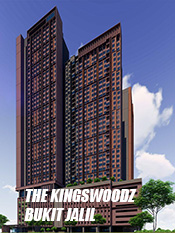



 Posts
Posts


