
PETALING JAYA: Little-known property developer Listari Marina (M) Sdn Bhd is building a mixed development at Klebang, Malacca with a gross development value of RM183mil and aimed at largely mainland Chinese buyers and Japanese investors seeking to invest in the country.
Speaking at a publicity event in Kuala Lumpur, its chief executive officer Datuk Seri Alex Teh Chee Teong said the project was part of its RM1.5bil mixed development project residential components, hotel, shopping mall and a water theme park that would be launched and developed in stages in the next 10 years.
“We have about over 200 acres of reclaimed land now, and the Eco Marine Park and Resorts will be beside the Klebang Beach, and near the Dataran 1 Malaysia launched by the Prime Minister,” he said at the ceremony to hand over a RM15mil investment pledge mock cheque to MAAKL Mutual Bhd.
He said the company was completing soon part of the theme park which features a water laser show, and according to him would be the largest in Asia.
In collaboration with MAAKL Mutual Bhd, the company will also offer purchasers free mutual fund units which equal to about 8% to 10% of the property purchase price and also free MAAKL Life Plus Insurance policy to eligible and qualified purchasers and investors.
Teh, who is also the director of London-listed Radiant Growth Investments Ltd said the listed company was planning to do a rights issue to raise more money to expand its business.
“We are planning to set up another waste to power plant in Vietnam. We are already building a power plant in Vietnam which is a joint venture with the Vietnamese government and funded by a US$36mil facility from the US export and import bank. We also aim to tender for another power plant in Shenzhen,” he said.
Teh said the company was also in discussion to acquire 15% stake in a 94,000ha in Cameroon for oil palm planting purposes.
“With our plans we may need to go and raise funds for the second time as the proceeds in our initial public offering is not sufficient,” he said.
Listed on the London stock exchange's Alternative Investment Market on Sept 20 last year, the company raised £6.3mil from its IPO.
By The Star
Friday, September 21, 2012

RHB Research: IGB REIT fair value RM1.43
KUALA LUMPUR: RHB Research Institute has initiated coverage on IGB REIT, which will be listed on Friday, with an Outperform call and a DDM-based fair value of RM1.43, based on a cost of equity assumption of 7%. The offer price is RM1.25.
It said IGB REIT, with its two assets Mid Valley Megamall (worth RM3.44bn) and The Gardens Mall (RM1.16bn) will be the largest pure retail REIT thus far, ahead of Pavilion REIT and Sunway REIT. “We believe that The Gardens Mall (TGM) will be the REIT's future growth driver. TGM currently contributes about 30% to IGB REIT's topline. TGM is a high-end mall and in the early stages of its rental cycle as compared to the more matured Mid Valley Megamall (MVM),” it said. RHB Research said other factors that could potentially drive IGB REIT's growth going forward include: 1) Strength of the management team; 2) Proactive asset enhancement initiatives; 3) Potential development of the surrounding areas; and 4) Resilient consumer spending. “We forecast an EPU growth of about 6%-7% per annum for IGB REIT, on the back of our rental growth assumption of 5%-6% per annum for MVM and 7%-9% per annum for TGM,” it said.
By The Star
Thursday, September 20, 2012
Mah Sing on lookout for land in prime areas
KUALA LUMPUR: Mah Sing Group Bhd is on a buying spree to acquire land banks that can generate a gross development value (GDV) of RM5 billion this year.
Its group managing direc-tor and group chief executive, Tan Sri Leong Hoy Kum, said the company has ac-quired land with a total GDV of RM3.62 billion so far and is on the lookout for land banks that can give it a yield of at least RM1 billion.
 "We are definitely on the lookout for land banks in prime areas such as Klang Valley, Penang, the Iskandar region in Johor and in Sabah," he told reporters after the companys extraordinary meeting at its headquarters, yesterday.
He said the company would redesign its housing concepts to include more townships that have plenty of affordable homes.
"This does not mean that we are doing away with the luxury concept but we have to listen to what the market wants and they want affordable homes," he said.
He said so far, Mah Sing had purchased three pieces of land this year in Rawang (RM41 million), Sabah (RM80.5 million) and soon, a parcel of land in Bangi for RM333.3 million.
"We are looking at building homes that will be priced below RM1 million and that will comprise mainly the types of homes that we are planning to build in the future," he added.
He said during yesterday's meeting, the shareholders had approved the acquisi-tion of the Bangi land meant for the SouthVille city township, which will kick-start next year.
The SouthVille city will be on a 166.7-hectare site and expected to be completed in the next eight years, starting from next year.
"We plan to have a range of affordable units that will include small office-home office units (Soho), affordable link homes and lifestyle suites priced from RM208,000 to RM530,000.
"We will start work on this project in the third quarter of next year and the first phase will be the affordable range that will be completed by 2016," he added.
By Business Times
Its group managing direc-tor and group chief executive, Tan Sri Leong Hoy Kum, said the company has ac-quired land with a total GDV of RM3.62 billion so far and is on the lookout for land banks that can give it a yield of at least RM1 billion.
He said the company would redesign its housing concepts to include more townships that have plenty of affordable homes.
"This does not mean that we are doing away with the luxury concept but we have to listen to what the market wants and they want affordable homes," he said.
He said so far, Mah Sing had purchased three pieces of land this year in Rawang (RM41 million), Sabah (RM80.5 million) and soon, a parcel of land in Bangi for RM333.3 million.
"We are looking at building homes that will be priced below RM1 million and that will comprise mainly the types of homes that we are planning to build in the future," he added.
He said during yesterday's meeting, the shareholders had approved the acquisi-tion of the Bangi land meant for the SouthVille city township, which will kick-start next year.
The SouthVille city will be on a 166.7-hectare site and expected to be completed in the next eight years, starting from next year.
"We plan to have a range of affordable units that will include small office-home office units (Soho), affordable link homes and lifestyle suites priced from RM208,000 to RM530,000.
"We will start work on this project in the third quarter of next year and the first phase will be the affordable range that will be completed by 2016," he added.
By Business Times
US home construction rebounds in August
New home construction in the United States rebounded in August from a July decline as the distressed housing market slowly continues to stabilize, government data released Wednesday showed.
Housing starts rose 2.3 percent from July to an annual rate of 750,000, the Commerce Department said.
The July rate was revised lower, to 733,000 from an initial estimate of 746,000.
The August pace in housing starts was a bit weaker than expected, with the consensus estimate at 770,000, but was 29.1 percent above the August 2011 rate.
Starts on single-family homes, the largest segment of the market, jumped 5.5 percent.
New building permits, an indicator of potential future homebuilding, were at an annual rate of 800,000, down 1.0 percent from July, the Commerce Department said. Permits were 24.5 percent higher than a year ago.
"August starts and permit numbers were so-so, but the broader trends suggest that the US housing recovery is solidifying," said Robert Kavcic at BMO Capital Markets.
Optimism among home builders rose to its highest level in more than six years in September, the National Association of Home Builders said Tuesday.
The NAHB/Wells Fargo sentiment index rose for a fifth straight month to its highest reading since June 2006.
"Builders across the country are expressing a more positive outlook on current sales conditions, future sales prospects and the amount of consumer traffic they are seeing through model homes than they have in more than five years," said NAHB chief economist David Crowe.
By AFP
US housing market recovery gains traction
The recovery in the US housing market continues to gain traction, data released Wednesday showed, a key improvement in the struggling economy just seven weeks before the presidential election.
With the economy dominating a tight race between President Barack Obama and Republican rival Mitt Romney ahead of the November 6 vote, signs of life are welcome in the housing sector, where millions of Americans have tied up their savings.
A pair of August housing data releases Wednesday further cemented the rough road back from a 2006 price bubble, analysts said.Existing home sales jumped 7.8 percent from July, the highest pace since May 2010, and were up 9.3 percent from a year ago, and prices increased the most in more than six years, the National Association of Realtors said.
The median price for all housing types, including single-family homes, apartments and townhouses, rose to $187,400 in August, up 9.5 percent from a year ago, the NAR said.
That was the strongest year-on-year price increase since January 2006, just before the market collapse that drove the world's biggest economy into the severe 2008-2009 recession.
"The US housing recovery is for real," said Sal Guatieri, senior economist at BMO Capital Markets."Great affordability, pent-up demand and strong investor interest in rental units are driving the market, and QE3 can only help by reducing mortgage rates further.
"A separate report from the Commerce Department showed housing starts rose 2.3 percent from July, and were up 29.1 percent from the August 2011 rate.
Starts on single-family homes, the largest segment of the market, jumped 5.5 percent.New building permits, an indicator of future homebuilding, fell 1.0 but were 24.5 percent higher than a year ago, the department said.
The data came on the heels of a sharply brighter outlook in the housing construction sector.
The National Association of Home Builders said Tuesday its NAHB/Wells Fargo sentiment index rose for a fifth straight month to its highest reading since June 2006.
"Builders across the country are expressing a more positive outlook on current sales conditions, future sales prospects and the amount of consumer traffic they are seeing through model homes than they have in more than five years," said NAHB chief economist David Crowe.
The US central bank last week rolled out its biggest stimulus in two years, QE3, in part to boost home building and buying, and fight high unemployment in the aftermath of the Great Recession.
Federal Reserve Chairman Ben Bernanke said the QE3 program -- purchases of mortgage-backed securities at a pace of $40 billion a month -- should help lower interest rates, particularly on mortgage rates which have been hovering at historic lows.
QE3 "should provide further support to the housing sector by encouraging home purchases and refinancing," which in turn would "help the economy grow," Bernanke said.
Barclays analyst Michael Gapen cautioned that the housing recovery still faced significant challenges.
"Our view is that housing is in a recovery phase, but one that will be restrained by the availability of credit, the pace of improvement in labor market conditions, and the overhang from distressed and foreclosed properties," he said.
By AFP
Wednesday, September 19, 2012
TRX draws strong global interest

The Tun Razak Exchange (TRX) is poised to be a success as there has been positive initial demand for the multi-billion ringgit development's Grade A offices, a research house said.
UOB Kay Hian said TRX's Grade A offices had attracted strong interest from multinational financial institutions which view the exchange as an avenue to set up new hubs to support future growth.
Some of the potential tenants are currently not present in Malaysia, the firm added.
"We are optimistic on the development of TRX, given its close proximity to the heart of Kuala Lumpur and the concept offered," UOB Kay Hian said, after a meeting with TRX developer 1MDB's management on the mega project.
The first phase of the sprawling financial district is due to kick off in the middle of next year, with prime Grade A office towers offering a gross floor area (GFA) of between 750,000 sq ft and 1.2 million sq ft.
The phase is estimated to generate a gross development value (GDV) of between RM5 billion and RM6 billion.
Over its 15-20 years of development, TRX is projected to generate a GDV of RM26 billion.
UOB Kay Hian said TRX will be the new international hub for finance and professional services.
It will house a right mix of government institutions, top global institutions and support services companies.
The firm said to make TRX a "work-live-and-play" area, the development also offers a retail mall with up to 1.5 million sq ft (to be done in phases) of net lettable area, residential blocks and a hotel. The development is expected to be completed by 2017.
Construction companies such as Boustead Group, WCT Bhd and Mudajaya Group are likely to be the prime beneficiaries of TRX's construction contracts.
"1MDB's management highlighted that the infrastructure cost is estimated to be RM2 billion," it noted.
Given the land has a gradient which requires a sizeable amount of earthworks, UOB Kay Hian believes the first RM1 billion will be spent on earthworks and basement works. The remaining RM1 billion will go towards external infrastructure works and rejuvenation of the surrounding areas including Jalan Imbi to enhance connectivity.
"1MDB has not decided on the source of funding as it is still deliberating on a few available options. However, a portion of this is likely to come from foreign direct investments," it added.
Property developers is expected to benefit as well because of TRX's location and connectivity.
By Business Times
Enquiries start to build up

The proposed 100-storey Menara Wawasan Merdeka has received pre-booking enquiries for over 60 per cent of its lettable space, according to an industry source.
The source said about 30 per cent of the space is being reserved for its developer, Permodalan Nasional Bhd (PNB), and several government- linked companies under PNB’s stable.
To be officially launched by year-end, the Menara Warisan Merdeka will cost RM2.5 billion to RM3 billion. It will have gross floor space of 3.0 million sq ft and 2.2 million sq ft of net floor space.
This will be followed by two subsequent phases comprising a shopping complex and condominiums. The whole development, to be undertaken over a 10-year period, will cost RM5 billion.
Last month, PNB announced that it had obtained the development order from Kuala Lumpur City Hall to build the 100-storey Menara Warisan Merdeka, touted to be the country’s tallest building.
PNB president and chief executive officerTan Sri Hamad Kama Piah Che Othman was reported as saying recently that the development order was attached with several conditions, including those related to legal matters.
PNB is studying the terms in order to fulfil them and to ensure proper planning as the development order was approved with conditions, Hamad Kama had said.
To be located within the Stadium Merdeka and Stadium Negara heritage area, the concept of the 100-storey building, its retail portion and the condominiums was mooted in early 2004 taking into account the need for enhancement of value and effective utilisation of the 7.6ha land adjacent to the two stadiums.
In 2005, the master plan was approved by the municipal authorities, followed by the issuance of final titles in 2008. The principal concept of PNB iconic building was then approved in 2009.
Since then, PNB has set up a wholly-owned unit, PNB Merdeka Ventures Sdn Bhd, to undertake the project, with Tengku Abdul Aziz Tengku Mahmud, formerly from Guthrie Property Development Holding Bhd and Sime Darby Property Bhd, taking the helm.
Once completed, the Menara Warisan Merdeka will be over 600 metres tall compared with Petronas Twin Towers at 453m; Burj Khalifa at 829m; and Taipei 101 at 509m.
By Business Times
BRDB buyout in sight

The buyout of Bandar Raya Developments Bhd (BRDB) is one of the more publicised merger and acquisition exercises of the year for a variety of reasons. For one thing, it started off a year ago as a move by major shareholder Ambang Sehati Sdn Bhd to buy over BRDB's prized assets namely the Bangsar Shopping Centre (BSC), Menara BRDB, CapSquare Retail Centre and Permas Jusco Mall for RM914mil.
The deal quickly drew attention, as not only was it a related-party transaction but also because one of the properties targeted by Ambang Sehati was the iconic BSC, a neighbourhood mall which at one time was not doing very well. Following a multi-million ringgit makeover several years back, it became a magnet for the who's who, not only of the corporate world but also Kuala Lumpur's elite.
Over the weeks that ensued, attention was drawn to the deal as some commentators reckoned that the properties might be worth more than the offer price.
The Minority Shareholder Watchdog Group also drew attention to a 23.57% stake in the company, whose voting rights would have impacted the deal one way or another. The ultimate owner of that stake could not be determined despite queries made by BRDB and the regulators.
There was also some grumbling over BRDB's prospects without those prized assets. To be sure though, it isn't clear if there were competing bids for the assets.
Possibly due to the negative press that surfaced after that proposal, and faced with questions over whether BRDB was getting a fair deal for the assets, the company and Ambang Sehati decided to call off the deal. That move was seen by some as a credible move by BRDB in the best interest of shareholders.
BRDB later said it would conduct an open tender for the assets but that did not materialise.
News trickled in over the remainder of 2011 and well into this year of the company's interest and intention to dispose of the assets. At the end of July, Ambang Sehati made a conditional take-over offer to take BRDB private.
With this offer, all the criticisms and questions of the earlier deal become academic. With this deal, minority shareholders were being offered a cash price for their stock in the company at a level never traded before.
A major reason why Ambang Sehati and many other major shareholders who seek to privatise their listed assets for that matter was making the offer was because the shares and warrants were trading at deflated values.
The shares and warrants of BRDB have been trading below the offer price (of RM2.90 and RM1.80 respectively) for the past three years up to July 30, when the offer was made.
AmInvestment Bank Bhd, the independent adviser for the deal, which deemed the offer of RM2.90 per share and RM1.80 per warrant as “not fair but reasonable”, had also advised minority shareholders to accept the offer.
Year-to-date, the share price has not moved by much, trading in the RM2.30 to RM2.40 range in the past few months before surging above that band following the offer.
Besides this, AmInvestment pointed out that the company's shares also suffered from being “fairly illiquid”. It said that from September last year to this August, the average monthly trading volume of 4.42 million shares represented 1.09% of the free float of 406.74 million shares.
Should the offer be accepted by shareholders, management would have the breathing space needed to review the operations of the company and make plans for growth.
Ambang Sehati has said it would review the operations of BRDB, which might include expansion, disposal and/or redeployment of assets and/or organisational changes.
It added that while BRDB would continue to focus on residential projects as well as pockets of commercial development, particularly in the Klang Valley and Johor, there were also plans to expand on the company's presence abroad, especially in the United Kingdom and the Middle East.
Furthermore, the asset sale which was aborted last year may come through as Ambang Sehati noted that as part of plans to concentrate on property development, BRDB might divest its investment in certain assets at an opportune time.
By The Star
Tun Razak Exchange infrastructure may cost RM2bil
PETALING JAYA: The infrastructure cost for the Tun Razak Exchange (TRX) is estimated at RM2bil with about 10 pre-qualified contractors who are eyeing the earthwork packages of the overall project.
UOBKayHian said in a report that as the land had a gradient which required a sizeable amount of earth work, the first RM1bil would be spent on earthwork and basement works, while the remaining RM1bil would go to external infrastructure works and rejuvenation of the surrounding areas of TRX, including Jalan Imbi, in order to enhance connectivity.
“1Malaysia Development Bhd (1MDB) has not decided on the source of funding as it is still deliberating on a few available options. However, a portion of this is likely to come from foreign direct investments (FDI),” it said.
It said currently ground clearing works on the land were ongoing and the first physical construction would commence in mid-2013.
“We understand there are about three packages comprising earthwork, basement and civil works in phase one. We believe that the earthwork packages could be significant, with packages valued at RM500mil to RM1bil in total,” it said
It opined that the potential winner was WCT Bhd, which could leverage on its expertise and track record from previous jobs in Iskandar, KLIA and Vale to stand a better chance in securing the earthwork packages.
“Other potential winners are IJM Corp Bhd and Mudajaya Bhd, we believe. Property developers will benefit as well because of its location and connectivity. Other than being located in a prime area, the development will also feature a dedicated MRT (mass rapid transit) station, and an existing and upcoming network of public transportation systems,” it said.
It added these would greatly benefit developers who have developments or landbanks around the area, which include Sunway Bhd and Boustead Bhd (potential of replicating The Curve in their landbank near TRX).
“We are optimistic on the development of TRX, given its close proximity to the heart of Kuala Lumpur and the concept offered. TRX will be the new international hub for finance and professional services that will also house a right mix of government intuitions, top global institutions and support services companies,” it said.
It said the first phase of development would kick off with prime Grade A office towers, offering a gross floor area of between 750,000 sq ft to 1.2 million sq ft depending on demand.
“We understand that there has been positive demand for TRX’s Grade-A offices, especially from the multi-national financial institutions that view TRX as an avenue to set up new hubs to support future growth. Some of the potential tenants are currently not present in Malaysia,” it said.
To make TRX a “work-live-and-play” area, it said the development also offers a retail mall with up to 1.5 million sq ft (to be done in phases) of net lettable area (NLA), residential blocks and a hotel and is expected to be completed by 2017.
By The Star
Tuesday, September 18, 2012
Sime eyes Aussie, Singapore projects
MAJOR PROPERTY DEALS: Part of company's blueprint to hit RM1b profit, says source
 SIME Darby Bhd, Malaysia's oldest conglomerate, is eyeing a major property project in Australia and an urban regeneration project in Singapore.
The projects will cost Sime Darby a few billion ringgit over their short- to medium-term development period, a source familiar with the group said.
"This is part of Sime Darby's five-year blueprint to achieve a pre-tax profit of RM1 billion from its property division by 2016 from RM460 million achieved in its latest financial year ended June 2012," the source said.
The source said the group plans to increase contribution from property investment to 20 per cent in 2016 from about five per cent of overall group revenue now.
"Property development accounts for about 95 per cent of Sime Darby Property's revenue," the source added.
Sime Darby's potential venture in Australia especially will bolster Malaysia's property acquisitions there.
Malaysians are the fourth largest group of buyers when it comes to snapping up residential and commercial properties in Australia, according to Jalin Realty International.
Jalin Realty told Business Times recently the figures were derived from the Foreign Investment Review Board, a non-statutory body that advises the Australian government on foreign investment policy and its administration.
Meanwhile, the source noted that the Battersea Power Station (BPS) project in London is also part of Sime Darby's blueprint to achieve the RM1 billion profit.
Sime Darby is part of a Malaysian consortium that owns the BPS, one of London's landmark buildings.
The consortium, which includes SP Setia Bhd and the Employees Provident Fund (EPF), paid STG400 million (RM1.97 billion) for the 15.78ha site.
Sime Darby and SP Setia each owns a 40 per cent stake in the joint-venture company, Battersea Project Holding Company Ltd, that will redevelop the site. EPF holds the remaining 20 per cent.
The gross development value of the 15-year project is expected to be around STG8 billion (RM40 billion) with the maiden launch expected in the first half of 2013.
By Business Times
TRX set to win green certification
KUALA LUMPUR: The Tun Razak Exchange (TRX) is set to bag an acclaimed international certification for sustainable green development.
The TRX master plan underwent a rigorous evaluation by the prestigious US-based Green Building Council (USGBC) on its overall impact beyond individual buildings.
The council examined the buildings' locations, the way they relate to each other and qualities of the public spaces that knit them together.
“Sustainability has been foremost in our plans every step of the way.
“We want to push the envelope in green development in Malaysia. This world-class recognition reflects our commitment to a green future,” 1MDB Real Estate Sdn Bhd chief executive officer Datuk Azmar Talib said in a statement.
The council has granted TRX a Leadership in Energy and Environmental Design (LEED) for Neighbourhood Development (LEED-ND) Plan Gold Level Conditional Approval.
This puts TRX on the penultimate stage of being pre-certified. - Bernama
LEED is an internationally recognised green building certification programme with a rating system for designing and constructing the world's greenest, most energy efficient and high performing buildings.
LEED-ND certification evaluates a whole township or district level not limited to individual buildings.
It is a global benchmark certifying a development as embracing world-class sustainability principles, smart growth and best practice urban planning.
LEED-ND development emphasises vibrant and healthy communities in a walkable mixed-use space.
It recognises buildings and infrastructures that reduced energy and water use while promoting other sustainable best practices.
The certification requires independent and third party verification that a development's location and design meet high standards of environmentally responsible and sustainable development.
1MDB is the master developer of the 70-acre international financial district, which was formerly known as KLIFD.
The strategic development is a national initiative to spur sustainable growth in new areas and lead the way for the federal capital to be a sustainable, smart and liveable city.
The masterplan provides for a 30 per cent of the TRX to be open spaces, including a 14-acre signature public park.
The TRX will apply cutting-edge technologies in energy, water and waste management, among others.
Smart systems, well-designed infrastructures and a centralised control and command centre will reduce carbon emissions by 40 per cent, total water demand by 60 per cent and divert 70 per cent waste from landfill.
By Bernama
It's business as usual for UMLand despite buyout
KUALA LUMPUR: United Malayan Land Bhd (UMLand) will stay focused on its business expansion including diversifying into new areas, despite being taken private by its major shareholders.
Tycoon Tan Sri Syed Mokhtar AlBukhary and Singaporean Datuk Ng Eng Tee, who each owns 28.1 per cent and 35.76 per cent stake in UMLand, are buying out the company at RM2.50 per share.
They are buying the shares from Temasek Holdings (Private) Ltd, which has a 20.75 per cent UMLand stake held via CapitaLand Ltd.
According to UMLand group chief executive officer Charlie Chia Lui Meng, the privatisation deal will be completed within the next two to three months.
Trading in the shares of UMLand has been suspended with effect from September 5 2012 and the company will be delisted from Bursa Malaysia.
"Business will be as usual for UMLand. I do not foresee any changes after it has been taken private," Chia told Business Times in a recent interview.
Chia said UMLand is diversifying its revenue stream with the setting up of an investment portfolio, which will comprise a series of hotels.
"There is a lack of hotel rooms in Johor Bahru and this is a good business area to go to as there will be demand with spillover from Singapore, thanks to the Iskandar Malaysia development," Chia said.
UMLand is one of the largest property developers in Iskandar, with a total landbank of over 900 hectares.
The Iskandar land represents 90 per cent of its undeveloped landbank.
The company has several new projects coming up in Iskandar in the next two years and there are plans to build up to five four-star hotels, Chia said.
Chia added that the hotels will be managed by UMLand, in partnership with several hotel operators.
UMLand has also set up a leasing arm to operate serviced apartments, retail malls and offices.
"When we build, we will retain some properties for rental yield. And when we sell, there will be an option to lease back the properties. As a property developer, we need to diversify at one point and look at recurring income," Chia said.
In February, UMLand launched Sommerset Puteri Harbour in Iskandar comprising 204 serviced apartments worth a combined RM220 million.
The units, sold under a leaseback arrangement, will be operated by The Ascott Group of Singapore.
By Business Times
Malaysia stamps mark in London
BRITISH ALLURE: Malaysians have found Britain, especially London, extremely attractive as an investment (and playground) location. Zuraimi Abdullah was in the city recently and came back with some ideas as to why Malaysia is well on its way to become the world’s top buyer of London properties this year.
"MALAYSIA has come to London", to borrow a quote from Datuk Seri Idris Jala, one of our brightest and "fun to hear him talk" ministers.
The arrival alluded by Idris Jala is not that typical one made by Malaysians en route to Bicester Village (about an hour's drive from London) to buy designer brands at half the prices than that in Kuala Lumpur. Neither was it by those who are there to spend Hari Raya or Christmas with their sons and daughters working or studying in the British capital.
It is also not a leisure trip by hardcore football fans to watch Arsenal, Chelsea or Tottenham slugging it out to be London's top Premier League club.
The arrival in question is by Malaysian investors who have made London a safe haven for their burgeoning cash pile.
The list of Malaysian investors in the city is extensive, from the Employees Provident Fund (EPF) and Permodalan Nasional Bhd (PNB) to IJM Land Bhd, Oriental Holdings Bhd and Eastern & Oriental Bhd.
PNB already has three properties in London in One Exchange Square, 90 High Holborn and Milton and Shire House.
In early August, Amcorp Properties Bhd said it was forming a joint venture to buy a freehold office building in London's trendy Mayfair district. This was followed by IJM Land Bhd's disclosure of a mixed development on Royal Mint Street.
Genting Malaysia Bhd, meanwhile, is investing STG120 million (RM592 million) to develop a leisure and entertainment complex in Birmingham.
Non-property wise, Berjaya Group founder Tan Sri Vincent Tan has already bought Welsh football club Cardiff City.
So has AirAsia's Tan Sri Tony Fernandes with his London-based Queens Park Rangers.
Malaysia was ranked second only to the United States in a list of the top five property investors in London by total investment volume between 2010 and the second quarter this year, with STG2.35 billion and STG3.53 billion ploughed in by both countries, respectively.
Rounding off the list were Germany with STG1.29 billion, Saudi Arabia with STG969 million and Qatar at STG750 million, according to an independent report.
But in the first seven months of the year, Malaysians bought STG1.3 billion worth of London properties, more than British buyers and beating the US (STG793 million) into second place among overseas investors, research by property consultant CBRE Group showed.
Analysts said the favourable exchange rates the European financial crash had created is a big draw for investors. The British pound's exchange rate has remained below or around the RM5 mark since last year.
A STG400 million deal concluded by Sime Darby Bhd, SP Setia Bhd and the EPF to buy the iconic Battersea Power Station in London earlier this month could have pushed Malaysia further from the US as London's top investor year to date.
Malaysia's growing appetite will be boosted by several potential deals by year-end.
Tabung Haji is currently finalising its first commercial property acquisition in London, estimated to be worth STG165 million.
The proposed acquisition, part of the pilgrimage fund's plans to splash some RM1 billion on overseas investments, is expected to be sealed this month.
Syarikat Takaful Malaysia is scouting for commercial buildings or offices in London, too.
Kumpuan Wang Amanah Pencen (KWAP) is rumoured to have just made its first foray there, with the acquisitions of three properties.
The pension fund reportedly plans to spend up to RM1 billion on London assets.
Analysts said central London has been the focus of Malaysian and other Far Eastern investors in recent years. They were looking to benefit from the city's perceived safe haven appeal and the iconic nature of some of its real estate.
A weak British pound, coupled with low interest rates, make London a compelling location, they added.
"Despite the current economic contraction, UK properties remain favourable, given the ultra-low interest rate environment, ongoing geo-economic uncertainties and relatively weak British pound," a local analyst said.
"Malaysians are attracted to London's property market by the weakness of sterling and the fact it is a liquid and transparent investment in a relatively stable political environment, often providing better returns than Asia's more volatile and smaller markets," he added.
BATTERSEA STRENGTHENS MALAYSIA'S PROWESS
Malaysia's appetite in property investment in London increased dramatically when the Sime Darby-SP Setia-EPF consortium won the bid to redevelop the iconic Battersea Power Station.
Apart from the STG400 million paid for the site, the consortium will contribute another STG200 million towards building an extension of the Northern Line of the London underground railway system, making the total effective cost some STG600 million.
It is a major coup for Malaysia as various development plans for the site, which once graced the cover of British rock group Pink Floyd's "Animals" album in 1977, had been shelved over the years due to financial issues.
The Malaysian consortium will create a new town centre with retail, commercial and residential components totalling eight million sq ft. The redevelopment will churn out an estimated gross development value (GDV) of STG8 billion over 15 years.
A recent visit to the Battersea site made it very clear why this piece of real estate was coveted by so many: its strategic location, size and value.
At 15.8ha, including 6ha for the old powerplant with prime riverfront access, the site is perhaps the largest piece of land left for redevelopment in central London.
The site is located south of the River Thames, and just east of Chelsea Bridge, which links it to the upmarket neighbourhoods of Chelsea, Kensington, Knightsbridge and Belgravia.
The world-famous Harrods, Harvey Nichols and the high-end shops of Sloane Street are all located in less than a 20-minute walk.
BATTERSEA'S PROSPECTS
EPF chief executive officer Tan Sri Azlan Zainol said it would not have got involved in the project if it were not convinced with its prospects and the partners behind it.
Azlan said the combined financial strength and experience of SP Setia and Sime Darby, both of which are backed by cash-rich PNB, are key factors.
The EPF itself is not a poor organisation.
According to a Towers Watson report, the EPF was the world's ninth biggest retirement fund in 2010 with investment assets of RM489 billion as at March 31, 2012.
CIMB Research estimates that the Battersea project can fetch a 25 per cent profit margin, but said earnings contributions will not trickle in until three years later, in 2016.
The total net internal area of the project is about 6.3 million sq ft, of which close to 60 per cent is residential.
The launch of the development's first phase is set for the second quarter of next year.
Phase One will be a self-contained development made up of multiple residential buildings with a total of 800 apartments, standing above a commercial podium with a GDV of STG1 billion.
The project development cost for the first two years is estimated at STG200 million, CIMB Research noted.
"Overall, we remain optimistic of the project's prospects. We like the location and (the project's) low land costs compared to its peers.
"We gather that the average selling price for residential properties will be about STG1,100 psf, broadly in line with other launches in the vicinity," the firm said.
By Business Times
Monday, September 17, 2012
Slowdown of property sector set to extend into next year
PETALING JAYA: Exorbitantly high selling prices, stringent banking rules and a generally cautious sentiment that has been having an impact on the Malaysian property market this year could continue into 2013.
Malaysian Institute of Estate Agents (MIEA) deputy president Siva Shanker said property transactions in the first half of 2012 had slowed down, adding that this trend showed no signs of abating any time soon.
 Siva: ‘Asking prices are too high. The buying frenzy is over.’
“Asking prices are too high. The buying frenzy is over. In 2010 and 2011, some residential sectors saw an increase of about 30%, which is way too high and moving towards a bubble. This trend has somewhat plateaued.
“What's happening now is there is no meeting of minds between the asking and the accepting price. The gap is just too wide and there are fewer transactions taking place,” he told StarBiz.
Siva also said transactions had been affected because there was a disparity between the asking price of the property and the actual price listed on the valuation report.
“For example, the asking price of a property is RM1mil but the valuation amount might only be RM800,000. There's a shortfall of RM200,000 and banks lend you money based on either the selling price or the valuation price whichever is the lower.
“So if the valuation price is RM800,000 and you're eligible for a 70% loan based on that amount, you get a sum of around RM560,000. This means the buyer is going to have to top up RM460,000 on his own!
“Funding becomes a problem and the sale gets aborted!”
Siva said a number of sales this year had been aborted because of this issue.
“We don't think 2013 is going to be much different, but we don't see the Malaysian property market crashing and burning like during the US subprime crisis.
“What we see is things slowing down, prices will stagnate a bit and not move up so much. In some cases, it won't move up at all.”
Siva said Bank Negara's responsible lending guidelines that were implemented this year also had an impact on the Malaysian property market.
Effective Jan 1, banks have been using net income instead of gross income to calculate the debt service ratio for loans. This is said to be a pre-emptive move by the central bank to contain the rise in consumer debt.
“Prudent lending guidelines are important in maintaining a stable economy, but I think some flexibility must be allowed for individual purchasers that have the capacity to repay their loan, but for whatever reasons, are unable to show that they can,” said Siva.
He also noted that there were many individuals having side incomes which were not declared.
“You could be a teacher earning a RM3,000 salary. However, you could be providing tuition classes on the side to earn extra income but can only show to the bank the salary that you earn.
“Prudent lending should involve assessing the customer, to some extent, on an individual basis. If he's an old customer with a good track record, you should have the discretion to offer him a little bit more. That discretion is now not available because of the lending guidelines.”
Siva also said the Malaysian public was cautious in light of the global economic uncertainties.
“The general slowdown has affected everyone. The US is not recovering as well as it should and Europe is in turmoil. However, in a sense we're not so exposed as Singapore, because we are more inward looking. Singapore is a bit more international, so their exposure is higher.”
“It's also sentiment. People are adopting a wait and see approach, and this creates a slowdown. If enough people do this, it creates a market!”
By The Star
Malaysian Institute of Estate Agents (MIEA) deputy president Siva Shanker said property transactions in the first half of 2012 had slowed down, adding that this trend showed no signs of abating any time soon.
“Asking prices are too high. The buying frenzy is over. In 2010 and 2011, some residential sectors saw an increase of about 30%, which is way too high and moving towards a bubble. This trend has somewhat plateaued.
“What's happening now is there is no meeting of minds between the asking and the accepting price. The gap is just too wide and there are fewer transactions taking place,” he told StarBiz.
Siva also said transactions had been affected because there was a disparity between the asking price of the property and the actual price listed on the valuation report.
“For example, the asking price of a property is RM1mil but the valuation amount might only be RM800,000. There's a shortfall of RM200,000 and banks lend you money based on either the selling price or the valuation price whichever is the lower.
“So if the valuation price is RM800,000 and you're eligible for a 70% loan based on that amount, you get a sum of around RM560,000. This means the buyer is going to have to top up RM460,000 on his own!
“Funding becomes a problem and the sale gets aborted!”
Siva said a number of sales this year had been aborted because of this issue.
“We don't think 2013 is going to be much different, but we don't see the Malaysian property market crashing and burning like during the US subprime crisis.
“What we see is things slowing down, prices will stagnate a bit and not move up so much. In some cases, it won't move up at all.”
Siva said Bank Negara's responsible lending guidelines that were implemented this year also had an impact on the Malaysian property market.
Effective Jan 1, banks have been using net income instead of gross income to calculate the debt service ratio for loans. This is said to be a pre-emptive move by the central bank to contain the rise in consumer debt.
“Prudent lending guidelines are important in maintaining a stable economy, but I think some flexibility must be allowed for individual purchasers that have the capacity to repay their loan, but for whatever reasons, are unable to show that they can,” said Siva.
He also noted that there were many individuals having side incomes which were not declared.
“You could be a teacher earning a RM3,000 salary. However, you could be providing tuition classes on the side to earn extra income but can only show to the bank the salary that you earn.
“Prudent lending should involve assessing the customer, to some extent, on an individual basis. If he's an old customer with a good track record, you should have the discretion to offer him a little bit more. That discretion is now not available because of the lending guidelines.”
Siva also said the Malaysian public was cautious in light of the global economic uncertainties.
“The general slowdown has affected everyone. The US is not recovering as well as it should and Europe is in turmoil. However, in a sense we're not so exposed as Singapore, because we are more inward looking. Singapore is a bit more international, so their exposure is higher.”
“It's also sentiment. People are adopting a wait and see approach, and this creates a slowdown. If enough people do this, it creates a market!”
By The Star
Tun Razak Exchange set to bag international green development certification
KUALA LUMPUR: The Tun Razak Exchange (TRX) is set to bag an acclaimed international certification for sustainable green development.
The TRX masterplan underwent a rigorous evaluation by the prestigious US-based Green Building Council (USGBC) on its overall impact beyond individual buildings.
The council examined the buildings' locations, the way they relate to each other and qualities of the public spaces that knit them together.
"Sustainability has been foremost in our plans every step of the way. We want to push the envelope in green development in Malaysia. This world-class recognition reflects our commitment to a green future," 1MDB Real Estate Sdn Bhd Chief Executive Officer Datuk Azmar Talib said in a statement.
The council has granted TRX a Leadership in Energy and Environmental Design (LEED) for Neighbourhood Development (LEED-ND) Plan Gold Level Conditional Approval.
This puts TRX on the penultimate stage of being pre-certified.
LEED is an internationally recognised green building certification programme with a rating system for designing and constructing the world's greenest, most energy efficient and high performing buildings.
LEED-ND certification evaluates a whole township or district level not limited to individual buildings.
It is a global benchmark certifying a development as embracing world-class sustainability principles, smart growth and best practice urban planning.
LEED-ND development emphasises vibrant and healthy communities in a walkable mixed-use space.
It recognises buildings and infrastructures that reduced energy and water use while promoting other sustainable best practices.
The certification requires independent and third party verification that a development's location and design meet high standards of environmentally responsible and sustainable development.
1MDB is the master developer of the 70-acre international financial district, which was formerly known as KLIFD.
The strategic development is a national initiative to spur sustainable growth in new areas and lead the way for the federal capital to be a sustainable, smart and liveable city.
The masterplan provides for a 30 per cent of the TRX to be open spaces, including a 14-acre signature public park.
The TRX will apply cutting-edge technologies in energy, water and waste management, among others.
Smart systems, well-designed infrastructures and a centralised control and command centre will reduce carbon emissions by 40 per cent, total water demand by 60 per cent and divert 70 per cent waste from landfill.
By Bernama
Malaysians snapping up Australian properties
KUALA LUMPUR: Malaysians are the fourth largest group of buyers when it comes to snapping up residential properties in Australia.
Jalin Realty International chief executive officer Ian Chen said the figures are derived from the Foreign Investment Review Board, a non-statutory body that advises the Australian government on foreign investment policy and its administration.
 "In the 2010-2011 period, Malaysia was in fourth position with a total of RM1.863 billion spent on properties in various parts of Australia. The top three countries were Britain, China and the United States," he said in an interview with the Business Times recently.
Jalin, a company set up by Chen's father in Malaysia 30 years ago, specialises in promoting Australian properties, mainly in Melbourne and Sydney, to buyers in countries like China, Jakarta, Singapore, Brunei and Malaysia.
"Most of our clients are from Singapore, followed by Malaysia. In Singapore, most of our clients are professionals while in Malaysia, they are mostly businessmen," he said.
Chen said most of the Malaysians who buy properties in Australia do so for investment purposes, while some buy them for their children who are there to further their studies.
He said the returns are very good and command a yield of between four and five per cent a year.
"The demand is expected to remain higher than the supply," he added. "We are planning to expand our expertise to India next year as it has the most number of immigrants to Australia as of now," he said.
Chen said the company is also looking at developing its own properties in Melbourne.
"We will be working with Australia's Lechte Corp for an upcoming project, which will be known as Forest Hill," he said.
The gross development value for the project is RM320 million.
He said the project will comprise 164 apartments and 17 townhouses.
"We are also looking at another project in Sydney," he added.
By Business Times
Jalin Realty International chief executive officer Ian Chen said the figures are derived from the Foreign Investment Review Board, a non-statutory body that advises the Australian government on foreign investment policy and its administration.
Jalin, a company set up by Chen's father in Malaysia 30 years ago, specialises in promoting Australian properties, mainly in Melbourne and Sydney, to buyers in countries like China, Jakarta, Singapore, Brunei and Malaysia.
"Most of our clients are from Singapore, followed by Malaysia. In Singapore, most of our clients are professionals while in Malaysia, they are mostly businessmen," he said.
Chen said most of the Malaysians who buy properties in Australia do so for investment purposes, while some buy them for their children who are there to further their studies.
He said the returns are very good and command a yield of between four and five per cent a year.
"The demand is expected to remain higher than the supply," he added. "We are planning to expand our expertise to India next year as it has the most number of immigrants to Australia as of now," he said.
Chen said the company is also looking at developing its own properties in Melbourne.
"We will be working with Australia's Lechte Corp for an upcoming project, which will be known as Forest Hill," he said.
The gross development value for the project is RM320 million.
He said the project will comprise 164 apartments and 17 townhouses.
"We are also looking at another project in Sydney," he added.
By Business Times
Nusa Gapurna mulls REIT
POTENTIALLY WORTH RM2.5b: Assets include six high-rise buildings being planned at PJ Sentral Garden City
NUSA Gapurna Sdn Bhd, a low-key developer, is mul-ling grouping its assets to form a commercial real estate investment trust (REIT) by 2015, which could potentially be worth more than RM2.5 billion.
It is understood the assets will include the six high-rise buildings that are being planned at PJ Sentral Garden City, a project by PJ Sentral Development Sdn Bhd.
PJ Sentral is a 70:30 joint venture between Nusa Gapurna Development Sdn Bhd (NGDSB) and the Selangor Economic Development Corp (PKNS).
Nusa Gapurna, controlled by Datuk Mohd Salim Fateh Din and his associates including Tan Sri Abdul Halim Ali, owns 60 per cent of NGDSB. The remaining stake in NGDSB is held by the Employees Provident Fund (EPF).
The construction of PJ Sentral Garden City located behind PJ Hilton Hotel will take seven to eight years beginning at the end of next year.
Business Times understands that it will comprise five custom-built office towers, each ranging from 20 to 45 floors, with estimated gross development value of RM2.6 billion.
The project will also include a five-star hotel, a 7,000 car park complex, a 1.6ha public park and a supportive retail element for food and beverage.
Sources familiar with the matter said that Nusa Gapurna is planning two business strategies for the assets.
"The first strategy is to form its own REIT, which is the primary option. It is more ideal because the company has ready tenants to give it good yield income. Financial advisers have been engaged for the matter," a source said.
The source said the second strategy is to sell the towers block by block to REIT managers or institutional investors with ready tenants.
According to the source, Nusa Gapurna is in negotiations with local public listed companies and corporate players to lease the buildings for a period of between 10 and 15 years.
"The company is finalising the design of the buildings with the anchor tenants. Construction will commence next year after getting all the necessary building approvals. Once these are settled, Nusa Gapurna will finalise the formation of the REIT," the source said.
The source said PJ Sentral Garden City will be built according to Multimedia Super Corridor Malaysia and Green Building Index specifications.
By Business Times
Saturday, September 15, 2012
Solutions to housing concerns likely in Budget 2013
The coming Budget 2013 is expected to address two interesting issues - how to curb the speculative property market and how to address the issue of affordable housing.
In a recent report, Kenanga Research says market talk is that the Government will consider hikes in real property gains tax (RPGT) and increase stamp duty for house purchases.
The research unit opines that Budget 2013 measures will likely address the affordable housing segment such as the 1Malaysia People's Housing (PR1MA) and My First Home schemes.
Kenanga in its research report says: “We foresee the Government hiking RPGT to indicate its willingness to reign in property prices.”
However, the research unit says across-the-board hike in buyers stamp duty is unlikely as it will hurt the first-time home owners' market, unless the stamp duty hikes are tiered according to house prices and first home-ownership status.
Low cost housing is capped at RM42,000, while affordable housing cost between RM85,000 and RM300,000.
Last month, Housing and Local Government Minister Datuk Seri Chor Chee Heung said the Government would not hesitate to tighten fiscal policies to curb property speculation, and ensure reasonable and affordable property prices.
He noted that most Malaysians felt property prices were “far too high” and wanted the Government to look into this.
During the 15th National Housing and Property Summit, Chor said the Government was expected to allocate more affordable housing projects such as the People's Housing Project (PPR) and PR1MA in the coming budget.
He added that the maximum household income of RM2,500 eligibility for PPR houses might be too low nowadays.
“Perhaps the maximum eligible household income for PPR houses can be increased to RM3,000,” Chor said.
Rising prices and affordability are issues being grappled by the Government and the private sector.
It should be noted that the Real Estate and Housing Developers' Association (Rehda) has proposed measures for Budget 2013 that are aimed at reducing business costs for property developers in order for property prices to be managed at more affordable levels eventually.
Rehda has proposed that private utility companies should not be imposing capital contribution charges on property developers, which are presently required to lay infrastructure in their projects.
Rehda points out that the duty of providing infrastructure such as sewage treatment plants and surrendering land for power substations add to development costs.
Based on its research, compliance costs payable to various authorities can be as high as 30% of the selling price of the housing units.
“All these contributions imposed on developers would eventually be passed on to buyers, thus increasing the prices of properties,” REHDA says.
Rehda has also proposed that developers be relieved from the role of providing low-cost housing, as well as an automatic release mechanism for unsold bumiputra units to the open market (50% of unsold bumiputra units to be released after six months from the sales launching date, 25% to be released after 12 months and the balance 25% to be released after 18 months).
Rehda has also asked for a reduction of stamp duty rates for property transfers, which the association says would help to lower the costs of home ownership, encourage house purchases and help sustain home affordability levels.
It was noted that the majority of annual residential property transactions were below RM300,000 (more than 78% in 2012, and more than 75% in 2011).
However, National House Buyers Association (HBA) secretary-general Chang Kim Loong tells StarBizWeek that there should be hikes in the RPGT and stamp duty rates, in order to curb excessive speculation in the property market.
HBA has proposed that RPGT be increased to 30% for the first two properties sold within two years after acquistion or completion (whichever is later).
“Subsequently, RPGT rates should drop to between 10% and 20% for the first two properties sold after the first two years, but within the first five years after acquistion or completion (whichever is later). There should be no RPGT after five years.”
HBA has also proposed that for the third and subsequent properties sold within 10 years, RPGT should be at 30%.
“After 10 years, there should be no RPGT.”
HBA also wants the current stamp duty rates to be maintained for the first two properties.
However, HBA has proposed that stamp duty rates to be increased to 5% of the purchase price for the third property, 7.5% for the fourth unit, and 10% for the fifth and subsequent properties.
To further curb property speculation, HBA also proposed tighter lending guidelines by imposing a maximum loan-to-value (LTV) ratio of 60% for the fourth housing loan, and a maximum LTV ratio of 50% for the fifth and subsequent house financing facilities.
Chang says HBA's proposals will not punish genuine house buyers, or those who buy for long-term investments, or to fund their children's education.
He also says HBA sent numerous proposals to the Government to increase the supply of affordable housing.
“We have called for the Government through PR1MA, to ensure that the maximum allocation for affordable housing is set aside when land is unlocked for property development.”
Chang also voiced his concerns about vested interests lobbying to build commercial properties such as shopping complexes and high-end properties when the government unlocks its land bank.
He has also asked for more incentives for property developers who build affordable properties such as lower tax rates.
“Incentives for lower income earners to buy their first property can include preferential interest rates,” he says.
Chang also opines that there is currently a huge mismatch between what the average household income can afford compared with what is available in the market.
“A homeless generation will emerge to create various social problems,” he says.
Based on HBA's estimates, he says families with a monthly income of less than RM3,000 a month can only afford a house which costs less than RM150,000 while those with a monthly income of up to RM6,000 can only afford a house which costs less than RM300,000.
“Based on government statistics, these numbers makes up almost 80% of our working population.”
The concerns surrounding affordable housing was brought up by Deputy Finance Minister Datuk Donald Lim Siang Chai who recently said that affordable housing would be a Budget 2013 highlight.
Lim says the Government had proposed to increase the limit of house prices under the My First Home scheme from RM220,000 to RM400,000 to fulfill the needs of those earning below RM3,000.
Property consultancy CB Richard Ellis (M) Sdn Bhd executive director Paul Khong says that increasing the limit of house prices under the My First Home scheme to RM400,000 for purchases within Klang Valley and Penang may be more relevant in today's scenario.
“House prices have moved up substantially over the last three years. The amount of up to RM220,000 may not be too meaningful especially for residential properties within the Klang Valley areas,” says Khong.
By The Star
City Hall is looking into providing affordable housing for them

The Kuala Lumpur City Hall (DBKL) is looking at the possibility of having more affordable houses for the middle-income group, said mayor Datuk Ahmad Phesal Talib.
He said two projects proposed to DBKL were under consideration as there was a growing demand for them.
“One of the projects has units priced at RM400,000 each and we want to see if the price can be reduced, while the developer of the other project is looking at having a 50:50 variation of high-end and medium-cost units.
“These projects will be the pioneers in the city targetted at middle-income earners and we hope to cap the unit price at below RM400,000.
“We realise the rich can afford to buy the high-end properties while the lower-income group can apply for PPR or low-cost units. But people in the middle-income group do not seem to have many options open to them.
“We have a special taskforce to oversee this matter so the younger generation will be able to live in Kuala Lumpur and afford these homes via joint loans,” he said after handing over keys to owners of units in Sentul Utama condominium block C and D in Sentul, Kuala Lumpur.
It was a long wait for the owners.
The condominium project declared abandoned in 1997 by Housing and Local Government Ministry (KPKT) involved 680 units.
It was to be completed in 1999 but the developer halted the project due to the 1997 financial crisis.
There were also problems with the relocation of squatters, which affected the progress of the project.
However, after 15 years, in a joint effort by KPKT, DBKL and the Federal Territories and Urban Wellbeing Ministry, the project was completed and the Certificate of Fitness for occupation were issued.
The project was revived and completed by the new management — Sentul Murni Sdn Bhd, which retained the selling price of RM90,000 per unit. Now, the market price for each unit is said to be RM300,000 per unit.
Ahmad Phesal applauded the developer for their commitment in completing the project.
“The revival of abandoned projects needs the combined effort of relevant stakeholders, and we need to look at the percentage of having low and medium-cost developments.
“As these projects come under KPKT, DBKL will assist to get these projects completed sooner,” he said.
During the event, Ahmad Phesal also launched the Bayu Sentul, a 360-unit condominium on a 0.963ha plot of land.
By The Star
Real Estate Awards - More entries from outside Klang Valley wanted
The Malaysian Institute of Estate Agents (MIEA) wants to encourage more participants outside the Klang Valley area for its upcoming Real Estate Awards next month.
MIEA deputy president and awards chairman Siva Shanker points out that one of the awards categories, the prestigious “Real Estate Agency of the Year,” is open to participants where the MIEA has a state branch, namely Penang, Perak, Johor, Sabah and Sarawak.
“In first three years when we held the awards, we had strong response from estate agencies from Kuala Lumpur but not from other states. It's because they (agencies outside Kuala Lumpur) felt that they can't compete,” he tells StarBizWeek in an interview.
Siva adds that many agencies outside the Klang Valley were reluctant to participate because there was just no comparison in terms of the quantum of the transaction.
“It's because they felt that the quantum of what they do cannot match with what is done in Kuala Lumpur. Property values are three times higher in the Klang Valley!”
To address this issue, awards under the Real Estate Agency of the Year category is now judged based on individual states.
“This is the second year we're doing it and the MIEA wants to encourage participation from estate agents from outside the Klang Valley area,” Siva reiterates.
This year's Real Estate Awards, which is being organised for the fourth consecutive year by the MIEA, will be held on Oct 6 at the Sime Darby Convention Centre in Kuala Lumpur.
There will be a total of eight award categories three for Agency (which is divided into small, medium and large firms), a Salesperson award, Specialised Category, Real Estate Agent of the Year, Real Estate Agency of the Year and Real Estate Agency of the Year State Branches.
The eight award categories are further broken down into 22 sub categories.
“We've broken up the awards based on the size of the agency, namely small (less than 20 agents), medium (21 to 100 agents) and large (above 100 agents) firms.
“We want to make a difference based on the size of the company. We don't want a large firm doing RM50mil worth of businesses competing against a smaller agency handling a lower quantum of work,” says Siva.
He also says awards for agents are divided into work for the residential, commercial and industrial sub-sectors.
“There's also a Specialised Category to cater for work that does not fall under the residential, commercial or industrial sub-sectors. This may include an abandoned development that has been revived, successfully putting together a difficult joint venture or selling an island, for instance.
“This is to cater to people that have done brilliant work but it's judged on a separate merit.”
Siva says there will also be special award category, namely the Real Estate Leadership Award, which will be by invitation only and reserved for selected, privileged individuals within the property industry.
“The Real Estate Leadership award is decided by the MIEA council of management. The recipient could be a valuer, developer or anyone within the property industry.
“However, he or she must have shown great leadership and moved the industry forward in a very special way. This person must have also provided immense contribution to MIEA itself. Not monetarily, but in some form of leadership or by example or guidance to the institute.”
Past recipients of the Real Estate Leadership award were Senator Datuk Abdul Rahim Rahman, the executive chairman of Rahim & Co group of companies, former Valuation Department director-general Datuk Ravindra Dass and Bukit Kiara Properties group chairman Datuk Alan Tong.
By The Star
HK says risk of property bubble higher after US stimulus

HONG KONG: The latest stimulus from the US Federal Reserve increases the risk that Hong Kong's redhot property market will overheat and authorities may act to deal with that at an “appropriate” time, Hong Kong's de facto central bank said.
The Federal Reserve kicked off another aggressive stimulus programme on Thursday, known as QE3, saying it would pump US$40bil into the. economy each month until it saw a sustained upturn in the weak jobs market.
Hong Kong, with one of the world's most open economies and a property market that is easy to enter, has low transaction costs and no capital gains tax. That makes the city's housing market a popular target for “hot money” when liquidity enters the global economy, as expected with QE3.
“Due to the launch of QE3 and as the risks of the euro debt crisis calm down, the chance of an overheating asset market in Hong Kong is escalating, so we will introduce suitable measures at the appropriate time,” Norman Chan, chief of the Hong Kong Monetary Authority, told reporters.
“The risk of an overheating property market also suggests a potential asset bubble,” Chan added.
Chan said he did not expect the US measures would put significant pressure on Hong Kong's low interbank interest rates. Hong Kong's interest rates are linked to those in the United States because the Hong Kong dollar is pegged to the greenback.
Chan reiterated that the Hong Kong government had no plan to change the Hong Kong dollar's peg to the US currency.
By Reuters
Thursday, September 13, 2012
I-Bhd eyes developing a mall in i-City
BANGKOK: I-Bhd, the master developer of i-City, plans to seal a definitive joint development agreement with Thailand's retail developer, Central Pattana Public Company Ltd (CPN), within two months to develop a mall within its flagship i-City Cybercentre in Shah Alam, Selangor.
Chief Executive Officer (CEO) Datuk Eu Hong Chew said the mall, at a gross development cost of RM500 million and spans 1.7 million sq ft, is slated to start its physical construction works early next year and complete by end-2015.
He told the media after the signing ceremony for the memorandum of understanding agreement between I-Bhd's unit, I-City Properties Sdn Bhd and CPN here yesterday for the purpose of working towards forming a joint venture through a special purpose vehicle (SPV) to develop the mall.
"The mall will be developed through the SPV, in which I-Bhd holds 40 per cent stake while the balance of 60 per cent will owned by CPN," he said.
He stated that CPN was chosen for the tie-up due to its expertise and experience as the group is now operating 20 malls in Thailand including Central World, which is reputedly the largest mall in Southeast Asia at 5.9 million sq ft.
"We are proud that CPN has chosen i-City to be its first foreign joint-venture in mall development," he said, adding that CPN is one of the foreign companies that has a joint venture with them to develop the urban cybercentre township.
He said the company is currently looking for a partner to develop a data centre at i-City.
Elaborating on the mall, Eu said it would be located within a 7.27-hectare plot in i-City and would complete the RM5 billion Cybercentre's offering as an international business by day and lifestyle haven by night.
"Currently, we have already invested about RM250 million in the i-City Cybercentre project, " he added.
Besides the mall, I-Bhd has also developed other properties such as a hotel, office tower, serviced apartments, and small office home office including a water theme park which will open in November this year.
Meanwhile, CPN CEO Kobchai Chirathivat said the company is very keen to establish its name in Malaysia as the country offers huge opportunities for foreign companies to invest.
"We see Malaysia as the best place to start our business outside Thailand as the country provides consistent foreign investment policy. Also, Malaysia is at the forefront of developing countries among the other Asean countries " he said.
He added Malaysia is a good country to invest in as its average capital income is six per cent higher than Thailand, while its purchasing power is two times higher than its northern neighbour.
By Bernama
Delayed project to be ready soon

AROUND 20 housebuyers who had initially planned to voice their dissatisfaction over the developer’s delay in completing the Taman Selayang Permata project, received good news instead during a visit to the site.
Some of the buyers, who have waited as long as six years since the signing of the sales and purchase agreement, were relieved when the project development company’s managing director Lin Lih Sen said that the project would be completed in two months.
“Currently, the project is 80% completed. What is left is the landscaping and infrastructure work,” he said.
Lin said the delay was caused by the lack of experienced engineers and consultants.
“We had previously submitted the water supply system layout plans for Syarikat Bekalan Air Selangor Sdn Bhd (Syabas) but it was rejected.
“We revised the plans and only received approval after submitting 13 plans,” he said, adding that it had delayed the project for 39 months.
“We also need to repair the sewage system and once Indah Water Konsortium (IWK) has issued us a support letter, it will help us obtain the Certificate of Fitness for Occupation (CFO) from Selayang Municipal Council (MPS) for the houses,” he said.
The housing development
consists of two projects that include 28 units of three-storey semi-detached houses as well as 84 units of two-and-a-half storey terrace houses.
Work on the terrace houses, costing from RM347,000 to RM534,000, started on July 22, 2005 while construction of the RM687,000 to RM1.28mil semi-detached houses started in August the same year.
Both projects were scheduled to be completed in 2007.
To-date, 77 units of houses from both projects have been sold.
Representatives from the Housing and Local Government Ministry (KPKT) were also present during the site visit.
Selayang parliamentary coordinator Jessie Ooi said a temporary committee consisting of housebuyers who faced the problem of delayed projects had been formed to discuss the issue.
“I will also liaise with the developer and KPKT to provide them full support on the development,” she said.
Temporary committee chairman Ng Chai Nea, who have waited an extra two years since the signing, said she had sold her house and was forced to rent a place while waiting for her new house to be handed over.
“I hope the house will be completed on time as I wish to celebrate the coming Chinese New Year in the new house,” she said.
By The Star
Cyberjaya properties draw foreign investors
A HOT SPOT: Seven developers to showcase projects in township
PROPERTIES in Cyberjaya are starting to attract interest from foreign investors as the development matures and returns good yields.
 Cyberview Sdn Bhd assistant general manager for business, corporate communications and planning Nazri Tumin said Cyberjaya is on the investment radar of investors namely from Japan and South Korea.
"There is a huge demand for Cyberjaya properties due to their good returns," Nazri said at a briefing on the Cyberjaya Premier Property Showcase here yesterday.
Mah Sing Group Bhd chief operating officer Teh Heng Chong said the company has been getting lots of interest from Hong Kong and Singaporean investors for its properties in Cyberjaya.
Most of the properties in Cyberjaya have been largely up market ever since its inception in 1997.
The premium prices at the location, however, have not deterred even local investors to own a property there.
UEM Land Holdings Bhd chief marketing officer Siti Mariam Mohd Desa said presently about 80 per cent of its property purchasers in Cyberjaya are locals.
Setia Haruman Sdn Bhd chief operating officer CK Lao said demand for houses above RM2 million is still high with a take up rate that can reach 100 per cent for certain projects.
Lao said there are over 20 projects ongoing in Cyberjaya currently with a gross development value of RM10.25 billion.
He noted that there is a provision under Cyberjaya's development masterplan for affordable housing but that would depend on market demand.
Meanwhile, the developers hope the government would relax rules on financing third property ownership and allocate more funds to improve public transportation accessibility in the Cyberjaya in the upcoming Budget 2013.
The showcase, to be held on September 22-23, will feature seven developers namely Setia Haruman, Cyberview, UEM Land, Mah Sing, Glomac, MCT Consortium Bhd and Emkay Group.
By Business Times
PROPERTIES in Cyberjaya are starting to attract interest from foreign investors as the development matures and returns good yields.
"There is a huge demand for Cyberjaya properties due to their good returns," Nazri said at a briefing on the Cyberjaya Premier Property Showcase here yesterday.
Mah Sing Group Bhd chief operating officer Teh Heng Chong said the company has been getting lots of interest from Hong Kong and Singaporean investors for its properties in Cyberjaya.
Most of the properties in Cyberjaya have been largely up market ever since its inception in 1997.
The premium prices at the location, however, have not deterred even local investors to own a property there.
UEM Land Holdings Bhd chief marketing officer Siti Mariam Mohd Desa said presently about 80 per cent of its property purchasers in Cyberjaya are locals.
Setia Haruman Sdn Bhd chief operating officer CK Lao said demand for houses above RM2 million is still high with a take up rate that can reach 100 per cent for certain projects.
Lao said there are over 20 projects ongoing in Cyberjaya currently with a gross development value of RM10.25 billion.
He noted that there is a provision under Cyberjaya's development masterplan for affordable housing but that would depend on market demand.
Meanwhile, the developers hope the government would relax rules on financing third property ownership and allocate more funds to improve public transportation accessibility in the Cyberjaya in the upcoming Budget 2013.
The showcase, to be held on September 22-23, will feature seven developers namely Setia Haruman, Cyberview, UEM Land, Mah Sing, Glomac, MCT Consortium Bhd and Emkay Group.
By Business Times
Affordable Cyberjaya homes in the pipeline
CYBERJAYA: Affordable housing could yet make its way to Cyberjaya but this would be dictated by the needs of the market, said its master developer.
“We have a provision for affordable homes, but whether we develop high or low-end property, it will depend on the market. At the moment there is strong demand for properties above RM2mil, especially from recent launches,” Setia Haruman Sdn Bhd chief operating officer CK Lao said.
“Some of the properties here were sold at close to RM1mil a few years ago and even then the take-up was 100%,” he said at a briefing on the Cyberjaya Premier Property Showcase.
The showcase, to be held on Sept 22-23, will feature seven developers, namely Setia Haruman, Cyberview, UEM Land, Mah Sing, Glomac, MCT, and Emkay.
Asked to elaborate, Cyberview Sdn Bhd assistant general manager (business, corporate communication and planning) Nazri Tumin said affordable residences were in the pipeline and would be announced “in due time”, possibly in the next few months.
Setia Haruman, which oversees the overall development of the MSC-status zone, is a 75:25 joint-venture between the Emkay Group and UEM Land Bhd, while Cyberview is the city manager.
Lao said a study carried out by the firm a few years ago revealed that a majority of those who lived in Cyberjaya were graduates, meaning average incomes were higher than that of other cities.
“Our market is no longer restricted to people working in Cyberjaya,” he noted, adding that the main factor for this was the 30-minute drive time between KL and Cyberjaya via the Maju Expressway.
By The Star
Kenanga Research downgrades Property sector to Neutral
KUALA LUMPUR: Kenanga Investment Research is downgrading property developers to Neutral from Overweight on potential worse-than-expected Budget 2013 risks and the closing general elections timeline.
The research house said on Thursday that first, high up on its list of fears are hikes in buyers stamp duties, although it reckoned this measure is unlikely.
“We think RPGT hikes are likelier, but this will have less physical impact on developers as the heftiest hike tends to be during the first 2-3 years holding period, that is during the construction period,” it said.
Kenanga Research said notwithstanding, sentiment will still be affected and it anticipates a near-term knee-jerk reaction on developers' share prices in this scenario.
“Even then, we still expect the physical market to continue in its current momentum given a liquid banking sector and attractive rates. As it is, most developers are meeting their sales target, except for UEM Land, which is another reason for our sector downgrade as we are cutting UEM Land recommendation,” it said.
The research house said although it is bullish on Johor, there is a high risk of UEM Land not meeting headline KPIs as it is now proportionately behind its sales targets.
“Our sector downgrade involves us re-basing most of our discount basis to widen our FD SoP RNAV discount rates to reflect our near-term cautiousness, although it is worth to note that on the positive side, most developers under our coverage are already approaching their forward PBV trough levels.
“We are downgrading our ratings and TPs on UEM Land (MP; TP: RM1.85) and Hunza Properties (UP; TP: RM1.50). We are maintaining our ratings but trimming our TPs on IJMLAND (OP; TP: RM2.60), Crest Builder (OP; TP: RM1.34), SPSETIA (MP; TP: RM3.80) and MAHSING (MP; TP: RM2.40).
“Our 4Q12 Top Pick is UOA Development (OP; TP: RM2.30) because of its strong net dividend yields of 7.6%-6.9% and its ability to meet its dividend commitments,” said Kenanga Research.
By The Star
Property sector downgraded to 'neutral'
Kenanga downgrades property sector Kenanga Research downgraded Malaysian property stocks to ’neutral’ from ’overweight’ as the upcoming Budget 2013 may bring fresh measures to curb speculations in the property market.
An increase in real property gains tax is more likely than a hike in stamp duty and that either measure may prompt knee-jerk selling of property stocks, it said in a note on Thursday. Kenanga downgraded its call on UEM Land Holdings to ’market perform’ from ’outperform’ and cut Hunza Properties to ’underperform’ from ’market perform’.
It said the delay in property launches at UEM Land may dent market expectations of the developer’s sales, while the lack of sizeable launches may hurt Hunza.
Kenanga’s pick for the sector is UOA Development because of the company’s strong net dividend yields and its ability to meet its dividend commitments.
At 1004 (0204 GMT), UEM Land was up 1.83 percent at 1.68 ringgit per share, Hunza was untraded at 1.48 ringgit per share and UOA Development was up 3.16 percent at 1.63 ringgit per share.
Malaysia’s benchmark composite index was up 0.35 percent at 1,619.45.
By Reuters
LBI Capital unit buys land in Sabah
KUALA LUMPUR: LBI Capital Bhd says its unit Goldmount Resources Sdn Bhd has bought four parcels of land measuring 1.44ha in Sabah from Liew Leong Lok, Liew Leong Chin and Liew Leong Ting for RM6.7 million to develop a high-end condominium project.
The 999-year leasehold land, expiring in 2909, is located at Signal Hill, on fringe of Kota Kinabalu city centre.
The planned development is expected to boost LBI’s future earnings, LBI said in a filing to Bursa Malaysia yesterday.
By Business Times
The 999-year leasehold land, expiring in 2909, is located at Signal Hill, on fringe of Kota Kinabalu city centre.
The planned development is expected to boost LBI’s future earnings, LBI said in a filing to Bursa Malaysia yesterday.
By Business Times
S P Setia Q3 earnings up 10% to RM100.4m, 9-month sales RM2.85b
KUALA LUMPUR: S P Setia Bhd's earnings rose 10% to RM100.4mil in the third quarter ended July 31, 2012 from RM91.24mil a year ago, boosted by higher margin due to the continuous value-creation for its property projects.
It said on Thursday the group achieved third quarter sales of RM1.045bil, bringing cumulative nine-month sales to RM2.855bil and remained upbeat for the remaining financial year.
"This represents an increase of 34% over the RM2.137bil achieved in the same period of the previous financial year," it said.
As at Aug 31, 2012, it said the group's sales for the first 10 months of the financial year totalled RM3.312bil, exceeding the group's full year sales for the financial year 2011.
For the third quarter, S P Setia's profit before taxation was 26% higher at RM145.61mil compared with RM115.81mil. Revenue increased by 12.1% to RM654.19mil from RM583.47mil. Earnings per share were 5.21 sen compared with 5.15 sen.
On the performance of the property segment in the third quarter, it said the increase in revenue was mainly due to higher revenue recognition from residential and commercial properties in the Klang Valley, Johor Bahru and Penang as a result of increased level of overall group sales achieved since FY2010.
Profit before taxation registered a higher percentage mainly due to the increase in the margin from 19% to 23% arising from group's success in steadily increasing the selling prices for its products through continuous value-creation.
Ongoing projects which contributed to the profit and revenue included Setia Alam and Setia Eco-Park at Shah Alam, Setia Walk at Pusat Bandar Puchong, Setia Sky Residences at Jalan Tun Razak.
Other projects were Bukit Indah, Setia Indah, Setia Tropika, Setia Eco Cascadia and Setia Eco Gardens in Johor Bahru and Setia Pearl Island, Setia Vista and Setia Greens in Penang.
However, its construction segment recorded lower revenue and profit before taxation, down by 53% and 78% respectively.
S P Setia said the completion of the Kementerian Dalam Negeri contract in Setia Tropika, Johor Bahru in the previous financial year has contributed to the current quarter decrease.
In the nine-months end July 31, the group's earnings increased 8.6% to RM266.79mil from RM245.50mil in the previous corresponding period. Revenue recorded a 10.2% rise to RM1.763bil from RM1.599bil.
By The Star
Wednesday, September 12, 2012
LBI to develop high-end condos
LBI Capital Bhd's wholly-owned subsidiary, Goldmount Resources Sdn Bhd, proposes to acquire four parcels of land measuring 0.9 hectare in Kota Kinabalu, Sabah, for RM6.699 million.
In a filing with Bursa Malaysia, LBI said Goldmount plans to develop high-end condominium project on the land.
The acquisition will increase the development land of the group and is expected to contribute higher earnings in the near future, it said.
By Bernama
In a filing with Bursa Malaysia, LBI said Goldmount plans to develop high-end condominium project on the land.
The acquisition will increase the development land of the group and is expected to contribute higher earnings in the near future, it said.
By Bernama
iProperty expects slight drop in residential deals
KUALA LUMPUR: Malaysia's residential property transactions will fall marginally this year as buyers move away from the high-end segment to focus on houses priced RM500,000 and below.
"Although transactions are dipping in the high-end segment, there is a bit of supply there which is why we think the fall will be marginal," Shaun Di Gregorio, chief executive officer of iProperty Group, said.
 Based on the data released by the National Property Information Centre, the residential segment accounted for RM61.83 billion of the total RM137.83 billion worth of properties sold last year.
The top-end market comprising bungalows, semi-detached homes and serviced apartments in hot spots had a bull run for a long period. But there is concern now on rising house prices across the board and their affordability.
In the past 12 months, developers had been shifting their focus to build houses priced between RM300,000 and RM500,000 because of demand in this price range, Di Gregorio said.
"We understand they are going to be building more landed properties priced between RM150,000 and RM500,000 on the outskirts of Kuala Lumpur for the next two to three years.
It is a business decision driven by analysis, data and demand," he said.
Di Gregorio said companies which have ongoing mixed development projects like SP Setia Bhd and Mah Sing Group Bhd will be spreading their launches according to market demand and sentiment.
"They will not flood the market at one go, but focus on building properties based on demand," he added.
According to iProperty Group's recent online property survey, 73 per cent of the 11,966 respondents preferred landed properties as there is better price appreciation.
The survey showed that price and location were the two key factors that the respondents viewed as important ahead of political/economic climate, when deciding to purchase a property.
Some 31 per cent of the respondents were looking to buy properties in the next six to 12 months and around 19 per cent said they would buy in the UK, Australia and Singapore.
Around 52 per cent of those surveyed considered the current economic and political climate to be conducive for property investment.
"The figure reflects a slight reduction from the previous survey as the market is anticipating the upcoming general election," Di Gregorio said.
By Business Times
"Although transactions are dipping in the high-end segment, there is a bit of supply there which is why we think the fall will be marginal," Shaun Di Gregorio, chief executive officer of iProperty Group, said.

The top-end market comprising bungalows, semi-detached homes and serviced apartments in hot spots had a bull run for a long period. But there is concern now on rising house prices across the board and their affordability.
In the past 12 months, developers had been shifting their focus to build houses priced between RM300,000 and RM500,000 because of demand in this price range, Di Gregorio said.
"We understand they are going to be building more landed properties priced between RM150,000 and RM500,000 on the outskirts of Kuala Lumpur for the next two to three years.
It is a business decision driven by analysis, data and demand," he said.
Di Gregorio said companies which have ongoing mixed development projects like SP Setia Bhd and Mah Sing Group Bhd will be spreading their launches according to market demand and sentiment.
"They will not flood the market at one go, but focus on building properties based on demand," he added.
According to iProperty Group's recent online property survey, 73 per cent of the 11,966 respondents preferred landed properties as there is better price appreciation.
The survey showed that price and location were the two key factors that the respondents viewed as important ahead of political/economic climate, when deciding to purchase a property.
Some 31 per cent of the respondents were looking to buy properties in the next six to 12 months and around 19 per cent said they would buy in the UK, Australia and Singapore.
Around 52 per cent of those surveyed considered the current economic and political climate to be conducive for property investment.
"The figure reflects a slight reduction from the previous survey as the market is anticipating the upcoming general election," Di Gregorio said.
By Business Times
Crest Builder’s new strategy
PETALING JAYA: Crest Builder Holdings Bhd is looking to “monetise government assets” as its property development strategy.
“We hope to secure one or two more in the next 12 to 18 months,” executive director Eric Yong said at a press conference after the company’s EGM yesterday.
He added that since the company believed in a quick turnaround time, it was still looking for “pocket land” in matured areas to privatise. “In this case, this would mean existing buildings to be privatised or redeveloped,” he said.
The company is targeting to secure between RM200mil and RM400mil in contracts by year-end. The jobs are mainly for building jobs in the Klang Valley, although it has submitted bids for infrastructure projects as well.
Crest Builder’s current orderbook size in terms of its property development segment stands at a gross development value (GDV) of RM2.5bil, which includes its Dang Wangi project and Malaysian Rubber Board (MRB) project.
Syarikat Prasarana Negara Bhd had partnered with Crest Builder to redevelop the Dang Wangi light rapid transit (LRT) station.
The project will see Crest Builder and its 49% joint-venture (JV) partner Detik Utuh Sdn Bhd developing a single-block mixed development atop the station. The development has a GDV of RM1.04bil and will front Jalan Ampang.
The company said it would submit the development order to the authorities next month. If all went as planned, it said the full approvals would be received in April or May next year.
“We plan to start the physical work in the second quarter of 2013. Based on the agreement with Prasarana, the project is scheduled to be complete in 2018,” Yong said.
Meanwhile, in regards to the MRB project, Crest Builder had earlier received a letter of intent from MRB for a mixed property development in Ampang via its 51% subsidiary Landasan Bayu Sdn Bhd.
Landasan Bayu is a JV between Crest Builder and Tindakan Juara Sdn Bhd. The project has a GDV of RM1.33bil.
Yong said the MRB project was on a similar timeline to the Dang Wangi project. “We plan to start works in the third quarter of 2013 and finish in the later half of 2018,” he said.
He expects the two projects to start contributing to the company’s financials in 2014. “As with each year, we target double-digit percentage growth in profit and revenue. Last year, we grew by about 15%. So, we hope to maintain or increase the growth,” he said.
Crest Builder’s construction order book stands at RM1bil, with RM1.3bil in unbilled sales inclusive of the two projects.
“If we don’t account for the two projects, our order book can last till the end of next year. If we include it, the order book would last until 2017,” Yong said.
Moving forward, Yong said he expects the property development segment to contribute more towards the company’s revenue and profit. “Ideally, it would be a 60:40 revenue share between construction and property. We expect to reach those levels by 2013.
The catalyst for the growth in its property development segment would be the Dang Wangi project and the MRB project.
Yong also said the company expected to launch Phase 2, 4 and 5 of the Batu Tiga project in Shah Alam. The project comprises medium to high-end cost developments, with a total GDV of RM445mil.
By The Star
Legoland Malaysia opens Johor to the world
NUSAJAYA: While Legoland Malaysia is only slated to open this Saturday, thousands have been privy to be among the first to experience the many rides, shows and attractions at the theme park during sneak previews since end of last month.
Among them include Legoland’s own staff and their families, members of the media, tour guides, tourism industry players, members from various agencies, taxi drivers and others.
Many have given their thumbs up for Asia’s first Legoland theme park and the sixth around the world, which has 15,000 Lego models, built with about 50mil Lego bricks.
The park is divided into various areas including Miniland, The Beginning, Lego Technic, Lego Kingdom, Imagination, Land of Adventure and Lego City.
Miniland is at the heart of every Legoland Park with miniature models from Asia’s best known cities, countries and landmarks.
Sisters Ann Khalid and Rose came all the way from Klang to enjoy the extreme rides at the park.
“I am sure that once this place open, it will be a hit among locals and foreigners,” they said.
“We are all about the rides. Although some of the rides are still not open, we are still thrilled to be here,” Ann said, adding that both of them were excited about the park especially when both of them still kept their Lego toys.
Another visitor M. Vella from Kuala Lumpur who came to the park with his two daughters found the park to be excellent and clean.
“However, we find it a bit hot but I am sure that the area will cool down once the trees mature,” he said, adding that they were all excited about the roller coasters.
For visitor Jason Kua, the intricate details put in to recreate mini Lego versions of Asian landmarks was the highlight of the park for engineer Jason Kua.
The 30-year-old said that he had always been a Lego fan since he was a child and it was interesting to see the various structures all built from Lego.
“My favourite mini structure is the Taj Mahal which even has a team of Lego Bollywood dancers that spin around in front of the structure,” he said when met during a special preview at the theme park here recently.
Jason, who resides in Taman Perling said it was also a surprise to see miniature versions of the Johor Baru city centre including the iconic yellow coloured Clock Tower and Jalan Segget included in the Miniland.
Another visitor, housewife, Zanariah Ashraff, 35, said herseven-year-old son Mohd Khairil Anuar enjoyed the Lego Build and Test Centre the best.
“We spent more than an hour in the centre and my son was so excited about creating his own mini Lego race car and then testing it out with other children,” she said.
She added that the theme park was different as it not only provided a host of exciting rides for young children but also encouraged them to learn and think.
“My son was also very excited about one of the rides called the “Driving School” where he had the opportunity to drive a miniature car through a track which had actual signs that you could see on the road,” she said adding that she would definitely make another trip to the park after it officially opens on Sept 15.
Meanwhile, Khazanah Nasional MD Tan Sri Azman Mokhtar who was also touring the park with his wife said the dry runs and sneak previews were a good way to sort out some of the teething issues.
“This park is certainly one of the best and biggest among all the Legoland parks. They have some interesting features and I have been going around to visit some of the rides to see for myself,” he said, adding that so far he was pleased with everything.
By The Star
Subscribe to:
Posts (Atom)
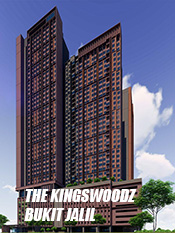



 Posts


