
I-BERHAD, a home appliances maker turned property developer, expects to see double-digit growth in its net profit this year.
Director Eu Hong Chew said this would be driven by its RM2 billion integrated commercial township in Shah Alam, known as i-City.
Last year, the company made a net profit of RM1.9 million.
"The main (profit) drivers will be the investment by Al Rajhi Bank as well as our tenancies," he told reporters after a media preview of i-City yesterday.
A few months ago, Saudi Arabia's Al Rajhi Bank, the world's largest Islamic banking group, paid RM95 million to buy some commercial space in the first phase of the township's development.
i-City, which spans 72 acres and has MSC Cybercentre status, has so far managed to attract 12 companies, including two multinationals, to take up tenancy since obtaining its certificate of fitness six weeks ago.
Another eight companies are expected to move in before the end of the year, said Eu.
These 20 companies would take up about 30 per cent to 40 per cent of the township's office space.
Eu said 100 per cent office tenancy would be possible by the middle of next year as there has been strong demand for space.
He pointed out that developments like i-City stand apart from others in that it is an information, communications and technology (ICT)-based township.
"These are the kind of services office users are looking for, and they are market-driven," he said.
He added that i-City, envisioned to be a digital city, is on track to be fully completed by 2015 as planned, with a shopping mall, an innovation centre, corporate office towers, serviced apartments and hotels.
Eu said the company does not expect to defer any launches and that its fiscal performance is unlikely to be affected by any economic slowdown next year.
I-Berhad is also keen to do joint venture developments with other landowners outside of the Klang Valley.
"We have been approached by two or three developers to see if we can bring the i-City concept to their developments," Eu said, adding that such plans are still at a preliminary stage.
By New Straits Times (by Adeline Paul Raj)
Friday, October 24, 2008

Wind of fortune blowing for I-Bhd
SHAH ALAM: The wind of fortune is blowing for I-Bhd as the company charts a new course in real estate and information and communication technology (ICT). Returns from its maiden property development in Shah Alam are expected to boost net profit by at least 10% in the current financial year ending Dec 31, 2008 (FY08).
I-Bhd, formerly known as Sanyo Industries (M) Sdn Bhd, began as an electrical home appliances manufacturer. Stiff competition from low-cost producers in China had prompted the company to think outside the box, which eventually led to I-Bhd's exit from the business.
In the second half of 2005, I-Bhd unveiled its intention to undertake its maiden property project - the RM2 billion i-City. The integrated commercial development sits on 28.8ha (72 acres) of freehold land in Shah Alam's Section 7.
"The journey we started three years ago is bearing fruit. We have nowhere to go but up," I-Bhd director Eu Hong Chew told reporters during a media visit to i-City's development site yesterday.
"We expect double-digit growth in net profit in 2008," Eu added.
I-Bhd's earnings declined in FY08's second quarter ended June. Net profit fell 4.4 % to RM525,000 from RM549,000 a year earlier while revenue was down 36% to RM475,000 from RM742,000. Going forward, property development will be the company's major revenue source.
i-City, a privately-funded five-year initiative, is due for completion by 2011. The future digital city includes a shopping mall, offices and hotels, besides apartments. So far, 44 cyber office suites have been completed and sold.
i-City was certified as an MSC Cybercentre by the government in May this year, placing the project on a par with Cyberjaya, KL Sentral and the Kuala Lumpur City Centre.
The corporate makeover of I-Bhd has received the thumbs-up from a major shareholder. Permodalan Nasional Bhd (PNB) president and group chief executive officer Tan Sri Hamad Kama Piah Che Othman said PNB was convinced of I-Bhd's new business model which combined the expertise of real estate development and ICT, hence differenting the firm from other property players in the country.
PNB is the second-largest shareholder with 17.15% in I-Bhd, after Sumurwang Sdn Bhd which holds 54.45%. "Good things will happen here (I-Bhd)," Hamad Kama Piah said during the visit to i-City yesterday.
He was non-committal when asked whether the state-owned fund manager planned to raise its stake in the property developer. "I have to get my advisers' (opinion). Our people will look at it," said the captain of PNB which manages some RM120 billion as of June this year.
Other property firms under PNB's stable include Island & Peninsular Bhd and Petaling Garden Bhd. PNB had taken both firms private in 2007.
I-Bhd fits strategically into PNB's portfolio as the developer could extend its ICT expertise to other real estate firms held by the fund manager.
By The EDGE Malaysia (by Chong Jin Hun)
Thursday, October 23, 2008
I-Berhad eyes double-digit profit growth
Property developer I-Berhad aims to achieve double-digit growth in net profit by year-end, driven by its unique information and communication technology (ICT) infrastructure, said its director, Eu Hong Chew.
“These are the kind of services office users are looking for and they are market-driven,” Eu told reporters after the preview of its RM2.0 billion integrated commercial development, i-City, in Shah Alam today.
For the financial year ended December 31, 2007, the company recorded a pre-tax profit of RM700,000 on the back of RM1.631 million in revenue.
Eu said i-City was designed as a fully-integrated township, comprising a shopping mall, corporate towers and corporate offices, office suites, shop offices, office and retail suites, hotel, apartments, a data centre and an innovation centre.
“Concierge services are also provided in i-City, which is equipped with meeting rooms and event halls in order to cater to the needs of tenants.
“All meeting rooms and event halls are equipped with wireless broadband connection and state-of-art audio visual facilities,” he said.
By Bernama
YNH in talks with funds to complete RM2.1b KL project
YNH Property Bhd is delaying the sale of part of a RM2.1 billion tower being designed by Norman Foster as the global credit crisis threatens the Malaysian capital's biggest commercial property transaction.
The company may scrap plans to raise as much as RM1.2 billion by selling the second half of the project and is in talks with funds from Singapore, Hong Kong and Japan on a venture to help complete development of the tower, said Daniel Chan, head of corporate services at the Ipoh-based company.
"People are more cautious and want lower pricing," Chan said in an interview yesterday. "This global problem will definitely affect Malaysia. It would be foolish to say we will be shielded."
YNH stumbled attempting to carry out Kuala Lumpur's biggest commercial real estate deal as the global credit crisis threatened to tip the world into recession.
The Malaysian government said on October 20 it expects slower-than-expected growth next year as the US and Chinese economies cool.
Shares of YNH closed 7 sen lower at RM1.15 yesterday. The decline in the company's shares this year has outpaced the slide in the benchmark Kuala Lumpur Composite Index.
The company is delaying completion of the RM920 million sale of the first half of the 45-storey office development to Kuwait Finance House (Malaysia) Bhd, agreed to in January, because of design changes, Chan said.
London-based architecture firm Foster & Partners, which designed the Beijing Capital International Airport's newest terminal and "The Gherkin" skyscraper in London, was appointed in March to design the Kuala Lumpur tower.
Malaysian real estate prices may stall as the supply of office space will increase from 2010, said Mervin Chow, an analyst at OSK Research Sdn.
"A lot of supply will hit the market in Kuala Lumpur, so I'm not too sure whether they can demand a good price by that time," he said. "Supply is going to come in by the end of this year and the momentum is going to peak by 2011. The dynamics of supply and demand by that time is not going to be favourable for developers."
There will be an additional 24.8 million square feet of office space after 2010, compared with existing capacity of 56.8 million square feet, Chow said.
Malaysia will cut its 2009 economic-growth forecast on November 4, from the current estimate of 5.4 per cent, Deputy Prime Minister and Finance Minister Datuk Seri Najib Razak said on October 20.
The developer is negotiating with funds that may take a 20 per cent stake in a venture to develop the tower.
Investing in the venture will allow the funds to receive earnings from rental while they wait for property markets to recover. They may then sell the building to a real estate investment trust, Chan said.
They "will have the ability to sell the second block to a REIT, that's what they have proposed to us," he said. "It's still in early stages of discussion."
YNH in January agreed to sell the first half of the development to Kuwait Finance.
The sale will be completed by year's end, later than planned, so the buyers can "make sure everything is right," Chan said.
The Grade A tower in Malaysia will have a retail podium and two office wings with total lettable space of 1.2 million square feet.
YNH plans to increase 2009 profit by 20 per cent to as much as RM120 million next year, based on RM300 million of sales.
"We are very cautious, we now like to be more conservative in what we are doing," Chan said. "If we are able to achieve our targets, it will be a bonus for us."
By Bloomberg
'Strong liquidity, firmer ringgit will boost properties'
SINGAPORE: The property market in Malaysia will be affected by the US financial crisis but strong liquidity and a firmer ringgit will help to weather the storm, a developer says.
Sime Darby Property Bhd managing director Datuk Tunku Putra Badlishah Tunku Annuar said for the country, liquidity would mean further access to mortgages.
However, lower interest rates would help to spur interest among consumers to buy house especially on the back of the economic uncertainties, he said.
“Malaysia will be one of the markets in the region that will be less affected by the crisis,” he told reporters here ahead of the launch of the rebranded Sime Darby Performance Centre here today.
Besides Malaysia, Singapore, which is the second biggest market for the developer, will also offer opportunities despite the current lacklustre property market, Badlishah said.
The company has a total landbank of 15,040 hectares in Malaysia, of which more than 75 per cent is for future development.
Last year, the Singapore business contributed 15 per cent to the developer’s bottomline while Malaysia’s operations accounted for 80 per cent contribution.
Among its successful projects in Singapore include the Orion, Balmoral Hills and the Sime Darby Enterprise Centre.
The company also has presence in Vietnam, China, the United Kingdom, the Philippines, Indonesia and Australia.
Badlishah said with the pressure of escalating material costs, the company planned to increase efficiency and procure centrally to help contain the external price pressures.
“We will be announcing some initiatives where we are tying up bulk purchases contracts with suppliers of raw materials so we can get good price for contractors. By doing so, we will be able to mitigate the cost increases.”
He said the company would also take a cautious stance on new property launches due to the slower demand.
By Bernama
UEM: Global crisis will slow growth
Infrastructure and property group UEM Group Bhd expects slower growth in the months ahead because of the global economic slowdown.
Managing director and chief executive officer Datuk Ahmad Pardas Senin said, however, that UEM Group, which has up to RM5 billion worth of projects in the country and overseas, will not be severely affected by the crisis although slower growth is expected.
"We don't feel the impact just yet, but there will definitely be slower growth.
"But our projects in Iskandar Malaysia and India are proceeding as planned," Ahmad Pardas told Business Times at the group's Hari Raya gathering in Kuala Lumpur yesterday.
The diverse group, which has interests in construction, property and highways, among other sectors, controls UEM Builders Bhd, Pharmaniaga Bhd and UEM Land Bhd, which is expected to be listed by month-end.
UEM Group in turn is wholly owned by government investment arm Khazanah Nasional Bhd.
On the second Penang bridge, Ahmad Pardas said the group was still awaiting word from the government on any new development.
The government last month withdrew the second bridge concession awarded to the group.
By New Straits Times (by Zaidi Isham Ismail)
Malaysian goods shine at China-Asean expo

NANNING: Hall 14 of the Nanning International Conference and Exhibition Centre in Nanning, Guangxi, China, was abuzz with visitors drawn to the Malaysian products on display at the 5th China-Asean Expo (Caexpo), which was launched yesterday.
In one corner, two Proton cars - a white Saga and a sporty-looking Symphony (Satria Neo) in orange and black stripes - held sway, drawing admiring glances and close scrutiny.
Other Malaysian exhibitors were not overlooked either, as visitors made their acquaintance with Made-in-Malaysia products ranging from assorted jam tarts from Sabah and automotive parts, to Ipoh white coffee and high-end stainless steel jewellery.
With almost 100 firms and government agencies from Malaysia promoting their products and services in the 2,900 square metres of exhibition space, there was certainly plenty to see, touch and sample.
The Malaysian booths in Hall 14 were part of the 3,300 booths from China and the 10 Asean countries participating in the Caexpo until October 25.
The event is co-sponsored by the Ministry of Commerce of China and its Asean counterparts as well as the Asean Secretariat, and organised by the government of Guangxi Zhuang Autonomous Region of China.
Held annually in Nanning, it is aimed at spurring the setting up of the China-Asean Free Trade Area (Cafta) and serving as a platform for China and Asean to enhance their bilateral economic and trading cooperation.
The expo, which is highlighting information and communications technology (ICT) cooperation as its theme this year, is divided into four exhibition pavilions, namely the Pavilion of Cities of Charm, the Pavilion of Investment Cooperation, the Pavilion of Commodity Trade and the Pavilion of Agricultural Applicable Technology.
Malaysia External Trade Development Corp trade commissioner Roslina Long said Caexpo is a valuable opportunity for Malaysian firms to showcase their products to China and other Asean countries.
Also held concurrently with the Caexpo is the 5th China-Asean Business Summit and other forums and conferences, including the 3rd China-Asean ICT Week.
By New Straits Times (by Chan Cheng Tuan)
Wednesday, October 22, 2008
YNH struggles with RM2.1b Foster tower
YNH Property Bhd is delaying the sale of part of a RM2.1 billion (US$600 million) tower being designed by Norman Foster as the global credit crisis threatens the Malaysian capital’s biggest commercial property transaction.
The company may scrap plans to raise as much as RM1.2 billion by selling half of the project and is in talks with funds from Singapore, Hong Kong and Japan on a venture to help complete development of the tower, said Daniel Chan, head of corporate services at the Ipoh, Malaysia-based company.
“People are more cautious and want lower pricing,” Chan said in an interview yesterday. “This global problem will definitely affect Malaysia. It would be foolish to say we will be shielded.”
YNH stumbled in attempting to carry out Kuala Lumpur’s biggest commercial transaction as the global credit crisis threatened to tip the world into recession. Malaysia’s government said October 20 it expects slower-than-expected growth next year as the US and Chinese economies cool.
The company is delaying completion of the RM920 million sale of the first half of the 45-story office development to Kuwait Finance House (Malaysia) Bhd, agreed to in January, because of design changes, Chan said.
London-based architecture firm Foster & Partners, which designed the Beijing Capital International Airport’s newest terminal and “The Gherkin” skyscraper in London, was appointed in March to design the Kuala Lumpur tower.
Supply Glut Looms
Malaysian real estate prices may stall as the supply of office space will increase from 2010, said Mervin Chow, an analyst at OSK Research Sdn Bhd.
“A lot of supply will hit the market in Kuala Lumpur, so I’m not to sure whether they can demand a good price by that time,” he said. “Supply is going to come in by the end of this year and the momentum is going to peak by 2011. The dynamics of supply and demand by that time is not going to be favorable for developers.”
There will be an additional 24.8 million square feet (2.3 million square meters) of office space after 2010, compared with existing capacity of 56.8 million square feet, Chow said.
Malaysia Slowing
Malaysia will cut its 2009 economic-growth forecast on November 4, from the current estimate of 5.4 per cent, Finance Minister Datuk Najib Razak said on October 20.
The developer is negotiating with funds that may take a 20 per cent stake in a venture to develop the tower. Investing in a venture will allow the funds to receive earnings from rents while they wait for property markets to recover. They may then sell the building to a real estate investment trust, Chan said.
They “will have the ability to sell the second block to a REIT, that’s what they have proposed to us,” he said. “It’s still in early stages of discussions.”
YNH in January agreed to sell the first half of the development to Kuwait Finance.
The sale will be completed by year-end, later than planned, so the buyers can “make sure everything is right,” Chan said.
The Grade A tower in Malaysia will have a retail podium and two office wings with total lettable space of 1.2 million square feet (111,000 square meters).
Shares of YNH have fallen 54 per cent this year, outpacing the 37 per cent slide in the benchmark Composite Index.
YNH plans to increase 2009 profit by 20 per cent to as much as RM120 million next year, based on RM300 million of sales.
“We are very cautious, we now like to be more conservative in what we are doing,” Chan said. “If we are able to achieve our targets, it will be a bonus for us.”
By Bloomberg
S. Korea to prop up building sector
SEOUL: South Korea said it would spend about US$4bil to prop up its wilting construction industry, the second major package this week as it grapples with the impact of the global financial storm on its economy.
President Lee Myungbak said the credit crunch around the world made South Korea’s economic situation even more grave than the Asian financial crisis a decade ago, which pushed the country to the edge of default.
“The overall situation is more serious than the 1997 crisis. Back then it was an Asian crisis but today the entire world economy is at risk,” a presidential spokesman quoted Lee as saying during a cabinet meeting.
“It’s not like any recovery of our own means we will have escaped the effects of the (global) crisis,” Lee said.
The latest package, which follows Sunday’s US$130bil rescue for the credit-squeezed financial system, will allocate over five trillion won (US$3.8bil) to the construction sector whose problems the government fears could ricochet through the slowing economy.
“It is feared troubles in sectors of the real economy, such as the construction industry, could make things worse in the financial sector as well,” the government said in a statement.
The money will be used to buy unsold new homes and land from domestic builders who want to pay off debt.
By Reuters
Seoul to spend US$6b to help builders
SOUTH Korea will spend as much as 8 trillion won (US$6 billion) to buy land and unsold homes, aiming to shield the property industry from a collapse that may worsen an economic slowdown.
State-owned Korea Housing Guarantee Co will buy 2 trillion of houses, the Ministry of Strategy and Finance and Ministry of Land, Transport and Maritime Affairs said yesterday in a statement.
Korea Land Corp will sell up to 3 trillion won of bonds to buy land from private companies. The rest of the funds will be used to provide debt guarantees and help low-income earners buy homes.
By Bloomberg
Tuesday, October 21, 2008
Relaxed FIC rules boon for residential property
PETALING JAYA: Further liberalisation of the Foreign Investment Committee (FIC) guidelines to attract foreign investors to the local property market, especially for commercial property, is most welcomed, industry players said.
It would be a most timely measure to raise the country’s attractiveness as a real estate investment destination, they said.
Lauding the economic stabilisation plans announced by Deputy Prime Minister Datuk Seri Najib Tun Razak yesterday, industry players said the Government’s proposed measures to review the FIC guidelines for the property sector would cushion the market from a demand slowdown caused by the global financial meltdown.
International Real Estate Federation (FIABCI) Malaysia president Datuk Richard Fong said while the FIC guidelines for residential property purchases by foreigners had been relaxed over the years, the commercial property sector was still subject to strict regulations.

Datuk Richard Fong
“Currently, a foreigner who wants to invest in any commercial property such as offices, retail malls, shop lots and factories but does not intend to occupy the premises himself, is required to have a bumiputra partner taking up 30% stake in the investment before he can go ahead with the purchase.
“This has been a huge restriction to commercial property sale as the guideline is deemed impractical and not advantageous to either party. It is not easy to find the right bumiputra partner who has the financial means to tie down their money for a commercial property purchase which usually runs into millions of ringgit,” Fong said.
Calling for the restriction to be relaxed, he said FIABCI Malaysia had proposed to the Government to impose such a requirement only on investments above RM100mil.
“There have been many instances where foreign interest for commercial property of RM50mil to RM100mil have been rejected because the right bumiputra partners could not be found,” he pointed out.
Fong said the relaxed FIC guidelines for the housing market that were introduced in December 2006 had attracted stronger interest from Middle Eastern, Korean, Japanese, Chinese, British and American buyers.
Since then, FIC approval for housing units priced from RM250,000 and restrictions on the usage and the number of units foreigners can purchase had been lifted.
Stressing that the property sector had the potential to attract higher foreign investments, Fong said the joint public-private sector initiative to launch Malaysia Property Inc next year to promote Malaysia’s real estate overseas had targeted to attract RM10bil in foreign investments over the next five years.
Meanwhile, Real Estate and Housing Developers Association president Datuk Ng Seing Liong said while the FIC had been relaxing guidelines for property purchases by foreigners, there were still restrictions imposed by state authorities.
At the state level, each state authority has the discretion to consider acquisition by a foreigner based on the location and type of property and the percentage of total units in a project. The transfer of property title is under the jurisdiction of the state government.
“These pertain mostly to issuance of property titles for projects involving state-alienated lands and bumiputra lots. State governments should abide by the Federal Government’s directive to relax rulings on foreign purchases to ensure the success of these measures,” Ng said.
By The Star (by Angie Ng)
Berjaya Land to proceed with overseas projects
BERJAYA Land Bhd (BLand), which has excess cash of RM1.8 billion from asset disposal and sale of loan stocks last year, will use more than half of it to fund overseas projects.
The projects are in Vietnam, South Korea and Libya, worth about RM50 billion, which will be released in phases over the next eight to 10 years, chief executive officer Datuk Francis Ng said.
Ng is cautious but bullish about the prospects, despite the current uncertainties in the global economy.
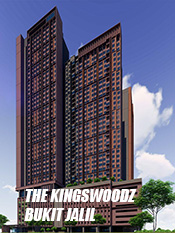
"We may rope in partners to work on the projects in Vietnam to cushion the volatile market. We believe demand will pick up due to the population size and the need for housing," he said after signing an agreement with Hanju Savanna (M) Sdn Bhd for the sale of Covillea Bukit Jalil condominiums in Kuala Lumpur for RM150 million.
BLand has four projects in Vietnam - the RM6.8 billion Vietnam Financial Centre and RM24.03 billion university township project in Ho Chi Minh City; Bien Hoa City Square in Dong Nai province worth RM752 million; and Thach Ban New City in Hanoi worth RM1.64 billion - launching from next year.
It plans to launch the RM11 billion Berjaya Jeju Resort development project in South Korea by the first quarter of next year and the RM6.8 billion integrated golf resort-cum-residential and commercial project in Tripoli, Libya, by mid-2009, Ng said.
"We expect the property division to contribute 50 per cent to the company's revenue by 2012 from 20 per cent currently. From the amount, 30 per cent will come from overseas projects," Ng said.
For fiscal year ended April 30 2008, BLand achieved a net profit of RM1.14 billion, largely from selling KL Plaza in Bukit Bintang, Kuala Lumpur, for RM470.6 million; two hotels in Seychelles for RM201 million; and irredeemable convertible unsecured loan stocks amounting to RM938.1 million.
Revenue tripled to RM1.52 billion due to the consolidation of Berjaya Sport Toto Bhd as a BLand unit.
Ng said earnings for the current year may dip due to outflow of investment funds for overseas projects.
Locally, BLand will launch 110 units of double storey houses or phase 2 of Berjaya Park in Shah Alam, Selangor, next month and 25 units of luxury bungalows worth RM175 million in Seputeh Heights, Kuala Lumpur, by December.
Ng said BLand is looking for en bloc buyers for the properties and also for its future launches.
"We hope to achieve RM350 million in sales by the end of the current fiscal year, from RM200 million currently," he added.
By New Straits Times (by Sharen Kaur)
BLand may put projects on hold
KUALA LUMPUR: Property company Berjaya Land Bhd may put some of its projects on hold due to the current bearish market sentiment but is still confident of generating some RM350mil in property sales in its financial year ending April 30, 2009, said chief executive officer Datuk Francis Ng.
But the company’s huge projects in Vietnam would not be affected, Ng said, pointing out he expected the property slowdown in Vietnam to be short term.
“We will proceed with our Vietnam ventures because it is a long term investment,” he said, adding that the company’s four property development projects in Vietnam were worth about US$2.5bil in gross development value (GDV).
He said he expected the overseas markets to contribute 30% of the company’s revenue in the next three to four years.
Ng said the global financial crisis and rising cost of building materials had brought on a slowdown in the local property market and that the company might have to review and postpone some projects until the market recovered.
But he said other new launches would boost the company’s total property sales and that Berjaya Land was confident of achieving RM300mil to RM350mil in sales this financial year.
Berjaya Land is scheduled to launch its Berjaya Park project in Shah Alam and Vasana Link Bungalows development in Seputih Heights before the end of the year.
“We are currently in talks for en-bloc sales of the properties,” Ng said, adding that the GDV for its 25-unit Vasana Link project was RM175mil.
“We have sold about RM200mil worth of properties currently,” he said after a signing ceremony between Berjaya Golf Resort Bhd and Hanju Savana(M) Sdn Bhd yesterday.
Berjaya Land’s subsidiary Berjaya Golf Resort signed a sale and purchase agreement with Hanju I&D Co Ltd’s subsidiary Hanju Savana, for the sale of its entire two blocks of the 20-storey Covillea Bukit Jalil condominiums for a total of RM150mil.
Ng said Berjaya Land was not in a hurry to raise new funds as it had about RM1.8bil from previous fund-rasing exercises, which it would use for future expansion.
By The Star
Bukit Kiara in UAE JV It is injecting RM700mil of properties
DUBAI: The Bukit Kiara group is injecting its properties, with a gross development value (GDV) of RM700mil, into a joint-venture (JV) company with United Arab Emirates’ Al Batha group to focus on property developments in Malaysia and overseas.
Under the JV agreement signed in Dubai yesterday, the JV company, Al Batha Bukit Kiara Holdings Sdn Bhd (ABBK Holdings), would be owned 60% by the Bukit Kiara group and 40% by Al Batha.
“The JV would enable both parties to expand their customer bases as well as leverage on each other’s strength to undertake property developments both in Malaysia and the UAE,” the two parties said in a joint statement
The Al Batha group, one of the biggest private investment groups in the UAE, would invest RM42mil in ABBK.
Al Batha, which is owned by the Al Qassimi family, has diverse businesses, including automobiles, pharmaceuticals, manufacturing, real estate and education.
As for the Bukit Kiara group, eight of its companies related to property development and previously 100% owned by Bukit Kiara Capital Sdn Bhd (which is under the Bukit Kiara group) would be injected into ABBK. These include the RM700mil worth of projects.
These eight companies include Bukit Kiara group’s flagship company Bukit Properties Sdn Bhd and seven others that are involved in interior design and contracting works as well as properties management services.
Bukit Kiara Properties Sdn Bhd managing director Tong Nguen Khoong said for the Bukit Kiara group, the formation of ABBK marked a significant milestone.
Speaking at the signing ceremony, Tong said Bukit Kiara Properties, which was set up eight years ago, had successfully completed its first and second projects with a GDV of about RM300mil.
“We are now in the middle of our third project, namely the Verve Suites, which comes in four phases. When completed, Verve Suites will reap in gross development revenue of close to RM530mil,” he said.
Tong added that the Verve Suites were now injected into ABBK as part of the RM700mil property projects.
He said ABBK would also undertake more property projects, the Persiaran Madge in Ampang and another along Jalan Tun Razak.
“We will also be exploring possibilities with Al Batha about expansion plans within Malaysia, the region and perhaps the UAE, where Al Batha has strategic pockets of land,” he said.
Tong said ABBK had started plans to open up a marketing and sales office in Dubai to tap into the growing affluence of UAE residents seeking alternative real estate investment opportunities.
Al Batha group managing director Rainer Joechen said the JV was an important step into the global market, where Al Batha wanted to have its operations or JVs with overseas companies.
“To invest in Malaysia is in line with the strategic objective of the Al Batha group to expand beyond the UAE,” he said.
Joechen said Al Batha was seeking to develop into the global markets and to have operations and JVs that would add value to its business.
Among those present at the official signing ceremony were Bukit Kiara group chairman Datuk Alan Tong Kok Mau and the chairman of the Al Batha group, Sheikh Ahmad Mohammed Al Qassimi.
By The Star (by Joseph Chin)
Malaysia to review foreign hypermart rules
The Ministry of Domestic Trade and Consumer Affairs is proposing that guidelines governing the expansion of foreign hypermarkets in Malaysia be reviewed as the business environment has changed over the years.
"Some of the conditions that were there during the time when the Cabinet discussed and issued the guidelines (several years ago) have now changed," Minister Datuk Shahrir Abdul Samad said, adding that the ministry will prepare a paper on the matter to be discussed in Cabinet.

SOCIAL DUTY: A representative of Carrefour giving out Deepavali gift. Looking on is Shahrir (right)
Speaking to reporters at "Deepavali with Carrefour" in Subang, Selangor, yesterday, he said hypermarkets like Carrefour, Giant and Tesco have had an impact on prices, spending, employment and investment in the country.
"As far as the Cabinet is concerned, there is a great deal of interest and support for the presence of hypermarkets," Shahrir said.
He said based on the ratio of hypermarket to population, "theoretically, there is no need for any more hypermarkets", but there continues to be interest by foreign hypermarkets to invest and open new outlets.
The ministry, since 2001, has introduced several guidelines to control the expansion of foreign hypermarkets and protect mom-and-pop stores.
The most stringent rule was a five-year freeze beginning January 2004 on openings in Kuala Lumpur, Shah Alam and Petaling Jaya in Selangor, Penang and Johor Baru. It is unclear whether this ban is still in force.
Other rulings include the application for building a hypermarket be submitted two years in advance and before the land is purchased. The government also requires that an impact study be done in a 3.5km radius from the identified location of a hypermarket.
These rules were incorporated into the Guidelines on Foreign Participation in the Distributive Trade Services 2004.
In his speech, Shahrir said the fall in global crude oil prices, which has also seen a decline in prices of some commodities and fuel pump, should see the prices of goods on the shelves come down in the next four to five months.
He said there will be an announcement on the price reduction for one food item this Friday, but declined to elaborate.
By New Straits Times (by Vasantha Ganesan)
Monday, October 20, 2008
Brisk sale of shop offices at PJCC
PETALING JAYA (PJ), as one of the most vibrant areas in the Klang Valley, has been attracting many investors in the past few decades.

Donovan Chia with a model of the PJCC project
As commercial and residential developments in PJ continue to prosper, a new development - Petaling Jaya Commercial City (PJCC) - has emerged as another potential growth area for property development.
PJCC, which is developed by PJCC Development Sdn Bhd is currently one of the biggest integrated commercial developments in PJ.
The PJCC development is modelled around and viewed as the second MidValley City in the eyes of some investors.
With a gross development value of about RM1bil, the project is slated for completion in eight years.
It is strategically located amid established townships such as Bandar Sunway, Subang Jaya, Kelana Jaya, Taman OUG, Puchong and Bangsar.
The development enjoys high visibility and is directly accessible from the NPE.
It is also easily accessible via a network of established roads such as Old Klang Road, Federal Highway, Lebuhraya Damansara Puchong, Kesas Highway and New Klang Valley Expressway.
The project will comprise three phases and includes shop offices, service apartments, a shopping mall, office tower, hotel and retail centre.
The 13.2ha prime commercial land will also include six acres of landscape greenery and a lake which is open to the public.
PJCC Development sales and marketing manager Donovan Chia said the three-, five- and eight-storey shop offices in Retail City I has been fully taken up.
The company planned to launch PJCC Residence, comprising 194 service suites by year-end, he said, adding that they had a built-up of 635 sq ft and 1,550 sq ft.
Chia said the 21-storey PJCC Promenade service suites was currently open for registration and comprised 208 units with built-up of 868 sq ft to 1,215 sq ft.
“The suites come with a retail podium that consists of 23 shoplots, a multi-storey car park and a basement car park,” he said.
He said the company had just launched the Retail City II development, which comprised three- and eight-storey shop offices and was looking to sell the property en-bloc.
“We have also launched the three-storey PJCC Garden Pavillion, which has 112 retail units,” he said.
He added that the Garden Pavillion was a street mall and expected to attract many youngsters and families once completed.
Chia said the company hoped to mirror the success of MidValley City and had priced its commercial properties at almost half the current selling price MidValley City’s properties.
“We are optimistic on the capital gains potential and rental returns for our properties,” he said.
By The Star (by Lee Kian Seong)
Far East hopes Malaysians will appreciate Silversea

UPSCALE LIFESTYLE: Silversea will feature a sky promenade on the 11th floor of each tower which stretches across link two buildings
SINGAPORE'S largest private property developer Far East Organisation wants to tap into the influx of Malaysian investors looking at property assets poised for capital appreciation on the island nation.
Far East is building a premium residential seafront development, Silversea, to be completed within three years and hopes to capture investors' interest with its unique design.
"We are positioning Silversea as a lifestyle product backed by the fact that Singapore's development will leap frog many other places once this credit crisis has passed due to major real estate and infrastructure investments," Far East executive director Chia Boon Kuah told reporters in Singapore recently.
Major real estate and infrastructure investments in Singapore from the public and private sectors amount to some US$43.6 billion (RM103.768 billion) for now to 2012.
Chia said that many Malaysians were keen to buy into the Singaporean property market, with some 23 per cent of all home buyers in Singapore coming from Malaysia for the third quarter of 2008.
According to information obtained from the Singaporean government, Malaysians formed 20 per cent of all home buyers, or have purchased 502 units in total from January to September of 2008. This figure grew from 17 per cent last year.
The attraction for investing in Singaporean real estate includes no currency controls or capital gains, no withholding tax on the disposal of property and proceeds can be easily remitted out of the country.
The Silversea project, located along Marine Parade Road, comprises four 21-storey glass towers with 383 units in total housed on a 218,435 sq ft site facing the eastern coastline.
The units, with high ceilings and full-height windows, range from 968 sq ft (two-bedroom unit) to 4,962 sq ft (four-bedroom penthouse unit). The four-room apartments have their own private lift lobbies with additional features in the master bedroom such as a mini-bar fridge, safe-deposit box and expanded bath.
Currently, Far East is releasing the first 13th floors of Silversea's Tower 4 for previews and prices for the units range between S$1,350 and S$2,000 (RM3,213 and RM4,760) per sq ft. The gross development value for these floors comes up to about S$168 million (RM399.84 million).
Other facilities in the development are two 50m pools, four dining pavilions, two spa villas and two cabanas. The four different themed dining pavillions - Northern Indian Tandoori, Italian Pizza, Brazilian Churrascaria and Japanese Teppanyaki - come fully equipped with the necessary fixtures such as tandoori ovens for the Northern Indian pavillion.
There is also an elevated viewing pavillion, equipped with kitchen amenities, overlooking the tennis courts for individuals to view the ongoing matches while relaxing in the shade.

Pic by Silversea website
The Silversea development will also feature a sky promenade on the 11th floor of each tower which stretches across to link two buildings.
"The promenade will have the five elements incorporated into the design. Residents on the lower levels can come to this floor to enjoy the seafront while utilising other amenities there such as the kitchen, infinity-edge pool or elemental spa," said Far East director of development and planning Chng Kiong Huat.
While Far East will have a Silversea exhibition in Kuala Lumpur soon, it is targeting other markets such as Indonesia, India, China, and the Middle East. Chia said he expects overseas buyers to account for some 50 per cent of Silversea's take-up.
By New Straits Times (by Jeeva Arulampalam)
Visit Silversea Official Website
SunCity holding its own in facing challenges
SUNWAY City Bhd’s (SunCity) growing exposure in the international property market and expanding portfolio of quality property development and investment assets in Malaysia will help “cushion” the company from the current meltdown in the global financial markets
Its cash reserve of RM554mil as at financial year ended June 30 (FY08) is the highest among all the listed property companies in the country.

Ngeow Voon Yean showing the site for a new office project within the Sunway Integrated Resort City
SunCity managing director for property development Ngian Siew Siong said the company’s strong cash position gave it a competitive advantage to “shop around” for viable distressed assets that might appear in the coming months as a result of the contagion effect of the global financial crisis on the local property market.
“SunCity has the resilience to face the tough times ahead. The company’s stronger foray in the international property market and increasing number of high-end projects and high net worth customers will come in handy to weather a market crunch locally,” Ngian told StarBiz.
The company’s huge unbilled sales of RM1bil to be realised over FY09 and FY10 will also provide a buffer against a soft market.
“Overall the market, especially for high-end residences, is still holding steady. Having gone into the high-end residential sector in a big way, SunCity will be able to weather the tough times ahead quite well,” he said.
Best of both worlds
Concurring with Ngian, managing director for property investment Ngeow Voon Yean said: “SunCity has the best of both worlds - a good combination of property development and property investment assets. The ratio in terms of revenue contribution between development and investment activities to the company is more balanced now at 52:48 (FY08) compared with 60:40 in FY07.”
He said the optimum balance was achieved after a company-wide rejuvenating and asset enhancement strategy over the past eight years that resulted in a leaner SunCity.
SunCity currently has undeveloped landbank of 757.6ha with estimated gross development value (GDV) of RM12bil and more than 12 ongoing projects locally and abroad.
Its stable of high margin products and good take up of properties have contributed to a strong balance sheet.
For FY08, SunCity recorded a revenue of RM1.3bil versus RM1.1bil in FY07 while pre-tax profit was higher at RM638mil against RM296mil previously. (Profit in FY08 was boosted by revaluation net gains of RM130.8mil of Sunway Pyramid and Sunway Carnival shopping malls.)
Sales reached RM1bil in FY08, a big jump from M688mil recorded in FY07, while the margin of its property products is maintained at around 30%.
Going offshore
Ngian said although projects in Malaysia presently accounted for more than 90% of SunCity’s property sales, offshore projects were gaining importance and would make higher contributions going forward.
Within the next five years, overseas projects will contribute 30% to sales, with the majority from India and China.
“The huge population and growing middle-class in China and India have created a big demand for houses in those countries.
“We are also exploring opportunities in Vietnam and have received a number of offers for joint ventures with local partners,” Ngian said.
He said with its strong design and marketing capability, SunCity had the competitive advantage to add value to property projects in the various regional markets.
The company’s maiden property project in India, Sunway Opus Grand Residency in Hyderabad, undertaken jointly with Indian partner Opus Developers & Builders Private Ltd, will be launch in the first quarter of next year.
To venture into China, SunCity partnered Sunway Holdings Bhd’s subsidiary Sunway Mas Sdn Bhd and Shanghai Guanghao Real Estate Development Group Co Ltd for a mixed high-rise development in the central business district of Jiangyin New Harbour City in Jiangsu Province.
The ultra modern resort-style project will have 1,110 medium to high-end condominium units on over 6.8ha. The project will cost some one billion renminbi (RM473mil).
“We believe our maiden project in China will form a base to secure other future property projects in this high growth country in line with the company’s plans to expand into the regional property market,” Ngian said.
Quality investment assets
Besides having established a strong brand name as a reputable and innovative developer of medium to high-end projects, SunCity has also built up a strong property investment division with total assets worth close to RM4bil.
The assets range from office buildings to shopping complexes, university campuses, a medical college, hotels and theme park resorts.
Over the years revenue contribution from commercial properties has grown to RM630mil in FY08 against RM470mil in FY07.
“Despite the current market uncertainties, we are looking towards achieving a 15% revenue growth from our stable of hospitality, leisure and commercial properties going forward,” Ngeow said.
SunCity’s property investment division is also planning to broaden the export of its property management expertise to other regional countries.
Advanced negotiations are underway to manage hotels under the company’s Allson International brand name in China and Vietnam. Allson International clinched a contract to manage a hotel in Siem Reap, Cambodia early this year.
In China, SunCity’s retail property management team was involved in designing and managing a shopping centre in Chongqing, Szechuan province.
By The Star (by Angie Ng)
Suncity reaping the rewards of timely expansion
The timely expansion of Sunway City Bhd’s (SunCity) stable of commercial assets in Sunway Integrated Resort City is bearing fruit for the property group as evidenced by the high occupancy and income fetched by the properties now.
The assets include Sunway Pyramid Shopping Mall, the 4.8ha Monash University campus, Sunway University College, Sunway Carnival Mall in Penang, Sunway Resort Hotel & Spa, Sunway Pyramid Hotel and Menara Sunway.
The crown jewel of the property investment division, Sunway Pyramid Shopping Mall, underwent a major expansion and redesigning exercise two years ago that cost RM550mil and added 900,000 sq ft in net lettable space to total 1.7 million sq ft.
SunCity managing director for property investment Ngeow Voon Yean said the redesigning and expansion of Sunway Pyramid which was completed last September was a major boost to the group’s rental income stream.
“The 360-degree makeover has turned Sunway Pyramid into a palatial and unique shopping kingdom with Egyptian and Morrocan themes. The opening of four new retail theme zones €“ Fashion Central, Asian Avenue, Marrakesh and Oasis Boulevard - offers the ultimate shopping experience for shoppers,” he said.
The enlarged mall is attracting more than 2.5 million visitors a month, compared with 1.5 million previously.
Pre-tax profit from Sunway Pyramid Shopping Mall and Sunway Carnival Mall is expected to rise to more than RM100mil in financial year ending June 30, 2009 (FY09) from RM80mil in FY08.
Ngeow said there was room to explore new shopping malls in the Klang Valley, including Kuala Lumpur.
“We may also consider opportunities in India and China when SunCity’s property development projects take off in those countries,” he added.
Meanwhile, SunCity’s hotel portfolio has also been expanded to five hotels with a total of 1,234 rooms from just a single property comprising the 431-room Sunway Resort Hotel previously.
Ngeow said SunCity had been in the forefront to promote the integrated resort development concept as proven by the immense success of Sunway Integrated Resort City which has become one of the key tourist destinations in the country.
“The decade old-initiative that was started by Sunway Group founding chairman Tan Sri Jeffrey Cheah in the 1990s has converted an ex-mining land into a thriving community for residential, leisure, education and commercial hub. These efforts have proven to be very strategic as they ensured SunCity remained strong and relevant to face the current challenging times,” Ngeow said.
The township’s commercial hub will be further spruced up with another two office developments in the pipeline. Currently, the only office building there is Menara Sunway with net lettable space of 300,000 sq ft.
A 28-storey block of small-office-home-office (SOHO) and commercial tower with net lettable area (NLA) of 300,000 sq ft will be built adjacent to Sunway Pyramid.
Construction work will commence next year.
The second office block with NLA of 500,000 sq ft will be build next to Menara Sunway at a later date.
“There is still strong interest for office space in Klang Valley’s suburban area because of the growing appeal of suburban commercial hubs. We are looking at rental rates of between RM5 and RM6 per sq ft,” Ngeow said.
By The Star (by Angie Ng)
FIABCI aims for higher standards
The International Real Estate Federation (FIABCI) Malaysia is poised to raise the standard of property development in the country with its annual Malaysia Property Award (MPA).
FIABCI-Malaysia honorary treasurer Yeow Thit Sang said the awards, now into its 16th year, has attracted some of the finest participants in the country over the years.

Yeow Thit Sang near his office at Plaza Mont’ Kiara
“We want to contribute to the improvement of the industry and raise the benchmark for property development with this award,” he told StarBiz.
Yeow said this year’s awards would be no different, having attracted the creme de la creme of property development.
“We have received more than 40 entries this year and all of them developed projects of outstanding quality,” he added.
Despite being a local award, winners of the prestigious MPA have gone on to attain international acclaim and recognition.
It is no surprise that the MPA has been considered by many as the “Oscars” of the property industry.
Winners of the MPA in their relevant categories will go on to represent Malaysia the following year at the FIABCI International Prix d’Excellence, an annual competition that honours the world’s best property projects.
Yeow gave the example of former MPA and International Prix d’Excellence winner SP Setia Bhd which was offered a development project in Vietnam.
“Winning the award contributed to the Vietnamese government asking SP Setia to be a partner in one of their projects. A lot of red tape were also removed with the win.
“It takes up to a year to get a business licence when you embark on a development project in a country such as Vietnam but SP Setia received the licence in half the time,” he said.
He also cited Westin owner Ireka Corp Bhd, which had problems selling one of its properties because the purchaser insisted on buying the property at a 10% discount.
“When Ireka won the Prix d’Excellence, the purchaser agreed to pay the full amount,” Yeow said.
The next Prix d’Excellence will be held in Beijing in May 2009.
In line with the need to recognise and honour the best, FIABCI sets high standards when it selects its winners. One of its judging criteria includes taking into consideration the impact a particular project has on the environment.
FIABCI has raised the bar significantly on environmental awareness for this year’s MPA.
“The impact a particular project has on the environment used to account for 10% of the judging criteria.
“This year, we have increased it to 25%. We want to promote environmental consciousness among Malaysian developers,” said Yeow.
He said projects that used recycled building materials and environmental friendly equipment such as solar panels usually received high points.
Yeow noted that the 1 Utama Shopping Centre in Petaling Jaya was the recipient of an International Prix d’Excellence award last year mainly because of its efforts in minimising its impact on the environmental.
The building has a huge underground tank that collects rain water which can be used over a few days.
“The main factor that gave them an edge at the Prix d’Excellence was the fact that they were recycling rain water for purposes such as flushing toilets,” Yeow said, adding that the shopping centre also saw a huge drop in its water bill ever since.
In addition, the evaluation process this year has also been modified and is now more comprehensive and critical.
Yeow said the evaluation committee comprised senior real estate agents, evaluators, architects and planners.
This year’s MPA will be held on Nov 1 at the One World Hotel in Petaling Jaya, with Malayan Banking Bhd as the official sponsor. A total of 10 categories will be contested.
By The Star (by Eugene Mahalingam)
Subscribe to:
Posts (Atom)



 Posts


