
PETALING JAYA: More activities are expected in the property market next year when buyers’ confidence returns and more projects come onstream, industry players said.
According to Real Estate and Housing Developers Association (Rehda) president Datuk Ng Seing Liong, the local market has not been much affected by the US subprime loans debacle and the global financial meltdown.
“Although the market has been rather quiet with fewer project launches, property prices are sustained at previous levels. Developers are being extra careful and are deferring new launches because of the prevailing weak market sentiment,” Ng told StarBiz.
To help stimulate greater buying interest, he said Rehda had urged the Government to provide incentives such as a a one-time grant of RM10,000 and full stamp duty exemption to first-time house buyers and to allow interest paid on housing loans be offset against personal income in income tax calculation.
Ng said the Government’s decision to invite the private sector to participate in developing government land through open tenders would open up new development opportunities for industry players.
SP Setia Bhd group managing director Tan Sri Liew Kee Sin concurred that the Government’s economic stabilisation plan to kick-start priority projects would pump prime the economy and create more confidence in the market.
“Malaysia is in a good position to withstand the global financial crisis. Our financial institutions are well insulated against the global financial meltdown as they have learned well from the last regional financial crisis,” he said.
One way for developers to ride out the current challenging market conditions is to create demand for their products. “That calls for more creative product development and marketing strategies,” Liew said. “Of course, having a broad product base and good geographical spread will also help to mitigate a slowdown in any particular sector.”
Mah Sing Group Bhd group managing director and chief executive Datuk Sri Leong Hoy Kum said that while the outlook was challenging, projects by branded developers would still do well.
“It all depends on the marketability of the products, as well as the supply and demand dynamics in the area. There will always be pent-up demand for housing as it is a fundamental necessity. For developers, it is a matter of good concept and product, location, branding and timing.
“We believe a lot of developers will start launching projects early next year as material prices will come down further in the next six months,” he added.
For this year, Mah Sing is scheduled to launch a substantial amount of properties worth about RM614mil, with a sales target of RM560mil.
Leong said the company’s edge was that it had pre-constructed a lot of its properties last year at old construction costs, and today, the buyers could enjoy the completed or soon-to-be-completed properties at very competitive prices.
Meanwhile, Sunway City Bhd (SunCity) managing director for property development Ngian Siew Siong said developers were more prudent and managing their cash flow better after learning from the lessons of the last financial crisis.
“SunCity is looking at attracting more foreign buyers, especially en bloc sales to South Koreans, Japanese and Chinese buyers. These are mainly for medium to high-end residences priced from RM500,000 to RM600,000.
“The company’s unbilled sales of close to RM1bil will be realised over the next two years. This is also a good time to look at clearing the unsold stock.”
Ngian said “clearer directions” would emerge after the first quarter of next year after the power transition in Umno and the Cabinet reshuffle.
By The Star (by Angie Ng)
Wednesday, November 12, 2008

Fewer houses built in Sarawak
KUCHING: Property developers in Sarawak have drastically cut down on the construction of new houses due to poor demand.
State Housing Minister Datuk Abang Johari Tun Openg said some 5,300 new houses had been built this year, about half of the 10,800 units constructed for the whole of 2005.
Last year, just over 8,400 houses were built statewide.
“There has been a marked decrease in the number of houses built this year and the entry of housing developers into the market,” he told the State Assembly during Question Time.
Johari said the ministry only issued 56 new licences to housing developers this year, down from 153 in 2005.
He said the increase in house prices (between 5% and 10% per annum in the past three years) due to higher production cost had dampened demand.
He said that more than 18,100 houses built by private developers since 2005 were single- and double-storey terrace units priced between RM140,000 and RM300,000.
Also built were some 3,299 double-storey semi-detached units priced between RM280,000 and RM480,000.
“An average of 25% stock remains unsold each year, and this is added to next year’s stock,” Johari said.
On the proposed state housing tribunal, Johari said Sarawak was now studying the Sabah model.
Once a suitable model was found, he said the state government would amend the Housing Developers (Control and Licensing) Ordinance 1993 and the Housing Developers (Control and Licensing) Regulations 1998.
By The Star (by Jack Wong)
State Housing Minister Datuk Abang Johari Tun Openg said some 5,300 new houses had been built this year, about half of the 10,800 units constructed for the whole of 2005.
Last year, just over 8,400 houses were built statewide.
“There has been a marked decrease in the number of houses built this year and the entry of housing developers into the market,” he told the State Assembly during Question Time.
Johari said the ministry only issued 56 new licences to housing developers this year, down from 153 in 2005.
He said the increase in house prices (between 5% and 10% per annum in the past three years) due to higher production cost had dampened demand.
He said that more than 18,100 houses built by private developers since 2005 were single- and double-storey terrace units priced between RM140,000 and RM300,000.
Also built were some 3,299 double-storey semi-detached units priced between RM280,000 and RM480,000.
“An average of 25% stock remains unsold each year, and this is added to next year’s stock,” Johari said.
On the proposed state housing tribunal, Johari said Sarawak was now studying the Sabah model.
Once a suitable model was found, he said the state government would amend the Housing Developers (Control and Licensing) Ordinance 1993 and the Housing Developers (Control and Licensing) Regulations 1998.
By The Star (by Jack Wong)
Las Vegas Sands to stop parts of Macau project
MACAU: Las Vegas Sands said yesterday it was halting part of its huge development in the gambling haven of Macau due to trouble accessing credit amid the global financial crisis.
The firm, which operates two casinos in Macau including the giant Venetian, said in a statement that work on parts of a US$12 billion (US$1 = RM3.58) resort and casino development on a reclaimed strip of land - called the Cotai Strip - would be stopped.
"Sites five and six on the Cotai Strip will be temporarily suspended until conditions in the capital markets improve," the Las Vegas-based firm said in a statement.
It said it would continue to seek financing that would allow it to complete the project, which includes a 1,800-room Sheraton hotel and three casinos.
"Our temporary suspension programme will enable us to recommence development in an efficient fashion, should sufficient capital to complete phase one of our development plans become available on reasonable terms," the statement said.
It said work on the Four Seasons private apartments in Macau and its Marina Bay Sands project in Singapore would continue.
The company, whose US-listed share price has plummeted from US$148 last October to around US$8 this month on worries about its debt burden, said it was "in the process of" raising an additional US$2 billion in funding commitments.
The firm has invested heavily in Macau, spending US$2.4 billion on the giant Venetian casino-resort.
Its aggressive expansion in the United States and abroad and the credit crunch have left Las Vegas Sands struggling to service its US$10 debt.
By AFP
The firm, which operates two casinos in Macau including the giant Venetian, said in a statement that work on parts of a US$12 billion (US$1 = RM3.58) resort and casino development on a reclaimed strip of land - called the Cotai Strip - would be stopped.
"Sites five and six on the Cotai Strip will be temporarily suspended until conditions in the capital markets improve," the Las Vegas-based firm said in a statement.
It said it would continue to seek financing that would allow it to complete the project, which includes a 1,800-room Sheraton hotel and three casinos.
"Our temporary suspension programme will enable us to recommence development in an efficient fashion, should sufficient capital to complete phase one of our development plans become available on reasonable terms," the statement said.
It said work on the Four Seasons private apartments in Macau and its Marina Bay Sands project in Singapore would continue.
The company, whose US-listed share price has plummeted from US$148 last October to around US$8 this month on worries about its debt burden, said it was "in the process of" raising an additional US$2 billion in funding commitments.
The firm has invested heavily in Macau, spending US$2.4 billion on the giant Venetian casino-resort.
Its aggressive expansion in the United States and abroad and the credit crunch have left Las Vegas Sands struggling to service its US$10 debt.
By AFP
Tuesday, November 11, 2008
200 bookings for Hua Yang apartments

Picture shown is Symphony Heights serviced apartment project
KUALA LUMPUR: Hua Yang Bhd has received bookings for more than 200 units of Phase 1 Symphony Heights @ Selayang serviced apartments since its soft launch a few months ago.
Chief operating officer Ho Wen Yan said the company had received more than 1,900 registrants for its RM180mil, 2.97-acre leasehold project at the flyover intersection to Batu Caves, Selangor.
Ho said a 10% “early bird” discount and other incentives such as free legal fees for the sale and purchase agreement and a RM500 down payment were being offered to buyers of the Phase 1 apartments.
“These incentives are in line with our aim to provide affordable housing at attractive packaging in strategic location,” he said during Symphony Heights’ official launch.
The project comprises three blocks of 29, 30 and 33 floors totalling 946 units. Phase 1, consisting 544 units, was soft launched in July and scheduled for completion before July 2011.
Phase 1 offers two-bedroom apartments with a 863 sq ft and 879 sq ft built-up area as well as three-bedroom apartments and 3+1 units. Prices range from RM135,200 to RM324,500.
By The Star (by S.C.Cheah)
For more detail information, please contact & visit the official website.
Mah Sing to buy land in Setapak for RM13m
Mah Sing Group Bhd is spending RM13 million to buy 2.12ha of freehold land in Setapak from Link Mart Sdn Bhd.
The RM13 million, which works out to be RM56.30 per square foot, will be paid in five progress payments based on specified milestones of development until the sub-division of land is obtained, Mah Sing said in a statement yesterday.
"It is in a prime location and represents a coup for Mah Sing as the land is freehold while surrounding area are mainly leasehold land," said group managing director Datuk Seri Leong Hoy Kum.
He said Setapak has experienced healthy growth in demand for shop offices as evidenced by the more than doubling in the transaction value of the shop office sub-segment in the first quarter of this year compared to the same quarter last year.
"With a catchment of close to 700,000 people from the middle- to upper-income groups in the vicinity, we have high hopes of a good take-up upon launch of the project," Leong added.
Mah Sing expects to generate gross development value of RM118 million from the Setapak project.
By Business Times
The RM13 million, which works out to be RM56.30 per square foot, will be paid in five progress payments based on specified milestones of development until the sub-division of land is obtained, Mah Sing said in a statement yesterday.
"It is in a prime location and represents a coup for Mah Sing as the land is freehold while surrounding area are mainly leasehold land," said group managing director Datuk Seri Leong Hoy Kum.
He said Setapak has experienced healthy growth in demand for shop offices as evidenced by the more than doubling in the transaction value of the shop office sub-segment in the first quarter of this year compared to the same quarter last year.
"With a catchment of close to 700,000 people from the middle- to upper-income groups in the vicinity, we have high hopes of a good take-up upon launch of the project," Leong added.
Mah Sing expects to generate gross development value of RM118 million from the Setapak project.
By Business Times
IJM team tipped to win Kerala medical city job
KOZHIKODE (Kerala): A consortium comprising IJM Bhd (3336) and Malaysia Allied Health Science Academy College (Mahsa) is tipped to develop a medical city in Kerala once the state government gives its nod.
The Kerala State Industrial Development Corporation and Malaysia's Construction Industry Development Board 9CIDB), both parties of the consortium, are engaged in serious talks to ink the agreement for the RM433 million (US$120 million) project in Kinalur in Kozhikode City.
"Through the CIDB, we signed the memorandum of agreement with the Kerala state government in September and hope to sign the final agreement any time soon.
"The estimated investment for the first phase is likely to surpass US$120 million and could be completed in three years' time.
"Malaysian companies have expressed interest to develop this project. This is a good opportunity for our country to export the expertise we have and develop our own technical knowledge," Works Minister Datuk Mohd Zin Mohamed, who visited the project site, said.

MOHD ZIN: Good opportunity to export Malaysian expertise
IJM will be the master builder while Mahsa will be involved in providing medical infrastructure.
The proposed integrated medical city, to be developed in four phases, will be built on a 110ha site in Kinalur, about 42km from Kozhikode or also known as Calicut - the third largest city in the southern state of Kerala.
A medical university, hospital, nursing scool, dental college and health centres comprising both traditional and modern medicine as well as pharmaceutical product manufacturers are being planned for the medical city.
The Malaysian consortium is also proposing to build a highway, cutting through Kinalur, which will slash the distance by half from the main city to the project site.
Once developed, it will easily create nearly 25,000 skilled and semi-skilled jobs for the locals, who rely heavily on agriculture.
After the visit, Kerala Public Works Minister Mons Joseph called on Mohd Zin for further discussions on the medical city project.
Speaking to reporters later, Joseph said Malaysian companies are keen to develop the project and the state government will hold further talks before finalising an agreement to kick off the mega undertaking which will transform the remote district into a satellite township.
By Bernama
The Kerala State Industrial Development Corporation and Malaysia's Construction Industry Development Board 9CIDB), both parties of the consortium, are engaged in serious talks to ink the agreement for the RM433 million (US$120 million) project in Kinalur in Kozhikode City.
"Through the CIDB, we signed the memorandum of agreement with the Kerala state government in September and hope to sign the final agreement any time soon.
"The estimated investment for the first phase is likely to surpass US$120 million and could be completed in three years' time.
"Malaysian companies have expressed interest to develop this project. This is a good opportunity for our country to export the expertise we have and develop our own technical knowledge," Works Minister Datuk Mohd Zin Mohamed, who visited the project site, said.

MOHD ZIN: Good opportunity to export Malaysian expertise
IJM will be the master builder while Mahsa will be involved in providing medical infrastructure.
The proposed integrated medical city, to be developed in four phases, will be built on a 110ha site in Kinalur, about 42km from Kozhikode or also known as Calicut - the third largest city in the southern state of Kerala.
A medical university, hospital, nursing scool, dental college and health centres comprising both traditional and modern medicine as well as pharmaceutical product manufacturers are being planned for the medical city.
The Malaysian consortium is also proposing to build a highway, cutting through Kinalur, which will slash the distance by half from the main city to the project site.
Once developed, it will easily create nearly 25,000 skilled and semi-skilled jobs for the locals, who rely heavily on agriculture.
After the visit, Kerala Public Works Minister Mons Joseph called on Mohd Zin for further discussions on the medical city project.
Speaking to reporters later, Joseph said Malaysian companies are keen to develop the project and the state government will hold further talks before finalising an agreement to kick off the mega undertaking which will transform the remote district into a satellite township.
By Bernama
Asean has no issue financing infrastructure: Malaysia
There is no issue with regard to financing infrastructure in Asean as it is flush with liquidity due to gross national savings in excess of US$300 billion.
Second Finance Minister Tan Sri Nor Mohamed Yakcop said that beyond Asean, there remained large pockets of liquidity in countries such as China, India and the Middle East.
“With a large and rapidly growing young population, there remains significant demand for greater infrastructure and a basis for strong project cash flows,” he said at the Asean Infrastructure Financing Mechanism Conference yesterday.
He said an estimated investments of US$30 billion are required annually for infrastructure development in the region.
“To drive the Asean infrastructure financing, we need to ensure good project cash flows and effective management of risks. Project risks should be shared on an equitable basis and intermediated through the capital markets to reduce the concentration of risk,” he added.
Nor Mohamed said that increasing private sector involvement in infrastructure projects can assist in building the country’s domestic private sector while developing the capital market.
According to him, Asean countries could also collaborate to fast-track the creation and growth of listed companies through cross-listings.
By Bernama
Second Finance Minister Tan Sri Nor Mohamed Yakcop said that beyond Asean, there remained large pockets of liquidity in countries such as China, India and the Middle East.
“With a large and rapidly growing young population, there remains significant demand for greater infrastructure and a basis for strong project cash flows,” he said at the Asean Infrastructure Financing Mechanism Conference yesterday.
He said an estimated investments of US$30 billion are required annually for infrastructure development in the region.
“To drive the Asean infrastructure financing, we need to ensure good project cash flows and effective management of risks. Project risks should be shared on an equitable basis and intermediated through the capital markets to reduce the concentration of risk,” he added.
Nor Mohamed said that increasing private sector involvement in infrastructure projects can assist in building the country’s domestic private sector while developing the capital market.
According to him, Asean countries could also collaborate to fast-track the creation and growth of listed companies through cross-listings.
By Bernama
Casino project: Singapore govt expected to step in
SINGAPORE: Singapore's government may form a venture with CapitaLand Ltd to take over one of the island's two casino-resorts if Las Vegas Sands Corp fails to stave off loan defaults, CIMB-GK Research Pte said.
Las Vegas Sands, the gaming company that said last week it may default on debt and face bankruptcy, reiterated last Saturday that it's committed to the US$4 billion (US$1 = RM3.54) Singapore resort.
The company has drawn down at least S$2 billion (S$1 = RM2.38) from a S$5 billion credit facility by several banks for the project.
If Las Vegas Sands cannot cough up its share of equity, the Singapore government is likely to step in," Donald Chua, a Singapore-based analyst at CIMB-GK, wrote in a report yesterday. "A viable option could be a 49:51 joint venture between the government and CapitaLand, with CapitaLand taking a controlling stake in the project."
Las Vegas Sands was one of two gaming companies that won the right to build resorts in Singapore after the city-state lifted a four-decade ban on casinos in 2005 to diversify the economy and create jobs.
The company said last week it faces "substantial doubt" about its ability to survive and may be short of cash for US$16 billion of projects in Asia.
Las Vegas Sands, in a statement yesterday, declined to comment on its earnings announcement.
Meanwhile, CapitaLand said in an e-mail it hasn't held any discussions with the Las Vegas-based company, adding that it's seeking investments in the "continuing global recessionary environment".
"CapitaLand wishes to clarify that no discussion has transpired between itself and Sands," it said in a statement.
By Agencies
Las Vegas Sands, the gaming company that said last week it may default on debt and face bankruptcy, reiterated last Saturday that it's committed to the US$4 billion (US$1 = RM3.54) Singapore resort.
The company has drawn down at least S$2 billion (S$1 = RM2.38) from a S$5 billion credit facility by several banks for the project.
If Las Vegas Sands cannot cough up its share of equity, the Singapore government is likely to step in," Donald Chua, a Singapore-based analyst at CIMB-GK, wrote in a report yesterday. "A viable option could be a 49:51 joint venture between the government and CapitaLand, with CapitaLand taking a controlling stake in the project."
Las Vegas Sands was one of two gaming companies that won the right to build resorts in Singapore after the city-state lifted a four-decade ban on casinos in 2005 to diversify the economy and create jobs.
The company said last week it faces "substantial doubt" about its ability to survive and may be short of cash for US$16 billion of projects in Asia.
Las Vegas Sands, in a statement yesterday, declined to comment on its earnings announcement.
Meanwhile, CapitaLand said in an e-mail it hasn't held any discussions with the Las Vegas-based company, adding that it's seeking investments in the "continuing global recessionary environment".
"CapitaLand wishes to clarify that no discussion has transpired between itself and Sands," it said in a statement.
By Agencies
Hektar REITnet profit rises 7.6pc in Q3
HEKTAR Real Estate Investment Trust (Hektar REIT), owner of over RM700 million of assets nationwide, saw net profit rise 7.6 per cent to RM9.6 million for the third quarter ended September 2008.
It registered a 20.9 per cent year-on-year revenue growth to RM22.2 million.
"We are pleased to register sustainable growth for the third quarter of 2008 amid a rather cautious outlook for the world market," Hektar Asset Management Sdn Bhd chief financial officer Zalila Mohd Toon said in a statement yesterday.
Hektar REIT, she added, continued to record positive rental reversions and solid occupancy rates across its portfolio of shopping centres in Subang Jaya (Selangor), Malacca and Muar.
Zalila said in the quarter reviewed, total occupancy of the shopping centre portfolio improved to 96.8 per cent.
Rental reversions remained positive, with 30 new or renewed tenancies recording an average increase of six per cent over previous rental rates.
Overall, net income per unit was three sen, with Hektar Asset declaring a third quarter dividend per unit (DPU) of 2.4 sen.
Based on the closing price of RM1.05 on September 30, this represents an annualised yield of 9.1 per cent.
The dividend will be distributed on December 5 2008.
Zalila said Hektar REIT's policy is to pay dividends on a quarterly basis and aims to distribute 90 per cent of the actual net profit for the current year ending December 31 2008.
By Business Times
It registered a 20.9 per cent year-on-year revenue growth to RM22.2 million.
"We are pleased to register sustainable growth for the third quarter of 2008 amid a rather cautious outlook for the world market," Hektar Asset Management Sdn Bhd chief financial officer Zalila Mohd Toon said in a statement yesterday.
Hektar REIT, she added, continued to record positive rental reversions and solid occupancy rates across its portfolio of shopping centres in Subang Jaya (Selangor), Malacca and Muar.
Zalila said in the quarter reviewed, total occupancy of the shopping centre portfolio improved to 96.8 per cent.
Rental reversions remained positive, with 30 new or renewed tenancies recording an average increase of six per cent over previous rental rates.
Overall, net income per unit was three sen, with Hektar Asset declaring a third quarter dividend per unit (DPU) of 2.4 sen.
Based on the closing price of RM1.05 on September 30, this represents an annualised yield of 9.1 per cent.
The dividend will be distributed on December 5 2008.
Zalila said Hektar REIT's policy is to pay dividends on a quarterly basis and aims to distribute 90 per cent of the actual net profit for the current year ending December 31 2008.
By Business Times
Monday, November 10, 2008
SunCity Ipoh to woo Asia Pacific, Mideast investors
SUNWAY City (SunCity) Bhd's RM2 billion Sunway City Ipoh township project in Perak, stalled during the 1997 Asian financial crisis but revived in early 2002, will feature a few world-class properties.
This is to woo investors from Asia Pacific and the Middle East as tourists or to take up residence in the township under the Malaysia My Second Home programme.
"We hope there will be interest through the product offering," managing director for property investment Ngeow Voon Yean told Business Times.
Last year, South Korean developer, CI Korea Co Ltd, signed a memorandum of understanding with project developer Sunway City Ipoh (SCI) Sdn Bhd to get South Koreans to buy properties in the township.
According to SunCity's website, it has a 65 per cent equity in SCI. The Perak State Government has some shares in it also.
The township, covering 520ha in Tambun some 20 minutes away from the city centre, is made of three components - property, leisure and education - planned for completion over five to 10 years.
Already built are over 3,000 lake-side homes, semi-detached houses, country home bungalows and apartments; Lost World of Tambun (LWOT); a golf driving range; a Giant hypermarket; Sunway College; Sun Inns Budget Hotel and an Extreme Park. Also in the pipeline are plans to set up a seafood park, an entertainment centre, an education hub and a hospital.
SCI is building a five-star hot spring and health spa resort for RM70 million, earmarked to be an iconic property in Malaysia and a world-class attraction.
Ngeow said the resort, with majestic limestone hills and a rainforest background, will operate from early next year and will add to Perak's appeal.
"We will launch 25 units of hill villas aimed at foreigners. Depending on the market, we will add 50 or 100 more later," Ngeow added.
There are also plans to extend LWOT, which was built in 2006 for RM60 million on a 14.6ha.
LWOT general manager Calvin Ho said the theme park, which has been designed along the lines of a lost civilisation, has pockets of land outside the 14.6ha enclave, for expansion. Among its attractions now are slides, a man-made river mea-suring 600m, a waterpark with turbulent waves and a variety of tube slides.
It boasts some unique attractions like the Tiger Valley, home to Siberian and Bengal tigers and the Tambun Hot Springs, with waters that have an average temperature of 45 degree Celsius.
"LWOT is the most expensive theme park built in the north and is set to grow. It features elements of medical tourism to attract the Arabs," he said.
By Business Times (by Sharen Kaur)
This is to woo investors from Asia Pacific and the Middle East as tourists or to take up residence in the township under the Malaysia My Second Home programme.
"We hope there will be interest through the product offering," managing director for property investment Ngeow Voon Yean told Business Times.
Last year, South Korean developer, CI Korea Co Ltd, signed a memorandum of understanding with project developer Sunway City Ipoh (SCI) Sdn Bhd to get South Koreans to buy properties in the township.
According to SunCity's website, it has a 65 per cent equity in SCI. The Perak State Government has some shares in it also.
The township, covering 520ha in Tambun some 20 minutes away from the city centre, is made of three components - property, leisure and education - planned for completion over five to 10 years.
Already built are over 3,000 lake-side homes, semi-detached houses, country home bungalows and apartments; Lost World of Tambun (LWOT); a golf driving range; a Giant hypermarket; Sunway College; Sun Inns Budget Hotel and an Extreme Park. Also in the pipeline are plans to set up a seafood park, an entertainment centre, an education hub and a hospital.
SCI is building a five-star hot spring and health spa resort for RM70 million, earmarked to be an iconic property in Malaysia and a world-class attraction.
Ngeow said the resort, with majestic limestone hills and a rainforest background, will operate from early next year and will add to Perak's appeal.
"We will launch 25 units of hill villas aimed at foreigners. Depending on the market, we will add 50 or 100 more later," Ngeow added.
There are also plans to extend LWOT, which was built in 2006 for RM60 million on a 14.6ha.
LWOT general manager Calvin Ho said the theme park, which has been designed along the lines of a lost civilisation, has pockets of land outside the 14.6ha enclave, for expansion. Among its attractions now are slides, a man-made river mea-suring 600m, a waterpark with turbulent waves and a variety of tube slides.
It boasts some unique attractions like the Tiger Valley, home to Siberian and Bengal tigers and the Tambun Hot Springs, with waters that have an average temperature of 45 degree Celsius.
"LWOT is the most expensive theme park built in the north and is set to grow. It features elements of medical tourism to attract the Arabs," he said.
By Business Times (by Sharen Kaur)
I&P: Four new projects on despite global crisis

PROPERTY developer Island & Peninsular Sdn Bhd (I&P) is going ahead with the launch of four new projects in the remaining months of this year, undeterred by the global economic slowdown.
Group managing director Datuk Jamaludin Osman said the first project calls for the launch of four additional phases of properties at its flagship Bandar Kinrara township this month in Puchong, Selangor.
The other three projects will involve launches of properties in new townships such as Alam Sari in Bangi; Alam Impian in Shah Alam; and Kota Bayuemas in Klang.
"It is business as usual for I&P, despite the slowdown. We are going ahead with our planned property launches from now until next year," he told Business Times in an interview.
Properties to be launched at the various developments will comprise two-storey terrace houses, semi-detached houses, bungalows and shoplots.
For example, the developer plans to launch two-storey terrace houses and shop units at Kota Bayuemas, as well as 110 units of two-storey terrace houses in Bandar Kinrara, priced from RM475,0000 per unit.
"All these launches are in preparation for next year's revenue," said Jamaludin.
Jamaludin said I&P also plans to push projects currently under construction at Bandar Kinrara and Alam Impian in Shah Alam.
Meanwhile, Jamaludin said the company has seen a softening of the market for its properties.
"It now takes six months to sell a certain property compared with previous years when once we launch, the units are immediately snapped up. But that's okay, we still manage to sell," he said.
"We remain positive on the local property market and will tread carefully," he added.
Jamaludin said I&P is still doing fine and has collected a revenue of RM517 million for the first nine months ended September.
The group turned in a revenue of RM800 million in the financial year ended January 2007.
Jamaludin, however, said the company will proceed to launch projects in 2009 only after carefully reviewing prevailing economic and market conditions.
"We will only launch in tandem with good economic and market conditions, we need to be cautious and prudent," said Jamaludin who declined to reveal the number of property launches the company has in store for next year because he wants to first observe the market conditions.
He said I&P has to remain competitive by coming out with strategies in tandem with the market situation.
"When the market is bad and you launch 1,000 units, you are certainly looking for trouble," said Jamaludin.
He said the market will be good with the support of banks to give out loans to housebuyers because houses are seldom bought cash.
"I&P takes pride that its houses are reasonably priced and remain competitive among its peers despite the rising cost of construction materials.
With a total landbank of 5,263ha nationwide, I&P also owns and develops Alam Damai in Cheras, Seri Beringin in Bukit Damansara, Alam Sutera in Bukit Jalil, Kota Seriemas in Nilai, Negri Sembilan, Taman Setiawangsa in Kuala Lumpur, Impian Morib hotel in Morib, Taman Inderawasih and Desa Mutiara in Penang and others.
I&P is a wholly-owned subsidiary of Permodalan Nasional Bhd (PNB) and was delisted from Bursa Malaysia in July last year.
Analysts believe that the company was privatised because PNB felt that its shares were undervalued.
By Business Times (by Zaidi Isham Ismail)
Mideast confidence in Bukit Kiara Properties
PETALING JAYA: The UAE-based Al Batha group, which invested RM42mil in a joint venture with Malaysia’s unlisted Bukit Kiara Properties group, highlights Middle-east companies’ interest in well-managed Malaysian companies.
However, the relationship between the diversified Al Batha group and Bukit Kiara group went beyond profits and it was built on common values, ethics and integrity.
Bukit Kiara Properties Sdn Bhd managing director Tong Nguen Khoong said three years ago, a representative of Al Batha group expressed interest in the properties built by the company.
This saw the Al Batha group, which is involved from automobiles, manufacturing, electronics and real estate, buying a few properties in Bukit Kiara’s Hijauan Kiara apartments.
This was followed by purchases in its first and second tower of the Verve Suites over the past 18 months.
“During this period, both companies got to know each other better,” he said, as both parties took cognisance of each other’s common values, ethics and integrity.
Tong said he remembered a conversation he had with Al Batha vice chairman Sheik Salem bin Mohammed Al Qassimi when Al Batha expressed interest in co-developing Bukit Kiara’s second tower of the Verve Suites.
He remarked to Sheik Salem that Al Batha would be better off as an investor in the project than as a co-developer because “our profit margins are very reasonable and we offer good value to our customers”.
He also recalled Sheikh Salem’s reply that making a reasonable profit but not exorbitant profit was good. This viewpoint was also consistent with Bukit Kiara group’s values.
“Later, this became the catalyst for discussion of investing into the Bukit Kiara group at the holding level,” he said.
Tong said with Al Batha group at the holding level was better instead of being co-investor on a project-by-project basis which would be too ad-hoc.
This led to the formation of the JV company - Al Batha Bukit Kiara Holdings Sdn Bhd (ABBK).
The JV, formalised in Dubai on Oct 20, would see Bukit Kiara group injecting properties with a gross development value of RM700mil.
The JV would provide Al Batha group a foothold into the global market where it intends to have its operations or JVs with overseas companies.
Tong said the paid-up capital of ABBK would be increased to RM105mil, following the injection of RM42mil for the 40% stake in ABBK.
Before Bukit Kiara group started discussions with the Al Batha group, an insurance company had earlier expressed interest to team up with the former.
“However, the insurance company’s focus was on returns in investments only, while we wanted to look at a longer-term partnership,” Tong added.
For the Bukit Kiara group, it has an opportunity to learn from the Al Batha group in the area of long-term growth as it is a huge conglomerate, he said.
“The future for the group is very bright and opens up the possibility of new growth areas to attract Middle-east investors. In the past, investors gave Malaysia a miss because of its small size,” he said.
Tong said once the critical mass was built up, Malaysians could expect to attract more foreign interest, especially from the Middle-east.
“We are looking at a 10 to 15 year horizon. The Middle-east market will create opportunities for Malaysians to venture out,” he added.
By The Star (by Joseph Chin)
However, the relationship between the diversified Al Batha group and Bukit Kiara group went beyond profits and it was built on common values, ethics and integrity.
Bukit Kiara Properties Sdn Bhd managing director Tong Nguen Khoong said three years ago, a representative of Al Batha group expressed interest in the properties built by the company.
This saw the Al Batha group, which is involved from automobiles, manufacturing, electronics and real estate, buying a few properties in Bukit Kiara’s Hijauan Kiara apartments.
This was followed by purchases in its first and second tower of the Verve Suites over the past 18 months.
“During this period, both companies got to know each other better,” he said, as both parties took cognisance of each other’s common values, ethics and integrity.
Tong said he remembered a conversation he had with Al Batha vice chairman Sheik Salem bin Mohammed Al Qassimi when Al Batha expressed interest in co-developing Bukit Kiara’s second tower of the Verve Suites.
He remarked to Sheik Salem that Al Batha would be better off as an investor in the project than as a co-developer because “our profit margins are very reasonable and we offer good value to our customers”.
He also recalled Sheikh Salem’s reply that making a reasonable profit but not exorbitant profit was good. This viewpoint was also consistent with Bukit Kiara group’s values.
“Later, this became the catalyst for discussion of investing into the Bukit Kiara group at the holding level,” he said.
Tong said with Al Batha group at the holding level was better instead of being co-investor on a project-by-project basis which would be too ad-hoc.
This led to the formation of the JV company - Al Batha Bukit Kiara Holdings Sdn Bhd (ABBK).
The JV, formalised in Dubai on Oct 20, would see Bukit Kiara group injecting properties with a gross development value of RM700mil.
The JV would provide Al Batha group a foothold into the global market where it intends to have its operations or JVs with overseas companies.
Tong said the paid-up capital of ABBK would be increased to RM105mil, following the injection of RM42mil for the 40% stake in ABBK.
Before Bukit Kiara group started discussions with the Al Batha group, an insurance company had earlier expressed interest to team up with the former.
“However, the insurance company’s focus was on returns in investments only, while we wanted to look at a longer-term partnership,” Tong added.
For the Bukit Kiara group, it has an opportunity to learn from the Al Batha group in the area of long-term growth as it is a huge conglomerate, he said.
“The future for the group is very bright and opens up the possibility of new growth areas to attract Middle-east investors. In the past, investors gave Malaysia a miss because of its small size,” he said.
Tong said once the critical mass was built up, Malaysians could expect to attract more foreign interest, especially from the Middle-east.
“We are looking at a 10 to 15 year horizon. The Middle-east market will create opportunities for Malaysians to venture out,” he added.
By The Star (by Joseph Chin)
HK property prices plunge but few buyers
HONG KONG: The window displays at the Hong Kong property agency where Stephen Poon works are bursting with cut prices, last minute reductions and cash incentives.
But buyers were still few and far between, as the stumbling global economy has cut dead the city's five-year booming property market.
"It has been very quiet," said Poon, a property agent for Midland Realty, a large city firm.
"Before September our branch was making HK$2 million to HK$3 million (HK$100 = RM45.42) every month, but now it's only around HK$50,000," he said, describing a 98 per cent drop in revenue.
"I have six kids, three are at university in the UK where fees are high," said Poon, whose commission has inevitably suffered. "It's my mission to make sure I can put them through school, but it is now also my cross to bear."
The global financial crisis is rapidly stunting Hong Kong's office, luxury and residential property markets after they hit a peak in the early summer.
Signs outside agents have shown discounts of more than a HK$1 million in recent weeks and analysts said they expected prices in every sector to drop by an average of 20-30 per cent before next July.
With sellers reluctant to lose value and many potential buyers holding off amid stock market turmoil and tightening lending conditions, many agents in the territory have already lost their jobs.
Nearly 5,000 agents in Hong Kong and China have left the city's biggest property group Centaline since June as the company struggles with plummeting commissions, Centaline's chairman Shih Wing-ching told AFP.
By AFP
But buyers were still few and far between, as the stumbling global economy has cut dead the city's five-year booming property market.
"It has been very quiet," said Poon, a property agent for Midland Realty, a large city firm.
"Before September our branch was making HK$2 million to HK$3 million (HK$100 = RM45.42) every month, but now it's only around HK$50,000," he said, describing a 98 per cent drop in revenue.
"I have six kids, three are at university in the UK where fees are high," said Poon, whose commission has inevitably suffered. "It's my mission to make sure I can put them through school, but it is now also my cross to bear."
The global financial crisis is rapidly stunting Hong Kong's office, luxury and residential property markets after they hit a peak in the early summer.
Signs outside agents have shown discounts of more than a HK$1 million in recent weeks and analysts said they expected prices in every sector to drop by an average of 20-30 per cent before next July.
With sellers reluctant to lose value and many potential buyers holding off amid stock market turmoil and tightening lending conditions, many agents in the territory have already lost their jobs.
Nearly 5,000 agents in Hong Kong and China have left the city's biggest property group Centaline since June as the company struggles with plummeting commissions, Centaline's chairman Shih Wing-ching told AFP.
By AFP
IJM Land banks on niche projects
With a number of lifestyle residential projects in its stable, IJM Land Bhd can look forward to riding out the current soft property market by focusing on its niche projects in Kuala Lumpur, Penang and Johor Baru.
For the financial year ending March 31, 2009 (FY09), the company expects to maintain sales at around RM800mil to RM900mil, especially from new project launches in Penang and Johor Baru, and ongoing developments in Kuala Lumpur and the Klang Valley.
Sales hit RM1bil for FY08.
Unless the market takes a turn for the worse, IJM Land is looking at 20 new project launches worth a total gross development value (GDV) of close to RM1bil over the next 12 months.
Managing director Datuk Soam Heng Choon said the market slowdown had affected mainly the mass market and lower product segments while the medium-high to high-end sector was still showing potential.
“We will focus on medium, medium-high and high-end products that are priced from RM300,000 to RM7.2mil a unit in good locations,” Soam said.
IJM Land now has more than 60 projects in various parts of the country and is reviewing the launches.
He said should conditions deteriorate, “there is a possibility of holding back some of the projects, which may also include the high priced products if demand falls.”
Soam expects the sales of the medium high-end and high-end properties to mitigate the margin squeeze in the lower-end product segment.
He said one of IJM Land’s strengths was having a broad product range in a geographically diversified market across the country.
“This allows the company the flexibility to tweak its product mix and product specifications to suit the current market conditions.
“We have also been prudent in ensuring our projects are located in prime locations and this has kept our projects in the radar screen of buyers, especially those looking for premier properties,” he pointed out.
Being low-rise and low density, Ampersand located in the highly sought after address in Jalan Kia Peng, Kuala Lumpur, stands out among the other high-rise condominium developments in the Kuala Lumpur City Centre (KLCC) area.
The 71 luxurious apartments with built up of 3,000 sq ft to 5,800 sq ft are priced from RM3mil to RM7.2mil, or an average price of RM1,200 per sq ft.
The price has almost doubled from the time when the project was first launched early last year. About 50% of the units have been sold to-date and the project will be completed next year.
In Penang, the maiden launch of IJM Land’s flagship project, The Light will take place in the first quarter next year.
The first residential project called The Light Linear to be launched in the first quarter will have a GDV of RM150mil while Light Point with a GDV of RM90mil will be launched few weeks after that.
The Light Linear will have 328 units with built-up from 1,379 to 1,513 sq ft, while the more spacious The Light Point units are from 1,807 to 4,000 sq ft.
The Light, a RM4.5bil residential and commercial development on Penang islands’ eastern coastline, will be developed over 12 years.
The residential precinct will have 1,186 residences, including waterfront villas and condominiums.
The commercial precinct will comprise office buildings, four hotels, retail malls, dining and entertainment facilities, a seafront park, floating restaurants and facilities for meetings, incentives, conventions and exhibitions.
In Johor Baru, IJM Land is planning to launch its latest development, Nusa Duta on 127 acres in the Iskandar Development Region by the first half of next year. The RM320mil project will comprise mainly landed properties that are priced from RM300,000.
To tap the foreign market, Soam said IJM Land was also resorting to marketing its high-end residences to participants of Malaysia My Second Home programme.
The maiden event was undertaken recently in Seoul to promote the Pearl Regency project to South Korean buyers.
“There is still good interest for quality Malaysian residential products among the Koreans and we plan to promote some of our other projects there in future,” he added.
Soam said property roadshows would also be held in the Middle Eat and Japan next year.
By The Star (by Angie Ng)
For the financial year ending March 31, 2009 (FY09), the company expects to maintain sales at around RM800mil to RM900mil, especially from new project launches in Penang and Johor Baru, and ongoing developments in Kuala Lumpur and the Klang Valley.
Sales hit RM1bil for FY08.
Unless the market takes a turn for the worse, IJM Land is looking at 20 new project launches worth a total gross development value (GDV) of close to RM1bil over the next 12 months.
Managing director Datuk Soam Heng Choon said the market slowdown had affected mainly the mass market and lower product segments while the medium-high to high-end sector was still showing potential.
“We will focus on medium, medium-high and high-end products that are priced from RM300,000 to RM7.2mil a unit in good locations,” Soam said.
IJM Land now has more than 60 projects in various parts of the country and is reviewing the launches.
He said should conditions deteriorate, “there is a possibility of holding back some of the projects, which may also include the high priced products if demand falls.”
Soam expects the sales of the medium high-end and high-end properties to mitigate the margin squeeze in the lower-end product segment.
He said one of IJM Land’s strengths was having a broad product range in a geographically diversified market across the country.
“This allows the company the flexibility to tweak its product mix and product specifications to suit the current market conditions.
“We have also been prudent in ensuring our projects are located in prime locations and this has kept our projects in the radar screen of buyers, especially those looking for premier properties,” he pointed out.
Being low-rise and low density, Ampersand located in the highly sought after address in Jalan Kia Peng, Kuala Lumpur, stands out among the other high-rise condominium developments in the Kuala Lumpur City Centre (KLCC) area.
The 71 luxurious apartments with built up of 3,000 sq ft to 5,800 sq ft are priced from RM3mil to RM7.2mil, or an average price of RM1,200 per sq ft.
The price has almost doubled from the time when the project was first launched early last year. About 50% of the units have been sold to-date and the project will be completed next year.
In Penang, the maiden launch of IJM Land’s flagship project, The Light will take place in the first quarter next year.
The first residential project called The Light Linear to be launched in the first quarter will have a GDV of RM150mil while Light Point with a GDV of RM90mil will be launched few weeks after that.
The Light Linear will have 328 units with built-up from 1,379 to 1,513 sq ft, while the more spacious The Light Point units are from 1,807 to 4,000 sq ft.
The Light, a RM4.5bil residential and commercial development on Penang islands’ eastern coastline, will be developed over 12 years.
The residential precinct will have 1,186 residences, including waterfront villas and condominiums.
The commercial precinct will comprise office buildings, four hotels, retail malls, dining and entertainment facilities, a seafront park, floating restaurants and facilities for meetings, incentives, conventions and exhibitions.
In Johor Baru, IJM Land is planning to launch its latest development, Nusa Duta on 127 acres in the Iskandar Development Region by the first half of next year. The RM320mil project will comprise mainly landed properties that are priced from RM300,000.
To tap the foreign market, Soam said IJM Land was also resorting to marketing its high-end residences to participants of Malaysia My Second Home programme.
The maiden event was undertaken recently in Seoul to promote the Pearl Regency project to South Korean buyers.
“There is still good interest for quality Malaysian residential products among the Koreans and we plan to promote some of our other projects there in future,” he added.
Soam said property roadshows would also be held in the Middle Eat and Japan next year.
By The Star (by Angie Ng)
True ‘open door’ policy needed
The RM7bil stimulus package may not be enough to avert a further property market slowdown next year.
The same can be said of the proposal to further liberalise the Foreign Investment Committee (FIC) guidelines on property and commercial sectors.
What we need is not a mere shot in the arm but a total “open door” policy that will truly attract foreign investors to buy our properties on a long-term basis.
Why do I think some of the proposed expenditures might not have its desired result?
RM1.2bil to build 25,000 units of low-and-medium-cost houses: The amount is a drop in the ocean when compared with the overall effect that a severe downturn would have on the economy, particularly the property market.
Developers are not so concerned with getting business to build low-cost units but how they are going to dispose off their billions of ringgit worth of properties, especially the medium to high-end ones.
A better option may be to buy the numerous unsold or vacant low-cost apartments in secondary areas so that the low-income group need not have to wait two to three years to move into their units. Many of these are going for a song. The problem is how to encourage people to move there.
One way is to provide discounted train fares. To spur locals to buy, the Government should waive stamp duties and allow tax deductions on house renovation and the purchase of furniture and appliances to encourage people to buy their first home.
Rather than borrowing RM5bil from the Employees Provident Fund to put into Valuecap Sdn Bhd to buy shares, (some developers describe it as putting money into quicksand), it could be better spent on infrastructure and on building new schools.
RM200mil to revive abandoned housing projects in strategic areas: This again is simply not enough. There are already many abandoned projects, some almost 10 years old. One abandoned project can be worth more than RM100mil. Moreover, reviving abandoned projects is very complicated and time-consuming. Usually it is done in good times when private sector developers find it lucrative enough to undertake them.
We should instead go all out to woo foreigners. Do away with unnecessary restrictions and red tape and treat foreign investors, especially those buying big-ticket items like en bloc purchase of office towers and joint venture partners, like VVIPs.
We must offer them something better than other countries. Provide all the incentives like waiving stamp duties, temporarily abolish the need for FIC approvals, give tax rebates and even permanent residents’ status and citizenship.
Why worry whether foreign buyers occupy the property or not? When developers are able to sell an entire office block to a foreign company, our developer makes money and the Government can earn revenue from taxes. The spin off from foreigners setting up businesses here will be great.
Look at Dubai, in the United Arab Emirates. If this tiny emirate can be transformed into the world’s most futuristic city in less than a decade, why are we still hampered by racial and other petty issues despite having achieved independence for over half a century?
Why are foreign investments pouring into Dubai, which is the world’s biggest construction site? It is luring hoards of tourists as well as property investors worldwide. This desert city of 1.4 million people in 2006 is an oasis of creative and bold ideas that we should emulate.
Yet, here in Malaysia we are unable to resolve issues like bumiputra quota for housing units.
Housing & Local Government Minister Datuk Seri Ong Ka Chuan said over the past few years, Asia Pacific had been steadily attracting a stream of foreign capital into its real estate markets and that of late, renewed bullishness in the region’s economies had revved investors’ interest in many property projects.
“Last year was particularly exciting, with hoards of global real estate investors from the US, the Middle East, China and Japan being drawn here,” he said at the recent signing ceremony between Berjaya Golf Resort Bhd and Hanju-Savanna (M) Sdn Bhd for the en bloc sale of Covilleas Bukit Jalil condominiums in Kuala Lumpur.
Ong said among the reasons for the foreign interest in this region were the exorbitant prices and increasingly compressed yields in the US and Europe; the abundance of liquidity in global markets; the perception by foreign fund managers that the region could provide high returns and the improving transparency of the region’s real estate markets.
Instead of waiting for the Arabs to come, some companies are wooing them in joint venture tie-ups (like the Bukit Kiara Group).
This will be the trend where our companies have to be more aggressive to venture abroad, not only to sell our properties but also to engage in win-win deals with foreign parties where both sides can do business in each other’s countries.
We should explore ways to further encourage more en bloc sales to foreigners as local demand is set to weaken in the coming months. We have to work hard to attract investments from the Middle East which is also hit by the current global financial “tsunami” and the fact that it now finds US real estate more affordable because of the subprime crisis.
By The Star (by S.C.Cheah)
The same can be said of the proposal to further liberalise the Foreign Investment Committee (FIC) guidelines on property and commercial sectors.
What we need is not a mere shot in the arm but a total “open door” policy that will truly attract foreign investors to buy our properties on a long-term basis.
Why do I think some of the proposed expenditures might not have its desired result?
RM1.2bil to build 25,000 units of low-and-medium-cost houses: The amount is a drop in the ocean when compared with the overall effect that a severe downturn would have on the economy, particularly the property market.
Developers are not so concerned with getting business to build low-cost units but how they are going to dispose off their billions of ringgit worth of properties, especially the medium to high-end ones.
A better option may be to buy the numerous unsold or vacant low-cost apartments in secondary areas so that the low-income group need not have to wait two to three years to move into their units. Many of these are going for a song. The problem is how to encourage people to move there.
One way is to provide discounted train fares. To spur locals to buy, the Government should waive stamp duties and allow tax deductions on house renovation and the purchase of furniture and appliances to encourage people to buy their first home.
Rather than borrowing RM5bil from the Employees Provident Fund to put into Valuecap Sdn Bhd to buy shares, (some developers describe it as putting money into quicksand), it could be better spent on infrastructure and on building new schools.
RM200mil to revive abandoned housing projects in strategic areas: This again is simply not enough. There are already many abandoned projects, some almost 10 years old. One abandoned project can be worth more than RM100mil. Moreover, reviving abandoned projects is very complicated and time-consuming. Usually it is done in good times when private sector developers find it lucrative enough to undertake them.
We should instead go all out to woo foreigners. Do away with unnecessary restrictions and red tape and treat foreign investors, especially those buying big-ticket items like en bloc purchase of office towers and joint venture partners, like VVIPs.
We must offer them something better than other countries. Provide all the incentives like waiving stamp duties, temporarily abolish the need for FIC approvals, give tax rebates and even permanent residents’ status and citizenship.
Why worry whether foreign buyers occupy the property or not? When developers are able to sell an entire office block to a foreign company, our developer makes money and the Government can earn revenue from taxes. The spin off from foreigners setting up businesses here will be great.
Look at Dubai, in the United Arab Emirates. If this tiny emirate can be transformed into the world’s most futuristic city in less than a decade, why are we still hampered by racial and other petty issues despite having achieved independence for over half a century?
Why are foreign investments pouring into Dubai, which is the world’s biggest construction site? It is luring hoards of tourists as well as property investors worldwide. This desert city of 1.4 million people in 2006 is an oasis of creative and bold ideas that we should emulate.
Yet, here in Malaysia we are unable to resolve issues like bumiputra quota for housing units.
Housing & Local Government Minister Datuk Seri Ong Ka Chuan said over the past few years, Asia Pacific had been steadily attracting a stream of foreign capital into its real estate markets and that of late, renewed bullishness in the region’s economies had revved investors’ interest in many property projects.
“Last year was particularly exciting, with hoards of global real estate investors from the US, the Middle East, China and Japan being drawn here,” he said at the recent signing ceremony between Berjaya Golf Resort Bhd and Hanju-Savanna (M) Sdn Bhd for the en bloc sale of Covilleas Bukit Jalil condominiums in Kuala Lumpur.
Ong said among the reasons for the foreign interest in this region were the exorbitant prices and increasingly compressed yields in the US and Europe; the abundance of liquidity in global markets; the perception by foreign fund managers that the region could provide high returns and the improving transparency of the region’s real estate markets.
Instead of waiting for the Arabs to come, some companies are wooing them in joint venture tie-ups (like the Bukit Kiara Group).
This will be the trend where our companies have to be more aggressive to venture abroad, not only to sell our properties but also to engage in win-win deals with foreign parties where both sides can do business in each other’s countries.
We should explore ways to further encourage more en bloc sales to foreigners as local demand is set to weaken in the coming months. We have to work hard to attract investments from the Middle East which is also hit by the current global financial “tsunami” and the fact that it now finds US real estate more affordable because of the subprime crisis.
By The Star (by S.C.Cheah)
Axis REIT to ride out slowdown
AXIS Real Estate Investment Trust (Axis REIT) (5106) expects to continue paying out attractive dividends to its unitholders despite the slowing global economy and the recent dismal performance of the local stock market.
Axis REIT, which now has a portfolio of 19 properties, does not see a cause for concern as only 20 per cent of its tenancy agreements are up for renewal next year.
Chief executive officer Stewart LaBrooy in fact feels that when businesses feel the pinch of the slowing economy, they tend to cut costs by relocating their offices from Grade A buildings into those offering more attractive rates.
"Based on the previous recession, when things get bad, companies trim their budgets and move to industrial parks .... (and) these are the types of properties that Axis REIT owns," he said.
"Our rentals have always been below the market price. We are so, (because we are) not located in town centres and want to be competitive. Our strategy is to keep the tenants for the long term," LaBrooy said, adding that buildings owned by Axis REIT are categorised as Grade A minus.
"In the location we are based at, we offer better yield even with our lower rents," he told Business Times in an interview recently.
Axis REIT, according to him, has managed to generate a gross yield of 11.6 per cent and has always distributed 99.9 per cent of its net income.
On whether Axis REIT will continue to acquire properties in the current economic scenario, Labrooy said: "We will still grow (our assets) despite the market.
"One should not buy when the market is greedy, but when the market runs scared," he said. In fact, he said, in the current market, there is more properties for sale than previously.
"There are many building owners who want to sell and lease back as they want to monetise their assets for working capital," he said.
"We will take the opportunity when we see it," he said.
Axis REIT will continue to look for commercial properties like offices, warehouses and industrial buildings in the Klang Valley and Johor to expand its asset base.
Currently, Axis REIT has completed the purchase of four and is completing a fifth property that will bring the value of its portfolio to an estimated RM696 million by December 31 2008.
Meanwhile, Axis REIT, which recently applied to be registered as a syariah-compliant counter, may look at debt financing though the issuance of sukuk paper as part of its future strategy.
"We are not looking at it ... maybe at the end of 2009 or in 2010," he said.
By Business Times (by Vasantha Ganesan)
Axis REIT, which now has a portfolio of 19 properties, does not see a cause for concern as only 20 per cent of its tenancy agreements are up for renewal next year.
Chief executive officer Stewart LaBrooy in fact feels that when businesses feel the pinch of the slowing economy, they tend to cut costs by relocating their offices from Grade A buildings into those offering more attractive rates.
"Based on the previous recession, when things get bad, companies trim their budgets and move to industrial parks .... (and) these are the types of properties that Axis REIT owns," he said.
"Our rentals have always been below the market price. We are so, (because we are) not located in town centres and want to be competitive. Our strategy is to keep the tenants for the long term," LaBrooy said, adding that buildings owned by Axis REIT are categorised as Grade A minus.
"In the location we are based at, we offer better yield even with our lower rents," he told Business Times in an interview recently.
Axis REIT, according to him, has managed to generate a gross yield of 11.6 per cent and has always distributed 99.9 per cent of its net income.
On whether Axis REIT will continue to acquire properties in the current economic scenario, Labrooy said: "We will still grow (our assets) despite the market.
"One should not buy when the market is greedy, but when the market runs scared," he said. In fact, he said, in the current market, there is more properties for sale than previously.
"There are many building owners who want to sell and lease back as they want to monetise their assets for working capital," he said.
"We will take the opportunity when we see it," he said.
Axis REIT will continue to look for commercial properties like offices, warehouses and industrial buildings in the Klang Valley and Johor to expand its asset base.
Currently, Axis REIT has completed the purchase of four and is completing a fifth property that will bring the value of its portfolio to an estimated RM696 million by December 31 2008.
Meanwhile, Axis REIT, which recently applied to be registered as a syariah-compliant counter, may look at debt financing though the issuance of sukuk paper as part of its future strategy.
"We are not looking at it ... maybe at the end of 2009 or in 2010," he said.
By Business Times (by Vasantha Ganesan)
Thursday, November 6, 2008
YTL Land offers homes with private pool

The newly completed Parkville Homes with its meandering artificial stream in Lake Edge, Puchong.
PETALING JAYA: YTL Land & Development Bhd is offering semi-detached houses with their own private pool in its Lake Edge upmarket residential development in Puchong.
Called the Waterville, the 50 units of homes are priced from RM1.59mil each. The design includes a lawn on the top floor and a long timber deck at the pool.
YTL Land general manager Edward T. G. Lee said many people had registered their interest in the Waterville homes (currently in an advanced stage of construction) that would feature 3,800 sq ft built-up area with four bedrooms and a maid’s room. The standard lot size is 40ft x 85ft.
Each bedroom comes with an en suite bathroom and the choice to shower in the outdoors. The master bedroom is located on the top floor while three bedrooms are on the first floor. The dry kitchen is in front while the living room is set at the rear of the house for privacy.
“There are many Puchong residents who are looking to upgrade. They like staying in Puchong because of the many amenities and it is very difficult for them to uproot,” Lee said on a media tour of the gated and guarded community yesterday.
He was confident the Waterville would be well received despite the current property market slowdown as there were few quality semi-detached houses in Puchong and that Lake Edge offered so much in terms of lifestyle living.
Lake Edge features a collection of courtyard, terrace, semi-detached homes and bungalows.
By The Star
AmFirst REIT posts bigger H1 revenue

COMMERCIAL ASSETS: Menara Merais, Kelana Brem Towers and Menara AmBank are among properties in AmFirst REIT's portfolio
AMFIRST Real Estate Investment Trust (AmFIRST REIT), the country's oldest property trust, saw a 63 per cent increase in revenue to RM45.4 million for the first half ended September 30 2008.
Net profit surged by 50 per cent to RM29.8 million from RM19.82 million a year ago.
The growth was attributed mainly by profit from its newly-acquired units at The Summit Subang USJ, which started to contribute from April 1.
There was also organic growth from positive rental reversion from tenancy renewals and tenant replacement, its manager Am ARA REIT Managers Sdn Bhd said in a statement yesterday.
As at September 30 2008, the average occupancy rate of AmFIRST's total properties stood at 88.26 per cent.
Am ARA chief executive officer Lim Yoon Peng said global uncertainties over real estate valuations, which developed during the period under review, have had an impact on investors' view on REIT stocks, reflected in depressed unit prices, and Malaysian REITS were not spared.
"Nevertheless, we believe fundamentals of the Malaysian property market remain firm," he said.
"REIT with good occupancy rates and strategies for development will be able to maintain steady dividend streams arising from the middle- to long-term nature of their tenancies, to the benefit of their unitholders," he added.
Lim said Am ARA will continue to extract the best value out of the existing assets in the trust's portfolio as there is still room to further improve the earnings capacity and potential.
AmFirst, listed in December 2006, is one of the larger commercial space REITs in Malaysia with six properties worth RM840 million in its portfolio. They are Bangunan AmBank Group, Menara AmBank, AmBank Group Leadership Centre, Menara Merais, Kelana Brem Towers and The Summit.
AmFIRST aims to diversify its portfolio via investments in profit-producing real estate, primarily used for commercial, retail and office purposes.
A distribution of 4.268 sen per unit, representing 100 per cent of AmFirst income after tax, has been declared. Based on AmFirst's market price of RM0.88 per unit (as at September 30), the distribution per unit represents an annualised yield of 9.7 per cent.
The book closure and payments date of the distribution is November 21 and 28 respectively.
By Business Times (by Sharen Kaur)
ING to pay RM328m for Menara Standard Chartered
The purchase by its Malaysian arm, ING Insurance Bhd, from Reco City Sdn Bhd is expected to be completed by year-end. Reco City is an affiliate of Singapore's GIC Real Estate Pte Ltd (GIC RE).
Business Times had earlier reported that ING was a frontrunner to buy the 45-storey building, with total tenantable area of about 345,000 sq ft.
ING Insurance president and chief executive officer Datuk Dr Nirmala Menon said that an agreement to buy the property was entered into in September.
"It is a calculated acquisition, which was made after we were satisfied with our professional consultants' due diligence reports, with relevant risk consideration and risk management done," she said.
She added that apart from capital appreciation, the building is one of the most prominent office towers in the prime commercial area of Kuala Lumpur's Golden Triangle. It would also act as a hedge against inflation.
"The company obtained approval from the Foreign Investment Committee (FIC) to acquire Menara Standard Chartered in September 2008. The purchase is scheduled to be completed before year-end," she added.
Talks surfaced recently that ING Insurance may not go ahead with the deal as parent ING Groep NV had warned that it will likely post euro500 million (RM2.27 billion) in losses, when it announces its third quarter results next week.
Last month, the Dutch government extended euro10 billion (RM45.3 billion) to ING to help reduce the financial services provider's debt equity ratio from 15 per cent to 10.
Nirmala, however, said that ING Insurance will continue to seek prime properties in Malaysia for investment.
"Our purchase of Menara Standard Chartered is our testament that ING Insurance is committed to long-term investments in the Malaysian market and we continuously seek prime investment opportunities including real estate opportunities. The total assets under (our) management currently stands at RM10 billion," she said, adding that investment is part of ING Insurance's portfolio diversification strategy for a secured and strong income stream.
Menara Standard Chartered is over 90 per cent occupied. Its main tenant is Standard Chartered Bank Malaysia.
GIC RE bought Menara Shahzan Insas in November 2001 for RM135 million. Following an extensive renovation, the building was renamed Menara Standard Chartered.
By Business Times (by Vasantha Ganesan)
Business Times had earlier reported that ING was a frontrunner to buy the 45-storey building, with total tenantable area of about 345,000 sq ft.
ING Insurance president and chief executive officer Datuk Dr Nirmala Menon said that an agreement to buy the property was entered into in September.
"It is a calculated acquisition, which was made after we were satisfied with our professional consultants' due diligence reports, with relevant risk consideration and risk management done," she said.
She added that apart from capital appreciation, the building is one of the most prominent office towers in the prime commercial area of Kuala Lumpur's Golden Triangle. It would also act as a hedge against inflation.
"The company obtained approval from the Foreign Investment Committee (FIC) to acquire Menara Standard Chartered in September 2008. The purchase is scheduled to be completed before year-end," she added.
Talks surfaced recently that ING Insurance may not go ahead with the deal as parent ING Groep NV had warned that it will likely post euro500 million (RM2.27 billion) in losses, when it announces its third quarter results next week.
Last month, the Dutch government extended euro10 billion (RM45.3 billion) to ING to help reduce the financial services provider's debt equity ratio from 15 per cent to 10.
Nirmala, however, said that ING Insurance will continue to seek prime properties in Malaysia for investment.
"Our purchase of Menara Standard Chartered is our testament that ING Insurance is committed to long-term investments in the Malaysian market and we continuously seek prime investment opportunities including real estate opportunities. The total assets under (our) management currently stands at RM10 billion," she said, adding that investment is part of ING Insurance's portfolio diversification strategy for a secured and strong income stream.
Menara Standard Chartered is over 90 per cent occupied. Its main tenant is Standard Chartered Bank Malaysia.
GIC RE bought Menara Shahzan Insas in November 2001 for RM135 million. Following an extensive renovation, the building was renamed Menara Standard Chartered.
By Business Times (by Vasantha Ganesan)
Wednesday, November 5, 2008
Malaysia unveils RM7b stimulus plan
The government has unveiled a RM7 billion stimulus package to reinforce and stimulate the economy, and at the same time, bring relief to the public at an economically challenging time.
Announcing the stimulus package in Parliament, Deputy Prime Minister Datuk Seri Najib Razak, who is also finance minister, said the measures were proof of the governments concern for the people's well-being and to stimulate private sector confidence.
Najib said the RM7 billion was from the savings derived from cuts in the fuel subsidy.
The government will adopt an expansionary policy as is the current practice in other countries.
He said the government had the flexibility to implement value added high impact projects.
Najib said the gross domestic product would be revised downwards to 3.5 per cent for 2009, but the fiscal deficit would remain at 4.8 per cent.
The reason for the deficit is that the government chooses to continue with Budget 2009, as announced, to maintain the growth momentum.
Najib told the Dewan Rakyat that to ensure more people could own houses, RM1.2 billion has been allocated to build 25,000 units of low- and medium-cost houses.
He said RM500 million has been set aside to upgrade, repair and maintain police stations, living quarters, army camps and quarters.
Najib also said RM600 million would be channelled to minor projects, including village roads, community halls and small bridges.
The deputy prime minister said the jobs would go to small-time contractors.
Public amenities such as roads, schools and hospitals will be allocated RM500 million, while a similar amount will be used to build and upgrade roads in rural areas, villages and agriculture roads, including in Sabah and Sarawak.
Najib said RM200 million had been set aside to improve school facilities, with the funds given evenly to religious, mission, Chinese and Tamil schools.
He said RM300 million would be allocated for a fund to implement a skills programme catering to the needs of employers and industry, particularly in the development corridors.
He said RM1.5 billion would be used to set up a special fund to attract private sector investment and would be disbursed as grants, cheap loans or as equity.
Another RM100 million has been allocated to set up new business premises to increase the number of small- and medium-scale entrepreneurs.
Youth programmes will receive RM100 million.
Najib said the packages were aimed at alleviating hardship and encourage spending.
Civil servants also received some good news with the extension of all housing loans from 25 years to 30 years, while the quantum of loan to buy cars has been increased.
Najib said Bank Negara would encourage local banks to introduce a similar measure for its housing loan customers.
To encourage the development of retail business and domestic tourism industry, hyper markets can open till 11pm on weekdays and 1am on weekends. Those in shopping complexes could seek to operate round the clock.
To stimulate activity in the private sector, import duties for cement, long iron and steel products for the construction and manufacturing sectors have been abolished.
The government will also allow individuals or foreign entities to buy commercial real estate worth RM500,000 and above without any Foreign Investment Committee approval, for their own use.
By Business Times
Announcing the stimulus package in Parliament, Deputy Prime Minister Datuk Seri Najib Razak, who is also finance minister, said the measures were proof of the governments concern for the people's well-being and to stimulate private sector confidence.
Najib said the RM7 billion was from the savings derived from cuts in the fuel subsidy.
The government will adopt an expansionary policy as is the current practice in other countries.
He said the government had the flexibility to implement value added high impact projects.
Najib said the gross domestic product would be revised downwards to 3.5 per cent for 2009, but the fiscal deficit would remain at 4.8 per cent.
The reason for the deficit is that the government chooses to continue with Budget 2009, as announced, to maintain the growth momentum.
Najib told the Dewan Rakyat that to ensure more people could own houses, RM1.2 billion has been allocated to build 25,000 units of low- and medium-cost houses.
He said RM500 million has been set aside to upgrade, repair and maintain police stations, living quarters, army camps and quarters.
Najib also said RM600 million would be channelled to minor projects, including village roads, community halls and small bridges.
The deputy prime minister said the jobs would go to small-time contractors.
Public amenities such as roads, schools and hospitals will be allocated RM500 million, while a similar amount will be used to build and upgrade roads in rural areas, villages and agriculture roads, including in Sabah and Sarawak.
Najib said RM200 million had been set aside to improve school facilities, with the funds given evenly to religious, mission, Chinese and Tamil schools.
He said RM300 million would be allocated for a fund to implement a skills programme catering to the needs of employers and industry, particularly in the development corridors.
He said RM1.5 billion would be used to set up a special fund to attract private sector investment and would be disbursed as grants, cheap loans or as equity.
Another RM100 million has been allocated to set up new business premises to increase the number of small- and medium-scale entrepreneurs.
Youth programmes will receive RM100 million.
Najib said the packages were aimed at alleviating hardship and encourage spending.
Civil servants also received some good news with the extension of all housing loans from 25 years to 30 years, while the quantum of loan to buy cars has been increased.
Najib said Bank Negara would encourage local banks to introduce a similar measure for its housing loan customers.
To encourage the development of retail business and domestic tourism industry, hyper markets can open till 11pm on weekdays and 1am on weekends. Those in shopping complexes could seek to operate round the clock.
To stimulate activity in the private sector, import duties for cement, long iron and steel products for the construction and manufacturing sectors have been abolished.
The government will also allow individuals or foreign entities to buy commercial real estate worth RM500,000 and above without any Foreign Investment Committee approval, for their own use.
By Business Times
Subscribe to:
Posts (Atom)
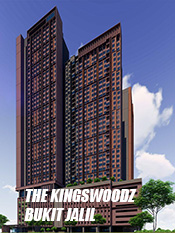



 Posts
Posts


