
BERJAYA Land Bhd (BLand) will take ownership of a new hotel in Vietnam's northern enclave under a US$75 million (RM253.5 million) deal to capitalise on the shortage of luxury hospitality units in the fast-growing Indochinese nation.
BLand will buy from Malaysia's Tradewinds Corp Bhd the 359-room five-star InterContinental Hanoi Westlake Hotel within the shores of Hanoi's West Lake.
The hotel will be managed by InterContinental Hotel Group, a global hospitality entity, with more than 3,700 hotels across nearly 100 countries in its portfolio.
"It gives us the opportunity to participate in the growth of the Vietnamese tourism industry," BLand chief executive Datuk Francis Ng said in a statement yesterday.
The deal, inked last week, will see BLand's wholly-owned Berjaya Leisure (Cayman) Ltd buying the entire stake in Tradewinds Corp's unit T.P.C. Development Ltd for US$25 million (RM84.5 million).
TPC owns 75 per cent of InterContinental Hanoi Westlake Hotel.
Berjaya Leisure will also assume US$50 million (RM169 million) worth of inter-company debts owed by TPC to its parent Tradewinds Resources Sdn Bhd which, in turn, is entirely owned by Tradewinds Corp.
BLand will resort to a combination of internal funds and bank loans to finance the deal, expected to be done by March 2008.
BLand, a unit of Malaysian conglomerate Berjaya Corp Bhd, has RM37.2 billion worth of overseas real estate jobs in China, Thailand and Vietnam, according to research firm ECM Libra Avenue.
By New Straits Times (By Chong Jin Hun)
Wednesday, November 14, 2007

Guocoland set to offer another niche development
KUALA LUMPUR: GuocoLand (M) Bhd is planning to offer another niche development
called The Nest in Kajang after successfully launching Cirrus, a bungalow and high-rise
condominium project located in Cheras, last month.
According to its annual report, The Nest will offer 36 bungalows with contemporary designs. The built-ups range between 3,810 sq ft and 5,236 sq ft, with prices starting from RM1.46 million. The developer completed the acquisition of the 8.76-acre freehold tract for a total cash
consideration of RM9 million recently.
For Cirrus, the developer has launched its bungalows first. Comprising 22 units, they have built-ups between 5,500 sq ft and 7,000 sq ft, with a price tag of RM2.7 million onwards. Situated on a 16-acre freehold tract, GuacoLand completed the acquisition earlier this year for a total cash consideration of RM66.7 million. The developer is still in the midst of planning
stages for the high-end condos.

An artist's impression of the Damansara City project
Another project expected to be launched early next year is the Damansara City development. Located on an 8.5-acre freehold tract next to Menara Milenium in Damansara Heights, the mixed project will offer some 2.2 million sq ft of residential, commercial and retail space.
GuocoLand group managing director Kwek Leng Seng said in its 2007 annual report, that Damansara City is envisaged to be an integrated commercial development that reflects the theme of “A city to Live, Work, Rest and Play”.
When completed in 2010, Damansara City will comprise a lifestyle retail mall, office towers, luxury condominiums, serviced apartments and a five-star boutique hotel that will be seamlessly integrated and incorporate state-of-the-art environmentally friendly and energy efficient architectural designs.
It is understood that construction has started on the basement levels and the luxury condominiums will be the first component to be launched. Meanwhile, Guocoland’s mixed
development along Old Klang Road in Kuala Lumpur, called Commerce One and Residence One, is moving along. Seven out of nine units of Commerce One have been sold. Commerce One comprises a block of five-storey shop offices with a lot size of 26ft by 77ft and priced from RM2.4 million. Two weeks ago, the developer completed a show unit for Residence One apartments to help boost sales. The leasehold project was opened for sale in April and is located on a 1-acre tract within Bedford Business Park, opposite Pearl Point shopping mall.
GuocoLand’s group revenue improved by 11%, from RM131 million to RM146 million,
following higher contribution from its residential projects. The results were based
on its financial year ended June 30.
By theSun (By Loo Pik Kwan)
called The Nest in Kajang after successfully launching Cirrus, a bungalow and high-rise
condominium project located in Cheras, last month.
According to its annual report, The Nest will offer 36 bungalows with contemporary designs. The built-ups range between 3,810 sq ft and 5,236 sq ft, with prices starting from RM1.46 million. The developer completed the acquisition of the 8.76-acre freehold tract for a total cash
consideration of RM9 million recently.
For Cirrus, the developer has launched its bungalows first. Comprising 22 units, they have built-ups between 5,500 sq ft and 7,000 sq ft, with a price tag of RM2.7 million onwards. Situated on a 16-acre freehold tract, GuacoLand completed the acquisition earlier this year for a total cash consideration of RM66.7 million. The developer is still in the midst of planning
stages for the high-end condos.

An artist's impression of the Damansara City project
Another project expected to be launched early next year is the Damansara City development. Located on an 8.5-acre freehold tract next to Menara Milenium in Damansara Heights, the mixed project will offer some 2.2 million sq ft of residential, commercial and retail space.
GuocoLand group managing director Kwek Leng Seng said in its 2007 annual report, that Damansara City is envisaged to be an integrated commercial development that reflects the theme of “A city to Live, Work, Rest and Play”.
When completed in 2010, Damansara City will comprise a lifestyle retail mall, office towers, luxury condominiums, serviced apartments and a five-star boutique hotel that will be seamlessly integrated and incorporate state-of-the-art environmentally friendly and energy efficient architectural designs.
It is understood that construction has started on the basement levels and the luxury condominiums will be the first component to be launched. Meanwhile, Guocoland’s mixed
development along Old Klang Road in Kuala Lumpur, called Commerce One and Residence One, is moving along. Seven out of nine units of Commerce One have been sold. Commerce One comprises a block of five-storey shop offices with a lot size of 26ft by 77ft and priced from RM2.4 million. Two weeks ago, the developer completed a show unit for Residence One apartments to help boost sales. The leasehold project was opened for sale in April and is located on a 1-acre tract within Bedford Business Park, opposite Pearl Point shopping mall.
GuocoLand’s group revenue improved by 11%, from RM131 million to RM146 million,
following higher contribution from its residential projects. The results were based
on its financial year ended June 30.
By theSun (By Loo Pik Kwan)
Bolton First Half (1H) profits down 50%
KUALA LUMPUR: Bolton Bhd's net profit for the first half (1H) ended Sept 30, 2007 halved to RM18.96 million from RM33.17 million a year ago due to higher cost of sales and the absence of other investing income. Revenue for the six-month period also came in marginally lower at RM168.1 million from RM168.7 million before. That coupled with a 6.8% higher cost of sales took gross profits down 14.1% year-on-year. In notes accompanying its unaudited accounts, the company did not say why earnings came in lower year-on-year. Instead, Bolton said earnings for the second quarter was higher than the first quarter mainly due to lower overhead costs and a RM1.5 million increase in contributions from its quarry and premix division. Its property development and investment division contributed RM118.4 million or 62% of the group's turnover. Bolton's property division remains to be the group's largest earnings generator despite its contribution down RM1.7 million from the previous quarter, it said. Earnings per share fell to 5.63 sen from 10.16 sen previously. Nonetheless, its directors remains confident that the group's performance for the current financial year ending March 31, 2008, will be "comparable" to that of the previous financial year. The company, led by executive chairman Datuk Mohamed Azman Yahya, has in recent months sold non-core assets to cut gearing and rejuvenate its balance sheet. It has refocused its business to property development.
By The EDGE
Property projects set to become major earnings stream for DNP
DNP Holdings Bhd expects its property development activities to serve as a major contributor to earnings, with the launch of several property projects in the Klang Valley and Penang next year.
The Penang-based company will launch three up-market condominium projects in Kuala Lumpur next year in Bukit Ceylon, Jalan Ampang and Jalan U-Thant.
In Penang, between two or three projects are expected to be launched on the island and Seberang Prai, its general manager (treasury and accounts) and company secretary Lee Kong Beng said yesterday.
He did not disclose the gross sales value of the projects as the selling prices of the units have not been determined.
"On Penang island, we will launch a landed property project on a 1.84ha site in Relau during the first half of 2008," he told reporters after the company's annual shareholders' meeting.
Lee said the other two projects on mainland Penang in the central Seberang Prai district will likely to be medium-cost housing projects.
In the Klang Valley, the development on Bukit Ceylon will comprise 420 units of condominiums. The project, which is yet to be named, will sit on a 1.06ha of land and is expected to be launched during the first half of the year.
Along Jalan Ampang, the proposed Menara DNP is set to emerge as an architectural icon, said Lee.
"We have engaged a French architect for this project which will comprise two blocks of 200 high-rise condominiums and is expected to be launched during the second half of 2008."
Meanwhile, along Jalan U-Thant, a low-rise apartment project comprising 30 units will be launched also during the second half of 2008.
On DNP's proposed disposal of its 6.28 per cent stake in Hong Kong-based Diamond String Ltd (the operator of the Ritz Carlton in Hong Kong) for RM66 million, Lee said the proceeds from the proposed transaction will be used to repay borrowings and for working capital.
On the company's trading business, Lee said DNP planned to increase its existing 32 apparel and life-style outlets to 50 by the end of the year.
Its fashion brands which include Topshop, Topman, Dorothy Perkins and Miss Selfridge, are found at outlets in Kuala Lumpur, George Town and Johor Baru.
By New Straits Times (By Marina Emmanuel)
The Penang-based company will launch three up-market condominium projects in Kuala Lumpur next year in Bukit Ceylon, Jalan Ampang and Jalan U-Thant.
In Penang, between two or three projects are expected to be launched on the island and Seberang Prai, its general manager (treasury and accounts) and company secretary Lee Kong Beng said yesterday.
He did not disclose the gross sales value of the projects as the selling prices of the units have not been determined.
"On Penang island, we will launch a landed property project on a 1.84ha site in Relau during the first half of 2008," he told reporters after the company's annual shareholders' meeting.
Lee said the other two projects on mainland Penang in the central Seberang Prai district will likely to be medium-cost housing projects.
In the Klang Valley, the development on Bukit Ceylon will comprise 420 units of condominiums. The project, which is yet to be named, will sit on a 1.06ha of land and is expected to be launched during the first half of the year.
Along Jalan Ampang, the proposed Menara DNP is set to emerge as an architectural icon, said Lee.
"We have engaged a French architect for this project which will comprise two blocks of 200 high-rise condominiums and is expected to be launched during the second half of 2008."
Meanwhile, along Jalan U-Thant, a low-rise apartment project comprising 30 units will be launched also during the second half of 2008.
On DNP's proposed disposal of its 6.28 per cent stake in Hong Kong-based Diamond String Ltd (the operator of the Ritz Carlton in Hong Kong) for RM66 million, Lee said the proceeds from the proposed transaction will be used to repay borrowings and for working capital.
On the company's trading business, Lee said DNP planned to increase its existing 32 apparel and life-style outlets to 50 by the end of the year.
Its fashion brands which include Topshop, Topman, Dorothy Perkins and Miss Selfridge, are found at outlets in Kuala Lumpur, George Town and Johor Baru.
By New Straits Times (By Marina Emmanuel)
Mah Sing owner open to strategic partnership
The major shareholder of property developer Mah Sing Group Bhd has not ruled out the possibility of tying up with strategic partners who can add value to the group.
A company spokesperson said in a statement that managing director Datuk Seri Leong Hoy Kum, who owns a 41 percent stake in the firm, was not immediately selling his shares in the company.

LEONG: Owns 41 pc stake in the firm, but is not immediately selling his shares in the company
"Our major shareholder wants to maintain his controlling stake and has no intention of selling down."
"We are not in talks with any parties at the moment but won't discount the possibility of tie-ups with strategic partners who can add value to the group," the spokesperson said in an-email reply to Business Times
The spokesperson was commenting on a Business Times report yesterday which said a consortium of Middle East and Malaysian institutional and individual investors are considering taking a strategic stake in the developer.
It is understood various parties, including Middle East and Malaysian investors, have been briefed on Mah Sing's outlook and structure recently.
By New Straits Times
A company spokesperson said in a statement that managing director Datuk Seri Leong Hoy Kum, who owns a 41 percent stake in the firm, was not immediately selling his shares in the company.

LEONG: Owns 41 pc stake in the firm, but is not immediately selling his shares in the company
"Our major shareholder wants to maintain his controlling stake and has no intention of selling down."
"We are not in talks with any parties at the moment but won't discount the possibility of tie-ups with strategic partners who can add value to the group," the spokesperson said in an-email reply to Business Times
The spokesperson was commenting on a Business Times report yesterday which said a consortium of Middle East and Malaysian institutional and individual investors are considering taking a strategic stake in the developer.
It is understood various parties, including Middle East and Malaysian investors, have been briefed on Mah Sing's outlook and structure recently.
By New Straits Times
Tuesday, November 13, 2007
CDL, Wachovia in S$432 million Cliveden at Grange deal
SINGAPORE: City Developments Ltd (CDL) and US-based Wachovia Group have formed a joint venture to buy two tower blocks at CDL’s luxury Cliveden at Grange (pix) for S$432.4 million (RM995.6 million). Under the agreement, Wachovia Development Corp will take a 60% stake
and CDL will hold the rest through subsidiary City Venture Properties (CVP) in the venture, called Grange 100. The tower blocks have 22 units each. The average price for all units purchased is S$3,750 psf. Cliveden at Grange, near Orchard Road, has four 24-storey towers with 3- (2,153 sq ft) and 4-bedroom (2,842 sq ft) apartments.

By The EDGE Singapore
and CDL will hold the rest through subsidiary City Venture Properties (CVP) in the venture, called Grange 100. The tower blocks have 22 units each. The average price for all units purchased is S$3,750 psf. Cliveden at Grange, near Orchard Road, has four 24-storey towers with 3- (2,153 sq ft) and 4-bedroom (2,842 sq ft) apartments.

By The EDGE Singapore
PJCC poised to take off
PETALING JAYA: PJCC Development Sdn Bhd is planning to launch two blocks of serviced apartments in its one-stop commercial hub, the PJ Commercial Centre (PJCC) by early next year.

An artist's impression of the PJCC skyline
Comprising 450 units in two blocks called PJCC Avenue and PJCC Tower in Petaling Jaya South near Sunway, the units will have built-up areas ranging from 550 sq ft to 1,800 sq ft.
PJCC Development’s marketing manager Vincent Tai said, the apartments would have various layouts to cater to young professionals.

Tai: PJCC's serviced apartments cater to young professionals
He said the selling prices of the apartment, which have yet to be finalised, are expected to be in the affordable range of between RM200 and RM220 psf.
“The gross development value (GDV) of the apartments is expected to be RM80 million,” said Tai, adding that the 33-acre PJCC, which is designed around a six-acre lake, is set to be a commercial hub once completed in 2014 with its Auto City, Retail City, Lake City and Tower City precincts.
It will house more than 2.9 million sq ft of commercial space upon completion, with a total GDV of RM500 million. “Phase 1, which is the Retail City comprising 302 units of 3-, 6- and 8-storey
shop offices, has recorded a take-up rate of 95% since its launch seven months ago,”
said Tai.
The 3-storey shop offices with built-ups of 4,412 sq ft are priced from RM785,000, while the 6-storey strata shop offices with built-ups of 1,228 sq ft are priced from RM188,900 per unit. The developer is looking at an enbloc sale for its 8-storey shop office, which has a built-up of 20,425 sq ft and is priced at RM3.9 million.
Phase 2, comprising the Auto City complex, bazaar complex, office tower, hotel and a shopping complex, is scheduled for launch next year. The area is accessible from the New Pantai
Expressway.
PJCC Development's previous projects include the 20-storey MCB Plaza and a 14-storey condominium project, both on Changkat Raja Chulan, Kuala Lumpur, Taman Ampang Mewah in Ampang and Taman Sri Pangkor on Pangkor Island.
By theSun (By Tim Leonard)

An artist's impression of the PJCC skyline
Comprising 450 units in two blocks called PJCC Avenue and PJCC Tower in Petaling Jaya South near Sunway, the units will have built-up areas ranging from 550 sq ft to 1,800 sq ft.
PJCC Development’s marketing manager Vincent Tai said, the apartments would have various layouts to cater to young professionals.

Tai: PJCC's serviced apartments cater to young professionals
He said the selling prices of the apartment, which have yet to be finalised, are expected to be in the affordable range of between RM200 and RM220 psf.
“The gross development value (GDV) of the apartments is expected to be RM80 million,” said Tai, adding that the 33-acre PJCC, which is designed around a six-acre lake, is set to be a commercial hub once completed in 2014 with its Auto City, Retail City, Lake City and Tower City precincts.
It will house more than 2.9 million sq ft of commercial space upon completion, with a total GDV of RM500 million. “Phase 1, which is the Retail City comprising 302 units of 3-, 6- and 8-storey
shop offices, has recorded a take-up rate of 95% since its launch seven months ago,”
said Tai.
The 3-storey shop offices with built-ups of 4,412 sq ft are priced from RM785,000, while the 6-storey strata shop offices with built-ups of 1,228 sq ft are priced from RM188,900 per unit. The developer is looking at an enbloc sale for its 8-storey shop office, which has a built-up of 20,425 sq ft and is priced at RM3.9 million.
Phase 2, comprising the Auto City complex, bazaar complex, office tower, hotel and a shopping complex, is scheduled for launch next year. The area is accessible from the New Pantai
Expressway.
PJCC Development's previous projects include the 20-storey MCB Plaza and a 14-storey condominium project, both on Changkat Raja Chulan, Kuala Lumpur, Taman Ampang Mewah in Ampang and Taman Sri Pangkor on Pangkor Island.
By theSun (By Tim Leonard)
Quill Capita posts RM4.9m 3Q net profits
KUALA LUMPUR: Quill Capita Trust Bhd, a real estate investment trust (REIT) declared RM4.9 million in net profits or 1.66 sen per share for the third quarter ended Sep 30, 2007, along with a revenue of RM7.39 million. For the cumulative nine-month period, net profits amounted to RM12.21 million or 4.74 sen a share while revenue was RM19.31 million. The sum of dividends declared during the period amounted to 3.99 sen per share. Meanwhile, net assets stood at RM1.06 per share as at Sept 30. Quil Capital closed 2 sen lower at RM1.12 yesterday. By The EDGE
Nusajaya land prices may double in 2 years
KUALA LUMPUR: Land prices in Nusajaya in the Iskandar Development Region may double in the next two years, making UEM World Bhd a direct beneficiary, said Credit Suisse.
“Coupled with South Johor Economic Region’s (SJER) proximity to rapidly growing Singapore, which has limited land and the wide gap between their land prices, we believe land prices in Nusajaya can only head up.
“They have already doubled from RM7 psf to RM15 psf in the past one year without much real development, and now with the Middle East investors coming in to quicken the pace of development, it is not unrealistic for land prices to double in another two years, which is the average price appreciation in other Asian special economic zones.
“This would bring land prices to the RM31 psf in our RNAV of RM6 per share for UEM,” Credit Suisse said in a report after taking UEM World’s senior director of corporate development on a non-deal roadshow to the United States and meeting 20 of its clients in San Francisco, Boston, and New York from Oct 22-26.
“While implementation of the SJER might not be clear-cut due to politics and culture, (government investment arm and UEM World major shareholder) Khazanah (Nasional Bhd) is devoting its efforts to develop the SJER and is working with Singapore for mutual benefit,” Credit Suisse said, maintaining UEM World as an outperform.
It said despite an absence of positive news flow from UEM World, the senior director assured clients that negotiations were progressing well and two major announcements were a possibility over the next two to three months: joint ventures between UEM and Middle Eastern investors to develop its land in Nusajaya, and the tier one theme park operator in Nusajaya.
On the latter, Credit Suisse said The Edge weekly had reported that Walt Disney Company had expressed its seriousness to build a theme park on a 200ha site in Nusajaya and had specified its requirements.
It said many clients had pointed out that the healthcare division was out of place, and that UEM World had had a poor track record overseas; hence, UEM World should streamline its group structure to be more focused on its property development in Nusajaya.
Credit Suisse said the UEM World official responded that it planned to keep the healthcare division and build up its non-concession business, which has better margins.
“UEM plans to spend RM400 million to expand its cement capacity to meet demand from the Iskandar Development Region by 2010, and another RM1.5 billion over the next three years to fund its property development in Nusajaya and acquire land in the Klang Valley,” it said.
By THE EDGE
“Coupled with South Johor Economic Region’s (SJER) proximity to rapidly growing Singapore, which has limited land and the wide gap between their land prices, we believe land prices in Nusajaya can only head up.
“They have already doubled from RM7 psf to RM15 psf in the past one year without much real development, and now with the Middle East investors coming in to quicken the pace of development, it is not unrealistic for land prices to double in another two years, which is the average price appreciation in other Asian special economic zones.
“This would bring land prices to the RM31 psf in our RNAV of RM6 per share for UEM,” Credit Suisse said in a report after taking UEM World’s senior director of corporate development on a non-deal roadshow to the United States and meeting 20 of its clients in San Francisco, Boston, and New York from Oct 22-26.
“While implementation of the SJER might not be clear-cut due to politics and culture, (government investment arm and UEM World major shareholder) Khazanah (Nasional Bhd) is devoting its efforts to develop the SJER and is working with Singapore for mutual benefit,” Credit Suisse said, maintaining UEM World as an outperform.
It said despite an absence of positive news flow from UEM World, the senior director assured clients that negotiations were progressing well and two major announcements were a possibility over the next two to three months: joint ventures between UEM and Middle Eastern investors to develop its land in Nusajaya, and the tier one theme park operator in Nusajaya.
On the latter, Credit Suisse said The Edge weekly had reported that Walt Disney Company had expressed its seriousness to build a theme park on a 200ha site in Nusajaya and had specified its requirements.
It said many clients had pointed out that the healthcare division was out of place, and that UEM World had had a poor track record overseas; hence, UEM World should streamline its group structure to be more focused on its property development in Nusajaya.
Credit Suisse said the UEM World official responded that it planned to keep the healthcare division and build up its non-concession business, which has better margins.
“UEM plans to spend RM400 million to expand its cement capacity to meet demand from the Iskandar Development Region by 2010, and another RM1.5 billion over the next three years to fund its property development in Nusajaya and acquire land in the Klang Valley,” it said.
By THE EDGE
MIA seeks enhanced regulatoryrole, better recognition
KUALA LUMPUR: The Malaysian Institute of Accountants (MIA) is considering the introduction of a competency assessment for accountants according to international standards and enhanced regulatory functions of the MIA that would enable it to participate more actively in designing surveillance mechanisms and disciplinary actions against errant accountants. These are among the amendments to the Accountants’ Act 1967 that the professional board is proposing to enhance local accountants’ competitiveness on the global front. MIA president Nik Mohd Hasyudeen Yusoff said: “We are working with the Ministry of Finance and have issued a consultative document regarding the proposed amendments to various key players such as the Securities’ Commission, Bank Negara, universities and other professional accounting bodies.” “We have obtained their feedback and we will finalise the proposed amendments by the end of the year. We hope they would be tabled at the Parliament as soon as possible,” he said. Nik Mohd Hasyudeen said the MIA was looking at how the accounting profession could be restructured in order to be resilient towards the changes in a competitive environment, partly due to globalisation, in which changes to the Accountants’ Act would be required. He said: “The Act was enacted in 1967 based on the realities of that time. However, as we move forward, we find that the landscape of accounting has changed.” “We want to have a more robust process in the accounting environment, so that we can react faster to make sure public confidence in the capital market is sustained,” he told reporters after the opening ceremony of the National Accountants Conference 2007 themed “Accountants: Towards Excellence, Achieving World Class” here yesterday. Nik Mohd Hasyudeen said: “For instance, under the current Act, we find difficulty in addressing the distress in the capital market because of the way the Act is structured. “With the amendments, we would be able to investigate alleged accounting malpractices faster, as we are seeking to enlarge the number of investigative committees that would speed up the process and help prevent adverse reports from circulating in the capital market.” Additionally, he said the proposed amendments would allow the professional body to recognise more overseas accountants, and vice versa. He said: “There are accountants from Vietnam that are interested in practising in our country, and we want to open the pathways for them.” “In return, we also want to look at how our members can also be accepted as professional accountants overseas as we believe it’s a two-way process,” Nik Mohd Hasyudeen said.
By The EDGE (By Yong Yen Nie)
Dijaya enters RM200m JV
KUALA LUMPUR: Dijaya Corporation Bhd has entered a joint-venture (JV) agreement with Aliran Firasat Sdn Bhd to develop the latter’s commercial land in Pekan Baru Sungai Buloh, Selangor, for an estimated gross development value of RM200 million. It said yesterday that it had entered into the JV via its subsidiary Nadi Jelita Sdn Bhd to develop 8.43 hectares of land into an integrated commercial development comprising shop-offices together with car park facilities and other necessary infrastructure. Nadi Jelita will finance the project using cash advances funded by Dijaya via internally generated funds and bank borrowings. Nadi Jelita will be responsible for all related work and should the cost exceed RM40 million, it will be borne by Aliran Firasat. The land has a net book value of RM65.6 million and the total development cost of the project excluding land is RM110 million.
By The EDGE
WCT to build AEON mall
KUALA LUMPUR: WCT Engineering Bhd has accepted a RM185 million contract from AEON Co (M) Bhd for the proposed design and build, testing and commissioning of a shopping complex in Johor Bahru. In a statement yesterday, WCT said the project for the three-storey shopping complex with a gross floor area of 895,000 sq ft was located on a parcel of land in Pulai. The project, expected to be completed by January 2009, was expected to contribute positively to its earnings and net assets for the financial year ending Dec 31, 2008, it added. By The EDGE
Consortium eyes strategic stake in Mah Sing
A consortium of Middle East and Malaysian blue-chip institutional and individual investors is eyeing a strategic stake in established property developer Mah Sing Group Bhd, sources said yesterday. 
The local, Abu Dhabi and Kuwait investors are the ones who have been steadily purchasing real estate in Malaysia and investing in the property boom in the country in recent months.

In control: With a 40 percent shareholding Leong would continue to maintain a controlling stake in the firm
"They are eyeing a strategic stake in Mah Sing to complete part of the Middle East-Southeast Asia property value chain," one source told Business Times.
"Partnering with the current major shareholders and management of Mah Sing will likely be the vehicle of choice for the investors' Southeast Asian expansion plans.
"This is especially due to its strong cash balances, low gearing, solid management and good track record. Mah Sing, with its financial muscle and niche offerings, is of strong appeal to the consortium of investors," the source added.
The sources declined to identify the potential investors in the consortium and Mah Sing officials were unavailable for comment.
Mah Sing's share price closed at RM1.71 on Bursa Malaysia yesterday.
The sources said the company was currently trading at an attractive valuation and the consortium was likely to enter into an equal partnership in buying a strategic stake in the developer.
The current controlling shareholder Datuk Seri Leong Hoy Kam, with 40 per cent stake, would continue to maintain a controlling stake in the firm and retain management control, they added.
Institutional investors such as Capital Group International Inc and Koperasi Permodalan Felda are other stakeholders with holdings of 9.7 and 8.6 per cent respectively in the company.
The deal would likely vary from the manner in which Middle East investors recently bought into construction firm, Putrajaya Perdana, and water works company Loh & Loh Corp Bhd.
In Putrajaya Perdana and Loh & Loh, the Middle East investors together with local investors took control of the companies by buying major stakes in both of them, triggering a general offer.
Mah Sing is an established developer with 14 projects spread across the Klang Valley, Kuala Lumpur, Penang and Johor Baru.
It is one of the few local Malaysian developers who have received international awards such as the International Property Award 2007 in association with CNBC in London for its Damansara Legenda project in Petaling Jaya.
The latest investor interest in Mah Sing follows moves by investors from Abu Dhabi institutions such as Mubadala Development Company and Aldar, along with Kuwait Finance House and others to pour billions of ringgit to purchase land in the Iskandar Development Region in Johor and elsewhere.
Prominent individual investors from the Gulf and Malaysia also secured controlling stakes in companies such as Putrajaya Perdana and Loh and Loh, both companies with healthy cash piles and negligible debt, to enhance their bids for Malaysian, Abu Dhabi and Kuwait projects.
"With the potential tie-up of the consortium of investors in Mah Sing, the company's ability to grow further locally, regionally and in the Middle East is set to be very good," said the source.
Based on its closing price of RM1.71 yesterday, Mah Sing is currently traded at a prospective price earnings ratio of nine times and seven times for financial years 2008 and 2009 respectively, analysts said.
Mah Sing is traded at a deep 40 per cent discount to its revised net asset value of RM2.86 as estimated by Macquarie Research.
Deutsche Bank (target price of RM3.02), CIMB (target price of RM3.00), Aseambankers (target price of RM3.00) and SJ Securities (target price of RM3.15) have all placed a buy on Mah Sing stock.
The company has a dividend policy of 40 per cent of net profit as dividends for the 2007 financial year.
The group's market capitalisation has doubled to over RM1billion to date from RM511 million as at end 2006.
By New Straits Times
WCT wins RM185mil job
KUALA LUMPUR: WCT Engineering Bhd has bagged a RM185mil contract from AEON Co (M) Bhd to design, build, test and commission a three-storey shopping complex in Mukim Pulai, Johor.
In a filing with Bursa Malaysia, WCT said the construction of the complex was expected to be completed by January 2009.
By Bernama
ACM 2007

ACM Expo & Forum - one of Asia's top tradeshow for the ICT & Media Industry will achieve a milestone in 2007 as its celebrates its 10th edition. It has brought together over 10,000 trade visitors and thousands of exhibitors which have resulted in over RM105 million worth of business deals and countless partnerships.
ACM 2007 Expo & Forum will be even more exciting as new technologies in the WORLD OF ICT come on stream. It's time you connect to Asia's leading INTERACTIVE platform for HIGH SPEED networking opportunities with thousands of decision makers and buyers across ASIA and the Middle East.
The exhibition is open to professionals, trade and business visitors only.
Admission is FREE.
Date: 20 -22 November 2007
Opening hours: 10.00am - 5.30pm ( 20 - 21 Nov )
10.00am - 4.00pm ( 22 Nov )
Venue:
ACM 2007 Expo & Forum will be held at the ultra modern Kuala Lumpur Convention Centre located next to the Petronas Twin Towers at the heart of Kuala Lumpur City Centre. Facilities include fully equipped exhibition halls and meeting rooms. The venue has ample parking and is efficiently served by extensive public transportation systems. Designed as " City within a City ", the venue is located within walking distance to major hotels and food and entertainment outlets.
For detail information, please visit website http://www.acm-expo.com/index.html
Monday, November 12, 2007
Brick and mortar challenge
By The EDGE Raja Mohd Azmi Raja Razali broke out in a wide smile as he extended his hand and I thought he looked a little different — it had to be the missing AirAsia cap! So what's the brick-and-mortar story? Raja Azmi is now the executive chairman of Mainstay Properties Sdn Bhd and Mainstay Development Sdn Bhd. It takes a while to associate the bubbly Raja Azmi with the scale model of a hybrid commercial complex called space u8 that takes centrestage in the developer's modest shop-office, located in Kuala Lumpur's Taman Danau Desa. "Based on the enquiries received, we do not see a problem in selling the project, but we want to make sure it works beyond sales. We cannot just 'tembak'. The [project] concept has to work... We cannot go half-way. We must show our commitment; we cannot just sell and 'cabut'. Either be there all the way or no way!" says Raja Azmi emphatically on space u8, his debut project. The freehold stratified project, coming up in the Shah Alam hot spot of Bukit Jelutong, embraces what the developer calls the SUMO (shop unit mall office) concept that combines business and leisure under one roof. In all, there are 58 units of four-storey shop office (46 intermediate, eight end and four corner units) with one four-storey anchor (84,000 sq ft) on an 8.39-acre tract. space u8 will be soft launched next month. The architectural design has managed to capitalise on the odd-shaped plot to come up with shop offices with dual frontages, most of which afford a view of an internal courtyard, designed to let in natural lighting plus regulate the temperature, helped by natural air flow (see accompanying story). How did Raja Azmi, an accountant by profession, end up a developer? What does the once executive vice-president and group chief financial officer of AirAsia know about brick and mortar? It all started very quickly after he called it a day at AirAsia, Raja Azmi tells City & Country in an interview inevitably peppered with fond references to Tony Fernandez and his relentless journey to success. "I don't want to be a billionaire. Tony has a vision of AirAsia being the biggest airline in the world. Tony is a one of a kind; we are lucky in Malaysia we have a Tony. I have worked with a number of CEOs but Tony is something else... "Tony is on a rocket and he has to have people who are 100% with him. It's very intense, not easy. Our yardstick is global — we want to be the world's best. The first five years were growth years and I was there right from the start. But I now want to have a bit more time for myself..." Raja Azmi may have thought he had cleared his plate, but it is fast piling up again. The space u8 site is part of 20.8 acres that he and his partners, introduced by their mutual friends, acquired from Guthrie for RM59.2 million. Besides the 8.39 acres (RM36.5 million) for space u8, the rest is industrial land. "Originally, it started off with me as an investor. But as we got along, it became more and more exciting and I found myself getting more involved. Initially, I wanted to be a director but now, my partners have put me as executive chairman. It is exciting in some ways as my input 'boleh pakai' for finance, marketing, networking and so on," he says. "I am optimistic the project will work. Why? Because we have done our homework. We believe the concept is right for the area. There is a good feel about the project. Selling the units is not a problem, but it is what happens after that..." His partners and key management team, who offer different types of experiences in both construction and property development, are totally in sync. The multi-disciplined professionals onboard include Zakaria Meranun (chairman of Atrium REIT Managers, manager of Malaysia's first industrial asset-focused real estate investment trust) and Hasnan Saaidin, with over 14 years of experience that extend to projects like the Petronas Twin Towers and Precinct 20 Putrajaya. As for the pricing, the space u8 units are tagged at an average of RM330 psf. This works out to about RM2.97 million for a 4-storey block or between RM393,000 and RM1.4 million for a stratified floor. The developer will be running the courtyard space. The rate for maintenance, primarily for the common walkway, staircase and lifts, has not been fixed but the developer says it will be the market norm. A question-and-answer session with Raja Azmi reveals what this new kid on the property block is made of, life after AirAsia and how he puts to use the guiding principles that have been inculcated at AirAsia. City & Country: What do you know about property development? Did it take you long to decide on becoming a developer? What parallels can be drawn from property development and AirAsia? How do you look at the property market? Property development's about track record, credibility... What's next after space u8? Your plans for the industrial land in Shah Alam? Do you miss the pace at AirAsia? Any sense of emptiness after AirAsia? What other businesses are you now in? What is life after AirAsia?
Until June this year, Raja Azmi was the CEO of Fly Asian Xpress Sdn Bhd (FAX), now renamed AirAsia X — the world's only long-haul low-cost airline and an extension of AirAsia. In fact, he was one of the pioneers behind AirAsia, Asia's leading low-cost airline.
Board and key management of Mainstay Development.
But listen to him talk shop and one cannot miss the passion and the must-succeed philosophy that must have been honed in the five years he worked alongside childhood friend and airline maverick Datuk Tony Fernandez, a man known for his ability to successfully change the business landscape.
Raja Azmi is right on the mark. While a project needs to boast unique selling points, a credible developer, who is in for the long term, has to create and build value. What good, after all, is a commercial project that is all sold out but is lifeless?
Raja Azmi: The price of the land must be right. When it comes to property, it is about location, location, location. I like the land because I stay in Shah Alam (laughs), because there is a premium attached to the Bukit Jelutong address.
It is all about people — having the right people with chemistry and who have the ability to work. We are a professional organisation; not an Ali Baba. We want to do this well. A property is a property, you sell to maximise value. This is our first project and we have to get it right!
It is not dissimilar — it requires teamwork, a single objective. There is also the similar feeling that the project will not fail... the vibes are right. Timing is important — AirAsia might not have been so good had it started five years later or two years earlier. When we first started, there was uncertainty as to how AirAsia would pan out but there was deep confidence that it would not fail. We went through the model and the financials. I have a similar feeling that space u8 will not fail. space u8 is a concept development and it has what the market needs. AirAsia has the right key people who are clear about what they want to do. The vision is clear. The key people execute it with passion and commitment. These people are professionals, chosen based on merit. space u8 also has all the expertise required — from construction to pricing and marketing. The team worked very fast. We have a single objective. We want to ensure that it will not merely be launched with a bang. We want people to go there. We are not a fly-by-night developer. The basic business fundamentals would apply in both (AirAsia and property) — giving the market what it wants.
We have gone through cycles. Some say the cycle is coming to an end. The government is pumping money into the economy with the promotion of the Iskandar Development Region, North Corridor Economic Region and East Coast Economic Region, so I don't think the market has peaked. My only worry is the US or China...
We want to build credibility. We have the expertise and are sincere. We have to think beyond racial lines and stuff like that. We have the right people for the right job — whoever is best for the job, gets it. We have a very good team here. We are focused.
It is too early to tell. But we are looking. We are here for the long term. We have been looking at a couple of prospects. A joint venture would be easier but we have to find the right one. This will probably be in the Klang Valley, but not Shah Alam.
We are holding it for the moment. We are looking at the possibility of custom building it... Zakaria , one of our partners, is chairman of Atrium REIT managers, so there is some synergy that we can look at. Atrium is basically into industrial properties.
The five years were intensive but fun. If you are not in AirAsia, you will not get that experience. You are able to change the landscape — you only read that in books! It was a chance of a lifetime. The company has to move on, the successors are in place, so let the next echelon take over. But Tony must be there! I want to enjoy life a bit.
Sometimes I miss the intensity (laughs). Five years is a long time... it was the best experience of my life. It's tough. Overall, I am happy. I never knew the kind of business opportunities out there. People think I have a lot of money but I don't have so much... I've got time! Now I can say that! (more laughter).
I am involved in start-ups... Masterskill (M) Sdn Bhd (a nurses training college) is going through an exciting phase, we want to get it listed next year. Then there is Gemilang Maintenance Services Sdn Bhd, which is a facilities management company with a contract to manage federal government buildings. Again, there is no reason why we cannot move to the next level of business. My role is to facilitate that move and hence allow more people to be rich, hopefully. I am still a shareholder of AirAsia X and AirAsia. I'm cool! I'm lucky. I'm blessed. My way of giving back is to try make other people richer.
You live only once. I have five children aged between 22 and eight. And one wife (laughs). My eldest son, aged 19, is in AirAsia's cadet pilot scheme — I nominated him but he has to go through all the tests before he can qualify. I wanted to be a pilot before but [couldn't because] I needed glasses. Those days, you needed 2020 vision before you could fly a plane and I ended up an accountant. Now my son can live my dreams... At least I worked in an airline; that's as close to an aircraft as I can get! I have thought of getting flying lessons... Who knows?
Malaysians making an impact at Cityscape Dubai

Something out of this world; glitzier and larger in size and scale; a whole different culture; the place to be for real estate. These were some of the comments of Malaysian developers and architects who returned from this year's Cityscape Dubai 2007, held between Oct 16 to 18 at the Dubai International Exhibition Centre. Officially the largest business-to-business real estate event in the world, Cityscape Dubai has been growing at breakneck speed since its introduction five years ago. This year's exhibition welcomed more than 50,000 regional and international investors, property developers, governmental and development authorities, architects, designers, consultants and professionals from more than 120 countries. More than 1,000 exhibitors showcased their projects and services on 70,000 sq m of exhibition space. This year's exhibition saw a 50% and 27% increase in the number of exhibitors and exhibition space, respectively. Previndran Singhe, CEO of Zerin Properties, tells City & Country that Cityscape Dubai is the place to be. "It's the biggest and most diverse real estate platform in the world. Truly a business-to-business (B2B) platform with lots of institutional investors." His second time at Cityscape Dubai, Previn came away impressed with some of the exhibitors, including Malaysia's top property developer, S P Setia Bhd. Apart from S P Setia, other Malaysian players who went on their own were UEM Land Sdn Bhd, Ekovest Bhd and KL Metro group. They exhibited Nusajaya, Danga Bay and the Legend International Water Homes, respectively. Architecture firms who went were Archicentre Sdn Bhd, as S P Setia's architects and Zone Architects. Since its inception in 2002, more Malaysian companies are beginning to exhibit in Cityscape Dubai. Matrade began organising a Malaysian Pavilion four years ago. This year, it had six companies exhibiting at the Malaysian Pavilion. They were Arch Collection Sdn Bhd, MK Land Holdings Bhd, Maymont Development Sdn Bhd, Park Games Equipment Sdn Bhd, Unique Green Recreation Sdn Bhd and Veritas Architects. According to national news agency Bernama, the companies received more than 408 enquiries during the three-day exhibition and recorded sales under negotiation over RM1.75 billion. The place to be The Windcatcher is part of two iconic towers (the other being Trillium) in S P Setia's 97 ha project called Setia City in Shah Alam. Another project showcased by the developer was Setia EcoCity in Johor Baru. The twin city to Singapore will boast yet another iconic structure called the Chrysalis Towers, three sculpted and articulated vertical art structures rising from a 7.5ha central urban park. "We want to promote Malaysian architecture and the incredible added value that good design can bring to all projects and buildings. Setia City and Setia EcoCity stood out well from the rest of the projects that were exhibited and we look forward with great anticipation for the next step for Gerard describes Cityscape Dubai as something out of this world. "The exhibitors know how to do things in a different style, spending millions on one exhibition. We're talking about taking up 10,000 sq ft of space for a booth!" This is Maymont's first overseas promotion and it is thinking of participating in other Cityscapes now. "We've been thinking about taking Matahari overseas for a while and thought Cityscape Dubai would be a good option. We're glad we did as Maymont has also managed to garner interest from various parties who want to look at JVs with us to work with their projects in the UAE. The scale of projects they are building is amazing. Here, we offer units in the hundreds. There, they're talking about thousands," says Gerard. To date, Maymont's Matahari is more than 60% sold. Another first timer, UEM Land says response have been positive and very encouraging. "Prospective investors were impressed and interested in the natural green tropical setting of Nusajaya," says its managing director Wan Abdullah Wan Ibrahim. Nusajaya is located in Johor's Iskandar Development Region. According to Wan Abdullah, UEM Land has already signed up for Cityscape Asia (in Singapore)and Dubai in April and October 2008, respectively. He feels there is a strong need to educate prospective investors on the location of Nusajaya in both its physical and economic context. "Cityscape Dubai has given us the opportunity to be in association with established international brands which will enhance Nusajaya's positioning as a regional city," Wan Abdullah adds. Lessons learnt For Datuk Low Tak Fatt, managing director of KL Metro group, Dubai is not about attracting the Arabs. The group has been participating in Cityscape Dubai since 2005 and recently decided to set up an office there to further promote its water chalets in Port Dickson. Although Low observes that there is a slowdown where very high-end properties are concerned, investors are very interested in Malaysia because of the guarantedd rental returns", he says of KL Metro's project. "That is why we decided to enter India as well. Our economy is doing well and these people still perceive us to be a good market. Singapore is expensive and Thailand is politically unstable, so we are perfect." The success of Cityscape Dubai has contributed to the launch of sister events around the world, including Cityscape Abu Dhabi, Cityscape Asia, Cityscape China, Cityscape India and Cityscape South America. This year, Cityscape became a biannual event in the Middle East with Abu Dhabi, the capital of the United Arab Emirates, a natural choice for a second location. By The EDGE (By Diana Chin)
"They had a fantastic booth showcasing several of their projects including the award-winning Setia Eco Park and carried the eco theme through out," shares Previn. This is S P Setia's first outing at Cityscape Dubai.
The buzz at Cityscape Dubai 2007, says Tan Loke Mun, is "pretty much the same as last year's, just glitzier and larger in size and scale". Director of Archicentre and immediate past president of Pertubuhan Akitek Malaysia (PAM), Tan echoed Previn's thoughts about S P Setia's booth standing out as it continued to develop the eco theme it first used at Cityscape Singapore in April.
Tan says projects in this region are generating a lot of interest, especially modern new cities of the future that place an emphasis on ecology, the environment and energy efficencies.
"S P Setia's Windcatcher Tower was the most popular with many coming round to see the model and take photos. That was quite gratifying to us and we are more convinced now of the need for buildings of the future to address energy usage and improve efficiencies as well as harness energy from the sun and wind where they can," Tan tells City & Country.
Malaysian and regional architecture," he adds.
Good response
While S P Setia may have impressed the crowd, Maymont Development's Matahari project was reeling in the buyers. According to its director Gerard Pereira, the developer recorded RM30 million in sales and bookings and expects more to come for its luxury super condominiums located in Sri Hartamas. "The people who have bought are Arabs from the UAE and some residing in the UK. Most are under the MM2H programme. Some have stated strong interest and will be flying in to Malaysia to look at the property further before they decide," he shares.
One of the lessons learnt by UEM Land at Cityscape Dubai is to be ready with well defined offerings. "And be ready to do actual transactions. Cityscape Dubai is both for B2B and B2C," says Wan Abdullah.
"The atmosphere and buying culture in Dubai is certainly different. I feel there is strong sentiment to invest in Malaysia. The Arabs like us because we are a strong Islamic nation," says Low. However, it is not only the Arabs that are buying. From the developer's experience, other nationalities are also snapping up properties exhibited at Cityscape.KL Metro managed to sell six units and has three more tentative bookings from Arabs to Indian expatriates living in Dubai. Which explains why the developer decided to exhibit in Cityscape India this year
Learning from the Dubai experience
The recent Cityscape Dubai Exhibition from Oct 16-18 showcased projects from 25 countries in over 700,000 sq m of exhibition space. The major Dubai (GLCs) government-linked companies — namely Dubai Properties, Nakheel, Eemar and Limitless among others, owned by the ruling Sheikh — had the best designed pavilions and the most impressive multimedia presentations. They showed how they used their oil money to raise their profile. It is the surplus oil money that is driving this city which has three foreigners every local. Parts of Dubai are like one huge construction site. A desert with oil underneath is being transformed with profits from extracting the oil.
Cityscape Dubai is perhaps one of the few in the world to be a business-to-business property exhibition where property sales are conducted in blocks and sites rather than single units.
Dubai itself is a city of contrasts. What started off as a small desert port has captured the imagination of the international property market place. This is a place to do business, to buy and sell real estate worldwide, to participate in the Middle East oil and gas industry and most of all, to allow the western business world and the Arabic business world to co-exist.
Up to 2003, foreigners were not allowed to buy long-term leases or freehold sites. But today, the major freehold developments which are controlled by the GLCs have seen massive increases in capital value and rentals under the "freehold with no restrictions" offered to foreigners. That alone must be a lesson to anyone wanting to "protect" their land for the locals.
Freedom to do business here is tempered by the fact that there are still no clear land laws to protect long-term investors. That is a problem waiting to happen. But happiness is the "flipper", where purchasers of properties under construction keep selling their rights at higher values. It is possible that a parcel in a development might change hands up to four times before completion.
Over the last six months, there has been concern about the long-term viability of the current real estate boom due to the sheer scale of the developments under construction. With the population of 1.4 to 2 million (official), the following are some statistics that merit consideration.
What started off as a small desert port has captured the imagination of the international property market place
Residential
Residential incoming supply — apartments
- Local zone (not for foreigners)
= 11,894 units
- Foreign ownership zone
= 134,838 units
Current rent for apartments
- Studio = US$18,000 per annum
- 1 bedroom = US$24,000 per annum
- 2 bedroom = US$34,000 per annum
- 3 bedroom = US$40,000 per annum
Offices
Current occupation is steady at 97%-98% in most buildings, but the total supply will increase from 1.6 million sq m to 5.6 million sq m by 2009. That could put pressure on rents in future.
Annual rents
Ranges from US$600 per sq m per annum to US$1,000 per sq m per annum.
Retail
In the retail category, there is currently 15 million sq ft completed with another 20 million sq ft under construction. The most successful retail centre is the Mall of Emirates at 2.23 million sq ft. The Mall of Arabia (Part I) will have 4 million sq ft when it is completed in 2010.
The malls are world class with indoor ski slopes, and international brand retailers. Dubai is now second in the world for recreational shopping behind Hong Kong.
The mantra for malls has been "Build them and tourists will come".
Hotels
September to May is the peak period for hotels in Dubai. Cccupancy drops during the summer months and Ramadan. But compound annual growth rate for tourist-visitors is still targeted at 15% per annum between 2006 and 2012 as they try and reach the target of 15 million tourists per annum. Approximately 30 hotels that have 2007 delivery dates remain under construction and only six hotels have been completed.
The following hotels will be completed over the next two years.

Hotels rates range between US$180 and US$250 per room per night.
Dubai is a great story. Its increasing exposure to international prominence has been due to the world-class airport anchored by the eighth largest airline in the world by passenger volume. Tourism dollars have been the catalyst for real estate investment. It has also become the new face of the Arab world in the modernisation drive by old Islamic cities to show that they can compete in the new world.
Cityscape Dubai is a microcosm showing the best of real estate in the Middle East and elsewhere. The Dubai GLCs are not afraid to trumpet international architects, international consultants and world-class managers as marketing tools to sell their real estate at high values.
Technology plays a large part in presentation since in Dubai, it is all about perception, perception, perception. Each of the GLCs try to outdo the other with the use of robots that walk, talk and sing love songs, to beautiful Ukranian dancing girls as well as inviting international artists like Shakira to perform in their stadium. No dance code here. Branding the Emirates Airline as the best airline in the Middle East and hiring the best brains in the world to achieve this objective has paid rich dividends indeed.
Despite having a huge foreign presence, there are only three main languages spoken — Arabic, English and Urdu. More than 75 different communities live and work in Dubai. Most of them are there for the money.
Malaysia at Cityscape Dubai was represented by Matrade, (still sticking to the 1970s formula of exhibition planning) and Nusajaya — a brave effort although it could have done better. Danga Bay and the Westin Langkawi's small pavilions were tucked away in a corner. The best Malaysian pavilion was Malaysia's SP Setia, with a pavilion to rival those of the Middle East. The branding effort was well received with offers to S P Setia for joint ventures in Omar, Abu Dhabi and Jordan.
Not surprisingly, Malaysia has a very positive image in the Middle East due to the very strong contributions by Malaysian leaders over the years to the Organisation of Ismalic Conference.
We could learn a large deal from the Dubai experience in how to turn a desert into valuable real estate. In fact, we have more advantages but we still seem to be afraid of letting go and aiming for the sky.
Despite our (MM2H) Malaysia My Second Home marketing and the "Malaysia Truly Asia" marathon, the most amazing endorsement for Malaysia came from an Iranian family. They have visited Malaysia during the months of August and September for the last two years and at the S P Setia Pavilion, said that they wish to live in Malaysia because the country is peaceful, the people are friendly and all the races seem to get along with each other on a daily basis despite some vocal minorities needing their 15 minutes of fame. The couple said they slept soundly every night, something they could not do where they are living currently.
That is something we take for granted here.
By The EDGE (By Kumar Tharmalingam - heads Hall Chadwick Asia, a corporate real estate advisory specialising in origination of quality commercial property for cornerstone investors in the region.)
Potential snag in IDR?
When it was first reported that Middle East parties were looking to pour money into the Iskandar Development Region (IDR), it was seen as a major coup for the government's south corridor project.
However, it may be too early for the regional authorities overseeing the IDR to consider it a done deal. According to sources, the recently announced RM4.1 billion investment by certain Middle East parties is conditional on certain developments taking place within a year. Part of that includes the implementation of various infrastructure projects as well as a certain amount of interest from other investors in this part of the IDR.
The exact details are not known at this time, but if the stipulated conditions are not met, there is a possibility the Middle East investors may not come up with the amount promised. And that, in turn, could be a roadblock to the IDR's progress.
The Iskandar Region Development Authority (IRDA) — the Federal statutory body responsible for realising the vision and objective of the IDR — did not reply to emailed questions from The Edge. It was reported in August that three Middle East consortiums — Mubadala Development Company, Millennium International Company and Kuwait Finance House — had signed agreements to invest some RM4.1 billion into the IDR.
The report stated that the funds would be spent on land and infrastructure for three investment clusters in the IDR, which will include a financial centre, lifestyle and entertainment zone and cultural zone. All will be located in a sector earmarked as Node 1 that is wedged in between the Johor State New Administrative Centre and the Second Crossing to Singapore covering of 96 million sq ft.
KFH has already stated that it is looking for partners for its project in the IDR. However, the source says, the big money from the Middle East would only start to flow in once the infrastructure within the IDR is more mature, as per the conditions in its agreement.
"Among the infrastructure works they are waiting for are the coastal highway and plans to turn Senai Airport into a low-cost hub," says the source. But despite the fanfare surrounding the IDR, sources in Johor say nothing substantial in terms of infrastructure has appeared yet.
To be fair, given the magnitude of the project, it would be unrealistic to assume visible results in such a short time. The biggest fear is that what happened at the Port Klang Free Trade Zone could happen within the IDR.
To recap, eight years ago, when the concept of the Port Klang FTZ was first mooted, Jafza International was given the concession to manage and operate the project. Jafza was credited with turning Dubai's Jebel Ali Free Zone into a commercial success. But in July this year, Jafza walked out of the project, frustrated by red tape and various political obstacles it encountered, according to foreign reports. Among the controversies was the sale of land within Port Klang. According to reports, the land was purchased by the port authority from a private company, Kuala Dimensi, at RM25 per sq ft. This was at a steep premium to Kuala Dimensi's original purchase price of only RM3 per sq ft.
Costs for the project had also ballooned from an estimated RM1.08 billion to RM4.6 billion. Jafza, fearing that its reputation would be tarnished, exited the project leaving the government with debts totalling more than RM4.6 billion.
There had been fears that the fallout from the Port Klang FTZ could affect other growth areas in Malaysia, particularly the IDR. Recently, it was reported that Walt Disney Co had been offered 500 acres in the middle of Nusajaya to build a theme park.
"The bright spot amid the troubles is that given the fiasco surrounding the Port Klang FTZ, the government would make sure the same does not happen in the IDR," says a Johor-based property consultant.
According to a source, some parties with interests in the IDR are not happy with the high level of incentives being offered to the Middle East investors.
"Although the tax incentives are nothing new, one sore spot is that the land where the investment is located has been converted from leasehold to freehold. It has inspired a small backlash from certain parties, who have not been offered the same treatment," says the source.
However, one party close to the matter explains that "this matter of converting leasehold to freehold land is done on a case-by-case basis. It depends on how much you are planning to invest in the IDR and what exactly your investment is. It is fair in that sense because the bigger your investment, the more willing the government is to give you incentives".
Regardless, the entry of investments from the Middle East would be a substantial shot in the arm for the IDR. So it does make sense that the government would do what is necessary to keep the investors happy.
By The EDGE (By Nadia S Hassan)
In Dubai, nothing is impossible
Even adages can become obsolete these days. Whoever says Rome was not built in a day, hasn't been to Dubai, the second largest of the seven emirates that make up the United Arab Emirates (UAE).
While it would be an exaggeration to say that the city of Dubai sprang up overnight, its landscape has undergone a transformation so phenomenal in the last 10 years, a first-time visitor like me couldn't help but view the sometimes outlandish, state-of-the-art buildings and the huge number of soaring skyscrapers, with dropped-jaw awe.
Yet, Dubai was once nothing more than a fishing village watered by a creek, on the edge of the Arabian Desert,.
And herein lies a lesson for Malaysia if it wants to make its growth corridors a success.
The government of Dubai has shown that with determination and radical policy changes, anything is possible. The fact that it has lots of moolah makes a huge difference, of course.
But the success story of Dubai is not just about how its leaders have been putting its huge cash-pile to good use, as members of the Kuala Lumpur Business Club (KLBC) mission to Dubai and Abu Dhabi, from Nov 3 to 6, found out.
It is also about the ability to adapt and change with the times, to accept the changes that globalisation brings, and more importantly, to push through effective execution of decisions and delivery of results.
It is about how the private sector has taken over the baton for development from the government, and where the motto for everyone seems to be, if it makes business sense, it makes sense in Dubai.
Innovation is a major thrust, reflected in the creation of the Hydropolis, an underwater hotel. Then there is this new township in the sea in the shape of a palm tree and of course, the construction of the Burj Dubai, which is touted to be the next tallest building in the world. Dubailand, the largest theme park in the world, is under construction. The list goes on.
These are lessons Malaysia can learn from the Emirates.
From our conversations with the people in Dubai, the explosive growth of skyscrapers and megamalls is not about building iconic structures, but to be the best in everything they do. And there is nothing wrong with being competitive.
It was only in the 1980s that the Dubai government made a major effort to wean the emirate from its dependence on oil revenue because of dwindling reserves. Today, oil contributes less than 10% to its gross domestic product (GDP). Tourism and financial services have become key growth areas, and it has emerged as the financial and cultural hub of the Middle East.
Consider these statistics.
According to the Dubai Statistics Department, last year, Dubai's population grew by 292,000, to 1.422 million people. This translates into 24,333 new people in Dubai every month, or 800 people a day.
In the last six years, Dubai has registered GDP growth averaging 13% per annum, surpassing the growth rates of even China and India. And the plan is to sustain this growth at 11% over the next 10 years.
Dubai is also a truly global village. Close to 90% of its population comprise foreign labour from some 165 countries, and the locals do not have hang-ups about that either. The largest corporations and, yes, even government institutions, are headed by foreigners, because the government subscribes to the philosophy that if Dubai does not have the talent, it can import it. And as long as these foreigners make profit for the companies, that is the bottom line.
Today, there are about 4,000 Malaysians working in Dubai. We are talking about a brain drain from Malaysia here.
Dubai is often described as the world's most luxurious tax haven, and a major business hub between the East and the West. Because of its strategic location at the epicenter of the Middle East, Europe, Asia and Africa, it has become a transport hub.
Of course, along with the explosive growth in the last 10 years, comes its own set of problems – pollution, traffic congestion and the social problems that the huge influx of blue-collar migrant workers, mostly from India, brings.
But then again, these are problems that are not unique to Dubai alone.
At the end of the four-day visit, most KLBC members were impressed with what they had seen and heard. Dubai has sold itself very well.
And herein lies another lesson for Malaysia.
We are not doing a good job selling the country abroad. David Eldon, chairman of the Dubai International Financial Centre and who once served in HSBC Malaysia, stressed this point when he gave a dinner talk in Dubai during the KLBC mission.
It takes more than trade missions once every few years to create awareness. We are not aggressive enough, even though Malaysia has all the necessary ingredients to compete head to head with the other countries.
Indeed, in many instances, we were first off the starting block but we fell short on delivery and execution. For example, we were first to explore becoming an Islamic financial hub, and the first in Asean to open the education sector to foreigners. But today, others are not just catching up, but overtaking Malaysia.
So, it is time not just to increase the drumbeats, but also to ensure that rhetoric is translated into action.
By The EDGE (By Anna Taing)
While it would be an exaggeration to say that the city of Dubai sprang up overnight, its landscape has undergone a transformation so phenomenal in the last 10 years, a first-time visitor like me couldn't help but view the sometimes outlandish, state-of-the-art buildings and the huge number of soaring skyscrapers, with dropped-jaw awe.
Yet, Dubai was once nothing more than a fishing village watered by a creek, on the edge of the Arabian Desert,.
And herein lies a lesson for Malaysia if it wants to make its growth corridors a success.
The government of Dubai has shown that with determination and radical policy changes, anything is possible. The fact that it has lots of moolah makes a huge difference, of course.
But the success story of Dubai is not just about how its leaders have been putting its huge cash-pile to good use, as members of the Kuala Lumpur Business Club (KLBC) mission to Dubai and Abu Dhabi, from Nov 3 to 6, found out.
It is also about the ability to adapt and change with the times, to accept the changes that globalisation brings, and more importantly, to push through effective execution of decisions and delivery of results.
It is about how the private sector has taken over the baton for development from the government, and where the motto for everyone seems to be, if it makes business sense, it makes sense in Dubai.
Innovation is a major thrust, reflected in the creation of the Hydropolis, an underwater hotel. Then there is this new township in the sea in the shape of a palm tree and of course, the construction of the Burj Dubai, which is touted to be the next tallest building in the world. Dubailand, the largest theme park in the world, is under construction. The list goes on.
These are lessons Malaysia can learn from the Emirates.
From our conversations with the people in Dubai, the explosive growth of skyscrapers and megamalls is not about building iconic structures, but to be the best in everything they do. And there is nothing wrong with being competitive.
It was only in the 1980s that the Dubai government made a major effort to wean the emirate from its dependence on oil revenue because of dwindling reserves. Today, oil contributes less than 10% to its gross domestic product (GDP). Tourism and financial services have become key growth areas, and it has emerged as the financial and cultural hub of the Middle East.
Consider these statistics.
According to the Dubai Statistics Department, last year, Dubai's population grew by 292,000, to 1.422 million people. This translates into 24,333 new people in Dubai every month, or 800 people a day.
In the last six years, Dubai has registered GDP growth averaging 13% per annum, surpassing the growth rates of even China and India. And the plan is to sustain this growth at 11% over the next 10 years.
Dubai is also a truly global village. Close to 90% of its population comprise foreign labour from some 165 countries, and the locals do not have hang-ups about that either. The largest corporations and, yes, even government institutions, are headed by foreigners, because the government subscribes to the philosophy that if Dubai does not have the talent, it can import it. And as long as these foreigners make profit for the companies, that is the bottom line.
Today, there are about 4,000 Malaysians working in Dubai. We are talking about a brain drain from Malaysia here.
Dubai is often described as the world's most luxurious tax haven, and a major business hub between the East and the West. Because of its strategic location at the epicenter of the Middle East, Europe, Asia and Africa, it has become a transport hub.
Of course, along with the explosive growth in the last 10 years, comes its own set of problems – pollution, traffic congestion and the social problems that the huge influx of blue-collar migrant workers, mostly from India, brings.
But then again, these are problems that are not unique to Dubai alone.
At the end of the four-day visit, most KLBC members were impressed with what they had seen and heard. Dubai has sold itself very well.
And herein lies another lesson for Malaysia.
We are not doing a good job selling the country abroad. David Eldon, chairman of the Dubai International Financial Centre and who once served in HSBC Malaysia, stressed this point when he gave a dinner talk in Dubai during the KLBC mission.
It takes more than trade missions once every few years to create awareness. We are not aggressive enough, even though Malaysia has all the necessary ingredients to compete head to head with the other countries.
Indeed, in many instances, we were first off the starting block but we fell short on delivery and execution. For example, we were first to explore becoming an Islamic financial hub, and the first in Asean to open the education sector to foreigners. But today, others are not just catching up, but overtaking Malaysia.
So, it is time not just to increase the drumbeats, but also to ensure that rhetoric is translated into action.
By The EDGE (By Anna Taing)
CIA 2007

Embracing the Future of Process Technology, Instrumentation and Analysia
CIA 2007 is the leading event in Asia for process engineering technology and process control, automation, instrumentation, analytical and laboratory technology and services.
| Market Demand in Asia has hit high gear in chemical processing, oil & gas, F&B processing, refining, pharmaceuticals, biotechnology, life sciences and R&D. With China and India becoming the main growth engines for measurement and automation technologies in the world market, and increasing investments in power plants, refineries, chemical and metal production in the region as a whole, Asia's need for world-class performance standards and improvements in the entire process chain has never been more acute |
| As the leading event in Asia for process engineering technology & process control, automation, instrumentation, analytical & laboratory technology and services, CIA2007 is in place to present yet another eventful staging. Showcasing the latest scientific instrumentation and process engineering technologies which can enhance product quality, improve process safety and plant availability, gain competitive advantage, increase production uptime and compliance, efficiently utilize resources and expand manufacturing capacity, CIA2007 is certainly where industry leaders make their mark. |


ControlsAsia & InstrumentAsia
As Asia continues to bustle with major upgrade orders and new project launches in industries such as chemical processing, oil & gas and life sciences, significant opportunities exist to sell into Asia with your latest technologies and solutions.

AnalabAsia
| The biomedical sciences industry in the region has been showing promising growth and is expected to continue for many years. Asia is also heading up with massive developments in the chemical & petrochemical, engineering, environment and life sciences clusters, which are driving the demand for innovative laboratory and analytical technologies and services. |
| AnaLabAsia2007 aims to take your company to the heart of these markets and explore the business prospects available in fulfilling the industry's sizeable demand for innovative laboratory and analytical technologies and services. |
What' up at CIA 2007 ....
- Numerous launches of new products and services from the industry leaders;
- 7 strong Group Pavilions which will showcase and impress you with their country's best and latest;
- Grasp the latest technology and innovative products at the ICS New Technology Forum
- Gain valuable insights and more on Resposible Waste Stewardship through the CHWMEG Conference;
- Participle in a FREE, half-day workshop on life sciences organised by the Singapore Society for Mass Spectrometry
| CIA2007 will be held at the largest purpose-built convention and exhibition centre in Asia Pacific, Suntec Singapore. Situated at the heart of Singapore's Central Business District, the centre boasts the latest in exhibition and conferences facilities. It enjoys a central downtown location with hotels, shops and restaurants within walking distance. This world-class centre is easily accessible by Mass Rapid Transit(MRT), and public bus or private transportation. |
| Suntec Singapore 1 Raffles Boulevard Suntec City Singapore 039593 Website: www.cia-asia.com |
Click on the map to see an enlarged version.

Subscribe to:
Posts (Atom)
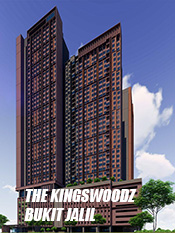



 Posts
Posts


