Malaysia Property News is a free resource website sharing Daily Property News & information about Property in Malaysia, which related to, Property Market, Property Investment, Commercial Property , Hot Properties Malaysia, Real Estate, Retail Shop, Business Park, Condominium Malaysia, Terraces & Apartment Malaysia, Houses, Residence, Resort and many more.

Tuesday, May 6, 2008

Oil and gas spin-offs for YNH township

PETALING JAYA: The US$5bil oil and gas (O&G) complex to be built in Manjung, Perak, by Qatar's Gulf Petroleum Ltd will create a new level of demand for housing in the area.

The company said recently it had received approval from the International Trade and Industry Ministry for its project, and that the Perak government had offered it a 405ha site in Manjung.

The economic spin-offs from this project will be felt by a wide range of businesses in Manjung, including Bandar Sri Manjung being developed by YNH Property Bhd.

“When Tenaga (Nasional Bhd) started building its Janamanjung power station in the late 1990s, there were about 2,000 construction workers in the area for several years.

“At the peak, there were about 5,000 workers,” YNH head of corporate finance Daniel Chan said.

The power station is located on an island near Lumut Port.

When a big project was being built, a lot of construction workers would come here to work, and they would be renting houses, Chan told StarBiz in a telephone interview from his office in Sri Manjung.

Chan said he had heard that Gulf Petroleum had started to hire construction workers to get earthworks moving.

When the project is completed several years later, the permanent employees at the complex would also require housing.

Bandar Sri Manjung will occupy a total of 809ha, of which about 365ha are yet to be developed. Demand for houses in the township was consistent, so about 20ha were developed every year, Chan said.

There is stable demand for housing from the naval base at Lumut Port.

In recent years, the flurry of activities at Kencana Petroleum Bhd's fabrication yard in Lumut had also brought numerous workers, including expatriates, Chan added.

Hence, contrary to concerns about a slowdown in the property sector, YNH is experiencing an increase in volume sales and prices at Bandar Sri Manjung.

Sales volume and house prices have increased by 10% to 20% in the first quarter. A single-storey house there cost RM120,000 this year compared with about RM105,000 last year, Chan said.

YNH shares are actively traded, with about three million shares changing hands daily.

At the price of RM2.33 a share, the stock sees a turnover of about RM35mil a week, indicative of buying by institutions.

By The Star (by C.S.Tan)

Experts to improve e-Tanah land registration system

PETALING JAYA: The Selangor Government will bring in land experts to improve the state's e-Tanah registration system, which is alleged to have led to manipulation and multiple ownership of land.

Selangor Mentri Besar Tan Sri Khalid Ibrahim said the state wanted to identify the weaknesses in the system to resolve the problem.


Tan Sri Khalid: Premature to blame land scams on a syndicate, as alleged by Khir Toyo.

“But it takes a bit of time to find 'why did you do this and that', then only can we solve the problem,” he said after a get-together with residents of the Kampung Muhibbah PPR flats in Puchong yesterday.

He told this to reporters when asked about the alleged land scams uncovered by the new state government.

Khalid said the weaknesses in the registration system were in the recording, approval and identification of owners.

“When you are talking about 20,000 files, people can change a file and even manipulate it. But we don't want to talk about manipulation until we clear up the system,” he said.

Khalid said most of the cases of multiple land ownerships were in the Petaling and Gombak districts, where the land prices were high.

“We are trying to find out why it happened and at the same time try to bring up some of cases for clarification and even for the courts to decide who the real owners are,” he said.

On former Mentri Besar Datuk Seri Dr Mohd Khir Toyo's claim that a syndicate was involved in the land scams and that it occurred when the manual system was computerised, Khalid said it would be premature to blame it on a syndicate until a probe was carried out.

On his visit to the Kampung Muhibbah PPR flats, he said the residents' problems included renting and buying the flat units from Kuala Lumpur City Hall.

“A repayment scheme should be worked out to enable the residents to eventually own the flats,” he added.

By The Star

Monday, May 5, 2008

Projects in Singapore set to further boost group image


The Seaview Collection condo in Sentosa Cove will comprise two eight-storey blocks of 125 residences.


VENTURING into Singapore's luxury residential property market is set to enhance IOI Properties Bhd's brand and reputation as a quality home developer in Malaysia and Singapore.

IOI Properties executive director Datuk Lee Yeow Chor is excited about the company's two projects in Sentosa Cove that would pave the way for more ventures across the causeway over the next two years.

The two projects will be undertaken with its Singapore joint-venture partner, Ho Bee Investment Ltd, which is involved in four other projects in Sentosa Cove.

“We are confident that the projects will do well as there are no more land for condominium projects in Sentosa Cove.

“The 5.3-acre land parcel that we successfully tendered for in January is the final piece of condominium land to be launched by Sentosa Cove Pte Ltd,” Lee said.

He added that the acquisition of the land has just been concluded and it would be the site for its second project, The Pinnacle Collection, which is one of the two condominium parcels that flank the entrance of the marina leading into Sentosa Cove.

Lee said the scheduled completion of the Genting group's integrated resort development on Sentosa Island next year would spawn a greater demand for more quality homes in Sentosa Cove.

“Sentosa Cove, a world-renowned exclusive residential development, is now about 50% completed while another 20% of the projects are now ongoing. It has attracted many high net worth buyers from around the world,” Lee said.

The Pinnacle Collection, comprising a 20-storey block of 250 luxury condominium units, will be launched by the end of next year.

The Pinnacle residences will have an average built-up of 2,000 sq ft. The building designs for the project are still being finalised.

Meanwhile, the company's first project in Sentosa Cove, the Seaview Collection, will comprise two eight-storey blocks of 125 residences on 3.6 acres.

Construction will start in the third quarter of this year and the project will be launched for sale by the end of the year.

Analysts look at IOI Properties' venture into Singapore positively.

A recent CIMB Research note said that as the company's profits were the largest compared with other Malaysian developers, IOI Properties had no choice but to seek new avenues for growth to see a significant impact on its bottom line.

“We view positively its choice of joint-venture partner as Ho Bee has carved a niche in high-end residential development projects on Sentosa Island.

“IOI Properties is one of the few Malaysian developers with the balance sheet to take on Singapore-scale projects,” it said.

CIMB Research said although the Singapore property market was highly competitive, “values are significantly higher than in Malaysia”.

“Assuming an average selling price of S$3,000 per sq ft, the sales value of the Seaview Collection condominiums alone is a mind-boggling RM2.4bil, which is equivalent to a medium-sized township that would easily take 10 to 15 years to complete.

“The break-even cost for the condominiums is estimated at S$1,900 per sq ft,” it said.

The margins for the Pinnacle project should also be good as the break-even cost is around S$2,400 per sq ft while the targeted selling price should be closer to S$3,500 per sq ft, the research house added.

By The Star

RM2b launch of Bandar Kinrara’s last phase


DREAM HOMES: Island & Peninsular’s new developments in the township will cover 203ha.

Island & Peninsular Bhd (I&P) will launch the last phase of its 770ha Bandar Kinrara township project in Puchong, building a commercial hub and a residential enclave worth more than RM2 billion.

The two developments will cover 203ha, being the last plot of land at the township, group managing director Datuk Jamaludin Osman said in an interview with Business Times.

“We will use 470 acres (about 190ha) to build semi-detached homes, bungalows and terrace houses, which we will release into the market in phases over six to seven years,” he added.

“The commercial hub will be an icon in the township, enhancing its value completely.”

I&P has 5,670ha in the Klang Valley, Selangor and Negri Sembilan, some of which has existing developments worth RM9.5 billion.

Jamaludin said the company is projecting earnings to grow this year, helped by new product offerings.

It is targeting net profit of RM225 million on the back of revenue of RM900 million for the year ending January 31 2009.

Last year, it posted net profit of RM222 million on revenue of RM774 million.

“The earnings will depend on market forces. We are on track, but will have to look at market sentiments in the second half of the year.

“We are hopeful, looking at our existing projects and new launches coming up.” Jamaludin said the new developments in Bandar Kinrara, as well as Alam Impian in Shah Alam and Alam Sari in Bangi, will boost I&P’s outlook with their product variety.

Alam Impian is a 4,860ha township, launched in December 2006, offering 11,000 semidetached homes, bungalows and terrace houses. It will be developed over the next 15 years and is worth RM4 billion.

Aman Sari, which was launched in November last year, will offer 3,500 semi-detached homes, bungalows and terrace houses on 176ha. I&P is expecting sales of RM1 billion from the development, which will go on for the next seven years.

Jamaludin said that two other projects, which will supplement the ongoing developments, are the 203ha Bayuemas in the Klang Valley and the 770ha Kota Seriemas in Nilai, Negri Sembilan.

Bayuemas will offer 2,700 semi-detached homes, bungalows and terrace houses worth RM1.4 bil-lion. It will be completed over 12 years.

Kota Seriemas will offer 18,000 houses worth RM2.7 billion. The project began in 2000 and will last for the next 15 years.

"In Kota Seriemas, we are building a nine-hole golf course, chalets and a clubhouse. We reckon it will enhance the value of the township.

"We will continue to offer a good lifestyle for residents at all of our townships," Jamaludin said.

"We are quite positive of sales from all our projects and will continue to launch new phases," he added.

By New Straits Times (by Sharen Kaur)

IOI Properties in for steady flow of earnings

Plan for high-value projects in Malaysia and Singapore will ensure good earnings prospects for group

IOI Properties Bhd will be able to reap good earnings from several high-value commercial and residential projects in Puchong, Kuala Lumpur, Penang and Singapore over the next two to three years.

The main board-listed company is also building up its property investment portfolio with the launch of the Puchong Financial Corporate Centre and the expansion of the IOI Mall in Puchong.

According to IOI Properties executive director Datuk Lee Yeow Chor, the company has set out to capitalise on the high value of its two townships, Bandar Puchong Jaya and Bandar Puteri Puchong, and has lined up a number of interesting commercial projects that will further spruce up these addresses.


Datuk Lee Yeow Chor

As Puchong still lacked Grade A office buildings, IOI Properties will be building the Puchong Financial Corporate Centre (PFCC) that will showcase five blocks of Grade A office buildings in Bandar Puteri Puchong.

Construction work for the first two blocks has started and is expected to be completed by the first quarter of 2009. Work on the other three blocks will start early next year and the buildings will be ready by 2011.

“If the offer is right, we may consider selling one of the blocks in PFCC on an en bloc basis to a corporate or institutional buyer.

“IOI Properties will keep the remaining four blocks for long-term lease by corporations on condition that the space leased should be at least 25,000 to 40,000 sq ft,” Lee told StarBiz.

At an estimated rental rates of between RM3.80 and RM4.60 per sq ft for the office space and RM7 per sq ft for the retail space, total rental income expected from the first two blocks was some RM23mil, he said.

“These are futuristic and iconic office buildings that will elevate the office property landscape in Puchong. The project's location along the Damansara-Puchong Expressway gives the buildings very good frontage,” he added.


An artist's impression of IOI Boulevard in Pulau Bandar Puchong.

The ongoing extension of the IOI Mall costing RM70mil will add 300,000 sq ft of net lettable space to the existing 670,000-sq-ft mall.

He said the new wing, scheduled for completion by the end of this year, would raise the annual rental income from the shopping mall to RM50mil from RM37mil now.

New lifestyle hub

In the 930-acre Bandar Puchong Jaya, a new lifestyle business-cum-entertainment hub called IOI Boulevard will be built on the last piece of commercial land totalling six acres.

The RM330mil project will comprise 60 shop offices of five, six and eight storeys with average built-up areas of 11,050 to 17,680 sq ft.

The 60 retail lots on the ground floor will be priced from RM600 to RM650 per sq ft while the offices that are occupying the upper floors will be from RM300 to RMM350 per sq ft.

There are also eight corner blocks of eight storeys each offering space of 45,000 sq ft a block. They are priced around RM17mil each.

“The focal point of IOI Boulevard will be the glass canopy-covered centre courtyard called Fusion that will be a covered street with lush landscaping and water features, complete with alfresco sidewalk cafes,” Lee said.

Each of the shop offices will be equipped with a private lift.

On the residential property front, IOI Properties is moving into luxury condominium developments in Kuala Lumpur with its maiden project, The Verandas Condominiums in Jalan Ampang. Work will start by year-end, to be completed in two years.

The 16-storey condominium block on 3.8 acres will have 152 residences, including 10 penthouses. The intermediate units are from 2,200 to 2,700 sq ft while the penthouses will be from 3,300 to 4,200 sq ft.

“The residences will be designed in a single banked layout with all units having a direct view of the Kuala Lumpur City Centre. There will be large landscaped areas with multiple pools and an elevated clubhouse,” Lee said.

In Penang, IOI Properties' parent IOI Corp Bhd will be developing a four-acre site in Tanjong Tokong, Penang, into a 35-storey condominium block.

Fettes Residence will comprise 191 condominiums with average built-up of 1,800 to 2,000 sq ft that will be priced from RM380 per sq ft. There are also four penthouses of 4,000 sq ft. Most of the condominium units have sea views.

Lee said IOI Properties also had three ongoing township projects in Kulai and Segamat in Johor, and was planning to launch a 250-acre project in Kempas.

By The Star (by Angie Ng)

Things Loke great for Peter and his angels

His 35 year old company has come a long way since making clay bricks

PETER'S Holdings Sdn Bhd is such a low-profile developer that many people may not know that this 35-year-old company has ongoing and future projects in Selangor, Perak and Johor worth an estimated gross development value (GDV) of RM1.25bil.

Another interesting aspect of this company is that its founder Peter Loke Kwok Seong is blessed with three talented children, all daughters, who are helping him run the company.

The eldest, Andrea Loke, who is the senior general manager, joined the company in 1994 after being called to the Malaysian Bar and is in charge of legal matters while Joanne, the second daughter, is in charge of sales and administration. Her forte is in graphic design.


Peter Loke Kwok Seong and his daughters (from right) Andrea, Joanne and Katrina with a model of the Papillon Desahill Condominium.

The youngest, Katrina, is the business development manager and the last to join the company.

The Loke sisters, who studied in Britain, have learnt the ropes from their father, having trudged through construction sites when they were young.

They are now busy with their maiden medium-high-end project, Papillion Desahill condominium in Taman Desa (off Jalan Klang Lama) in Kuala Lumpur. The project, soft launched a month ago, has a GDV of RM180mil.

CIMB-Mapletree Real Estate Fund 1 (a private estate fund managed by CIMB-Maple Management Sdn Bhd) is the synergistic partner via a collaborative arrangement.

The condominium comprises two luxurious wings with 15 levels each and 225 units on 4.5 acres. Units come in four designs, with 1,312 to 2,059 sq ft built-up areas and priced from RM480,000 to RM800,000 (or around RM400 per sq ft).


The condominium comprises two wings with 15 levels each and 225 units on 4.5 acres.

The 16 highest units are the duplex penthouses with 2,498 to 3,661 sq ft built-up areas and priced RM1.1mil to RM1.6mil each.

The condominium, atop a hill, offers buyers a good view of either KLCC or Petaling Jaya and it boasts an infinity pool, tai chi garden, jacuzzi pool, gymnasium, sun deck, children's play area and multi-purpose court.

With three women running the daily operations, it is not surprising that they have also given their “feminine” touches to the concept as well as interior design of the show unit at the site.


Show unit: Lounge and dining area.

“When we designed the condo, we looked at it from the woman's point of view. For instance, women like large kitchens and practical layout,” said Andrea, adding that the maid's room with her own bathroom was tucked away for added privacy.


High-end: Solid timber flooring in all bedrooms, air-conditioning units, quality and branded bathroom fittings, among other features.

Each unit has spacious living and dining areas to comply with the Papillon's “family” concept.

Although the Papillon is a medium-high-end project, it boasts high-end features like solid timber flooring of bungalow standards in all bedrooms, air-conditioning units, quality and branded bathroom fittings, 8ft-high doors and an intercom system linked to the security centre.


An intercom system links each unit to the security centre.

Each unit comes with two covered car park bays.

“We are extremely busy these days. We are still developing Petaling Utama, where we have completed some 4,000 units of mixed low and low-medium-cost apartments on 150 acres of leasehold land. This project has another five years to go,” said Katrina.

She said the company prided itself in being able to create new and value-added products for its purchasers.

“Value creation is very important to us. For example, we increased the size of the normal low-cost apartment from 650 sq ft to 700 sq ft for our RM42,000 low-cost apartments in Petaling Utama that also come with an en suite for the master bedroom,” she said.

Peter's Holdings began as a manufacturer of clay bricks before moving up into property development and construction and then embarked on salvaging of abandoned housing schemes in Perak and Kuala Lumpur.

Its foray into the Kuala Lumpur market happened when Bank Negara sought its help to revive 150 acres of prime land in Petaling Utama that has today become a viable township.

The company's other projects include Taman Seri Berembang in Port Klang, Green Acres in Ipoh, Zeus Business Park in Johor, and a medium-cost apartment project in Balakong.

With his “angels” running the show, Peter Loke said he was spending more time to look for property development opportunities in China.

“I am very happy with them (daughters). Now I can retire,” he said with a smile.

By The Star (by S.C.Cheah)

Developers zoom in on Taman Desa

With better road infrastructure, more projects are coming up

Taman Desa, off Jalan Klang Lama, is experiencing a mini property boom as developers zoom into this much-sought-after neighbourhood in Kuala Lumpur.

The completion of the New Pantai Expressway (NPE) a few years ago has greatly eased the traffic flow at Jalan Klang Lama as motorists can bypass most parts of the widened Jalan Klang Lama.

The NPE links Bangsar and the KL-Seremban Highway to Bandar Sunway, Subang Jaya and beyond.

Taman Desa residents can also access the KLIA-Putrajaya Highway via the Seremban Highway or at Kuchai Lama.

With the new highway linkages, residents of Taman Desa and its adjacent areas, including Seputeh and Taman Abadi, can gain access to any part of the Klang Valley and many amenities are now within their reach.

Over the past few years, several new developments have come up or are being launched in Taman Desa, an established neighbourhood that was developed by Faber Union about 30 years ago.

Faber Union started off with 110 semi-detached houses and 120 bungalow lots in 1976 at Taman Desa. It later built 578 units of two-storey terrace house in 1978.

It then went into building apartments such as the Faber Ria (402 units) in 1985, Faber Heights (370 units) in 1989, Faber Indah (130 units) in 1989, Danau Idaman (659 units) in 1996, Danau Impian (500 units), Danau Permai (512 units), Tiara Faber (320 units) in 2000, and Taratak Muhibbah (1,064 units) in 2000.

It also developed the Casa Desa condominium (410 units) and Danau Villa (64 units of three-storey semi-detached link home) in 2007.

Taman Desa started off as an upmarket housing area with semi-detached houses and bungalow lots many years ago. It has retained its middle-to-upper-class image, thanks to new developments that reflect this upmarket image.

One of the newcomers is the Papillon Desahill condominium by Zeus-TNB Properties Sdn Bhd, an affiliate of Peter's Holdings Sdn Bhd.

The 4.5-acre freehold project comprises 225 units with built-up areas from 1,312 to 2,039 sq ft and duplex units from 2,498 to 3,661 sq ft (from RM365 per sq ft). It is next to the Faber Heights condominium and very near Jalan Klang Lama.

Two other new projects are the Danau Villa three-storey semi-detached link homes, a joint venture between Faber Union and Kuala Lumpur City Hall and the Desa Ria, a 104-unit freehold condo by the UOA Group. It boasts larger units of 2,200 sq ft and was launched in 2006. The units were priced around RM300 per sq ft when it was launched but they are now selling from RM385 to RM445 per sq ft.

Taman Desa's other housing schemes such as Seputeh and Taman Abadi are a mix of landed and high-rise apartments.

There are some 7,000 units of apartment and condominium in Taman Desa alone. These include completed projects like the OBD Garden (260 units), Desa Villa (340 units), Desa Murni (500 units), Bukit Desa (252 units), Desa Ria (104 units), Abadi Villa condo (330 units) and Abadi Indah apartments (754 units).

There are about 5,500 housing units in Taman Desa, Taman Bukit Desa, Taman Danau Desa, Taman Desa Utama, Seputeh and Taman Abadi, with about 30,000 people staying in Taman Desa.

Facilities in Taman Desa include the Desa Water Park, Taman Desa Medical Centre, wet market, office towers at Faber Towers, shops in the Taman desa and Danau Desa commercial centres, two secondary schools and a primary school. A new school is being built near Desa Ria.

Henry Butcher Marketing Sdn Bhd chief operating officer Tang Chee Meng said Taman Desa was a generally safe place to live as residents have their own security patrols. He said a number of tycoons also lived there.


Tang Chee Meng >> It is a good place to call home <<

“Taman Desa is one of those under-rated locations in the Klang Valley which is a very convenient place to stay.

“In the past, people were concerned about the notorious traffic congestion along Jalan Klang Lama, but today with the vast improvements in road infrastructure, Taman Desa, with its central and convenient location between KL and PJ, enjoys excellent connectivity and accessibility. It is a good place to call home,” he said.

Tang said Taman Desa had a good record of capital appreciation. He cited the case of a man who bought his first house, a double-storey terrace house, for only RM145,000 in 1989 and sold it in 1991 for RM181,000. Today it is worth RM560,000 toRM630,000. A similar house was priced at only RM70,000 to RM76,000 in 1978.

“The man bought his second house, a double-storey semi-detached house, in 1991 at RM265,000. Today, it is worth more than RM1mil.

“The house was going for only RM98,000 to RM113,000 in 1978 while the bungalows were going for RM140,000 to RM160,000. Today, the bungalows are worth RM1.8mil to RM2.5mil. Prices have never dropped,” he added.

By The Star (by S.C.Cheah)

Vasa sees better profit despite higher costs

Local laminated flooring producer and exporter Vasa International Sdn Bhd is calmly working out ways to overcome challenges arising from the US economic slowdown and rising raw material prices.

“There is no point complaining on negative issues all the time. Somehow we have to live with them,” said group managing director P.C. Tam. “We should find a way to overcome the problems and to mitigate their impact.”
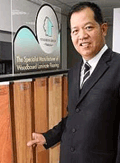

P.C. Tam

The group has two wholly owned subsidiaries: Stalheim Industries Sdn Bhd which manufactures Inovar Floor brand wood-based laminated flooring, and Vasatech Sdn Bhd which produces low-pressure melamine paper for short-cycle press lamination.

Vasa also markets accessories related to laminated flooring like skirting boards and profiles. It sources these accessories from suppliers in Malaysia and China, and also imports some high-end accessories from Europe.


Vasa now exports 80% of its laminated flooring to about 30 countries.

Tam said the increasing prices of oil and raw materials had resulted in higher production and logistic costs.

Coupled with the weakening US dollar, these factors had pulled down the group's earnings in the past three years, he told StarBiz at Vasa's head office and plant in Batang Berjuntai, Selangor.

The group posted a net profit of RM4.8mil in 2005 and RM5.3mil in 2006, but the figure dropped to RM3mil last year.

Nevertheless, it has forecast a higher profit of about RM7mil this year, supported by an expansion in production capacity and better sales of high-end products.

“We have plans to enlarge our production capacity as the increase in capacity usage will lower the unit cost. Then we will be able to compete in the international market with quality products at reasonable prices.”

Currently, Stalheim sources most of the raw materials like water-resistant high-density hardwood fibreboard from East Malaysia and China. Its plant, which runs at about 70% capacity, produces about 6 million sq m of laminated flooring annually. Tam said it would increase production to 90% capacity this year.

As for Vasatech, its factory is running on full capacity, producing 22 million sq m of melamine paper annually. The group has invested RM11mil to buy another automated machine from Europe that is expected to arrive this month.

It will increase annual production to 40 million sq m of melamine paper by year-end.

“This is to meet the rising demand from customers and for our own consumption (Stalheim),” Tam said, adding that 60% of the melamine paper output was currently supplied to customers in the furniture-manufacturing sector.

Seeking non-price-sensitive markets
Tam said the laminated flooring market was growing tremendously.

Although production costs had gone up, Tam said the group had segmented its products so that it could get a higher margin from the high-end products and at the same time, not lose out in terms of volume from the medium-range products.

“So, it is quite important for us to sell more high-end products and look for markets that are not so price-sensitive.

“We have to move to the markets where people are looking for quality products, more reliable service, professional approach, consistent quality and forward product development.”

Tam said there were always such customers in countries like Japan, Australia and South Africa.

Mitigating the US dollar impact
The challenge now for the group is to continue widening the range of Inovar Floor products to maintain or improve its profitability.

Tam believes strong branding efforts played an important role in marketing its products. Vasa now exports 80% of its laminated flooring to about 30 countries, including Thailand, South Africa, the US, Singapore, Middle East, South America and Japan.

He said currency fluctuations should not be the excuse for a company delivery of good performance.

“We try not to pass on the cost increase to customers. We try to switch to other currencies (in pricing) instead of just US dollars,” he said, adding that it was now also selling products in Australian dollar, Singapore dollar and Japanese yen.

Vasa started exporting Inovar Floor laminated floorings to Japan five years ago and Japan is now a very important market for the group.

“We are quite proud of this achievement – that we are able to sell to Japan – because our quality products have managed to meet the requirements of the Japanese customers and achieved the Japan Industrial Standard for Super E0 (formaldehyde emission level) certification.”

Inovar Floor laminated flooring is also being supplied to IKEA Japan for the use of IKEA outlets in the Asia-Pacific. The group targets to sell 30,000 sq m of flooring to the IKEA chain in Asia-Pacific this year.

“We will continue to develop new products and more designs and try to be competitive and ahead of market trends. We want to be the innovator, not the follower,” said Tam.

Improved domestic
Vasa does not want to miss out on the opportunities in the local market too. It wants to have a strong position in its own country.

Therefore, through marketing arm Inovar Resources Sdn Bhd, it started to place more emphasis on the local market three years ago. Domestic sales contribution has since risen from 5% to 20%.

“We realised that our quality products were gradually getting acceptance from the local consumers compared with those from China,” Tam said.

Currently, Inovar Floor products have about 90% share in the local property development market. Its customers include Gamuda, Sime UEP, Malton, Sunrise and Negara Properties.

Tam added that to further develop its business, the group would seek a public listing, perhaps in two years.

By The Star (by Rachael Kam)

Serenity seeks more Malaysian buyers for Phuket project

HIGH-END residential developer Serenity Development Group is looking to attract more Malaysian purchasers for its latest luxury development, Serenity Terraces in Phuket, Thailand.

The beachfront development, which comprised apartments, penthouses and villas, had already seen “encouraging” interest from Malaysian buyers, said development director Elad Kushnir.

“We look forward to attracting more Malaysians in the future,” he told a press conference recently.

Elad said that there was an increasing number of Malaysians with businesses in Thailand and more Malaysians were looking to invest in properties there.

The Serenity Terraces development project, which overlooks Chalong Bay, is 60% complete with about 30% of the units already sold, primarily to European purchasers, he said.

The development consists of 52 luxury residential units with a gross development value of US$30mil. Prices of the properties range from US$450,000 to US$1.2mil.

Green Heritage Group is the principal consultant for the project and provides full marketing and sales as well as development management for Serenity Terraces.

According to its chief operating officer and director Ramesh K. Hamal, purchasers are guaranteed great value in capital appreciation.

“As the project is located in Phuket, buyers are assured of great capital returns,” he said.

Also present at the press conference was reigning Formula One (F1) champion Kimi Raikkonen, one of the newest residents of Serenity Terraces.

By The Star (by Eugene Mahalingam)

Friday, May 2, 2008

IGB in no hurry to sell Renaissance

PROPERTY developer and hotel owner IGB Corp Bhd is in no hurry to sell the five-star Renaissance Kuala Lumpur, its executive director Tan Boon Lee said.

IGB made public its intention to sell the 910-room property last year.


IGB executive director Tan Boon Lee talks to Business Times about plans to open four more Cititel Express.

"The Renaissance is on the market. It is not one of the strategic properties that we want to grow. Renaissance is a non-core asset, so we will look to dispose of it," Tan told Business Times in an interview.

"Every year, the value of the property is going up. It's a matter of time. We are in no hurry to sell," Tan said.

IGB hopes to make RM800 million from the sale of the 12-year-old property. The hotel is held equally by IGB and Hong Kong's New World Development.

"The hotel is yielding, but not as high as (our) Cititel hotels. We want to unlock the value of the property and put (the investment) into new Cititel hotels," Tan said.

Both Cititel and Cititel Express cater for the mid-range market segment. The hotels, which typically have 400 rooms and 250 rooms respectively, bring in gross operating profit (GOP) of 60 per cent.

GOP is gross revenue (from rooms, food and beverage, laundry or business centre) minus cost of operations (wages, electricity and amenities).

When asked why it has been difficult to make a deal, Tan said: "There is an eight-year management agreement in place. A lot of buyers these days want to put in their own brand or want to self-manage, (but) we (at RM800 million) are selling below the replacement value."

The net book value of the property as at December 2007 was RM647 million, while its market value quoted by an analyst was RM654 million.

Last October, the hotel's general manager said that the hotel would undergo a US$16.7 million (about RM53 million) facelift this year and next.

The renovation and refurbishment, to be carried out over two phases, would involve the 510-room East Wing, followed by the 400-room West Wing.

The hotel, opened in June 1996, comprises two towers resting on a podium housing a convention centre which can accommodate 1,000 people.

Initially, the property was divided into the four-star New World and the five-star Renaissance hotels.

In 2004, in line with its global strategy to streamline hotel names, the New World brand was dropped and the popular Renaissance adopted.

Renaissance is part of the Marriott International Group hotel chain.

By New Straits Times (by Vasantha Ganesan)

IGB plans 4 more Cititel Express hotels

IGB Corp Bhd has plans to open four Cititel Express hotels between now and 2010, at an estimated cost of RM120 million.

The proposed hotels, costing about RM120,000 per room to build, will be located in Kota Kinabalu, Ipoh, Penang and Kuching.

IGB already operates two Cititel hotels - in Mid Valley City, Kuala Lumpur, and Penang - and a Cititel Express in Jalan Tuanku Abdul Rahman, Kuala Lumpur.

It is not surprising that IGB - which also runs the Boulevard, MiCasa and The Gardens hotel brands - is looking to grow the Cititel name as the hotel chain rakes in gross operating profit (GOP) of 60 per cent.

GOP is gross revenue (from rooms, food and beverage, laundry or business centre) minus cost of operations (wages, electricity and amenities).

"Ideally, we would like to have representation on the Kangaroo route, from London to Australia via Southeast Asia," IGB executive director Tan Boon Lee said in an interview with Business Times.

"We are keen on city centre developments, and our plan is to grow the Cititel brand and St Giles.


STRATEGIC PILLAR: One of the rooms in Cititel Express

"Hotel operations are a strategic pillar for IGB, and will continue to grow," he said, adding that the business will grow at the same pace as its property development and property investment and contribute a third of its profit.

The Cititel/ Cititel Express names are used in Southeast Asia, while the St Giles brand is used in London, the UK. All three brands cater for the mid-range market.

Cititel typically has 400 rooms, while Cititel Express has about 250 rooms.

IGB is also aggressively seeking hotel representation in Sydney and Bangkok, Tan said.

He added that, given the strong GOP, it made better sense to own and manage a hotel rather than just the latter.

Likewise, IGB prefers to build its own hotel than take over an existing one.

The five-star 439-room The Gardens hotel and 170 serviced apartments in Mid Valley City will open this quarter and the third quarter respectively.

Other hotels in the group include the MiCasa All Suite Hotel in Yangon, Myanmar; New World Hotel in Ho Chi Minh City, Vietnam; and Boulevard Mid Valley.

All the hotels, except that in Yangon, registered net profits last year.

Tan expressed hopes that once the economy in Myanmar bounces back, the hotel there will also report net profits.

By New Straits Times (by Vasantha Ganesan)

Reaching new heights with the super rich


KUALA LUMPUR: The sky is the limit for highrise condos, and with prices to match, lately.


The Binjai, an upmarket property in the heart of Kuala Lumpur.

Malaysia's super rich are pushing residential property prices to new heights, mainly in the most hankered-for Kuala Lumpur city centre addresses.

Prices of some of these yet-to-be-ready units in this vicinity are touching RM2,300 psf or in excess of RM15 million for the larger units.

While addresses in Bangsar and Damansara Heights were the traditional favourites when it came to high-end living, now there is serious hype about having a city address, much similar to the lure of living in London's Hyde Park, New York's Central Park or Ropongi Hills in Tokyo.

Location aside, specifications like imported marble and timber strip flooring alone are not going to excite these buyers. Instead, they demand the "wow" factor and everything that comes with it. Never mind the price. And state-of- the-art security is top priority.

Knight Frank Ooi & Zaharin Sdn Bhd general manager (project marketing) Tan Lay Kuen said buyers of super high-end properties are becoming more conscious about brand image and quality.

"This is because they are well-travelled and want the comfort of a strong brand name behind a development, such as the Four Seasons or the Millennium, which will offer them a certain standard."

Tan said the most premium condo and service residences were being sought by those who were buying to "live in".

"Typically, these people are not looking at it from the investment point of view. They want a place they can call home, whether for year-round stay or in-between their travels. So quality is everything."

She described the buyers as middle-aged, and "not overly concerned about the price".

A few years ago, Oriental Holdings Bhd chairman Datuk Loh Cheng Yean and former investment banker and former Singapore national tennis player Sherman Lim came up with a plan for Katana Residences, an exclusive 30-unit condo development in the U-Thant area, now nearing completion.

The idea for such a project was conceived because Loh, who was looking for a property in the city then, could not find one that matched her expectations!

Initial prices for Katana ranged from RM780 psf to RM1,000 psf (about RM3 to RM5 million per unit); the rest were subsequently sold during construction last year at prices ranging from RM1,200 psf to RM1,600 psf.

Lim described the condo buyers as "private and very particular" about the internal layout as well as how the building looked from the outside.

"The buyers are from Malaysia, Singapore, Indonesia, Hong Kong and other parts of the region.

"Basically, they place heavy emphasis on design as they all have lived in various international cities before, like New York, London, Tokyo, Shanghai and Hong Kong. They are very international in their outlook and demand."

The first wave of modern high-end living in the KLCC area was tested by Amanah Capital Partners Bhd, when it came up with the Ascott service apartments and Kirana condominiums, launched just months before the 1997 Asian economic crisis.

Back then, those sussing out the place included Malaysia's elite upper class, including royalty and socialites. Prices were set at around RM550 psf then. A real bargain, if you consider the prices today.

By New Straits Times

IOI Prop sees RM1b GDV from project

KULAI: IOI Properties Bhd sees its second mixed property development project in Johor generating RM1bil in gross development value (GDV).

Senior general manager (property division) Simon Heng said its Taman Kempas Utama would be launched this month.

“The location of Taman Kempas Utama in the Kempas-Tebrau growth corridor, within Iskandar Malaysia, augurs well for the company,” Heng told StarBiz recently.

He said the project, on a 101.17ha site on the North-South Expressway, would have about 2,000 residential and commercial units upon completion in 10 years.

The project would consist of high-end double-storey link and semi-detached houses, gated and guarded with smart-home concept, and shop offices, he said.

About 20.2ha of the area will be allocated for light industrial buildings and a Tesco hypermarket is planned for next year.

Heng said the Kempas-Tebrau corridor was currently the hottest spot for property development in south Johor with more than 10 ongoing projects.

“After 12 years in Kulai, it is timely to have a project in the Johor Baru district as we have been receiving requests from many Johor Baru residents,” he said, adding that the company was targeting existing house owners in the Kempas-Tebrau area, as they would prefer to buy houses within the area.

Heng said IOI Properties was also looking at Malaysian professionals working in Singapore, Singaporeans, and pensioners and expatriates based in the republic.

The spiralling prices of private properties in Singapore would force many buyers there to look elsewhere and Johor Baru was the best choice for them, he said.

By The Star (by Zazali Musa)

Magna Prima plans RM1bil 5-in-1 project

KUALA LUMPUR: Magna Prima Bhd will embark on a mega five-in-one integrated development at Jalan Kuching here this year.

Group managing director Steven Lee Kian Seng said the project, with a gross development value (GDV) of RM1.1bil, would comprise three-storey shop lots, eight-storey signature offices, two blocks of serviced apartments, a boutique hotel and a three-level retail mall.

“We are thrilled to be embarking on this project which is Magna Prima’s biggest project to-date,” he said at the company’s annual dinner in Kuala Lumpur last Saturday.

Construction on the 10.23-acre freehold site will be undertaken in four phases, with the first phase to begin in July. The final phase is targeted for completion by the third quarter of 2012.

Lee said the project would re-affirm the company’s standing as a major award-winning property contractor and developer in the country.

“When I took over the management of Magna Prima in 2005, I had a heavy responsibility ahead of me. I had to re-energise a demoralised team and motivate them to work with me towards building a new Magna Prima into one of the country’s top property developers, and a prominent brand name in the region.

“Quality, innovation, hard work and teamwork will be the cornerstones of the new Magna Prima as we steer it towards profitability and growth,” he added.

On its award-winning “six-star” The Avare in Kuala Lumpur, Lee said it had won the CNBC Asia Pacific Property Award in the high-rise development category.

The Avare, he noted, was being built at a “breathtaking rate of seven floors a month and all 78 units sold within a year.”

Magna Prima posted a whopping 944% rise in pre-tax profit to RM37.6mil for the year ended Dec 31, 2007 from RM3.6mil in 2006. Revenue also rose by 326% to RM344.4mil.

By The Star (by S.C.Cheah)

Selprop keen on Damansara Heights


Menara Milenium in Damansara Heights

PETALING JAYA: Selangor Properties Bhd (Selprop), one of the largest developers in Damansara Heights, plans to launch a few projects in the much sought-after area.

The company will launch its 107-unit Batai high-end condominium project this year but had not decided on its gross development value, financial controller Lee Boon Kian told reporters after the company AGM yesterday.

The last Damansara project on Selprop's books was Menara Milenium, comprising a 25-storey office building and a four-storey annexe block, completed eight years ago.

Lee said the pricing of the high-end units would likely fall within market rates for the location of RM800 to RM1,000 per sq ft.

“At present we are at the building planning stage and have done the initial earthworks,” he said.

The developer is also planning another project in Damansara in a joint venture with E&O Property Development. This will be a mixed commercial and condominium development at Jalan Semantan in Damansara Heights.

The joint developers were awaiting government approval for the “development order” on this project, Lee said.

Selprop's on-going developments include the RM400mil Bukit Permata mixed development in Gombak, and the RM350mil Selayang Mulia residential project.

At present, the company has 200 acres of undeveloped land bank, predominantly in the Klang Valley, of which about 26 acres is in Damansara.

Lee said the land bank was expected to last 10 more years.

As for the often-mentioned 19.57 acres of undeveloped land at Pusat Bandar Damansara, corporate affairs manager Chong Koon San said there were no immediate plans for development.

For the financial year ended Oct 31, 2007 (FY07), Selprop’s net profit dropped to RM84.5mil from RM89.6mil in FY06. However, revenue grew to RM198.6mil from RM181.1mil previously.

The lower net profit could be attributed to a forex loss from the sale of Multiplex stapled securities in its Australian operations that contributed the bulk of earnings in FY07.

The high dividend-paying company declared a 10% dividend for FY07.

By The Star (by Loong Tse Min)

Property developer fetes buyers in big do

SPK Homes hosted an evening of celebration and appreciation for approximately 200 guests of their latest project in Shah Alam – the Cahaya SPK.

Flanked by the lush natural forest of Shah Alam on one side and an Olympic length swimming pool on the other, SPK Homes had every reason to toast to the success of its 500-acre residential project which has a dedicated 78 acres of wide open parks, water canals and spacious playgrounds.


Fantastic win: The first prize winner (left) posing with SPK Homes Head of Property’s Lim (centre) and senior marketing executive Liong Ve Lyn.

Most of the units launched under their Precinct 1A – The HillPark Bungalow Lots, Precinct 2A – The Park Superlink Homes and Precinct 3 – The Park Link Villas have been sold.

SPK Homes feted the buyers and their families to a sumptuous fare of local and western delicacies, and an interesting programme line-up which included great entertainment, attractive lucky draws and the announcement of cash rewards for buyers. SPK Homes also presented a progress update of the project.


Game for some fun: One of the buyers sportingly sings Getaran Jiwa, with music accompaniment from the Balle Balle performers.

While enjoying dinner, the Balle Balle performers entertained guests with their rendition of all time favourites. Adding to the excitement of the night were the 23 lucky draw prizes worth RM15,000.

From resort and F & B vouchers to spa and holiday packages to Bali, Bangkok and Phuket, many buyers went home with big smiles as they held their rewards in hand.

Steven Lim, SPK’s Head of Property, together with his team, played the courteous host and warmly welcomed guests, interacted with them during the course of the night and were on hand to bid them adieu until the next SPK Homes celebration.

“Our buyers have initiated their own online forum to share insights about their investment at Cahaya SPK. Truly, it is amazing that even before the project is completed, a commendable community spirit among Cahaya SPK owners has been birthed,” said Lim. Lim also gave buyers a preview of Cahaya SPK’s next launch – the Precinct 2B – The Park Superlink Homes.

Also in the pipeline are two more launches for the year - bungalows and semi-dees, scheduled for the 4th quarter of the year.

Lim then announced the “Buyer Reward Programme” and the e-portal services for buyers which received a big nod from those present.

Concluding the night on a high note, Buddy Loren took to the stage and held the audience enthralled with his delightful imitations of many great performers including the late Tan Sri P. Ramlee and Saloma.

By The Star

SP Setia builds RM15mil show village

PENANG: SP Setia Bhd is investing RM15mil in a first-of-its-kind show village to market its Setia Pearl Island properties.

SP Setia property division (north) general manager S. Rajoo said the investment was necessary, given that the group did not want to sell its homes through brochures.


S. Rajoo

“We want to show the buyers what they will be getting in the show village,” he said.

The village, located on eight acres within the housing scheme, comprises 32 types of residential properties in the RM900mil project comprising a total of 1,200 landed homes.

It has an outdoor gymnasium, children’s playground as well as man-made water pond.

The project is also landscaped with water features and various species of plants and trees.

Rajoo said representatives from various financial institutions would be at the show village daily to help house buyers obtain loans.

So far, the company has spent over RM8.8mil to construct, decorate and landscape 10 homes representing the semi-detached and terrace houses to be built in the project.

“Another 10 houses will be built by year-end. In 2009, we will build the remaining 12 properties for the show village,'' he said.

The entire village is scheduled for completion end-2009.

The Setia Pearl Island project will be 50% completed by year-end and would have about 600 residential properties.

“The whole project is scheduled for completion in three years,” Rajoo said, adding that the first phase, comprising 291 terrace houses, had been fully sold.

“The first phase is about 70% completed and should be ready in October,” he added.

The second phase, comprising 267 terrace houses, is also sold out.

By The Star (by David Tan)

UOA sells office towers for


UOA Group’s wholly-owned Paramount Properties Sdn Bhd has sold three proposed boutique office towers in its flagship Bangsar South City (BSC) project in Kuala Lumpur for RM131.35 million.

UOA said in a statement the en-bloc sale to Bangga Istimewa Sdn Bhd and Bidang Lagenda Sdn Bhd, which are owned by the Middle East’s Al Batha Group, reflects the confidence of foreigners in its projects.

Although BSC has yet to be officially launched, UOA pointed out that interest from prospective parties, locals included, has been strong.

Besides commercial properties, BSC will also feature residential units that will contribute to its projected gross development value of RM3.5 billion.

Located off the Federal Highway and New Pantai Expressway, the development is being planned as the “new vibrant city between KL, Petaling Jaya and Bangsar” and in an area UOA dubs as the country’s “golden triangle of real estate”.

The 60-acre BSC will be developed over six to 10 years to consist of three precincts: The Village, which will make the entrance statement for the entire development; the 30-acre Park Residences condominiums that will house units of 1,300sq ft to 2,100sq ft; and a 30-acre commercial precinct.

The latter will be made up of The Horizon, The Virtual and The Sphere office complexes. The Horizon will comprise 10- and 11-storey blocks to be sold en-bloc, with each tower having an average gross area of 54,000sq ft as well as penthouses complete with feature pools.

The Virtual will be made up of 10 blocks of 20-storey offices, while The Sphere will be a retail complex featuring food and beverage outlets and other amenities.

With a 20-year track record, UOA has developed some of KL’s landmarks such as Wisma UOA Centre, UOA II, UOA Damansara I and II, UOA Pantai, as well as residences such as Villa Mont’ Kiara, Prima Midah Heights, Villa Yarl and Desa Bangsar Ria.

By New Straits Times (by Zoe Phoon)

Wednesday, April 30, 2008

MRCB: KL Sentral to be completed by 2015


RELAXATION CENTRE: Sooka Sentral focuses on luxurious health, beauty, wellness and dining experience

MALAYSIAN Resources Corp Bhd (MRCB), a construction and property company, expects to complete the whole development of its RM8.4 billion comprehensive and integrated Kuala Lumpur Sentral development project (KL Sentral) by 2015.

Its retail asset development general manager Zulkifli Ibrahim said the company has completed more than RM2 billion worth of development, and another RM5 billion new development is under construction and progressing rapidly.

"This new development includes the construction of high-rise office buildings, a shopping mall, a five-star hotel, condominiums, luxury service apartments, and a media and education centre," he told reporters during a media tour around KL Sentral's latest edition called Sooka Sentral - a lifestyle, health and dining centre - in Kuala Lumpur yesterday.

Zulkifli said construction work on the new shopping mall is expected to begin by the middle of the year, with targeted completion by 2011, while the office buildings, condominiums and luxury service apartments, located opposite the National Museum, are scheduled to start by the end of the year.

KL Sentral is being developed as a futuristic self-contained city, providing the perfect living, work and play environment. Located in the heart of Kuala Lumpur, it is also dedicated to be the transport hub of the city.

The Sooka Sentral, meanwhile, is located directly opposite the southern entrance of the KL Sentral station. The six-storey building is managed by Sooka Sentral Sdn Bhd, a wholly-owned subsidiary of MRCB.

"It is the only and ultimate centre for relaxation within KL Sentral development that focuses on luxurious health, beauty, wellness and dining outlets," Zulkifli said, adding that Sooka Sentral has reached a 100 per cent occupancy rate.

He said the gross development value of Sooka Sentral is about RM60 million, offering some 9,290 sq m of space. It houses a fitness centre, a spa, beauty and health centre, a food court, fine dining restaurants and alfresco dining outlets.

Among its tenants include Centro, Kiliney Kopitiam, Zen, Chili Espresso, myNEWS.com, Oriental Spoom, Sushi King, Kelantan Delights, Kabul restaurant, World of Perfume, Cuttery, Beaubelle, Equal Fitness Sports Massage, Tanamera Tropical Spa, Chiill Reflexology, The Spa, and SynarGym.

By New Straits Times (by Kamarul Yunus)

Lifestyle centres for KL Sentral


KUALA LUMPUR: Kuala Lumpur Sentral, the integrated commercial-cum-residential development in Brickfields, will have two retail-cum-lifestyle centres offering close to one million sq ft of net lettable space.

The first, the 100,000-sq-ft Sooka Sentral Lifestyle Centre that opened last December, is now fully occupied.

Sooka Sentral Sdn Bhd general manager Zulkefli Ibrahim said the RM50mil lifestyle centre would provide wellness, health, beauty and dining facilities for residents and office workers in Kuala Lumpur Sentral and the surrounding area.

With rental rates of RM8 to RM20 per sq ft, Sooka was expected to generate an annual rental income of RM8.4mil, he said at a media tour of the new facility yesterday.

The second project will comprise a 750,000-sq-ft shopping centre to be built at a cost of RM420mil on Lot G. Construction will kick off by mid-year for completion in 2011.

Zulkefli said the new shopping centre was expected to generate annual rental income of RM60mil.

The 72-acre Kuala Lumpur Sentral development started in 1997 and is scheduled to be completed in 2015.

By The Star

Berjaya in RM11b joint venture


RESORT-LIKE: Artist’s impression of part of the Jeju project.

BERJAYA Land Bhd is partnering the Jeju Free International City Development Centre (JDC) to develop a US$3.6 billion (about RM11 billion) resort-type residential and commercial complex in South Korea.

Berjaya Jeju Resort Ltd is an 81:19 joint venture between Berjaya Leisure (Cayman) Ltd and JDC.

Berjaya Jeju will be the master developer for the development of 74.37ha in Yerae-Dong, Seogwipo-Si, Jeju.

The Yerae Resort-type Residential Complex will be developed over eight to 10 years, Berjaya Land said in a statement yesterday.

The development, costing US$2.6 billion (RM8 billion) to build, will comprise 600 mid-rise apartments, 200 villas, 500-room resort hotel and serviced residences, and a full-fledged casino with 500 rooms.

Other components include a commercial facility and shopping; indoor arena and dining amenities; a health, medical centre and spa resort; cultural village; and other recreational, private and public facilities.

The casino, a key development, will be built in the early phase of the project.

Berjaya Jeju, which will have an initial paid-up capital of US$30 million (RM95 million), will enter into a sale and purchase agreement with JDC to buy the land from JDC for 72.1 billion won (RM230 million).

Following the acquisition, JDC is required to con-tribute not less than US$4.5 million (RM14 million) worth of improvements to the land in the form of infrastructure such as roads and parks.

Berjaya Land said that the development cost of the project will be financed through equity, borrowings and proceeds from the sale of housing units developed under the project.

JDC is a statutory agency established within South Korea's Ministry of Construction and Transportation.

It oversees the development of Jeju.

By New Straits Times

BLand-S. Korean JV to build US$2.6bil resort

PETALING JAYA: Berjaya Land Bhd (BLand) is teaming up with South Korea’s Jeju Free International City Development Centre (JDC) to build a US$2.6bil (RM8.2bil) resort-style residential and commercial complex with a full-fledged casino in Jeju province.

BLand told Bursa Malaysia yesterday its unit, Berjaya Leisure (Cayman) Ltd (BCayman), had signed an agreement to set up the joint venture, Berjaya Jeju Resort Ltd (Berjaya Jeju).

Berjaya Jeju would be the master developer for the 74.37ha site in Yerae-dong, Seogwipo-si, Jeju province. It will develop the project over eight to 10 years.

The development would have 600 mid-rise apartments, 200 villas, a 500-room resort hotel and serviced residences and a full-fledged casino with 500 rooms, an indoor arena, a health, medical centre and spa resort, a cultural village and other recreational, private and public facilities.

“The casino, which will be the key development, shall be constructed in the early phase of the project,” the company said.

BLand said the project would have a gross development value estimated at US$3.6bil, subject to the finalisation of the business plan.

The initial paid-in share capital of Berjaya Jeju would not be less than US$30mil, of which BCayman would subscribe for 81% and JDC the remaining 19%.

BLand said Berjaya Jeju would then enter into a sale and purchase agreement to acquire the land from JDC for 72.1 billion won (US$73mil).

After the land acquisition, JDC would contribute US$4.5mil for infrastructure such as roads and parks on the site.

In a separate statement, JDC said the JV would attract foreign tourists by developing high-end tourism products targeting Asia and the Middle East as well as South Korea by using Berjaya Group’s global marketing network.

JDC said the resort-style residential complex would make a 774.1 billion won (US$772.83mil) contribution to the Jeju economy and create 6,300 jobs.

By The Star

Status quo on mega projects in Penang

PENANG: The situation with Penang's mega projects under the Ninth Malaysia Plan (9MP) remains unchanged for now.

Chief Minister Lim Guan Eng said this after meeting Second Finance Minister Tan Sri Nor Mohamed Yakcop on Monday to get a clearer picture on the status of the projects in the state, which had been included under the 9MP.

“The situation is the same for now,” he said.

On Saturday, Nor Mohamed said the mega projects under 9MP, which included the Penang Outer Ring Road (PORR) and the monorail, have not reached “approval stage.”

He said the government couldn’t give a commitment on the two projects as they had yet to reach the level where approval was being considered.

However, Lim, in a reaction to the issue, said it was a question of ethics and moral.

“Before the general election, the Federal and previous state government had made commitments that the mega projects had been passed and will be implemented. But their commitments changed after the people’s decision on March 8,” he said.

Lim said if the Federal Government did not intend to live up to its commitment, “it would be making a rash action as the mega projects also involved international parties.”

By The Star

Fiasco of the factories to end

Major changes are in the offing for the Illegal Factories Rehabilitation Programme introduced by the previous Selangor state government in 2006.

According to Selangor State New Village Development and Illegal Factory Task Force Committee chairman Ean Yong Hian Wah, the policy reviews are necessary because the illegal factories legalisation programme has flaws.

“It must benefit entrepreneurs and citizens of the state which isn't the case now,” Ean Yong told the StarMetro during a recent interview at the state secretariat in Shah Alam.

“Factory owners feel that the premiums being charged for land use conversions are too high while those living near the factories are complaining about pollution, fire hazards, non-existent buffer zones and social issues,” he said.

“The process will take time because we intend to pursue this on a case-to-case basis to draw up new rules and regulations,” Ean Yong said.

By definition, factories operating without permits, business licences or certificates of completion and compliance (CCC) on land meant for residential, agricultural or commercial purposes or on government reserve land are illegal.

Responding to a question on illegal factories during The Star's Cafe Latte Chat in March, Selangor Mentri Besar Khalid Ibrahim said: “I’m not closing them down. I’m trying to work with them, to make them follow us. The existence of illegal factories is due to corrupt practices”.

A 2006 census recorded 3,165 illegal factories in Selangor with exports worth RM4bil annually and 150,000 job opportunities for locals and foreigners.

But Selangor State Local Government, Study and Research Committee chairman Ronnie Liu said the number of illegal factories was more than 4,000 because cottage industries were also involved. (See table for comprehensive data).

Under the incentive package offered, factory owners will enjoy a 50% discount on land premiums paid within three months of the conversion approval while those paying within six months are entitled to a 30% discount and 10% discount for those who pay up within nine months.

According to Balakong Chinese Chamber of Commerce and Industry and Balakong Jaya Industrial Area Land and Factory Owners Associa-tion joint chairman Lam Koong Sum, factory owners are forced to pay higher premiums due to the higher value of industrial land.

“Furthermore, light industries were told to pay premiums for medium industries and medium industries for heavy industries. This has affected the small players,” he said.

Under the incentive package, temporary operating licences and temporary building permits are issued yearly for a maximum of three years to premises located in industrial zones or areas to be rezoned for industrial use.

Owners and operators must first submit land usage conversion applications, planning permits and build ing plans to be reviewed by authorities such as the Fire and Rescue Department, Environment Depart-ment, state water supplier Syabas and Tenaga Nasional Berhad.

For premises not in industrial zones or in areas that cannot be rezoned, temporary licences and permits would still be issued on a yearly basis for a maximum of three years but operators would either have to move to an industrial zone or cease operations within the time.

The ultimate agenda should be to create a win-win situation for residents, factory owners and the state that also stands to benefit from collecting quit rent.

By The Star (by Geetha Krishnan)

Investors turn wary on construction stocks

Negative news on possible delays and revaluation hits sentiment

PETALING JAYA: After several consecutive quarters of positive growth for the construction industry, investor sentiment on the sector appears to be turning, mainly owing to negative news of possible delays or revaluation of mega projects

A case in point is the selldown on Gamuda Bhd from a 30-day high of RM3.44 on April 21 to RM3.08 yesterday.

TA Securities technical analyst Stephen Soo said news on further delays, especially in Penang where there remained disagreements, were worrying traders.

“At the same time, the market has also come off its peak since the Telekom Malaysia Bhd listing (ex-TM International Bhd),” he told StarBiz.

Soo forecasts 1,240 to 1,260 points as the immediate term support for the KL Composite Index. The benchmark index fell 11.66 points to 1,283.65 yesterday.

He said as the construction sector could be overbought, he anticipated further downside next month, which indicated its relative weakness versus the resilient oil and gas and plantation sectors.

In the medium term, Soo said the market would “try to find a bottom” at end-June.

On the other hand, Kenanga Investment Bank Bhd head of research Yeonzon Yeow does not think the outlook for the sector is bad.

“Most (construction counters) have booked in their projects for the next two years.

“Their earnings would come in within expectations, hopefully for those that were negotiated last year and this year as well,” he added.

Yeow said the contracts tendered for had built-in cost escalation and cost variation allowances so there would be little risk to margins, but before construction companies could complete negotiations, some counters might book losses.

Beyond the next two years, he said, ongoing projects were unlikely to be derailed since the state and federal governments “are both investment friendly.''

However, it would be a different story for the projects on which work has not commenced.

Yeow believes that the margins for such projects would be maintained, but “the quantum could be affected”.

He picks LCL Corp Bhd, TRC Synergy Bhd, Muhibbah Engineering (M) Bhd, WCT Engineering Bhd and IJM Corp Bhd as stocks that would be able to meet earnings expectation over the next two years.

Meanwhile, OSK Research has a neutral call on the sector “with a downside bias based on delay and non-commencement risk,” said its analyst Jeremy Goh.

However, Goh believes that much of the downside would have been factored into share prices by now.

Generally, he sees flat growth, or at best 1% growth this year, in contrast to the Bank Negara's official estimate of 5.5% growth, given that about 85% of the growth in the sector could be statistically attributed to government expenditure.

He attributed this to the lower government development expenditure of RM40bil this year compared with RM40.6bil last year.

Goh recommends construction players with large overseas exposure, naming WCT Engineering, which derives 67% of its order book from the Middle East.

By The Star (by Loong Tse Min)

HLA buys building from PJ City

KUALA LUMPUR: Hong Leong Assurance Bhd (HLA) has entered into a sale and purchase agreement with PJ City Development Sdn Bhd for the proposed acquisition of a six-storey commercial building for RM75.698mil.

Hong Leong Financial Group Bhd, the parent company of HLA, told Bursa Malaysia the commercial building was to be erected on leasehold land measuring about 16.6 acres in Petaling Jaya.

“The property is targeted to be fully completed by first quarter of 2009,” it said.

By Bernama

Tuesday, April 29, 2008

TTDI Harta wins estate award


Datuk Johan Ariffin (second from left) with (from left) Naza TTDI senior manager of marketing and sales SM Faliq SM Nasimuddin, planning, contracts and quality assurance MD Myrzela Sabtu and finance senior MD Tan Poh Hock.


PETALING JAYA: TTDI Harta Sdn Bhd, a subsidiary of Naza TTDI, won the Cityscape Asia Real Estate Awards 2008 under the Future Commercial Development category for its Laman Seri Business Park, Shah Alam.

The awards ceremony in Singapore was attended by over 300 industry leaders and was held in conjunction with the Cityscape Asia exhibition at the Suntec Conference and Exhibition Centre from April 15 to 17.

A panel of international judges rated each project on its contribution to world architecture, culture invention and imagination, respect for the people and environmental awareness and appropriateness in the emerging and recently developing countries in the Asian region with winners recognised in 12 categories.

TTDI group managing director Datuk Johan Ariffin said the award testified to TTDI’s goal of making the business park the best commercial development in Shah Alam.

The 8.245-acre Laman Seri Business Park has six blocks of four- and five-storey shop offices that will feature modern contemporary façade, dual frontage and wide pedestrian walkways. There are 900 parking bays at basement and surface level.

There will also be a 37,000 sq ft central events piazza for alfresco dining and water features such as ponds, a creek and synchronised water fountains with fibre optic lighting.

To date, more than 30% of the 46 units had been sold.

The expected yields are around 8.3% per annum or RM18,000 per month for a four-storey shop office. Each strata floor is priced from RM403,000.

By The Star

HeiTech to sell Menara Heitech to PNB

HEITECH Padu Bhd plans to sell a piece of freehold land and office building, Menara HeiTech Village, in UEP Subang Jaya to Permodalan Nasional Bhd (PNB) for RM65 million.

HeiTech Padu and PNB yesterday entered into a sale and purchase agreement (SPA) for the sale of the property, HeiTech said in a filing to Bursa Malaysia yesterday.

Concurrently, HeiTech Padu and PNB had also entered into an agreement for the leaseback by HeiTech of the property for a fixed term of 10 years from the completion date of the SPA.

The lease agreement is renewable at HeiTech Padus option at a revised monthly rental rate to be mutually agreed upon.

By Bernama

BLand gets Viet cert for project

BERJAYA Land Bhd (BLand) said yesterday that it has received the investment certificate from Vietnam's licensing authority for its Bien Hoa project.

A joint venture between BLand and Industrial Urban Development Joint Stock Company No 2 will build offices and houses, among others, under the project.

Its estimated gross development value is US$230 million (RM726.8 million) while development cost is US$180 million (RM568.8 million).

Work is due to start later this year and is scheduled for completion in stages from between 2010 and 2011, BLand told Bursa Malaysia.

By New Straits Times

Tasek to become regional player in RM751mil deal

PETALING JAYA: The Hong Leong group is restructuring its building materials division, Tasek Corp Bhd, to transform the cement producer into a regional integrated building materials supplier. It is also rewarding Tasek shareholders with a dividend of 54 sen per share totalling RM99.6mil.

In a statement to Bursa Malaysia yesterday, Tasek said it had entered into a sale and purchase agreement with Singapore-listed Hong Leong Asia Ltd (HLA) to acquire the latter’s building materials business for S$323.5mil (RM751.36mil).

To finance the acquisition, Tasek would issue 212.25 million new Tasek shares at RM3.54 each.

The board also approved the special net interim dividend of 54 sen per share, which is conditional upon completion of the proposed acquisition.

Tasek said the issue price of RM3.54 per share was based on the volume weighted average price of the shares for the five market days up to and including April 23 of RM4.08 after deducting the 54 sen dividend.

After the completion of the proposed acquisitions, HLA’s total stake in Tasek would increase to 68.34% from 31.92%.

However, HLA and its parties acting in concert are seeking the approval of the Securities Commission and other Tasek shareholders for an exemption from undertaking a mandatory offer for the remaining shares.

To facilitate the proposed acquisition, Tasek has proposed to increase its authorised share capital from RM300mil now to RM1bil.

The unaudited proforma consolidated results of HLA’s building materials business showed a net profit of S$8.77mil (RM20.37mil) on revenue of S$210.91mil for the financial year ended Dec 31, 2006. For 2007, the proforma net profit stood at S$28.90mil and revenue at S$341.68mil.

“Through the proposed acquisition, Tasek shareholders will have an opportunity to participate in the performance of the building materials business and the resultant enlarged and diversified earnings base,” the statement said.

As a regional integrated building materials player, Tasek said its scale of operations would increase in regional markets like Singapore, Malaysia and Indonesia.

“The transformation is also expected to enhance the profile and market position of Tasek.

“Further, with an enlarged capital base, Tasek will be better positioned to pursue other acquisition opportunities for further growth as and when such opportunities arise,” it added.

Tasek said the board was positive about the prospects of the construction industry in Malaysia (especially in the development of Iskandar Malaysia) and Singapore due to the strong spending in private and public projects, including infrastructure.

This would translate into higher demand for building materials, it said.

By The Star

International quality homes


Westwood Green town houses start from RM3mil

About an hour's drive away from the Raffles City mall in downtown Shanghai, is CapitaLand's impressive Westwood Green Project, a gated and guarded residential development.

Located south-west of Shanghai in Huacao town in the Minhang District, the special features of Westwood Green include its location within the Jin Feng international community. In fact, it is just across the road from the Shanghai American School.

Surrounded by some of Shanghai's premium villa projects and high-end residential apartments, the existence of a multinational community is by no means due to luck.

Everything is nice about the project, from the landscaped grounds and club house facilities to the designs of the low-rise condominium units and town houses.

Apparently, American architect Benjamin Wood was hired to design these homes for contemporary living with the focus on privacy and spacious layouts.


Spacious layout and landscaped grounds offer residents a great home

According to Westwood Green Project representative Wang Yao Dong, the total development area spans 153,000sq m.

Launched in November 2005 and expected to be completed by December this year, the project comprises 280 town houses and 140 condominium units.

Built-up space of the town houses range from 235sq m to 300sq m with an extra 80sq m of basement space. Condominium units are between 140sq m and 250sq m.

The town houses cost RMB14,000 to RMB27,000 persquare metre while the condominium units cost RMB13,000 to RMB18,000 per square metre.

This means that a typical town house unit will cost RMB6mil (240sq m x RMB25,000 per sq m) or about RM3mil. But such a unit will come with furnishings.

To date, the 80% of the town houses have been sold and 50% of the condominium units have been taken up.

Due to the size of the development, the residential units are categorised under the "western" and "eastern" flanks.

Apparently, the "Western side" appeals more to foreigners who make up 90% of the purchasers while 10% are local buyers. Buyers who opt for the eastern side appear to be 50% foreigners and 50% locals.

Overseas buyers are mainly Asians from Hong Kong, Taiwan, Singapore, Indonesia and even Malaysia.

Ten minutes away by car from the Westwood Green Project is the Hongqiao Transportation Hub which will eventually include high-speed train service (expected to be completed within 10 years) to Beijing and metro train lines linking downtown Shanghai.

By The Star