
PETALING JAYA: Contractors expect new jobs to start flowing in following the Government’s efforts to pump prime the economy in the first half of next year.
Master Builders Association Malaysia president Ng Kee Leen said it usually took three to six months for tenders to be called after an official announcement.
Last month, the Government announced a RM7bil stimulus package to prevent the economy from contracting amid the global slowdown.
Ng told StarBiz that about RM4bil of the RM7bil was for the construction sector, which often had a spillover effect on other segments.
“The new jobs are likely to be small contracts like low-cost housing and schools,” he said, adding that more stimulus packages were anticipated next year.
Despite the weaker economic conditions, contractors are still busy with projects that were offered in late 2007 and the beginning of this year.
“Contractors are not doing so bad. We may not be making much money but there are still jobs to be done. We hope the RM7bil package will be quickly disseminated to contractors to bid for the projects. This will enable the benefits of the stimulus to be felt and help contractors survive in this tough times,” Ng added.
A research house, in a report, said the Government’s pump-priming efforts were likely to gain momentum next year as the stimulus would ensure the 2009 growth forecast of 3.5% was met and the country did not slip into a recession.
“With just two years to go before the end of the 9MP (Ninth Malaysia Plan) and more than half of the allocation of RM230bil not spent, we think the construction sector can certainly look forward to more aggressive project flows,” it said.
On Monday, it was reported that the Government was likely to open tenders in the first quarter of next year for the extension of the light rail transport (LRT) system involving the Kelana Jaya and Ampang lines.
The contracts offered are worth over RM1bil in total, which is part of the RM10bil upgrade of Klang Valley’s LRT system that was announced during the Budget 2009 presentation in August.
Meanwhile, Syarikat Prasarana Negara Bhd, owner of the LRT assets, said on its website the tender for architectural consultancy services for the upgrade of 24 Ampang line station was now open.
By The Star (by Yeow Pooi Ling)
Wednesday, December 24, 2008

Sunrise property pact latest to be called off
PETALING JAYA: The termination of Sunrise Bhd’s put and call option agreement involving RM767mil worth of properties is the latest major cancellation to hit the property sector.
The proposed agreement signed with Malaysia Commercial Development Fund Pte Ltd (MCDF) gives MCDF the right to buy Sunrise’s MK20, a mixed development project in Mon’t Kiara, for RM767mil during the option period.
MCDF paid RM36.9mil as option deposit to the developer, which would now be refunded given the deal’s cancellation.
According to Aseambankers, Sunrise’s proposed deal was supposedly a build-then-sell concept with profit recognition upon completion in 2013.
It said the deal could be called off due to rejection by the relevant authorities, or the two parties failed to secure the funds needed for the project.
Given Sunrise’s net gearing level of 52% as of end-June, the deal’s termination would provide the developer some breathing space until ongoing projects with unbilled sales of RM1.3bil were delivered by financial year 2010, it said.
“The termination of the en bloc sale of MK20, however, has lowered earnings visibility beyond financial year 2011 as it could have raked in more than 25% in profit before tax margin amid falling construction costs,” Aseambankers noted.
Last month two deals were aborted: Dutaland Bhd’s proposed joint-venture agreement with Stonehage Westcity Property Fund Ltd and Merrill Lynch (Asia Pacific) Ltd involving properties worth RM1.8bil, and the proposed sale of Menara Citibank to IOI Corp Bhd for RM734mil.
Six property-related deals, including the above, have been cancelled since August, indicating the cautious outlook for the sector, according to one research house.
It said there was a likelihood of further cancellations, especially by investors from countries badly affected by the global economic crisis such the United States, Europe, Hong Kong and Singapore, and those from countries whose currencies had depreciated sharply.
“We maintain a cautious view on Malaysian property. We prefer property investment asset owners over developers due to their more defensive earnings,” the research house added.
By The Star
The proposed agreement signed with Malaysia Commercial Development Fund Pte Ltd (MCDF) gives MCDF the right to buy Sunrise’s MK20, a mixed development project in Mon’t Kiara, for RM767mil during the option period.
MCDF paid RM36.9mil as option deposit to the developer, which would now be refunded given the deal’s cancellation.
According to Aseambankers, Sunrise’s proposed deal was supposedly a build-then-sell concept with profit recognition upon completion in 2013.
It said the deal could be called off due to rejection by the relevant authorities, or the two parties failed to secure the funds needed for the project.
Given Sunrise’s net gearing level of 52% as of end-June, the deal’s termination would provide the developer some breathing space until ongoing projects with unbilled sales of RM1.3bil were delivered by financial year 2010, it said.
“The termination of the en bloc sale of MK20, however, has lowered earnings visibility beyond financial year 2011 as it could have raked in more than 25% in profit before tax margin amid falling construction costs,” Aseambankers noted.
Last month two deals were aborted: Dutaland Bhd’s proposed joint-venture agreement with Stonehage Westcity Property Fund Ltd and Merrill Lynch (Asia Pacific) Ltd involving properties worth RM1.8bil, and the proposed sale of Menara Citibank to IOI Corp Bhd for RM734mil.
Six property-related deals, including the above, have been cancelled since August, indicating the cautious outlook for the sector, according to one research house.
It said there was a likelihood of further cancellations, especially by investors from countries badly affected by the global economic crisis such the United States, Europe, Hong Kong and Singapore, and those from countries whose currencies had depreciated sharply.
“We maintain a cautious view on Malaysian property. We prefer property investment asset owners over developers due to their more defensive earnings,” the research house added.
By The Star
Perak defends decision to give freehold titles

Cordial greetings: Najib shaking hands with Perak Mentri Besar Datuk Seri Mohd Nizar Jamaluddin after he chaired the 64th National Land Committee Meeting in Putrajaya yesterday.
IPOH: The Perak Government has defended its decision to offer freehold titles to new and planned villages.
State senior executive councillor Datuk Ngeh Koo Ham said the power related to land rested on the state government.
“The National Land Code is a governing code for administrative purposes only,” he told a press conference yesterday.
He said the state had discussed special circumstances in awarding freehold titles such as public or government projects and projects that were of public interest.
“The new and planned villages come under special circumstances,” he added.
Explaining the reason behind
the awarding of freehold titles to new and planned villages, Ngeh said the Pakatan Rakyat government wanted to rectify the past injustices done to those living in these villages.
“They did not go into the villages voluntarily but were forced to move into them and they were not given basic amenities.”
“They suffered a lot,” he added.
Meanwhile, the Penang government said it will meet and discuss whether to continue with its plan to allow owners of low and medium-cost flats to convert their leasehold titles to freehold without paying a land premium.
Chief Minister Lim Guan Eng was commenting on Deputy Prime Minister Datuk Seri Najib Tun Razak’s statement that state governments could only issue freehold titles for land intended for federal and public use.
Lim said an announcement on the matter would probably be made today.
“We need to consider carefully whether we are going to implement the policies or re-propose them at the next National Land Council meeting,” he said, noting that the state took the matter “very seriously”.
By The Star (by Sylvia Looi and Christina Chin)
Malaysia Pacific in talks to sell Wisma MPL stake
MALAYSIA Pacific Corp Bhd (MPC), a property developer, expects to conclude talks with at least two investors for the part sale of its RM250 million Wisma MPL in Kuala Lumpur early next year.
Its chief executive officer Datuk Bill C.P Ch'ng said the company still wants to own part of the building rather than sell it outright.

"Even with the current financial crisis, there are still people talking to us," he told reporters after the company's annual general meeting in Kuala Lumpur yesterday.
He declined to disclose the two parties but said one is a local and the other a foreign investor.
Wisma MPL is MPC's commercial property in Jalan Raja Chulan, in the Golden Triangle commercial district of Kuala Lumpur.
The slowing economy is also a good time to speed up a project to build a trading and exhibition centre in Johor to spur business among Asian nations, Ch'ng said.
The Asia Pacific Trade and Exhibition Centre (APTEC) in Iskandar Malaysia, Johor, forms part of MPC's LakeHill Resort City project.
"Asian countries should use APTEC to source and distribute their products to Asian markets," he said.
MPC also plans to launch the first phase of the project, Taman Nusa Damai, which comprises mostly residential units, by February next year.
"We should complete this first phase project within the next two years," he said.
In its 2008 annual report, MPC said the new partners in LakeHill Development Sdn Bhd, LakeHill Resort's developer, plan to list the company in three to four years.
Amanah Raya Bhd had bought 22 per cent of LakeHill Development. The rest is held by MPC.
By Business Times (by Kamarul Yunus)
Its chief executive officer Datuk Bill C.P Ch'ng said the company still wants to own part of the building rather than sell it outright.

"Even with the current financial crisis, there are still people talking to us," he told reporters after the company's annual general meeting in Kuala Lumpur yesterday.
He declined to disclose the two parties but said one is a local and the other a foreign investor.
Wisma MPL is MPC's commercial property in Jalan Raja Chulan, in the Golden Triangle commercial district of Kuala Lumpur.
The slowing economy is also a good time to speed up a project to build a trading and exhibition centre in Johor to spur business among Asian nations, Ch'ng said.
The Asia Pacific Trade and Exhibition Centre (APTEC) in Iskandar Malaysia, Johor, forms part of MPC's LakeHill Resort City project.
"Asian countries should use APTEC to source and distribute their products to Asian markets," he said.
MPC also plans to launch the first phase of the project, Taman Nusa Damai, which comprises mostly residential units, by February next year.
"We should complete this first phase project within the next two years," he said.
In its 2008 annual report, MPC said the new partners in LakeHill Development Sdn Bhd, LakeHill Resort's developer, plan to list the company in three to four years.
Amanah Raya Bhd had bought 22 per cent of LakeHill Development. The rest is held by MPC.
By Business Times (by Kamarul Yunus)
Tuesday, December 23, 2008
Housing market deemed resilient
SP Setia Bhd group managing director and chief executive officer Tan Sri Liew Kee Sin says the company will focus next year on cash-generative and cash-accretive projects that will further strengthen its balance sheet. It plans to take advantage of opportunities which may arise during the current financial crisis.
WHAT is your outlook for the local property market in the coming 12 months?
The global economic slowdown will be a challenging time for all developers. Securing sales as well as maintaining profit margins will not be easy. However, we should not talk ourselves into a recession. There is still ample liquidity in the market and the country is in a strong position this time around compared to many other Asian countries.
The reduction of EPF contributions from 11% to 8% has also provided support in increasing the nation’s disposable income. On the assumption that the slowdown in developed countries does not last beyond 2009, the country should be able to weather this storm relatively well.
Where SP Setia is concerned, we are in a solid position because of the width and depth of our market. Most of our properties are catered towards landed residential homes within townships. On top of that, prices of our products start from as low as RM200,000.
Although there are predictions that the mass housing market segment will be the worst hit by the current external environment, our view and experience with the mass housing market is that it is in fact a very resilient market segment supported by strong demographics and a fundamental demand for homes.
The sub-urbanisation trend – where households move away from the congestion of the KL city centre into more spacious and modern suburban dwellings – is also unlikely to be reversed, given the scarcity of affordable homes closer to the city centre which offer the kind of lifestyle amenities sought by the current generation of housebuyers.
Townships that are connected along the main highway arteries should see robust and sustained demand for commercial properties over the mid- to long-term. By this reasoning, high-end residential properties in more central locations should also do well by virtue of the fact that it is likely to be in short supply given the expected increase in demand from people working in the city centre.
In your opinion, how has the global financial meltdown impacted the performance of the local property market (in terms of project launches, take-up rate and unit price)?
Developers are taking a more cautious approach in business given the economic outlook. Launches are slowing down but that does not mean that we should stop building. The mass housing sector has proven to be a resilient market in the past. In fact, it was this sector that contributed to SP Setia’s success and growth during the 1998 crisis. From one brand called Setia, we now have five brands which are Setia, Duta, Sky Residences, Eco and Commercial. I believe if you have the right product mix, there will be sales.
Has the market slowdown affected SP Setia’s project launches and product pricing?
Not really. As a company, we are coping very well. Our financial position is strong and we will finish off 2008 with a record sales performance of RM1.4bil. Our main focus for 2009 is on cash-generative and cash-accretive projects which will further strengthen our balance sheet to enable us to take advantage of any good opportunities which may arise during the current financial crisis.
Even in current conditions, we are making investments in projects which have long-term growth or yield enhancing potential such as the Setia City Mall in our Setia Alam township. We will also continue to brand-build – our experience from the last crisis has proven that an economic downturn can sometimes be the best time to grow a brand.
What are some of the company’s strategic plans to ride out the challenging market, including plans for its Vietnam project?
The group’s strategy is to maintain a diversified range of properties in different geographical locations and across all income brackets so that we can attract a wide spectrum of customers. Currently, SP Setia has projects in three different states in the country – the Klang Valley, Johor and Penang.
We have to continue to reinvent ourselves, setting new benchmarks and pushing the envelope to deliver the best to customers. We strongly believe in continuously differentiating ourselves to stay on top of the game. There is always a continuous flow of marketing-driven activities and customer appreciation events to keep buyers and prospective buyers in the loop as the best form of advertising is through word-of-mouth. About 60% of our customers are actually through referrals.
Despite the current macroeconomic instabilities coupled with the suburban living trend being a relatively new concept in Vietnam, we are confident that the idea will take off. Our show village should be ready in the first quarter of next year and this should help give a better visualisation to potential purchasers of what SP Setia is capable of.
We feel that the sub-urbanisation of housing and offices is inevitable given the congestion, inadequate infrastructure, cramped living quarters and expensive office space in central cities like Ho Chi Minh City and Hanoi. In this sense, we feel that SP Setia has a distinct advantage in Vietnam as building suburban townships is our forte.
What will be the main growth drivers for SP Setia for the coming one to two years?
The current uncertainty surrounding the global economy will undoubtedly have an impact on the business environments and domestic economies of countries around the world, and Malaysia is unlikely to be spared. In this context, it is more prudent in the short to medium term to adopt a more flexible business model that is centered on projects that are cash-accretive and cash-generative.
In short, we will refocus on our forte, which is building townships which offers stable earnings growth by targeting the resilient middle-income segment of the property market. In the light of the positive demographics, high household savings rate and relative job security of this particular income segment, the fundamental demand for township properties is likely to be sustainable, particularly in townships where significant investments in infrastructure and amenities have been made upfront.
A good example here is our Setia Alam township in Shah Alam. Apart from the RM150mil interchange that we built to connect the township from the NKVE expressway two years ago, today, we have a Tesco hypermarket that opened in October and the Tenby Private and International School which opened in neighbouring Setia Eco Park in September.
By The Star
WHAT is your outlook for the local property market in the coming 12 months?
The global economic slowdown will be a challenging time for all developers. Securing sales as well as maintaining profit margins will not be easy. However, we should not talk ourselves into a recession. There is still ample liquidity in the market and the country is in a strong position this time around compared to many other Asian countries.
The reduction of EPF contributions from 11% to 8% has also provided support in increasing the nation’s disposable income. On the assumption that the slowdown in developed countries does not last beyond 2009, the country should be able to weather this storm relatively well.
Where SP Setia is concerned, we are in a solid position because of the width and depth of our market. Most of our properties are catered towards landed residential homes within townships. On top of that, prices of our products start from as low as RM200,000.
Although there are predictions that the mass housing market segment will be the worst hit by the current external environment, our view and experience with the mass housing market is that it is in fact a very resilient market segment supported by strong demographics and a fundamental demand for homes.
The sub-urbanisation trend – where households move away from the congestion of the KL city centre into more spacious and modern suburban dwellings – is also unlikely to be reversed, given the scarcity of affordable homes closer to the city centre which offer the kind of lifestyle amenities sought by the current generation of housebuyers.
Townships that are connected along the main highway arteries should see robust and sustained demand for commercial properties over the mid- to long-term. By this reasoning, high-end residential properties in more central locations should also do well by virtue of the fact that it is likely to be in short supply given the expected increase in demand from people working in the city centre.
In your opinion, how has the global financial meltdown impacted the performance of the local property market (in terms of project launches, take-up rate and unit price)?
Developers are taking a more cautious approach in business given the economic outlook. Launches are slowing down but that does not mean that we should stop building. The mass housing sector has proven to be a resilient market in the past. In fact, it was this sector that contributed to SP Setia’s success and growth during the 1998 crisis. From one brand called Setia, we now have five brands which are Setia, Duta, Sky Residences, Eco and Commercial. I believe if you have the right product mix, there will be sales.
Has the market slowdown affected SP Setia’s project launches and product pricing?
Not really. As a company, we are coping very well. Our financial position is strong and we will finish off 2008 with a record sales performance of RM1.4bil. Our main focus for 2009 is on cash-generative and cash-accretive projects which will further strengthen our balance sheet to enable us to take advantage of any good opportunities which may arise during the current financial crisis.
Even in current conditions, we are making investments in projects which have long-term growth or yield enhancing potential such as the Setia City Mall in our Setia Alam township. We will also continue to brand-build – our experience from the last crisis has proven that an economic downturn can sometimes be the best time to grow a brand.
What are some of the company’s strategic plans to ride out the challenging market, including plans for its Vietnam project?
The group’s strategy is to maintain a diversified range of properties in different geographical locations and across all income brackets so that we can attract a wide spectrum of customers. Currently, SP Setia has projects in three different states in the country – the Klang Valley, Johor and Penang.
We have to continue to reinvent ourselves, setting new benchmarks and pushing the envelope to deliver the best to customers. We strongly believe in continuously differentiating ourselves to stay on top of the game. There is always a continuous flow of marketing-driven activities and customer appreciation events to keep buyers and prospective buyers in the loop as the best form of advertising is through word-of-mouth. About 60% of our customers are actually through referrals.
Despite the current macroeconomic instabilities coupled with the suburban living trend being a relatively new concept in Vietnam, we are confident that the idea will take off. Our show village should be ready in the first quarter of next year and this should help give a better visualisation to potential purchasers of what SP Setia is capable of.
We feel that the sub-urbanisation of housing and offices is inevitable given the congestion, inadequate infrastructure, cramped living quarters and expensive office space in central cities like Ho Chi Minh City and Hanoi. In this sense, we feel that SP Setia has a distinct advantage in Vietnam as building suburban townships is our forte.
What will be the main growth drivers for SP Setia for the coming one to two years?
The current uncertainty surrounding the global economy will undoubtedly have an impact on the business environments and domestic economies of countries around the world, and Malaysia is unlikely to be spared. In this context, it is more prudent in the short to medium term to adopt a more flexible business model that is centered on projects that are cash-accretive and cash-generative.
In short, we will refocus on our forte, which is building townships which offers stable earnings growth by targeting the resilient middle-income segment of the property market. In the light of the positive demographics, high household savings rate and relative job security of this particular income segment, the fundamental demand for township properties is likely to be sustainable, particularly in townships where significant investments in infrastructure and amenities have been made upfront.
A good example here is our Setia Alam township in Shah Alam. Apart from the RM150mil interchange that we built to connect the township from the NKVE expressway two years ago, today, we have a Tesco hypermarket that opened in October and the Tenby Private and International School which opened in neighbouring Setia Eco Park in September.
By The Star
Ekovest to thicken order book

Ekovest Bhd, a property and infrastructure developer, is bidding for seven to eight projects worth up to RM5 billion in total, as it hopes to pile up its order book for rainy days.
"Most of the tenders are for government-related projects. They involve both buildings and infrastructure," said executive vice-chairman Datuk Lim Kang Hoo after the company's annual general meeting in Kuala Lumpur yesterday.
The company's earnings growth over the near term is highly dependent on its order book valued at about RM600 million, mainly derived from two projects. The bulk of the orders is expected to keep the company busy over the next two to three years.
"Barring unforeseen circumstances, we are hopeful that we can sustain our earnings growth this year," Lim said.
However, the company stressed that any cancellation or post-ponement of the major jobs in hand, such as the new phase of Universiti Malaysia Sabah and two contracts with Universiti Teknologi Tun Hussein Onn Malaysia, could hurt its ear-nings significantly.
"There is always a possibility that projects are put on hold. We have been through it and experienced it in the past.
"Nevertheless, we are prepared. If the worst happens, we may have to scale down and cut costs. Of course, we may not have to go through that. We'll just have to see how it goes next year," Lim explained.
The company posted a 55 per cent decline in net profit during the first quarter ended September 30 2008.
Besides banking on winning more local jobs, the company, which took part in a highway project in India three years ago, has set its eyes on more overseas projects. Initial talks have begun and feasibility studies are ongoing.
"We are looking at places close by, such as Indonesia and Vietnam. We think this is the right time to look into it, especially when prices are falling," Lim said.
The company is also looking at how it can participate in the Danga Bay Waterfront City Development, which has been aborted due to the unfavourable equity market conditions.
"We are looking at measures on how to participate in it ... and considering a joint venture with other parties or through direct investment. A decision should be made by the middle of next year," Lim said.
By Business Times (by Goh Thean Eu)
Monday, December 22, 2008
Vantage Lifestyle stamps mark

Yuri Ong (right) and another company director James Keet with a model of The Serai
A NEW property development company, Vantage Lifestyle Sdn Bhd, is going all-out to stamp its mark in the competitive Segambut high-end residential market with its maiden project, The Serai.
Not only is its pricing about half that of similar upmarket homes in neighbouring Mont’ Kiara and Segambut, it is offering The Serai to be assessed by the Building and Construction Authority of Singapore under its stringent Construction Quality Assessment System (Conquas).
As Vantage Lifestyle (a member of 3i Properties Sdn Bhd) director Yuri Ong Wei Meng said it was better for a professional third party to judge The Serai’s quality than “blowing our own trumpet.”
“We believe we are the only small developer that will be assessed under Conquas,” he said during a tour of the semi-detached showhouse in Segambut recently.
The Serai (lemon grass), a gated and guarded freehold development, comprises two units of three-storey bungalows priced from RM3.2mil, and 28 units of three-storey semi-detached houses priced from RM1.65mil each. The bungalows, on land sizes from 7,912 to 7,632 sq ft , have about 6,000 sq ft of built-up area with their own pool.
The semi-detached houses have land sizes of about 3,200 sq ft and a built-up area of 4,632 sq ft. Monthly maintenance charge is RM350.
The luxuriously furnished showhouse is available for sale at RM2.65mil after a 3% discount.
The double-volume living area enhances the perception of grandeur with the right furnishing and curtains. There are also a lot of thoughtful details, some of them too small to notice.
For example, external metal louvres on the upper portion of the tall tinted glass panels cuts off excessive sunlight. Double-section sliding doors are used with tiny slots to drain off any rain water collected in its tracks.
Top marks go to the huge master bedroom and ensuite master bath with shower area, deep long bath and double basins that occupy 840 sq ft of the top floor. This does not include two timber deck areas and balcony.
There are three spacious bedrooms on the first floor and two more on the ground floor, including a maid’s room. In all, there are five bathrooms and a powder room.
Besides the current 3% discount and about RM60,000 in interest savings from a 10:90 payment plan, buyers also get extra features worth over RM100,000, including three-phase power supply, pneumatic booster pump, automatic gate system, plaster ceiling, hot water system, Astro points to the living room, family hall, master bedroom and master bath (where you can watch TV in your long bath), and tempered glass shower screen in all the bathrooms.
These homes are ideal for people in their 40s and 50s with two or three children. The guest room on the ground floor can be used for the elderly or as a study.
About 60% of the 30 homes have been sold since the project was soft launched on Oct 18 with most of the buyers being upgraders from around the area.
Although it may not have the prestigious Mont’ Kiara or Sri Hartamas names, it is actually quite accessible to these areas via Jalan Segambut and a proposed link to Mont’ Kiara via Persiaran Prima Pelangi.
Several new developments have been completed, under construction as well as being planned in the vicinity of The Serai. Across the road from The Serai are some newly completed terrace houses and further away are the newly completed Anjung Tiara semi-detached homes on a hillside, some shophouses and the freehold Bukit Seri Bintang (nearing completion) project by Ipoh-based Total Resources Sdn Bhd.
Bukit Seri Bintang comprises 26 units of 2½-storey terrace houses priced from RM638,000 to RM988,000 and six semi-detached houses priced from RM928,000 to RM1.4mil.
The upmarket Desa Parkcity, on the other side of a hill, forms the backdrop for The Serai.
“Since we bought our land, the land cost have shot up by 40%. The price of land is now about RM100 psf,” said Ong, who plans to do similar developments in the Klang Valley. His two other partners are brothers Bernard and James Keet.
Looks like the trio have done their homework well which is based on what Ong described as building for a target market.
By The Star (by S.C. Cheah)
Malaysian malls seen growing income further
MALAYSIAN malls are expected to grow their income further in 2009 with more visitors despite the anticipated slower economy.
President of the Malaysian Association for Shopping and Highrise Complex Management (PPK) Joyce Yap said a higher traffic would cushion the decline in spending.

"However, the extent at which they grow would depend on their tenant mix such as whether they are in fashion, food or if they retail home products," she told Business Times in an interview.
According to Yap, even during the 1997/1998 financial crisis, many shopping complexes had in fact recorded an increase in traffic.
This is because during a downturn, consumers tend to look for places to relax, Yap said.
"During the 1997/1998 crisis, business at food and beverage outlets (within malls) shot up. Visitorship continued on an uptrend in malls, although spend per person had declined," she said.
There is usually a shift in priority of what consumers spend on, but they hardly cut down on food.
Malls that tend to perform better are those that are well designed, offer variety and are well managed.
Shopping complexes that aggressively promote and have retailers who offer more than just discounts also do well. These include providing gifts with purchases, free services or have tie-ups with bank cards to offer additional value.
In the current environment, it is also best not to cut promotional budget. Rather, one should look at improving services and having cross promotions within shopping zones.
"Malls within Mutiara Damansara, or within Bandar Utama and those shopping complexes in the Golden Triangle can do cross-promotions," she said.
General manager for marketing at Pavilion KL Kung Suan Ai said she believes the Pavilion will do well in 2009 as it is always working on making the mall attractive.
"In 2009, we will improve our concierge service. We are working on retailers providing delivery services to hotels for purchases made by tourists," she said.
With all these in place and its recent Malaysia Property Award 2008 for Retail Development, given by the Malaysian Chapter of Fiabci, Pavilion hopes to increase the patronage level to 2.4 million a month in 2009 from 2.2 million a month this year.
By Business Times
President of the Malaysian Association for Shopping and Highrise Complex Management (PPK) Joyce Yap said a higher traffic would cushion the decline in spending.

"However, the extent at which they grow would depend on their tenant mix such as whether they are in fashion, food or if they retail home products," she told Business Times in an interview.
According to Yap, even during the 1997/1998 financial crisis, many shopping complexes had in fact recorded an increase in traffic.
This is because during a downturn, consumers tend to look for places to relax, Yap said.
"During the 1997/1998 crisis, business at food and beverage outlets (within malls) shot up. Visitorship continued on an uptrend in malls, although spend per person had declined," she said.
There is usually a shift in priority of what consumers spend on, but they hardly cut down on food.
Malls that tend to perform better are those that are well designed, offer variety and are well managed.
Shopping complexes that aggressively promote and have retailers who offer more than just discounts also do well. These include providing gifts with purchases, free services or have tie-ups with bank cards to offer additional value.
In the current environment, it is also best not to cut promotional budget. Rather, one should look at improving services and having cross promotions within shopping zones.
"Malls within Mutiara Damansara, or within Bandar Utama and those shopping complexes in the Golden Triangle can do cross-promotions," she said.
General manager for marketing at Pavilion KL Kung Suan Ai said she believes the Pavilion will do well in 2009 as it is always working on making the mall attractive.
"In 2009, we will improve our concierge service. We are working on retailers providing delivery services to hotels for purchases made by tourists," she said.
With all these in place and its recent Malaysia Property Award 2008 for Retail Development, given by the Malaysian Chapter of Fiabci, Pavilion hopes to increase the patronage level to 2.4 million a month in 2009 from 2.2 million a month this year.
By Business Times
Supply of shopping centre space to slow

The supply of shopping centre space in the Klang Valley is expected to slow over the next three years as developers put projects on hold as it is now tougher to raise funds.
At the same time, some developers have stalled projects as a knee-jerk reaction due to fears of the slowing global economy while others are waiting for raw material prices to fall.
Regroup Associates has projected that in Klang Valley there may be only 1.47 million sq ft of net lettable area in 2009, down by 400,000 sq ft projected in the first half of the year.
In 2010, only half, or 2.16 million sq ft of net lettable area, will be ready as opposed to 2.63 million sq ft which was supposed to come on stream in 2010.
However, opportunities are still available even during an economic downturn, said Regroup Associates managing director Allan Soo.
"Developers should view things objectively and look for opportunities.
"Those who do so will see actual opportunities during a recession as retail demand can be created," Soo told Business Times.

According to Soo, there are still unserved communities and opportunities to create something new. He cited Cheras as an example where more malls can be developed and where funds are likely to come and buy these properties in the future.
Moreover, during difficult times, there is less competition in the markets and costs of construction are also lower.
One could do something that caters to trends of the future, Soo added.
"Consumers go for experience and a good time. This is called experiential retail. If developers continue to build yesterday's mall, it is bound to fail," he said.
Soo also pointed out that successful malls are not necessarily Grade A shopping malls.
"Success which is measured by traffic, rents and profits are even made by hypermarkets," he pointed out.
By Business Times (by Vasantha Ganesan)
Still in foreign investors' shopping list

(Click the image to enlarge)
MALAYSIA'S shopping malls continue to be on the radar of foreign investors despite a global economic slowdown.
This is due to the fact that the Malaysian retail industry is mature, coupled with the likelihood of obtaining bargains during a slowdown, property consultants said.
"Retail centres are very good long-term investments. They provide the extra in terms of dynamism, the mall can be repositioned and (space) rejigged," Regroup Associates managing director Allan Soo said.
"Despite the onset of a worldwide recession and the pressure on funding, interest in retail centres is increasing," Soo told Business Times in an interview.
"We (Regroup) continue to get enquiries (to buy). We have at least three foreign funds who are keen on retail centres in Malaysia," he said, adding that funds start from RM100 million up to those with an unlimited budget.
Soo explained that during a recession, there are more sellers and less buyers.
"Therefore yield goes up as price comes down. Instead of the usual five per cent to seven per cent yield that one hopes to get from a purchase, buyers are now hoping for a nine per cent yield," he said.
Yield measures the return for a buyer. In this instance, it is income from the property relative to the value of the asset.
However, as fund raising becomes more difficult during an economic slowdown, some investors hold back their investment as they expect prices to come down further.
"Some funds are reviewing their strategy ... they are looking for the right time to purchase," he said.
He said that in 1998, foreign investors continued to be interested in Malaysia. There were "vulture funds" coming in to buy malls at huge bargains.
Real estate consultant Savills Rahim & Co's managing director Robert Ang feels that while interest in our malls will continue, Malaysia will face competition from other markets, especially those where prices have declined drastically.
"Yes, interest from foreign companies and foreign funds in our malls will continue ... (but) there are many other opportunities elsewhere in other countries too," Ang said.
He pointed out that at this point there are no "juicy malls" in prime locations available.
However, Soo contends that there is a lack of properties for sale in Southeast Asia, which means that Malaysia will remain attractive.
"In this region, there is not that much availability coming up. What is there available in Hong Kong and Singapore?" he asked.
"Compared to India and China, though these markets are growing, they are not as matured. Malaysia has three decades of retail development," Soo said.
But is it good to sell most of our retail centres to foreigners?
According to Soo, it creates value for the asset as it brings in foreign investment.
"These investors cannot take away the asset. They may resell to a Malaysian or to another foreigner, but they can't take the property away," he pointed out.
Ang agreed, saying that there are still developer-managed malls which are poorly run. "When funds come in, they offer a different kind of expertise which keeps the level of management high," he said.
By Business Times (by Vasantha Ganesan)
Drop in building material prices benefits contractors and Govt
The slump in building material prices will not only benefit contractors but also save the Government a significant amount of money.
In the middle of this year, the Government agreed to include the variation of price (VOP) clause into design-and-build projects on a 50:50 basis instead of limiting it to conventional contracts.
The list of claimable items was expanded to 11 from five previously due to the escalating prices of building materials. Since then, these prices have declined significantly.
Master Builders Association Malaysia president Ng Kee Leen said the VOP clause allowed either party to claim back any cost savings or shared any cost increases.

Ng Kee Leen
“The Government can claim back from contractors if the building material prices had fallen below the base price as at Jan 1, 2008,” he told StarBiz.
“It is only fair that the Government gets compensated when prices come down (below base) and vice versa for the contractors.”
Profit margins were little impacted as these were accounted for in the project bids and contracts, he added.
However, with the exception of petrol prices, the rest of claimable items were currently still above or hovering around the base price, Ng said.
An analyst at a brokerage said compensation to the Government, if any, would not affect contractors’ earnings.
For conventional projects, which are on tender basis, the margins are protected from fluctuating material prices as contractors can make a full claim if the costs are higher than a certain threshold.
For design-and-build projects, contractors can benefit about 50% from the price fall, or lose 50% of the price increase.
“Nonetheless, the companies that I’ve spoken to indicated that they have not made any claims for VOP this year,” he said.
A research house, in its report, said the near-term outlook of the construction sector had improved due to the sharp drop in prices of raw materials like steel, oil and bitumen, which would ease margin pressure.
The prospects for replenishing order book had also improved with the Government’s pump-priming initiatives.
Earnings of construction companies in the third quarter, however, were still impacted by the higher cost of building materials as some of these inventories were locked in earlier, the research house said.
By The Star (by Yeow Pooi Ling)
In the middle of this year, the Government agreed to include the variation of price (VOP) clause into design-and-build projects on a 50:50 basis instead of limiting it to conventional contracts.
The list of claimable items was expanded to 11 from five previously due to the escalating prices of building materials. Since then, these prices have declined significantly.
Master Builders Association Malaysia president Ng Kee Leen said the VOP clause allowed either party to claim back any cost savings or shared any cost increases.

Ng Kee Leen
“The Government can claim back from contractors if the building material prices had fallen below the base price as at Jan 1, 2008,” he told StarBiz.
“It is only fair that the Government gets compensated when prices come down (below base) and vice versa for the contractors.”
Profit margins were little impacted as these were accounted for in the project bids and contracts, he added.
However, with the exception of petrol prices, the rest of claimable items were currently still above or hovering around the base price, Ng said.
An analyst at a brokerage said compensation to the Government, if any, would not affect contractors’ earnings.
For conventional projects, which are on tender basis, the margins are protected from fluctuating material prices as contractors can make a full claim if the costs are higher than a certain threshold.
For design-and-build projects, contractors can benefit about 50% from the price fall, or lose 50% of the price increase.
“Nonetheless, the companies that I’ve spoken to indicated that they have not made any claims for VOP this year,” he said.
A research house, in its report, said the near-term outlook of the construction sector had improved due to the sharp drop in prices of raw materials like steel, oil and bitumen, which would ease margin pressure.
The prospects for replenishing order book had also improved with the Government’s pump-priming initiatives.
Earnings of construction companies in the third quarter, however, were still impacted by the higher cost of building materials as some of these inventories were locked in earlier, the research house said.
By The Star (by Yeow Pooi Ling)
Saturday, December 20, 2008
SunCity riding on cashflow management

Sunway South Quay is promoting a new international metropolis in the Klang Valley
SUNWAY City Bhd’s (SunCity) sound cashflow management and strong balance sheet will see the company through the challenging property market conditions brought about by the global financial crisis.
Its portfolio of niche developments and property investment assets, as well as its increasing foray into the international property market will help cushion the company from the adverse impact of the crisis.
With RM560mil in cash reserve, it is looking to pick up some good distressed assets, including land, that will come in handy when the market bounces back.
SunCity managing director for property development Ngian Siew Siong says that in the past six months, the company had gone ahead with the launch of the South Quay project in Bandar Sunway and Vivaldi condominiums in Kiara Hills.
“We are going full swing with our best-selling projects in prime locations that have a large international community and expatriates. These include Sunway Palazzio luxury condominiums in Sri Hartamas, BayRocks Garden Waterfront Villas in Sunway South Quay, Villa Manja semi-detached houses in Sunway SPK Damansara, and Challis Damansara in Sunway Damansara,” he says.
Going forward, there will not be any new project startups except for sub-phases in ongoing projects.
The company still has RM1bil worth of projects in the pipeline from recent launches which will keep it busy for the next one year.
Ngian says SunCity’s strong unbilled sales of RM1bil will sustain the company’s bottom line over the financial years ending June 30, 2009 and 2010.
The company is also cushioned against the difficult market conditions by its exposure to investment property which contributes about 50% to its bottom line. Besides a good spread of medium to high-end residential projects in multiple locations, SunCity also has a portfolio of high-yield investment assets that provide steady recurrent income streams that are also more recession-proof.
To take advantage of the prevailing low construction costs and ride on the market recovery in the next three years, it will focus on high yielding projects next year, including a new corporate office building located beside Menara Sunway. Another is a small office home office cum retail project, called Sunway Pyramid 3, which will be the extension of the Sunway Pyramid shopping mall.
“We see the current situation as a good opportunity to prevent an overheated and over-competitive market. This is the time for us to focus on re-engineering some of our strategies, our processes and human resources, as well as improve customer services and loyalty programmes.
“SunCity’s growth these one to two years will be primarily driven by its ongoing and planned projects in the Klang Valley, Ipoh and Penang, as well as those located in India, China, Cambodia and Vietnam. With more than 12 active projects in Malaysia and overseas, we look forward to tread steadily despite the challenging market conditions,” Ngian says.
Having survived three market downturns, its ability to ride out those difficult times is testimony to its hardiness and competitiveness to stay ahead of the pack.
“It is a challenging time for developers as they need to deliver world-class products without compromising on product quality and specifications. As construction costs have came off their peak around June, it is now up to the developer to either maintain the property prices at current levels or pass on the cost advantage to the customers.
“It is prudent for industry players to weigh the market demand and supply situation before deciding on the price of their products,” Ngian points out.
By The Star
Ten tips for buying property
If you are looking for a property here are ten tips.
1. Location: Fundamental to your wellbeing and will determine potential value.
2. Ability to repay: You have to service your loan for many years to come and should buy within your means.
3. Rental or occupation: Establishing your objective to buy will ensure that look for the right property at the price.
4. Quality: Find out the materials used, finishes and project maintenance standards to ensure that you get value for money.
5. Developer’s reputation: Buying from a reputable developer will ensure a project will be completed on time will not be abandoned during difficulyt times.
6. Neighbourhood: The surrounding neighbourhood will determine safety and wellbeing of you and family.
7. Facilities: Good amenities and facilities will ensure convenience and comfort.
8. Accessibility: Having good road connectivity will ensure easy travel and accessibility.
9. Resale value: The property should potentially provide good capital appreciation in the future.
10. Financing: Choosing the best loan package will protect your interest the long term.
By The Star
1. Location: Fundamental to your wellbeing and will determine potential value.
2. Ability to repay: You have to service your loan for many years to come and should buy within your means.
3. Rental or occupation: Establishing your objective to buy will ensure that look for the right property at the price.
4. Quality: Find out the materials used, finishes and project maintenance standards to ensure that you get value for money.
5. Developer’s reputation: Buying from a reputable developer will ensure a project will be completed on time will not be abandoned during difficulyt times.
6. Neighbourhood: The surrounding neighbourhood will determine safety and wellbeing of you and family.
7. Facilities: Good amenities and facilities will ensure convenience and comfort.
8. Accessibility: Having good road connectivity will ensure easy travel and accessibility.
9. Resale value: The property should potentially provide good capital appreciation in the future.
10. Financing: Choosing the best loan package will protect your interest the long term.
By The Star
Developers targeting the middle markets for new launches

The spreading global financial crisis has wrapped its tentacles around the domestic property market, causing loss of confidence and apprehension, and forcing developers to rethink their development plans and launches.
The indications are the property market is stable despite a downturn in some areas where prices had previously appreciated sharply, largely because of foreign buying which has slowed in more recent times.
Having staved off the challenges posed by escalating material prices that inflated construction costs by about 30%, particularly during the first half this year, developers are now faced with the softening property market.
As consumers’ purchasing power is affected by rising costs and inflationary pressures, developers have not been able to increase prices and instead, have had to absorb the cost increase and contend with lower profit margins.
Although the escalating costs have since subsided, the prices of cement and cement aggregates, sand and steel are still about 10% to 20% higher compared with the same time last year.
The protracted US financial crisis continues to have an adverse impact on the economies of many countries. In Malaysia, it has dampened sentiment in the local property scene which was more noticeable in the second half this year.
The residential property market is getting more attention from developers these days as they need to monitor the market very closely before embarking on any new project, while striving to complete ongoing projects.
The retail and office market may also be affected if the negative impact of the global financial crisis causes a drop in the occupancy and rental rates for commercial space. As for the industrial property sector, it has been quiet for the past decade as a result of an overbuilt situation.
New housing project launches saw a significant drop as developers opted to stay liquid in anticipation of a prolonged slump and to ensure their capability of moving ongoing projects when the market recovers.
Developers are adopting a wait-and-see attitude with their launches. To play it safe, they have decided to defer their projects to ensure that they are better received when they are finally ready for launch and also to avoid having to suffer any price cuts.
Those that have boldly decided to push ahead, are doing so in smaller numbers through pre-launch previews to gauge the take-up rate.
Given the prospect of further deterioration in the global economy and the uncertainties ahead, property developers are expected to remain cautious. Property sales are expected to slow further next year as the full impact of the global financial meltdown and the credit crunch is felt.
Even the main players in the property scene such as SP Setia Bhd, Sunrise Bhd and E&O Property are deferring their projects.
But it’s not all doom and gloom. According to research house ECM Libra Investment Research, property developers are in a strong financial position to withstand a downturn. It points to a financial system flush with liquidity and an all-time low average lending rate, adding that there is also no widespread mortgage default and property foreclosure to drive prices sharply lower.
“Developers are exercising greater financial prudence and have lower borrowings. The average net debt/equity ratio of developers now is around 28.1% which is about half of the 58.4% level seen in 1998,” says a senior analyst at ECM Libra.
Having said so, the slowdown and project deferments in 2008, which are expected to spill over into 2009, will likely affect the financial performance of property developers.
While the volume of residential properties transacted contracted by 35% during the last Asian financial crisis and took two years to regain ground, the analyst does not expect sales of residential units this time around to fall to such an extent. On the other hand, he expects a recovery in sales growth in 2010.
Fortunately, for many developers, their large unbilled sales from the record sales registered in 2007 and earlier this year will tide them over and contribute to their bottom lines over the next two years. Developers with recurring property investment earnings will do better than those who rely solely on property development.
As such, companies with sizeable exposure to property investment assets such as KLCC Property and Sunway City can look forward to more resilient earnings from property investment.
This is because the occupancy and rental rates for quality office and retail space in Kuala Lumpur and the Klang Valley are holding out quite well and will provide a steady stream of earnings to these companies.
Demand for luxury condominiums is on a downward spiral as this segment has been driven by speculative buying. Secondary prices for luxury condominiums in the KLCC and Mont’Kiara areas have fallen by 15% to 20% over the past six months. With more stocks coming onstream next year, coupled with the slowdown in foreign buying interest, there is a risk of further price correction come 2009.
Going forward, developers may go back to basics and launch more mass housing projects, deemed more resilient as the target market is the middle-income group who buy these properties for own occupation. Even SP Setia is looking to focus on mass housing products for the middle-income segment where demand fundamentals are still strong and less speculative.
“Those with large residential land-bank and different product range in diversified locations such as SP Setia and Mah Sing will be less affected. With their large land-bank at cheap land costs, these developers will have more flexibility to modify their planned launches to cater to the current demand during a downturn.
“Come 2009, it is all about cash conservation and minimising the risk of low take-up rates. Developers are expected to be pragmatic in terms of pricing and scale. They will also be cautious in launching projects which require substantial upfront outlay. So there won’t be many new large-scale greenfield projects to look forward to in the near term,” he adds.
With the total supply of residential properties having dropped sharply since the beginning of the year and the lower margin that developers have had to contend with, what is the way forward for home prices?
While property markets around the globe including New York, London, Singapore, Hong Kong and Sydney, have taken a severe beating with price erosions of between 20% and 50% so far, the local market has been lucky as there has been no panic selling to drive prices down.
Most developers feel that the prices of houses are expected to hold out over the next one year as local property prices have maintained fairly reasonable rates and are not over-priced as in other countries.
Glomac Bhd managing director Datuk FD Iskandar says local property prices are expected to remain stable in the next one year “as the market’s growth has always been organic without any over-pricing.”
Mah Sing Group Bhd president Datuk Seri Leong Hoy Kum expects the medium to high-end landed residential property prices to remain stable.
“The medium to high-end landed property segment will continue to yield decent long-term positive capital appreciation going forward in the foreseeable future.
“There will still be transactions, albeit at a slower pace, as this property segment has a pool of buyers who are higher income earners and they tend to hedge their wealth in such properties during uncertain times.
“These people have a wider savings to expense ratio, and generally look to invest their excess funds in properties as there are limited investment options right now,” he says.
Leong says developers need to understand what buyers want when planning products and undertake due diligence and feasibility studies to ensure that there is no product mismatch.
“Good concepts, right pricing and prime locations will still help sell our products. Any downward pressure may only be felt for undesirable locations, or when there is a surplus supply of properties on offer,” Leong adds.
Maintaining a more positive outlook that house prices will appreciate next year is Zerin Properties chief executive officer Previndran Singhe, who says demand and prices for well-located residential properties are expected to go up following the easing inflationary pressures and lower lending rates.
Whichever way the market heads, developers should adopt the best practices of ensuring due market diligence is undertaken before proceeding with a project’s launch.
Ultimately, the value of a property is dependent on supply and demand, location, quality of workmanship, design and concept, as well as the reputation and brand premium commanded by the developer.
As with most things these days, it is back to basics.
By The Star (by Angie Ng)
Demand will lean towards landed properties
As the New Year rounds the corner and plans are made for the coming year, house buyers may find less variety in terms of geographical location and market segments. This is to be expected as the next two years are expected to be challenging, even for the most robust of property developers owing to the current global financial turmoil.
What is certain today is that developers are rather uncertain about how things will pan out and prefer to take a wait-and-see attitude.
The larger ones have already started their series of market studies and are in the midst of re-strategising and changing their product mix. Others are waiting to see what the big boys are going to do while they keep a low profile.
It is disconcerting, to say the least. Bracing for the worst, some developers have deferred their launches, particularly those offering high-rise condominiums as they tend to be rather speculative. Other developers and property consultants say landed properties will be more popular, in terms of both demand and price.
Says Rahim & Co managing director Robert Ang: “There will be a demand for landed properties. Their prices will hold up better.”
At Colliers, deputy managing director Lee Vun Tsir says landed properties in prime locations like Bangsar, Damansara Heights, Kenny Hills and Bukit Tunku will continue to be alluring.

Lee Vun-Tsir
“As security becomes an issue, gated and guarded projects will generate new interest among home buyers. We are seeing enquiries for these projects among the oil and gas boys.
“After all, there are not many of these gated and guarded developments; Duta Nusantara, Duta Tropika in Sri Hartamas, Flora Murni, Aman Kiara in Mont’Kiara and Seri Beringin and Idamansara in Damansara Heights,” says Lee.
Rentals at Seri Beringin are expected to be about RM12,000 and RM15,000 and Idamansara between RM17,000 and RM18,000.
Because Colliers is leaning towards higher-end projects – RM2mil and above – Lee declines to comment on mass housing.
“We have clients asking for fire-sale properties. We have not seen these yet, but we are seeing more lelong signs for Mont’Kiara condominiums,” he says.
Lee says 2009 will be an interesting year for the property market. If all the stimulus packages announced around the world works, just as our own RM7bil package, the market will turn around very fast. Prime development at the right price will always have buyers, especially today.
Many are waiting with cash, which is why cash is king today, but we will not see the dizzying prices of last year, says Lee.
There will be the YTLs buying from the Eng Lians, says Lee, referring to YTL’s purchase of a one-acre plot in Jalan Stonor from the Eng Lian group.
As for house buyers, Lee says they are unlikely to go wrong with landed properties or those with low density.
“Places like KLCC and Mont’Kiara are highly speculative. So be wise. The signs are there. One of which is developers giving 10:90 deals, pay 10% and the rest after the completion of the project. Or they may include interior decor in the price of the house.These are good deals, but always go for reputable developers in good locations. That means access.
“Developers who have sold between 70% and 80% of their projects are on their way home; they are safe. It is the developers with many units, with less than 20% sales, who may encounter problems,” he says.
Among the larger property companies, SP Setia Bhd says it will ride out the next two years fairly well. (See story on SP Setia)
“What is certain is demand has shrunk, competition is intense and every developer will have to find market share. Other developers are watching us, to see what steps we take, being one of the larger ones with a land-bank of over 4,000 acres in the Klang Valley, Penang and Johor,’’ group managing director and chief executive officer Tan Sri Liew Kee Sin.
“Developers in a single location with a single product will be in trouble. The KLCC vicinity and Mont’Kiara will be very speculative while Damansara Heights, Bangsar, Kenny Hills and Bukit Tunku will hold their ground. Taman Tun Dr Ismail will remain a comfortable area to live, while Bandar Utama and Subang Jaya will be congested,” he says.
Bandar Raya Developments Bhd (BRDB) chief executive officer Datuk Jagan Sabapathy says the company’s properties will hold their price. It is developing One Menerung, The Troika at KLCC and Capital Square.

Datuk Jagan Sabapathy
Jagan declines to say how prices will go, saying only the company’s buyers have not deferred payments. About three-quarters of the group’s revenue for 2009 will come from the property division arising from unbilled sales of The Troika, One Menerung and CapSquare Office Tower 2.
“I have friends asking me if there are any fire-sales. I tell them there will be none, not in the type of properties we are offering. We have not seen any decline in the prices for The Troika and One Menerung. While we recognise that the prices of our developments are dependent on market conditions, both these projects occupy a premium space in the luxury property market,” says Jagan.
On the second phase of CapSquare Residences, he says this will be deferred due to the current economic situation and the weaker market sentiment.
“While the continuing uncertainty over the length and depth of the economic downturn makes accurate predictions impossible, BRDB has the financial flexibility to weather the current meltdown. We have not seen an erosion in our collections and we are well-supported by RM1bil in unbilled sales and RM400mil in value of unsold properties in prime locations,” Jagan says.
By The Star (by Thean Lee Cheng)
What is certain today is that developers are rather uncertain about how things will pan out and prefer to take a wait-and-see attitude.
The larger ones have already started their series of market studies and are in the midst of re-strategising and changing their product mix. Others are waiting to see what the big boys are going to do while they keep a low profile.
It is disconcerting, to say the least. Bracing for the worst, some developers have deferred their launches, particularly those offering high-rise condominiums as they tend to be rather speculative. Other developers and property consultants say landed properties will be more popular, in terms of both demand and price.
Says Rahim & Co managing director Robert Ang: “There will be a demand for landed properties. Their prices will hold up better.”
At Colliers, deputy managing director Lee Vun Tsir says landed properties in prime locations like Bangsar, Damansara Heights, Kenny Hills and Bukit Tunku will continue to be alluring.

Lee Vun-Tsir
“As security becomes an issue, gated and guarded projects will generate new interest among home buyers. We are seeing enquiries for these projects among the oil and gas boys.
“After all, there are not many of these gated and guarded developments; Duta Nusantara, Duta Tropika in Sri Hartamas, Flora Murni, Aman Kiara in Mont’Kiara and Seri Beringin and Idamansara in Damansara Heights,” says Lee.
Rentals at Seri Beringin are expected to be about RM12,000 and RM15,000 and Idamansara between RM17,000 and RM18,000.
Because Colliers is leaning towards higher-end projects – RM2mil and above – Lee declines to comment on mass housing.
“We have clients asking for fire-sale properties. We have not seen these yet, but we are seeing more lelong signs for Mont’Kiara condominiums,” he says.
Lee says 2009 will be an interesting year for the property market. If all the stimulus packages announced around the world works, just as our own RM7bil package, the market will turn around very fast. Prime development at the right price will always have buyers, especially today.
Many are waiting with cash, which is why cash is king today, but we will not see the dizzying prices of last year, says Lee.
There will be the YTLs buying from the Eng Lians, says Lee, referring to YTL’s purchase of a one-acre plot in Jalan Stonor from the Eng Lian group.
As for house buyers, Lee says they are unlikely to go wrong with landed properties or those with low density.
“Places like KLCC and Mont’Kiara are highly speculative. So be wise. The signs are there. One of which is developers giving 10:90 deals, pay 10% and the rest after the completion of the project. Or they may include interior decor in the price of the house.These are good deals, but always go for reputable developers in good locations. That means access.
“Developers who have sold between 70% and 80% of their projects are on their way home; they are safe. It is the developers with many units, with less than 20% sales, who may encounter problems,” he says.
Among the larger property companies, SP Setia Bhd says it will ride out the next two years fairly well. (See story on SP Setia)
“What is certain is demand has shrunk, competition is intense and every developer will have to find market share. Other developers are watching us, to see what steps we take, being one of the larger ones with a land-bank of over 4,000 acres in the Klang Valley, Penang and Johor,’’ group managing director and chief executive officer Tan Sri Liew Kee Sin.
“Developers in a single location with a single product will be in trouble. The KLCC vicinity and Mont’Kiara will be very speculative while Damansara Heights, Bangsar, Kenny Hills and Bukit Tunku will hold their ground. Taman Tun Dr Ismail will remain a comfortable area to live, while Bandar Utama and Subang Jaya will be congested,” he says.
Bandar Raya Developments Bhd (BRDB) chief executive officer Datuk Jagan Sabapathy says the company’s properties will hold their price. It is developing One Menerung, The Troika at KLCC and Capital Square.

Datuk Jagan Sabapathy
Jagan declines to say how prices will go, saying only the company’s buyers have not deferred payments. About three-quarters of the group’s revenue for 2009 will come from the property division arising from unbilled sales of The Troika, One Menerung and CapSquare Office Tower 2.
“I have friends asking me if there are any fire-sales. I tell them there will be none, not in the type of properties we are offering. We have not seen any decline in the prices for The Troika and One Menerung. While we recognise that the prices of our developments are dependent on market conditions, both these projects occupy a premium space in the luxury property market,” says Jagan.
On the second phase of CapSquare Residences, he says this will be deferred due to the current economic situation and the weaker market sentiment.
“While the continuing uncertainty over the length and depth of the economic downturn makes accurate predictions impossible, BRDB has the financial flexibility to weather the current meltdown. We have not seen an erosion in our collections and we are well-supported by RM1bil in unbilled sales and RM400mil in value of unsold properties in prime locations,” Jagan says.
By The Star (by Thean Lee Cheng)
Good location will save the day for YNH
IPOH-BASED YNH Property Bhd believes it can still benefit from the global economic slowdown by focusing on developments that are located in good and prime locations.
As cliche as it may sound, adhering to the old adage of “location, location, location” speaks volumes for YNH head of corporate services Daniel Chan.

Daniel Chan
“While the Malaysian property market should experience a slowdown next year, we feel that properties in good, prime locations will still be able to generate good demand,” he says, adding that the company is not scaling down or deferring any of its ongoing projects despite the current economic downturn.
“All of our projects are on track and we are going full swing,” he says.
Two primary developments that YNH has in the pipeline are its Kiara 163 mixed development project in Mont’Kiara and a township development in Manjung, Perak, both of which Chan says are situated in “good locations”.
He says the Kiara 163 project is targeted at both local buyers and expatriates and that YNH plans to launch the project in the first quarter of 2009.
The Manjung development is still under construction and is targeted at primarily government employees.
“Civil servants earn consistent salaries and they are least likely to be retrenched,” he says.
Chan says Malaysia’s property market is still resilient compared with many Asian and developed countries.
“Property in Malaysia is still very affordable compared to countries like Hong Kong and Singapore,” he says, adding that the recent interest rate reduction by Bank Negara is a good move to promote spending.
“Lower interest rates means it would be cheaper to borrow money and easier to repay your loan,” Chan says.
By The Star (by Eugene Mahalingam)
As cliche as it may sound, adhering to the old adage of “location, location, location” speaks volumes for YNH head of corporate services Daniel Chan.

Daniel Chan
“While the Malaysian property market should experience a slowdown next year, we feel that properties in good, prime locations will still be able to generate good demand,” he says, adding that the company is not scaling down or deferring any of its ongoing projects despite the current economic downturn.
“All of our projects are on track and we are going full swing,” he says.
Two primary developments that YNH has in the pipeline are its Kiara 163 mixed development project in Mont’Kiara and a township development in Manjung, Perak, both of which Chan says are situated in “good locations”.
He says the Kiara 163 project is targeted at both local buyers and expatriates and that YNH plans to launch the project in the first quarter of 2009.
The Manjung development is still under construction and is targeted at primarily government employees.
“Civil servants earn consistent salaries and they are least likely to be retrenched,” he says.
Chan says Malaysia’s property market is still resilient compared with many Asian and developed countries.
“Property in Malaysia is still very affordable compared to countries like Hong Kong and Singapore,” he says, adding that the recent interest rate reduction by Bank Negara is a good move to promote spending.
“Lower interest rates means it would be cheaper to borrow money and easier to repay your loan,” Chan says.
By The Star (by Eugene Mahalingam)
Mah Sing counts on quick turnaround time
Mah Sing Group Bhd plans to leverage on its quick project turnaround time and strong branding to strengthen its position as a premier medium to high-end developer of landed and niche residential developments in the Klang Valley, Penang and Johor Baru.
The company has an impressive track record for building quality semi-detached residences and bungalows at competitive prices.

“The supply of semi-detached and detached houses is expected to make up only less than 10% of total houses built by 2010. We believe our tested model of selling semi-detached houses at the price of terrace houses and bungalows at semi-detached prices will place our products in good stead,” says Mah Sing president Datuk Seri Leong Hoy Kum.
Being market-driven, the developer has enough projects planned for launch next year to meet the demand.
“We will have approximately nine parcels of projects in this segment for launch next year, including our garden bungalows in Hijauan Residence, One Residence, Kemuning Residence, StarParc Point and Southgate Commercial Centre in the Klang Valley; Sierra Perdana and Sri Pulai Perdana 2 in Johor Baru; and Residence@Southbay and Legenda@Southbay in Penang. This segment could potentially be a natural hedge against a downcycle as there are limited investment options available now,” Leong says.
Mah Sing’s propensity to grow will come from its existing projects and locked-in sales, as well as pre-constructed projects in Kemuning Residence and Aman Perdana in the Klang Valley, and Sierra Perdana in Johor Baru.
It had purchased substantial land in 2007, with potential gross development value (GDV) exceeding RM2bil which will last the company for some time.
According to Leong, the company had RM143mil in cash as at Sept 30 and will be receiving RM213mil next year when the sale of The Icon Jalan Tun Razak is completed by June. It still has about RM3.9bil in remaining project GDV and unbilled sales that will last for the next five years. Of this, RM282mil comprised pre-constructed products locked in at old construction costs.
“We have experienced quite decent sales because of our right product mix targeting the right group of house buyers who are the medium to high-income earners in their 40s and above,” he notes.
In the first nine months this year, Mah Sing chalked up RM367mil in sales against its target of RM450mil for the whole of 2008. During the same period, it launched RM399mil worth of projects against a launch target of RM484mil for the year.
The advantage of having projects with strong product differentiation and in prime locations has also contributed to the strong take-up. Its commercial project, Southgate has done well, with 90% of Vivo and 80% of Vox & Vertex blocks sold at approximately RM1,100 per sq ft for the retail space and RM550 per sq ft for the office suites.
Leong says: “We are going to move ahead with existing projects although we will be very careful. Our projects have been designed to ride the wave of demand for medium to high-end landed residential properties, especially semi-detached homes and bungalows, where demand still exceeds supply.”
By The Star (by Angie Ng)
The company has an impressive track record for building quality semi-detached residences and bungalows at competitive prices.

“The supply of semi-detached and detached houses is expected to make up only less than 10% of total houses built by 2010. We believe our tested model of selling semi-detached houses at the price of terrace houses and bungalows at semi-detached prices will place our products in good stead,” says Mah Sing president Datuk Seri Leong Hoy Kum.
Being market-driven, the developer has enough projects planned for launch next year to meet the demand.
“We will have approximately nine parcels of projects in this segment for launch next year, including our garden bungalows in Hijauan Residence, One Residence, Kemuning Residence, StarParc Point and Southgate Commercial Centre in the Klang Valley; Sierra Perdana and Sri Pulai Perdana 2 in Johor Baru; and Residence@Southbay and Legenda@Southbay in Penang. This segment could potentially be a natural hedge against a downcycle as there are limited investment options available now,” Leong says.
Mah Sing’s propensity to grow will come from its existing projects and locked-in sales, as well as pre-constructed projects in Kemuning Residence and Aman Perdana in the Klang Valley, and Sierra Perdana in Johor Baru.
It had purchased substantial land in 2007, with potential gross development value (GDV) exceeding RM2bil which will last the company for some time.
According to Leong, the company had RM143mil in cash as at Sept 30 and will be receiving RM213mil next year when the sale of The Icon Jalan Tun Razak is completed by June. It still has about RM3.9bil in remaining project GDV and unbilled sales that will last for the next five years. Of this, RM282mil comprised pre-constructed products locked in at old construction costs.
“We have experienced quite decent sales because of our right product mix targeting the right group of house buyers who are the medium to high-income earners in their 40s and above,” he notes.
In the first nine months this year, Mah Sing chalked up RM367mil in sales against its target of RM450mil for the whole of 2008. During the same period, it launched RM399mil worth of projects against a launch target of RM484mil for the year.
The advantage of having projects with strong product differentiation and in prime locations has also contributed to the strong take-up. Its commercial project, Southgate has done well, with 90% of Vivo and 80% of Vox & Vertex blocks sold at approximately RM1,100 per sq ft for the retail space and RM550 per sq ft for the office suites.
Leong says: “We are going to move ahead with existing projects although we will be very careful. Our projects have been designed to ride the wave of demand for medium to high-end landed residential properties, especially semi-detached homes and bungalows, where demand still exceeds supply.”
By The Star (by Angie Ng)
YTL Land goes ahead with projects
YTL Land & Development Bhd, the property arm of YTL Corp Bhd, has no intention of deferring any of its projects despite the current economic downturn.
Executive director Datuk Yeoh Seok Kian says the company’s plans are on track despite the weaker market sentiment.
“We are not isolated from the effects of the current credit crunch but neither are we scaling back or deferring any of our projects.
“In fact, we have gone ahead with both our Malaysian and Singapore property launches with the confidence that residential properties in prime locations or in well-populated catchment areas will continue to enjoy good appreciation and attract investors,” he says.

An exterior shot of the Waterville Homes, part of the Lake Edge residential project in Puchong.
YTL Land is currently focusing on its Lake Edge development located in Puchong, where it has just launched its latest phase of landed homes. Called Waterville, the development comprises 50 units of 2½-storey semi-detached houses.
Apart from its Waterville homes, which have already secured a 30% take-up rate, YTL Land will also launch its Parkville homes (also in Lake Edge), which comprises a collection of eight bungalows and eight semi-detached homes.
“We are optimistic of achieving the RM120mil GDV (gross development value) target set for both our Waterville and Parkville launches by our financial year end in June 2009,” Yeoh says.
Despite the weaker economic climate, Yeoh says YTL Land would not be revising the prices of its ongoing projects downwards.“We will not devalue any one of our projects, primarily because most of the acquisition of our land-bank has been the result of smart partnerships, resulting in lower upfront investment costs. This gives us room to pace ourselves against market conditions,” he says.
YTL Land is cautiously optimistic about the economic climate ahead.
“Although consumer sentiment has been dampened by the current economic situation, there are many buyers who are still on the lookout for good buys that can provide returns over the long term,’’ Yeoh says, adding that the company is working with banks and other relevant parties to ensure buyers’ needs are taken care of.
Yeoh believes that Malaysia remains an attractive market for foreigners as properties are still very affordable compared to neighbouring countries. The Government’s continued push of the Malaysia Property Inc (MPI) and “Malaysia My 2nd Home” programme has opened up opportunities for the country.
“The abolishment of the Real Property Gains Tax and the limit on the number of residential property loans obtained by foreigners has also added to Malaysia’s appeal as a property haven,” he adds.
By The Star (by Eugene Mahalingam)
Executive director Datuk Yeoh Seok Kian says the company’s plans are on track despite the weaker market sentiment.
“We are not isolated from the effects of the current credit crunch but neither are we scaling back or deferring any of our projects.
“In fact, we have gone ahead with both our Malaysian and Singapore property launches with the confidence that residential properties in prime locations or in well-populated catchment areas will continue to enjoy good appreciation and attract investors,” he says.

An exterior shot of the Waterville Homes, part of the Lake Edge residential project in Puchong.
YTL Land is currently focusing on its Lake Edge development located in Puchong, where it has just launched its latest phase of landed homes. Called Waterville, the development comprises 50 units of 2½-storey semi-detached houses.
Apart from its Waterville homes, which have already secured a 30% take-up rate, YTL Land will also launch its Parkville homes (also in Lake Edge), which comprises a collection of eight bungalows and eight semi-detached homes.
“We are optimistic of achieving the RM120mil GDV (gross development value) target set for both our Waterville and Parkville launches by our financial year end in June 2009,” Yeoh says.
Despite the weaker economic climate, Yeoh says YTL Land would not be revising the prices of its ongoing projects downwards.“We will not devalue any one of our projects, primarily because most of the acquisition of our land-bank has been the result of smart partnerships, resulting in lower upfront investment costs. This gives us room to pace ourselves against market conditions,” he says.
YTL Land is cautiously optimistic about the economic climate ahead.
“Although consumer sentiment has been dampened by the current economic situation, there are many buyers who are still on the lookout for good buys that can provide returns over the long term,’’ Yeoh says, adding that the company is working with banks and other relevant parties to ensure buyers’ needs are taken care of.
Yeoh believes that Malaysia remains an attractive market for foreigners as properties are still very affordable compared to neighbouring countries. The Government’s continued push of the Malaysia Property Inc (MPI) and “Malaysia My 2nd Home” programme has opened up opportunities for the country.
“The abolishment of the Real Property Gains Tax and the limit on the number of residential property loans obtained by foreigners has also added to Malaysia’s appeal as a property haven,” he adds.
By The Star (by Eugene Mahalingam)
Depth and spread will stand SP Setia in good stead

Single storey show house in Setia Eco Gardens, Johor
SP Setia group managing director and chief executive officer Tan Sri Liew Kee Sin is a picture of confidence. “You just take a look at this,” he says, referring to the scene outside the window from his room. Pockets of green with roof tops dotting the horizon makes a pretty picture against the blue sky. He is very proud of what he has done at Setia Eco Park, about 30 minutes by car from Petaling Jaya.
“I prefer visitors to come here. They will be able to see what we have done. Eco Park is unlike any other development, with a good measure of greens, parks and lakes,” says Liew.
Several years old, Eco Park is yet to be completed but he is confident the demand for bungalows and semi-detached will be there.
“We have depth, in terms of market segments, and spread, in terms of locations. These factors alone will stand us in good stead in the next two years as the financial meltdown unwinds and we will be ahead of our peers,” he says.
Liew is reluctant to be specific about the type of products he will be offering for the coming year. “We will finalise our market plans after December, having undertaken intensive studies to change the product mix. What is certain is demand has shrunk, competition is intense and every developer will have to find market share. Other developers will see what steps we take, being one of the larger ones with a land-bank of over 4,000 acres,” he says.
The company is aiming for an internal sales target of RM1.1bil for the financial year ending October 2009, 21% lower than the RM1.4bil achieved in FY08. It also has set a minimum net profit target of RM214mil for FY09, similar to what was achieved in FY08. As of October 2008, it had unbilled sales of RM1.1bil.
“We at SP Setia will go back to basics. We have paid for all our infrastructure, we will drop non-core divisions and focus on longer term cash-generative projects,” he says.
He says the company will focus on the local middle-income group, which traditionally has been supportive. More than 90% of the company’s income are locally generated and this will remain the same, he says, although the company has work in Vietnam.
“That means our demand is from locals and from those who have made Malaysia their second home, unlike developments which are more dependent on foreign buyers,” says Liew.
The company will continue to focus on three major areas: the Klang Valley, Penang and Johor. “How we are going to shift and strategise, I don’t know yet. The next two to three months will be crucial as we chart our course,” he says, adding that the company has about 4,800 acres of undeveloped land.
He says SP Setia’s land is fully paid for. Likewise, the infrastructure. “We have no heavy capital expenditure, which means our policy today is cash preservation. If the land comes in cheap, we will buy,” he says, adding: “If there is anything to build, now is the time, with the drop in construction materials.”
By The Star (by Thean Lee Cheng)
It’s business as usual for condominium developer Sunrise
Sunrise Bhd general manager (branding and corporate communications) Joachim Ng says it will be business as usual for the condominium developer in Mont’Kiara.
Although the global financial crisis has affected sentiment, Ng says its projects have been almost fully sold, except for some bumiputra-reserved units and the newly launched Mont’Kiara Residence.
“We have been through many cycles and will continue to be prudent in controlling costs and monitoring cashflows. But as we said earlier, we are fortunate to have a large pool of unbilled sales that will tide us through this period.
“We will also continue building on our brand proposition and creating value for all stakeholders. After this crisis, we think buyers will gravitate towards time-tested and proven developers in the next upcycle,” Ng says. They will also be watching for opportunities to make good asset purchases at favourable prices, he says.
On the large number of high-rise developments in Mont’Kiara and scepticism among analysts and property consultants that prices and yield will hold, Ng says the reality is there is an irreversible trend towards high-rise living in Kuala Lumpur.
“Increasingly, locals are opting for condo living because of security, facilities, landscaping and lifestyle,” he says.
Ng says 15 years ago, locals made up only 10% of the condo population in Mont’Kiara. Now they comprise 35% in Sunrise-built developments.
As of Sept 30 this year, the company’s unbilled sales amounted to RM1.37bil, equivalent to 2.6 times its average annual revenue over the past three years, Ng says.
With 82 acres left besides Seri Kembangan and Mersing, Ng says the company is constantly on the lookout for opportunities that may come its way.
Its existing land-bank in Mont‘Kiara will see it through at least another decade. Most of its projects are on three to eight acres.
He says Mont’Kiara Residence, comprising 19 fully completed bungalows priced at RM6.5mil upwards, was launched in mid-November at the height of the global financial crisis.
He says the company has secured strong interest for nine units. Sunrise has four other ongoing projects – 10 Mont’Kiara (90% sold), 11 Mont’Kiara (80% sold), Mont’Kiara Meridin (90% sold) and Solaris Dutamas.
“These will be completed in the next two years. We have several other projects pending approvals and will wait for better market conditions,” Ng says.
Mont’Kiara Meridin is expected to be completed in the beginning of next year, and the 17-acre Solaris Dutamas by the end of next year. Completion of the 10 Mont’Kiara and 11 Mont’Kiara is expected at end-2009 and 2011 respectively.
“From now till next year, we will focus on marketing Mont’Kiara Residence bungalows. MK28 in Mont’Kiara will be launched when sentiment improves.
By The Star (by Thean Lee Cheng)
Although the global financial crisis has affected sentiment, Ng says its projects have been almost fully sold, except for some bumiputra-reserved units and the newly launched Mont’Kiara Residence.
“We have been through many cycles and will continue to be prudent in controlling costs and monitoring cashflows. But as we said earlier, we are fortunate to have a large pool of unbilled sales that will tide us through this period.
“We will also continue building on our brand proposition and creating value for all stakeholders. After this crisis, we think buyers will gravitate towards time-tested and proven developers in the next upcycle,” Ng says. They will also be watching for opportunities to make good asset purchases at favourable prices, he says.
On the large number of high-rise developments in Mont’Kiara and scepticism among analysts and property consultants that prices and yield will hold, Ng says the reality is there is an irreversible trend towards high-rise living in Kuala Lumpur.
“Increasingly, locals are opting for condo living because of security, facilities, landscaping and lifestyle,” he says.
Ng says 15 years ago, locals made up only 10% of the condo population in Mont’Kiara. Now they comprise 35% in Sunrise-built developments.
As of Sept 30 this year, the company’s unbilled sales amounted to RM1.37bil, equivalent to 2.6 times its average annual revenue over the past three years, Ng says.
With 82 acres left besides Seri Kembangan and Mersing, Ng says the company is constantly on the lookout for opportunities that may come its way.
Its existing land-bank in Mont‘Kiara will see it through at least another decade. Most of its projects are on three to eight acres.
He says Mont’Kiara Residence, comprising 19 fully completed bungalows priced at RM6.5mil upwards, was launched in mid-November at the height of the global financial crisis.
He says the company has secured strong interest for nine units. Sunrise has four other ongoing projects – 10 Mont’Kiara (90% sold), 11 Mont’Kiara (80% sold), Mont’Kiara Meridin (90% sold) and Solaris Dutamas.
“These will be completed in the next two years. We have several other projects pending approvals and will wait for better market conditions,” Ng says.
Mont’Kiara Meridin is expected to be completed in the beginning of next year, and the 17-acre Solaris Dutamas by the end of next year. Completion of the 10 Mont’Kiara and 11 Mont’Kiara is expected at end-2009 and 2011 respectively.
“From now till next year, we will focus on marketing Mont’Kiara Residence bungalows. MK28 in Mont’Kiara will be launched when sentiment improves.
By The Star (by Thean Lee Cheng)
BLand's world-class resort
BERJAYA Land Bhd’s (BLand) whopping US$1.8bil joint-venture project – Berjaya Jeju Resort – on Jeju Island is the largest investment undertaken by a foreign developer in South Korea’s tourism industry.
The resort-type residential complex will serve as a residential area with low-rise buildings and villa equipped with hospitals, care centres and other modern facilities.
Jeju Special Self-Governing Province Investment Environment (JIE) representative Woo Jin Cha says the world-class project will take Jeju to greater heights and serve as a turning point in Jeju’s rebirth as a global destination for recreation and tourism.
Jeju also known as the “Hawaii of the Orient” and “Gods’ Island” is developed by Jeju Free International City Development Centre (JDC), Woo said in a briefing to a group of foreign journalists recently. JIE is a unit of JDC.
Jeju attracts some 5.8 million tourists annually and has drawn an estimated US$3bil of foreign direct investments to date.
Woo says JDC is currently “designing” Jeju to be a free international city via six core projects.
They are the Jeju Science Park, Myth and History Theme Park, Seogwipo Tourism Port, Resort-type Residential Complex, Healthcare Town and English Education City.
By 2011, when the first phase of Jeju Free International City international project is completed, about one million foreign tourists will visit South Korea annually while domestic tourists are set to double to 9.4 million yearly.
By The Star
The resort-type residential complex will serve as a residential area with low-rise buildings and villa equipped with hospitals, care centres and other modern facilities.
Jeju Special Self-Governing Province Investment Environment (JIE) representative Woo Jin Cha says the world-class project will take Jeju to greater heights and serve as a turning point in Jeju’s rebirth as a global destination for recreation and tourism.
Jeju also known as the “Hawaii of the Orient” and “Gods’ Island” is developed by Jeju Free International City Development Centre (JDC), Woo said in a briefing to a group of foreign journalists recently. JIE is a unit of JDC.
Jeju attracts some 5.8 million tourists annually and has drawn an estimated US$3bil of foreign direct investments to date.
Woo says JDC is currently “designing” Jeju to be a free international city via six core projects.
They are the Jeju Science Park, Myth and History Theme Park, Seogwipo Tourism Port, Resort-type Residential Complex, Healthcare Town and English Education City.
By 2011, when the first phase of Jeju Free International City international project is completed, about one million foreign tourists will visit South Korea annually while domestic tourists are set to double to 9.4 million yearly.
By The Star
Breather for property market
As the adverse impact of the global financial crisis widens to the other economic sectors such as trading, manufacturing, retail and services, many expect the residential and commercial property sector to also take a hit.
This is because when businesses are affected by the crisis and turn in poorer than expected financial results, there is the risk of downsizing and slower output. Some of the affected companies will take the opportunity to scale down their manpower or relocate to lower-cost countries. Already, some multinational corporations in Penang have announced plans to downsize their staff strength due to the poor demand outlook over the next one to two years.
The flagging consumer confidence and worries over job security will severely affect demand for durable goods, especially big-ticket items, including property and cars. The phrase “cash is king” is becoming more widely heard as consumers hold back unnecessary spending and save for rainy days ahead. Meanwhile, rentals of commercial property including office, retail and industrial space will also come under downward pressure should the occupancy of these property be affected by the downsizing of businesses in the coming months.
However, we can take comfort in the fact that the current market downturn will not fall into a crash mode like the 1998 Asian financial crisis. The fundamentals of the country’s financial system and the economy are stronger now and the current downturn should be more moderate, pending any further surprises in the external front.
The gloomy market sentiment is expected to prolong over the next two to three quarters at least and developers have reduced their launches significantly to minimise the risk of having to go ahead with building projects despite a low take-up rate, or to drop prices. This is a smart move on the developers’ part to avoid unneccesary holding cost and the need to lower profit margins should prices of their property need to be lowered.
However, developers with good projects in the right locations and the financial means to support construction costs should consider completing their projects before offering them for sale. This will be in line with the Housing and Local Government Ministry’s policy of promoting the build-and-sell strategy among developers to avoid the risk of abandoned projects. The See Hoy Chan group had used this method of development in its Bandar Utama project with great success.
Nevertheless, the risks of slow sales and poor take-up are real under current conditions and it is not surprising to hear developers deferring launches. Last week, news reports highlighted a few deferments in Penang. Hunza Properties Bhd deferred its RM400mil Gurney Paragon Mall which was earlier scheduled to start in September, while Eastern & Oriental will delay the launch of the first phase of the Seri Tanjung Pinang condominiums with gross development value of RM1bil. These condominiums were scheduled for launch in the current financial year ending March 31, 2009, but have now been pushed to the third quarter of next year. With lower launches, developers are currently concentrating on selling existing unsold stocks as well as executing ongoing projects to realise the huge unbilled sales locked-in prior to the economic downturn.
In a way, the current slowdown is a “breather” for the property market to build on a more comfortable pace and avoid a potential overheated and overbuilt situation. Developers should use this time to focus on product development and market research to put together better quality products for customers when a recovery sets in.
As for property buyers, those with surplus cash and the ability to leverage on their investment, should shop around for the right property as it is better to invest in these fixed physical assets than the more volatile equities.Those with a penchant for high-rise apartments can look around the Kuala Lumpur City Centre and Mont’Kiara areas as the prices in the secondary market have come down by 15% to 20% in recent months.
No doubt, there will be good upside potential for local real estate when the market bounces back.
# Deputy news editor Angie Ng thinks this is a good time to buy property for those who are cash rich
By The Star (by Angie Ng)
This is because when businesses are affected by the crisis and turn in poorer than expected financial results, there is the risk of downsizing and slower output. Some of the affected companies will take the opportunity to scale down their manpower or relocate to lower-cost countries. Already, some multinational corporations in Penang have announced plans to downsize their staff strength due to the poor demand outlook over the next one to two years.
The flagging consumer confidence and worries over job security will severely affect demand for durable goods, especially big-ticket items, including property and cars. The phrase “cash is king” is becoming more widely heard as consumers hold back unnecessary spending and save for rainy days ahead. Meanwhile, rentals of commercial property including office, retail and industrial space will also come under downward pressure should the occupancy of these property be affected by the downsizing of businesses in the coming months.
However, we can take comfort in the fact that the current market downturn will not fall into a crash mode like the 1998 Asian financial crisis. The fundamentals of the country’s financial system and the economy are stronger now and the current downturn should be more moderate, pending any further surprises in the external front.
The gloomy market sentiment is expected to prolong over the next two to three quarters at least and developers have reduced their launches significantly to minimise the risk of having to go ahead with building projects despite a low take-up rate, or to drop prices. This is a smart move on the developers’ part to avoid unneccesary holding cost and the need to lower profit margins should prices of their property need to be lowered.
However, developers with good projects in the right locations and the financial means to support construction costs should consider completing their projects before offering them for sale. This will be in line with the Housing and Local Government Ministry’s policy of promoting the build-and-sell strategy among developers to avoid the risk of abandoned projects. The See Hoy Chan group had used this method of development in its Bandar Utama project with great success.
Nevertheless, the risks of slow sales and poor take-up are real under current conditions and it is not surprising to hear developers deferring launches. Last week, news reports highlighted a few deferments in Penang. Hunza Properties Bhd deferred its RM400mil Gurney Paragon Mall which was earlier scheduled to start in September, while Eastern & Oriental will delay the launch of the first phase of the Seri Tanjung Pinang condominiums with gross development value of RM1bil. These condominiums were scheduled for launch in the current financial year ending March 31, 2009, but have now been pushed to the third quarter of next year. With lower launches, developers are currently concentrating on selling existing unsold stocks as well as executing ongoing projects to realise the huge unbilled sales locked-in prior to the economic downturn.
In a way, the current slowdown is a “breather” for the property market to build on a more comfortable pace and avoid a potential overheated and overbuilt situation. Developers should use this time to focus on product development and market research to put together better quality products for customers when a recovery sets in.
As for property buyers, those with surplus cash and the ability to leverage on their investment, should shop around for the right property as it is better to invest in these fixed physical assets than the more volatile equities.Those with a penchant for high-rise apartments can look around the Kuala Lumpur City Centre and Mont’Kiara areas as the prices in the secondary market have come down by 15% to 20% in recent months.
No doubt, there will be good upside potential for local real estate when the market bounces back.
# Deputy news editor Angie Ng thinks this is a good time to buy property for those who are cash rich
By The Star (by Angie Ng)
Glomac Q2 net profit drops to RM7.7m
PROPERTY developer Glomac Bhd says its second-quarter net profit fell by 24 per cent, due partly to less work done by the construction division.
Net profit fell to RM7.7 million during the quarter to October 31 against RM10.22 million in the same period last year. For the first half, its net profit declined by 27 per cent to RM15.5 million.
However, the company managed to grow its quarterly revenue by eight per cent to RM91 million, while six-month sales rose marginally to RM170.55 million, against RM166 million in the first half of last year.
"Our performance in the first half of this year was satisfactory, considering the difficult operating environment," said group executive chairman Tan Sri FD Mansor in a statement.

Higher sales were partly due to the recently completed Suria Stonor, as well as its township development Bandar Saujana Utama.
"We believe our sales in affordable township products will sustain. Nonetheless, in view of the current challenging market conditions, we will be more selective in considering new launches.
"Although Glomac has earmarked more than RM1 billion worth of new projects to be launched, we will most likely assess and launch these new projects when the economy recovers and when market sentiment improves," he said.
By Business Times
Net profit fell to RM7.7 million during the quarter to October 31 against RM10.22 million in the same period last year. For the first half, its net profit declined by 27 per cent to RM15.5 million.
However, the company managed to grow its quarterly revenue by eight per cent to RM91 million, while six-month sales rose marginally to RM170.55 million, against RM166 million in the first half of last year.
"Our performance in the first half of this year was satisfactory, considering the difficult operating environment," said group executive chairman Tan Sri FD Mansor in a statement.

Higher sales were partly due to the recently completed Suria Stonor, as well as its township development Bandar Saujana Utama.
"We believe our sales in affordable township products will sustain. Nonetheless, in view of the current challenging market conditions, we will be more selective in considering new launches.
"Although Glomac has earmarked more than RM1 billion worth of new projects to be launched, we will most likely assess and launch these new projects when the economy recovers and when market sentiment improves," he said.
By Business Times
Friday, December 19, 2008
Big property launches delayed
PETALING JAYA: Developers are delaying the launching of any major projects amidst the current weak market sentiment.
According to Real Estate and Housing Developers’ Association president Datuk Ng Seing Liong, major launches were being put off for a few months. However, some smaller-scale projects should be introduced after the Chinese New Year.

Datuk Ng Seing Liong
The trend was across the board for all types of properties as buyers were on a wait-and-see mode, he told StarBiz in a telephone interview.
“Deferring projects is a business decision and should not lead to abandoned projects. We have had enough of that in the past,” he said.
Ng believed recovery in the property market would take at least one to 1½ years.
“You can’t go wrong with properties. The most they can weaken is 10% to 15%,” he said, adding that in an economic downturn, it was important that developers could break even and sustain their cashflow.
“If any of them had locked-in sales, it’d be a bonus,” he said.
Dijaya Corp Bhd managing director Tong Kien Onn said the company was keeping tabs on the market to gauge the right time for its next launch.
It is planning to launch three new projects within the Tropicana area in Petaling Jaya over the next one year. They are Tropicana Grande, a condominium fronting the Tropicana golf course; Tropicana Avenue, which is a commercial centre; and Pool Villas, comprising semi-detached villas.
“There are plans for two new landed property developments located south of Kuala Lumpur, which we are targeting to launch by middle of next year,” he said.
The developer is also in the midst of promoting its unsold ready units of Villa Green super semi-detached homes.
“We sold about 75%, which were completed and delivered to our purchasers in April,” he said.
Tong said its property locations at Tropicana Indah and Tropicana City remained attractive for the owner-occupier segment of buyers.
“Most of our available stocks are completed properties and this helps because potential buyers can move in sooner and they enjoy savings on their loan interests,” he added.
Dijaya has unbilled sales of about RM250mil, most of which will be recognised over the next one year.
Mah Sing Group Bhd group managing director Datuk Seri Leong Hoy Kum said it had completed construction of a lot of housing products at the old lower costs.
Its completed products amounted to RM282mil, which will allow profit and cashflow to be ploughed back to the group immediately.
Together with this amount, gross development value and unbilled sales totalling RM3.9bil would sustain earnings in the coming years, he said.
He added that the group had a war chest of RM143mil and would receive an additional RM212mil in cash after the completion of its Icon Jalan Tun Razak by June next year.
Mah Sing will seek land in prime locations in the Klang Valley, Johor Baru and Penang. Last month, it paid RM13mil for a 2.12ha site in Setapak, which is opposite the upcoming Parkson Grand Setapak to be completed next year.
By The Star (by Yeow Pooi Ling)
According to Real Estate and Housing Developers’ Association president Datuk Ng Seing Liong, major launches were being put off for a few months. However, some smaller-scale projects should be introduced after the Chinese New Year.

Datuk Ng Seing Liong
The trend was across the board for all types of properties as buyers were on a wait-and-see mode, he told StarBiz in a telephone interview.
“Deferring projects is a business decision and should not lead to abandoned projects. We have had enough of that in the past,” he said.
Ng believed recovery in the property market would take at least one to 1½ years.
“You can’t go wrong with properties. The most they can weaken is 10% to 15%,” he said, adding that in an economic downturn, it was important that developers could break even and sustain their cashflow.
“If any of them had locked-in sales, it’d be a bonus,” he said.
Dijaya Corp Bhd managing director Tong Kien Onn said the company was keeping tabs on the market to gauge the right time for its next launch.
It is planning to launch three new projects within the Tropicana area in Petaling Jaya over the next one year. They are Tropicana Grande, a condominium fronting the Tropicana golf course; Tropicana Avenue, which is a commercial centre; and Pool Villas, comprising semi-detached villas.
“There are plans for two new landed property developments located south of Kuala Lumpur, which we are targeting to launch by middle of next year,” he said.
The developer is also in the midst of promoting its unsold ready units of Villa Green super semi-detached homes.
“We sold about 75%, which were completed and delivered to our purchasers in April,” he said.
Tong said its property locations at Tropicana Indah and Tropicana City remained attractive for the owner-occupier segment of buyers.
“Most of our available stocks are completed properties and this helps because potential buyers can move in sooner and they enjoy savings on their loan interests,” he added.
Dijaya has unbilled sales of about RM250mil, most of which will be recognised over the next one year.
Mah Sing Group Bhd group managing director Datuk Seri Leong Hoy Kum said it had completed construction of a lot of housing products at the old lower costs.
Its completed products amounted to RM282mil, which will allow profit and cashflow to be ploughed back to the group immediately.
Together with this amount, gross development value and unbilled sales totalling RM3.9bil would sustain earnings in the coming years, he said.
He added that the group had a war chest of RM143mil and would receive an additional RM212mil in cash after the completion of its Icon Jalan Tun Razak by June next year.
Mah Sing will seek land in prime locations in the Klang Valley, Johor Baru and Penang. Last month, it paid RM13mil for a 2.12ha site in Setapak, which is opposite the upcoming Parkson Grand Setapak to be completed next year.
By The Star (by Yeow Pooi Ling)
Kwong Hing eyes more commercial properties
LITTLE-known property developer and manager Kwong Hing Group may buy more commercial properties to improve its earnings, especially given the current economic scenario.
The group, which turned 50 yesterday, already owns several buildings including Wisma Hamzah Kwong Hing in Lebuh Ampang, Wisma KH on Jalan Sultan Ismail, Plaza Pengkalan on Jalan Ipoh and Wisma Fui Chui, on Jalan Cheng Lok.

Managing director Lim Fap Khoon said that it has several offers already on its table.
"We are interested in acquiring commercial buildings but it would depend on the location and the pricing," Lim said.
In Malaysia, the group currently does not have any major commercial project. Projects in hand are medium-cost residential developments in Pahang, Selangor and Kuala Lumpur ranging between RM100,000 to RM150,000 per unit.
As such, it wants to grow its investment portfolio.
Lim was speaking to reporters following the launch of the newly renovated Wisma Hamzah Kwong Hing and the unveiling of its new corporate logo.
The ceremony was officiated by the Minister for the Federal Territories Datuk Sri Zulhasnan Rafique.
According to Lim, the building, which is now encased in a reflective gold-coated glass skin, which creates an effect that is posh, was built in 1984 at a cost of RM38 million.
This 22-storey building which is fully occupied, underwent a RM16 million renovation to transform it into an iconic structure in what was once the central business district.
"The book value of Wisma Hamzah Kwong Hing, after depreciation and before renovation is RM28 million," he said.
Seventy per cent of the group's revenue is derived from property development in Malaysia and in China and from property management.
Another 20 per cent comes from the trading of canvas shoes under the brand Warrior while the rest is from a network marketing business BAE International Inc Sdn Bhd.
The history of the company began in 1958, when Lim made his way to Malaya from Dabu in Meizhou, China, to begin trading textile. It later ventured into property development which today sees it also owning shopping centres along Jalan Tuanku Abdul Rahman and Jalan Petaling and Bangunan HSBC in Medan Tuanku.
By Business Times (by Vasantha Ganesan)
The group, which turned 50 yesterday, already owns several buildings including Wisma Hamzah Kwong Hing in Lebuh Ampang, Wisma KH on Jalan Sultan Ismail, Plaza Pengkalan on Jalan Ipoh and Wisma Fui Chui, on Jalan Cheng Lok.

Managing director Lim Fap Khoon said that it has several offers already on its table.
"We are interested in acquiring commercial buildings but it would depend on the location and the pricing," Lim said.
In Malaysia, the group currently does not have any major commercial project. Projects in hand are medium-cost residential developments in Pahang, Selangor and Kuala Lumpur ranging between RM100,000 to RM150,000 per unit.
As such, it wants to grow its investment portfolio.
Lim was speaking to reporters following the launch of the newly renovated Wisma Hamzah Kwong Hing and the unveiling of its new corporate logo.
The ceremony was officiated by the Minister for the Federal Territories Datuk Sri Zulhasnan Rafique.
According to Lim, the building, which is now encased in a reflective gold-coated glass skin, which creates an effect that is posh, was built in 1984 at a cost of RM38 million.
This 22-storey building which is fully occupied, underwent a RM16 million renovation to transform it into an iconic structure in what was once the central business district.
"The book value of Wisma Hamzah Kwong Hing, after depreciation and before renovation is RM28 million," he said.
Seventy per cent of the group's revenue is derived from property development in Malaysia and in China and from property management.
Another 20 per cent comes from the trading of canvas shoes under the brand Warrior while the rest is from a network marketing business BAE International Inc Sdn Bhd.
The history of the company began in 1958, when Lim made his way to Malaya from Dabu in Meizhou, China, to begin trading textile. It later ventured into property development which today sees it also owning shopping centres along Jalan Tuanku Abdul Rahman and Jalan Petaling and Bangunan HSBC in Medan Tuanku.
By Business Times (by Vasantha Ganesan)
PJ Development defends its hillside project
KUALA LUMPUR: “Hillside” and “landslide” are two words that have been propping up in the same sentence quite extensively as of late.
Ever since the tragic landslide that hit Bukit Antarabangsa two weeks ago, developers with hillside developments have been under the radar by observers who fear that these projects are accidents just waiting to happen.

According to PJD Management Services Sdn Bhd chief operating officer Lim Lian Seng, the company has adhered to relevant safety requirements.
Many developers are giving assurances that their hillside developments are in compliance with the relevant remedial and safety regulations and are safe to inhabit.
For PJ Development Holdings Bhd (PJD), that task will be a lot tougher, especially for its Siarah Oakleaf development which is located within Bukit Antarabangsa itself.
The development comprises twenty 2½-storey semi-detached homes with a gross development value of over RM40mil. The homes have a starting price of RM2mil.
PJD Management Services Sdn Bhd chief operating officer Lim Lian Seng said the company had adhered to the relevant safety requirements when it undertook the construction of the project, which is now 90% complete.
“We have the geo-technical reports as requested by the Ampang Jaya Municipal Council (MPAJ) and Ikram (Public Works Institute) to certify that the land where our project is safe to construct,” he said when contacted by StarBiz.
“Procedure-wise, we have the clearance from the proper authorities to go ahead with the project,” Lim said, adding that the company was expecting to receive the certificate of fitness by February.
He also said that safety was always a primary concern for the company when it decided to embark on its development in Bukit Antarabangsa.
“The land was approved for the construction of 200 units of condominiums but we were more cautious and decided to construct landed homes,” Lim said, adding that PJD was not working on other hillside developments.
The Siarah Oakleaf development is located about 600m from where the landslide took place. Lim said the landslide tragedy on Dec 5 would have an impact on both property buyers and sellers.
“It will affect everyone. Purchasers are more cautious and developers will definitely have problems selling our (hillside) projects,” he said.
With the right reports, analysis and proper drainage systems in place, Lim said it would still be safe to develop projects on hillsides.
By The Star (by Eugene Mahalingam)
Ever since the tragic landslide that hit Bukit Antarabangsa two weeks ago, developers with hillside developments have been under the radar by observers who fear that these projects are accidents just waiting to happen.

According to PJD Management Services Sdn Bhd chief operating officer Lim Lian Seng, the company has adhered to relevant safety requirements.
Many developers are giving assurances that their hillside developments are in compliance with the relevant remedial and safety regulations and are safe to inhabit.
For PJ Development Holdings Bhd (PJD), that task will be a lot tougher, especially for its Siarah Oakleaf development which is located within Bukit Antarabangsa itself.
The development comprises twenty 2½-storey semi-detached homes with a gross development value of over RM40mil. The homes have a starting price of RM2mil.
PJD Management Services Sdn Bhd chief operating officer Lim Lian Seng said the company had adhered to the relevant safety requirements when it undertook the construction of the project, which is now 90% complete.
“We have the geo-technical reports as requested by the Ampang Jaya Municipal Council (MPAJ) and Ikram (Public Works Institute) to certify that the land where our project is safe to construct,” he said when contacted by StarBiz.
“Procedure-wise, we have the clearance from the proper authorities to go ahead with the project,” Lim said, adding that the company was expecting to receive the certificate of fitness by February.
He also said that safety was always a primary concern for the company when it decided to embark on its development in Bukit Antarabangsa.
“The land was approved for the construction of 200 units of condominiums but we were more cautious and decided to construct landed homes,” Lim said, adding that PJD was not working on other hillside developments.
The Siarah Oakleaf development is located about 600m from where the landslide took place. Lim said the landslide tragedy on Dec 5 would have an impact on both property buyers and sellers.
“It will affect everyone. Purchasers are more cautious and developers will definitely have problems selling our (hillside) projects,” he said.
With the right reports, analysis and proper drainage systems in place, Lim said it would still be safe to develop projects on hillsides.
By The Star (by Eugene Mahalingam)
Sime plans mega project,12,000ha multi-themed scheme to kick off next year
KUALA LUMPUR: SIME Darby Bhd will carry out a massive development project at the Negri Sembilan-Selangor border covering some 12,120ha, with the first launch expected next year.
The development will be based on five themes – health, education, sports, hi-tech and recreation – and will be located at its present Labu and Tanah Merah estates.
Each theme will be developed as an integrated city and the cities will be interconnected.
The first to be launched next year will be the Medical City, which will encompass training colleges, a medical centre of excellence, teaching hospitals and even housing units built for the elderly and infirm.
“We will even invite other medical companies, especially international ones, to set up their facilities in this city.

Datuk Seri Ahmad Zubir Murshid.
“We will also be building a nurses training centre to produce 15,000 nurses a year,” said Sime Darby president and chief executive Datuk Seri Ahmad Zubir Murshid.
He was speaking at a media briefing to announce that the Goverment had agreed in principle to Sime Darby’s proposal to buy up to 51% of IJN Sdn Bhd, which operates the national heart institute, Institut Jantung Negara.
Zubir said a second IJN would be built at the Labu Medical City which would also see four other “centres of excellence,” including one for cancer treatment. He said the five cities would be like “multiple Subang Jaya(s),” which was also developed by Sime Darby.
On the purchase of a majority stake in IJN, he explained that it made sense because the group’s healthcare division’s long term plan was to set up several centres of medical excellence.
However, he stressed that “it was not yet a done deal” as due diligence of IJN had yet to be done. He also denied that IJN made more money than Sime Darby’s medical services business.
“Last year IJN made RM20mil while (Sime Darby’s) SJMC made RM25mil. This is a marriage and not a takeover. The synergy from this win-win situation is tremendous,” Zubir said.
By The Star (by Wong Sai Wan)
The development will be based on five themes – health, education, sports, hi-tech and recreation – and will be located at its present Labu and Tanah Merah estates.
Each theme will be developed as an integrated city and the cities will be interconnected.
The first to be launched next year will be the Medical City, which will encompass training colleges, a medical centre of excellence, teaching hospitals and even housing units built for the elderly and infirm.
“We will even invite other medical companies, especially international ones, to set up their facilities in this city.

Datuk Seri Ahmad Zubir Murshid.
“We will also be building a nurses training centre to produce 15,000 nurses a year,” said Sime Darby president and chief executive Datuk Seri Ahmad Zubir Murshid.
He was speaking at a media briefing to announce that the Goverment had agreed in principle to Sime Darby’s proposal to buy up to 51% of IJN Sdn Bhd, which operates the national heart institute, Institut Jantung Negara.
Zubir said a second IJN would be built at the Labu Medical City which would also see four other “centres of excellence,” including one for cancer treatment. He said the five cities would be like “multiple Subang Jaya(s),” which was also developed by Sime Darby.
On the purchase of a majority stake in IJN, he explained that it made sense because the group’s healthcare division’s long term plan was to set up several centres of medical excellence.
However, he stressed that “it was not yet a done deal” as due diligence of IJN had yet to be done. He also denied that IJN made more money than Sime Darby’s medical services business.
“Last year IJN made RM20mil while (Sime Darby’s) SJMC made RM25mil. This is a marriage and not a takeover. The synergy from this win-win situation is tremendous,” Zubir said.
By The Star (by Wong Sai Wan)
Subscribe to:
Posts (Atom)
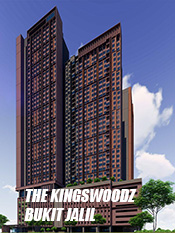



 Posts
Posts


