
KOTA KINABALU: Hotels and resorts here were told to step up the ‘greening’ of their premise to complement the government’s effort in developing a sustainable tourism sector.
Chief Minister Datuk Musa Aman said the hospitality sector should be mindful of the need to reduce its carbon footprint as Sabah was known for its biodiversity, clean environment and nature-based destinations.
“It is crucial for players in the tourism sector who depend on Sabah’s natural products to lure tourists to implement greener policies.
“Look for innovative ways of reducing energy and water use, recycle what you can, and try to start sourcing for organic detergents,” Musa said at the Ming Garden Hotel and Residence here.
He said businesses that showed real commitment in going green would draw in environmental conscious clientele apart from helping to create a safer and better environment.
Musa also called on hotel and resort operators in Sabah to create their own niche and offer something different to guests and make use of the feedback from their customers to update and improve their services.
He added that Malaysia has a variety of products that cater to the needs of tourists, from nature destinations to rich cultural heritage and premier shopping malls.
“There is something for everyone who visits Malaysia.
“It is projected that in 2020, the country’s tourism sector will grow by three folds with 36 million tourist arrivals and RM168 billion in receipts,” he said.
The state’s annual tourist arrivals had risen by 13.6% in 2011 and exceeded its initial target of 2.63 million visitors annually.
He added that the Sabah government had projected a repeat positive performance with tourist arrivals expected to exceed 2.75 million this year.
“The continuing upward trend means more hotel rooms are needed to accommodate the increasing number of visitors and the opening of Ming Garden is indeed timely.”
The Ming Garden Hotel and Residence is the newest hotel in Kota Kinabalu with 600 rooms, comprising 244 guest rooms and 356 service residences.
The property is a joint venture between the state-owned Sabah Urban Development Corporation (SUDC) and the Long Yuan Construction Group of China.
By The Star
Thursday, March 15, 2012

Meda to buy Majuperak land for RM13m
KUALA LUMPUR: Meda Inc Bhd will buy a 103.69 hectares of land in Sg Siput, Perak, from Majuperak Holdings Bhd for RM13 million.
The acquisition is for mixed development comprising commercial and residential properties.
By Business Times
The acquisition is for mixed development comprising commercial and residential properties.
By Business Times
Wednesday, March 14, 2012
S’pore developers bids for sites signal likely dip in home prices
SINGAPORE: Developers on the island-state are becoming more cautious about how much money they are willing to pay for private home sites.
They seem to be getting more worried that private home prices could fall, perhaps by up to 8% this year, according to a research report.
So they have to factor the potentially lower prices of the homes into their sums when deciding how much to offer for a plot on sale.
The BNP Paribas research report analysed about 100 government land sale bids since 2007 up until last month.
When developers look at how much to bid for a site, they consider the likely “break-even” figure. That is, how much they would have to pay for the project, taking into account the cost of building the condo and various other finance, marketing and administration costs.
Then, of course, they add a bit on top to make it worth their while, in terms of profits which means they would offer less for the land than break-even.
The report said developers were lowering the figure they were willing to pay for land, as they could no longer feel sure that prevailing home prices would hold up by the time they were likely to sell the project.
Starting in mid-2011, the difference between the expected break-even price and current selling prices started to widen to 19.8%, well above the mean of 12.1%, the report said.
The mean of 12.1% would tend to represent the profit margin developers have been achieving, on average.
This difference of about 8 percentage points is likely to represent developers' efforts to guard against the possibility of future average selling prices heading south.
A similar pattern was also observed in the second quarter of 2008, right before home prices tanked, when margin buffers widened in similar fashion, BNP Paribas property analyst Chong Kang Ho noted.
The wider spread of bids for each site, which indicates differing views among developers, and the shorter turnaround of launches also reflected concerns of an uncertain outlook in the market, he added.
Developers' nervousness is reflected not just in their bid prices but also in their haste in pushing out new launches.
The average turnaround time between securing a site and launching a project has been cut to just eight months for sites awarded in the past two years down from more than 10 months, generally, for sites awarded in 2009.
Another likely trend was even more enthusiasm for sites right near MRT stations and retail malls, the report said.
Developers feel that buyers will go for homes built on these plum sites even if times get a little rough.
By The Straits Times
They seem to be getting more worried that private home prices could fall, perhaps by up to 8% this year, according to a research report.
So they have to factor the potentially lower prices of the homes into their sums when deciding how much to offer for a plot on sale.
The BNP Paribas research report analysed about 100 government land sale bids since 2007 up until last month.
When developers look at how much to bid for a site, they consider the likely “break-even” figure. That is, how much they would have to pay for the project, taking into account the cost of building the condo and various other finance, marketing and administration costs.
Then, of course, they add a bit on top to make it worth their while, in terms of profits which means they would offer less for the land than break-even.
The report said developers were lowering the figure they were willing to pay for land, as they could no longer feel sure that prevailing home prices would hold up by the time they were likely to sell the project.
Starting in mid-2011, the difference between the expected break-even price and current selling prices started to widen to 19.8%, well above the mean of 12.1%, the report said.
The mean of 12.1% would tend to represent the profit margin developers have been achieving, on average.
This difference of about 8 percentage points is likely to represent developers' efforts to guard against the possibility of future average selling prices heading south.
A similar pattern was also observed in the second quarter of 2008, right before home prices tanked, when margin buffers widened in similar fashion, BNP Paribas property analyst Chong Kang Ho noted.
The wider spread of bids for each site, which indicates differing views among developers, and the shorter turnaround of launches also reflected concerns of an uncertain outlook in the market, he added.
Developers' nervousness is reflected not just in their bid prices but also in their haste in pushing out new launches.
The average turnaround time between securing a site and launching a project has been cut to just eight months for sites awarded in the past two years down from more than 10 months, generally, for sites awarded in 2009.
Another likely trend was even more enthusiasm for sites right near MRT stations and retail malls, the report said.
Developers feel that buyers will go for homes built on these plum sites even if times get a little rough.
By The Straits Times
Tuesday, March 13, 2012
Developer will not compensate USJ One Avenue residents
NO COMPENSATION will be paid to residents of USJ One Avenue in USJ 1, Subang Jaya, whose cars have been damaged in a flood at the condominium’s lower ground car park last week.
The decision was made by the developer in a meeting with residents’ representatives.
Last week, more than 200 cars were damaged when the basement car park of the condominium was flooded during a downpour.
 Recalling a nightmare: USJ One Avenue residents at the meeting looking at the images captured during the flood.
Developer MCT Berhad instead offered a relief fund of RM250,000 to the Joint Management Body (JMP).
MCT representatives also gave technical and legal explanations why compensation will not be given.
The residents said such an incident should not have occurred in a premier development.
The meeting saw the residents’ committee chairman leaving the meeting.
Another residents’ representative, who refused to be named, said the developer had to shoulder a great deal of responsibility now.
“There were no precautions taken even after the first flood last year.
“The second is worse and we demand measures to prevent floods,” she said.
Resident Fakrul Azuan Hashim said he was disappointed with the result of the meeting.
“This is not the first time such an incident had occurred but the management has not taken any preventive action.
“The developer’s ability to provide good service and management to the condo buyers has been questioned,” he said.
Another resident Gerald Lee said the developer was avoiding their responsibility.
“I am disappointed with the outcome as we believe that the developer should pay compensation for negligence,” he said.
A Facebook account addressed www.facebook.com/usj1avenuecondo was set up for the residents to raise their opinions and concerns on the management of the condominium.
By The Star
The decision was made by the developer in a meeting with residents’ representatives.
Last week, more than 200 cars were damaged when the basement car park of the condominium was flooded during a downpour.

Developer MCT Berhad instead offered a relief fund of RM250,000 to the Joint Management Body (JMP).
MCT representatives also gave technical and legal explanations why compensation will not be given.
The residents said such an incident should not have occurred in a premier development.
The meeting saw the residents’ committee chairman leaving the meeting.
Another residents’ representative, who refused to be named, said the developer had to shoulder a great deal of responsibility now.
“There were no precautions taken even after the first flood last year.
“The second is worse and we demand measures to prevent floods,” she said.
Resident Fakrul Azuan Hashim said he was disappointed with the result of the meeting.
“This is not the first time such an incident had occurred but the management has not taken any preventive action.
“The developer’s ability to provide good service and management to the condo buyers has been questioned,” he said.
Another resident Gerald Lee said the developer was avoiding their responsibility.
“I am disappointed with the outcome as we believe that the developer should pay compensation for negligence,” he said.
A Facebook account addressed www.facebook.com/usj1avenuecondo was set up for the residents to raise their opinions and concerns on the management of the condominium.
By The Star
Monday, March 12, 2012
Proud moment for developer

PROPERTY developer, Magna Prima Berhad officilaly announced its first step into the regional market with the launch of its maiden overseas project, The Istana recently.
The Istana is a 25-storey single tower residential apartment situated on A’Beckett Street in Melbourne, Australia — a prime address in the heart of Melbourne’s Central Business District.
Datuk Siti Nurhaliza officially launched the event in JW Marriott Hotel KL.
Siti also purchased the “royal address” at The Istana, Melbourne.
Magna Prima Berhad’s executive director Datuk Rahadian Mahmud said: “The launch of The Istana is highly significant as it marks our foray into the regional market. In fact, this maiden regional project actually expedites our 10-year vision for a regional presence.”
Formerly known as Dynasty Living, The Istana spreads over more than 27,000sq ft and has 320 units comprising studio units, apartments and double-storey penthouses.
The name change was a strategic move to better reflect the character of the property and to add a touch of Malaysia.
To date, The Istana has attracted a 62% take up among Australian and other international buyers. The remaining 38% (120 units) will be marketed to Malaysians and expatriates living here. The units are priced from A$340,000 (approximately RM1.1mil) and are targeted for completion in 2014.
By The Star
EPF to allot projects in Sungai Buloh by June
The Employees Provident Fund (EPF), which is charged to lead the development of the proposed prime township sited at Rubber Research Institute of Malaysia (RRIM) land in Sungai Buloh, Selangor, is expected to start distributing portions of the long-awaited project by June.
EPF chief executive officer Tan Sri Azlan Zainol said it will start calling for tenders, which are open to all strong property developers in the country to participate in.
“The project is going through some legal issues and then it will go through the bidding process.
“The development will be spread out over several phases and each phase will be around 12.15ha-20.25ha portions for the development of projects from commercial, residential, industrial, affordable housing and shophouses,” he told Business Times in an interview at EPF’s headquarters here recently.
Previously managed by RRIM, the 1,215ha land was slated for development over the next 10-15 years, as announced in the 2010 Budget , but until now the project has not taken off.
On May 12, 2010, the government had approved the proposal for the development of the Sungai Buloh land by Kwasa Land Sdn Bhd, a wholly-owned subsidiary of the EPF.
The EPF will have a master plan where it will allocate a few parcels and allow property developers to bid for those parcels, of which some parcels will be operated on a joint-venture basis while others may be sold outright via bids.
The development is likely to feature a big linear park, green lungs, open spaces, walkways and water bodies.
It will incorporate information technology and data infrastructure (Multimedia Super Corridor city status) and urban transportation integration.
This development will also house the depot for the upcoming mass rapid transit system.
Dubbed the new hub of the Klang Valley, the development is expected to attract RM5 billion in investments.
By Business Times
EPF chief executive officer Tan Sri Azlan Zainol said it will start calling for tenders, which are open to all strong property developers in the country to participate in.
“The project is going through some legal issues and then it will go through the bidding process.
“The development will be spread out over several phases and each phase will be around 12.15ha-20.25ha portions for the development of projects from commercial, residential, industrial, affordable housing and shophouses,” he told Business Times in an interview at EPF’s headquarters here recently.
Previously managed by RRIM, the 1,215ha land was slated for development over the next 10-15 years, as announced in the 2010 Budget , but until now the project has not taken off.
On May 12, 2010, the government had approved the proposal for the development of the Sungai Buloh land by Kwasa Land Sdn Bhd, a wholly-owned subsidiary of the EPF.
The EPF will have a master plan where it will allocate a few parcels and allow property developers to bid for those parcels, of which some parcels will be operated on a joint-venture basis while others may be sold outright via bids.
The development is likely to feature a big linear park, green lungs, open spaces, walkways and water bodies.
It will incorporate information technology and data infrastructure (Multimedia Super Corridor city status) and urban transportation integration.
This development will also house the depot for the upcoming mass rapid transit system.
Dubbed the new hub of the Klang Valley, the development is expected to attract RM5 billion in investments.
By Business Times
We have funds to develop the park in Shah Alam, Federal Govt tells Selangor
SHAH ALAM: Putrajaya does not agree with the intention of the Selangor Government to sell off part of the Shah Alam National Botanical Garden.
Instead, the Federal Government wants to lease the entire park from the state government.
Agriculture and Agro-based Industries Minister Datuk Seri Noh Omar said the state government had proposed to take over the management of the park, which had been handled by the ministry since it was developed in 1986.
“The state has proposed to sell 100 acres (40.5ha) of the park to raise RM100mil which will be put into a trust fund to manage the park.
“The ministry does not agree with this proposal. If it leases the park to us, we have the funds to develop it without having to sell any land,” he said after visiting the botanical garden here.
He added that the 817ha park was a biodiversity reservoir with 422 plant species.
Noh said the ministry had allocated RM116mil to develop the park over five years from 2010 to 2014.
He also pointed out that the state government had signed a memorandum of understanding (MoU) with the ministry in 2006 to gazette the park as a forest reserve and to lease it to the Federal Government for 60 years.
“Unfortunately, what was planned did not materialise as the current state government has refused to sign the lease agreement.
“The state government should honour the understanding between state and federal governments,” he said.
He added that an official agreement needed to be signed as the MoU was not legally binding.
Since the park was commissioned 26 years ago, Noh said the Federal Government had spent RM236mil to develop it without signing any lease agreement.
“It was based on an understanding. It was easy in the past as both (state and federal) governments were Barisan Nasional,” he said.
By The Star
Instead, the Federal Government wants to lease the entire park from the state government.
Agriculture and Agro-based Industries Minister Datuk Seri Noh Omar said the state government had proposed to take over the management of the park, which had been handled by the ministry since it was developed in 1986.
“The state has proposed to sell 100 acres (40.5ha) of the park to raise RM100mil which will be put into a trust fund to manage the park.
“The ministry does not agree with this proposal. If it leases the park to us, we have the funds to develop it without having to sell any land,” he said after visiting the botanical garden here.
He added that the 817ha park was a biodiversity reservoir with 422 plant species.
Noh said the ministry had allocated RM116mil to develop the park over five years from 2010 to 2014.
He also pointed out that the state government had signed a memorandum of understanding (MoU) with the ministry in 2006 to gazette the park as a forest reserve and to lease it to the Federal Government for 60 years.
“Unfortunately, what was planned did not materialise as the current state government has refused to sign the lease agreement.
“The state government should honour the understanding between state and federal governments,” he said.
He added that an official agreement needed to be signed as the MoU was not legally binding.
Since the park was commissioned 26 years ago, Noh said the Federal Government had spent RM236mil to develop it without signing any lease agreement.
“It was based on an understanding. It was easy in the past as both (state and federal) governments were Barisan Nasional,” he said.
By The Star
Saturday, March 10, 2012
Condo market challenging

“Bank Negara is keeping a close eye on the mortgage loan market on concerns of rising household debt-to-gross domestic product levels and has issued new guidelines to further tighten lending with effect from Jan 1,” said property consultancy Knight Frank, in its Second Half 2011 Real Estate Highlights report.
“This will inevitably have a negative impact on this sector as demand turns cautious with further pressure expected on prices and rentals of high-end condominiums in selected locations and schemes.”
Concurring with the bearish outlook is DTZ Research. In its Property Times Kuala Lumpur fourth-quarter 2011 report, DTZ pointed out that the sizeable number of new condominiums entering the market about 5,004 units in 2012 and another 4,502 units in 2013 was expected to put downward pressure on the rental market, especially in the Kuala Lumpur city centre, as a majority of them are in this location.
“The rental market will continue to feel pressure from the significant new supply that will be completed in the next two years. In addition, the economic uncertainty and tightening of credit by banks will contribute to the cautious demand for luxury residential properties,” Property Times added.
The Knight Frank report said during the review period, prices and rentals of high-end condominiums in selected schemes in Kuala Lumpur and the city fringe continued to face downward pressures due the high number of existing supply and new completions as well as a weak leasing market emanating from low occupational demand from local residents and expatriates.
The projects that are scheduled for completion this year include Residensi Kia Peng, The Pearl @ KLCC (formerly known as Stonor 16), Crest Jalan Sultan Ismail, Setia Sky Residences Phase 1A (Boheme Tower), St Mary Residences, Verticas Residensi (Towers A, B and C), Suasana Bukit Ceylon, 9 Madge, Amarin Wickham, Gaya Bangsar, and Matahari Desa Sri Hartamas.
Recent upmarket condominium projects that have been launched included Verdana @ North Kiara (Phase 1), Icon Residence Mont'Kiara, Mirage Residence, Laman Ceylon, 188 Suites, St John Woods Residence, Rimbun Condominium (formerly known as Amphill Residence) and Platinum Suites Phase 1 of Platinum Victory Face project.
Other projects in the pipeline during the first half of this year include serviced apartments project KL Trillion, Royce Residence, SoHo units @ Arcoris Mont' Kiara (formerly known as MK 20) and Damansara City 2 serviced apartments.
In the primary market, developers continued to offer attractive incentives such as rebates, discounts and a limited period of free maintenance fees to drive sales.
There was also a notable shift with more sales and leasing activities in the city fringe and suburban areas evident from several successful previews and launches of high-end condominiums at new benchmark prices commensurate with higher building specifications and improved level of facilities.
By The Star
Residential prices hardly fall
There was a lot of talk late last year that property prices will tumble in 2012 after the steep rise in the residential sector over the past few years. So far, we have not seen any of that.
What we are seeing is:
Keep your finger on these three factors and let us now take a look at today's launches. In some of these launches, buyers need only to pay about 1% downpayment of the property price instead of the required 10% on signing of the sale and purchase agreement. The stamp duty and legal fees are also waived and they need not pay anything else until after the property is completed. Such schemes have attracted many buyers.
The question to ask is: If the market is as good as many claimed it to be, why are developers offering such schemes? When a property is sold, it is registered as a sale. But the absolute revenue of the unit is yet to be paid.
For easy calculation purposes, 10% of a RM500,000 property is RM50,000. If the first 10% is paid, this RM50,000 is registered as revenue by the developer, but in the sales column, a sale of RM500,000 is recorded. That is why the sales and revenue figures vary considerably.
If a developer allows a buyer to pay only 1% of the purchase price, this does not mean he “loses” that other 9%. He will get it back after a certain period of time. The same goes for the waiver of the stamp duty and legal fees. The developer has to pay the lawyers for services rendered. All these charges and fees are packaged into the deal which the buyer will have to bear in due time. In this case, later rather than sooner.
Developers are offering such attractive terms in order to make a sale. Many of these schemes are offered in condominium projects because there is generally a glut in this segment. While such schemes may attract genuine buyers who need a roof over their heads and who are thankful that they can defer payment, it also attracts those who have no problem forking out that 1% downpayment and take a gamble that they will be able to offload it when the project is completed.
If one were to drive around certain parts of the Klang Valley today, there are some completed high-rise with large mobile numbers plastered on windows. It may not be so easy to offload units when there are so many of them.
What is noticeably absent, and which many would like to see are more launches of landed housing. But this is unlikely to happen. Only the secondary market is offering landed units, which may explain to a certain degree why the secondary market was rather robust last year. It applies not only for the Klang Valley, but for Penang as well and is a reflection of strong domestic demand despite the many negative predictions for this year.
When a developer considers a piece of land, he thinks of how much he can make from it. If he were to build a condominium and throw in various facilities, he can sell more houses than if he were to build landed units. That is why most of the launches today are high-rise projects, be it condominiums or serviced apartments.
Developers are also limited by what they have. Increasinlgy, land in city centres and popular areas are getting smaller. Which explains why in highly dense areas, condominium projects continue to be sprout up in the most congested of areas.
The development of landed units can only take place when there is large tracts of land, which also explains why the big boys like Mah Sing and SP Setia are venturing further away from city centres.
The other obvious factor in today's launches are the size and price of the condominium units. Most of the units are small. Studio apartments may be in the 500 sq ft range or thereabouts while those targeted at families may be three-bedroom units with built-up areas of 1,200 sq ft onwards. Most of the launches today are priced close to RM700,000 onwards. On a per sq ft basis, the price is still going up, whether it is a Petaling Jaya address or a Bukit Jalil one.
So, while sales volumes may stagnate in newly-launched projects (which explains why developers are offering units for sale with a 1% downpayment), on a per sq ft basis, prices does not seem to be stabilising. Developers are trying to maintain affordability by having smaller units, deferring payment and leveraging on low interest rates.
Assistant news editor Thean Lee Cheng is glad that Bank Negara is monitoring the household debt and lending in the property sector closely as this year promises to be an exciting one.
By The Star
What we are seeing is:
- Bank Negara's tightened guidelines on consumer lending have started to work. Loan applications and loan approvals have fallen in January;
- In certain locations, house prices and rental have started to ease; and
- Developers are offering very enticing terms since the beginning of this year.
Keep your finger on these three factors and let us now take a look at today's launches. In some of these launches, buyers need only to pay about 1% downpayment of the property price instead of the required 10% on signing of the sale and purchase agreement. The stamp duty and legal fees are also waived and they need not pay anything else until after the property is completed. Such schemes have attracted many buyers.
The question to ask is: If the market is as good as many claimed it to be, why are developers offering such schemes? When a property is sold, it is registered as a sale. But the absolute revenue of the unit is yet to be paid.
For easy calculation purposes, 10% of a RM500,000 property is RM50,000. If the first 10% is paid, this RM50,000 is registered as revenue by the developer, but in the sales column, a sale of RM500,000 is recorded. That is why the sales and revenue figures vary considerably.
If a developer allows a buyer to pay only 1% of the purchase price, this does not mean he “loses” that other 9%. He will get it back after a certain period of time. The same goes for the waiver of the stamp duty and legal fees. The developer has to pay the lawyers for services rendered. All these charges and fees are packaged into the deal which the buyer will have to bear in due time. In this case, later rather than sooner.
Developers are offering such attractive terms in order to make a sale. Many of these schemes are offered in condominium projects because there is generally a glut in this segment. While such schemes may attract genuine buyers who need a roof over their heads and who are thankful that they can defer payment, it also attracts those who have no problem forking out that 1% downpayment and take a gamble that they will be able to offload it when the project is completed.
If one were to drive around certain parts of the Klang Valley today, there are some completed high-rise with large mobile numbers plastered on windows. It may not be so easy to offload units when there are so many of them.
What is noticeably absent, and which many would like to see are more launches of landed housing. But this is unlikely to happen. Only the secondary market is offering landed units, which may explain to a certain degree why the secondary market was rather robust last year. It applies not only for the Klang Valley, but for Penang as well and is a reflection of strong domestic demand despite the many negative predictions for this year.
When a developer considers a piece of land, he thinks of how much he can make from it. If he were to build a condominium and throw in various facilities, he can sell more houses than if he were to build landed units. That is why most of the launches today are high-rise projects, be it condominiums or serviced apartments.
Developers are also limited by what they have. Increasinlgy, land in city centres and popular areas are getting smaller. Which explains why in highly dense areas, condominium projects continue to be sprout up in the most congested of areas.
The development of landed units can only take place when there is large tracts of land, which also explains why the big boys like Mah Sing and SP Setia are venturing further away from city centres.
The other obvious factor in today's launches are the size and price of the condominium units. Most of the units are small. Studio apartments may be in the 500 sq ft range or thereabouts while those targeted at families may be three-bedroom units with built-up areas of 1,200 sq ft onwards. Most of the launches today are priced close to RM700,000 onwards. On a per sq ft basis, the price is still going up, whether it is a Petaling Jaya address or a Bukit Jalil one.
So, while sales volumes may stagnate in newly-launched projects (which explains why developers are offering units for sale with a 1% downpayment), on a per sq ft basis, prices does not seem to be stabilising. Developers are trying to maintain affordability by having smaller units, deferring payment and leveraging on low interest rates.
Assistant news editor Thean Lee Cheng is glad that Bank Negara is monitoring the household debt and lending in the property sector closely as this year promises to be an exciting one.
By The Star
Bankers and lawyers should know better
BUYING a property that eventually becomes abandoned is a painful experience for many house buyers. It not only hurts purchasers who have lost their hard-earned money but also affects the property industry's reputation which has taken a beating due to unethical activities of a few culprits.
This is particularly so when the abandoned project is not caused by factors such as economic downturn or withdrawal of purchasers, but solely due to irresponsible people who claim to be “developers” but do not hold a licence to do so.
It was recently reported that our Housing and Local Government Ministry has identified 195 abandoned developments that were unlicensed in our country. I am puzzled as to how these “developers” are able to start their projects when they do not even have their licence to apply for financing if they require a bridging loan, and is their sales and purchase (S&P) agreement properly attested by a lawyer before they start selling?
In this context, what can be done and who should play a part in reducing these unlawful developers? Assessing our existing housing development process would provide us with some ideas.
When a developer plans for a housing project, he must first get the necessary approvals and licences from the relevant authorities such as the development order, building plan, advertising permit and developer's licence. The developer then may need to source for a bridging loan from a financial institution and this is followed by getting lawyers to prepare the legal documents which include the S&P agreement.
When the project is launched to the market, the developer will require the purchasers to sign the S&P agreements in order to finalise the purchase. Should the purchaser acquire a housing loan from a bank, the bank will come into the picture to process the loan application submitted by the purchaser. Those are the basic procedures involved in developing and marketing a housing project in Malaysia.
For unlicensed development, the regulatory bodies are not in the picture. In such cases, it becomes apparent that the lawyers and/or bankers, both representing the house purchaser, have a role to play as the first line of defence to protect the interest of the purchaser.
Hence, there are questions that begged to be answered. How is it possible for financial institutions to approve the end financing loan for a property development in the absence of all or part of the required approvals and licences? The same questions are posted to lawyers who prepare the legal documents for unlicensed development.
I believe everyone has a role in identifying irresponsible players in the industry, especially the bankers and lawyers with their better access to information and strong regulatory network as compared to the general public. As a purchaser and a customer, you would have expected your banker and lawyer to carry out their due diligence duties to ensure that your interest is not compromised.
In other industries, professional practitioners who do not convey the right message and do not protect customers' interests can be given stern punishment as their action may be deemed as negligence, fraud or even criminal breach of trust.
According to the record of National House Buyers Association, in the case of Keng Soon Finance Bhd (1996), a financial institution had granted a loan to an unlicensed developer, and it was decided that the loan and the security offered were invalid. The bank could not institute the foreclosure proceedings on the land and therefore could not recover its loan.
Under our Housing Development Act, a property developer that engages in, carries out or undertakes housing development without having been duly licensed can be fined between RM250,000 and RM500,000 or to imprisonment for a term not exceeding five years or both. This is an avenue to take action against unlicensed developers. While we have the law in place, it is equally important to ensure strong enforcement comes along.
For house buyers, you are strongly advised to purchase property from reputable developers and to do thorough “shopping” and analysis before signing on the dotted lines. Responsible developers are keen to work hand-in-hand with purchasers and appreciate the role of the National House Buyers Association which advocates the protection of house buyers in Malaysia. We should stand together as a team to fight against irresponsible developers.
And for anyone of you who think that you have bought into one of those unlicensed developments mentioned earlier in the article, it is time to write and call your banker or lawyer for clarification.
Datuk Alan Tong is the group chairman of Bukit Kiara Properties, he was the FIABCI World president in 2005-2006 and was named Property Man of The Year 2010 by FIABCI Malaysia.
By The Star
This is particularly so when the abandoned project is not caused by factors such as economic downturn or withdrawal of purchasers, but solely due to irresponsible people who claim to be “developers” but do not hold a licence to do so.
It was recently reported that our Housing and Local Government Ministry has identified 195 abandoned developments that were unlicensed in our country. I am puzzled as to how these “developers” are able to start their projects when they do not even have their licence to apply for financing if they require a bridging loan, and is their sales and purchase (S&P) agreement properly attested by a lawyer before they start selling?
In this context, what can be done and who should play a part in reducing these unlawful developers? Assessing our existing housing development process would provide us with some ideas.
When a developer plans for a housing project, he must first get the necessary approvals and licences from the relevant authorities such as the development order, building plan, advertising permit and developer's licence. The developer then may need to source for a bridging loan from a financial institution and this is followed by getting lawyers to prepare the legal documents which include the S&P agreement.
When the project is launched to the market, the developer will require the purchasers to sign the S&P agreements in order to finalise the purchase. Should the purchaser acquire a housing loan from a bank, the bank will come into the picture to process the loan application submitted by the purchaser. Those are the basic procedures involved in developing and marketing a housing project in Malaysia.
For unlicensed development, the regulatory bodies are not in the picture. In such cases, it becomes apparent that the lawyers and/or bankers, both representing the house purchaser, have a role to play as the first line of defence to protect the interest of the purchaser.
Hence, there are questions that begged to be answered. How is it possible for financial institutions to approve the end financing loan for a property development in the absence of all or part of the required approvals and licences? The same questions are posted to lawyers who prepare the legal documents for unlicensed development.
I believe everyone has a role in identifying irresponsible players in the industry, especially the bankers and lawyers with their better access to information and strong regulatory network as compared to the general public. As a purchaser and a customer, you would have expected your banker and lawyer to carry out their due diligence duties to ensure that your interest is not compromised.
In other industries, professional practitioners who do not convey the right message and do not protect customers' interests can be given stern punishment as their action may be deemed as negligence, fraud or even criminal breach of trust.
According to the record of National House Buyers Association, in the case of Keng Soon Finance Bhd (1996), a financial institution had granted a loan to an unlicensed developer, and it was decided that the loan and the security offered were invalid. The bank could not institute the foreclosure proceedings on the land and therefore could not recover its loan.
Under our Housing Development Act, a property developer that engages in, carries out or undertakes housing development without having been duly licensed can be fined between RM250,000 and RM500,000 or to imprisonment for a term not exceeding five years or both. This is an avenue to take action against unlicensed developers. While we have the law in place, it is equally important to ensure strong enforcement comes along.
For house buyers, you are strongly advised to purchase property from reputable developers and to do thorough “shopping” and analysis before signing on the dotted lines. Responsible developers are keen to work hand-in-hand with purchasers and appreciate the role of the National House Buyers Association which advocates the protection of house buyers in Malaysia. We should stand together as a team to fight against irresponsible developers.
And for anyone of you who think that you have bought into one of those unlicensed developments mentioned earlier in the article, it is time to write and call your banker or lawyer for clarification.
Datuk Alan Tong is the group chairman of Bukit Kiara Properties, he was the FIABCI World president in 2005-2006 and was named Property Man of The Year 2010 by FIABCI Malaysia.
By The Star
Hua Yang unveils plans for Ipoh township
IPOH: Hua Yang Bhd has unveiled plans for a pedestrian mall and three types of affordable homes on a 335.2ha site in Bandar Universiti Seri Iskandar (BUSI), about 25 minutes' drive from here.
The ongoing development has a gross development value (GDV) of RM80 million.
BUSI is an upcoming township which has grown into a large student and university catchment, and has become a haven for public servants working at Perak Tengah District council, and others from Manjung, Tronoh, Batu Gajah and Pusing.
Students and university lecturers from Universiti Teknologi Mara, Universiti Teknologi Petronas, Institut Perdangan Mara and Institut Kemahiran Belia Negara contribute to the 10,000-strong population of BUSI.
"To further enhance the facilities offered at OneBU@Seri Iskandar - the lifestyle and business hub of BUSI - we will be previewing the pedestrian mall at our sales launch on March 10," Tony Ng, Hua Yang's Perak branch manager, said recently.
The mall offers 123 units and is located adjacent to the newly-opened Tesco Superstore and complements the lifestyle experience at OneBU@Seri Iskandar.
"We will launch three types of affordable homes ranging from RM130,00 to RM180,000 for single-storey and double-storey link houses," Ng said.
The Seri Idaman and Seri Andaman series consist of single-storey terrace houses measuring 800 square feet and are priced from RM130,00 onwards. A total of 909 units will be built.
By Business Times (by P. Chandra Sagaran)
The ongoing development has a gross development value (GDV) of RM80 million.
BUSI is an upcoming township which has grown into a large student and university catchment, and has become a haven for public servants working at Perak Tengah District council, and others from Manjung, Tronoh, Batu Gajah and Pusing.
Students and university lecturers from Universiti Teknologi Mara, Universiti Teknologi Petronas, Institut Perdangan Mara and Institut Kemahiran Belia Negara contribute to the 10,000-strong population of BUSI.
"To further enhance the facilities offered at OneBU@Seri Iskandar - the lifestyle and business hub of BUSI - we will be previewing the pedestrian mall at our sales launch on March 10," Tony Ng, Hua Yang's Perak branch manager, said recently.
The mall offers 123 units and is located adjacent to the newly-opened Tesco Superstore and complements the lifestyle experience at OneBU@Seri Iskandar.
"We will launch three types of affordable homes ranging from RM130,00 to RM180,000 for single-storey and double-storey link houses," Ng said.
The Seri Idaman and Seri Andaman series consist of single-storey terrace houses measuring 800 square feet and are priced from RM130,00 onwards. A total of 909 units will be built.
By Business Times (by P. Chandra Sagaran)
SP Setia said to be keen on fresh bid for London’s Battersea site
PETALING JAYA: SP Setia Bhd, which made two bids of £262mil (RM1.2bil) and £324mil (RM1.5bil) last year for London's Battersea Power Station site, is said to be keen to make a fresh bid for the ongoing sales tender exercise for the 15.8ha (39.1 acres) freehold site.
According to an advertisement in The Wall Street Journal on Wednesday by joint agents Knight Frank and Ernst & Young, the freehold of the site is offered for sale by private treaty via informal tender.
It said the site is located in a prominent central London riverside location with valid outline planning permission for a major mixed use development totalling about 750,000 sq m (or 8 million sq ft) in gross external area (GEA).
However, when contacted yesterday, SP Setia declined to comment on the tender exercise.
Knight Frank Malaysia executive director Sarkunan Subramaniam said a number of Malaysian developers had the technical and financial capabilities to undertake the redevelopment of the Battersea Power Station site into a mixed used development.
“It is a sizeable commitment, no doubt, and we expect a number of good bids for this tender exercise,” he told StarBizWeek.
Sarkunan said a series of advertisements which started appearing last Saturday, had appeared in a number of countries including Malaysia, Hong Kong, China and the Middle East.
He pointed out that the submission of bids should be no later than 12 noon, London time, on May 6.
On Nov 18 last year, SP Setia submitted its first offer of £262mil to Lloyds Banking Group and Ireland's National Asset Management Agency to buy debts linked to the power station.
However, the offer was rejected. It subsequently submitted its second bid of £324mil to take control of the site and to buy up the bank debt but the bid was also rejected.
In an announcement to Bursa Malaysia on Nov 24 last year, SP Setia confirmed the rejection by the lenders but added that it believed property development prospects in London were positive.
“Accordingly, the group will continue to look out for and assess other possibilities to invest, via strategic partnerships and land-banking opportunities, in this exciting market,” it added.
SP Setia president and CEO Tan Sri Liew Kee Sin had said that the company was keen on venturing into London's property market.
A Hwang DBS Vickers research note yesterday said backing from Permodalan Nasional Bhd (PNB), the largest shareholder of SP Setia, could enhance the company's bids for government land and large overseas projects.
“SP Setia, with its RM83mil net cash and RM2.8bil record unbilled sales, has room to landbank further.
“It is eyeing government land redevelopment projects, as well as PNB's prime landbank in the Klang Valley and Johor.
“It may also consider expanding in Vietnam (downtown Ho Chi Minh City and Hanoi for long-term potential), Australia (Melbourne, Sydney), and London (still pursuing Battlesea with government-linked companies as potential partners), with a minimum target of 20% in pre-tax profit margins,” the report added. Meanwhile, a Reuters report on Feb 15 stated that the price tag for the site was about £300mil to £400mil.
It added that the decaying coal-fired power station that was closed in 1983 after 50 years in service was expected to draw interest from the Far East, Russia and the Middle East.
The site has seen several failed redevelopment attempts in the three decades since the power station was closed.
Irish developer Real Estate Opportunities (REO) was the last to try its luck with a £5.5bil redevelopment plan but the plan collapsed in December last year after the company went into administration.
AFP reported last month that even top English Premier League football club Chelsea had expressed an interest in acquiring the site.
By The Star
According to an advertisement in The Wall Street Journal on Wednesday by joint agents Knight Frank and Ernst & Young, the freehold of the site is offered for sale by private treaty via informal tender.
It said the site is located in a prominent central London riverside location with valid outline planning permission for a major mixed use development totalling about 750,000 sq m (or 8 million sq ft) in gross external area (GEA).
However, when contacted yesterday, SP Setia declined to comment on the tender exercise.
Knight Frank Malaysia executive director Sarkunan Subramaniam said a number of Malaysian developers had the technical and financial capabilities to undertake the redevelopment of the Battersea Power Station site into a mixed used development.
“It is a sizeable commitment, no doubt, and we expect a number of good bids for this tender exercise,” he told StarBizWeek.
Sarkunan said a series of advertisements which started appearing last Saturday, had appeared in a number of countries including Malaysia, Hong Kong, China and the Middle East.
He pointed out that the submission of bids should be no later than 12 noon, London time, on May 6.
On Nov 18 last year, SP Setia submitted its first offer of £262mil to Lloyds Banking Group and Ireland's National Asset Management Agency to buy debts linked to the power station.
However, the offer was rejected. It subsequently submitted its second bid of £324mil to take control of the site and to buy up the bank debt but the bid was also rejected.
In an announcement to Bursa Malaysia on Nov 24 last year, SP Setia confirmed the rejection by the lenders but added that it believed property development prospects in London were positive.
“Accordingly, the group will continue to look out for and assess other possibilities to invest, via strategic partnerships and land-banking opportunities, in this exciting market,” it added.
SP Setia president and CEO Tan Sri Liew Kee Sin had said that the company was keen on venturing into London's property market.
A Hwang DBS Vickers research note yesterday said backing from Permodalan Nasional Bhd (PNB), the largest shareholder of SP Setia, could enhance the company's bids for government land and large overseas projects.
“SP Setia, with its RM83mil net cash and RM2.8bil record unbilled sales, has room to landbank further.
“It is eyeing government land redevelopment projects, as well as PNB's prime landbank in the Klang Valley and Johor.
“It may also consider expanding in Vietnam (downtown Ho Chi Minh City and Hanoi for long-term potential), Australia (Melbourne, Sydney), and London (still pursuing Battlesea with government-linked companies as potential partners), with a minimum target of 20% in pre-tax profit margins,” the report added. Meanwhile, a Reuters report on Feb 15 stated that the price tag for the site was about £300mil to £400mil.
It added that the decaying coal-fired power station that was closed in 1983 after 50 years in service was expected to draw interest from the Far East, Russia and the Middle East.
The site has seen several failed redevelopment attempts in the three decades since the power station was closed.
Irish developer Real Estate Opportunities (REO) was the last to try its luck with a £5.5bil redevelopment plan but the plan collapsed in December last year after the company went into administration.
AFP reported last month that even top English Premier League football club Chelsea had expressed an interest in acquiring the site.
By The Star
Parkson plans RM3b chain of shopping malls in China
KUALA LUMPUR: Parkson Holdings Bhd, a Lion group company, will invest some RM3 billion to develop a chain of 10 shopping complexes by 2020.
The development and management of the mall, which will be under Festival City Sdn Bhd, will open in major cities within the country and carry the Festival City brandname.
 Group managing director Datuk Alfred Cheng this is a natural extension of its enormous retail experience and to create a new and steady source of income.
“Parkson is in its 25th year of operations and has a lot of retail experience. In some of our overseas operations where we occupy a larger area, we are already operating a ‘pseudo’ shopping malls.
So, we already have experience running malls and this is a natural extension,” he said.
Cheng explained that it used the word “pseudo” as it already has seven malls in China where Parkson is the main occupant with smaller retailers.
“The focus (previously) was to build a network of Parkson (department store). Now that we have achieved more than 105 stores in Asia, we feel ready to also venture into shopping complexes,” he said.
“Within the next three years, we expect to have two more malls and, within 10 years, 10 malls in total in Malaysia,” he said.
In a recent interview, it was reported that Parkson was finalising a second mall that will be located in Malacca.
“Each mall will cost between RM250 million and RM300 million on the average or maybe even a little more,” Cheng told Business Times following the official launch of the first mall.
“We will only be in major cities for a start,” he added.
Cheng also did not discount the fact that it could buy an existing mall but said that it would focus on developing its own mall.
Parkson Holdings is the majority shareholder in both Hong Kong-listed Parkson Retail Group Ltd and Singapore-listed Parkson Retail Asia.
The former listed entity covers the retail operations in China, while the latter covers operations in Malaysia, Vietnam and Indonesia.
Meanwhile, Cheng said KL Festival City will post a earnings before tax and interest of RM20 million in the first year of operations. The mall's tenants are expected to rake in a total of RM300 million in sales in during the same period.
KL Festival City, whose theme is "Every Day is a Celebration", is a 1.1 million-sq-ft mall with a total net lettable area of 500,000 sq ft.
Shares of Parkson Holdings yesterday rose 3 sen to close at RM5.56. The stock's price has fallen by 1.77 per cent so far this year, compared with the benchmark FTSE Bursa Malaysia Kuala Lumpur Composite Index's 3.15 per cent rise.
By Business Times
The development and management of the mall, which will be under Festival City Sdn Bhd, will open in major cities within the country and carry the Festival City brandname.
“Parkson is in its 25th year of operations and has a lot of retail experience. In some of our overseas operations where we occupy a larger area, we are already operating a ‘pseudo’ shopping malls.
So, we already have experience running malls and this is a natural extension,” he said.
Cheng explained that it used the word “pseudo” as it already has seven malls in China where Parkson is the main occupant with smaller retailers.
“The focus (previously) was to build a network of Parkson (department store). Now that we have achieved more than 105 stores in Asia, we feel ready to also venture into shopping complexes,” he said.
“Within the next three years, we expect to have two more malls and, within 10 years, 10 malls in total in Malaysia,” he said.
In a recent interview, it was reported that Parkson was finalising a second mall that will be located in Malacca.
“Each mall will cost between RM250 million and RM300 million on the average or maybe even a little more,” Cheng told Business Times following the official launch of the first mall.
“We will only be in major cities for a start,” he added.
Cheng also did not discount the fact that it could buy an existing mall but said that it would focus on developing its own mall.
Parkson Holdings is the majority shareholder in both Hong Kong-listed Parkson Retail Group Ltd and Singapore-listed Parkson Retail Asia.
The former listed entity covers the retail operations in China, while the latter covers operations in Malaysia, Vietnam and Indonesia.
Meanwhile, Cheng said KL Festival City will post a earnings before tax and interest of RM20 million in the first year of operations. The mall's tenants are expected to rake in a total of RM300 million in sales in during the same period.
KL Festival City, whose theme is "Every Day is a Celebration", is a 1.1 million-sq-ft mall with a total net lettable area of 500,000 sq ft.
Shares of Parkson Holdings yesterday rose 3 sen to close at RM5.56. The stock's price has fallen by 1.77 per cent so far this year, compared with the benchmark FTSE Bursa Malaysia Kuala Lumpur Composite Index's 3.15 per cent rise.
By Business Times
Rental eases in London market


Benham and Reeves managing director Anita Mehra says “some tenants are willing to downsize or move further away as they cannot afford to pay high rentals.”
Mehra was in Kuala Lumpur recently to speak with Malaysians who bought into that market.
She says that although the rental market is healthy, unemployment which is expected rise and a slowing down of the UK economy will affect the rental market going forward.
Her comments are supported by research reports by property consultancies Savills and Jones Lang La Salle, both of which are based in London.
According to Savills, “the previously strong residential rental growth has recently eased in the prime rental market of central London. Prime markets of the south-east have also soften slightly.”
Jones Lang La Salle reports that “rental values have been increasing for two years now (but) the rate of growth has slowed during the second half of last year.”
In its January 2012 report Residential Market Analysis: Prime Central London, Jones Lang says “demand continues to be the highest at the lower end of the market and even more so recently since the increase in rental values has forced some tenants to seek smaller properties or less well-located areas.”
The report goes on to say that “rental value growth has been strongest in studio and one-bedroom apartments. These smaller flats have seen average rental growth of 17.1% during 2011, whereas larger flats have seen a 9.3% rise.”
Although the report focused on Prime Central London, and not the Greater London rental market, it does somewhat give an indication of the Greater London area.
While prices continue to rise in London, prices are on the downtrend in other parts of the country.
Mehra singled out success stories like the riverside development Imperial Wharf in Chelsea where a one-bedroom unit can be rented out for £400 per week compared to Beauford Park in Hendon (£250 a week for a one-bedder).
At the presentation, many investors also enquired about a project in Acton and properties in Ealing.
“Some areas may be further away from the city but the environment is good, like Ealing where it is more family-oriented,” she said.
Reports from Savills said Asian buyers tend to like east of the city in areas like Canary Wharf, at one time known as Docklands which has undergone massive regeneration.
In prime central London, Savills says the Greeks, Italians and Egyptians like Marylebone and Regents Park and tend to go for the large trophy houses and turnkey flats, while other buyers from Europe have taken a liking to Mayfair, Knightsbridge and Chelsea, Kensington and St John's Wood. The Americans go for the well-maintained family houses in West Brompton.
Dynamics changing
The London property market, as a result of the 2007/2008 global financial crisis, is undergoing changes, Mehra says.
One of the most obvious is the foreign capital flight into the market, despite the economic uncertainties in the eurozone.
They call this a “flight to safe haven”, that is foreigners are putting their money into property which they consider as a “preserver of wealth.”
Over in the United States, the reverse is happening. Across the Atlantic, prices of property have gone below the value of their mortgage loans, that is the value of the loans taken out on properties is greater than the market value of the properties.
It is baffling that while the eurozone debt problem languishes, London properties are increasing in value.
Savills' Prime London Residential Markets (January 2012) says global unrest and economic uncertainty is to London's advantage as this has resulted in equity flowing there from other parts of Europe, the Middle East and China.
The prime residential markets of London performed the most strongly over the course of last year as it benefited from strong demand from international buyers who accounted for 55% of sales. These investors introduced £4.5bil of new equity into the market in 2011, one of the highest in recent years. In 2010, foreigners invested £3.7bil into the prime residential market.
Despite the eurozone problems, the European share of the market rose from 13.2% of sales in 2010 to 19.6%, while that of Middle Eastern buyers increased from 7.6% to 8.5%.
However, in the ultra prime market where values typically exceed £15mil, and overseas demand is strongest, annual growth ended the year just short of 19%. Growth was modest in the second half of last year at just 3.75%, the Savills report says.
Buyers who go for this ultra prime real estate are also rather telling they include billionaires from Greece, Italy and Egypt. Both Greece and Italy are among the two worst-hit economies in Europe while the Middle East unrest has also resulted in capital flight to London.
The dynamics of the London property market is undergoing other changes.
Of the £4.5bil that entered the prime central London last year, about a quarter or £1.4bil of new equity (investments) flowed into the newly built prime market alone as opposed to the secondary market. Last year, most of these newly-built properties were sold to Mainland Chinese and other Asians who accounted for a quarter (26%) of foreign purchases in this sector, while UK buyers formed a little over a third. In 2009, UK buyers formed three-quarters of the market for newly build London properties, Savills' The World in London says.
Buyers from Mainland China, Singapore, Hong Kong and Malaysia tend to be more investment oriented. Their objective is to benefit from the weak sterling and possible long term growth. They dominate the apartment market but at the lower price points compared with most other overseas buyers. Good access and communication links were their key requirements.
The report further says that “developers have consequently sought to target the Chinese and Pacific Asians by tailoring products to their preferences in terms of configuration, layout and design features.”
Says Malaysia Properties Inc (MPI) chief executive officer Kumar Tharmalingam: “Those who buy into the London market are taking a risk that the sterling will strengthen and the prices will go up. They are also taking a risk that the Malaysian economy will weaken.
“While London is an international market like Singapore, being an absentee landlord, you will have to pass the management of the property to an agent and there will be a cost to that. The only thing they can hope for is capital and currency appreciation. The laws there protect the displaced, and are anti-wealthy while the laws in Singapore protect the owners and Singapore is just two hours away.”
MPI is a government agency set up to promote Malaysian properties.
By The Star
Friday, March 9, 2012
Developer’s latest property overlooks city skyline

G RESIDENCE is one of Tan and Tan Devlopments Berhad’s latest properties in the heart of metropolitan Kuala Lumpur.
Designed to complement contemporary lifestyles, this property is developed by Opt Ventures Sdn Bhd, a joint venture company between Tan and Tan (an IGB company) and Sin Heap Lee Sdn Bhd.
Positioned as leasehold on commercial title, this two-tower, 23-storey residential apartments is strategically located along Jalan Desa Pandan on a 1.46ha site with the prime units overlooking the city’s skyline.
IGB head of property development, Teh Boon Ghee said G Residence overlooks Lingkungan U-Thant, backs the Polo Club and neighbours the Royal Selangor Golf Club.
“G Residence is affordably priced at an average of RM650 per sq ft with an expected maintenance fee of 30sen per sq ft, which includes the sinking fund. The prices range between RM610,000 to RM1mil per unit.
“It is surrounded by a mature township of shopoffi ces and apartments. So far, 80% of G Residence have been sold out since the property was officially opened for sales on Dec 8 last year,” said Teh, who is the executive director for IGB. He added that those who wish to buy G Residence units for investment can expect a rental yield of about 5.5%.
The apartments consist of three specifi cations, namely Types A, B and C, with Type C being the largest at 1,545sq ft followed by Type A 1,400sq ft and Type B 1087sq ft.
Type B would be an ideal choice for singles, who intend to start living on their own, while Types A and C would fit families with school-going children.
Every unit offers breathtaking views and high ceilings, which offers a spacious outlook.

This is further enhanced with a non-column layout.
One need not incur additional costs for an expensive kitchen cabinet as each unit comes with a built-in kitchen and Electrolux cooker hob and hood.
If you love entertaining friends with your culinary expertise, you can opt for Types A and C units as it is equipped with a dry and wet kitchen for your convenience.
Meanwhile, the master bedrooms have an attached bathroom fully equipped with modern fixtures.
G Residence is equipped with facilities such as a multi-purpose hall, a 2,300sq ft gym with skylight, 30m swimming pool, wading pool, playground and a common garden.
With 26 commercial units available at the ground and fi rst fl oor, residents can expect life at G Residence to be lively. To cater to this concept, the developer has ensured that ample carpark space will be provided for retail alone. The carpark entrance to retail outlets will be separate to ensure better security.
The commercial units and apartments are only accessible via an access card. The property is scheduled to be completed in February 2015.
Established in 1971, Tan & Tan Developments Berhad is one of Malaysia’s most innovative and visionary developer.
The company has been the recipient of The Edge’s Top Property Developers Award for eight consecutive years and has been awarded the prestigious FIABCI Award of Distinction for Residential Development in 2002.
In 2002, Tan & Tan and IGB Corporation Berhad merged, making Tan & Tan a wholly owned subsidiary of IGB, which is listed on the main board of Bursa Malaysia.
The company is famous for high-end condominium living with its Hampshire Place, Cendana and U-Thant Residence. Its success story continues with the joint development of Sierramas, an exclusive guarded residential estate with KL-Kepong Property Holdings Sdn Bhd. Tan & Tan is now redefining luxury with its newly unveiled Garden Manor.
By The Star
RM22bil plan to turn Mersing into the likes of Bali and Hawaii
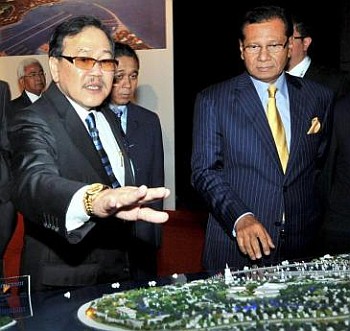
JOHOR BARU: Radiant Starfish Development Bhd plans to position Mersing town into an international tourist destination on par with Gold Coast, Bali, Caribbean and Hawaii.
Chief executive officer Ungku Safian Abdullah said the town had all the ingredients to become a tourist hotspot and its potential had yet to be exploited.
“I can guarantee you that Mersing town will no longer look like what it is seven years from now,'' he said at a press conference yesterday.
Ungku Safian said Mersing, which was located on the north east of Johor, was sandwiched between 40 unspoiled islands and the 200-million-year old Endau-Rompin National Park.
He was speaking after the signing of memorandum of agreements with YPJ Holdings Sdn Bhd, Sinohydro Corp (M) Sdn Bhd, Shengrong International Group Co Ltd and CIMB Insurance Brokers Sdn Bhd witnessed by Johor Mentri Besar Datuk Abdul Ghani Othman.
The agreements entail the development of the RM22bil Mersing Laguna, which involves the building of hotels and villas, land reclamation, a water theme park and provide insurance coverage for the project.
Ungku Safian said the reclamation works and related infrastructure would cost RM4.2bil and RM1bil respectively, adding that some RM17bil was required for develop the rest of project which would take seven years to complete.
The components of the project will consists 22 blocks of five-storey boutique hotels with 3,000 rooms, 4,000 villas and service apartments, marina facilities and commercial development
“Mersing Laguna is aimed at attracting tourists with high spending power and travellers who would love nature and eco-tourism,'' he said.
Mersing Laguna is one of the nine projects announced by Prime Minister Datuk Seri Najib Tun Razak in Putrajaya on Feb 28 under the East Coast Economic Region.
By The Star
SP Setia eyes govt land redevelopment jobs
SP Setia Bhd is eyeing government land redevelopment projects as well as Permodalan Nasional Bhd's (PNB) prime landbank in the Klang Valley and Johor.
In a note today, HwangDBS Vickers Research Sdn Bhd said with PNB's backing, SP Setia could enhance bids for government land and large overseas projects.
It said SP Setia may also consider expanding in Vietnam, Australia and London.
"SP Setia has room to landbank further with a net cash of RM83 million and RM2.8 billion record unbilled sales," it said.
HwangDBS Vickers said given the improved clarity on management continuity and strong growth potential, it would maintain its "hold" call on SP Setia at a target price of RM4.50.
By Bernama
In a note today, HwangDBS Vickers Research Sdn Bhd said with PNB's backing, SP Setia could enhance bids for government land and large overseas projects.
It said SP Setia may also consider expanding in Vietnam, Australia and London.
"SP Setia has room to landbank further with a net cash of RM83 million and RM2.8 billion record unbilled sales," it said.
HwangDBS Vickers said given the improved clarity on management continuity and strong growth potential, it would maintain its "hold" call on SP Setia at a target price of RM4.50.
By Bernama
Naim Indah says no new plans for more projects
PETALING JAYA: Naim Indah Corp Bhd (Nicorp) denies there are plans for new development projects except for what had been agreed upon with Generasi Cipta Sdn Bhd last month.
The property and timber company was responding to a report on Monday in a Chinese daily saying that Nicorp's new chief executive was expected to bring in a new development plan worth RM500mil.
“The directors and major shareholder of Nicorp wish to clarify that there is no proposal from Datuk Raymond Chan to bring a new development plan into the company as at to date, apart from the heads of agreement (HoA) entered into with Generasi Cipta Sdn Bhd which was announced on Feb 10, 2012,” it said in the announcement on Bursa Malaysia.
 On the sharp increase in its share price on Wednesday, it said that the company was not aware of any reason for the movement except for the update regarding the Generasi Cipta HoA.
Nicorp announced on March 7 that it had received authorisation from Generasi Cipta “to initiate, negotiate and finalise other investment opportunities in the best interest of Nicorp except on property investments and property development business”.
The counter gained 26% on Wednesday to close at 65.5 sen from 52 sen a day before. Yesterday, the counter dipped 3.8% to 63 sen.
On Feb 10, Nicorp announced that it entered into a HoA with Generasi Cipta to buy 60% of Sagajuta for RM240mil.
Following that, Nicorp also intends to buy the remaining 40% stake in Sagajuta that is not owned by Generasi Cipta on similar terms as agreed between Nicorp and Generasi Cipta.
Nicorp added that the parties involved did not intend to undertake a mandatory general offer, seeking an exemption from the Securities Commission from it.
Chan is one of the directors of Generasi Cipta and also the managing director of Sagajuta Group and 1Green Enviro Sdn Bhd.
He was appointed Nicorp chief executive on Feb 29. On the same day, Sagajuta's former executive director Tan Tiang Lai was appointed Nicorp executive director.
Early in February, Chan bought a 12.11% stake in Nicorp from the then largest stakeholder Crest Energy Sdn Bhd. With the Sagajuta acquisition, he and several others stand to own up to 33% stake in Nicorp via a reverse takeover from his private company Sagajuta (Sabah) Sdn Bhd.
By The Star
The property and timber company was responding to a report on Monday in a Chinese daily saying that Nicorp's new chief executive was expected to bring in a new development plan worth RM500mil.
“The directors and major shareholder of Nicorp wish to clarify that there is no proposal from Datuk Raymond Chan to bring a new development plan into the company as at to date, apart from the heads of agreement (HoA) entered into with Generasi Cipta Sdn Bhd which was announced on Feb 10, 2012,” it said in the announcement on Bursa Malaysia.
Nicorp announced on March 7 that it had received authorisation from Generasi Cipta “to initiate, negotiate and finalise other investment opportunities in the best interest of Nicorp except on property investments and property development business”.
The counter gained 26% on Wednesday to close at 65.5 sen from 52 sen a day before. Yesterday, the counter dipped 3.8% to 63 sen.
On Feb 10, Nicorp announced that it entered into a HoA with Generasi Cipta to buy 60% of Sagajuta for RM240mil.
Following that, Nicorp also intends to buy the remaining 40% stake in Sagajuta that is not owned by Generasi Cipta on similar terms as agreed between Nicorp and Generasi Cipta.
Nicorp added that the parties involved did not intend to undertake a mandatory general offer, seeking an exemption from the Securities Commission from it.
Chan is one of the directors of Generasi Cipta and also the managing director of Sagajuta Group and 1Green Enviro Sdn Bhd.
He was appointed Nicorp chief executive on Feb 29. On the same day, Sagajuta's former executive director Tan Tiang Lai was appointed Nicorp executive director.
Early in February, Chan bought a 12.11% stake in Nicorp from the then largest stakeholder Crest Energy Sdn Bhd. With the Sagajuta acquisition, he and several others stand to own up to 33% stake in Nicorp via a reverse takeover from his private company Sagajuta (Sabah) Sdn Bhd.
By The Star
PNB buys two London properties for RM2.6bil
PETALING JAYA: Permodalan Nasional Bhd (PNB) has joined the ranks of global investors to buy into prime London commercial offices with its latest purchase of two properties, 90 High Holborn and One Exchange Square, bringing to four its portfolio of properties in the international financial centre.
The two buildings, which come with single tenancies, were bought from German fund manager KanAm for £550mil (RM2.6bil), offering PNB an annual yield of 5.25%, a source said.
One Exchange Square is tenanted by the European Bank for Reconstruction and Development, a quasi public organisation, while 90 High Holborn is the headquarters of law firm Olswang.
The deals are the latest in a series of purchases by PNB since late last year. A local Malay daily reported group president and chief executive officer Tan Sri Hamad Kama Piah Che Othman as saying PNB needs to diversify its investments, instead of solely relying on the equities market.
In December, PNB bought a 12-storey office space in Milton & Shire House on 1 Silk Street for £350mil from US investor Beacon Capital.
In January, it bought Woolgate Exchange, on 25 Basinghall Street, a nine-storey commercial office with a basement floor for £270mil from Irish development and investment company D2, a source said. Woolgate Exchange offers an annual yield of 5.7% compared with the average annual yield of 5.25%.
PNB's first foreign foray was in Australia where it bought Santos Place in Brisbane for A$290mil in August 2010 from Nilson Properties.
The Employees' Provident Fund is the other fund that is buying into London. Prior to PNB's entry into foreign property investment, the EPF has been the most aggressive among Malaysia-based funds, with most, if not all, its overseas investments in Britain. In 2010, EPF said it was putting aside £1bil (RM4.85bil) for its British property investments. EPF has so far spend more than £600mil (RM3.1bil) in London purchases, with most of the properties offering a yield exceeding 5% a year.
Besides PNB and EPF, Tabung Haji may be the other fund seeking investments abroad. Its overseas property assets are located in the Middle East. In the case of Tabung Haji, whatever it purchases must be syariah-compliant, which means the building must be used for halal activities.
PNB manages a fund size of over RM190bil while Tabung Haji manages funds totalling about RM30bil.
London has been considered a “safe haven” with investors from Europe, mainland China, Middle East and Russian investors buying into its commercial office space sector of late.
By The Star
The two buildings, which come with single tenancies, were bought from German fund manager KanAm for £550mil (RM2.6bil), offering PNB an annual yield of 5.25%, a source said.
One Exchange Square is tenanted by the European Bank for Reconstruction and Development, a quasi public organisation, while 90 High Holborn is the headquarters of law firm Olswang.
The deals are the latest in a series of purchases by PNB since late last year. A local Malay daily reported group president and chief executive officer Tan Sri Hamad Kama Piah Che Othman as saying PNB needs to diversify its investments, instead of solely relying on the equities market.
In December, PNB bought a 12-storey office space in Milton & Shire House on 1 Silk Street for £350mil from US investor Beacon Capital.
In January, it bought Woolgate Exchange, on 25 Basinghall Street, a nine-storey commercial office with a basement floor for £270mil from Irish development and investment company D2, a source said. Woolgate Exchange offers an annual yield of 5.7% compared with the average annual yield of 5.25%.
PNB's first foreign foray was in Australia where it bought Santos Place in Brisbane for A$290mil in August 2010 from Nilson Properties.
The Employees' Provident Fund is the other fund that is buying into London. Prior to PNB's entry into foreign property investment, the EPF has been the most aggressive among Malaysia-based funds, with most, if not all, its overseas investments in Britain. In 2010, EPF said it was putting aside £1bil (RM4.85bil) for its British property investments. EPF has so far spend more than £600mil (RM3.1bil) in London purchases, with most of the properties offering a yield exceeding 5% a year.
Besides PNB and EPF, Tabung Haji may be the other fund seeking investments abroad. Its overseas property assets are located in the Middle East. In the case of Tabung Haji, whatever it purchases must be syariah-compliant, which means the building must be used for halal activities.
PNB manages a fund size of over RM190bil while Tabung Haji manages funds totalling about RM30bil.
London has been considered a “safe haven” with investors from Europe, mainland China, Middle East and Russian investors buying into its commercial office space sector of late.
By The Star
Private investors to develop Sabah resort
PETALING JAYA: Three private investors from Sabah and Peninsular Malaysia have grouped together to develop Sabah's first over-water resort development comprising 88 villas and a restaurant 12 metres underwater located off the coast of Semporna.
Known as Alorie Lepa Lepa, the villas, ranging from 2,200 sq ft to 5,500sq ft, are being sold for between RM2.8mil and RM5.5mil each with a minimum 7% annual returns for the first five years.
There would be a 10% compounded interest every five years, which meant that from the sixth to the 10th year, the owner would receive a 7.7% annual return, its managing director Louise Lang said.
The gross development value is RM280mil.
On how the private investors were able to form a company and to build on the sea off Mabul Island, Lang said the company had “acquired the submerged land title from the Sabah state government to build on the site.
“The buyers will receive master titles to the villas,” she added.
By The Star
Known as Alorie Lepa Lepa, the villas, ranging from 2,200 sq ft to 5,500sq ft, are being sold for between RM2.8mil and RM5.5mil each with a minimum 7% annual returns for the first five years.
There would be a 10% compounded interest every five years, which meant that from the sixth to the 10th year, the owner would receive a 7.7% annual return, its managing director Louise Lang said.
The gross development value is RM280mil.
On how the private investors were able to form a company and to build on the sea off Mabul Island, Lang said the company had “acquired the submerged land title from the Sabah state government to build on the site.
“The buyers will receive master titles to the villas,” she added.
By The Star
Second Festival City mall on the way
FESTIVAL City Sdn Bhd, a Lion Group company which aims to be a major mall owner and operator in Malaysia, is finalising a deal for a second shopping complex.
Festival City, a unit of Parkson Holdings Bhd, was set up to diversify into mall management to derive a new source of income.
 The Lion group is no stranger to mall operations as it previously managed a chain of shopping complexes which carried the Parade brand. It also used to own and operate the Xtra hypermarket chain.
"We are finalising a second mall," senior general manager Gui Cheng Hock said in a recent interview. The mall, to be located in Malacca, is likely to be ready within three years.
The group has since 2005 voiced its plans to diversify into shopping complex management. The plans finally materialised in October 2011, when it opened its first mall called KL Festival City along Jalan Genting-Kelang.
The mall measures 1.1 million sq ft with a total net lettable area of 500,000 sq ft . The second mall, Gui said, will have a larger net lettable area than the first one.
He explained that at KL Festival City, it was not able to cater to retailers who had wanted more space.
As such, it hopes that by having a bigger mall it will not have to disappoint tenants.
Asked if it plans to diversify into shopping complex management in countries where it has already established Parkson stores, Gui said it wanted to establish itself first in Malaysia.
The idea is to have a successful mall that will also see its tenants flourish. Once this relationship is established, it will be easier for the mall operator to take its tenants with it when it expands.
"Once the tenants are confident with our mall, we can form a core group of tenants who will come with us where ever we expand," he said.
Gui sees potential for its shopping complexes in Kuala Lumpur, Johor Bahru and Penang.
Does it prefer to build its own mall or to will it buy existing malls?
"The direction is to look for land and to build from scratch...but we are open to all opportunities," Gui said.
By Business Times
Festival City, a unit of Parkson Holdings Bhd, was set up to diversify into mall management to derive a new source of income.

"We are finalising a second mall," senior general manager Gui Cheng Hock said in a recent interview. The mall, to be located in Malacca, is likely to be ready within three years.
The group has since 2005 voiced its plans to diversify into shopping complex management. The plans finally materialised in October 2011, when it opened its first mall called KL Festival City along Jalan Genting-Kelang.
The mall measures 1.1 million sq ft with a total net lettable area of 500,000 sq ft . The second mall, Gui said, will have a larger net lettable area than the first one.
He explained that at KL Festival City, it was not able to cater to retailers who had wanted more space.
As such, it hopes that by having a bigger mall it will not have to disappoint tenants.
Asked if it plans to diversify into shopping complex management in countries where it has already established Parkson stores, Gui said it wanted to establish itself first in Malaysia.
The idea is to have a successful mall that will also see its tenants flourish. Once this relationship is established, it will be easier for the mall operator to take its tenants with it when it expands.
"Once the tenants are confident with our mall, we can form a core group of tenants who will come with us where ever we expand," he said.
Gui sees potential for its shopping complexes in Kuala Lumpur, Johor Bahru and Penang.
Does it prefer to build its own mall or to will it buy existing malls?
"The direction is to look for land and to build from scratch...but we are open to all opportunities," Gui said.
By Business Times
Shoppers, there's a new mall in town
KUALA LUMPUR: KL Festival City, the new mall under the Lion Group, expects tenants within the mall to rake in between RM300 million and RM400 million in the first year of operations.
The mall, located along Jalan Genting-Klang, will achieve this by October 31 2012. The mall will be officially launched today.
The group's Parkson department store is the anchor tenant occupying a total 122,000 sq ft of retail space.
Mini anchors include MBO Cinemas with seven screens, Econsave supermarket, Superstar Karaoke and TBM Electrical.
Thirty per cent of the mall tenants are in the food and beverage including Nando's, Kenny Rogers , Bumbu Desa and Papa Johns.
"The mall sees a monthly foot count of between 400,000 and 500,000," Festival City Sdn Bhd senior general manager Gui Cheng Hock told Business Times in an interview.
The mall's catchment within a 15 minute drive is around 600,000 households deriving an average monthly income of RM4,200.
The mall has gross area of 1.1 million sq ft and a net lettable area of 500,000 sq ft.
The mall derives between nine per cent and 10 per cent yield, which Gui says is better than the yields derived by most real estate investment trusts of around six per cent and seven per cent.
By Business Times
The mall, located along Jalan Genting-Klang, will achieve this by October 31 2012. The mall will be officially launched today.
The group's Parkson department store is the anchor tenant occupying a total 122,000 sq ft of retail space.
Mini anchors include MBO Cinemas with seven screens, Econsave supermarket, Superstar Karaoke and TBM Electrical.
Thirty per cent of the mall tenants are in the food and beverage including Nando's, Kenny Rogers , Bumbu Desa and Papa Johns.
"The mall sees a monthly foot count of between 400,000 and 500,000," Festival City Sdn Bhd senior general manager Gui Cheng Hock told Business Times in an interview.
The mall's catchment within a 15 minute drive is around 600,000 households deriving an average monthly income of RM4,200.
The mall has gross area of 1.1 million sq ft and a net lettable area of 500,000 sq ft.
The mall derives between nine per cent and 10 per cent yield, which Gui says is better than the yields derived by most real estate investment trusts of around six per cent and seven per cent.
By Business Times
E&O rebuts report
PETALING JAYA: Eastern & Oriental Berhad (E&O) has issued a statement over an article which appeared in The Star Online on March 7, 2012, entitled "Malaysia's Naim Holdings lags on analyst revisions".
The statement from E&O group corporate strategy director Lyn Chai follows:
"Eastern & Oriental Berhad (E&O) would like to take this opportunity to share with your readers the true performance of the company to provide a more balanced and accurate report that can be substantiated by fund managers and analysts.
* Local and foreign analysts who cover our stock, including some who have followed us for several years, reaffirm that the company's estimated earnings per share (EPS) for the financial year ending March 31 2012 remains between RM0.08 and RM0.11.
* E&O recently announced a 300% year-on-year increase in net profit to RM83.6mil for the third quarter ended Dec 31 2011.
* Following the strong third-quarter results announcement the analysts who covered E&O raised their target price: CIMB - RM1.77; Kenanga - RM1.49; and Hwang-DBS - RM1.80
* In terms of earnings sustainability, E&O as at Jan 31 2012 has achieved unbilled sales (completed property sale transactions and bookings that are yet to be recognised in the books) amounting to nearly RM950mil which will be recognised within the next two to three years.
* E&O continues with its property launches with the most recent being the first tower of the RM1.2bil Andaman at Quayside condominiums in Penang. In the heart of Kuala Lumpur's central business district, E&O's highly-successful St Mary's Residences will be completed this year and riding on this success, new launches are being planned. Down south, the company will be launching its first product within the 210-acre RM3bil masterplanned Medini Integrated Wellness Capital in the next 12 months.
* E&O also has a renowned hospitality and lifestyle arm that is expanding and contributes consistently to the group's earnings, and is the foundation on which E&O's brand for exclusivity is derived.
Based on these facts and figures, it is more than evident that E&O is in a robust earnings sustainability position. Most significantly, E&O is on an upward momentum to further strengthen its foothold as Malaysia's leading luxury lifestyle property development group."
By The Star
Thursday, March 8, 2012
Tenants’ market as KL sees addition of 6.9mil sq ft of office space

Property consultancy, Knight Frank in its Second Half 2011 Real Estate Highlights report said competition for tenants was anticipated to intensify and it would remain a tenants' market.
Buildings due for completion this year include Menara Worldwide, Menara Petronas 3 Phase II, Menara Binjai, Menara FELDA, Integra Tower at The Intermark, Menara Darussalam (Grand Hyatt) and The Crest @ Jalan Sultan Ismail.
The report said the completions would see an additional 2.8 million sq ft of office space, bringing the projected cumulative supply in the city to 49 million sq ft.
In the city's fringe, an estimated 4.2 million sq ft of office space is expected to come on-stream. They include Dua Sentral, Lot A KL Sentral CIMB HQ, Lot E KL Sentral Park, The Horizon Bangsar South (Phase 3), Menara LGB, 348 Sentral and Lot G KL Sentral.
DTZ Research's Property Times Kuala Lumpur Q4 2011 report said the overall office sector forecast pointed to a weakening market as an oversupply was expected due to major completions scheduled in the next two years in the midst of a weakening economy.
“By 2014, an additional 13.4 million sq ft of office space will enter the market. Of this, about 11 million sq ft is accounted by 16 buildings located within the city's golden triangle, compared with the previous peak in 1998 which saw a total office space of 4.8 million sq ft,” the report added.
Meanwhile, transaction of new office buildings had been fairly active with both local and foreign investors looking around for good buys.
Property Times said investment transactions in the last quarter of 2011 saw a jump of 3.6 times in value totalling RM4.8bil against RM1.35bil in the third quarter of last year.
This was mainly contributed by the listing of the Pavilion REIT with an asset value of RM3.54bil.
It said going forward, given the projected slower economic growth, and a weakening property market across most segments, there would be more caution, and as a result deals would probably become more challenging due to a widening gap between buyers' and sellers' expectations.
“With the forthcoming general election expected to be called in early 2012, an element of political uncertainty will arise and may deter investors, especially foreign entities which would like to see a clearer political landscape settling in after the election before embarking on major purchases,” the DTZ report added.
The Knight Frank report said although there was a substantial amount of supply coming on stream, it had yet to translate to a decline in occupancy.
“In KL city, average occupancy during the second half of 2011 was recorded at 84.8% while in KL city fringe, it was 87.5%. Grade A offices in both the KL city and KL city fringe achieved higher occupancy rates at 87.0% and 89.8% respectively attributed to limited existing supply of good grade office space.”
It pointed out that the leasing market remained active and was driven mainly by the oil and gas and financial sectors. Major leasing transactions such as Weatherford and Transocean took up about 31,000 sq ft each in GTower while Citigroup committed to approximately 100,000 sq ft in Cap Square Office Tower II.
The review period also saw Petronas committing to some 30,000 sq ft in Vista Tower while Technip and Shell took up approximately 77,300 sq ft in total in the newly completed Dijaya Plaza.
The report said well-located quality and good grade office space with MSC status and green features might command higher rental rates due to limited existing supply of such prime space.
“The situation has led to more developers aiming to provide office space with both MSC status and Green Building Index (GBI) accreditation,” it added.
By The Star
Hua Yang plans RM80mil project in Perak township
PETALING JAYA: Hua Yang Bhd has unveiled plans worth RM80mil in gross development value (GDV), which includes a pedestrian mall and three types of homes at the 838-acre Bandar Universiti Seri Iskandar (BUSI) township in Perak.
“We will launch three types of affordable homes, ranging from RM130,000 to RM180,000 for a single-storey to a double-storey linked house,” said Hua Yang Perak branch manager Tony Ng.
The Seri Idaman and Seri Andaman series will consist of 909 units of single-storey terrace houses measuring 800 sq ft and priced from RM130,000 onwards.
While the double-storey linked houses, named Tropika and Casa series, will be priced from RM180,000 onwards and are due to be completed by the second quarter 2014 and the first quarter 2015 respectively.
Developed since 2002, the township is Hua Yang’s biggest township project nationwide.
The remaining land bank of 490 acres will generate up to RM 872mil in GDV.
“We’ve recorded excellent sales results for BUSI, with 81% of our launches fully sold. This translates to RM56.3mil in GDV based on our nine-month results announcement for financial year 2012.
He said the company would be previewing the Pedestrian Mall at its sales launch on March 10, aimed to further enhance the facilities offered at OneBU@Seri Iskandar, the lifestyle and business hub of the township.
To date, up to RM800,000 had been invested in upgrading works of BUSI, which included the construction of a new stone wall at the entrance, artistic banner with key wordings of the development, landscaping works, resurfacing of the roads, and increased roads signages.
“As for financial year 2013, we aim to launch RM80mil worth of projects at the township,” said chief financial officer May Chan.
By The Star
“We will launch three types of affordable homes, ranging from RM130,000 to RM180,000 for a single-storey to a double-storey linked house,” said Hua Yang Perak branch manager Tony Ng.
The Seri Idaman and Seri Andaman series will consist of 909 units of single-storey terrace houses measuring 800 sq ft and priced from RM130,000 onwards.
While the double-storey linked houses, named Tropika and Casa series, will be priced from RM180,000 onwards and are due to be completed by the second quarter 2014 and the first quarter 2015 respectively.
Developed since 2002, the township is Hua Yang’s biggest township project nationwide.
The remaining land bank of 490 acres will generate up to RM 872mil in GDV.
“We’ve recorded excellent sales results for BUSI, with 81% of our launches fully sold. This translates to RM56.3mil in GDV based on our nine-month results announcement for financial year 2012.
He said the company would be previewing the Pedestrian Mall at its sales launch on March 10, aimed to further enhance the facilities offered at OneBU@Seri Iskandar, the lifestyle and business hub of the township.
To date, up to RM800,000 had been invested in upgrading works of BUSI, which included the construction of a new stone wall at the entrance, artistic banner with key wordings of the development, landscaping works, resurfacing of the roads, and increased roads signages.
“As for financial year 2013, we aim to launch RM80mil worth of projects at the township,” said chief financial officer May Chan.
By The Star
OSK unit buying land for RM45.4mil
KUALA LUMPUR: OSK Property Holdings Bhd, via its wholly-owned subsidiary, Potensi Rajawali Sdn Bhd, has proposed to buy two parcels of industrial land totalling 13.73 acres from Perniagaan Sri Mujur Maju Sdn Bhd for RM45.4mil.
According to the company's filing with Bursa Malaysia yesterday, the Shah Alam land was in an established industrial area occupied by large warehouses and factories known as Taman Perindustrian Subang Utama.
“The land has been approved with development order for 16 units of semi-detached factories with land sizes and built up ranging from 17,900 sq ft to 50,800 sq ft and 14,896 sq ft to 60,076 sq ft respectively. Based on preliminary plans and subject to approval from the relevant authorities, OSK Property proposes to revise and enhance the development plan by offering smaller industrial units to increase affordability and saleability,” it said.
By The Star
According to the company's filing with Bursa Malaysia yesterday, the Shah Alam land was in an established industrial area occupied by large warehouses and factories known as Taman Perindustrian Subang Utama.
“The land has been approved with development order for 16 units of semi-detached factories with land sizes and built up ranging from 17,900 sq ft to 50,800 sq ft and 14,896 sq ft to 60,076 sq ft respectively. Based on preliminary plans and subject to approval from the relevant authorities, OSK Property proposes to revise and enhance the development plan by offering smaller industrial units to increase affordability and saleability,” it said.
By The Star
Wednesday, March 7, 2012
CEO to park 73 of his privately-owned properties worth RM1.1bil into Dijaya

PETALING JAYA: Tan Sri Danny Tan Chee Sing, the substantial shareholder and group chief executive officer of Dijaya Corp Bhd, will inject 73 of his privately-held properties with a market value of RM1.1bil for approximately RM948.7mil into Dijaya Corp, making it one of the largest related party transactions in Malaysia.
In a press conference yesterday, Dijaya officials said that the proposed amalgamation exercise would be satisfied by RM250mil cash and the balance via the issuance of a 10-year 2% coupon Redeemable Convertible Unsecured Loan Stocks (RCULS), with a staggered conversion price range of RM1.30 to RM2.50 over a 10-year period.
There would also be a renounceable rights issue of up to 491.3 million new shares of RM1 each, which Tan has committed to take up at least RM250mil, which is also the minimum scenario of the proposed exercise.
This effectively means that Tan would be injecting cash of RM250mil back into the company.
The chances of Tan triggering a general offer threshold is remote as there are clauses which limit the quantity of RCULS to be converted depending on profits made by Dijaya over the next 10 years.
Dijaya's renounceable rights issue of up to 491.3 million new shares of RM1.00 each is priced at an issue price of RM1.20 per rights share, together with a bonus issue of up to 122.83 million new shares of RM1 each in Dijaya.
Shareholders are entitled to four rights shares for every five existing Dijaya shares held and one bonus share for every four rights shares subscribed.
“These proposed acquisitions and corporate exercises will need to be approved by shareholders of Dijaya and the Securities Commission. An independent adviser with the purpose of protecting minorities, would be appointed,” said Astramina Advisory managing director Wong Muh Rong, who is also Dijaya's joint adviser for the exercise.
Presently, Tan directly owns 30.5% of Dijaya, and indirectly owns 17.86% through Impeccable Ace Sdn Bhd and 18.26% through Golden Diversity Sdn Bhd.
Under a maximum scenario, Tan's shareholding in the company would remain at 30.5%. Under a minimum scenario, his shareholding will increase to 42.67%.
Wong said that chances of a mandatory general offer was remote, as offer letters to underwrite Dijaya's shares under a minimum scenario had already been received from RHB Bank Bhd and AmInvestment Bank Bhd.
Meanwhile, the properties to be injected are a mixture of land and property investments in the Klang Valley, Penang, Johor and Sabah which would see Dijaya's landbank increase to 870 acres from 802 acres, and its total lettable area increase from 550,000 sq ft to 1.4 million sq ft. “Some of these landbank are in prime locations such as Jalan Bukit Bintang, Jalan Conlay and SS2 in the Klang Valley, and Macalister Road in Penang,” Dijaya managing director Datuk Tong Kien Onn told a press conference here.
The investment properties are already tenanted out offering average yields of 8%.
The injection of new assets would see Dijaya's gross development value (GDV) increase to RM37bil from RM30bil.
Wong added that Tan had been acquiring these parcels of land and investment properties for the last 20 years.
The indicative market value of the land held for development is RM720mil while the land held as investment properties are valued at RM384mil, as appraised by independent professional valuers, CH William, Knight Frank, CBRE and Rahim & Co.
“As this stock was previously never on the radar screen of investors, I would say that this deal is more positive than negative. Firstly, it improves the market capitalisation and liquidity of the company. A GDV of RM37bil puts it right up there with some of the biggest property players in the country,” said a property analyst
“While its true that not all of the assets purchased are earnings accretive apart from the investment properties, the new landbank makes them a lot bigger and streamlines the whole group. Size-wise, Dijaya has grown quite significantly,” said the analyst.
Meanwhile, for long-term capital requirements of the group, Dijaya proposed a debt funding via the issuance of up to RM500mil guaranteed commercial paper/medium term notes programme (CP/MTN) with an option to issue detachable warrants.
RHB Bank Bhd and AmBank Bhd are the guarantor banks and RHB Investment Bank Bhd and AmInvestment Bank Bhd are the appointed joint lead arrangers and joint lead managers for the proposed CP/MTN programme.
Astramina Advisory is the appointed financial adviser for the proposed CP/MTN programme.
Dijaya would abort its proposed private placement that was previously announced on Aug 18 2011.
According to Dijaya's announcement to Bursa, the proposed acquisitions are aimed at amalgamating the group's assets with those held by the major shareholders which would ultimately mitigate potential conflict of business interests between Dijaya and its major shareholders whilst at the same time help transform it into a single real estate flagship with greater access to larger landbank for future developments and long-term real estate investments as well as greater economies-of-scale.
“The introduction of additional long-term real estate investments will provide the group with a more stable and sustainable income streams arising from rental income,” said Dijaya in its announcement.
Astramina Advisory, RHB Investment Bank and AmInvestment Bank have been appointed as the joint advisers for Dijaya for the amalgamation exercise.
By The Star
2nd-time buyers get a better shot at buying executive condos in Singapore

SINGAPORE: When the news broke last Friday that second-time buyers of public housing units would be given more chances to purchase executive condominium (EC) units, Eddie Luo, 37, was elated.
The engineer and his wife were seeking to move their two children and his father from their five-room flat in Sengkang, and had failed to get a unit at Twin Waterfalls in Punggol on their first try. They are happy now that they have landed themselves a unit.
Luo was among the many who thronged the Punggol showroom on Sunday, following the announcement of a revised quota of flats for second-timers namely those who have previously enjoyed a housing subsidy from the government.
From 5% previously, 30% of units in ECs will now be set aside for this class of house hunters. ECs are sold by private developers with condominium-like facilities, but come with conditions set by the Housing Board, such as a five-year minimum occupancy period.
All 182 units of Twin Waterfalls set aside by developer Frasers Centrepoint for second-timers were snapped up in two hours.
Its spokesman, Elson Poo, said the strong demand was a testament to the attractive pricing of the project, which is going for S$698 per sq ft (psf).
In all, 460 of the 728 units have been sold.
The response for the 670 units in the other executive condominium project being marketed, the Tampines Trilliant, was more muted.
A Sim Lian group spokesman said that of the 168 units released for second-timers on Saturday, about 110 units were sold within the day.
About 300 units, which go for S$766 psf, have been sold.
Ultimately, the demand boiled down to price as well as the quota, said SLP International's head of research Nicholas Mak.
“The higher the price goes, the more skewed towards second-timers the number will be, because first-timers may not be able to afford the more expensive developments,” he said.
“Going forward, you might see more ECs being dependent on second-timers or HDB upgraders rather than first-timers, given the glut of affordable Build-To-Order (BTO) flats coming onstream.”
The government has promised to build about 25,000 new flats this year.
Based on Mak's data, the psf prices of ECs when they were launched in 1996 was about S$400; EC units now go from about S$700 to S$750 psf.
Nearby private condominium units are fetching S$820 to S$950 psf for comparable flat types.
On the other end of the scale, a larger BTO flat will cost S$250 to S$350 psf, and a resale flat, S$380 to S$550 psf.
“If second-timers continue to go for ECs, it may be feasible to revise the quota even further,” said Mak.
Poo agreed. Based on the sales at Twin Waterfalls, the 30% allocated to second-timers have already been taken up. Of the 70% reserved for first-timers, slightly less than half have been taken up.
“The government has responded to ground sentiment. But it could still be frustrating for the second-time buyer, who may have a stronger financial base but do not have the chance to buy EC units,” he said.
Colin Tan, the research head at Chesterton Suntec International, said such demand might continue, since second-timers felt they had a real chance at getting a choice unit now.
As a rule, the ratio of first- and second-timers are observed only within the first month of a project's launch.
After that, any eligible house hunter may buy, although the less-desirable units may be left by then.
Tan said he did not expect the quota to make a big impact on the market due to the small quantities, unless the government sold more land for ECs.
By ANN/The Straits Times
KL City Hall needs RM135mil to compenstate proposed project in Bukit Gasing
The Kuala Lumpur City Hall (DBKL) will have to fork out RM135mil to acquire the land if it did not want the proposed development in Bukit Gasing.
Mayor Tan Sri Ahmad Fuad Ismail said according to Federal Territory (Planning) Act 1982 (Act 267) Section 25, the developer could claim compensation if DBKL cancelled the approval for the development.
He said this in response to the gathering by about 100 people on Sunday who were concerned about the development on the Kuala Lumpur side of the hill.
The residents had applied for a judicial review in the High Court in 2008 challenging DBKL’s approval of the development.
The High Court had made its decision on Sept 6, 2010 and the residents were denied the right to be heard.
The residents appealed against the decision in the Court of Appeal yesterday but it was unsuccessful.
“Even before the inception of Federal Territory of Kuala Lumpur, the land had already been zoned for housing by the Selangor town and country planning department. “Therefore, there is no issue about land usage when we received the proposal for development.
“On the other side, there is already a high-density condominium project while the proposed one in Kuala Lumpur only has 71 bungalows.
“The earthwork being carried out at the site is being monitored by the Public Works Institute of Malaysia (Ikram).
“DBKL has 52.6ha of green lung compared with only 36.42ha for Selangor and we have added another 6ha more, so how can they question our commitment?” he asked.
He added that the application for the green lung to be gazetted had already been submitted to the land office.
“The land use and zoning are also in our structure plan. The Lembah Pantai MP Nurul Izzah has been informed about the proposed development and discussions had been held with the residents.
“There wasn’t any public hearing because the land title was not changed and our approval was based on the compliance of the terms for development,” he said.
By The Star
Mayor Tan Sri Ahmad Fuad Ismail said according to Federal Territory (Planning) Act 1982 (Act 267) Section 25, the developer could claim compensation if DBKL cancelled the approval for the development.
He said this in response to the gathering by about 100 people on Sunday who were concerned about the development on the Kuala Lumpur side of the hill.
The residents had applied for a judicial review in the High Court in 2008 challenging DBKL’s approval of the development.
The High Court had made its decision on Sept 6, 2010 and the residents were denied the right to be heard.
The residents appealed against the decision in the Court of Appeal yesterday but it was unsuccessful.
“Even before the inception of Federal Territory of Kuala Lumpur, the land had already been zoned for housing by the Selangor town and country planning department. “Therefore, there is no issue about land usage when we received the proposal for development.
“On the other side, there is already a high-density condominium project while the proposed one in Kuala Lumpur only has 71 bungalows.
“The earthwork being carried out at the site is being monitored by the Public Works Institute of Malaysia (Ikram).
“DBKL has 52.6ha of green lung compared with only 36.42ha for Selangor and we have added another 6ha more, so how can they question our commitment?” he asked.
He added that the application for the green lung to be gazetted had already been submitted to the land office.
“The land use and zoning are also in our structure plan. The Lembah Pantai MP Nurul Izzah has been informed about the proposed development and discussions had been held with the residents.
“There wasn’t any public hearing because the land title was not changed and our approval was based on the compliance of the terms for development,” he said.
By The Star
Alternative sites for studio apartments for elderly not feasible
SINGAPORE: The Housing Board has decided to go ahead with its original plans to build 130 units of studio apartments for the elderly at the junction between Toh Yi Drive and Toh Yi Road.
This decision comes a month after residents there submitted a petition to their Member of Parliament, Sim Ann, in a bid to oppose plans. The Housing Board said that the site was the only one available in the estate suitable to build the studio apartments.
However, it said that it had addressed the residents' concerns of losing the estate's main recreational facility by incorporating a children's playground, elderly fitness corner and community garden.
The Housing Board also explained that the other alternative sites suggested by the residents were not feasible.
By ANN/The Straits Times
This decision comes a month after residents there submitted a petition to their Member of Parliament, Sim Ann, in a bid to oppose plans. The Housing Board said that the site was the only one available in the estate suitable to build the studio apartments.
However, it said that it had addressed the residents' concerns of losing the estate's main recreational facility by incorporating a children's playground, elderly fitness corner and community garden.
The Housing Board also explained that the other alternative sites suggested by the residents were not feasible.
By ANN/The Straits Times
Tuesday, March 6, 2012
The fear factor in property purchases
PETALING JAYA: Property developers and consultants from Penang to Johor are generally bullish about the residential property market and do not think there is a bubble.
They are of the view that there are two types of buyers, one who is buying out of need and the other out of fear that prices would go up further. The speculative element which was evident a few years ago has dissipated.
 Real Estate and Housing Developers' Association (Rehda, Penang) chairman Datuk Jerry Chan said: “Buyers have money which they would like to park somewhere.
“Sales this year have been better than last year, driven by fear rather than the speculative element,” said Chan who is also group managing director for Penang-based Asas Dunia Bhd.
Chan was commenting on a report Debunking the property bubble myth by CIMB which said that talk of a property bubble was overstated as the sharp rise in residential property prices over the past few years was confined to selected areas.
“Affordability is near its all-time high and prices have to surge 50% to 100% before affordability falls to pre-Asian financial crisis levels,” the report said.
The report said it was surprising that residential prices had not risen at a faster pace as new supply had fallen significantly over the past few years.
Chan said tourism was also very big in Penang and if China and Indian nationals were to buy in Penang, it would “turn the market upside down.”
“So I foresee Penang prices would continue to rise because of inadequate supply of land, not because of inadequate developments,” he said.
In the Klang Valley, Reapfield Properties Sdn Bhd chief executive officer Gerard Kho said domestic demand for residentials was expected to be strong until the middle of this year.
Managing director for the Khong & Jaffar group of companies Elvin Fernandez said “it is not a question of whether there is a bubble or not but whether prices in certain areas are tied in to fundamentals or not.
“And we know in certain hot spots, they are not,” Fernandez said.
In Johor, KGV International Property Consultants Samuel Tan said the state was undergoing a transition because of the Iskandar Malaysia factor.
“New houses entering the market are priced a lot higher than three years ago but the market is accepting it,” he said.
By The Star
They are of the view that there are two types of buyers, one who is buying out of need and the other out of fear that prices would go up further. The speculative element which was evident a few years ago has dissipated.

“Sales this year have been better than last year, driven by fear rather than the speculative element,” said Chan who is also group managing director for Penang-based Asas Dunia Bhd.
Chan was commenting on a report Debunking the property bubble myth by CIMB which said that talk of a property bubble was overstated as the sharp rise in residential property prices over the past few years was confined to selected areas.
“Affordability is near its all-time high and prices have to surge 50% to 100% before affordability falls to pre-Asian financial crisis levels,” the report said.
The report said it was surprising that residential prices had not risen at a faster pace as new supply had fallen significantly over the past few years.
Chan said tourism was also very big in Penang and if China and Indian nationals were to buy in Penang, it would “turn the market upside down.”
“So I foresee Penang prices would continue to rise because of inadequate supply of land, not because of inadequate developments,” he said.
In the Klang Valley, Reapfield Properties Sdn Bhd chief executive officer Gerard Kho said domestic demand for residentials was expected to be strong until the middle of this year.
Managing director for the Khong & Jaffar group of companies Elvin Fernandez said “it is not a question of whether there is a bubble or not but whether prices in certain areas are tied in to fundamentals or not.
“And we know in certain hot spots, they are not,” Fernandez said.
In Johor, KGV International Property Consultants Samuel Tan said the state was undergoing a transition because of the Iskandar Malaysia factor.
“New houses entering the market are priced a lot higher than three years ago but the market is accepting it,” he said.
By The Star
Ivory expects nod for RM10b Penang project this week
GEORGE TOWN: Ivory Properties Group Bhd is expecting approval from the Penang Development Corporation (PDC) this week for its proposed RM10 billion “Penang World City” project at Bayan Mutiara.
Executive director Murly Manokharan said yesterday the development was expected to incorporate, among others, medical facilities, Grade-A offices and both high-end and affordable housing units.
 “We are open to working with strategic partners for certain components of the development, such as a shopping mall and a medical centre, as opposed to seeking investors for an outright sale of chunks of the land,” he told Business Times after the company’s extraordinary general meeting (EGM).
Present was Ivory’s deputy chairman and executive director Datuk Seri Nazir Ariff Mushir Ariff.
During the EGM, which lasted 40 minutes and saw a shareholder turnout of 62 per cent, the company received unanimous approval from those present for its plan to purchase and develop a 41.02ha site in Bayan Mutiara on Penang island, from the PDC and Chief Minister of Penang (Incorporated).
The land was sold for RM1.07 billion, or RM240 per sq ft, to be paid over five years.
Shareholders also gave their nod for a joint-venture between Ivory and Dijaya Corporation Bhd to develop the land, which is located near the Penang Bridge.
After the execution of the Builder Agreement, Tropicana Ivory Sdn Bhd – which is 55-per cent owned by Dijaya and 45 per cent by Ivory – will develop the RM10-billion Penang World City development. The development will be a mixed-use residential and commercial project.
Murly said the master-planned development, which has been crafted by international firm Design 103 International Ltd, would adhere to any height restrictions imposed by the Department of Civil Aviation, owing to the project’s proximity to the Penang International Airport at Bayan Lepas. Any project sited within 15km from the airport is deemed by the DCA to be in the flight path.
Penang World City, he noted, was expected to be completed in eight years, with work on the first phase commencing at the end of this year.
“Now that we have obtained shareholder approval to enter into the joint-venture with Dijaya and also for the proposed rights issue, we are looking at a RM500 million capitalisation and are in a better financial position to carry out the project,” Murly said.
As the principal builder of the project and turnkey contractor, Ivory will manage and develop the entire project, for which it will be entitled for 48 per cent of the gross development value.
“We are currently engaging with both local and foreign investors who may been keen to partner us in certain phases of the proposed development.
“However, our first obligation is to honour whatever outstanding payments which are being owed and we are looking at settling the RM80 million being owed to the PDC by April 10,” Murly added.
PDC and Chief Minister Inc sealed a deal on November 11 last year to sell the land to Penang-based Ivory Properties Group Bhd for RM1.07 billion, or RM240 per sq ft, to be paid up in five years.
Ivory’s chairman and group chief executive officer Datuk Low Eng Hock was quoted last month saying that the company has paid a RM22.1 million deposit for the land and that the remainder will be paid according to the scheduled progress payment after shareholder approval was obtained at the EGM.
By Business Times
Executive director Murly Manokharan said yesterday the development was expected to incorporate, among others, medical facilities, Grade-A offices and both high-end and affordable housing units.
Present was Ivory’s deputy chairman and executive director Datuk Seri Nazir Ariff Mushir Ariff.
During the EGM, which lasted 40 minutes and saw a shareholder turnout of 62 per cent, the company received unanimous approval from those present for its plan to purchase and develop a 41.02ha site in Bayan Mutiara on Penang island, from the PDC and Chief Minister of Penang (Incorporated).
The land was sold for RM1.07 billion, or RM240 per sq ft, to be paid over five years.
Shareholders also gave their nod for a joint-venture between Ivory and Dijaya Corporation Bhd to develop the land, which is located near the Penang Bridge.
After the execution of the Builder Agreement, Tropicana Ivory Sdn Bhd – which is 55-per cent owned by Dijaya and 45 per cent by Ivory – will develop the RM10-billion Penang World City development. The development will be a mixed-use residential and commercial project.
Murly said the master-planned development, which has been crafted by international firm Design 103 International Ltd, would adhere to any height restrictions imposed by the Department of Civil Aviation, owing to the project’s proximity to the Penang International Airport at Bayan Lepas. Any project sited within 15km from the airport is deemed by the DCA to be in the flight path.
Penang World City, he noted, was expected to be completed in eight years, with work on the first phase commencing at the end of this year.
“Now that we have obtained shareholder approval to enter into the joint-venture with Dijaya and also for the proposed rights issue, we are looking at a RM500 million capitalisation and are in a better financial position to carry out the project,” Murly said.
As the principal builder of the project and turnkey contractor, Ivory will manage and develop the entire project, for which it will be entitled for 48 per cent of the gross development value.
“We are currently engaging with both local and foreign investors who may been keen to partner us in certain phases of the proposed development.
“However, our first obligation is to honour whatever outstanding payments which are being owed and we are looking at settling the RM80 million being owed to the PDC by April 10,” Murly added.
PDC and Chief Minister Inc sealed a deal on November 11 last year to sell the land to Penang-based Ivory Properties Group Bhd for RM1.07 billion, or RM240 per sq ft, to be paid up in five years.
Ivory’s chairman and group chief executive officer Datuk Low Eng Hock was quoted last month saying that the company has paid a RM22.1 million deposit for the land and that the remainder will be paid according to the scheduled progress payment after shareholder approval was obtained at the EGM.
By Business Times
Takaful Malaysia to invest in London properties
KUALA LUMPUR: Takaful Malaysia Bhd is looking at diversifying its investment portfolio by acquiring properties in London this year.
Group managing director Datuk Hassan Kamil said the Islamic insurer has RM200 million in its war chest.
"We are scouting for commercial buildings or offices within a 30km radius of central London," Hassan told Business Times recently.
It is learnt that the company has appointed an adviser to search for properties by the end of this month.
He viewed that a depreciated currency and a devalued market were making London properties a worthy investment.
"It is a good time for investments, both for potential capital gains as well as reaping good yields," he said.
Hassan believed that yields of between 5.5 per cent and 8.5 per cent could be achieved in London's main office and financial district, where demand was hit hard due to the credit crunch.
He said if successful, Takaful Malaysia would be the first fully-owned Malaysian insurer or takaful player to own properties overseas.
Bank Negara Malaysia limits local insurers to invest up to only five per cent of their total assets overseas.
This means that Takaful Malaysia will have about RM250 million for property investment overseas from the total RM4.9 billion investment assets.
Hassan hoped that any potential London investments would be the beginning of its plans to broaden income through properties.
The investment portfolios of takaful operators are similar to their conventional counterparts' and include equity, cash and bonds.
More than 50 per cent of Takaful Malaysia's asset allocation is in sukuk and equity while Government Investment Issue (GII) and properties are its other main assets.
Properties investment currently makes up about five per cent of the company's investment portfolio.
Its largest investment is its headquarters - Dataran Kewangan Darul Takaful building, which it bought in 2005 for RM117.7 million.
By Business Times
Group managing director Datuk Hassan Kamil said the Islamic insurer has RM200 million in its war chest.
"We are scouting for commercial buildings or offices within a 30km radius of central London," Hassan told Business Times recently.
It is learnt that the company has appointed an adviser to search for properties by the end of this month.
He viewed that a depreciated currency and a devalued market were making London properties a worthy investment.
"It is a good time for investments, both for potential capital gains as well as reaping good yields," he said.
Hassan believed that yields of between 5.5 per cent and 8.5 per cent could be achieved in London's main office and financial district, where demand was hit hard due to the credit crunch.
He said if successful, Takaful Malaysia would be the first fully-owned Malaysian insurer or takaful player to own properties overseas.
Bank Negara Malaysia limits local insurers to invest up to only five per cent of their total assets overseas.
This means that Takaful Malaysia will have about RM250 million for property investment overseas from the total RM4.9 billion investment assets.
Hassan hoped that any potential London investments would be the beginning of its plans to broaden income through properties.
The investment portfolios of takaful operators are similar to their conventional counterparts' and include equity, cash and bonds.
More than 50 per cent of Takaful Malaysia's asset allocation is in sukuk and equity while Government Investment Issue (GII) and properties are its other main assets.
Properties investment currently makes up about five per cent of the company's investment portfolio.
Its largest investment is its headquarters - Dataran Kewangan Darul Takaful building, which it bought in 2005 for RM117.7 million.
By Business Times
Subscribe to:
Posts (Atom)
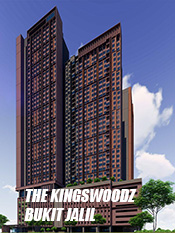



 Posts
Posts


