
PETALING JAYA: Those interested in finding out more on KLCC properties, especially when it concerns investing there, can now obtain all the necessary information with just a simple mouse click.
Zerin Properties Sdn Bhd, a Klang Valley-based real estate consultancy recently launched a property portal called www. klcc-living.com to provide a comprehensive guide to properties in the KLCC area.
“Its not only a guide for KLCC properties, but a guide for the entire KLCC area as well,” said Terence Yap, assistant head of agency at Zerin Properties.
“The website contains an interactive map of KLCC where users can simply click on a property they wish to view and find out all important details regarding the property, from its size, price, facilities offered and so forth.” Yap added that the website also carries details on eateries, international schools, hospitals, entertainment outlets, embassies and other places in the KLCC belt.
“There are more than 25 luxury high-rise projects in the KLCC area and we have listed all the developments in our site, including the upcoming projects” he said.
“A high number of those interested to invest in KLCC are foreigners and with the website, they can now log on from their respective countries to make a virtual visit to KLCC.”
He said the idea for the website was mooted after Zerin Properties received numerous calls from locals and foreigners interested in investing in and living in the KLCC area.
“KLCC has emerged as the most sought after address in the country and based on feedback from our business space and expatriate leasing divisions, we can conclude that most business people, new start-ups and home buyers want to be as close as possible to KLCC,” said Yap.
“This has led to a surge in demand for residential properties in the KLCC area and prices are simply going up with a basic, 1,000-over sq ft condo going for more than RM1.5 million while some penthouses are being sold at a whopping RM12 million.
“So for those who wish to be part of the KLCC action and don't know how to get started, just log on to our website. We have also included details on the Malaysia My Second Home programme for expatriates wishing to live in Malaysia,” added Yap.
By theSun (by Tim Leonard)
Monday, January 28, 2008

Buyers snap up Gaya Bangsar units
NATIONAL property development agency UDA Holdings Bhd has sold 95 per cent of Gaya Bangsar, its latest high-end development in Kuala Lumpur, within a week of the pre-launch.
Gaya Bangsar is a 34-storey full-service luxury condominium tower that comprises 285 residential units ranging in size from 671 sq ft to 1,610 sq ft.

LUXURY LIVING: A model of Gaya Bangsar
The units are priced between RM350,000 and RM900,000 each.
Managing director Datuk Jaafar Abu Hassan said at a briefing last Friday that UDA was looking at a gross development value (GDV) of RM157 million from the development, which it hopes to complete by 2011.
Jaafar said the units were mostly bought by locals, while expatriates living in the country bought less than 10 per cent.
"We have also achieved the Bumiputera sales quota of 40 per cent. This is a positive indicator and an encouraging development in Bumiputera ownership in real estate properties," he said.
UDA expects to begin construction on the 0.5ha site next to Dataran Maybank in July.
"The market rate for such units in this area is currently averaging around RM550 per sq ft. We expect prices to appreciate by 20 to 30 per cent in three to four years," Jaafar later told Business Times.
Gaya Bangsar is the second of a series of high-end condominiums that UDA will develop in Kuala Lumpur over the next five years.
Its maiden project was Sinaran TTDI in Taman Tun Dr Ismail, the units of which were sold within six months of its launch.

The project, which achieved sales of around RM175 million, is due for completion in 2010.
In the pipeline is a residential and commercial development on 1.8ha near the Sheraton Imperial Hotel.
The project, comprising a condominium block, two office towers and retail outlets, will have a GDV exceeding RM300 million.
"We have not given the project a name. We hope to launch it by the third quarter of this year," Jaafar said.
UDA also plans to build shophouses in Jalan Pantai and a four-star hotel in Jalan Petaling on land it owns.
"As we move forward, we will develop more high-end properties," Jaafar said.
By New Straits Times (by Sharen Kaur)
Gaya Bangsar is a 34-storey full-service luxury condominium tower that comprises 285 residential units ranging in size from 671 sq ft to 1,610 sq ft.

LUXURY LIVING: A model of Gaya Bangsar
The units are priced between RM350,000 and RM900,000 each.
Managing director Datuk Jaafar Abu Hassan said at a briefing last Friday that UDA was looking at a gross development value (GDV) of RM157 million from the development, which it hopes to complete by 2011.
Jaafar said the units were mostly bought by locals, while expatriates living in the country bought less than 10 per cent.
"We have also achieved the Bumiputera sales quota of 40 per cent. This is a positive indicator and an encouraging development in Bumiputera ownership in real estate properties," he said.
UDA expects to begin construction on the 0.5ha site next to Dataran Maybank in July.
"The market rate for such units in this area is currently averaging around RM550 per sq ft. We expect prices to appreciate by 20 to 30 per cent in three to four years," Jaafar later told Business Times.
Gaya Bangsar is the second of a series of high-end condominiums that UDA will develop in Kuala Lumpur over the next five years.
Its maiden project was Sinaran TTDI in Taman Tun Dr Ismail, the units of which were sold within six months of its launch.

The project, which achieved sales of around RM175 million, is due for completion in 2010.
In the pipeline is a residential and commercial development on 1.8ha near the Sheraton Imperial Hotel.
The project, comprising a condominium block, two office towers and retail outlets, will have a GDV exceeding RM300 million.
"We have not given the project a name. We hope to launch it by the third quarter of this year," Jaafar said.
UDA also plans to build shophouses in Jalan Pantai and a four-star hotel in Jalan Petaling on land it owns.
"As we move forward, we will develop more high-end properties," Jaafar said.
By New Straits Times (by Sharen Kaur)
AP Land to launch China project soon
Changshu development will have GDV of RM420mil
ASIA Pacific Land Bhd (AP Land), which is diversifying its revenue sources by acquiring oil palm plantation land and a college, will be launching a development in Changshu, 100km northwest of Shanghai, by the middle of the year.
ASIA Pacific Land Bhd (AP Land), which is diversifying its revenue sources by acquiring oil palm plantation land and a college, will be launching a development in Changshu, 100km northwest of Shanghai, by the middle of the year.
This is in addition to the launches of MyHabitat Tower 2 in Kuala Lumpur comprising 150 units of serviced apartments with a gross development value (GDV) of RM120mil and 80 high-end villas in Bandar Tasik Puteri near Rawang with RM40mil GDV, this year.
The Changshu development would comprise serviced apartments and 3-storey shop houses with a GDV of RM420mil that would take three years to complete. It is on a 16.16-acre plot the company acquired late last year from China's National Land Resources Bureau for RM46mil.
AP Land joint managing director Low Su Ming said if everything went according to plan, the development would be launched by the middle of the year. Details are still on the drawing board.

Low Su Ming
“We like this city because unlike the larger cities on the coast, it is still liveable and it has a number of large multinationals from Taiwan and Japan that have part of their operations here,” she told StarBiz.
Low said judging by the number of multinationals that have located their operations in Changshu, demand for housing and commercial space would be even higher by the time the development was completed in three years.
She said it was AP Land's strategy to diversify its revenue stream from property development by venturing abroad.
“Changshu is the first step. The confidence level has to be established first,” Low said, adding that venturing abroad was a necessity rather than a choice.
“This way, we can broaden our earnings from property development. We'll have another source of revenue if the property sector is on a down cycle in Malaysia,” she added.
She said the company was looking at other overseas projects and there might be another in hand by the time the Changshu development was launched.
“Two months ago, we were offered another deal,” Low said, adding that the company might conclude another land acquisition deal in the Klang Valley before the year is out.
Property development would continue to be the core business despite the acquisition of 20,000ha of oil palm plantation in eastern Kalimantan, Indonesia, and the acquisition of Victoria International College, which has a campus in Klang, she said.
The company announced the acquisition of the college from Dynamic Master (M) Sdn Bhd for RM2.5mil recently while the oil palm plantation was acquired for RM15.88mil late last year.
“The college was acquired with a view of transferring the campus from Klang to our Bandar Tasik Puteri where we're in the process of building more amenities,” Low said. The township still has 1,500 acres undeveloped.
Low said AP Land planned to have property management services with property development for future projects.
She said the company would be managing the serviced apartments in Changshu, just like what it would be doing for MyHabitat where Tower 2 would have a serviced hotel residence.
“We're building a management team for the serviced apartments in tandem with the developments,” Low said.
AP Land is no stranger to the hospitality industry. It has a hospitality division that manages the 5-star Crown Princess Kuala Lumpur.
Low said the venture into the agriculture sector was part of the company's strategy to diversify its earnings.
“Our objective is to build a strong division. There'll be further announcements in March,” she said.
This is a strategic decision, keeping in mind the price of crude palm oil, which has breached RM3,200 a tonne in recent times, Low said. “The plantation sector is not new to us, we've done this before,” she added.
AP Land used to own oil palm plantations in Sabah until it was disposed to rationalise and improve returns for the company.
Low said with the conclusion of the sale of City Square Centre to Australia's Macquarie Global Property Advisors in the middle of last year and the settlement of RM350mil debts, the company could look forward to further acquisitions since it was in a stronger financial position.
Macquarie acquired the properties for RM680mil.
“We've allocated two-thirds of the proceeds from the sale after paying off the debt for property development while the rest will be going to plantations,” she said.
AP Land is going regional and China is the first step, Low said.
By the Star (by Fintan Ng)
Corporate makeover continues
News from the US and Europe was negative last week and is expected to remain depressing, but companies in Malaysia are making efforts and progress in conditions within their control.
MALAYSIAN corporates are making steady progress in transforming their business models to fit the changes of recent years in business conditions and competition. This will pay dividends for investors in the long run even though the rolling stock markets are distracting them, or are disrupting their plans.

Investors have started to reap the financial rewards from the transformation efforts although much of those gains were erased in panic selling early last week.
Several factors calmed the markets in the later part of the week, including latest views that Asian economies, while not fully decoupled from the US, have partially decoupled. It is perceived that China, for instance, would not feel the full impact of a US recession, as its own personal consumption and construction would still spur economic growth.
While news from the west will continue to be focused on losses in the financial sector, domestic developments, at this point, remain invigorating.
Ramunia Holdings Bhd agreed to a reverse takeover offer from the MISC Bhd group for the purchase of the latter's Malaysia Marine and Heavy Engineering Sdn Bhd (MMHE) for RM3.2bil via a share swap.
This combines the sprawling fabrication facilities of both companies, and transform Ramunia into an indirect subsidiary of Petronas, the parent company of MISC. This will bring a Petronas premium to Ramunia.
Petronas' member companies are known for their good corporate governance and financial results. In addition, both Petronas and MISC could award fabrication jobs to the remade Ramunia, as they have done for MMHE. This could be similar to the relationship of VADS Bhd to Telekom Malaysia Bhd which awarded IT outsourcing contracts to the former, its associate company.
Besides having a far larger order book than Ramunia, MMHE also achieved higher net profit margins of 12.5% against Ramunia's 3.4% last year.
An alliance is also being formed between DiGi.Com Bhd and Time dotCom Bhd which will transfer its third generation (3G) spectrum to the former for shares in DiGi worth about RM640mil. This will produce a huge gain for Time dotCom as its cost of investment in the spectrum was just RM67.8mil.
Proton Holdings Bhd is said to be recovering, as bookings for its new Saga were brisk since its launch a week ago. This followed the strong sales of its Persona in the second half of last year. It is rebuilding value in the medium term as it seeks a global strategic partner for the long term.
Sime Darby Bhd is also making progress in an important division where yields at its plantations in Indonesia are understood to be improving substantially. This will bring its yield closer to those of IOI Corp Bhd and Kuala Lumpur Kepong Bhd.
In the banking sector, Public Bank Bhd has surprised so often in its results that it's no longer a surprise. It continues to display high growth in earnings, loans and deposits, coupled remarkably with reportedly the lowest level of non-performing loans in the industry.
It made a pre-tax profit of over RM430mil from overseas for the year ended Dec 31, 2007 and this is targeted for cautious expansion.
It is noted that when Public Bank announced its results last week, it was the first bank, and among the first batch of listed companies, to do so in the current reporting season. It could report well within one month of the end of its latest quarter in spite of being so large, encompassing overseas operations, and subject to tight regulatory scrutiny.
There is no reason for other listed companies to need two months to issue their results, and perhaps Bursa Malaysia should consider shortening the reporting deadline to one month, as in certain developed markets.
Construction groups Crest Builder Holdings Bhd and Hock Seng Lee Bhd disclosed sizeable new contracts last week.
It is hoped the Government will accelerate the award of contracts under its various plans, as expansion of the construction sector would help to partially offset lacklustre exports from the manufacturing sector.
An impact from the economic slowdown or recession from the US cannot be avoided but a strengthening of the domestic economy and corporations would alleviate a sombre situation.
Income for citizens
The Government said last week it sought to reduce the number of foreign workers in this country by more than 200,000 this year. This would compel employers to hire local workers at “reasonable” salaries, according to a Government official.
This is a refreshing statement because for many years, foreign workers have driven down wages, and in certain industries, displacing Malaysian workers from their jobs.
The official said the Government would be strict with the service sector such as hotels and restaurants. This should bring about higher, or at least adequate, service levels because hotels and restaurants have been deploying foreign workers as waiters, who do not speak local languages, to serve customers.
It is surprising, however, that three industries – construction, manufacturing and plantations – would be exempted from the strict measures. It has often been said that locals did not want to work in these industries.
It should be expected, in fact, that Malaysians do not want jobs where wages are priced to levels in Indonesia or Bangladesh.
Employers will argue that they can't afford to pay higher wages but in fact, they have been enjoying super profits by paying low wages to foreign workers but not lowering their prices.
In western countries and Australia, waiters are Caucasians, which means such jobs must be paid far more than that offered to locals here. Jobs there are priced to attract their own citizens.
The mines, construction and even the manufacturing sector there employ “white people” who work in such jobs because they are adequately paid.
It is sometimes said that the semiconductor sector retains little of its revenue here because of high import content, and that income in the plantation sector is almost entirely retained in the country. This is not true because foreign workers, who displaced locals in the plantation sector, repatriate their wages to their home countries.
Furthermore, plantation companies employ far fewer Malaysians than they should because they naturally prefer to hire cheap foreign labour. Taken to extremes, every job in the country can conceivably be taken over by foreigners at a lower salary.
Economic growth should filter through to benefit everyone, even the unskilled or less skilled, and not make fortunes for employers at the expense of the Malaysian worker.
By The Star (by C.S.Tan)Sunday, January 27, 2008
Most expensive cities in 2008

LONDON, New York and Moscow are now the world’s most expensive cities for residential apartment buyers, according a survey by the Global Property Guide (www.globalpropertyguide.
com), an international property research firm.
Residential apartments in Prime Central London are among the priciest in the world, at US$21,800 to US$36,200 (RM71,235 to RM118,290) per sq m. Prime Central London includes Belgravia, Chelsea, Mayfair, Notting Hill, Knightsbridge, Regent's Park, South Kensington, St John's Wood, and St James.
Prices in other luxurious areas in London such as Wimbledon, Hampstead, Richmond, and Wandsworth range from US$14,142 to US$19,361 per sq m, also among the highest in the world.
New York comes in second place with property prices in Upper Manhattan ranging between US$13,270 and US$22,923. Apartment prices in Lower Manhattan are around US$12,510
– US$20,456.
Moscow comes in third place with central Moscow apartment prices ranging from US$10,764 to
US$20,506.
Other cities in Europe that are among the top 10 most expensive cities for condominium buyers
are Paris, Barcelona, and Geneva. Condominium prices in Paris are around US$12,930 to US$18,070 per sq m.
In Spain, prices of flats in Barcelona are between US$9,160 and US$9,870. Prices of apartments
in Madrid are lower than Barcelona, at US$6,535 – US$ 8,000.
In Switzerland, prices of flats in Geneva are around US$6,870 - US$10,400 per sq m. Prices in
Geneva are higher compared to Zurich, at US$5,900 – US$9,830.
Of the three German cities included in the study, Munich is the most expensive with prices of flats at US$3,485 – US$3,700 per sq m; followed by Frankfurt at US$2,360 – US$3,300 per sq m.
Property prices in Berlin are still relatively subdued at US$1,840 – US$2,600 per sq m.
Residential apartments in Istanbul, Turkey are among the cheapest in Europe, at around US$1,850 to US$2,500 per sq m.
Expensive Asia-Pacific cities
Among the top 10 most expensive cities, four are in Asia, namely, Hong Kong, Tokyo, Singapore, and Mumbai.
Residential apartment prices in Hong Kong range from US$10,490 to 14,780 per sq m, in Tokyo from US$7,600 to US$11,870 per sq m, and in Singapore from US$11,500 to US$13,340 per sq m.
Mumbai is a notable exception among the 10 most expensive cities; it is located in a poor country, albeit rapidly growing. A mix of high population density, archaic land laws, rapid urbanisation and strong economic growth contributes to the surprisingly expensive property prices in Mumbai.
Property prices in Mumbai are around US$8,600 to US$10,300 per sq m. This is significantly higher than New Delhi (prices at US$1,970 – US$3,260 per sq m) or Bangalore. Despite equally rapid economic expansion, property prices in Bangalore are still among the cheapest in the world at US$950 – US$1,900 per sq m.
Compared to Mumbai, Chinese cities are significantly cheaper. Prices of flats in Shanghai are around US$2,870 to US$3,540 per sq m, while those in Beijing are priced at US$2,100 to US$2,330 per sq m.
Properties in Australia are near the top of the scale, with apartment prices in Sydney at around US$6,290 to US$9,690 per sq m. New Zealand is significantly cheaper than Australia, with apartment prices in Wellington at only US$4,360 – US$4,500 per sq m.
In South East Asia, the price of a 120 sq m condo in Jakarta is around US$1,073 per sq m, cheaper than Kuala Lumpur (US$1,400 per sq m), Manila (US$1,969 per sq m) or Bangkok (US$2,819 per sq m).
Americas and the Caribbean
In Canada, properties in Toronto are relatively more expensive than those in Montreal. Apartment prices in Toronto range from US$4,600 to US$6,400 per sq m, while condos in Montreal are priced at around US$3,660 – US$5,200.
In Costa Rica, one of the most favoured locations for American second-home buyers and baby
boomers, flats in San Jose are relatively cheap at US$1,250 – US$2,440 per sq m. Properties
along Costa Rica’s Pacific coast in the provinces of Puntarenas and Guanacaste are relatively more expensive at US$2,120 – US$2,890 per sq m.
Property prices in the Caribbean are generally at par with Western Europe. Prices of flats in Turks and Caicos Islands are around US$5,670 - 8,230 per sq m, in the Bahamas at US$3,860
to US$5,680 per sq m, in Cayman Islands at US$3,660 – US$8,265 per sq m, and in Trinidad and Tobago at US$3,140 – US$3,170 per sq m.
The Middle East and Africa are inexpensive
Properties in the Middle East are among the cheapest in the world. For instance, in Egypt, residential apartment prices in Cairo’s plush Maadi district cost around US$400 to US$900. Properties in Zamalek are a bit higher than Maadi but are still affordable at US$700 – US$1,400 per sq m.
Residential flats measuring 120 sq m in Beirut, Lebanon and Amman, Jordan cost around US$1,250 per sq m. Properties in Tel Aviv and Dubai are among the most expensive in the Middle East. Apartment prices in Tel Aviv are around US$4,560 – US$5,220 per sq m, while those in Dubai range from US$3,590 – US$4,130 per sq m.
In South Africa, the price of a 120 sq m 2-bedroom flat in Cape Town is around US$2,784 per sq m, around twice the prices of similarsized properties in Johannesburg, US$1,376 per sq m.
Renters
London, Moscow and New York are also the most expensive cities for renters. The monthly
rent for a 120 sq m apartment in prime central London is around US$13,000. In other luxurious
areas in London, the monthly rent is around US$7,900 for a similarsized unit.
The rent for 120 sq m flats in Moscow and New York are around US$8,000 per month. Tokyo, Paris and Hong Kong are the next three most expensive cities for renters at around US$5300 — US$5,600 per month for a 120 sq m unit.
Other cities in the top 10 are Sydney (US$4,145 per month for a 120 sq m unit), Geneva (US$3,600), St Petersburg (US$3,400) and Mumbai (US$3,380). Cairo, Egypt, has one of the
lowest rents at around US$455 per month for a 150 sq m unit apartment. Beirut, Lebanon and
San Jose, Costa Rica also have cheap rents at around US$1,150 per month for similar-sized units. — www.globalpropertyguide.com
Article post by theSun
Saturday, January 26, 2008
Best Modern Houses

Powell: "I tried to do this book 10 years ago but there weren’t enough decent houses or talent." Photograph by Johnni Wong
Author, urban designer and former academic Robert Powell, 66, initially refused to pick his favourite house among the 25 featured in his latest book, The New Malaysian House.
"I’m not going to answer that. Every house was carefully selected. I visited them all with one exception. I actually looked at 40 houses and all have specific qualities," said Powell who was in Kuala Lumpur recently. He is now based in London where he resides with his KL-born wife, Shantheni Choralingam.
But the prolific author did point out that he loved the Sekeping Serendah house by architect and owner Ng Seksan because, "I slept in it". He also loved architect Kerry Hill’s Bukit Ledang Housein Federal Hill, KL, because the valley was an extension of the living space.
Powell remarked that new houses in Malaysia now are very different from houses in Singapore, where he resided, and taught at the National University of Singapore from 1984-2001."It used to be the case, some 20 years ago, that builders would flatten the site but now architects are more confident of building according to the land form. It has become much more interesting as houses now have views."
How did the author come up with a list and know which houses to select? "I know of a couple of well-known architects like Jimmy Lim, Ken Yeang and Kerry Hill for some 20 years and others like Frank Ling and Pilar Gonzalez-Herraiz for about 10 years and also younger architects like Kevin Low," said Powell.
"I started asking around and they recommended others who produce the same sort of (modern) architecture. And there are those coming out of the institute (Malaysian Institute of Architects / PAM). But also, little groups of people like Ng Seksan and Wooi Lok Kuang. Wooi had worked for Jimmy Lim and little bits of Jimmy Lim came out of the houses that he has done."
Powell regard such groups as a loose collective of intellectuals with an affinity for each other’s architectural work.
"Interestingly, every architect featured in the book has spent some formative years working abroad. They came back and brought with them new ideas and adapted them to the particular climate and culture."
The original list had 40 houses and the selection was limited by the author’s time and schedule.
"I didn’t have a fixed idea of what this book should be about. I talked with architects. They each have a common connection and interaction with the landscape in their work."
Does Powell detect a common trend in Malaysian architecture?
"Surprisingly, no. Some countries do reflect a great deal of repetition in local architecture. But there is a wide variety here from vernacular to contemporary that reflect a spectrum of approaches."
Among the houses featured in the book highlighted by Powell include the Johor House at the Leisure Farm Resort, Enderong House and Sum Sum Valley Housein Bukit Janda Baik. For houses that are regarded as experimental, the author picks the Mud Houses in Serendah, Rawang.
And out of the work of the 25 architects featured, Powell was proud to point out that 21 were Malaysian.
"I tried to do this book 10 years ago but there weren’t enough decent houses or talent. Even seven years ago this couldn’t be done.
"Now, Malaysian architecture is recognised as being of international standards. To be honest, I’ve only just scratched the sur¬face."
Which among the houses would Powell pick to represent the best of modern Malaysian architecture?
"The Sum Sum Valley House by Choo Gim Wah. This three-storey house is a concrete-and-glass structure sited in the jungle. It is a beautifully modern house in Bukit Janda Baik, some 40km from Kuala Lumpur.
"When inside the house, one can ‘touch’ the greenery outside. And from the outside, the house is almost transparent. This is pure modernist architecture. That would be my choice, closely followed by - for entirely different reasons - Ernesto Bedmar’s Sadeesh House. So sensuous."
And after authoring 27 books including the "seminal", The Asian House Powell has become wiser about production quality. He has his fair share of dreadful photographers, such as one who is notorious for underexposed pictures. "I’ll never work with him again," stressed Powell.
For this new book, he worked with Singapore-based Albert Lim Koon Seng whose works have been published widely in architectural journals, according to the book jacket. But hey, didn’t we see similar pictures of the Tierra House supplied by Frank and Pilar’s architectural firm, Architron Design Consultants? Perhaps, I missed the due credits.
By The Star (by
Belleview plans 8 new projects
PENANG: The Belleview group plans to launch eight commercial and residential projects here with an estimated gross sales value of RM1.2bil in the first half.
Managing director Sunny Ho told reporters the projects included an upmarket shopping mall, which was a joint venture between the group, Lion group, and a US-based investment fund company.
The shopping mall, located in the heart of Georgetown, would have total lettable area of 600,000 sq ft, he said.
Sunny Ho
“The other big project for 2008 is Season Park, comprising 800 condominium units in Air Itam.
“We plan to price the units from RM180,000, depending on the built-up area, which ranges from 850 to 2,000 sq ft,” he added.
Other projects lined up include the Palmyra Residences in Balik Pulau comprising terrace and semi-detached houses, 6 Western Avenue in Jalan Utama comprising solely bungalows, Seasons Place in Air Itam, comprising solely commercial properties, Melody Homes in Air Itam, comprising apartments with recreational facilities, Bukit Dumbar Residences in Bukit Dumbar, a landed residential project, and Moulmein Rise in Pulau Tikus, a luxurious commercial-cum-residential project.
“We will also be launching our new logo on the first day of Chinese New Year to re-brand and reposition the Belleview group and better reflect the diversity of our projects in 2008.
“We have also allocated RM4mil to RM5mil for advertisement and promotion of our new property launches this year,” Ho said.
Founded in 1984, the Belleview group has to date completed 4,238 residential and commercial properties in Penang and Kulim, Kedah, with an estimated gross sales value of RM1.3bil.
By The Star (by David Tan)
Frost & Sullivan: Mideast will be major FDI source
MALAYSIA will see a 10 to 15 per cent growth in foreign direct investment (FDI) this year, according to global growth consulting company Frost & Sullivan.
Its South Pacific partner and managing director, Manoj Menon, said the FDI will spill into sectors like services, manufacturing, real estate, property, and retail.
"We believe this year Malaysia will see growth in investment and it may come from the Asian region and the Middle East," Menon said at a media briefing in Kuala Lumpur yesterday.
"The Middle East is looking aggressively at the Malaysian market. So, for the Iskandar Development Region, we see collaborations increasing substantially," he said.
Menon said the top three FDI contributors are expected to be the Middle East, China and India.
"The overall outlook for 2008 is that investors are going to be a little bit cautious in making investments. Still, the FDI from Asia will grow in terms of value," he said.
Frost & Sullivan's director of chemicals, materials and food, Asia Pacific, Kumaraguru Veerasamy, said crude palm oil (CPO) prices are expected to soften to RM2,800 per tonne this year.
"We estimate that it should taper off at about RM2,800," he said.
"Malaysia exports 80 per cent of palm oil while the balance is for the local consumption, so I'm quite perplexed to understand why there is a shortage," he added.
According to Veerasamy, bioethanol is seen as the next market trend as in the case of biodiesel last year due to high feedstock prices.
Bioethanol is used as a petrol substitute and is mainly produced by the sugar fermentation process although it can also be manufactured by the chemical process of reacting ethylene with steam, he said.
Frost & Sullivan's Asia Pacific head of automotive and transportation practice, Kavan Mukhtyar, said the Malaysian automotive industry is expected to grow seven per cent this year.
"We believe that replacement car buyers, a lot of interesting new models and the fairly positive economic outlook for 2008 are among the factors driving sales," he said.
According to Frost & Sullivan, the healthcare market in Asia Pacific will grow to US$236.5 billion (RM766.26 billion) this year, a compound annual growth rate of 10 per cent, from US$214.8 billion (RM696 billion) last year.
By Bernama
Its South Pacific partner and managing director, Manoj Menon, said the FDI will spill into sectors like services, manufacturing, real estate, property, and retail.
"We believe this year Malaysia will see growth in investment and it may come from the Asian region and the Middle East," Menon said at a media briefing in Kuala Lumpur yesterday.
"The Middle East is looking aggressively at the Malaysian market. So, for the Iskandar Development Region, we see collaborations increasing substantially," he said.
Menon said the top three FDI contributors are expected to be the Middle East, China and India.
"The overall outlook for 2008 is that investors are going to be a little bit cautious in making investments. Still, the FDI from Asia will grow in terms of value," he said.
Frost & Sullivan's director of chemicals, materials and food, Asia Pacific, Kumaraguru Veerasamy, said crude palm oil (CPO) prices are expected to soften to RM2,800 per tonne this year.
"We estimate that it should taper off at about RM2,800," he said.
"Malaysia exports 80 per cent of palm oil while the balance is for the local consumption, so I'm quite perplexed to understand why there is a shortage," he added.
According to Veerasamy, bioethanol is seen as the next market trend as in the case of biodiesel last year due to high feedstock prices.
Bioethanol is used as a petrol substitute and is mainly produced by the sugar fermentation process although it can also be manufactured by the chemical process of reacting ethylene with steam, he said.
Frost & Sullivan's Asia Pacific head of automotive and transportation practice, Kavan Mukhtyar, said the Malaysian automotive industry is expected to grow seven per cent this year.
"We believe that replacement car buyers, a lot of interesting new models and the fairly positive economic outlook for 2008 are among the factors driving sales," he said.
According to Frost & Sullivan, the healthcare market in Asia Pacific will grow to US$236.5 billion (RM766.26 billion) this year, a compound annual growth rate of 10 per cent, from US$214.8 billion (RM696 billion) last year.
By Bernama
Landmarks shares jump on news of Bintan deal
Shares of Landmarks Bhd jumped yesterday after the property firm inked an agreement that allows it to embark on licensed activities such as gaming at Indonesia's Bintan island.
The shares rose 22 sen or 7.4 per cent to RM3.18 at almost double the previous day's trading volume.
Early yesterday, research house ECM Libra reiterated its "buy" call on Landmarks and raised its target price to RM5.12 from RM3.68 before.
It became more bullish on the firm after the subsidiary - Bintan Treasure Bay Pte Ltd - announced an alliance with an Indonesian company, allowing the former to undertake certain activities at its Bintan Treasure Bay project.
These activities are medical tourism, multimedia and information technology hosting, as well as games and entertainment, including gaming.
Landmarks will pay the company, PT Wisata Hiburia, 10 per cent of its net profit from the integrated resorts project.
"While details are sketchy at the moment, we are very upbeat on the prospect of the proposed development of international class integrated resorts within such close proximity to Singapore," ECM said in a report yesterday.
Another research house, Aseambankers, also felt that the development is positive to Landmarks and its major shareholder, Genting Bhd, as this puts them a step closer towards realising plans to set up a casino in the proposed integrated resort in Bintan's Lagoi Bay.
However, the research house remains concerned as to how this development will fit into the framework of Indonesia's national anti-gambling laws.
It is also uncertain as to how Indonesia's predominantly Muslim population will react to the setting up of the country's first legal casino.
"We believe there could still be a few other approvals required before this integrated resort project takes off.
"Nevertheless, should Landmarks get all the necessary approvals to build the casino, this will significantly boost the profitability of the proposed Lagoi project," Aseambankers said in a note to clients yesterday.
It is understood that such as casino will cater only to foreign tourists and non-Muslims, it added. In 2007,
Bintan attracted around 330,000 visitors last year, mainly from Singapore, South Korea and Japan.
Aseambankers maintained its "hold" recommendation on Genting, with an unchanged target price of RM7.50.
Genting, which owns about 30 per cent of Landmarks, rose 25 sen to close at that target price yesterday.
By New Straits Times (by Adeline Paul Raj)
The shares rose 22 sen or 7.4 per cent to RM3.18 at almost double the previous day's trading volume.
Early yesterday, research house ECM Libra reiterated its "buy" call on Landmarks and raised its target price to RM5.12 from RM3.68 before.
It became more bullish on the firm after the subsidiary - Bintan Treasure Bay Pte Ltd - announced an alliance with an Indonesian company, allowing the former to undertake certain activities at its Bintan Treasure Bay project.
These activities are medical tourism, multimedia and information technology hosting, as well as games and entertainment, including gaming.
Landmarks will pay the company, PT Wisata Hiburia, 10 per cent of its net profit from the integrated resorts project.
"While details are sketchy at the moment, we are very upbeat on the prospect of the proposed development of international class integrated resorts within such close proximity to Singapore," ECM said in a report yesterday.
Another research house, Aseambankers, also felt that the development is positive to Landmarks and its major shareholder, Genting Bhd, as this puts them a step closer towards realising plans to set up a casino in the proposed integrated resort in Bintan's Lagoi Bay.
However, the research house remains concerned as to how this development will fit into the framework of Indonesia's national anti-gambling laws.
It is also uncertain as to how Indonesia's predominantly Muslim population will react to the setting up of the country's first legal casino.
"We believe there could still be a few other approvals required before this integrated resort project takes off.
"Nevertheless, should Landmarks get all the necessary approvals to build the casino, this will significantly boost the profitability of the proposed Lagoi project," Aseambankers said in a note to clients yesterday.
It is understood that such as casino will cater only to foreign tourists and non-Muslims, it added. In 2007,
Bintan attracted around 330,000 visitors last year, mainly from Singapore, South Korea and Japan.
Aseambankers maintained its "hold" recommendation on Genting, with an unchanged target price of RM7.50.
Genting, which owns about 30 per cent of Landmarks, rose 25 sen to close at that target price yesterday.
By New Straits Times (by Adeline Paul Raj)
Berjaya Land aborts Vietnam project
BERJAYA Land Bhd's plans of developing residential and commercial properties in Vietnam's Nhon Trach district has fallen through.
In an announcement to Bursa Malaysia yesterday, Berjaya Land said it will not proceed with its co-development plans with Tin Nghia Co Ltd, a leading state-owned enterprise in Dong Nai.
The property development is inclusive of its transportation and infrastructure network.
"The board wishes to inform that after much discussion and consideration, the parties involved have decided not to proceed with the project based on the findings of the feasibility study report," Berjaya Land said.
Berjaya Land had signed a memorandum of understanding in November 9, 2006 but the memorandum will now be mutually terminated by the related parties.
Mideast investors keen to list REITs in Malaysia, Singapore
MIDDLE Eastern investors are keen to list property trusts in Malaysia and Singapore, said AmanahRaya-JMF Asset Management Sdn Bhd Datuk Mohamad Azahari Moha-med Kamil.
Singapore and Malaysia dominate the real estate investment trust (REIT) market in Southeast Asia, with a total market value of about US$22 billion (RM71.28 billion), he said in a statement.
Malaysian REITs have yields of around seven per cent, which is attractive to investors, especially for those who seek long-term stable return investments in the real estate sector.
"While Singapore, considered as a developed market for REITs, currently has weighted average yield of 4.9 per cent," he said.
Malaysia has some 11 REITs listed on Bursa Malaysia with a market value of about US$1.6 billion (RM5.18 billion). There is also a lot of growth potential as REITs are still buying assets to expand while new ones are preparing to get listed, he said.
Azahari attended the REIT Review Asia 2008 conference held in Singapore last Wednesday. Earlier on Tuesday, he was one of the panelists discussing REIT markets in Malaysia, Singapore and Hong Kong.
Azahari said liquidity is still investors' main consideration when looking at REITs, which means that the size of a trust matters.
They also look at a REIT's strategy to grow and improve yield.
"The only Malaysian REIT rated by Standard & Poors' as investable grade, AmanahRaya-Reit in 2007 had demonstrated a fine example of an attractively managed REIT that saw its asset size successfully increasing to almost double, its gearing reduced, and its projected yield improved by 50 basis points, all within less than a year after its listing on Bursa Malaysia."
AmanahRaya has tied up with Gapuraprima Group, a reputable Indonesia developer listed on the Jakarta Stock exchange. They are targeting to list a regional REIT in Singapore this year.
"We are expecting a consistent increase in the market capitalisation in Singapore and Malaysia, and we are confident that more investors will consider investing REITs in their portfolio.
"With the recent sub-prime, credit crunch and banking crisis, there would be opportunities for asset managers to conduct portfolio rebalancing and we believe that REITs will continue to be preferred in view of its defensive risk profile," he said.
By New Straits Times
Singapore and Malaysia dominate the real estate investment trust (REIT) market in Southeast Asia, with a total market value of about US$22 billion (RM71.28 billion), he said in a statement.
Malaysian REITs have yields of around seven per cent, which is attractive to investors, especially for those who seek long-term stable return investments in the real estate sector.
"While Singapore, considered as a developed market for REITs, currently has weighted average yield of 4.9 per cent," he said.
Malaysia has some 11 REITs listed on Bursa Malaysia with a market value of about US$1.6 billion (RM5.18 billion). There is also a lot of growth potential as REITs are still buying assets to expand while new ones are preparing to get listed, he said.
Azahari attended the REIT Review Asia 2008 conference held in Singapore last Wednesday. Earlier on Tuesday, he was one of the panelists discussing REIT markets in Malaysia, Singapore and Hong Kong.
Azahari said liquidity is still investors' main consideration when looking at REITs, which means that the size of a trust matters.
They also look at a REIT's strategy to grow and improve yield.
"The only Malaysian REIT rated by Standard & Poors' as investable grade, AmanahRaya-Reit in 2007 had demonstrated a fine example of an attractively managed REIT that saw its asset size successfully increasing to almost double, its gearing reduced, and its projected yield improved by 50 basis points, all within less than a year after its listing on Bursa Malaysia."
AmanahRaya has tied up with Gapuraprima Group, a reputable Indonesia developer listed on the Jakarta Stock exchange. They are targeting to list a regional REIT in Singapore this year.
"We are expecting a consistent increase in the market capitalisation in Singapore and Malaysia, and we are confident that more investors will consider investing REITs in their portfolio.
"With the recent sub-prime, credit crunch and banking crisis, there would be opportunities for asset managers to conduct portfolio rebalancing and we believe that REITs will continue to be preferred in view of its defensive risk profile," he said.
By New Straits Times
Friday, January 25, 2008
Platinum Park set to sparkle in KLCC area
PLATINUM Park’s Grade A office towers are expected to fill the demand for premium office spaces in the KLCC belt with its attractive pricing as a pull-factor.
This is evident with the recent enbloc purchase of its 50-storey office tower (pix) by the Federal Land Development Authority (Felda).

Felda signed a sale and purchase agreement with Platinum Park’s developer TTDI Development Sdn Bhd for RM640.7 million, or an average of RM930psf.
To be named Menara Felda, the office tower will have a nett lettable area of 689,000 sq ft, a 1,500-capacity banquet hall and a variety of other facilities.
Menara Felda will be the tallest tower among Platinum Park’s seven iconic towers that essentially comprise three office towers, three high-end condo towers and a service- apartment tower.
While, at RM930 psf, TTDI Development’s deal doesn’t exactly match the RM1,120 psf benchmark deal set by Glomac Bhd, which sold its Glomac Tower to Kuwait Finance House late last year for RM577 million, the Felda deal is certainly higher than Mah Sing Bhd’s enbloc sale of East Wing of TTDI DEVELOPMENT The Icon along Jalan Tun Razak for an average of RM899 psf late last year. That sale was valued at RM237 million.
Some investors have approached Felda with an offer of RM1,250psf disclosed by Deputy Prime Minister Datuk Seri Najib Tun Razak after the ground breaking ceremony on Jan 22. “We have been approached with offers for RM1,250 psf and if we sold it today, we would make a profit of RM220 million,” said Najib.
Menara Felda is located in Platinum Park’s 9.1-acre tract.
When contacted, several real estate practitioners commented that the transaction was a fair deal for buyer and seller.
Zerin Properties Sdn Bhd’s CEO Previndran Singhe said: “The pricing was fair, in view of the going rates for KLCC property”. “The pricing will certainly put a premium on the KLCC-based Grade A office space,” added Previndran.
“Platinum Park would redefine the KLCC area as a prestigious address and a world-class real estate development.
“If the product is good, then its going to be a walk in the park for TTDI Development as its offerings would be snapped up by buyers,” said Previndran.
Platinum Park is the secondlargest real estate development in KLCC’s vicinity after the KLCC project with a gross development value (GDV) of RM3.5 billion.
“We are also holding strategic talks with two other parties who are keen on purchasing Platinum Park office towers enbloc,” said TTDI Development group managing director Datuk Johan Ariffin.
Johan said a “necklace” of niche lifestyle retail outlets featuring products and services with international appeal never seen before in KL, would complement the development of Platinum Park.
He said the condominiums will be noted for their space, measuring between 2,200 sq ft and a whopping 13,000 sq ft, all priced from RM2,000 to RM2,500 psf onwards.
The developer claims Platinum Park, to be developed over the next eight years along the intersection of Jalan Stonor, Jalan Binjai and Lorong Kuda, will be of international standards on par with Hyde Park of London, Central Plaza in New York, Rodeo Drive in Los Angeles and Tokyo’s Roppongi.
“Platinum Park will have a gross floor area of 3.5 million sq ft, and will be the most accessible in the KLCC area as there are six roads leading in and out of the development site, and we have also submitted a traffic plan for City Hall’s approval,” said Johan.
DTZ Debenham Tie Lung (M) Sdn Bhd executive director Brian Koh said there have been no new project launches in the KLCC area over the past six months and news of Platinum Park’s launch will excite market sentiment.
“Platinum Park will fill the need for Grade A offices and high-end condo demand in the KLCC area. We expect the project to augment the market demand for KLCC area properties,” said Koh.
“The enbloc sale of Menara Felda also puts the project on a firm ground,” he added.
Henry Butcher Malaysia Sdn Bhd COO Tang Chee Meng said the pricing of Platinum Park condo’s over the RM2,000 psf mark will eventually push up prices in the KLCC area to higher levels.
“Despite the economic slow down in the US, we in Malaysia are attracting lots of foreign funds, especially from Korea and the Middle East,” said Tang.
“And since Platinum Park is a notably huge project, it will set the benchmark for high-end residential prices in KLCC. It is in a favorable position in the prevailing market condition,” he added.
Another consultant, Kenrich Realty’s Alfred Chin said buyers would now have more choice and options in selecting KLCC properties.
“The more choices, the better they are for investors. And with Platinum’s launch, I believe investors, especially foreigners, will get that — choice,” said Chin.
By theSun (by Tim Leonard)
This is evident with the recent enbloc purchase of its 50-storey office tower (pix) by the Federal Land Development Authority (Felda).

Felda signed a sale and purchase agreement with Platinum Park’s developer TTDI Development Sdn Bhd for RM640.7 million, or an average of RM930psf.
To be named Menara Felda, the office tower will have a nett lettable area of 689,000 sq ft, a 1,500-capacity banquet hall and a variety of other facilities.
Menara Felda will be the tallest tower among Platinum Park’s seven iconic towers that essentially comprise three office towers, three high-end condo towers and a service- apartment tower.
While, at RM930 psf, TTDI Development’s deal doesn’t exactly match the RM1,120 psf benchmark deal set by Glomac Bhd, which sold its Glomac Tower to Kuwait Finance House late last year for RM577 million, the Felda deal is certainly higher than Mah Sing Bhd’s enbloc sale of East Wing of TTDI DEVELOPMENT The Icon along Jalan Tun Razak for an average of RM899 psf late last year. That sale was valued at RM237 million.
Some investors have approached Felda with an offer of RM1,250psf disclosed by Deputy Prime Minister Datuk Seri Najib Tun Razak after the ground breaking ceremony on Jan 22. “We have been approached with offers for RM1,250 psf and if we sold it today, we would make a profit of RM220 million,” said Najib.
Menara Felda is located in Platinum Park’s 9.1-acre tract.
When contacted, several real estate practitioners commented that the transaction was a fair deal for buyer and seller.
Zerin Properties Sdn Bhd’s CEO Previndran Singhe said: “The pricing was fair, in view of the going rates for KLCC property”. “The pricing will certainly put a premium on the KLCC-based Grade A office space,” added Previndran.
“Platinum Park would redefine the KLCC area as a prestigious address and a world-class real estate development.
“If the product is good, then its going to be a walk in the park for TTDI Development as its offerings would be snapped up by buyers,” said Previndran.
Platinum Park is the secondlargest real estate development in KLCC’s vicinity after the KLCC project with a gross development value (GDV) of RM3.5 billion.
“We are also holding strategic talks with two other parties who are keen on purchasing Platinum Park office towers enbloc,” said TTDI Development group managing director Datuk Johan Ariffin.
Johan said a “necklace” of niche lifestyle retail outlets featuring products and services with international appeal never seen before in KL, would complement the development of Platinum Park.
He said the condominiums will be noted for their space, measuring between 2,200 sq ft and a whopping 13,000 sq ft, all priced from RM2,000 to RM2,500 psf onwards.
The developer claims Platinum Park, to be developed over the next eight years along the intersection of Jalan Stonor, Jalan Binjai and Lorong Kuda, will be of international standards on par with Hyde Park of London, Central Plaza in New York, Rodeo Drive in Los Angeles and Tokyo’s Roppongi.
“Platinum Park will have a gross floor area of 3.5 million sq ft, and will be the most accessible in the KLCC area as there are six roads leading in and out of the development site, and we have also submitted a traffic plan for City Hall’s approval,” said Johan.
DTZ Debenham Tie Lung (M) Sdn Bhd executive director Brian Koh said there have been no new project launches in the KLCC area over the past six months and news of Platinum Park’s launch will excite market sentiment.
“Platinum Park will fill the need for Grade A offices and high-end condo demand in the KLCC area. We expect the project to augment the market demand for KLCC area properties,” said Koh.
“The enbloc sale of Menara Felda also puts the project on a firm ground,” he added.
Henry Butcher Malaysia Sdn Bhd COO Tang Chee Meng said the pricing of Platinum Park condo’s over the RM2,000 psf mark will eventually push up prices in the KLCC area to higher levels.
“Despite the economic slow down in the US, we in Malaysia are attracting lots of foreign funds, especially from Korea and the Middle East,” said Tang.
“And since Platinum Park is a notably huge project, it will set the benchmark for high-end residential prices in KLCC. It is in a favorable position in the prevailing market condition,” he added.
Another consultant, Kenrich Realty’s Alfred Chin said buyers would now have more choice and options in selecting KLCC properties.
“The more choices, the better they are for investors. And with Platinum’s launch, I believe investors, especially foreigners, will get that — choice,” said Chin.
By theSun (by Tim Leonard)
Metro Kajang expects good yields for Wang Commerz
Metro Kajang Holdings Bhd (Metro Kajang) launched Wang Commerz@Pelangi Semenyih recently and the developer expects rental yields to be as high as 9%. The project is the commercial parcel of Metro Kajang’s 294.66-acre township, Pelangi Semenyih, Selangor. “So far, we have opened six blocks of shop offices and 70% have been sold,” said Johnny Lam, marketing manager of Metro Kajang.

An artist's impression of Wang Commerz@Pelangi Semenyih
The 2- and 3-storey shop offices, sized at 22ft by 75ft are priced from RM329,000 onwards. The freehold project takes up 6.89 acres and comprises a total of 169 units spread over 14 blocks with a gross development value (GDV) of RM33 million.
Lam attributes the good response at Wang Commerz to its location, which surrounds a hypermarket. "The supply of shop offices in Semenyih is low and the existing commercial areas are pretty scattered, with no strong attraction," he said.
"The potential rental yield of this project is 9%," said Lam, adding that the average rental yield for commercial projects in Semenyih is 5%. "Commercial projects in the town centre of Semenyih are doing well with yields between 5% and 8%," he said.
Another two blocks of Wang Commerz will be launched in February, after Chinese New Year, Lam added. Construction is due to begin in approximately three months’ time and would take two years to complete.
Meanwhile, the first six phases of Pelangi Semenyih’s RM300 million residential parcel — comprising 1- and 2-storey linked homes — have been completed with Phase 6 launched early January.
Developed under the build-then-sell (BTS) scheme, Phase 6 is divided into four parcels with Phases 6A and 6B sold out.
“Twenty-two out of 88 units have been sold at Phase 6C; Phase 6D is yet to be opened,” said Lam. The 1-storey linked homes are sized at 20ft by 65ft and priced at RM132,800.
“We’re now at Phase 7, which is divided into 7A and 7B,” said Lam. The 2-storey 20ft by 70ft linked homes are priced from RM197,800 onwards.
“Out of 200 units, there are only eight corner units left in 7A. As for 7B, out of 86 units opened for sale, 36 units have been sold,” he said, adding that 7B will have a total of 256 units.
Completion of the residential parcel is expected in Dec 2009.
Metro Kajang’s other commercial development, Metro Avenue, has been more than 50% sold, said Lam. Located in Kajang, the 30 units of 3-storey shop offices are sized at 22ft by 80ft and prices range between RM838,000 and RM968,000.
To be launched in February, is Phase 1B of Sentosa Villas, located adjacent to Metro Avenue. The 2- and 3-storey terraced homes are sized between 20ft by 65ft and 20ft by 80ft with an average price of RM340,000. Out of a total 73 units, four have been sold prior to the launch.
Meanwhile, Phase 1A will comprise 46 units of semidees and 16 units of bungalows priced at RM778,000 onwards and RM1.09 million onwards respectively. The semidees will be sized at 40ft by 90ft, 45ft by 90ft and 50ft by 90ft while the bungalows will be sized at 50ft by 90ft and 60ft by 90ft. Phase 1A will be launched in 2H 2008, said Lam.
Metro Kajang also recently held a promotional event for its Pelangi Damansara Sentral residence suites. Located close to Mutiara Damansara, the RM60 million project comprises residential suites, shops and offices housed in a tower with 16 floors.
“All our 11 shops have been sold; there are only six of the 22 office units and 17 units of residences left,” said Lam. The project was launched in June last year and takes up 1.7 leasehold acres.
The 193 units of residential suites come in three designs with built-ups of 674 sq ft, 856 sq ft and 1,027 sq ft. Priced between RM168,000 and RM239,000, these suites have a maintenance fee of 20 sen psf.
According to Lam, units with the largest built-up are sold out.
The shop units have a built-up of 26ft by 70ft and priced at RM999,000. The 22 office units are sized at 26ft by 80ft and are priced from RM366,000 onwards. Lam revealed that most of the purchasers bought for investment purposes. “It is a mature area, and the potential rental yield is more than 8%,” he said. Construction will begin next month and completion is expected in 2010.
“The majority of our buyers are from Petaling Jaya but we also have buyers from other states such as Ipoh and Penang. Our other buyers are from Kuala Lumpur, Seremban, Bangi, Ampang, Bukit Antarabangsa and Subang Jaya,” he said.
By theSun (by Yeong Ee-Wah)

An artist's impression of Wang Commerz@Pelangi Semenyih
The 2- and 3-storey shop offices, sized at 22ft by 75ft are priced from RM329,000 onwards. The freehold project takes up 6.89 acres and comprises a total of 169 units spread over 14 blocks with a gross development value (GDV) of RM33 million.
Lam attributes the good response at Wang Commerz to its location, which surrounds a hypermarket. "The supply of shop offices in Semenyih is low and the existing commercial areas are pretty scattered, with no strong attraction," he said.
"The potential rental yield of this project is 9%," said Lam, adding that the average rental yield for commercial projects in Semenyih is 5%. "Commercial projects in the town centre of Semenyih are doing well with yields between 5% and 8%," he said.
Another two blocks of Wang Commerz will be launched in February, after Chinese New Year, Lam added. Construction is due to begin in approximately three months’ time and would take two years to complete.
Meanwhile, the first six phases of Pelangi Semenyih’s RM300 million residential parcel — comprising 1- and 2-storey linked homes — have been completed with Phase 6 launched early January.
Developed under the build-then-sell (BTS) scheme, Phase 6 is divided into four parcels with Phases 6A and 6B sold out.
“Twenty-two out of 88 units have been sold at Phase 6C; Phase 6D is yet to be opened,” said Lam. The 1-storey linked homes are sized at 20ft by 65ft and priced at RM132,800.
“We’re now at Phase 7, which is divided into 7A and 7B,” said Lam. The 2-storey 20ft by 70ft linked homes are priced from RM197,800 onwards.
“Out of 200 units, there are only eight corner units left in 7A. As for 7B, out of 86 units opened for sale, 36 units have been sold,” he said, adding that 7B will have a total of 256 units.
Completion of the residential parcel is expected in Dec 2009.
Metro Kajang’s other commercial development, Metro Avenue, has been more than 50% sold, said Lam. Located in Kajang, the 30 units of 3-storey shop offices are sized at 22ft by 80ft and prices range between RM838,000 and RM968,000.
To be launched in February, is Phase 1B of Sentosa Villas, located adjacent to Metro Avenue. The 2- and 3-storey terraced homes are sized between 20ft by 65ft and 20ft by 80ft with an average price of RM340,000. Out of a total 73 units, four have been sold prior to the launch.
Meanwhile, Phase 1A will comprise 46 units of semidees and 16 units of bungalows priced at RM778,000 onwards and RM1.09 million onwards respectively. The semidees will be sized at 40ft by 90ft, 45ft by 90ft and 50ft by 90ft while the bungalows will be sized at 50ft by 90ft and 60ft by 90ft. Phase 1A will be launched in 2H 2008, said Lam.
Metro Kajang also recently held a promotional event for its Pelangi Damansara Sentral residence suites. Located close to Mutiara Damansara, the RM60 million project comprises residential suites, shops and offices housed in a tower with 16 floors.
“All our 11 shops have been sold; there are only six of the 22 office units and 17 units of residences left,” said Lam. The project was launched in June last year and takes up 1.7 leasehold acres.
The 193 units of residential suites come in three designs with built-ups of 674 sq ft, 856 sq ft and 1,027 sq ft. Priced between RM168,000 and RM239,000, these suites have a maintenance fee of 20 sen psf.
According to Lam, units with the largest built-up are sold out.
The shop units have a built-up of 26ft by 70ft and priced at RM999,000. The 22 office units are sized at 26ft by 80ft and are priced from RM366,000 onwards. Lam revealed that most of the purchasers bought for investment purposes. “It is a mature area, and the potential rental yield is more than 8%,” he said. Construction will begin next month and completion is expected in 2010.
“The majority of our buyers are from Petaling Jaya but we also have buyers from other states such as Ipoh and Penang. Our other buyers are from Kuala Lumpur, Seremban, Bangi, Ampang, Bukit Antarabangsa and Subang Jaya,” he said.
By theSun (by Yeong Ee-Wah)
Growing Gombak

KL's skyline as seen from Gombak
With the increasing affluence of its residents, Gombak is seeing demand for higher-end properties grow
The property landscape in Selangor's Gombak is slowly changing with demand rising for higher-end homes there. Gombak borders Kuala Lumpur to the southeast.
Already several semi-detached projects in the area have been warmly received. These developments include Mutiara Goodyear Development Bhd’s Taman Mutiara Gombak and Astana Gemilang by Ekar Makmur Jaya Sdn Bhd.
Metro Homes Sdn Bhd director See Kok Loong said there now seems to be a demand for mid- to high-end properties from the residents living there. “The preference in the past had always been for small terraced homes as residents in the area are not all well to do. But the residents here have stronger purchasing power now, so they are looking to upgrade to something more comfortable,” he told PropertyPlus.
According to See, land prices there average from RM60 to RM80 psf. He added that developers coming into this mature area would not only enjoy good infrastructure but also a strong population base, which would create a demand for new properties. “It would be difficult to start a high-end project in an area without an upgraders market readily available,” he said, adding that
Gombak is such a market.
“Developers looking at Gombak as a potential area for development will have to take into consideration that most of the land available is in small pocket-sized tracts with easy access to the main roads, suitable for high-end niche projects,” he said.
However, he added that the hilly condition of the land as well as the numerous kampungs (villages) and squatter homes in the area might deter developers, particularly inexperienced ones, to start residential projects there despite its proximity to Kuala Lumpur’s city centre. He
believes condominiums are not yet popular in Gombak.
According to the theSun/Metro Homes Gombak housing price monitor for the October 2007 to December 2007 period, a freehold 2-storey terraced house in Taman Greenwood with a lot size of 20ft by 75ft and a built-up of 1,600 sq ft was priced between RM250,000 and RM260,000.

Meanwhile, a leasehold 2-storey terraced house in Taman Pelangi Jaya with a lot size of 16ft by 65ft and a built-up of 1,200 sq ft was transacted between RM180,000 and RM200,000.
See noted that Taman Greenwood, Taman Rowther and Taman Bukit Permata are among the more popular developments in Gombak due to their strategic locations near the main access road of Jalan Gombak.
“Residents have good access to other parts of Kuala Lumpur such as Sentul as well as Setapak and Jalan Tun Razak via Jalan Setapak,” he explained.
He added that the price and rental rates of freehold and leasehold terraced houses in Gombak would remain one of the lowest among other areas close to the city centre such as Segambut and Sentul. “The price appreciation rate for properties there would average about 2% to 3% per annum, which is below the usual 5% in the neighbouring areas,” he offered, while rental yields are at 3%.
A freehold 2-storey terraced house in Taman Rowther with a lot size of 20ft by 70ft and built-up of 1,800 sq ft can be rented out for between RM1,000 and RM1,200 a month. In Taman Gemilang, a leasehold 2-storey terraced house with a lot size of 18ft by 65ft and built-up of 1,300 sq ft is tenanted for between RM700 and RM1,000 a month.
Meeting demand
Mutiara Goodyear banked on the lack of high-end properties in Gombak to launch its 32.7-acre freehold Taman Mutiara Gombak, comprising terraces, semi-dees and apartments, in October 2006.

Mutiara Gombak's residential properties have all been sold
To date, all units have been sold and are awaiting completion by the second to third quarter of this year. The group aims to launch terraced shop offices in the development this year.
Prices ranged from RM328,800 to RM360,000 for the terraces with built-ups of 1,961 sq ft onwards, while the semidees, with built-ups of between 2,977 sq ft and 4,719 sq ft, are priced from RM580,000 to more than RM1 million each. The development has a total gross development value (GDV) of RM190 million.
Its senior sales and marketing manager Irene Koh said, due to the shortage of higher-end developments in the area, the demand for such properties was evident when the group managed to sell more than 80% of the gated and guarded development within two weeks of its launch.
“People living [in Gombak] would be comfortable with the place and instead of moving elsewhere, would rather upgrade within the area,” she said.
She added that there is a scarcity of land in Gombak, most of which is Malay Reserve Land or individually owned small parcels. “Whoever is able to purchase land there would definitely go for high-end developments due to the size [of the land] and the demand for such properties,” she said.
Meanwhile, Astana Gemilang, another freehold semi-dee project in Gombak completed two years ago has also been sold out. It consists of 72 units with average built-ups of 3,200 sq ft with prices of RM700,000 onwards. Expect to hear more about properties in Gombak.
By theSun (by Yap Yew Jin)
One World Hotel to open Jan 28
Bandar Utama City Corp Sdn Bhd’s maiden hotel development, the 5-star One World Hotel, in Petaling Jaya has set a conservative occupancy forecast rate of 61% for 2008.
Its general manager Ho Hoy Sum (pix) said, the response towards the 438-room hotel has been very encouraging so far. The hotel, which will officially be opened on Monday, had started operations in the middle of last year.


One World will open a spa, long bar and more meeting rooms soon
“Though it may not have met our set expectations, the trends and results over the past seven months have certainly helped us to align our goals and strategies for this year,” Ho told PropertyPlus, adding that its targeted average occupancy rate for the year will be close to those of the chain hotels.
The owners of the locally managed hotel have set aside a substantial amount as part of its advertising and promotion fund to further promote the property in the Asia Pacific region.
“We will be putting advertisements in airline magazines and targeted international dailies. We have already identified our targeted market segments and we will continue to pursue them with greater confidence as most of our facilities are already up and running,” said Ho.
With an investment amounting to some RM240 million, the 20-storey hotel has also tied up with WorldHotels Deluxe Collections Group, a leading Europeanbased hotel group for more than 500
independent hotels and regional hotel brands, to market it overseas.
In view of the increasingly competitive local marketplace, Ho said One World still managed to obtain its fair share of the market in the vicinity through its MICE (Meetings, Incentives, Conference and Exhibitions) facilities and innovative products.
“This was achieved in light of our high average usage rate that is comparable with international hotels. With our extensive and state-of-the-art facilities, we have an edge over competitors as we are able to offer them competitive prices,” he added.
The hotel will have more facilities to offer its guests soon. Facilities that are expected to be ready by the month’s end include the Thann Sanctuary Spa, a long bar as well as three additional meeting rooms that face the gardens, said Ho. This will add to, among other facilities, its five food-andbeverage outlets and pillar-less Imperial Ballroom that can accommodate some 2,000
people.
On the government’s Visit Malaysia Year 2007 initiative, Ho said the hotel managed to benefit from joining some of the trade shows organised by Tourism Malaysia as a platform to introduce and promote the hotel.
By theSun (by Loo Pik Kwan)
Its general manager Ho Hoy Sum (pix) said, the response towards the 438-room hotel has been very encouraging so far. The hotel, which will officially be opened on Monday, had started operations in the middle of last year.


One World will open a spa, long bar and more meeting rooms soon
“Though it may not have met our set expectations, the trends and results over the past seven months have certainly helped us to align our goals and strategies for this year,” Ho told PropertyPlus, adding that its targeted average occupancy rate for the year will be close to those of the chain hotels.
The owners of the locally managed hotel have set aside a substantial amount as part of its advertising and promotion fund to further promote the property in the Asia Pacific region.
“We will be putting advertisements in airline magazines and targeted international dailies. We have already identified our targeted market segments and we will continue to pursue them with greater confidence as most of our facilities are already up and running,” said Ho.
With an investment amounting to some RM240 million, the 20-storey hotel has also tied up with WorldHotels Deluxe Collections Group, a leading Europeanbased hotel group for more than 500
independent hotels and regional hotel brands, to market it overseas.
In view of the increasingly competitive local marketplace, Ho said One World still managed to obtain its fair share of the market in the vicinity through its MICE (Meetings, Incentives, Conference and Exhibitions) facilities and innovative products.
“This was achieved in light of our high average usage rate that is comparable with international hotels. With our extensive and state-of-the-art facilities, we have an edge over competitors as we are able to offer them competitive prices,” he added.
The hotel will have more facilities to offer its guests soon. Facilities that are expected to be ready by the month’s end include the Thann Sanctuary Spa, a long bar as well as three additional meeting rooms that face the gardens, said Ho. This will add to, among other facilities, its five food-andbeverage outlets and pillar-less Imperial Ballroom that can accommodate some 2,000
people.
On the government’s Visit Malaysia Year 2007 initiative, Ho said the hotel managed to benefit from joining some of the trade shows organised by Tourism Malaysia as a platform to introduce and promote the hotel.
By theSun (by Loo Pik Kwan)
Green haven set to take shape on Pulau Banding
“WOULD you like to own a piece of the forest?” asked Yusof Abu Othman senior general manager of Emkay Group of Companies when describing the stilt-like traditional homes that will be offered in the 620-acre leasehold Pulau Banding near Gerik, Perak. The island is located in Tasik Temengor near the 117,500ha Royal Belum State Park.
According to Yusof, who is also the head of the Pulau Banding development, these niche homes with land areas of between two and six acres will be developed by MKN Group Sdn Bhd, the developer of the RM600 million Pulau Banding.
The MKN Group is part of the Emkay Group, which is founded by its executive chairman Tan Sri Mustapha Kamal Abu Bakar (pix).

“It will be a low-density development planned for 15 plots at the moment. The project is being studied and the developer will be working on a prototype unit soon,” he told PropertyPlus yesterday after the launching of the Pulau Banding Foundation and Pulau Banding Research Centre by the Natural Resources and Environment Minister Datuk Seri Azmi Khalid.
The launch of the project, Yusof said, would depend on Perak’s department of environment’s approvals for the environmental impact assessment (EIA).
“We are preparing to submit the EIA and expect to receive the approval by April. Even then, we will take our time to launch the project as it will also depend on the success of the resort and research centre,” he said, adding that the public needs to be educated about appreciating eco-tourism.
Among the aims of the research centre, which will be operational in March, is to introduce, inform and educate visitors and tourists on the flora and fauna of the Belum- Temengor Rainforest.

The existing jetty at Pulau Banding will be upgraded
“Today, people easily pay more than RM1,000 psf for properties in Kuala Lumpur’s city centre. Only when they learn how to appreciate the value of the forest, only then can the land values on the island be raised,” he explained while declining to reveal the prices of the homes.
Meanwhile, the 70-room Belum-Temengor Resort will also be operational in March and the average room rates will be between RM120 and RM150, said the director of Rimba Mulia Sdn Bhd, K Mohanachandran.
Rimba Mulia has been appointed the project manager of Pulau Banding.
For the resort’s first year of operations, Mohanachandran is targeting an occupancy rate of more than 40% to consider it a success.
“We will be working with local travel agents to bring in local and foreign visitors.
We also have plans at a later stage to promote the project overseas via the foreign travel marts such as those in London and Berlin,” he added.
Meanwhile, to jumpstart the first-year operations of the research centre, Yayasan Emkay donated RM1 million for the construction, maintenance and overheads of the centre that sits on a 2.19-acre site on the island, leased from the developer.
During the press conference, Mustapha Kamal also said it is targeting some RM4 million annually for the next five years to keep the research centre operational.
“We need funds to keep the research centre sustainable and we are targeting the corporate big boys to contribute to the research centre as part of their corporate social responsibility,” he said, adding that it will be inviting companies as well as the Prime Minister Datuk Seri Abdullah Ahmad Badawi to visit the island soon.
Pulau Banding will be developed in two phases over 10 years. The first phase will comprise hospitality and residential projects, recreational facilities and the research centre.
By theSun (by Loo Pik Kwan)
According to Yusof, who is also the head of the Pulau Banding development, these niche homes with land areas of between two and six acres will be developed by MKN Group Sdn Bhd, the developer of the RM600 million Pulau Banding.
The MKN Group is part of the Emkay Group, which is founded by its executive chairman Tan Sri Mustapha Kamal Abu Bakar (pix).

“It will be a low-density development planned for 15 plots at the moment. The project is being studied and the developer will be working on a prototype unit soon,” he told PropertyPlus yesterday after the launching of the Pulau Banding Foundation and Pulau Banding Research Centre by the Natural Resources and Environment Minister Datuk Seri Azmi Khalid.
The launch of the project, Yusof said, would depend on Perak’s department of environment’s approvals for the environmental impact assessment (EIA).
“We are preparing to submit the EIA and expect to receive the approval by April. Even then, we will take our time to launch the project as it will also depend on the success of the resort and research centre,” he said, adding that the public needs to be educated about appreciating eco-tourism.
Among the aims of the research centre, which will be operational in March, is to introduce, inform and educate visitors and tourists on the flora and fauna of the Belum- Temengor Rainforest.

The existing jetty at Pulau Banding will be upgraded
“Today, people easily pay more than RM1,000 psf for properties in Kuala Lumpur’s city centre. Only when they learn how to appreciate the value of the forest, only then can the land values on the island be raised,” he explained while declining to reveal the prices of the homes.
Meanwhile, the 70-room Belum-Temengor Resort will also be operational in March and the average room rates will be between RM120 and RM150, said the director of Rimba Mulia Sdn Bhd, K Mohanachandran.
Rimba Mulia has been appointed the project manager of Pulau Banding.
For the resort’s first year of operations, Mohanachandran is targeting an occupancy rate of more than 40% to consider it a success.
“We will be working with local travel agents to bring in local and foreign visitors.
We also have plans at a later stage to promote the project overseas via the foreign travel marts such as those in London and Berlin,” he added.
Meanwhile, to jumpstart the first-year operations of the research centre, Yayasan Emkay donated RM1 million for the construction, maintenance and overheads of the centre that sits on a 2.19-acre site on the island, leased from the developer.
During the press conference, Mustapha Kamal also said it is targeting some RM4 million annually for the next five years to keep the research centre operational.
“We need funds to keep the research centre sustainable and we are targeting the corporate big boys to contribute to the research centre as part of their corporate social responsibility,” he said, adding that it will be inviting companies as well as the Prime Minister Datuk Seri Abdullah Ahmad Badawi to visit the island soon.
Pulau Banding will be developed in two phases over 10 years. The first phase will comprise hospitality and residential projects, recreational facilities and the research centre.
By theSun (by Loo Pik Kwan)
A garden you can eat
Balconies and windowsills can be perfect spots for a bit of herb gardening, especially if you are short of space. Never let the lack of a “real garden” deter you from harvesting fresh herbs for your cooking. With some planning and a little bit of imagination, you will be amazed at the different herbs you can grow in a limited space.
Although most herbs need plenty of light, too much of a good thing can be bad. If your balcony receives sunlight most parts of the day, you can block it out during the hottest times with a bamboo screen, for example. Even if the balcony is not exposed to direct sunlight, the concrete walls of the house will release heat throughout the day. This means it will still be too hot for some herbs to grow, says Nicole van den Steenhoven of Bukit Kiara Properties. She suggests creating a microclimate by selecting some hardy herbs that will work as a climate adjuster for the more sensitive species. Here, she has created a sample balcony and windowsill for a better idea on how you can start off your little herb garden. The term “herbs” has been used in a wider context to include other edible plants and spices.
The balcony
You will be surprised to know that there are a variety of herbs that can be grown in pots on your balcony. These include pandan, curry leaves, lemon grass, chili, aloe vera, basil and rosemary. To take some of the heat off the concrete, try placing larger plants on the outer edge and smaller and more sensitive ones under them so that they still receive enough sunlight, but indirectly.
Larger plants that are popular include the limau kasturi, curry leaves and lemon grass. A rather new plant that is gaining popularity is the Siam cherry and Vietnamese apple.
The former bears small fruits that can be plucked almost daily while the latter has apple-like fruits that are a big hit with children.
An important thing to note when planting on the balcony is the direction it faces. Balconies facing south are exposed to direct sunlight, hence some herbs need more care when grown here. Those native to the tropics, like lemon grass, aloe vera and curry leaves will grow well anywhere.
The windowsill
You can grow several types of herbs in your house as long as the area is not air-conditioned as most herbs and plants tend to dry out in cooler temperatures. The low temperature stops the plant from absorbing water and it will eventually wilt.

You can still do a spot of gardening if you have a little space on your windowsill. Choose herbs like the basil, dill and chives. Even the basket is fi lled with several types of herbs.
Your window should get some sunlight but not full. A north-facing window is ideal but that doesn’t mean other directions are not suitable for a windowsill herb patch. You just need to be more aware of how much sun comes through the window. Creating a simple mesh that will act as a shield can reduce the effects of the sunlight. The screen can be made of wood and fine mosquito mesh.
Don’t forget to leave the window open, especially when the sun is shining through to allow any hot air trapped inside to be released.
Herbs that will do well on a window shelf include basil, dill, coriander, chili and chives. A hanging basket is another option for those who do not have much shelf space to put the potted plants.
OTHER MATERIALS NEEDED FOR A THRIVING HERB GARDEN
Pots and baskets
There are no hard and fast rules on suitable containers for your herbs. You can use traditional clay pots or decorative ceramic ones. If you’re looking at lighter pots, try plastic containers.
Whatever container you choose, always make sure that it has an outlet for water to drain as most herbs are sensitive to stagnant water at the root area. Use a collecting tray underneath to keep your windowsill clean and throw out excess water frequently. You can also use crystals for some plants like the pandan, keeping them fresh in a vase. The crystals will last for about two months.

Larger plants like the Siam cherry and curry leaves protect smaller plants from direct exposure to sunlight
When it comes to the size of a container, most western herbs like basil, dill, parsley and coriander need little space as they are annuals and last only a few months. A pot of about 150mm in diameter will do. For other herbs like curry leaves, pandan and lemon grass, pots need to be bigger, preferably 250mm in diameter. If you use a smaller pot, you will need to repot these plants more often.
Potting material
In principal, most herbs thrive in well-drained mixed soil. Nicole recommends using a light and well-drained potting mix, which you can achieve by mixing an imported potting mix available at hypermarkets or nurseries with vermiculite or perlite. These can also be substituted with Styrofoam pellets. The pellets are light and will improve drainage of the potting mixture. Do not reuse this potting mixture.
This article is an excerpt from haven — a bi-monthly interior design and gardening magazine published by The Edge.
Although most herbs need plenty of light, too much of a good thing can be bad. If your balcony receives sunlight most parts of the day, you can block it out during the hottest times with a bamboo screen, for example. Even if the balcony is not exposed to direct sunlight, the concrete walls of the house will release heat throughout the day. This means it will still be too hot for some herbs to grow, says Nicole van den Steenhoven of Bukit Kiara Properties. She suggests creating a microclimate by selecting some hardy herbs that will work as a climate adjuster for the more sensitive species. Here, she has created a sample balcony and windowsill for a better idea on how you can start off your little herb garden. The term “herbs” has been used in a wider context to include other edible plants and spices.
The balcony
You will be surprised to know that there are a variety of herbs that can be grown in pots on your balcony. These include pandan, curry leaves, lemon grass, chili, aloe vera, basil and rosemary. To take some of the heat off the concrete, try placing larger plants on the outer edge and smaller and more sensitive ones under them so that they still receive enough sunlight, but indirectly.
Larger plants that are popular include the limau kasturi, curry leaves and lemon grass. A rather new plant that is gaining popularity is the Siam cherry and Vietnamese apple.
The former bears small fruits that can be plucked almost daily while the latter has apple-like fruits that are a big hit with children.
An important thing to note when planting on the balcony is the direction it faces. Balconies facing south are exposed to direct sunlight, hence some herbs need more care when grown here. Those native to the tropics, like lemon grass, aloe vera and curry leaves will grow well anywhere.
The windowsill
You can grow several types of herbs in your house as long as the area is not air-conditioned as most herbs and plants tend to dry out in cooler temperatures. The low temperature stops the plant from absorbing water and it will eventually wilt.

You can still do a spot of gardening if you have a little space on your windowsill. Choose herbs like the basil, dill and chives. Even the basket is fi lled with several types of herbs.
Your window should get some sunlight but not full. A north-facing window is ideal but that doesn’t mean other directions are not suitable for a windowsill herb patch. You just need to be more aware of how much sun comes through the window. Creating a simple mesh that will act as a shield can reduce the effects of the sunlight. The screen can be made of wood and fine mosquito mesh.
Don’t forget to leave the window open, especially when the sun is shining through to allow any hot air trapped inside to be released.
Herbs that will do well on a window shelf include basil, dill, coriander, chili and chives. A hanging basket is another option for those who do not have much shelf space to put the potted plants.
OTHER MATERIALS NEEDED FOR A THRIVING HERB GARDEN
Pots and baskets
There are no hard and fast rules on suitable containers for your herbs. You can use traditional clay pots or decorative ceramic ones. If you’re looking at lighter pots, try plastic containers.
Whatever container you choose, always make sure that it has an outlet for water to drain as most herbs are sensitive to stagnant water at the root area. Use a collecting tray underneath to keep your windowsill clean and throw out excess water frequently. You can also use crystals for some plants like the pandan, keeping them fresh in a vase. The crystals will last for about two months.

Larger plants like the Siam cherry and curry leaves protect smaller plants from direct exposure to sunlight
When it comes to the size of a container, most western herbs like basil, dill, parsley and coriander need little space as they are annuals and last only a few months. A pot of about 150mm in diameter will do. For other herbs like curry leaves, pandan and lemon grass, pots need to be bigger, preferably 250mm in diameter. If you use a smaller pot, you will need to repot these plants more often.
Potting material
In principal, most herbs thrive in well-drained mixed soil. Nicole recommends using a light and well-drained potting mix, which you can achieve by mixing an imported potting mix available at hypermarkets or nurseries with vermiculite or perlite. These can also be substituted with Styrofoam pellets. The pellets are light and will improve drainage of the potting mixture. Do not reuse this potting mixture.
This article is an excerpt from haven — a bi-monthly interior design and gardening magazine published by The Edge.
Signature on expansion drive
KUALA LUMPUR: Kitchen and wardrobe manufacturer Signature International Bhd (SIB) plans to strengthen its presence abroad given the buoyant property market overseas, managing director K.C. Tan said.
SIB had applied for a RM3mil brand promotion grant from Malaysian External Trade Development Corp that would be utilised for its overseas expansion, he said.
Tan cited China, India and the Middle East, principally Dubai, as countries that provided ample opportunities.

(From left): Signature chairman Datuk Anuar Othman, executive director Michael Chooi, managing director K.C.Tan and director Nik Mohd Iskandar Nik Hassan at the listing ceremony.
“We offer competitive pricing relative to the regional players,” he said after the company's listing on Bursa Malaysia second board yesterday.
SIB shares opened at RM1.26 for one sen premium over its initial public offering (IPO) price of RM1.25. It reached an intra-day high of RM1.26 before closing at RM1.05 yesterday, down 20 sen.
On the opening price, Tan said the company was fundamentally strong “but we would have to leave (the price) for the market to decide.”
SIB, which also offers supplementary installation services to its customers unlike its European counterparts, was currently bidding for RM100mil worth of local and overseas projects at a 50:50 ratio, said Tan.
Its current order book for local and foreign jobs totalled RM50mil and RM3mil respectively, he said, noting that SIB had a success rate of 50% in bidding for past projects.
Meanwhile, SIB planned to open five more Signature Kitchen showrooms overseas, including India and New Zealand by year-end, Tan said. The company's dealers would be investing some RM200,000 to RM500,000 in each showroom, he said. At present, SIB has 12 dealers in its seven showrooms overseas.
Moreover, SIB would capitalise on the overseas projects by its local property developer partners such as Glomac Bhd, Gamuda Bhd and IJM Corp Bhd to supply kitchen and wardrobe systems, he said.
“We are targeting the overseas market to contribute 12% to group revenue for the financial year ending June 30, 2008 from the present 8%,” he added.
Tan said the contribution of the overseas market would become more significant to SIB's bottom line in two to three years.
SIB’s IPO involved the issuance of 17.7 million new shares and an offer for sale of 2.1 million shares to approved bumiputra investors.
By The Star
KFH in talks to finance two Sabah projects
PENANG: Kuwait Finance House (M) Bhd (KFH) is negotiating to finance two projects in the Sabah Development Corridor.
Managing director and chief executive officer Datuk K. Salman Younis said the projects were related to the infrastructure and real estate sectors.
“We will sign one deal on Jan 29. The other should be ready for signing soon,” he told reporters after the launch of the Islamic Banking Briefing & Roadshow in Penang.

Salman (left) shaking hands with Penang State Speaker Datuk Yahaya Hamid after the roadshow launch
“We are also making plans to finance projects in the East Coast Economic Corridor. We recently met the state authorities and the government-linked companies in Terengganu,” he said.
Salman said KFH would set up five branches in the country this year, including two in Penang. The others will be in Johor Baru, Kuching and Sabah.
“These branches will help promote our financing products for the retail sector,” he said.
Currently, KFH has one commercial banking centre and three branches in Kuala Lumpur.
Salman said KFHMB recently secured two financing deals for property projects in Penang.
“Last November, we underwrote The Sanctuary, a project within the Batu Uban growth triangle.
“And recently we provided financing to Ideal Capital Intelligence for The One, Penang Cyber City on a 13.5-acre site in Bayan Baru,” he said.
By The Star (by David Tan)
Bina Puri plans to list Thai subsidiary
SAMUT PRAKARN, Thailand: Bina Puri Holdings Bhd, which has secured another condominium project worth RM81mil in Bangkok, plans to list its subsidiary Bina Puri (Thailand) Ltd in the kingdom.
Executive chairman Datuk Mohamed Feisal Ibrahim said the company planned to engage financial advisers to look into the listing requirements, including looking into profit records and future revenue forecasts.
“If we can meet the requirements and list our subsidiary here, we can tap the capital market to facilitate our expansion, not just in the construction sector but also property development with land owners,” he said after a ceremony to hand over the first phase of the Bang Plee low-cost housing project to the National Housing Authority (NHA) yesterday.
Bina Puri, with joint-venture partner Deva Property Pcl Thailand, completed the first phase consisting of 22 blocks of 1,052 units.
The Bang Plee project, valued at RM236.88mil, involved three phases of 118 blocks (5,640 units).
Feisal said the RM1.48bil contract awarded by NHA to Bina Puri and Deva Property was for a total 37,447 units.
He said the company was confident of getting more contracts from the Thai government, which planned to build 600,000 low-cost units costing RM42,000 each by 2010.
It has 11 projects, including 7,888 units at Bangkhuntien District (RAMA II project), 6,024 units in Rom Klao, 5,784 units in Bang Pu and 272 units in Krasaebon.
Feisal said the company had also secured two private condominium projects, including the A Space in Sukhumvit 77, Bangkok, comprising eight condominium buildings.
This month, it clinched another condominium project in Sukhumvit 101, valued at RM81mil, while talks were ongoing with Deva on an apartment job in Sukhumvit 38, he said.
By Bernama
Subscribe to:
Posts (Atom)
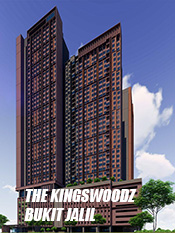



 Posts
Posts


