Malaysia Property News is a free resource website sharing Daily Property News & information about Property in Malaysia, which related to, Property Market, Property Investment, Commercial Property , Hot Properties Malaysia, Real Estate, Retail Shop, Business Park, Condominium Malaysia, Terraces & Apartment Malaysia, Houses, Residence, Resort and many more.

Monday, March 7, 2011

RM700m projects to enhance i-City's value


I-BERHAD, an integrated ICT developer, will start to build three properties worth about RM700 million at its i-City development in Shah Alam, Selangor, by the end of this year.

The properties are a serviced apartment block with over 100 units, a 210-room boutique hotel and a 300,000 sq ft data centre.

Chief executive officer Eu Hong Chew said the projects are meant to improve its income and enhance the land value, which is now about RM400 million.

"Because of the development model, we have vested interest to ensure that the property and land value will continue to be enhanced," Eu told Business Times during a recent study tour to Seoul, South Korea.
i-City, a RM2 billion knowledge and tourism project which started in 2005, will be developed on 29ha, over the next 10 to 15 years.

I-Berhad bought the land in the early 1990s for some RM60 million.

Eu said the company had invested RM150 million in the development, which now boasts a broadband speed of 20Mbps with fibre optics network and a back-up power supply.

Some 20 per cent of the land area has also been developed with cybercentre office suites, data-centres and an innovation centre with a combined 500,000 sq ft of space.

Eu said the company is expected to sign soon a joint venture agreement with a major local property developer to build the serviced apartments.

It also plans to do the same for the hotel development.

For the data centre, I-Berhad has a strategic alliance with a company called HDC, controlled by Datuk Richard Fong Loong Tuck, who is Glomac Bhd group executive vice-chairman.

"We believe that the tourism development will spur investment interest in i-City and demand for new office space," Eu said.

Future developments at i-City will include a one million sq ft mall, almost equivalent to Mid Valley Megamall in Kuala Lumpur, a four-star and five-star hotel, amusement park and an animation studio.

Eu said I-Berhad is in talks with foreign operators to help develop the mall. He declined to name them.

It is learnt that I-Berhad is talking to a major operator in Australia.

Earlier reports speculated that Singapore's CapitaLand Ltd would be its foreign partner.

By Business Times

Saturday, March 5, 2011

MRT – mired in controversy


Click thumbnail for larger image.

The planned mass rapid transit (MRT) project may be just what the city of Kuala Lumpur needs as a long-term solution to public transportation. But the MRT plan is today mired with controversy.

Some resident associations have been up in arms about the potential disruption to their homes and likely increased traffic congestions during the construction phase of the mega project. Some are also questioning the proposed alignment of the MRT on the grounds that the Sungai Buloh to Kajang route does not reach the right catchment areas while unjustifiably passes through mature and wealthier neighbourhoods that have less of a need for public transport.

Another oft-cited critique is that the Government should first fix other forms of public transport such as the bus system, which should cost much less to solve, before embarking on the multi-billion MRT.

That then leads to the issue of cost can the Government really afford to fork out the estimated whopping RM50bil needed for building the MRT?

There are also concerns about the Government's choice of making Syarikat Prasarana Bhd the MRT project owner. Critics argue that since Prasarana and its subsidiary RapidKL have failed at something as basic as creating an efficient public bus service in the city, that it isn't the best body to be owning the MRT.

Not only that, Prasarana's track record is questionable. According to the 2008 Auditor-General's report, a number of troubling allegations were made over the past management of Prasarana, including the acquisition of land at inflated prices, the purchase of loss-making entities for no good reason and buying buses that didn't work properly. Its financial strength is another issue.

Yet another grouse with the MRT is the choice of making Gamuda Bhd and MMC Corp Bhd the project delivery partners (PDP) of the MRT project, considering that these two companies are planning to bid for a significant portion of the whole project mainly the tunnelling works.

To be fair, many of these concerns are being addressed. Consider first the worries of residents in pockets such as Taman Tun Dr Ismail (TTDI). What had heightened their concerns was the pasting of notices in their neighbourhood that some of their houses could be acquired under the Land Acquisition Act 1960 for the purposes of building the MRT track.

SPAD sheds light

But the body at the centre of the MRT, the newly-formed Land Public Transport Commission (SPAD), is helping to ease concerns. For starters, soon after the TTDI fiasco concerning the land acquisition notices, Spad issued a statement saying that houses there need not be acquired as they are located beyond the 20m minimum buffer zone for the proposed MRT line. Spad said that the final decision on the land acquisition would only be made after the public display ends in May. “At this moment, the proposed alignment does not require acquisition of residential homes in TTDI.”


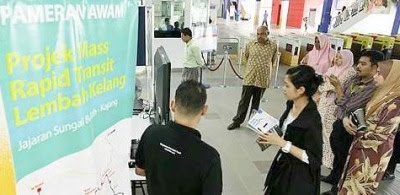
Members of the public looking at an exhibition on the MRT project in Bangsar LRT station.

In an interview with StarBizWeek, SPAD's chief executive Mohd Nur Ismal Kamal stressed that it was open to feedback from the rakyat. “This (the MRT project) is not about bulldozing ideas or pushing solutions down people's throats,” he said.

SPAD has opened various lines of communication for public feedback on the project, especially on the alignment of the MRT stations, through public displays, its website and telephone lines. Nevertheless, a consultant says for a project that may cost up to RM50bil or more, there is little information about the stations, traffic flow, parking facilities, or fare mechanism.

The environmental impact assessment (EIA) report, which has been made public, is another source of information on the MRT.

Notably, the EIA report itself has raised a few issues about the MRT, such as traffic congestion, noise, dust and pollution and ground vibrations that could affect households from the building of the MRT. The report said the MRT project will affect 108,000 residential units in 403 lots where the 51km mass rapid transit line will traverse.

However, the EIA report also recommended steps to overcome or mitigate those impacts. SPAD has said it would ensure the MRT project owner would follow the steps.

Is Prasarana right for the job?

As for the choice of Prasarana as the project owner, questions are raised as to its suitability. Not only are there questions about its track record and alleged past transgressions, there is also the concern about its financial viability. It has been reported that Prasarana had total debts to the tune of RM9.64bil as at end-2009 and has to repay bonds to the tune of RM7.1bil (in principal amounts) that will mature between 2011 and 2023. There are also reports that the Government has allocated RM2.5bil to pay for Prasarana-issued bonds which are due in November 2011.

Prasarana has recently said it would be raising between RM5bil and RM10bil over the next five years via a bond sale to fund the light rail transit (LRT) extensions. It had also raised RM2bil in 2009.

According to SPAD, there is sound rationale for the choice of Prasarana as the MRT project owner. “It is 100%-owned by the Ministry of Finance Inc and was set up to facilitate, coordinate, undertake and expedite infrastructure projects approved by the Government. As the MRT is a government-funded infrastructure project, Prasarana is the most relevant entity to be the owner of the asset of the (MRT) network. It also has a lot of expertise in owning public transport assets built up over the years,” explains SPAD's Mohd Nur. He adds that there is going to be a governance structure in place to ensure that Prasarana meets the high standards expected of it.

Prasarana's property play

Interestingly, Prasarana will play a key role to try to make money from real estate opportunities given to it by the government.

The financial model being used for Malaysia's MRT is called “rail plus property” and is similar to what Hong Kong's Mass Transit Railway, which is often cited as one of the world's most-successful examples of a well-run and financial-viable inner city train project.

Explains Prasarana's newly-appointed group managing director Shahril Mokhtar in a recent interview with StarBizWeek: “We are doing a study that out of the 51 km (line of proposed MRT), we have to identify a few parcels (of land) that can be developed into commercial or residential areas. We can partner with property developers and profit from the development can be shared. These properties will be around the station or on top of the stations. It can be rented or sold. The profit can be returned to the Government to offset the cost of the MRT. Hong Kong has done this for the last 20 over years.”

According to a consultant familiar with the Hong Kong experience, it had the advantage of planning the system in the 70s when it was still developing. Another success factor was the strict check and balances imposed by the Government on the operator of the MTR.

Shahril says that under his stewardship, Prasarana will become self-sustaining, with a target of breaking even by 2015. Prasarana has yet to reply to specific questions on its financial status.

Shahril took over the helm of Prasarana in October last year and his mandate is to transform the asset owner and operator of several public transport providers. Two months after he came on board, he dished out a 2-year transformation plan while a five-year master plan is crafted. He also restructured the management team, tweaked the organisational structure and set a direction for the company.

“We have to win the trust of the customer. If there is no trust, it would be tough. We also need to change the perception of Prasarana,'' he says.

The PDP issue

Back to the MRT. On the appointment of the MMC-Gamuda joint venture as the project's PDP, SPAD has explained that MMC-Gamuda will be the MRT project manager but with the added responsibility of having to deliver the project within an agreed time and cost.

“Any cost overrun and delays in project completion which are basic common risks in projects will be borne by the PDP. The PDP is not a turnkey contractor and the project will be divided into work packages which will be awarded individually through open tender. The Government will make the final decision on the awarding of contracts.”

The fact remains though that the Government will be footing the bill of the MRT, which means MMC-Gamuda should stand to make a decent profit as project managers of the multi-billion project. It is understood that MMC-Gamuda were picked as the MRT projects PDP as they are the ones to have first pitched the MRT project to the government, having hired consultants to do a detailed study on it.

MMC-Gamuda will also not be allowed to tender for any of the work packages except for tunnelling works. SPAD said the Government felt that an exception should be made as the PDP is the only local construction company that has experience in major tunnelling works. Still, the tunnelling work should again provide decent profit margin to MMC-Gamuda if they win the bid.

SPAD's Mohd Nur also says that costs will be kept down through the implementation of a value management study where an independent party will scrutinise the project plans to ensure that optimum value is derived.

Together with the “rail plus property” model, the plans sound good but that's only on paper. It is left to be seen if the MRT project will be carried out without any excesses and in the most transparent way possible. To be fair, one positive step has already been the setting up of SPAD.

“Before, public infrastructure projects were just dished out to different parties, who subsequently needed to be bailed out by the Government. Now at least, there is a one-stop regulator that is trying to ensure that things get done correctly,” says one observer.

One of SPAD's first tests will be to decide on the alignment of the MRT, which is turning out to be a challenging job.

“We're having to look at it from a myriad of perspectives and balance it all,” says Mohd Nur. Among the factors being taken into account are the social impact, engineering aspect or “constructability”, journey times, land acquisition costs, accessibility to users and ridership.

It will certainly be interesting to see SPAD's final decision on the MRT allignment and the basis at which it came to that conclusion.

By The Star

AP Land sees good potential in Niseko

The influx of tourists and investors from around the world, especially Asia and Europe, is set to change the real estate and infrastructure landscape of one of the most popular ski resort destinations in the world, Niseko in Hokkaido, the northern island of Japan.

Currently there is still a lack of awareness on the potentials and opportunities there, which explains why it is still a relatively untapped market as far as real estate development and investment is concerned.

According to Asia Pacific Land Bhd (AP Land) joint managing director, Low Su Ming, the pioneer developers from Australia, who are generally small fit outs, have taken more than 10 years to develop Niseko to what it is today.

“The rest of the world are only now beginning to take note of Niseko. As such, properties here are still affordable but it is not so much about the cost of investment but the propensity for the properties to improve in value that is of great interest,” Low tells StarBizWeek.

Low believes Niseko will continue to enjoy growth, adding that investment returns have been growing in recent years, with further capital growth expected.

“Niseko is clearly a world-class ski location, with its real estate still a fraction of the price of other comparable international destinations.

“This place, ranked by Forbes as the second snowiest place on earth and famed for its long ski season (from November to April yearly) and fine powder snow, has seen tourist arrivals doubling every year.

“We see great potential and opportunities in this area. At this moment, demand for accommodation far outpaces supply,” Low says.

AP Land is undertaking its maiden development in Japan – Shiki Niseko comprising 69 units of 1, 2 and 3 bedroom high-end residences with commercial component in the heart of the ski village, known as central Hirafu. The project is scheduled for completion by the end of 2012.

Low says most investors have taken a long-term position and are comfortable to enjoy their asset and ride out any short-term volatility.

LJ Hooker Niseko Resort branch manager Derek Kennewell concurs, saying that if Niseko’s attractions can be elevated to the level of some of the more mature resorts in Europe and North America over the next decade or two, “then we may see big tourism growth numbers, which will drive property investment.”

“Niseko offers something unrivalled in Asia, with access that cannot be beaten by Europe and America. The tourism market here is one of the biggest in the world, and if the bullet train makes it to Niseko in the coming decades it will bring a massive influx of domestic tourists,” he says.

He adds that Niseko is growing organically at its own pace.

“Many still think of Niseko as an anomaly, and are waiting for it to dry up as it did in the Japanese Bubble era in the late 80s and early 90s leading to the ‘lost decade’.”

“In actual fact, we are under-supplied when it comes to commercial premises, and more shopping facilities will bring a new level of tourists to the area.

“No doubt this will take time to manifest,” he says.

In recent years, big property players from Hong Kong and Malaysia are making their presence felt in Niseko with land and whole villages exchanging hands.

Their plan is to cater to the growing affluence in various Asian markets and higher demand for more lifestyle properties in Niseko.

Hong Kong’s PCCW Ltd has planned to add 14,000 beds in Hanazono over the coming decade, including a couple of hotels and village shops and services.

Besides APL, another Malaysian corporation, YTL Corp’s hospitality arm YTL Hotels & Properties Sdn Bhd has last April purchased Niseko Village located at the southeastern foothills of Mt Niseko An’nupuri.

Kennewell says that with the Chinese yuan rising steadily against the greenback in the past several years, China represents a huge market opportunity as it is now much cheaper to buy a property in Japan.

On what are the missing links in the Niseko tourism and real estate landscape now, he says: “Boutique shops, and personal services.

“There is also a need for more cultural and international events to attract guests all through the year, though these are improving year on year,” he adds.

By The Star

Guocoland unit sells land for RM45m

GUOCOLAND (Malaysia) Bhd’s associate company is selling a piece of land in Malacca to Perbadanan Kemajuan Negeri Melaka for RM45 million.

The associate, Continental Estates Sdn Bhd (CESB) — a property developer that also operates an palm oil estate — will use the proceeds for working capital and repayment of borrowings.

Guocoland said in a stock exchange filing yesterday that the sale will result in a gain of about RM15 million to CESB and RM7.5 million to the group.

The land, measuring about 202.5ha, is located in Jasin.

By Business Times

Sunway bags deal to build part of Legoland

SUNWAY Holdings Bhd’s construction unit has bagged a RM258 million contract to build part of the Legoland Theme Park in Johor.

The project, which will take 15 months, is targeted to be completed on June 2 next year, Sunway said in a statement to Bursa Malaysia yesterday.

Sunway Construction Sdn Bhd accepted the letter of award from IDR Assets Sdn Bhd.

The project is expected to contribute positively to the Sunway group’s earnings from this year onwards, the group said.

By Business Times

Sarawak offers land to AirAsia for LCCT

KUCHING: The Sarawak government has offered a piece of land next to the Kuching International Airport to AirAsia Bhd to build a dedicated low-cost carrier terminal (LCCT), said Deputy Chief Minister Tan Sri Dr George Chan.

He said the LCCT would not only draw more air travellers but also boost the state's tourism industry and double its revenue.

“The state government has offered land to AirAsia to set up an LCCT here. Now, AirAsia just need to build the terminal. They (AirAsia and the state government) are talking seriously,” Dr Chan, also the state's Tourism and Heritage Minister, told Bernama yesterday.

AirAsia has plans to turn Sarawak into a low-cost air travel hub with extensive domestic and international connections.

The plan to set up an LCCT in Sarawak was because the airport tax of RM51 imposed at the KL International Airport was considered too high by travellers.

Dr Chan urged Malaysia Airports Holdings Bhd (MAHB) to seriously consider reducing the airport tax and charges so as to develop new traffic and to further promote the state's tourism industry.

He said the high airport tax had hindered AirAsia from increasing flight frequency and introducing new routes in the state.

“It is a chicken and egg situation. MAHB should seriously consider lowering the airport tax or charging a minimum rate. It is better than having none, especially when the Miri, Sibu and Bintulu airports are not very busy.”

By Bernama

MRT project cost now estimated to reach RM50b

PETALING JAYA: The construction cost of the entire 150km Mass Rapid Transit (MRT) urban transport project may run up to RM50bil, three sources said, two of whom are directly involved in the project. The third is an independent party doing consulting work for the MRT line.

“When Gamuda-MMC first gave an estimate a couple of years ago, a figure of RM36.6bil was brought up for the 150km line,” said the source who is directly involved with the project.

“Now that we are concentrating on one line Sg Buloh-Kajang we have asked them for an estimate and they said it may cost RM18bil to RM20bil to construct. This does not include the rolling stock, land acquisitions and other provisions.”

Land Public Transport Commission chief executive officer Mohd Nur Ismal Kamal said the Government was doing all it could to drive down the cost.

“With land acquisition and rolling stock, it could come up to RM50bil, but it is too early to say,” he said. “We will know the full picture later as the project is still at the public display stage. This will end in middle of May.”

“From the feedback, we will then consider the alignment and the length of the platforms for the stations, whether it is a four-car train or more,” Mohd Nur added.

He said that once the public display was over, a target cost would be worked and agreed on. Once the tender was over, it may be different from the target cost, he said.

“The MRT is not just a transport project. It will have a catalytic effect,” Mohd Nur said, adding that an independent party would scrutinise the project plans and ensure that optimum value was derived.

The entire project will be fully funded by the Government and a special-purpose vehicle under the Finance Ministry would be set up to advise, manage and raise the funds.

CIMB Research in its report yesterday said that the higher cost for the Sungai Buloh-Kajang line was not a surprise as the earlier number was based on 2009 prices. (Higher construction cost and inflation may contribute to the current cost which is estimated to reach RM20bil for the Sg Buloh-Kajang line.)

“Based on the average RM353m/km for the line, the entire MRT project (150km) could be worth RM53bil compared with the current estimate of RM36bil,” it said, commenting on the outcome of Syarikat Prasarana Negara Bhd's contractors' briefing on Thursday.

The briefing was to provide an overview of the MRT project and the job opportunities available.

The event was packed with more than 100 contractors, according to a Prasarana spokesman when contacted by StarBizWeek.

Prasarana project director Zulkifli Mohammad Yusof and Datuk Azmi Mat Nor, who represented the Project Development Partner (PDP), chaired the event. (MMC-Gamuda JV Sdn Bhd manages the project as the PDP.)

CIMB Research said the briefing focused on the Sg Buloh-Kajang MRT line's project structure, alignment specifications, tender guidelines/timelines and updated cost breakdown.

“The main takeaways from the briefing were the prequalification process that will start this month and the total estimated cost for Sungai Buloh-Kajang MRT line that is RM20bil,” it said.

It said Prasarana would start the ball rolling with the elevated structure package (elevated portion is worth RM10.8bil of the total cost of RM20bil) which would be broken up into several sub-packages and was open to all contractors except the PDP.

“Priority will be given to contractors with financial strength, expertise and track record. Contractors who do not prequalify will still be able to bid for the subcontracting packages,” it said.

It added that this suggested the awards were likely to take place no earlier than May 11, while the July 11 timeline for the start of work was still intact.

Prasarana and the PDP will work together in rolling out the award of the MRT packages and disbursing the funds via progress payments.

“Funding/payment will be drawn down from a special company under the Finance Ministry,” it said.

By The Star

Friday, March 4, 2011

SP Setia may be eyeing more land

PETALING JAYA: Property developer SP Setia Bhd may buy more land following its latest acquisition of 268 acres in Cyberjaya, analysts said.

They believe that the recent share placement by SP Setia to its major shareholders might help boost the company's acquisition plan as the exercise was expected to raise some RM1bil to finance its existing and future projects.

HwangDBS Vickers Research, in its report yesterday, said that as SP Setia build up its war-chest with the upcoming RM1bil placement and record RM1.8bil unbilled sales, the company had a knack of winning lucrative land deals, and was planning for more high-density mixed development and townships in the Klang Valley.

Kenanga Research echoed the sentiment, saying that RM300mil to RM400mil of the potential RM1bil cash from the share placement might be used to buy land.

“Hence, there is still room for more sizeable land deal in the near future,” it said in a report yesterday.

It added that the company's net gearing was still at a comfortable level of 0.26 times while cash pile remained sizeable at RM1bil as at Oct 31, 2010.

SP Setia shareholders recently approved a proposal for the placement of up to 15% of the company's issued and paid-up capital that would involve the issuance of up to 152.52 million new shares.

The share placement will involve three major shareholders in SP Setia Skim Amanah Saham Bumiputera (ASB), under the banner of Permodalan Nasional Bhd; Employees Provident Fund (EPF); and SP Setia president and chief executive officer Tan Sri Liew Kee Sin.

ASB is the largest shareholder in SP Setia with 20.12% stake while EPF has 14.47% and Liew 11.96%.

On Wednesday, SP Setia said it had bought the freehold land in Cyberjaya's flagship zone from Setia Haruman Sdn Bhd for RM420.4mil.

The land will be developed as Setia Eco Glades project by Setia Eco Villa, a 70:30 joint-venture company between SP Setia and Setia Haruman.

Liew said the project would be a mixed residential and commercial development and was expected to have a gross development value of RM3bil.

The project, targeted at high-end customers in Cyberjaya, offered RM2mil for a semi-detached house and a minimum RM3mil for a bungalow. Construction is expected to commence in financial year 2012 and will span over six years.

HwangDBS said Cyberjaya had started to come on buyers' radar screen, given its improved connectivity (20 minutes from Kuala Lumpur via new highway), increased investment by multinational companies and availability of amenities.

“Mah Sing Group Bhd's Residence and UEM Land Bhd's Symphony Hills have recently seen strong take-up at new benchmark prices,” it said.

By The Star

Mutiara Goodyear launches lifestyle homes with GDV of RM40m

KUALA LUMPUR: MUTIARA GOODYEAR DEVELOPMENT Bhd has launched its new phase of its lifestyle homes in Nadayu 92, Kajang with a gross development value (GDV) of over RM40 million.

It said on Friday, March 4 the new phase included four bungalows priced from RM2.2 million and 24 semi-detached homes priced from RM1.3 million. The built-up of the bungalows and semi-detached homes are 6,142 sq ft and 4,579 sq ft respectively.

Its executive chairman Hamidon Abdullah said: “We are encouraged by the good take up rate for Phase 1 which was fully sold within a day during its launch early this year. Hence, we expect a good take up rate for the bungalows and semi-detached homes.”

Nadayu 92, Kajang is a gated and guarded community spread over 69 acres of freehold land with total GDV of RM350 million.

By The EDGE Malaysia

Prasarana to get part of RRIM land for development

PETALING JAYA: Syarikat Prasarana Negara Bhd will be allocated a parcel of land in the proposed Sungai Buloh Rubber Research Institute Malaysia (RRIM) development project for commercial development as part of the “rail plus property” model being used to offset the cost of building the mass rapid transit (MRT), sources said.

“Negotiations are ongoing between Prasarana and the Employees Provident Fund (EPF),” said one source.

“The parcel of land (to be allocated) will be used to build the MRT's main depot but it will also include commercial development above and possibly around the depot, in the form of retail and office space,” another source explained.

Prasarana has been appointed the MRT project and asset owner.

It has been reported that the Government will fund the MRT, possibly through the raising of bonds, and that Prasarana will adopt Hong Kong's “rail plus property” approach in its urban public transportation system, whereby parcels of land are developed to offset the cost of construction of public transport systems.

Prasarana will be given land to develop in joint ventures with developers and the proceeds from that will be repaid to the Government.

It has also been reported that Prasarana is finalising prospective land parcels that the company would develop.

Last March, the Government announced that EPF would form a joint venture to develop 3,000 acres of land in Sungai Buloh owned by RRIM into a new hub for the Klang Valley. The new hub in Sungai Buloh will lead to over RM5bil of new investments, it was then said.

The RRIM land is also among the sites identified for re-development under Budget 2010.

The location and size of RRIM's land near the fast developing Kota Damansara area holds significant attraction for developers and is expected to command a price premium, analysts have said.

The redevelopment of the RRIM land is also part of the Greater Kuala Lumpur Strategic Development Project initiative under the 10th Malaysia Plan.

In July last year, the EPF said it had engaged several consultants to advise on the development of the land.

Subsequently, Kwasa Land Sdn Bhd was set up by the Federal Government and will act as a development manager on behalf of the EPF and the Government. Kwasa Land will be involved in conducting open tenders or negotiations with developers relating to the land parcels in the RRIM development.

It is left to be seen if Prasarana would have to pay for the parcel of land in RRIM or whether it will be given to it free. “This is something being worked out now but it is important to note that Prasarana is wholly-owned by the Government and the MRT project is also Government led,” a source said.

By The Star

Thursday, March 3, 2011

Pressure on office rental rates


PETALING JAYA: The abundance of office space supply in 2011 is expected to create pressure on rental rates for this property sub-sector.

Henry Butcher Malaysia Sdn Bhd chief operating officer Tang Chee Meng said there would be a slight weakening in rates in the next three to six months as there was an oversupply of office space in the market.

“A lot of buildings are being completed and there will be an increase in supply. Unless demand picks up, this will put pressure on rents,” he said.

According to a January report by DTZ Research, there was no new addition to the office stock in Kuala Lumpur in the fourth quarter of 2010 (Q410) as some of the expected completions were delayed to 2011.

“There was, however, a reduction in total stock of 500,000 sq ft due to the demolition of two old office buildings for redevelopment,” it said.

It said the office market continued to experience active enquiries but the take-up of space declined due to relocations outside the city and consolidations.

“As a result, the overall occupancy rate of office buildings in Kuala Lumpur decreased from 87.1% in Q3 2010 to 86.4% in Q4 2010.”

According to DTZ, office rents in Q410 continued to face downward pressure, with average prime office rents dropping marginally from RM5.98 per sq ft per month in Q310 to RM5.97 per sq ft in Q410.

Khong & Jaafar Sdn Bhd managing director Elvin Fernandez said he expected office rents to hold in the next three to six months. “I don't think it will rise much. At best, it will hold,” he said.

DTZ said there was about 13.23 million sq ft of new office space in the pipeline between 2011 and 2013, the majority of which was scheduled for completion in 2012.

“In addition, there is an announcement for a proposed 100-storey office by Pemodalan Nasional Bhd of 2 million sq ft that will put further pressure on future competition.”

It said the effort to target 100 multinational companies to have a presence in Malaysia and the proposed commencement of high impact infrastructure projects such as the MRT and the extension of the LRT lines would spur growth in office demand in the long term.

“However, the outlook for the sector is expected to remain soft in the next few years as it will take time to increase demand with these new initiatives while there is a substantial amount of new supply coming up, most of which are of a speculative nature.

“The expected forthcoming general election may cause a short period of uncertainty in the short term as companies may want to remain uncommitted until the political situation is clearer,” said DTZ.

By The Star

SP Setia to launch RM3b project in Cyberjaya


The property market in Cyberjaya is proving too hard to ignore for SP Setia Bhd as the developer is taking a second stab at the growing area.

Malaysia's biggest developer by sales will launch a RM3 billion eco-themed project in Cyberjaya, Selangor, early next year.

"Cyberjaya is a market you must not ignore. We are looking at 3,000 to 4,000 expatriates working there who need housing," chief executive officer Tan Sri Liew Kee Sin said in a briefing in Cyberjaya yesterday.

"We will be targeting mainly the senior staff of multinational companies and Malaysians who want to invest or live here," he said.
Cyberjaya is the base for many multinational companies' support centres. Chipmaker AMD, for instance, recently opened an office that will support the finance and IT needs of its global operations.

SP Setia's project will be called Setia Eco Glades and it will feature 2,437 units of superlink houses, semi-detached homes, bungalows, condominiums and shoplots.

It has partnered Setia Haruman Sdn Bhd, the master developer of the Cyberjaya Flagship Zone for the project. SP Setia will hold 70 per cent of the joint venture while Setia Haruman holds the rest.

The joint venture is buying 107.2ha of land from Setia Haruman for RM420.4 million or RM36 per square foot.

This is the second attempt by SP Setia to buy land in Cyberjaya. In 2007, it agreed on a deal to buy 63.18ha from Setia Haruman for RM190.6 million but this fell through in 2008.

Liew said SP Setia aims to price its semi-detached units and bungalows from RM2 million and RM3 million, respectively, similar to homes at its Setia Eco Park development in Shah Alam.

The first phase of the project, comprising condominiums and semi-detached homes, is targeted to be launched by the first quarter of next year.

"We are bullish on sales. Cyberjaya has ready infrastructure," Liew said.

On funding, Liew said SP Setia will partly borrow from banks.

By Business Times

SP Setia buys Cyberjaya land for RM420mil

CYBERJAYA: Property developer SP Setia Bhd has bought 108.5ha of prime freehold land in Cyberjaya's flagship zone for RM420.4mil from Setia Haruman Sdn Bhd.

The land will be developed as Setia Eco Glades project by Setia Eco Villa, a joint-venture company between SP Setia Bhd which holds 70% and Setia Haruman Sdn Bhd 30%.

SP Setia president and chief executive officer Tan Sri Liew Kee Sin said the project would be a mixed residential and commercial development. “It is expected to have a gross development value of RM3bil,” he told a press conference after a signing ceremony between SP Setia and Setia Haruman.

Liew represented SP Setia while Setia Haruman by its chairman Tan Sri Mustapha Kamal Abu Bakar.

Liew is optimistic about the demand as the project will be targeted to high-end customers in Cyberjaya.

“Cyberjaya is a market that you must not ignore. It provides huge potentials as there are ready customers from 5,000 multinational companies operating there,” he said.

Asked on the price range, Liew said: “We want something that is really upmarket development.”

Giving indications based on Setia Eco Park in Shah Alam, Liew said it offered RM2mil for a semi-detached house and a minimum RM3mil for a bungalow.

Setia Eco Glades will be created as a new eco-themed development in Cyberjaya based on its flagship development, Setia Eco Park.

The project is expected to commence in financial year-end 2012 and span a six-year development period.

Meanwhile, Mustapha Kamal said there was about 680ha still available for sale in Cyberjaya.

“I truly believe after this signing ceremony, the land price would not be the same any more,” he added.

By Bernama

Wednesday, March 2, 2011

Residential property prices likely to stay flat

PETALING JAYA: Property prices of the local residential sub-sector are expected to be flat in the next few months as fears of rising oil prices due to the political unrest in the Middle East may damper investor and buyer confidence.

Khong & Jaafar Sdn Bhd managing director Elvin Fernandez said the local residential sub-sector would not see “insane run-ups” in prices like last year due to both global and local factors.

“Stock markets in the region have not been on the run-up. The uncertainty in oil prices and measures taken by Bank Negara to curb rising property prices will see (prices) within the local residential property sector holding,” he said when contacted by StarBiz yesterday.

Fernandez said the local residential sub-sector experienced “insane run-ups” in prices towards the second half of 2010 but, in light of both local and foreign events, the run-up in prices “will be arrested.”

Henry Butcher Malaysia Sdn Bhd chief operating officer Tang Chee Meng said he expected prices of the residential sub-sector to be stable in the next three to six months.

“Property prices won't go up as crazily as it did last year,” he said.

There would still be interest for landed properties and high-rise developments would experience a bigger slowdown, he said, adding that if oil prices shot up, people might put off property investment.

In its report, DTZ said that to push sales, developers were now selling smaller units in line with market demand, especially aiming at the investment segment of the market which was still relatively strong.

“Capital values are stable in most locations with an average of RM599 per sq ft, but rental rates continue to experience deterioration as new completions add competitive pressures to existing projects,” it said.

Tang also said if oil prices shot up, people might put off property investment.

By The Star

SP Setia buys prime land in Cyberjaya

Property developer, S P Setia Bhd, has bought 108.5 hectares (268.11 acres) of prime freehold land in Cyberjaya's flagship zone for RM420.4 million from Setia Haruman Sdn Bhd.

The land will be developed as Setia Eco Glades project by Setia Eco Villa, a joint-venture company between S P Setia Bhd which holds 70 per cent and Setia Haruman Sdn Bhd 30 per cent.

S P Setia president and chief executive officer Tan Sri Liew Kee Sin said the project would be a mixed residential and commercial development.

By Bernama

Rehda: Demand for green buildings needs to be market driven

PETALING JAYA: The development of green buildings continues to gain momentum in Malaysia every year but the demand for it needs to be market-driven.

Real Estate and Housing Developers Association (Rehda) president Datuk Michael Yam said local property players should not develop green buildings or incorporate energy-saving elements into their projects just because it was the “in thing” to do.

“Malaysia can pass laws (on green buildings) and developers can go into it voluntarily. But at the end of the day, if the market is not demanding it, than it's not practical.

“It needs to be market driven,” he said at a press conference prior to the Rehda Youth Green Tour yesterday.

Yam said while developing and living in green buildings made financial sense in the long term, not everyone might be ready to embrace this concept just yet.

“It costs more to go green and not everyone can afford it (purchasing green properties). Developers need to evaluate what the market wants.”

“You need to do it (offer green buildings) gradually and slowly induce the public on the benefits of going green. This will trigger off a green revolution among developers.”

Yam said awareness of the benefits of going green (other than the property sector) was growing in Malaysia, adding that media coverage of green-related issues was also becoming more common.

Yam said the awareness on the benefits of going green was still at its infancy stage in Malaysia and that the public needs to be educated about its advantages.

“If everyone is willing to subscribe to this higher cost, then (the prices of green buildings) will become more affordable because of the economies of scale,” he said.

Meanwhile, the Green Tour, which was hosted by Rehda Youth, yesterday organised tours to four environmental friendly developments in the Klang Valley.

The developments were 1First Avenue, Challis Damansara, GTower and Ken Bangsar. Held for the first time, the tour aims to educate the public on green buildings.

The tour was officiated by Housing and Local Government Minister Datuk Wira Chor Chee Heung.

By The Star

Tuesday, March 1, 2011

Legoland Malaysia set for 2012 opening

The development of Legoland Malaysia in Iskandar Malaysia by IDR Resorts and Merlin E ntertainments is gathering momentum for its grand opening in 2012.

Datuk Syed Mohamed Syed Ibrahim, president and chief executive officer of Iskandar Investment Group and chairman of IDR Resorts, said next year would be a significant year for Iskandar Investment with the launch of completed projects
such as Legoland Malaysia under the company's first phase of development in Iskandar Malaysia.

"There will be more job opportunities for all," he said in a statement today.

He said RM200 million worth of contracts had already been awarded, and tourist receipts when Legoland Malaysia opens in 2012 would further boost the local and regional economy.

Iskandar Investment, he said, was committed to creating value for the community and driving Iskandar Malaysia's vision of becoming a sustainable metropolis of international standing.

IDR Resorts, a member company of Iskandar Investment, is responsible for the development of Legoland Malaysia in partnership with Merlin Entertainments.

Over 40 interactive rides, shows and attractions for the theme park are currently being fabricated for Iskandar Malaysia.

Creation of the 15,000 Legoland model structures at the Model Building Centre for Legoland Malaysia in the Nusa Cemerlang Industrial Park is also progressing smoothly.

By Bernama

Call for entries to Malaysia Property Award 2011

The International Real Estate Federation (Fiabci) Malaysia is calling for entries to the 19th Malaysia Property Award 2011.

Fiabci Malaysia is accepting entry submissions until March 31 for projects developed in Malaysia between year 2006 and 2010. A total of 14 award categories are offered this year, including Environmental (Rehabitation/ Conservation), Heritage (Restoration/ Conservation), Hotel, Industrial, Master Plan, Office, Public Sector, Purpose-Built/ Specialised Project, Residential (High Rise), Residential (Low Rise), Resort, Retail, and Special Award for National Contribution and Sustainable Development.

The projects will be judged based on design, workmanship, impact on the environment, ease of facilities management, financial viability, marketing strategies, benefit to the community and lifestyle improvements. Winners will be announced in mid-October.

Winners of this programme will automatically enter the final selection process of the Fiabci International Prix d’ Excellence Award, which will be contested by property development projects from 60 countries.

For more information, contact the secretariat at 03–6203 5090/ 5091 or email fiabcimalaysia@fiabci.com.my.

By The Star

Monday, February 28, 2011

Ireka positive Aseana Properties will start to contribute in next two to three years


Ireka is involved in the construction of phases three and four of Sandakan Harbour Square in Sabah

KUALA LUMPUR: Ireka Corp Bhd is confident its 23%-owned associate company, Aseana Properties Ltd, which has been weighing down on the company's financial performance with its losses, will be able to contribute positively to the group in the next two to three years.

Ireka group executive director Lai Voon Hon said Aseana's portfolio included seven development projects in Malaysia and three projects in Vietnam. It also has a 16.4% equity investment in Ho Chi Minh City-based Nam Long Corp.

“Most of the projects in Aseana are only kicking off from this year and we see Aseana contributing positively to Ireka from financial year 2012 onwards.

“Going forward, the number of projects that will be able to contribute to Aseana's bottomline will increase.

“We are confident that beyond 2012, there will be quite a bit of profits coming in from Aseana,” Lai told StarBiz.

For the nine-month period ended December 31, 2010, Ireka recorded a pre-tax loss of RM10.26mil, compared with a pre-tax profit of RM8.16mil in the preceding year. Revenue was 7% higher at RM308.8mil.

The loss was in part attributable to a share of loss in Aseana Properties of RM7.5mil and a mark-to-market loss for share investment in Kinh Bac City Development Shareholding Corporation of RM1.6mil.

According to Lai, having Aseana as the property fund arm of Ireka is a good business model.

As the exclusive development manager of the fund, Ireka earns a fixed annual management fee and a performance fee from Aseana.

The fund holds all of Ireka's earlier ongoing property projects in Malaysia, leaving the parent company, which is also involved in construction, with an asset-light balance sheet.

“Aseana gives Ireka the platform to expand its expertise to emerging markets such as Vietnam and for the group to undertake more development projects as compared to Ireka undertaking the projects on its own.

“Listed on the London Stock Exchange, Aseana has a larger capital base and the ability to own more development assets or investments.

“Ireka currently manages a portfolio of current and upcoming projects with a total estimated gross development value (GDV) in excess of US$2bil,” Lai added.

He said with Aseana more mature now, Ireka was looking to beef up its property development division and was actively scouting for land in prime areas in Malaysia and Vietnam. It is also looking for joint venture opportunities with land owners.

Together with Aseana Properties, Ireka will soon commence on a number of new development projects, including a residential project in Jalan Kia Peng, Kuala Lumpur.

According to Lai, the plan is to raise the ratio of earnings contribution between the property and construction divisions to 50:50 over the next five years from 5:95 now.

As at Dec 31, 2010, Ireka's construction order book amounted to RM1.003bil with approximately RM430mil still outstanding.

Over the last nine months, the group has tendered for jobs totalling over RM1bil and has successfully secured three projects with total contract sum of about RM297mil.

Its local construction portfolio include SENI Mont' Kiara, a high end condominium project in Mont' Kiara; an integrated hotel cum office towers project at KL Sentral and the Kulai-Second Link Expressway Interchange.

It is also involved in the construction of phases three and four of Sandakan Harbour Square in Sabah, comprising a modern lifestyle mall and a hotel.

Lai said Ireka, which had been active in Vietnam's property market over the past four years, was ready to export its construction expertise there.

The group is confident Vietnam's property and construction markets would bounce back strongly in a year or two's time.

Lai said the construction industry in Vietnam was growing in tandem with the economic development of the country and demand for expertise in the infrastructure, commercial and residential segments would continue to rise.

Earlier this month, Ireka Engineering and Construction Vietnam Company Ltd (IECVCL), a wholly-owned subsidiary of Ireka Corp Bhd, secured a construction package to build a general hospital at the International Hi-Tech Healthcare Park (IHHP) in Binh Tan District, Ho Chi Minh City, in Vietnam.

The contract, valued at RM27.58mil, comprises the construction of a reinforced concrete structure and related ancillary works for the general hospital.

By The Star (by Angie Ng)

Bina Puri eyes RM250m revenue from property


The Jesselton Condominum. Bina Puri is on an expansion trail to strengthen its presence in Sabah. Inset: Bina Puri Holdings Executive Director Mathew Tee

KOTA KINABALU: Bina Puri Holdings Bhd is projecting a total of RM250mil sales revenue from its property division or 20% of the group's overall ongoing projects this year.

Bina Puri Holdings Bhd executive director Mathew Tee, 35, in a media Q&A session at Bina Puri's office at Alam Mesra here on Saturday said the contribution marked the construction group's effort to shift away from its core business activities to property development.

Of the amount RM66mil is from Sabah, said Tee adding that excellent performance of property market in Sabah had contributed positively to their property division from nothing last year to 20% of total gross development this year.

The group's other substantial property contribution came from its new property launches in the Klang Valley, Penang and Johor.

Tee said the company's shift towards property sector was part of its exercise to diversify and balance the group activities from mainly construction.

“We find that property division gives better profit margin. We foresee that in next five years Bina Puri will have a 50:50 mix between construction and property,'' said Tee adding that this year was a record year for Bina Puri Group with a revenue exceeding RM1bil.

The group bullish performance, he said, was due to large volume turnover of ongoing projects which was on average of RM350mil per year or about RM18mil per month.

For the past five years, the group secured on average of RM1.5bil projects per year.

Tee said the group's overall total ongoing projects was RM5.7bil with unbilled portion amounting to RM2.6bil.

Bina Puri's outstanding orderbook of RM2.5bil will roll out over the next two year.

Tee said the company is on an expansion trail to further strengthen its presence in Sabah. Bina Puri has been in Sabah for 15 years and had completed more than RM1.5bil worth of projects here. Currently, it has over RM600mil worth of ongoing projects here.

Tee said the projects include the construction of two high-end condominium; Jesselton View and One Jesselton at Kepayan, affordable housing scheme in Sandakan, Central Lecture Hall & Post Graduate Centre for Universiti Malaysia Sabah and an 8-storey medium-cost apartments in Menggatal.

He added that 28% totalling about RM2.8bil of the group's ongoing projects in Malaysia came from Sabah and Sarawak.

Bina Puri Holdings Bhd is a Bursa Malaysia Main Board company with 35 years of experience in civil and building construction both locally and internationally.

By The Star