
RETAILER Metrojaya Bhd expects sales to grow by five per cent this year, driven by new stores and ongoing marketing and promotion activities.
Last year, it made some RM400 million in sales.
The group operates seven department stores which account for 60 per cent of its revenue, three specialty stores and a new venture called MJ Outlet, which sells off-the-season products from its department and specialty stores.
"The idea to operate MJ Outlet is to provide a proper avenue to market our off-the-season products instead of having a warehouse sale all the time," chief executive officer Robert Heng said.
Metrojaya had launched an MJ Outlet and a Reject Shop at Brem Mall in Kepong on Saturday. Covering 46,000 sq ft of retail space, the stores offer men, ladies and children apparels and household items.
Well-known brands like Somerset Bay, East India and household items from Laura Ashley and Living Quarters are all available at MJ Outlet where prices are reduced by up to 70 per cent.
Heng said since its soft launch on December 20 last year, MJ Outlet has received positive feedback from customers who shop for quality products at lower prices.
"Our customers appreciate the move especially during challenging times like now," he adds.
Metrojaya has signed an 18-year lease with Brem Holdings Bhd and spent a total of RM4 million or RM2 million each to open MJ Outlet and Reject Shop.
Depending on the response, Heng said the group may open more MJ Outlets but it has not set any targets or budgets.
"It depends, as we move along, since our main focus is still department stores. If we do open more MJ Outlets, it will be at the edge of town," he said.
Meanwhile, Metrojaya will open a 125,000 sq ft department store in Sabah by the third quarter this year.
By Business Times (by Zurinna Raja Adam)
Monday, January 12, 2009

Saturday, January 10, 2009
RM200mil projects lined up

Artist’s impression of OSK Property’s condominium project in Jalan Yap Kwan Seng, Kuala Lumpur.
OSK Property Holdings Bhd has lined up a few residential property and commercial projects worth RM200mil for launch in the Klang Valley, Seremban and Sungei Petani this year.
For the current financial year ending Dec 31, the company hopes to clinch sales of between RM120mil and RM130mil. Last year, it launched RM180mil worth of properties and recorded sales of RM153mil.
OSK Property executive director and chief operating officer Gerard Tan says that amid the current market slowdown, house buyers comprise mainly owner occupiers who are looking to upgrade into more prestigious addresses. “Developers have lowered their profit margin from 25% to 30% previously to about 20% now and it is certainly a good time to buy property for their good value. The onus is on developers to ensure their projects are properly planned and meet the needs of the buyers,” he tells StarBizweek.

Gerard Tan in front of a Sutera Damansara show house
OSK Property’s latest project in the Klang Valley is the 100-acre Sutera Damansara in Bandar Sri Damansara, Petaling Jaya. Scheduled for launch around March for completion in seven years, the project comprises 617 landed residences, 936 apartments and 24 shop houses with a total gross development value (GDV) of RM800mil. Tan says only 80 acres of the 100-acre project will be developed initially and the remaining 20 acres, for high-rise dwellings, will be undertaken after five years.
The initial phase will comprise terrace houses of around 2,305 sq ft priced from RM478,000. Since the project’s soft launch last month, RM52mil sales have been recorded.
In Kuala Lumpur, OSK Property is looking to launch a high-end condominium project in Jalan Yap Kwan Seng in October. The 108 condominiums, ranging from 703 sq ft to 4,152 sq ft, would be priced from RM1,000 per sq ft. The project with GDV of RM150mil is targeted for completion in three years.
The company also owns a 0.65-acre plot in Jalan Raja Abdullah and hopes to tie up with the adjoining land owner to develop the land into a condominium project later this year.
Tan says the company’s 12-acre plot in Bangi will be developed into 74 units of 2- and 2½-storey Bangi Lake Hill Villa. The building plans for the project have been approved and it will be launched in May. The units will be priced from RM880,000 to RM1mil.
In Seremban, the Mont Jade residential enclave comprising 243 semi-detached houses and bungalows will be launched in March.
The semi-detached houses will be priced from RM450,000 and bungalows from RM500,000.
OSK Property’s joint venture with Menang Development Sdn Bhd to develop 80 acres in Seremban 3 is at its tail end with a total of 547 units built to-date and another 147 units remaining units.
In Sungei Petani, the company has completed half of the 2,500 acres of land it owns in Bandar Puteri Jaya. A total 25.000 housing units worth a GDV of RM1bil have been completed. The balance RM1bil in property units will be undertaken over the next five years.
Meanwhile, on the company’s plans for Atria Damansara in Damansara Jaya, Tan said: “Our plan is to redevelop the property into a more upmarket retail and commercial destination for Petaling Jaya folks. The modern shopping mall will have gross lettable area of 1.3 milion sq ft and also some low-rise shop offices.
“The development order has been obtained last year and the redevelopment is expected to kick off late next year. The potential GDV of some RM1bil will be realised by 2012,” he adds.
Last February, OSK Property sealed the deal to purchase Atria Damansara shopping complex located on 5.48 acres for RM75mil.
Currently some 68% of the space in the complex have been leased out for a monthly rental income of more than RM8mil.
“We will retain some of the property for lease to generate recurring income while the rest will be for sale. The oroject is expected to revive the vibrancy of the Damansara Jaya commercial area into a more happening destination,” Tan says.
By The Star (StarBizweek - by Angie Ng)
Analysts mixed on cement price outlook this year
Although major construction material costs have come down recently, analysts are mixed on the outlook for the price of cement this year.
An analyst said that theoretically, the cement price in 2009 should increase given that the prices of coal and electricity, which are vital for cement production, would be higher than last year.
“But we expect cement price to remain the same this year, as the global economic uncertainty and external factors were pressuring the local manufacturers from increasing the price,” she tells StarBizWeek.
However, another analyst from a multinational firm predicted otherwise. He opines that cement price will fall because its raw material costs had come down.
He says the price has not declined like other products because the cement industry is more localised and, therefore, domestic manufacturers have more control.
After the cement price liberalisation on June 5 last year, he says import volumes have remained small due to the high logistic costs.
Currently, he adds, the local price has risen about 27% to RM280 per tonne from RM220 early last year.
Cement Industries of Malaysia Bhd chief financial officer Rozahan Osman says demand for cement in the region will grow 1% to 2% this year if major infrastructure projects progress as planned and residential projects recover as predicted.
“Cement demand contracted in the second half of 2008, while the full year growth rate is expected to be around 3% compared with 8% growth in the first half. We expect demand to recover in the second half of 2009.
“Cement price could only be lowered when prices for major production input, such as coal and production consumable prices, are lower,” he says.
Meanwhile, Cement and Concrete Association of Malaysia executive director Grace Okuda says market forces of supply and demand will determine the price of cement.

Grace Okuda
She says unless the government speed up the implementation of the stimulus packages, especially on infrastructure projects, cement demand will continue to slow down.
“However, we expect demand to recover latest by the fourth quarter. Currently, there is no cut in production yet and as there is no retrenchment in the cement industry. Manufacturers are looking for new markets to mitigate the domestic slowdown,” she says, adding that presently, only a small percentage of the domestic production is for export.
According to Okuda, cement price had not risen from 1995 to late 2006. In December 2006, it rose only 10% although production costs had risen by 31%.
Since then, its price had gone up twice - 15% to 20% in June and about 8% in August last year. The increases were due to an unprecedented 63% hike in diesel price and 26% rise in electricity tariffs.
She says the association has informed the Government of the industry’s concern and hopes it will reduce electricity tariffs.
By The Star (by K.C.Law)
An analyst said that theoretically, the cement price in 2009 should increase given that the prices of coal and electricity, which are vital for cement production, would be higher than last year.
“But we expect cement price to remain the same this year, as the global economic uncertainty and external factors were pressuring the local manufacturers from increasing the price,” she tells StarBizWeek.
However, another analyst from a multinational firm predicted otherwise. He opines that cement price will fall because its raw material costs had come down.
He says the price has not declined like other products because the cement industry is more localised and, therefore, domestic manufacturers have more control.
After the cement price liberalisation on June 5 last year, he says import volumes have remained small due to the high logistic costs.
Currently, he adds, the local price has risen about 27% to RM280 per tonne from RM220 early last year.
Cement Industries of Malaysia Bhd chief financial officer Rozahan Osman says demand for cement in the region will grow 1% to 2% this year if major infrastructure projects progress as planned and residential projects recover as predicted.
“Cement demand contracted in the second half of 2008, while the full year growth rate is expected to be around 3% compared with 8% growth in the first half. We expect demand to recover in the second half of 2009.
“Cement price could only be lowered when prices for major production input, such as coal and production consumable prices, are lower,” he says.
Meanwhile, Cement and Concrete Association of Malaysia executive director Grace Okuda says market forces of supply and demand will determine the price of cement.

Grace Okuda
She says unless the government speed up the implementation of the stimulus packages, especially on infrastructure projects, cement demand will continue to slow down.
“However, we expect demand to recover latest by the fourth quarter. Currently, there is no cut in production yet and as there is no retrenchment in the cement industry. Manufacturers are looking for new markets to mitigate the domestic slowdown,” she says, adding that presently, only a small percentage of the domestic production is for export.
According to Okuda, cement price had not risen from 1995 to late 2006. In December 2006, it rose only 10% although production costs had risen by 31%.
Since then, its price had gone up twice - 15% to 20% in June and about 8% in August last year. The increases were due to an unprecedented 63% hike in diesel price and 26% rise in electricity tariffs.
She says the association has informed the Government of the industry’s concern and hopes it will reduce electricity tariffs.
By The Star (by K.C.Law)
REITs’ high yields and risks

Investors are spoilt for choice in their search for yield as many shares and most of the real estate investment trusts (REITs) offer dividend yields in the high single digit to low teens.
Like their counterparts in the developed markets, however, they are also scared and uncertain if both the yield and capital value of REITs will hold.
A sell-down in REITs that intensified in December have pushed their unit prices lower and, therefore, lifted their yields. Axis REIT, for instance, fell from a 52-week high of RM2.00 and from RM1.20 in late November to RM1.00 less than two weeks later. It has since recovered to around the RM1.20 level.
Such price fluctuations may be the norm in these volatile markets but retail, and even institutional investors, did not expect prices for REITs to swing like that. Typically, REITs have tenancies leased for a number of years in contrast with trading businesses in which revenue varies from day to day or contract to contract.
REITs, of course, face the property market risk of tenants moving out and in the global credit crunch, the risk in rolling over their loans. Prices of REITs also fell in the general sell-off of securities by investors going into cash.
As a result, Axis REIT was carrying a historical yield of about 13% for 2008, annualising its nine-month income distribution.
REITs in Singapore and Hong Kong showed similar, or even higher, historical yields as their unit prices fell further, reflecting the greater risks in the property markets there.
Starhill Global REIT, the former Macquarie Pacific REIT, listed in Singapore, shows a historical yield of 13.6% with its units traded at 52 cents. That is still much lower than the 82 cents a unit that YTL Corp Bhd paid for a 26% stake in the REIT. Furthermore, the REIT now has the support of the very large YTL group.
On Dec 23, Starhill told the Singapore Exchange it is consulting its legal advisers to assess Future Revolution’s and Futuregement’s ability to meet their obligations to the REIT’s properties in Japan.
Future Revolution and related entities directly occupy 33% of the space in Starhill’s Japanese properties. The bulk of Starhill’s properties are, however, in Singapore.
Fortune REIT, with retail properties in Hong Kong but listed in Singapore, was yielding as high as 18% for 2008, one of the highest in the sector. The REIT is sponsored by Cheung Kong (Holdings) Ltd, the flagship company of Li Ka-shing. Interestingly, a report by Macquarie Research forecasts Fortune REIT’s high yield will be sustained this year.
A yield of even 10% is very high for any asset class and if the Malaysian REITs can sustain their current yields, this is a rich field for investors in search of income.
High yields prevent expansion
The window of expansion for real estate investment trusts (REITs) has closed for the time being as their high yields preclude the possibility of any yield-enhancing acquisitions.
When the stock market was buoyant last year, prices for the units of REITs were higher and their yields were thus lower, at around 7% and even as low as 3%.
With that, it was possible for REITs to purchase properties that yield 8% to 9% and that would increase the yield of the trust.
With current yields of about 10% in the REITs, any purchases of properties with yields below that would reduce the trust’s yield.
It appears that even where the REIT promoter thinks it will be fruitful to purchase a property with a yield lower than the trust’s, shareholders may reject it.
That happened at Atrium REIT which proposed to purchase an industrial property for RM17.8mil cash from a related party. This is not unusual because sponsors provides a pipeline of properties for many of their REITs.
However, as the property offered a yield of 8.75%, lower than Atrium’s own yield that was then about 10%, minority unitholders rejected the purchase resolution at an EGM in November.
The financing window for REITs is also, for the moment, closed. REITs need to issue new units to raise capital now and then so as to raise their borrowing capacity and to repay loans.
REITs are regulated to maintain borrowings below 50% of their total assets but they do not retain the cashflow to repay their loans. They normally pay out 90% of their income so as to qualify for tax exemption, which leaves very little for loan repayment. Some REITs have a policy of distributing 99% of their income.
With the units of some the REITs trading below their par value and a lack of institutional interest, REITs will have to wait for markets to improve before they can substantially expand their asset size.
Fundamental flaws in trusts
Real estate investment trusts (REITs) are pitched to retail investors, including moms and pops and retirees, that they are a handy alternative to owning a house or condomium for rental income.
In a REIT, maintenance and tenancies for the properties are handled by a manager whereas an individual, buying a house to rent out, has to look for a tenant, ensure rents are paid and done so on time, and he has to take care of repairs and maintenance himself. REITs are, therefore, appealing to busy investors and retirees who do not want the drudgery of that work.
The price performance of REITs last year, however, show it does not mirror that of real properties. While a house of RM500,000 has held up its value so far, the value of REITs would easily has lost 50% in the last 12 months.
The first difference is that REITs are listed in stock markets and, like all listed securities, are subject to a sell-down whenever there is fear.
Secondly, REITs in most markets finance their property purchases with short-term loans. This exposes them to risks of banks willing to refinance and higher interest rates. This is an aspect not considered by many retail investors even if the facts were made known by the REITs in their prospectuses.
Would they buy a house with a loan repayable in five years or less? Probably not, but that’s the characteristic of a REIT. In some cases, a REIT may have its borrowings due within the year.
The reason for a preference for short-term debt could be that interest costs are lower than long-term debt, which boosts the bottomline. If REIT prices move up, they can issue more units to pare down debts, or make more purchases.
Last week, investors in Singapore heaved a sigh of relief that CapitaCommercial Trust, a REIT managed by the CapitaLand Ltd group, obtained a three-year loan of S$580mil at a very favourable rate of about 4% a year to refinance a loan coming due in March. Earlier, there were concerns that banks might charge 7% or 8% which would knock off a lot of its income.
In the US, some REITs have even failed altogether. By now, retail investors are aware that investments in REITs have to be managed the same way as their equity investments, with potentially the same risks.
By The Star (by C.S.Tan)
Sliding out of disasters
Although a new year has dawned on us, coming to terms with the Dec 6 landslide in Bukit Antarabangsa will not be easy for the aggrieved parties.
There is a need for more cohesive and concrete measures to mitigate the losses and sufferings brought on by such calamities.
Various calls have been made by concerned groups, including members of the public and non-governmental organisations, for proper guidelines on hillslope management to be in place.
With vast tracts of hilly terrain dotting the whole country, Malaysia certainly needs top-notch hillslope management expertise and guidelines to ensure they are properly managed and are sustainably maintained for future generations.
Prudent hillslope management to adhere to slope-safety management and warning system should involve all relevant parties – the local authorities, landowners, developers, and residents. Unsafe slopes must be rectified on a timely and regular basis.
Although landslide-related disasters are not a daily occurence, there is a possibility of more such mishaps and there is simply no time to lose. The sooner we come to terms with the seriousness of the problem and seek ways to address it the better.
The changing weather conditions in the country, prolonged heavy downpours and rampant clearing of land and felling of trees to make way for development, have all contributed to the current deterioration in our hill slopes.
The landslide in Bukit Antarabangsa was not the first time that such a muishap had happened in the country and it would certainly not be the last.
In the last 15 years, there were 13 major landslides in the Hulu Kelang area, of which five were in Bukit Antarabangsa. Studies by the Public Works Department predict that more will occur.
Some say the increasing number of such incidences is Mother Nature’s way of venting its wrath on mankind for failing to take care of the environment.
Chairman of The Hillslope Development Task Force of the Real Estate and Housing Developers Association (Rehda) Selangor branch, Datuk Eddy Chen has called for a dedicated federal agency that is empowered to issue and enforce guidelines and standards for hillslope management, approve hillside development and monitor slopes.
Stressing that a blanket ban on all hillslope developments is not a sustainable long-term answer, he said
such a ban will affect many landowners and developers as the provisions for contingency losses will have serious consequences for many public-listed companies.
A survey conducted by Rehda Selangor branch estimated that 4,500 acres of hillside land, valued at about RM1.4bil, are involved.
Besides getting property owners to seek insurance coverage of their property from damages caused by landslides, it is also worth considering the setting up of a special fund where developers of approved hillside developments will make regular contributions based on sales of their projects.
Like the cess contributed by palm oil industry players to ensure the industry’s stability, such a fund will provide financial resources to property industry players for recovery work in the event of any potential disaster or accidents.
If the fund is properly structured, property buyers will also have to pay a nominal contribution to the fund which will be built into the purchase price.
As shown in the massive damage caused by the latest landslide in Bukit Antarabangsa, it will be a small price to pay for developers and property buyers to have such a fund in place for a more orderly recovery scheme for victims of other future development-related mishaps.
To return buyers confidence in the property market and ensure the success of such a fund, industry players should take up the initiative to promote it.
Angie Ng is deputy editor of The Star and she believes that the authorities, industry players and the people have a responsibility to care for the environment and ensure sustainable development.
By The Star
There is a need for more cohesive and concrete measures to mitigate the losses and sufferings brought on by such calamities.
Various calls have been made by concerned groups, including members of the public and non-governmental organisations, for proper guidelines on hillslope management to be in place.
With vast tracts of hilly terrain dotting the whole country, Malaysia certainly needs top-notch hillslope management expertise and guidelines to ensure they are properly managed and are sustainably maintained for future generations.
Prudent hillslope management to adhere to slope-safety management and warning system should involve all relevant parties – the local authorities, landowners, developers, and residents. Unsafe slopes must be rectified on a timely and regular basis.
Although landslide-related disasters are not a daily occurence, there is a possibility of more such mishaps and there is simply no time to lose. The sooner we come to terms with the seriousness of the problem and seek ways to address it the better.
The changing weather conditions in the country, prolonged heavy downpours and rampant clearing of land and felling of trees to make way for development, have all contributed to the current deterioration in our hill slopes.
The landslide in Bukit Antarabangsa was not the first time that such a muishap had happened in the country and it would certainly not be the last.
In the last 15 years, there were 13 major landslides in the Hulu Kelang area, of which five were in Bukit Antarabangsa. Studies by the Public Works Department predict that more will occur.
Some say the increasing number of such incidences is Mother Nature’s way of venting its wrath on mankind for failing to take care of the environment.
Chairman of The Hillslope Development Task Force of the Real Estate and Housing Developers Association (Rehda) Selangor branch, Datuk Eddy Chen has called for a dedicated federal agency that is empowered to issue and enforce guidelines and standards for hillslope management, approve hillside development and monitor slopes.
Stressing that a blanket ban on all hillslope developments is not a sustainable long-term answer, he said
such a ban will affect many landowners and developers as the provisions for contingency losses will have serious consequences for many public-listed companies.
A survey conducted by Rehda Selangor branch estimated that 4,500 acres of hillside land, valued at about RM1.4bil, are involved.
Besides getting property owners to seek insurance coverage of their property from damages caused by landslides, it is also worth considering the setting up of a special fund where developers of approved hillside developments will make regular contributions based on sales of their projects.
Like the cess contributed by palm oil industry players to ensure the industry’s stability, such a fund will provide financial resources to property industry players for recovery work in the event of any potential disaster or accidents.
If the fund is properly structured, property buyers will also have to pay a nominal contribution to the fund which will be built into the purchase price.
As shown in the massive damage caused by the latest landslide in Bukit Antarabangsa, it will be a small price to pay for developers and property buyers to have such a fund in place for a more orderly recovery scheme for victims of other future development-related mishaps.
To return buyers confidence in the property market and ensure the success of such a fund, industry players should take up the initiative to promote it.
Angie Ng is deputy editor of The Star and she believes that the authorities, industry players and the people have a responsibility to care for the environment and ensure sustainable development.
By The Star
Thursday, January 8, 2009
Dubai building boom cooling?

The cancellation of a massive contract awarded to a joint-venture company in which WCT Bhd participated is prompting some analysts to take a closer look at Dubai.
At least three research houses issued early despatches on the emirate's super hot property sector yesterday.
Although ECM Libra Investment Research, Citigroup and Aseambankers did not issue blanket warnings in their reports, they pointed out the emerging risk of a property downturn in Dubai.
Several Malaysian companies are currently undertaking huge construction projects in Dubai. They include WCT, Gamuda Bhd, IJM Corp Bhd, Muhibbah Engineering Bhd and Sunway Holdings Bhd.
On Monday, the WCT joint venture to build a RM4.6 billion racecourse was cancelled, with the principal Meydan LLC saying that the job had fallen behind schedule.
WCT is contesting the cancellation.
ECM Libra said it was as surprised as WCT, adding that in its engagement with the company, WCT had said that its projects in the Middle East were on schedule.
While indicating that the dispute between the joint venture and Meydan could be project-specific, ECM Libra noted that the Middle East, too, was not being spared the negative impact of a global economic slowdown.
"It is likely to see slower construction activities as the property sector in the region cools down," ECM Libra said.
As a region, the Middle East has benefited enormously over the past few years from the unprecedented rise in crude oil prices.
However, as the commodity bubble burst amid a contracting global economy, the region seems to be feeling some pain from the credit crunch as well.
Citigroup, focusing its report on Gamuda, said the latter's projects in the Gulf states face low risk of cancellation as they are government-funded.
However, it added that Gamuda's Gulf infrastructure projects have low profitability owing to the high prices of raw materials.
Still, in view of the construction and property down-cycle risks, the medium-term earnings outlook remained unexciting, Citigroup said.
Meanwhile, ECM Libra said that based on conversations with companies under its coverage, collection of progress billings was still generally on time, except in Qatar where it now takes between three and four months compared with two months previously.
Aseambankers analyst Vincent Khoo's report yesterday was of a similar tone, reminding clients that Moody's Investor Services had issued last October a caution on Dubai's soaring debt of at least US$47 billion (RM165 billion) more than gross domestic product.
"The cancellation of the Meydan Racecouse contract raises speculation of Dubai's weakening financial position being the real reason for the cancellation," Khoo wrote.
By Business Times (by Mustapha Kamil)
Daewoo gets RM665mil job from KLCCP
PETALING JAYA: Daewoo Engineering & Construction Co Ltd has secured a RM665mil project from KLCC Property Holdings Bhd (KLCCP) for the latter’s mixed development project in Kuala Lumpur.
KLCCP said yesterday that its unit Arena Merdu Sdn Bhd had awarded the contract to Daewoo for the construction and completion of the superstructure main contract works of the project at Lot C, which is next to the Suria KLCC mall.
“The contract sum will be funded through internal reserve and external borrowings. The contract completion period is Oct 6, 2011 for the whole works,” it said.
According to KLCCP’s latest annual report, the Lot C development would provide an additional 1.4 million sq ft of gross floor area, made up of retail and office space.
The development was scheduled to be delivered in phases, starting from 2010.
KLCCP was also scheduled to start work to develop the adjacent Lot D1, which was envisaged to be a commercial development comprising both serviced apartments and prime office space.
By The Star
KLCCP said yesterday that its unit Arena Merdu Sdn Bhd had awarded the contract to Daewoo for the construction and completion of the superstructure main contract works of the project at Lot C, which is next to the Suria KLCC mall.
“The contract sum will be funded through internal reserve and external borrowings. The contract completion period is Oct 6, 2011 for the whole works,” it said.
According to KLCCP’s latest annual report, the Lot C development would provide an additional 1.4 million sq ft of gross floor area, made up of retail and office space.
The development was scheduled to be delivered in phases, starting from 2010.
KLCCP was also scheduled to start work to develop the adjacent Lot D1, which was envisaged to be a commercial development comprising both serviced apartments and prime office space.
By The Star
Wednesday, January 7, 2009
Becoming a millionaire

Enroling in a property investment programme may save you needless anxiety when you are ready to buy property when bargains come up.
When done correctly, property investment can yield huge returns. However, in order to reap the benefits of such investments, it's important that investors first learn how to invest right before spending their hard-earned cash towards the purchase of a property.
To avoid wasting good money, a property investor needs to have an understanding of the dynamics of property investment, and one can learn through Renesial Leong.
Renesial, who has over 20 years worth of experience in property investment, has a proven track record. She is the author of one of Malaysia's first property investment guidebooks and a national best seller, ''Property Jewels''.
Her second book, ''Your Tenants, Your Jewels'' is also a must-read for every landlord. Renesial is an avid believer in sharing her experience and expertise with anyone interested in property investment.
She said, ''Looking back at those 20 solid, long years and especially recalling how lost I was when I started, I feel that there is so much I can share with people who want to venture into property investing.''
Renesial has successfully conducted various seminars on property investment locally as well as in Singapore and Hong Kong.
So don't miss her seminar titled ''The Property Mastery Programme — Road Map to Profitable Residential Property Investment'' happening on May 16 to 17 in Kuala Lumpur. The main objective of the programme is to help people understand property investment inside out, the rewards and the risks.
''I hope through the programmes, I can help shorten investors' learning curve by at least five years, while comprehensively guiding them to understand the formula for success,'' she explained.
The programme is designed to help property investor to map out a sure path to gain financial independence and ultimately achieve financial freedom.
''It is easy to get into properties but difficult and costly to get out. Wrong property investments may take years of undoing the damaged done.
''That is why this programme is designed to ensure participants get it right the first time and every time.''
Many past participants of the programme have successfully bought properties with low to zero down-payment and are now enjoying a positive cash flow every month from rental returns.
Participants of this seminar stand to gain indispensable knowledge of all aspects of property investment, including learning how to cut their mortgage repayments by half and leverage on property loans for other investments and gain valuable insight on tenant and property management.
Owning properties is an excellent long-term investment vehicle to fund your children's education and retirement needs.
In property investment, inflation works for the investor, whereas in other portfolio investments, such as stocks, bonds, mutual funds or endowment policies, inflation will erode returns.
''The Property Mastery Programme — Road Map to Profitable Residential Investment'' is organised by Real Property Mastery Sdn Bhd, a joint venture between MasteryAsia (M) Sdn Bhd and Renesial Leong to provide the best in education and mentorship programmes in the area of Property and Real Estate Investment.
The two-Day programme will be held on May 16 to 17 in KL. Seats are limited. Call Liew at 03-9059 6488, toll free line: 1800-88-1426 to register.
By The Star
High-end landed property still in demand
Property developer Mah Sing Group Bhd group president and chief executive Datuk Seri Leong Hoy Kum gives his views on the future direction of the company and the outlook for the industry
WHAT are some project launches that can be expected from Mah Sing in the coming months?
We believe this year will see continued demand for medium- to high-end landed products and we have planned our launches accordingly.
For example, we will have Garden Bungalows in Hijauan Residence and designer bungalows in the re-branded One Legenda in Cheras.
The 30 Garden Bungalows come with a land size of 45’x80’ and a built-up area of about 3,407 sq ft and will be priced from RM1.1mil per unit.
One Legenda will offer only 26 limited-edition bungalows with a generous land size of more than 8,000 sq ft and a built-up area of about 5,000 sq ft. They will be priced from RM2.5mil each.
Kemuning Residence in Shah Alam is reaching completion and there will be a few last bungalows which we are offering on a build-and-sell concept.
We will also continue to launch semi-detached houses and bungalows in Aman Perdana, where the take-up rate has been very good.
For our commercial projects, we are optimistic about Southgate Commercial Centre which has done very well, with 90% of Vivo and 80% of Vox & Vertex blocks sold at about RM1,100 per sq ft (psf) for retail and RM550 psf for office suites.
We will also launch our new project, StarParc Point, a freehold commercial project in Setapak directly opposite the upcoming Parkson.
In Penang, we are offering medium- to high-end homes with Residence @Southbay, where there will be some 288 super-link homes with land size from 22’x75’ and built-up from about 3,000 sq ft, priced from RM755,000.
We also have 88 resort bungalows in Legenda @Southbay, which offers land size from 5,000 sq ft to more than 10,000 sq ft, as well as built-up areas of 3,800 to 8,000 sq ft.
These bungalows are priced from RM2mil to RM5mil.
In Johor, we plan to launch more phases in Sierra Perdana and Sri Pulai Perdana 2. Sierra Perdana is enjoying more visibility now as the construction of the upgraded six-lane coastal highway, which will cut through Sierra Perdana, has reached an advanced stage.
With the highway, we are only a few minutes to Permas Jaya and Johor Baru city centre. Sri Pulai Perdana 2 will ride on the success of Sri Pulai Perdana and the spill-over demand from this matured township where UTM is one of the key attractions for people moving into this area.
In your opinion, how has the global financial meltdown impacted the performance of the local property market?
We can still see transactions, albeit at a slower pace, as the medium- to high- end segment has a pool of buyers who are higher income earners. These people have a wider savings/expense ratio, and generally look to invest their excess funds in properties as there are limited investment options right now.
What is the impact on the company’s property sales and new project launches?
We achieved RM367mil in sales in the first nine months of 2008, against our sales target of RM450mil for the year. During the period, we launched properties worth RM399mil against our 2008 target of RM484mil.
For 2009, we are looking to maintain our sales and launch numbers. Besides that, we have pre-constructed projects worth some RM282mil for sale and launch, which will allow us to ride out these challenging times.
How is Mah Sing riding out the current property market slowdown?
Our balance sheet is very healthy with RM143mil cash as at Sept 30. We shall receive an additional RM213mil this year when our The Icon project at Jalan Tun Razak is completed by June.
We still have about RM3.9bil in outstanding gross development value and unbilled sales to last us for the next five years, of which RM282mil is pre-constructed products locked in at old construction costs. Our strong research and development, unique business model of quick turnaround and the right product mix have put us in a better position to ride through these challenges.
What is your outlook for the local property market in the next 12 months?
We expect the medium to high-end landed property segment to continue to yield decent long-term positive capital appreciation going forward.
By The Star
WHAT are some project launches that can be expected from Mah Sing in the coming months?
We believe this year will see continued demand for medium- to high-end landed products and we have planned our launches accordingly.
For example, we will have Garden Bungalows in Hijauan Residence and designer bungalows in the re-branded One Legenda in Cheras.
The 30 Garden Bungalows come with a land size of 45’x80’ and a built-up area of about 3,407 sq ft and will be priced from RM1.1mil per unit.
One Legenda will offer only 26 limited-edition bungalows with a generous land size of more than 8,000 sq ft and a built-up area of about 5,000 sq ft. They will be priced from RM2.5mil each.
Kemuning Residence in Shah Alam is reaching completion and there will be a few last bungalows which we are offering on a build-and-sell concept.
We will also continue to launch semi-detached houses and bungalows in Aman Perdana, where the take-up rate has been very good.
For our commercial projects, we are optimistic about Southgate Commercial Centre which has done very well, with 90% of Vivo and 80% of Vox & Vertex blocks sold at about RM1,100 per sq ft (psf) for retail and RM550 psf for office suites.
We will also launch our new project, StarParc Point, a freehold commercial project in Setapak directly opposite the upcoming Parkson.
In Penang, we are offering medium- to high-end homes with Residence @Southbay, where there will be some 288 super-link homes with land size from 22’x75’ and built-up from about 3,000 sq ft, priced from RM755,000.
We also have 88 resort bungalows in Legenda @Southbay, which offers land size from 5,000 sq ft to more than 10,000 sq ft, as well as built-up areas of 3,800 to 8,000 sq ft.
These bungalows are priced from RM2mil to RM5mil.
In Johor, we plan to launch more phases in Sierra Perdana and Sri Pulai Perdana 2. Sierra Perdana is enjoying more visibility now as the construction of the upgraded six-lane coastal highway, which will cut through Sierra Perdana, has reached an advanced stage.
With the highway, we are only a few minutes to Permas Jaya and Johor Baru city centre. Sri Pulai Perdana 2 will ride on the success of Sri Pulai Perdana and the spill-over demand from this matured township where UTM is one of the key attractions for people moving into this area.
In your opinion, how has the global financial meltdown impacted the performance of the local property market?
We can still see transactions, albeit at a slower pace, as the medium- to high- end segment has a pool of buyers who are higher income earners. These people have a wider savings/expense ratio, and generally look to invest their excess funds in properties as there are limited investment options right now.
What is the impact on the company’s property sales and new project launches?
We achieved RM367mil in sales in the first nine months of 2008, against our sales target of RM450mil for the year. During the period, we launched properties worth RM399mil against our 2008 target of RM484mil.
For 2009, we are looking to maintain our sales and launch numbers. Besides that, we have pre-constructed projects worth some RM282mil for sale and launch, which will allow us to ride out these challenging times.
How is Mah Sing riding out the current property market slowdown?
Our balance sheet is very healthy with RM143mil cash as at Sept 30. We shall receive an additional RM213mil this year when our The Icon project at Jalan Tun Razak is completed by June.
We still have about RM3.9bil in outstanding gross development value and unbilled sales to last us for the next five years, of which RM282mil is pre-constructed products locked in at old construction costs. Our strong research and development, unique business model of quick turnaround and the right product mix have put us in a better position to ride through these challenges.
What is your outlook for the local property market in the next 12 months?
We expect the medium to high-end landed property segment to continue to yield decent long-term positive capital appreciation going forward.
By The Star
Top Investment

Empowered: Recent participants of the workshop. Photo courtesy of the Entrepreneur Action group.
Over the years, real estate has proven time and again its stability, attractive returns and ability to hedge against inflation. Thus, it is not surprising that most of the rich invest substantially in properties.
It is an expert opinion that most people's Asset Allocation Model and Investment Portfolio should look something like this (give or take 5%):
Assuming you have RM100,000 set aside for investment purposes, at least RM60,000 should be invested in properties. Less than RM30,000 go directly into the stock market and the balance (less than RM5,000) into high risks, highly leveraged, volatile investments such as Options, Futures or Foreign Exchange (Forex).
Many people make the mistake of concentrating too much of their time and money into the upper levels of the pyramid, as their portfolio returns are highly volatile and unpredictable.
First, it's extremely important to build up a solid investment base using real estate before venturing into other investments to give your portfolio regular and predictable rental income and to enjoy capital appreciation.
If you have an hour per day to look after your various investments, you ought to be spending 60% of that time for properties, 30% for equities and less than 5% for high risk investments.
Some trainers mention that you only need less than 20 minutes a day.
Yes, only if you have invested at least two hours per day over the next three years mastering the subject - a hidden fact many are unaware of.
In Malaysia, two main direct investment vehicles are real estate and stocks. Properties are stable and long term in nature, whereas the stock market is volatile and short term.
Hence one needs to practice Tactical Asset Allocation between these two.
Another mistake is buying investment products giving single digit returns with high upfront charges.
You should only take the risks and invest when you see the opportunity to make more than double of what you can save with minimal risks.
For real estate, it is advisable to have a portfolio of various property types.
Whichever way the property cycle goes, you will be able to enjoy benefits either from Rentals or Appreciation.
Your foundation must be solid. For beginners, start investing for rental returns beginning with medium cost apartments.
The risks are minimal as long as your chosen location is strategic. ''Using creative financing techniques, many of our graduates have even bought properties with little or zero Down Payment and achieved a positive cash flow.
It's extremely easy to earn long term compounded returns from both Rental Yields and Capital Appreciation of 10-12% p.a.'' according to Milan Doshi, best-selling author and independent financial trainer.
Once you have built a firm base, move up and invest in landed houses for capital appreciation.
The risks here are higher as landed properties will give you negative cash flow if you put in the minimum down payment.
Your ultimate goal in property investments is to eventually move to the commercial sector once your budget grows to RM1 million.
* Milan Doshi will be conducting a three-hour Financial Workshop on ''How YOU can become a Multi-Millionaire Property and Stock Investor... with Little or No Money Down!'' on Sun, Jan 11. Call 019-2263262.
By The Star
2011 launch for Resorts World at Sentosa
RESORTS World at Sentosa Pte Ltd, a unit of Genting International Ltd, says its integrated resort may be fully completed and officially launched in 2011.
The casino, the Universal Studio Singapore theme park, the Festive Walk and four hotels (namely Hotel Michael, Maxim Towers, Hard Rock Hotel and Festive Hotel) are due to be launched in the first quarter next year.
However, the world's biggest oceanarium, Marine Life Park, the Spa Villas and the Equarius Hotel will be launched later.
"It will be launched after the first quarter of 2010, it may be end-2010, it may be 2011. We are working closely with the Singapore government on it. We will be able to have a clearer picture on the launching and opening dates after a few months," said Resorts World at Sentosa vice-president and head of communications Krist Boo during a company visit yesterday.
When completed, the integrated resort will offer six hotels comprising over 1,800 rooms, two major attractions, a casino, a six-star spa and wellness retreat, and a Maritime Xperiential Museum, among others.

Currently, the resort is under construction and is about 60 per cent completed.
It is expected to generate about 45,000 jobs, of which 10,000 people will be staff of Resorts World at Sentosa.
By Business Times
The casino, the Universal Studio Singapore theme park, the Festive Walk and four hotels (namely Hotel Michael, Maxim Towers, Hard Rock Hotel and Festive Hotel) are due to be launched in the first quarter next year.
However, the world's biggest oceanarium, Marine Life Park, the Spa Villas and the Equarius Hotel will be launched later.
"It will be launched after the first quarter of 2010, it may be end-2010, it may be 2011. We are working closely with the Singapore government on it. We will be able to have a clearer picture on the launching and opening dates after a few months," said Resorts World at Sentosa vice-president and head of communications Krist Boo during a company visit yesterday.
When completed, the integrated resort will offer six hotels comprising over 1,800 rooms, two major attractions, a casino, a six-star spa and wellness retreat, and a Maritime Xperiential Museum, among others.

Currently, the resort is under construction and is about 60 per cent completed.
It is expected to generate about 45,000 jobs, of which 10,000 people will be staff of Resorts World at Sentosa.
By Business Times
ARA plans China, India, Japan property funds
SINGAPORE: Singapore property fund manager ARA Asset Management said yesterday it plans to launch country-focused funds for China, India and Japan to take advantage of declining real estate prices that it expects will bottom in late 2009.
ARA, partly owned by Hong Kong tycoon Li Ka-shing's Cheung Kong (Holdings), would also consider taking its listed real estate investment trusts (REITs) private if share prices remained weak, group chief executive officer John Lim said in an interview.
"In terms of deal flows, we see more opportunities coming up," he said in reference to properties that are being offered at reduced prices. Credit markets have also loosened from October-November last year in that bankers were now willing to consider proposals from investors such as ARA, he added.
Asian property prices have fallen sharply since the middle of last year, and listed developers and property trusts in Asia excluding Japan are now trading around 30 per cent below net asset values, JPMorgan said in a report on Monday.
Suntec REIT, which owns office and retail space in Singapore's central business district and is the largest of four listed property trusts managed by ARA, was last traded around S$0.815 (S$1 = RM2.38) a unit - less than half its value at the start of 2008.
"As a responsible manager, we always explore all options (and) privatisation is one of the options," Lim said when asked about the fall in REIT prices.
Besides Suntec, ARA also manages Fortune REIT in Singapore, Prosperity REIT in Hong Kong and AmFIRST REIT in Malaysia along with several privately held funds.
Lim also said that although office rents in Singapore have fallen from the highs reached in the middle of 2008, most tenants renewing leases this year would have to pay higher rates as current rents are still more expensive than three to four years ago.
"It has to be. Most of the leases were signed in 2005, 2006. Our average passing rent is S$6.50 per sq ft and rentals in the Suntec area are still achieving S$10 psf," he said.
Looking ahead, Lim said ARA hoped to launch country-specific closed-end funds that will invest in China, India and Japan to buy assets near the bottom of the property cycle.
The firm hoped to raise a minimum of US$500 million (US$1 = RM3.50) for each fund, he said.
ARA's flagship Asia Dragon Fund, which on Monday bought a 51-storey office-cum-retail building in Nanjing, China, for about S$340 million, has more than US$1 billion available for new investment.
The fund plans to focus on China, Hong Kong and Singapore, fund director Ng Beng Tiong said.
By Reuters
ARA, partly owned by Hong Kong tycoon Li Ka-shing's Cheung Kong (Holdings), would also consider taking its listed real estate investment trusts (REITs) private if share prices remained weak, group chief executive officer John Lim said in an interview.
"In terms of deal flows, we see more opportunities coming up," he said in reference to properties that are being offered at reduced prices. Credit markets have also loosened from October-November last year in that bankers were now willing to consider proposals from investors such as ARA, he added.
Asian property prices have fallen sharply since the middle of last year, and listed developers and property trusts in Asia excluding Japan are now trading around 30 per cent below net asset values, JPMorgan said in a report on Monday.
Suntec REIT, which owns office and retail space in Singapore's central business district and is the largest of four listed property trusts managed by ARA, was last traded around S$0.815 (S$1 = RM2.38) a unit - less than half its value at the start of 2008.
"As a responsible manager, we always explore all options (and) privatisation is one of the options," Lim said when asked about the fall in REIT prices.
Besides Suntec, ARA also manages Fortune REIT in Singapore, Prosperity REIT in Hong Kong and AmFIRST REIT in Malaysia along with several privately held funds.
Lim also said that although office rents in Singapore have fallen from the highs reached in the middle of 2008, most tenants renewing leases this year would have to pay higher rates as current rents are still more expensive than three to four years ago.
"It has to be. Most of the leases were signed in 2005, 2006. Our average passing rent is S$6.50 per sq ft and rentals in the Suntec area are still achieving S$10 psf," he said.
Looking ahead, Lim said ARA hoped to launch country-specific closed-end funds that will invest in China, India and Japan to buy assets near the bottom of the property cycle.
The firm hoped to raise a minimum of US$500 million (US$1 = RM3.50) for each fund, he said.
ARA's flagship Asia Dragon Fund, which on Monday bought a 51-storey office-cum-retail building in Nanjing, China, for about S$340 million, has more than US$1 billion available for new investment.
The fund plans to focus on China, Hong Kong and Singapore, fund director Ng Beng Tiong said.
By Reuters
AEON to open two Jusco stores
AEON Co (M) Bhd, which operates the Jusco department store chain, expects to open two retail stores this year.
Its general manager of the corporate affairs division, A. Rashid Adam, said one of the new stores will be located in Malacca and the other in Cheras in the Klang Valley.
There are now 26 Jusco stores, all located on the west coast of Peninsular Malaysia.
“We will continue with our strategy of capturing strong market share in the retail industry through our J-Card loyalty programme which provides discount price privileges and gift redemptions,” Rashid said during a prize-giving ceremony for outstanding employees at the Setiawangsa Jusco store yesterday.
Consumers are expected to be cautious in spending this year but Jusco is confident of generating strong sales through attractive sales promotions and its J-card loyalty campaign, he said.
Stating that 2009 will be a challenging year for retail operators due to the economic conditions, Rashid said the company remains confident of at least maintaining last year’s sales with its strong branding.
“Due to the economic downturn, spending especially on electrical products and apparels has slowed down. However, the spending on food items has remained relatively unchanged,” he said.
By Bernama
Its general manager of the corporate affairs division, A. Rashid Adam, said one of the new stores will be located in Malacca and the other in Cheras in the Klang Valley.
There are now 26 Jusco stores, all located on the west coast of Peninsular Malaysia.
“We will continue with our strategy of capturing strong market share in the retail industry through our J-Card loyalty programme which provides discount price privileges and gift redemptions,” Rashid said during a prize-giving ceremony for outstanding employees at the Setiawangsa Jusco store yesterday.
Consumers are expected to be cautious in spending this year but Jusco is confident of generating strong sales through attractive sales promotions and its J-card loyalty campaign, he said.
Stating that 2009 will be a challenging year for retail operators due to the economic conditions, Rashid said the company remains confident of at least maintaining last year’s sales with its strong branding.
“Due to the economic downturn, spending especially on electrical products and apparels has slowed down. However, the spending on food items has remained relatively unchanged,” he said.
By Bernama
Tuesday, January 6, 2009
Penang hotel projects on, Unesco guidelines awaited
The four hotel development projects on Penang island, which have been in question for allegedly contravening height restrictions in George Town's heritage zone, have not been scrapped.
Chief Minister Lim Guan Eng yesterday said the state authorities and affected developers are awaiting guidelines from the United Nations Educational, Scientific and Cultural Organisation (Unesco) on whether any changes should be made to the project plans.
"The developers fully understand that legally, the projects can still proceed, although Unesco needs to state if any modifications are needed. Penang needs these projects (investments) to offset the oncoming economic recession," he told a press conference at his office in George Town.
Lim said the four project developers - Boustead Holdings Sdn Bhd, Asia Global Business Sdn Bhd, E & O Bhd and the Low Yat Group - were unhappy when they heard in November that George Town's place on Unesco's World Heritage List was in jeo-pardy due to their projects.
The four projects were approved before George Town was inscribed on the heritage list. Two are AGB's Rice Miller boutique hotel in Weld Quay and the Boustead Royale Bintang Hotel project behind the General Post Office in Lebuh Downing, both lying in the heritage core zone.
The other two are E & O Hotel's extension and a 23-storey hotel in Jalan Sultan Ahmad Shah by the Low Yat Group in the buffer zone, both of which will be 84.4m high.
The World Heritage Committee (which administers Unesco's World Heritage programme) stipulates in its guidelines that a maximum height of 18m (or roughly five storeys) have been set for buildings on the island's heritage core and buffer zones.
"Since the approval for all four projects were based on Unesco's guidelines," noted Lim, "either all four projects stay or none at all".
Several property developers in Penang have already announced plans to defer their projects in the state, in the face of uncertain economic times.
E & O Bhd last month announced that it is reviewing its property development launches amid the current economic slowdown, and will delay the launch of the first phase of the Seri Tanjung Pinang condominiums in Penang.
The first phase was to have been launched during the company's current fiscal year ending March 31 2009. The new targeted launch date has since been pushed to the third quarter of next year.
Hunza Properties Bhd is also delaying the construction of its Gurney Paragon shopping mall in Pulau Tikus, while awaiting prices of construction costs and material prices to come down.
By Business Times (by Marina Emmanuel)
Chief Minister Lim Guan Eng yesterday said the state authorities and affected developers are awaiting guidelines from the United Nations Educational, Scientific and Cultural Organisation (Unesco) on whether any changes should be made to the project plans.
"The developers fully understand that legally, the projects can still proceed, although Unesco needs to state if any modifications are needed. Penang needs these projects (investments) to offset the oncoming economic recession," he told a press conference at his office in George Town.
Lim said the four project developers - Boustead Holdings Sdn Bhd, Asia Global Business Sdn Bhd, E & O Bhd and the Low Yat Group - were unhappy when they heard in November that George Town's place on Unesco's World Heritage List was in jeo-pardy due to their projects.
The four projects were approved before George Town was inscribed on the heritage list. Two are AGB's Rice Miller boutique hotel in Weld Quay and the Boustead Royale Bintang Hotel project behind the General Post Office in Lebuh Downing, both lying in the heritage core zone.
The other two are E & O Hotel's extension and a 23-storey hotel in Jalan Sultan Ahmad Shah by the Low Yat Group in the buffer zone, both of which will be 84.4m high.
The World Heritage Committee (which administers Unesco's World Heritage programme) stipulates in its guidelines that a maximum height of 18m (or roughly five storeys) have been set for buildings on the island's heritage core and buffer zones.
"Since the approval for all four projects were based on Unesco's guidelines," noted Lim, "either all four projects stay or none at all".
Several property developers in Penang have already announced plans to defer their projects in the state, in the face of uncertain economic times.
E & O Bhd last month announced that it is reviewing its property development launches amid the current economic slowdown, and will delay the launch of the first phase of the Seri Tanjung Pinang condominiums in Penang.
The first phase was to have been launched during the company's current fiscal year ending March 31 2009. The new targeted launch date has since been pushed to the third quarter of next year.
Hunza Properties Bhd is also delaying the construction of its Gurney Paragon shopping mall in Pulau Tikus, while awaiting prices of construction costs and material prices to come down.
By Business Times (by Marina Emmanuel)
Manhattan housing up in 4Q, but luxury market down
NEW YORK (AP) - In what seemed like a New York-minute, prices of luxury homes in Manhattan are suddenly falling.
One penthouse owner on Central Park West repeatedly slashed the asking price down to $9.9 million from an original $16.5 million - and still no takers.
"Up through the end of this summer, there were almost two markets in Manhattan, the high-end and everything else,'' said Jonathan Miller, president and chief executive of Miller Samuel Inc., a real estate appraisal and consulting firm.
That all changed after Sept. 7 when the government seized control of Fannie Mae and Freddie Mac, the mortgage finance giants.
"People started thinking the high-end market is just as vulnerable as the rest,'' Miller said.
The median sales price of a luxury apartment slipped nearly 4 percent to $4,022,000 between October and December compared with the same period a year ago, according to Prudential Douglas Elliman's quarterly report released Tuesday.
The report defines the luxury market as the upper 10 percent of sales prices.
The market held up better for the merely somewhat-rich.
The median price for all Manhattan apartments - $900,000 - gained almost 6 percent in the quarter, the report said.
Another report from Brown Harris Stevens, also released Tuesday, showed the median sales price rose nearly 8 percent during the quarter.
But each report shows a weakening market overall.
Inventory has soared and sales volume has slowed. And this is likely just the beginning.
"Most of these (fourth-quarter) sales were negotiated before Lehman Brothers collapsed. The anxiety has intensified. We'll see more of an effect in the upcoming quarters,'' said Gregory Hyman, chief economist at Brown Harris Stevens.
The luxury market started to totter in September when the stock markets tanked and major Wall Street firms started to vanish.
Wealthy homeowners have since cut their asking prices, trying to move properties before the bleeding gets worse.
"You've got a market where suddenly people don't have the wealth they had before.
Those who helped to build Wall Street to the stratosphere don't know what their futures look like now,'' said Rick Goodwin, publisher of Ultimate Homes and its parent publication Unique Homes.
Nearly 42 percent of the 259 Manhattan homes currently listed for $10 million or more were dumped on the market since September, according to StreetEasy.com, a New York City listings web site.
Flippers at 15 Central Park West, dubbed the "Hedge Fund building,'' and other new condo buildings like The Plaza and Trump Park Avenue are trying to unload their investments.
Last year, 69 sellers with properties listed for $10 million or more cut their prices - 59 of them were in September or after.
There were only 17 price increases last year, according to StreetEasy.com.
But the reductions could be in vain.
"Those who can afford to buy these properties, they're thinking it doesn't feel right to put $20 million into real estate right now,'' Goodwin said.
Wall Street's weekend homes are also feeling the pinch.
More homeowners in the posh Long Island towns known as the Hamptons are pulling their properties off the market and booking summer renters for cash flow, said Judi Desiderio of Town & Country.
She estimates the summer rental supply has increased 10 percent over last year.
Sales volume in the Hamptons has also slowed this year, but the Wall Street turmoil in September "broke the logjam'' of the buyer-seller standoff, said Gary Persia.
A flurry of sales between $2.5 million and $8 million closed in the weeks following Lehman's bankruptcy as sellers decided it would be better to negotiate on price than to wait.
"No one walked away with a wash,'' Persia said.
"But were they at prices that (the sellers) anticipated in the spring? No.''
But both Persia and Desiderio see opportunity for the superrich to snap up Hamptons homes at favorable prices.
The so-called "East End dirt'' is safer to put money into than investing cash in the stock market or depositing it in major banks, which could disappear overnight, they point out.
The luxury home market, which is loosely defined depending on locale, is showing cracks nationwide.
While prices held steady at the end of the year, according to ILHM Luxury Housing Report released late last month, the number of days a property stays on the market, an average of 147 days, has shot up since September.
Ronna Brand, president of Brand Realty Inc. in Beverly Hills, California, said home sales over $10 million in the swanky neighborhoods of Beverly Hills and Malibu are slowing and luxury buyers are taking more time to consider their purchases.
She noted that some of her clients took big hits to their stock portfolios recently and quickly got into cash positions.
"Even the rarified atmosphere of the superrich,'' she said, "is a little thinner.''
By The Star
One penthouse owner on Central Park West repeatedly slashed the asking price down to $9.9 million from an original $16.5 million - and still no takers.
"Up through the end of this summer, there were almost two markets in Manhattan, the high-end and everything else,'' said Jonathan Miller, president and chief executive of Miller Samuel Inc., a real estate appraisal and consulting firm.
That all changed after Sept. 7 when the government seized control of Fannie Mae and Freddie Mac, the mortgage finance giants.
"People started thinking the high-end market is just as vulnerable as the rest,'' Miller said.
The median sales price of a luxury apartment slipped nearly 4 percent to $4,022,000 between October and December compared with the same period a year ago, according to Prudential Douglas Elliman's quarterly report released Tuesday.
The report defines the luxury market as the upper 10 percent of sales prices.
The market held up better for the merely somewhat-rich.
The median price for all Manhattan apartments - $900,000 - gained almost 6 percent in the quarter, the report said.
Another report from Brown Harris Stevens, also released Tuesday, showed the median sales price rose nearly 8 percent during the quarter.
But each report shows a weakening market overall.
Inventory has soared and sales volume has slowed. And this is likely just the beginning.
"Most of these (fourth-quarter) sales were negotiated before Lehman Brothers collapsed. The anxiety has intensified. We'll see more of an effect in the upcoming quarters,'' said Gregory Hyman, chief economist at Brown Harris Stevens.
The luxury market started to totter in September when the stock markets tanked and major Wall Street firms started to vanish.
Wealthy homeowners have since cut their asking prices, trying to move properties before the bleeding gets worse.
"You've got a market where suddenly people don't have the wealth they had before.
Those who helped to build Wall Street to the stratosphere don't know what their futures look like now,'' said Rick Goodwin, publisher of Ultimate Homes and its parent publication Unique Homes.
Nearly 42 percent of the 259 Manhattan homes currently listed for $10 million or more were dumped on the market since September, according to StreetEasy.com, a New York City listings web site.
Flippers at 15 Central Park West, dubbed the "Hedge Fund building,'' and other new condo buildings like The Plaza and Trump Park Avenue are trying to unload their investments.
Last year, 69 sellers with properties listed for $10 million or more cut their prices - 59 of them were in September or after.
There were only 17 price increases last year, according to StreetEasy.com.
But the reductions could be in vain.
"Those who can afford to buy these properties, they're thinking it doesn't feel right to put $20 million into real estate right now,'' Goodwin said.
Wall Street's weekend homes are also feeling the pinch.
More homeowners in the posh Long Island towns known as the Hamptons are pulling their properties off the market and booking summer renters for cash flow, said Judi Desiderio of Town & Country.
She estimates the summer rental supply has increased 10 percent over last year.
Sales volume in the Hamptons has also slowed this year, but the Wall Street turmoil in September "broke the logjam'' of the buyer-seller standoff, said Gary Persia.
A flurry of sales between $2.5 million and $8 million closed in the weeks following Lehman's bankruptcy as sellers decided it would be better to negotiate on price than to wait.
"No one walked away with a wash,'' Persia said.
"But were they at prices that (the sellers) anticipated in the spring? No.''
But both Persia and Desiderio see opportunity for the superrich to snap up Hamptons homes at favorable prices.
The so-called "East End dirt'' is safer to put money into than investing cash in the stock market or depositing it in major banks, which could disappear overnight, they point out.
The luxury home market, which is loosely defined depending on locale, is showing cracks nationwide.
While prices held steady at the end of the year, according to ILHM Luxury Housing Report released late last month, the number of days a property stays on the market, an average of 147 days, has shot up since September.
Ronna Brand, president of Brand Realty Inc. in Beverly Hills, California, said home sales over $10 million in the swanky neighborhoods of Beverly Hills and Malibu are slowing and luxury buyers are taking more time to consider their purchases.
She noted that some of her clients took big hits to their stock portfolios recently and quickly got into cash positions.
"Even the rarified atmosphere of the superrich,'' she said, "is a little thinner.''
By The Star
Resorts World at Sentosa to open in 2010
PETALING JAYA: Genting International plc’s unit Resorts World at Sentosa Pte Ltd will embark on an aggressive marketing campaign to build awareness about its integrated resort in Sentosa Island slated to open in 2010.
Assistant vice-president Robin Goh said the company would be “casting its net far” and aggressively promoting the resort to Malaysia, China, India, Indonesia and Thailand.

Robin Goh
“It will be robust as we have one year to the opening of our doors,” he told StarBiz.
While he did not elaborate on the amount allocated for the awareness campaign, he said it would be a “sizeable amount running into the millions.”
He said the advertising blueprint was still being reviewed.
“We will be heavy on advertising, be it basic or supporting media. We will organise roadshows and take part in trade shows organised by ourselves or parent company Genting.
“Of course by the second half of 2009, we will reveal our hotel and ride rates,” he said.
Goh said the company was forging ahead with confidence despite the lacklustre economy. “We need good reason for people to come to this part of the world,” he said.
The 49ha mega resort is on track to welcoming 15 million visitors in its first year of operations. The S$6bil Resorts World at Sentosa, developed by Genting International, will boast the first and only Universal Studios theme park in South-East Asia, Marine Life Park, Maritime Xperiential Museum and six world-class hotels.
Goh said the first four hotels to open would be Hotel Michael, Maxims Tower, The Hard Rock Hotel and Festive Hotel.
By The Star (by Eileen Hee)
Assistant vice-president Robin Goh said the company would be “casting its net far” and aggressively promoting the resort to Malaysia, China, India, Indonesia and Thailand.

Robin Goh
“It will be robust as we have one year to the opening of our doors,” he told StarBiz.
While he did not elaborate on the amount allocated for the awareness campaign, he said it would be a “sizeable amount running into the millions.”
He said the advertising blueprint was still being reviewed.
“We will be heavy on advertising, be it basic or supporting media. We will organise roadshows and take part in trade shows organised by ourselves or parent company Genting.
“Of course by the second half of 2009, we will reveal our hotel and ride rates,” he said.
Goh said the company was forging ahead with confidence despite the lacklustre economy. “We need good reason for people to come to this part of the world,” he said.
The 49ha mega resort is on track to welcoming 15 million visitors in its first year of operations. The S$6bil Resorts World at Sentosa, developed by Genting International, will boast the first and only Universal Studios theme park in South-East Asia, Marine Life Park, Maritime Xperiential Museum and six world-class hotels.
Goh said the first four hotels to open would be Hotel Michael, Maxims Tower, The Hard Rock Hotel and Festive Hotel.
By The Star (by Eileen Hee)
Monday, January 5, 2009
Dubai dream turns sour as job cuts rise
DUBAI: Dubai's rapid expansion in recent years provided jobs for millions. But the global financial meltdown has abruptly ended the dream for many people as more and more firms sack staff to cut costs.
Spectacular economic growth, spurred by a robust construction sector, lured people from far and wide to the booming city on the shores of the Gulf, tempted by high pay, low tax and - for many Europeans - the year-round sunshine.
Foreigners form most of the population in Dubai and with residency permits linked to employment many of the people who are losing their jobs face the added upheaval of leaving the country.
"I don't feel that I was wronged. This is business... But I would have preferred a cut in my salary rather than being sacked," said an Arab man who was let go by government-controlled property group Nakheel.
Another former Nakheel employee: "Only four days before we were given the termination letter, our director told us in a meeting that the situation was difficult and that the budget for our project had been cut by three quarters.
Nakheel has its fingerprints on most of Dubai's iconic projects, including three palm-shaped artificial islands and a cluster of islands in the shape of a world map.
It unveiled in early October another gigantic project to erect a 1km high tower, which, if ever built, would dwarf the unfinished Burj Dubai, currently standing around 700m high.
Property sold like hot cakes for the past few years but demand has slumped amid the global credit crunch as panicking investors and creditors fled the market.
All of sudden, the viability of the grandiose property projects has become questionable.
Nakheel's job cuts programme is one of the largest so far in the United Arab Emirates, but is far from the only one.
Damac Properties, Dubai's largest private property developer, cut 200 jobs, or 2.5 per cent of its workforce, in October.
Al-Shafar General Contracting said a few days ago it was laying off up to 1,000 workers as its order book has dropped by US$817 million (US$1 = RM3.47) since September.
Emaar, the other local property giant, said recently that it was revising its recruitment strategy and reportedly laid off 100 workers last month.
Omniyat has shed 69 jobs out a 350-strong workforce and Tameer has notified 180 employees that December 31 will be their last working day.
The job losses have spread beyond property jobs to the financial sector.
Shuaa Capital investment bank, for instance, has cut 21 jobs, or nine per cent of its manpower.
Companies in Dubai and the rest of the United Arab Emirates were until recently on a hiring spree. Some 640,000 work permits for foreigners were issued in the first quarter of this year, 306,000 in Dubai alone, according to a study published last week.
By AFP
Spectacular economic growth, spurred by a robust construction sector, lured people from far and wide to the booming city on the shores of the Gulf, tempted by high pay, low tax and - for many Europeans - the year-round sunshine.
Foreigners form most of the population in Dubai and with residency permits linked to employment many of the people who are losing their jobs face the added upheaval of leaving the country.
"I don't feel that I was wronged. This is business... But I would have preferred a cut in my salary rather than being sacked," said an Arab man who was let go by government-controlled property group Nakheel.
Another former Nakheel employee: "Only four days before we were given the termination letter, our director told us in a meeting that the situation was difficult and that the budget for our project had been cut by three quarters.
Nakheel has its fingerprints on most of Dubai's iconic projects, including three palm-shaped artificial islands and a cluster of islands in the shape of a world map.
It unveiled in early October another gigantic project to erect a 1km high tower, which, if ever built, would dwarf the unfinished Burj Dubai, currently standing around 700m high.
Property sold like hot cakes for the past few years but demand has slumped amid the global credit crunch as panicking investors and creditors fled the market.
All of sudden, the viability of the grandiose property projects has become questionable.
Nakheel's job cuts programme is one of the largest so far in the United Arab Emirates, but is far from the only one.
Damac Properties, Dubai's largest private property developer, cut 200 jobs, or 2.5 per cent of its workforce, in October.
Al-Shafar General Contracting said a few days ago it was laying off up to 1,000 workers as its order book has dropped by US$817 million (US$1 = RM3.47) since September.
Emaar, the other local property giant, said recently that it was revising its recruitment strategy and reportedly laid off 100 workers last month.
Omniyat has shed 69 jobs out a 350-strong workforce and Tameer has notified 180 employees that December 31 will be their last working day.
The job losses have spread beyond property jobs to the financial sector.
Shuaa Capital investment bank, for instance, has cut 21 jobs, or nine per cent of its manpower.
Companies in Dubai and the rest of the United Arab Emirates were until recently on a hiring spree. Some 640,000 work permits for foreigners were issued in the first quarter of this year, 306,000 in Dubai alone, according to a study published last week.
By AFP
HwangDBS positive on construction sector

HWANGDBS Vickers Research Sdn Bhd said it sees the outlook for the local construction sector in 2009 as positive, boosted by the government's expenditure on infrastructure projects.
The high-profile jobs include extension of the Klang Valley light rail transit system and the inter-state water transfer.
"We expect 2009 to be the year for the government to play catch-up (after 2008's more muted allocation of construction projects) as pump priming efforts appear vital to ensure its internal Gross Domestic Product (GDP) growth target of 3.5 per cent is met and the economy does not slip into recession," it wrote in its market focus report recently.
"The (government's) development expenditure of RM53.7 billion for 2009 is a hefty 16 per cent increase from 2008 estimates of RM46.3 billion. An additional RM7 billion was announced as part of a stimulus package in November," it said.
The foreign research firm also sees improved outlook for the construction sector's margins, as building material prices have corrected sharply.
The price of steel bars at RM1,900 per tonne has dropped from a peak of above RM4,000 per tonne.
"When material prices were at the peak, the government planned to delay some projects given the higher cost. The lower cost now will allow more projects to be implemented," it said.
HwangDBS Vickers said it expects bigger construction players with good execution track records such as IJM Corp Bhd and WCT Bhd to emerge as winners given the increased focus on timely delivery.
"Apart from potential government jobs, we believe IJM will be eyeing projects in India, the Middle East and private sector jobs in Malaysia. For WCT, we expect the group to leverage on their Middle East presence for order book replenishment," it said.
Meanwhile, its 12-month target for the Kuala Lumpur Composite Index is 950 points, based on 12 times 2010 earnings.
"In the near term, concerns about growth may continue to weigh on the market. In this environment, we like stocks with relatively resilient dividend flows.
"Utility-type/concession earnings at YTL Power Bhd, PLUS Expressway Bhd and Lingkaran Trans Kota Holdings Bhd should sustain high-dividend payouts," it added.
For 2008 and 2009, DBS expects the country's GDP to grow by 5.5 per cent and 3.3 per cent respectively. This estimate factors in another 50 basis points cut in the Bank Negara Malaysia's policy rate to 2.75 per cent by end first quarter of 2009.
By Business Times
Sunday, January 4, 2009
Property: Investing in something tangible
Embattled investors singed by the performance of the equity and financial markets in 2008 may want to look at more tangible assets to invest in going forward.
In such an unpredictable environment, one of the most tangible of assets is property, especially for more conservative investors who are looking for steady but unexceptional returns.
That leaves the question of when and at what price point investors should acquire properties, assuming that more gloomy economic and business data are still on the way which may have an effect on consumer sentiment and therefore, negatively impact property prices.
Those in the property industry, from developers to agents, will tell you that any time is a good time to buy property, especially if purchasing to stay because there is a probability that postponing a purchase may result in that particular property becoming unavailable or becoming pricier.
On the other hand, now may be the time to conserve cash and wait for opportunities, even for those who are looking to upgrade. For those who are investing for returns, that is a more difficult question to answer because launch prices have not plateaued although secondary market prices have fallen.
Property industry experts will tell investors that prices have not risen by much in the country compared with Singapore while falling secondary market prices may be due to any number of factors including location, accessibility, amenities and the number of new units coming into the market in any particular location.
iProp Realty Sdn Bhd managing director Victor Lim says investing in commercial property is always a safe bet. “If you look around, there are fewer good commercial properties compared with residential properties, so they can command a premium,” he tells StarBizWeek.

Victor Lim
He says compared with residential properties, business tenants are a more stable source of income. “Tenants in residential properties have a tendency to move whereas business tenants will stay longer,” Lim says.
He says the general rule of thumb is that the investment must yield at least 6.0% gross return before it can be considered. However, prime locations will also have better capital appreciation.
“I’ve a client who invested RM1.6mil in a shopoffice in the early 2000s in Desa Sri Hartamas and sold it last year (2008) for RM3.2mil,” Lim says.
He says investors may not wait even when times are bad. “Another client who has been eyeing a plot of land in Puchong bought it for RM2mil cash, sometimes investors just have to seize the opportunity and wait it out,” he adds.
Lim says another way to diversify a property investment portfolio is through purchasing real estate overseas. “Those who buy abroad do so for a number of reasons, maybe they’re buying with an eye to migrating or maybe it’s for their children’s education,” he says.
“I know a number of my clients have started to look at properties in the US and Australia because of their attractive prices. They cashed out of the local property market early this year and are now looking at the US and Australia, at least one of them is serious about the US,” Lim says.
On the other hand, Hartaemas Real Estate Sdn Bhd marketing manager Bernard Yong says that for the year ahead, condominiums in prime locations are still a top pick.
However, he says a good time to invest in property is probably at the beginning of the second quarter of 2009. “I’m looking at Mont’Kiara condominium units, at prices between RM500 psf to RM600 psf,” Yong says, adding that Bangsar is another alternative.
He says launch prices have not come down but developers have become more creative at selling. “They’re giving more incentives or more creative financing,” Yong says.
He says secondary market prices for residential properties in Mont’Kiara, KLCC and KL Sentral have been affected with the KLCC location being the most speculative.
“From next year till 2011, there are between 8,000 to 9,000 condominium and serviced apartment units becoming available in the KLCC location where demand for units of 1,000 to 1,600 sq ft has been healthy but the larger units are unsold,” Yong says.
He says that while properties closer to the Petronas Towers may not see any drop in prices, there may be a stagnation of prices for newer projects.
“Those looking to buy into the location may see opportunities there,” Yong says.
By The Star (by Fintan Ng) Posted on 3th Jan'09
In such an unpredictable environment, one of the most tangible of assets is property, especially for more conservative investors who are looking for steady but unexceptional returns.
That leaves the question of when and at what price point investors should acquire properties, assuming that more gloomy economic and business data are still on the way which may have an effect on consumer sentiment and therefore, negatively impact property prices.
Those in the property industry, from developers to agents, will tell you that any time is a good time to buy property, especially if purchasing to stay because there is a probability that postponing a purchase may result in that particular property becoming unavailable or becoming pricier.
On the other hand, now may be the time to conserve cash and wait for opportunities, even for those who are looking to upgrade. For those who are investing for returns, that is a more difficult question to answer because launch prices have not plateaued although secondary market prices have fallen.
Property industry experts will tell investors that prices have not risen by much in the country compared with Singapore while falling secondary market prices may be due to any number of factors including location, accessibility, amenities and the number of new units coming into the market in any particular location.
iProp Realty Sdn Bhd managing director Victor Lim says investing in commercial property is always a safe bet. “If you look around, there are fewer good commercial properties compared with residential properties, so they can command a premium,” he tells StarBizWeek.

Victor Lim
He says compared with residential properties, business tenants are a more stable source of income. “Tenants in residential properties have a tendency to move whereas business tenants will stay longer,” Lim says.
He says the general rule of thumb is that the investment must yield at least 6.0% gross return before it can be considered. However, prime locations will also have better capital appreciation.
“I’ve a client who invested RM1.6mil in a shopoffice in the early 2000s in Desa Sri Hartamas and sold it last year (2008) for RM3.2mil,” Lim says.
He says investors may not wait even when times are bad. “Another client who has been eyeing a plot of land in Puchong bought it for RM2mil cash, sometimes investors just have to seize the opportunity and wait it out,” he adds.
Lim says another way to diversify a property investment portfolio is through purchasing real estate overseas. “Those who buy abroad do so for a number of reasons, maybe they’re buying with an eye to migrating or maybe it’s for their children’s education,” he says.
“I know a number of my clients have started to look at properties in the US and Australia because of their attractive prices. They cashed out of the local property market early this year and are now looking at the US and Australia, at least one of them is serious about the US,” Lim says.
On the other hand, Hartaemas Real Estate Sdn Bhd marketing manager Bernard Yong says that for the year ahead, condominiums in prime locations are still a top pick.
However, he says a good time to invest in property is probably at the beginning of the second quarter of 2009. “I’m looking at Mont’Kiara condominium units, at prices between RM500 psf to RM600 psf,” Yong says, adding that Bangsar is another alternative.
He says launch prices have not come down but developers have become more creative at selling. “They’re giving more incentives or more creative financing,” Yong says.
He says secondary market prices for residential properties in Mont’Kiara, KLCC and KL Sentral have been affected with the KLCC location being the most speculative.
“From next year till 2011, there are between 8,000 to 9,000 condominium and serviced apartment units becoming available in the KLCC location where demand for units of 1,000 to 1,600 sq ft has been healthy but the larger units are unsold,” Yong says.
He says that while properties closer to the Petronas Towers may not see any drop in prices, there may be a stagnation of prices for newer projects.
“Those looking to buy into the location may see opportunities there,” Yong says.
By The Star (by Fintan Ng) Posted on 3th Jan'09
Best way to invest RM50,000 now
Have some cash to invest? Three experts were asked what would be the best way to invest RM50,000 and below are their responses.

Andy Tang
Executive Director
Head of Performance Development
Great Vision Advisory Group
First of all, we need to know what is the purpose of the savings? Is it for short-term use? Medium or long-term usage?
Our money should be allocated into three portions: liquidity, profit and security. Usually, money in the liquidity portion is meant for short-term use. The money allocated for the profit portion is mainly for investment, hedging for higher return (either to re-invest in business, the share market, etc.), whereas money allocated for security purpose is meant for long-term use such as retirement, long-term care, education and lifestyle.
For liquidity purposes, which is mainly for the short term, it usually involves savings accounts, current accounts, fixed deposits or short-term income funds.
The ideal ratio of funds to be utilised is 20% for liquidity, 35% for profitability and 45% for security. Of course, the ratio is different from time to time and from one individual to another.
While making the allocation, it is a must to re-visit or review other essential planning such as a healthcare plan, family income protection plan, future income protection plan, critical illness coverage plan, debt cancellation, mortgage protection plan and mortgage review, life insurance and estate planning.
Before making any decision on the RM50,000, we need to identify the end in mind to avoid any disappointment.
First, we have to review and identify what other financial resources we have and only then proceed with the plan.
In conclusion, after checking and reviewing your personal cashflow, this is not only the RM50,000 that we should plan for but it could involve the ongoing securing of wealth from your yearly surplus in order to ensure wealth preservation and accumulation for the future. For a better picture of the entire planning, it is always advisable to look for the capable financial adviser.

Reginald Yoganathan Hunt
Senior Group Sales Manager
Great Eastern Life Assurance (Malaysia) Berhad
Investing RM50,000 over a period of six to 10 years. There are a number of financial instruments that yield higher than the fixed deposit and give a reasonable return of 7%–9% a year.
·Investment-linked single premium with a reputable life insurance company. Equity funds have shown to generate 8% to 10% return over a period of seven to 10 years but there is also the danger of a market crash where you may end up poorer. Bond funds give a lower return and are safer.
Real estate investment trusts (REITs) have recently sprung up and with quality buildings and high rental rates, a fair income can be assumed and reasonable returns could be expected.
·Unit trusts have been in the scene for quite some time. Most of them are life insurance or bank-backed organisations and they have also shown consistent returns.
·Structured products have recently come into the scene. Insurance companies and banks have moved into cash on low fixed deposit rates. As the experience is still in its infancy stage, we will have to wait to see if they perform well.
My recommendation would be to invest in investment-linked single premium product. Half of the RM50,000 can be invested in bonds and the other half in equities.

Robert Foo
Managing Director and Principal Consultant
MyFP Services Sdn Bhd
We should aim to get real returns of about 5% to 6% after deducting the inflation rate if our objective is to protect of our savings value from being eroded in times of high inflation.
In the long term, however, we expect interest rates to moderate to about 2% to 3%, hence we would target to obtain about 7% to 8% in gross returns.
The financial instrument to achieve this would be unit trusts of different asset classes.
We would usually invest with about four to five different fund managers as well as varying asset classes as a form of risk diversification.
Despite the volatile market situation, it is possible to achieve notable returns in these investments provided we invest for the long term, generally more than five years.
It is also important to review our investment portfolio every six months and restructure according to the market’s performance.
Depending on one’s life stage, it would be necessary to plan for expenses as well as insurance before investing.
It is also crucial to have a timeframe in mind when investing.
For example, if we are planning for our retirement in 20 years’ time, we would target higher returns at the beginning by investing in riskier asset classes.
We would then gradually move to less riskier forms of asset classes as we near our retirement.
By The Star (by StarBizWeek)

Andy Tang
Executive Director
Head of Performance Development
Great Vision Advisory Group
First of all, we need to know what is the purpose of the savings? Is it for short-term use? Medium or long-term usage?
Our money should be allocated into three portions: liquidity, profit and security. Usually, money in the liquidity portion is meant for short-term use. The money allocated for the profit portion is mainly for investment, hedging for higher return (either to re-invest in business, the share market, etc.), whereas money allocated for security purpose is meant for long-term use such as retirement, long-term care, education and lifestyle.
For liquidity purposes, which is mainly for the short term, it usually involves savings accounts, current accounts, fixed deposits or short-term income funds.
The ideal ratio of funds to be utilised is 20% for liquidity, 35% for profitability and 45% for security. Of course, the ratio is different from time to time and from one individual to another.
While making the allocation, it is a must to re-visit or review other essential planning such as a healthcare plan, family income protection plan, future income protection plan, critical illness coverage plan, debt cancellation, mortgage protection plan and mortgage review, life insurance and estate planning.
Before making any decision on the RM50,000, we need to identify the end in mind to avoid any disappointment.
First, we have to review and identify what other financial resources we have and only then proceed with the plan.
In conclusion, after checking and reviewing your personal cashflow, this is not only the RM50,000 that we should plan for but it could involve the ongoing securing of wealth from your yearly surplus in order to ensure wealth preservation and accumulation for the future. For a better picture of the entire planning, it is always advisable to look for the capable financial adviser.

Reginald Yoganathan Hunt
Senior Group Sales Manager
Great Eastern Life Assurance (Malaysia) Berhad
Investing RM50,000 over a period of six to 10 years. There are a number of financial instruments that yield higher than the fixed deposit and give a reasonable return of 7%–9% a year.
·Investment-linked single premium with a reputable life insurance company. Equity funds have shown to generate 8% to 10% return over a period of seven to 10 years but there is also the danger of a market crash where you may end up poorer. Bond funds give a lower return and are safer.
Real estate investment trusts (REITs) have recently sprung up and with quality buildings and high rental rates, a fair income can be assumed and reasonable returns could be expected.
·Unit trusts have been in the scene for quite some time. Most of them are life insurance or bank-backed organisations and they have also shown consistent returns.
·Structured products have recently come into the scene. Insurance companies and banks have moved into cash on low fixed deposit rates. As the experience is still in its infancy stage, we will have to wait to see if they perform well.
My recommendation would be to invest in investment-linked single premium product. Half of the RM50,000 can be invested in bonds and the other half in equities.

Robert Foo
Managing Director and Principal Consultant
MyFP Services Sdn Bhd
We should aim to get real returns of about 5% to 6% after deducting the inflation rate if our objective is to protect of our savings value from being eroded in times of high inflation.
In the long term, however, we expect interest rates to moderate to about 2% to 3%, hence we would target to obtain about 7% to 8% in gross returns.
The financial instrument to achieve this would be unit trusts of different asset classes.
We would usually invest with about four to five different fund managers as well as varying asset classes as a form of risk diversification.
Despite the volatile market situation, it is possible to achieve notable returns in these investments provided we invest for the long term, generally more than five years.
It is also important to review our investment portfolio every six months and restructure according to the market’s performance.
Depending on one’s life stage, it would be necessary to plan for expenses as well as insurance before investing.
It is also crucial to have a timeframe in mind when investing.
For example, if we are planning for our retirement in 20 years’ time, we would target higher returns at the beginning by investing in riskier asset classes.
We would then gradually move to less riskier forms of asset classes as we near our retirement.
By The Star (by StarBizWeek)
Friday, January 2, 2009
EPF ready to snap up bargains
An Economic downturn is bad news for a lot of people but for the Employees Provident Fund (EPF), it is music to its ears.
The pension fund, which has more than RM330 billion of assets, is eager to snap up bargains, be it in the stock market or the property market.
"Patience is the name of the game, there's nothing clever about it. For long-term fund like us, this is the time that we have waited for," Johari Abdul Muid, deputy chief executive officer of investment, told Business Times and Berita Harian in an interview recently.

As the stock market had fallen some 40 per cent in 2008, the EPF had been buying more shares in companies like SP Setia Bhd, a developer, Petronas Gas Bhd, and Public Bank Bhd, Bursa Malaysia filings show.
Although the weak stock market could make it tough for the EPF to maintain its dividend payout for 2008, buying stocks at low prices now could also mean a windfall when the market recovers.
Earlier last month, the EPF said its third quarter investment income fell 60 per cent from the second quarter as it set aside more money to cover the lower value of its stock market investments.
The EPF has 23.4 per cent of its funds in stocks in the third quarter, the third-biggest asset class after government bonds, loans and corporate bonds.
"Everyone's expecting recovery in 2010. You should see some recovery maybe middle of next year (2009), end of next year (2009)," he said.
The EPF also wants to buy more properties, a segment of which its investment is far short of what has been recommended by consultants. It can invest up to three per cent of its total but has spent only one per cent.
"There's quite a number of buildings that will probably be up for sale soon. Things are tough and cash is tight. I expect more sellers than buyers," Johari added.
Johari said he has been sending out his staff to find "good properties" for the last two months. Surprisingly, the fund has not been approached by potential sellers despite it being a natural candidate as it is flush with cash.
"Maybe they don't see us as a property player," he said.
The EPF has bought several choice assets in recent years, notably Wisma KFC and the Sogo shopping mall in Kuala Lumpur. These have been delivering good rental returns while other properties offer the chance for redevelopment.
An example is the training academy for Malaysia Airlines in Kelana Jaya which it bought for RM145 million in 2007.
"We see the potential of that piece of land. It is perfect land for redevelopment," he said.
By Business Times (by Shahriman Johari)
The pension fund, which has more than RM330 billion of assets, is eager to snap up bargains, be it in the stock market or the property market.
"Patience is the name of the game, there's nothing clever about it. For long-term fund like us, this is the time that we have waited for," Johari Abdul Muid, deputy chief executive officer of investment, told Business Times and Berita Harian in an interview recently.

As the stock market had fallen some 40 per cent in 2008, the EPF had been buying more shares in companies like SP Setia Bhd, a developer, Petronas Gas Bhd, and Public Bank Bhd, Bursa Malaysia filings show.
Although the weak stock market could make it tough for the EPF to maintain its dividend payout for 2008, buying stocks at low prices now could also mean a windfall when the market recovers.
Earlier last month, the EPF said its third quarter investment income fell 60 per cent from the second quarter as it set aside more money to cover the lower value of its stock market investments.
The EPF has 23.4 per cent of its funds in stocks in the third quarter, the third-biggest asset class after government bonds, loans and corporate bonds.
"Everyone's expecting recovery in 2010. You should see some recovery maybe middle of next year (2009), end of next year (2009)," he said.
The EPF also wants to buy more properties, a segment of which its investment is far short of what has been recommended by consultants. It can invest up to three per cent of its total but has spent only one per cent.
"There's quite a number of buildings that will probably be up for sale soon. Things are tough and cash is tight. I expect more sellers than buyers," Johari added.
Johari said he has been sending out his staff to find "good properties" for the last two months. Surprisingly, the fund has not been approached by potential sellers despite it being a natural candidate as it is flush with cash.
"Maybe they don't see us as a property player," he said.
The EPF has bought several choice assets in recent years, notably Wisma KFC and the Sogo shopping mall in Kuala Lumpur. These have been delivering good rental returns while other properties offer the chance for redevelopment.
An example is the training academy for Malaysia Airlines in Kelana Jaya which it bought for RM145 million in 2007.
"We see the potential of that piece of land. It is perfect land for redevelopment," he said.
By Business Times (by Shahriman Johari)
EPF may bid for Menara Citibank
The Employees Provident Fund (EPF) may bid for Menara Citibank, a prominent building in the heart of Kuala Lumpur, as it feels that now is the time to increase its property collection.

"We are enquiring ... I can consider (bidding)," Johari Abdul Muid, deputy chief executive officer of investment, told Business Times and Berita Harian in an interview recently.
Menara Citibank, a 50-storey building that is almost fully occupied, is up for sale again after IOI Corp Bhd called off its purchase that was priced at RM586.73 million.
IOI backed out of the deal in November, forfeiting its RM73.36 million deposit paid to Inverfin Sdn Bhd, citing concern over the economy.
Inverfin is 50 per cent owned by Menara Citi Holding Co Sdn Bhd, a unit of US bank Citigroup. Singapore's CapitaLand Ltd holds another 30 per cent, while Amsteel Corp Bhd owns the rest.
"When it comes to buildings, we have a clear-cut policy to deal with more prominent ones," Johari said.
In May, the pension fund bought the 26 Boulevard building in Precinct 3, Putrajaya, from Putrajaya Holdings Sdn Bhd. More than 90 per cent of the office and retail space in the building has been taken up by government departments and companies.
EPF invested RM1.78 billion in real estate in 2007, or just 0.6 per cent of its total investments. Its portfolio includes properties such as the Sogo shopping mall, Wisma KFC and a building in KL Sentral.
Menara Citibank has a net lettable area of 733,626 sq ft and 99 per cent occupancy rate.
The net book value of the building as of December 31 2007 is RM458 million and the gross rental revenue is RM43.3 million (excluding revenue from the car park of RM3.3 million).
By Business Times (by Shahriman Johari)

"We are enquiring ... I can consider (bidding)," Johari Abdul Muid, deputy chief executive officer of investment, told Business Times and Berita Harian in an interview recently.
Menara Citibank, a 50-storey building that is almost fully occupied, is up for sale again after IOI Corp Bhd called off its purchase that was priced at RM586.73 million.
IOI backed out of the deal in November, forfeiting its RM73.36 million deposit paid to Inverfin Sdn Bhd, citing concern over the economy.
Inverfin is 50 per cent owned by Menara Citi Holding Co Sdn Bhd, a unit of US bank Citigroup. Singapore's CapitaLand Ltd holds another 30 per cent, while Amsteel Corp Bhd owns the rest.
"When it comes to buildings, we have a clear-cut policy to deal with more prominent ones," Johari said.
In May, the pension fund bought the 26 Boulevard building in Precinct 3, Putrajaya, from Putrajaya Holdings Sdn Bhd. More than 90 per cent of the office and retail space in the building has been taken up by government departments and companies.
EPF invested RM1.78 billion in real estate in 2007, or just 0.6 per cent of its total investments. Its portfolio includes properties such as the Sogo shopping mall, Wisma KFC and a building in KL Sentral.
Menara Citibank has a net lettable area of 733,626 sq ft and 99 per cent occupancy rate.
The net book value of the building as of December 31 2007 is RM458 million and the gross rental revenue is RM43.3 million (excluding revenue from the car park of RM3.3 million).
By Business Times (by Shahriman Johari)
EPF eyes prime govt land in Klang Valley
The Employees Provident Fund (EPF) plans to bid for the government's prime land in the Klang Valley as it seeks to boost its property investment and improve returns to its members, a senior official said.
The pension fund, which manages some RM332.4 billion currently, has invested only one per cent of its total in properties so far and it is keen for more.
"Of course we'll be interested. We are in a position to consider big tracts of land," Johari Abdul Muid, the deputy chief executive officer for investment, told Business Times and Berita Harian in an interview recently.
On November 4 2008, Deputy Prime Minister Datuk Seri Najib Razak said that companies will be allowed to develop government land under an open tender system.
It is part of the government's plan to raise funds and boost a slowing economy.
The centrepiece asset is the 1,600ha owned by the Rubber Research Institute Malaysia in Sungai Buloh, Selangor. The land is located next to the thriving Kota Damansara area.
Other possible areas for development include land in Jalan Cochrane and Jalan Ampang Hilir, which is also strategic as it is close to the Petronas Twin Towers.
The EPF can invest up to three per cent of its funds, or some RM10 billion, in properties like buildings or even land. It has invested about RM3.3 billion or one per cent, so far, Johari said.
"We have, in our normal presentation of investment (to the government), said that we are a bit short from the property perspective," he said, adding that the EPF will follow the government's decision. This means that if the land is auctioned, it will bid for them.
He explained that the EPF can buy the land on its own and then develop it in partnership with property companies.
Details of the government's plans with the land are being finalised by the Economic Planning Unit.
By Business Times
The pension fund, which manages some RM332.4 billion currently, has invested only one per cent of its total in properties so far and it is keen for more.
"Of course we'll be interested. We are in a position to consider big tracts of land," Johari Abdul Muid, the deputy chief executive officer for investment, told Business Times and Berita Harian in an interview recently.
On November 4 2008, Deputy Prime Minister Datuk Seri Najib Razak said that companies will be allowed to develop government land under an open tender system.
It is part of the government's plan to raise funds and boost a slowing economy.
The centrepiece asset is the 1,600ha owned by the Rubber Research Institute Malaysia in Sungai Buloh, Selangor. The land is located next to the thriving Kota Damansara area.
Other possible areas for development include land in Jalan Cochrane and Jalan Ampang Hilir, which is also strategic as it is close to the Petronas Twin Towers.
The EPF can invest up to three per cent of its funds, or some RM10 billion, in properties like buildings or even land. It has invested about RM3.3 billion or one per cent, so far, Johari said.
"We have, in our normal presentation of investment (to the government), said that we are a bit short from the property perspective," he said, adding that the EPF will follow the government's decision. This means that if the land is auctioned, it will bid for them.
He explained that the EPF can buy the land on its own and then develop it in partnership with property companies.
Details of the government's plans with the land are being finalised by the Economic Planning Unit.
By Business Times
Mutiara Goodyear seeks to expand landbank
Mutiara Goodyear Development Bhd is consolidating itself and realigning its focus and resources so it can seize opportunities when the property market recovers, says chief executive officer Kee Cheng Teik.

Kee Cheng Teik
What is your outlook for the property market?
The Malaysian economy has been resilient in the first half of 2008, but is increasingly being affected by the global downturn. Consumer demand for properties has slowed down from the third quarter of 2008 due to the market uncertainties and we expect this to continue in 2009.
But we are happy with the measures introduced by the Government to spur the local property market. Incentives such as the abolishment of the real property gain tax and the elimination of Foreign Investment Committee approval for foreign purchases of residential properties above RM250,000 are among positive signs that will spur the primary and secondary property market in the short to medium term.
Furthermore, we applaud the Government’s move to allow savings in the Employees Provident Fund to be used for monthly repayments of housing loans as this will stimulate consumer spending and house ownership, besides easing the burden of paying monthly loan instalment by home owners.
In addition, the Government just recently announced a stimulus package worth RM7bil, a large chunk of which will be allocated to the housing and construction sector. The Government has removed import duties for cement and long iron and steel products, and also abolished approved permits for long iron and steel products, making these building materials more competitively priced.
While these incentives are very much welcomed, markets may remain volatile for some time — more so because the present crisis is of global proportions. So even with the stimulus package, it may take a while before the measures kick in and the market pick up again.
We view property based on its long-term prospects as a property development cycle encompasses at least three years; from the initial study phase to completion. Hence, even though the property market’s short-term prospects are uncertain; we are bullish over its long term prospects.
The success of a property development is based on location and a well-managed cost structure. In times of uncertainty, optimum cashflow management takes precedence in a development to ensure an increase in asset value.
Going forward, at least in the medium term, the Malaysian property market will still be largely led by high end residential properties but it will naturally spill over to medium range properties as well.
What are the challenges ahead for the company, especially in a slowing economy?
Our challenge for the coming years is to enhance the value of our assets, manage cashflow, and put all our development plans in order so that we can take advantage of the market when the timing is right to launch.
We are still seeking to increase our landbank in key markets either via joint ventures or strategic partnerships. We will take this opportunity to consolidate ourselves and to realign our focus and resources. We believe when the market recovers, the opportunity will arise and we want to be in a position to ride on the opportunity.
What are the new launches the company plans to undertake in the Klang Valley and Seberang Perai?
We are planning to launch a few projects, the timing of which depends on market conditions. These projects include:
• High-end mixed development project located at the exclusive Melawati Hills. The first phase of which shall comprise of 142 units of high-end bungalows;
• A mixed residential and commercial development in Kajang;
• Mixed residential projects in Seberang Perai and Penang Island;
• A commercial development in Sunway Commercial centre.
These projects are expected to carry an overall gross development value (GDV) of more than RM2.5bil.
How have the recent launches fared?
Mutiara recently launched a 1.38ha commercial development project, Prima Avenue in Dataran Prima, Kelana Jaya. This modern contemporary development incorporates two blocks of 15-and 16-storey freehold commercial office tower with a retail podium called The Tube.
We have received overwhelming response for the duplex units at The Tube while interest in the office suites has been very encouraging. As of to date, more than 70% of the first block launched in September has been fully taken up.
What is your current landbank?
Mutiara has a total of about 356.4ha of landbank in Penang and the Klang Valley with an estimated total GDV of RM4.1bil when fully developed.
By Business Times

Kee Cheng Teik
What is your outlook for the property market?
The Malaysian economy has been resilient in the first half of 2008, but is increasingly being affected by the global downturn. Consumer demand for properties has slowed down from the third quarter of 2008 due to the market uncertainties and we expect this to continue in 2009.
But we are happy with the measures introduced by the Government to spur the local property market. Incentives such as the abolishment of the real property gain tax and the elimination of Foreign Investment Committee approval for foreign purchases of residential properties above RM250,000 are among positive signs that will spur the primary and secondary property market in the short to medium term.
Furthermore, we applaud the Government’s move to allow savings in the Employees Provident Fund to be used for monthly repayments of housing loans as this will stimulate consumer spending and house ownership, besides easing the burden of paying monthly loan instalment by home owners.
In addition, the Government just recently announced a stimulus package worth RM7bil, a large chunk of which will be allocated to the housing and construction sector. The Government has removed import duties for cement and long iron and steel products, and also abolished approved permits for long iron and steel products, making these building materials more competitively priced.
While these incentives are very much welcomed, markets may remain volatile for some time — more so because the present crisis is of global proportions. So even with the stimulus package, it may take a while before the measures kick in and the market pick up again.
We view property based on its long-term prospects as a property development cycle encompasses at least three years; from the initial study phase to completion. Hence, even though the property market’s short-term prospects are uncertain; we are bullish over its long term prospects.
The success of a property development is based on location and a well-managed cost structure. In times of uncertainty, optimum cashflow management takes precedence in a development to ensure an increase in asset value.
Going forward, at least in the medium term, the Malaysian property market will still be largely led by high end residential properties but it will naturally spill over to medium range properties as well.
What are the challenges ahead for the company, especially in a slowing economy?
Our challenge for the coming years is to enhance the value of our assets, manage cashflow, and put all our development plans in order so that we can take advantage of the market when the timing is right to launch.
We are still seeking to increase our landbank in key markets either via joint ventures or strategic partnerships. We will take this opportunity to consolidate ourselves and to realign our focus and resources. We believe when the market recovers, the opportunity will arise and we want to be in a position to ride on the opportunity.
What are the new launches the company plans to undertake in the Klang Valley and Seberang Perai?
We are planning to launch a few projects, the timing of which depends on market conditions. These projects include:
• High-end mixed development project located at the exclusive Melawati Hills. The first phase of which shall comprise of 142 units of high-end bungalows;
• A mixed residential and commercial development in Kajang;
• Mixed residential projects in Seberang Perai and Penang Island;
• A commercial development in Sunway Commercial centre.
These projects are expected to carry an overall gross development value (GDV) of more than RM2.5bil.
How have the recent launches fared?
Mutiara recently launched a 1.38ha commercial development project, Prima Avenue in Dataran Prima, Kelana Jaya. This modern contemporary development incorporates two blocks of 15-and 16-storey freehold commercial office tower with a retail podium called The Tube.
We have received overwhelming response for the duplex units at The Tube while interest in the office suites has been very encouraging. As of to date, more than 70% of the first block launched in September has been fully taken up.
What is your current landbank?
Mutiara has a total of about 356.4ha of landbank in Penang and the Klang Valley with an estimated total GDV of RM4.1bil when fully developed.
By Business Times
Parkson Haiphong to buy Viet property for US$24.15mil
KUALA LUMPUR: Parkson Haiphong Co Ltd has signed a sale and purchase agreement with Thuy Duong Investment Joint Stock Co to acquire a property in Vietnam for US$24.15mil. Parkson Haiphong is a wholly-owned subsidiary of Parkson Holdings Bhd.
In a filing to Bursa Malaysia, Parkson Holdings said the proposed acquisition was to enhance the earnings of the group and was also in line with the company’s objective of owning key operating outlets.
It said the proposed acquisition would result in net incremental savings in terms of rental otherwise payable and additional income from the entertainment centre.
“The property is situated in a strategic and high growth development area which augurs well for future expansion and the Parkson Holdings group will be able to benefit from any capital appreciation in connection with the property,” it said.
Parkson Holdings said the funding for the proposed acquisition would be sourced from internally-generated funds and/or from bank borrowings.
“The proposed acquisition is expected to be completed by the first quarter of 2009,” it said.
By Bernama
In a filing to Bursa Malaysia, Parkson Holdings said the proposed acquisition was to enhance the earnings of the group and was also in line with the company’s objective of owning key operating outlets.
It said the proposed acquisition would result in net incremental savings in terms of rental otherwise payable and additional income from the entertainment centre.
“The property is situated in a strategic and high growth development area which augurs well for future expansion and the Parkson Holdings group will be able to benefit from any capital appreciation in connection with the property,” it said.
Parkson Holdings said the funding for the proposed acquisition would be sourced from internally-generated funds and/or from bank borrowings.
“The proposed acquisition is expected to be completed by the first quarter of 2009,” it said.
By Bernama
Wednesday, December 31, 2008
Putrajaya Holdings optimistic
Putrajaya Holdings Sdn Bhd, the master developer of the country's federal administrative centre, is confident of the continued appeal of any new property launches it may have in the pipeline, despite the global economic slowdown.
"We believe genuine buyers with the capacity to buy will still buy," its chief executive officer Azlan Abdul Karim said.

"Speculators may have reservations about buying new units, but genuine buyers keen to live in Putrajaya will buy ... and here, people who have bought their units are genuine buyers," he said in Putrajaya yesterday.
According to Azlan, all of Putrajaya Holdings' residential and commercial units launched last year have been sold, including 500 residential units, 200 shop-lots and 37 light industrial units.
Next year, 23 semi-detached residential units will be launched, with prices starting from RM1.7 million per unit.
"We have not advertised, but based on registrations the response has been good."
"Uniquely designed" apartment units will also be launched next year, he said.
Replying to a question, he said that prices of properties in Putrajaya rose last year in line with the increase in prices of raw materials.
"But now, with the (raw material) prices going down, we may lower our prices.
Earlier, Azlan attended the groundbreaking ceremony for the new Election Commission (EC) headquarters in Precint 2, officiated by outgoing EC chairman Tan Sri Ab Rashid Ab Rahman.

He said that tenders for the 10-storey building will open in one to two months.
The building, estimated to cost between RM70 million and RM80 million, will have a total gross floor area of about 22,400 sq m. It is expected to be completed by mid-2011.
By Business Times (by Roziana Hamsawi)
"We believe genuine buyers with the capacity to buy will still buy," its chief executive officer Azlan Abdul Karim said.

"Speculators may have reservations about buying new units, but genuine buyers keen to live in Putrajaya will buy ... and here, people who have bought their units are genuine buyers," he said in Putrajaya yesterday.
According to Azlan, all of Putrajaya Holdings' residential and commercial units launched last year have been sold, including 500 residential units, 200 shop-lots and 37 light industrial units.
Next year, 23 semi-detached residential units will be launched, with prices starting from RM1.7 million per unit.
"We have not advertised, but based on registrations the response has been good."
"Uniquely designed" apartment units will also be launched next year, he said.
Replying to a question, he said that prices of properties in Putrajaya rose last year in line with the increase in prices of raw materials.
"But now, with the (raw material) prices going down, we may lower our prices.
Earlier, Azlan attended the groundbreaking ceremony for the new Election Commission (EC) headquarters in Precint 2, officiated by outgoing EC chairman Tan Sri Ab Rashid Ab Rahman.

He said that tenders for the 10-storey building will open in one to two months.
The building, estimated to cost between RM70 million and RM80 million, will have a total gross floor area of about 22,400 sq m. It is expected to be completed by mid-2011.
By Business Times (by Roziana Hamsawi)
HICOM Properties buying Benua Kurnia and Neraca Prisma for RM722mil
KUALA LUMPUR: HICOM Properties Sdn Bhd will acquire the entire equity interest in both Benua Kurnia Sdn Bhd and Neraca Prisma Sdn Bhd for a total purchase consideration of RM722.463mil.
In a filing to Bursa Malaysia, DRB-HICOM said its wholly-owned subsidiary signed an agreement with vendors Datuk Ahmad Abdullah and Mohd Nazree Abu Kassim to acquire the stakes.
Benua Kurnia and Neraca Prisma own three parcels of freehold land spanning 606.8ha in Johor Baru.
DRB-HICOM said it would dispose five pieces of its plantation land at RM341.74mil to the vendors and the issuance of bank guarantee facility amounting to RM238.95mil to satisfy the purchase consideration.
The balance of RM141.77mil would be paid by cash, it added.
The proposed acquisition of the development land would enable the group to immediately replenish the diminishing landbank for its future business growth and sustainable earnings, DRB-HICOM said.
The land had good development potential, being located in a prime location surrounded by matured potential development, the group said.
In addition, the land is located within the Economic Zone E Senai-Skudai of Iskandar Malaysia.
The proposed acquisition was in line with the group’s core business competencies and is a significant step towards ensuring future sustainable growth for its property development division, DRB-HICOM said.
It is expected to be completed after the financial year ending March 31, 2009.
By Bernama
In a filing to Bursa Malaysia, DRB-HICOM said its wholly-owned subsidiary signed an agreement with vendors Datuk Ahmad Abdullah and Mohd Nazree Abu Kassim to acquire the stakes.
Benua Kurnia and Neraca Prisma own three parcels of freehold land spanning 606.8ha in Johor Baru.
DRB-HICOM said it would dispose five pieces of its plantation land at RM341.74mil to the vendors and the issuance of bank guarantee facility amounting to RM238.95mil to satisfy the purchase consideration.
The balance of RM141.77mil would be paid by cash, it added.
The proposed acquisition of the development land would enable the group to immediately replenish the diminishing landbank for its future business growth and sustainable earnings, DRB-HICOM said.
The land had good development potential, being located in a prime location surrounded by matured potential development, the group said.
In addition, the land is located within the Economic Zone E Senai-Skudai of Iskandar Malaysia.
The proposed acquisition was in line with the group’s core business competencies and is a significant step towards ensuring future sustainable growth for its property development division, DRB-HICOM said.
It is expected to be completed after the financial year ending March 31, 2009.
By Bernama
KC eyes abandoned projects outside Sabah
LABUAN: KC Project Management Services Sdn Bhd that has been rehabilitating abandoned housing projects in Sabah wants to use its expertise to help resolve similar “problems” in other states.
“It would be a pity if the experience and knowledge gained by KC is not fully made use of and extended to peninsular Malaysia and Sarawak,” chief executive Dr Robert K.C. Chin said in an interview.
Chin said his company had been appointed by Sabah’s Minister of Local Government and Housing to manage, assume control and complete abandoned housing projects in the state since 1987.
He said KC had been instrumental in setting up a special-purpose vehicle to rehabilitate and complete all abandoned housing projects in Sabah.
To help revive such projects, Chin said the Sabah government had also set up KKTP Sdn Bhd to provide funding and register and transfer land titles to genuine house buyers.
By Bernama
“It would be a pity if the experience and knowledge gained by KC is not fully made use of and extended to peninsular Malaysia and Sarawak,” chief executive Dr Robert K.C. Chin said in an interview.
Chin said his company had been appointed by Sabah’s Minister of Local Government and Housing to manage, assume control and complete abandoned housing projects in the state since 1987.
He said KC had been instrumental in setting up a special-purpose vehicle to rehabilitate and complete all abandoned housing projects in Sabah.
To help revive such projects, Chin said the Sabah government had also set up KKTP Sdn Bhd to provide funding and register and transfer land titles to genuine house buyers.
By Bernama
Subscribe to:
Posts (Atom)
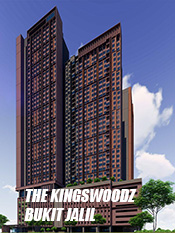



 Posts
Posts


